

The impact of type 2 diabetes on bone metabolism
Open accessThe DOI matches its Crossref record; 61 of the 61 references it cites were found in a registry or an index.
Abstract
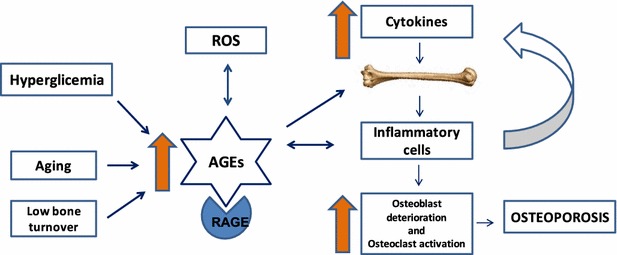
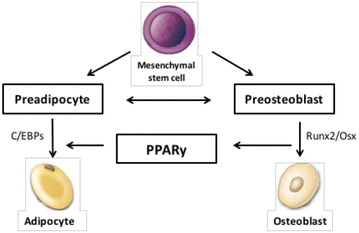
Diabetes complications and osteoporotic fractures are two of the most important causes of morbidity and mortality in older patients and share many features including genetic susceptibility, molecular mechanisms, and environmental factors. Type 2 diabetes mellitus (T2DM) compromises bone microarchitecture by inducing abnormal bone cell function and matrix structure, with increased osteoblast apoptosis, diminished osteoblast differentiation, and enhanced osteoclast-mediated bone resorption. The linkage between these two chronic diseases creates a possibility that certain antidiabetic therapies may affect bone quality. Both glycemic and bone homeostasis are under control of common regulatory factors. These factors include insulin, accumulation of advanced glycation end products, peroxisome proliferator-activated receptor gamma, gastrointestinal hormones (such as the glucose-dependent insulinotropic peptide and the glucagon-like peptides 1 and 2), and bone-derived hormone osteocalcin. This background allows individual pharmacological targets for antidiabetic therapies to affect the bone quality due to their indirect effects on bone cell differentiation and bone remodeling process. Moreover, it's important to consider the fragility fractures as another diabetes complication and discuss more deeply about the requirement for adequate screening and preventive measures. This review aims to briefly explore the impact of T2DM on bone metabolic and mechanical proprieties and fracture risk.
Overview
The claims and statistics of this paper haven’t been checked yet.
Free: it reads the open-access text and checks the first 5 claims that cite a source we can check. Create a free account to check every claim.
Integrity signals
Registry
Cites
Statistics
Figures
Verification
Claims the paper makes
The claims and statistics of this paper haven’t been checked yet.
Free: it reads the open-access text and checks the first 5 claims that cite a source we can check. Create a free account to check every claim.
Claims other papers make about this one
Each is checked against this paper’s own text: does it say what the citing paper says it does?
The cited source says what the claim attributes to it.
In the citing paper
“Similarly, patients with T2DM frequently experience disturbances in bone and mineral metabolism (15).”
From Biological variation in serum thyroid, iron metabolism, and plasma bone metabolism biomarkers in patients with type 2 diabetes mellitus (2025) · cites this paper as [15]
Self-check
Percentages, sums and reported differences re-computed from the paper’s own numbers.
The self-check needs the paper’s full text.
Citations
Cites
Advanced glycation end-products: A review
Singh, R., Barden, A., Mori, T., & Beilin, L. (2001) · Diabetologia · doi:10.1007/s001250051591 · Cited by 2,597 · cited 1×
“The presence of glucose induces the formation of intermediate products containing highly reactive dicarbonyls, which ultimately leads to the production of irreversible accumulation of advanced glycation end products compounds [25], from a non-enzymatic glycation process [26].”
BackgroundHypovitaminosis D is associated with insulin resistance and β cell dysfunction
Chiu, K. C., Chu, A., Go, V. L. W., & Saad, M. F. (2004) · The American Journal of Clinical Nutrition · doi:10.1093/ajcn/79.5.820 · Cited by 1,642
Advanced glycation endproducts—role in pathology of diabetic complications
Ahmed, N. (2005) · Diabetes Research and Clinical Practice · doi:10.1016/j.diabres.2004.09.004 · Cited by 1,455
The role of gut hormones in glucose homeostasis
Drucker, D. J. (2007) · Journal of Clinical Investigation · doi:10.1172/jci30076 · Cited by 614
Mathieu, C., Gysemans, C., Giulietti, A., & Bouillon, R. (2005) · Diabetologia · doi:10.1007/s00125-005-1802-7 · Cited by 612
Older Women With Diabetes Have a Higher Risk of Falls
Schwartz, A. V., Hillier, T. A., Sellmeyer, D. E., Resnick, H. E., Gregg, E., Ensrud, K. E., Schreiner, P. J., Margolis, K. L., Cauley, J. A., Nevitt, M. C., et al. (2002) · Diabetes Care · doi:10.2337/diacare.25.10.1749 · Cited by 576
Vitamin D and type 2 diabetes: a systematic review
Mitri, J., Muraru, M. D., & Pittas, A. G. (2011) · European Journal of Clinical Nutrition · doi:10.1038/ejcn.2011.118 · Cited by 570
Bone mineral density and fracture risk in type-2 diabetes mellitus: the Rotterdam Study.
de Liefde, I. I., van der Klift, M., de Laet, C. E. D. H., van Daele, P. L. A., Hofman, A., & Pols, H. A. P. (2005) · Osteoporosis International · doi:10.1007/s00198-005-1909-1 · Cited by 555
PPAR-γ regulates osteoclastogenesis in mice
Wan, Y., Chong, L.-W., & Evans, R. M. (2007) · Nature Medicine · doi:10.1038/nm1672 · Cited by 517
In Vivo Assessment of Bone Quality in Postmenopausal Women With Type 2 Diabetes
Farr, J. N., Drake, M. T., Amin, S., Melton, L. J., McCready, L. K., & Khosla, S. (2014) · Journal of Bone and Mineral Research · doi:10.1002/jbmr.2106 · Cited by 499
Cited by
Muire, P. J., Mangum, L. H., & Wenke, J. C. (2020) · Frontiers in Immunology · doi:10.3389/fimmu.2020.01056 · Cited by 165
Bergapten: A review of its pharmacology, pharmacokinetics, and toxicity
Liang, Y., Xie, L., Liu, K., Cao, Y. L., Dai, X., Wang, X., Lu, J., Zhang, X., & Li, X. (2021) · Phytotherapy Research · doi:10.1002/ptr.7221 · Cited by 128
Links among Obesity, Type 2 Diabetes Mellitus, and Osteoporosis: Bone as a Target
Martiniaková, M., Bíro, R., Pénzes, N., Šarocká, A., Kováčová, V., Mondočková, V., & Omelka, R. (2024) · International Journal of Molecular Sciences · doi:10.3390/ijms25094827 · Cited by 119
The Impact of Childhood Obesity on Skeletal Health and Development
Dimitri, P. (2019) · Journal of Obesity & Metabolic Syndrome · doi:10.7570/jomes.2019.28.1.4 · Cited by 112
Advanced glycation end products mediate biomineralization disorder in diabetic bone disease
Gao, Q., Jiang, Y., Zhou, D., Li, G., Han, Y., Yang, J., Xu, K., Jing, Y., Long, B., Geng, Z., et al. (2024) · Cell Reports Medicine · doi:10.1016/j.xcrm.2024.101694 · Cited by 104
Metadata
- Authors
- Sanches, C. P., Vianna, A. G. D., & Barreto, F. D. C.
- Affiliations
- Hospital Nossa Senhora das Graças (BR)
- Universidade Federal do Paraná (BR)
- Corresponding author
- Sanches, Claudia Pinheiro
- Venue
- Diabetology & Metabolic Syndrome
- Published
- 2017-10-19
- Volume
- 9
- Issue
- 1
- Pages
- 85-85
- ISSN
- 1758-5996 (ISSN-L)
- PMC
- PMC5649056
- OpenAlex
- W2766412682
- Cited by
- 115
- References
- 61
- Citations by year
- 2026: 8 · 2025: 18 · 2024: 16 · 2023: 12 · 2022: 15 · 2021: 18 · 2020: 13 · 2019: 6 · 2018: 9
- FWCI
- 1.39
- Type
- journal article
- Language
- en
- Open access
- gold
- doi.org
- Licence
- cc-by
- Locations
- Diabetology & Metabolic Syndrome (publishedVersion, cc-by)
- PubMed Central (publishedVersion, cc-by)
- PubMed (publishedVersion)
- DOAJ (DOAJ: Directory of Open Access Journals) (submittedVersion)
- Topics
- Health Sciences › Medicine › Orthopedics and Sports Medicine › Bone health and osteoporosis research
- Life Sciences › Biochemistry, Genetics and Molecular Biology › Molecular Biology › Bone Metabolism and Diseases
- Health Sciences › Medicine › Infectious Diseases › HIV-related health complications and treatments
- Keywords
- type 2 diabetes, bone metabolism, osteoporotic fractures, bone microarchitecture, osteoblast apoptosis, osteogenic differentiation, osteoclast resorption, advanced glycation end products, insulin, PPARγ, glucose-dependent insulinotropic polypeptide, glucagon-like peptide-1, glucagon-like peptide-2, osteocalcin, antidiabetic drugs, bone remodeling, fragility fractures, fracture risk screening, older adults
About these checks
Registry, retraction, Cites and statistics results are computed, not judged, with one exception: a printed reference that no index lists is read once by a model before it counts as a citation error. Claims are extracted by a model and kept only when their quote appears verbatim in the text; each cited source is then checked, with a model’s help, for whether it says what the claim relies on. Those verdicts can be wrong — read the claim’s quote and the cited source before relying on one.
Statistics and arithmetic are recomputed, not judged.
Confidence bands are shown only for fields calibrated on our annotated test set. None is calibrated yet, so no band is shown.
What counts as a claim ›How we measure confidence ›How we check this ›
Are you an author, or do you see a problem with this page? Request a review
How to cite
Cite CoChat for the checks on this page, and the paper for its own findings.
- This page
- CoChat. (2026). Citation check: The impact of type 2 diabetes on bone metabolism. https://app.cochat.ai/papers/10.1186/s13098-017-0278-1
- The paper
- Sanches, C. P., Vianna, A. G. D., & Barreto, F. D. C. (2017). The impact of type 2 diabetes on bone metabolism. Diabetology & Metabolic Syndrome. https://doi.org/10.1186/s13098-017-0278-1
Data sources
Bibliographic data: Semantic Scholar, OpenAlex, Crossref.
Contains information from the Semantic Scholar Academic Graph Datasets, made available under the ODC Attribution License (ODC-BY 1.0).
Semantic Scholar’s data is described in: Kinney, R., et al. (2023). The Semantic Scholar Open Data Platform. arXiv:2301.10140.
