

The DOI matches its Crossref record.
High dietary zinc supplementation increases the occurrence of tetracycline and sulfonamide resistance genes in the intestine of weaned pigs
Overview
The claims and statistics of this paper haven’t been checked yet.
Run the check — free, no account needed. It reads the open-access text and checks the sources it cites.
Integrity signals
Registry
Cites
Statistics
Figures
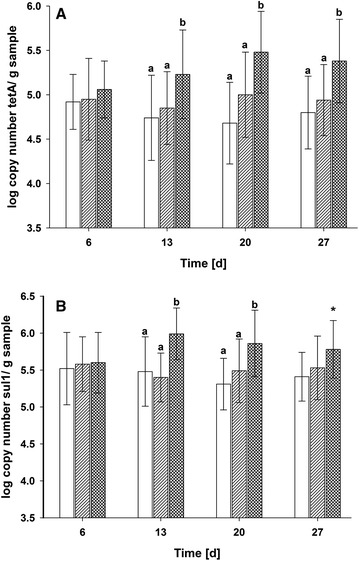
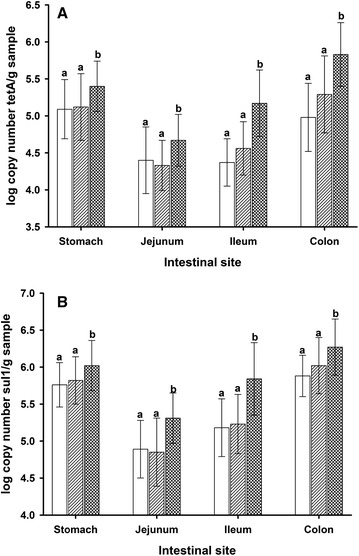
Verification
Claims the paper makes
The claims and statistics of this paper haven’t been checked yet.
Run the check — free, no account needed. It reads the open-access text and checks the sources it cites.
Claims other papers make about this one
Each is checked against this paper’s own text: does it say what the citing paper says it does?
The cited source says what the claim attributes to it.
In the citing paper
“Previous studies conducted by our team and other laboratories have demonstrated that the supplementation of trace elements, such as copper and zinc, in agricultural environments may lead to an increased incidence of ARGs [13–16].”
From Severity-dependent alterations in oral microbiota and antibiotic resistance in children with dental fluorosis (2026) · cites this paper as [16]
Self-check
Percentages, sums and reported differences re-computed from the paper’s own numbers.
The self-check needs the paper’s full text.
Citations
Cites
No references could be resolved yet.
Research works printed but not linked: 23
- Pettigrew JE (2006) Reduced use of antibiotic growth promoters in diets fed to weanling pigs; dietary tools, part 1. Anim Biotechnol 17:207–215 · DOI
- Starke IC, Pieper R, Neumann K, Zentek J, Vahjen W (2014) The impact of high dietary zinc oxide on the development of the intestinal microbiota in weaned piglets. FEMS Microbiol Ecol 87:416–427 · DOI
- Vahjen W, Pieper R, Zentek J (2010) Bar-coded pyrosequencing of 16S rRNA gene amplicons reveals changes in ileal porcine bacterial communities due to high dietary zinc intake. Appl Environ Microbiol 76:6689–6691 · DOI
- Broom LJ, Miller HM, Kerr KG, Knapp JS (2006) Effects of zinc oxide and Enterococcus faecium SF68 dietary supplementation on the performance, intestinal microbiota and immune status of weaned piglets. Res Vet Sci 80:45–54 · DOI
- Hojberg O, Canibe N, Poulsen HD, Hedemann MS, Jensen BB (2005) Influence of dietary zinc oxide and copper sulfate on the gastrointestinal ecosystem in newly weaned piglets. Appl Environ Microb 71:2267–2277 · DOI
- Vahjen W, Pieper R, Zentek J (2011) Increased dietary zinc oxide changes the bacterial core and enterobacterial composition in the ileum of piglets. J Anim Sci 89:2430–2439 · DOI
- Bednorz C, Oelgeschläger K, Kinnemann B, Hartmann S, Neumann K, Pieper R, Bethe A, Semmler T, Tedin K, Schierack P, Wieler LH, Guenther S (2013) The broader context of antibiotic resistance: zinc feed supplementation of piglets increases the proportion of multi-resistant Escherichia coli in vivo. Int J Med Microbiol 303:396–403 · DOI
- Burgos Y, Beutin L (2010) Common origin of plasmid encoded alpha-hemolysin genes in Escherichia coli. BMC Microbiol 10:193 · DOI
- Rayamajhi N, Cha SB, Kang ML, Lee SI, Lee HS, Yoo HS (2009) Inter- and intraspecies plasmid-mediated transfer of florfenicol resistance in Enterobacteriaceae isolates from swine. Appl Environ Microbiol 75:5700–5703 · DOI
- Liu P, Pieper R, Rieger J, Vahjen W, Davin R, Plendl J, Meyer W, Zentek J (2014) Effect of dietary zinc oxide on morphological characteristics, mucin composition and gene expression in the colon of weaned piglets. PLoS One 9:e91091. doi: 10.1371/journal.pone.0091091 · DOI
- Martin L, Pieper R, Schunter N, Vahjen W, Zentek J (2013) Performance, organ zinc concentration, jejunal brush border membrane enzyme activities and mRNA expression in piglets fed with different levels of dietary zinc. Arch Anim Nutr 67:248–261 · DOI
- Holzel CS, Muller C, Harms KS, Mikolajewski S, Schafer S, Schwaiger K, Bauer J (2012) Heavy metals in liquid pig manure in light of bacterial antimicrobial resistance. Environ Res 113:21–27 · DOI
- Cavaco LM, Hasman H, Aarestrup FM (2011) Zinc resistance of Staphylococcus aureus of animal origin is strongly associated with methicillin resistance. Vet Microbiol 150:344–348 · DOI
- Starke IC, Zentek J, Vahjen W (2013) Ex vivo-growth response of porcine small intestinal bacterial communities to pharmacological doses of dietary zinc oxide. PLoS One 8:e56405. doi: 10.1371/journal.pone.0056405 · DOI
- Jacela JY, DeRouchey JM, Tokach MD, Goodband RD, Nelssen JL, Renter DG, Dritz SS (2010) Feed additives for swine: fact sheets—high dietary levels of copper and zinc for young pigs, and phytase. J Swine Health Prod 18:87–91 · DOI
- Speer BS, Shoemaker NB, Salyers AA (1992) Bacterial resistance to tetracycline: mechanisms, transfer, and clinical significance. Clin Microbiol Rev 5:387–399 · DOI
- Sköld O (2001) Resistance to trimethoprim and sulfonamides. Vet Res 32:261–273 · DOI
- Seiler C, Berendonk TU (2006) Heavy metal driven co-selection of antibiotic resistance in soil and water bodies impacted by agriculture and aquaculture. Front Microbiol 3:399
- Baker-Austin C, Wright MS, Stepanauskas R, McArthur JV (2006) Co-selection of antibiotic and metal resistance. Trends Microbiol 14:176–182 · DOI
- Silver S (1996) Bacterial heavy metal resistance: new surprises. Ann Rev Microb 50:753–789 · DOI
- Suckling CJ, Sweeney JR, Wood HC (1977) Dihydropteroate synthase: purification by affinity chromatography and mechanism of action. J Chem Soc Perk 4:439–442 · DOI
- Leser TD, Amenuvor JZ, Jensen TK, Lindecrona RH, Boye M, Møller K (2002) Culture-independent analysis of gut bacteria: the pig gastrointestinal tract microbiota revisited. Appl Environ Microbiol 68:673–690 · DOI
- Dintzis FR, Laszlo JA, Nelsen TC, Baker FL, Calvert CC (1995) Free and total ion concentrations in pig digesta. J Anim Sci 73:1138–1146 · DOI
Cited by
Sorted by citations
Xia, Y., Peng, S., Yu, J., Wang, Y., Ye, Y., Liu, M., Shang, L., Cui, X., Wang, P., & Ding, Z. (2026) · Journal of Oral Microbiology · doi:10.1080/20002297.2026.2714622
Metadata
- Authors
- Vahjen, W., Pietruszyńska, D., Starke, I. C., & Zentek, J.
- Venue
- Gut Pathogens
- Published
- 2015-08-26
- Volume
- 7
- Issue
- 1
- ISSN
- 1757-4749
- PMC
- PMC4551370
- Cited by
- 99
- References
- 0
- Language
- en
- Funders
- Deutsche Forschungsgemeinschaft (SFB852/A01)
About these checks
Registry, retraction, Cites and statistics results are computed, not judged, with one exception: a printed reference that no index lists is read once by a model before it counts as a citation error. Claims are extracted by a model and kept only when their quote appears verbatim in the text; each cited source is then checked, with a model’s help, for whether it says what the claim relies on. Those verdicts can be wrong — read the claim’s quote and the cited source before relying on one.
Statistics and arithmetic are recomputed, not judged.
Confidence bands are shown only for fields calibrated on our annotated test set. None is calibrated yet, so no band is shown.
What counts as a claim ›How we measure confidence ›How we check this ›
Are you an author, or do you see a problem with this page? Request a review
