

Identifying the factors affecting ‘patient engagement’ in exercise rehabilitation
Open accessPublished version of a preprint
The DOI matches its Crossref record; 39 of the 40 references it cites were found in a registry or an index; 111 of the 185 sources its claims cite were checked for support.
Abstract
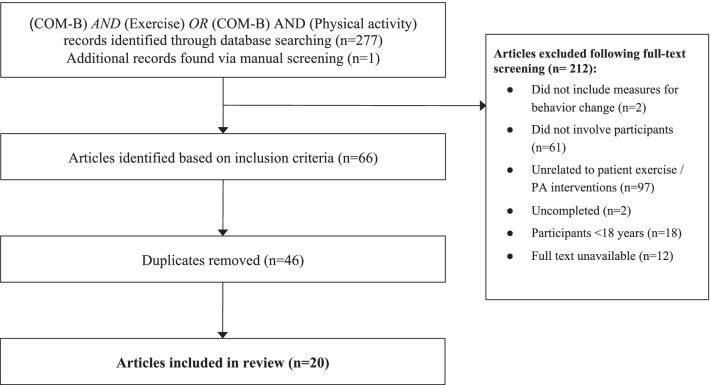
Background: Despite the proven benefits of exercise rehabilitation for numerous health conditions, musculoskeletal injuries and recovery from surgery, patient adherence to such programs is reported to often be less than 35%. Increasing patient engagement therefore has the potential to improve patient health outcomes, benefiting the patient, their carers and the services that support them. The aims of this review were to identify the factors that contribute to ‘patient’ engagement in prescribed exercise rehabilitation using the COM-B (capability, opportunity, motivation-behaviour) framework of behavioural analysis. Methods: Five electronic databases (PubMed, Embase, Cochrane, Web of Science, and ClinicalTrials.gov) were searched. ‘COM-B’ was the key word searched for specifically within titles and abstracts, combined with either ‘physical activity’ OR ‘exercise’ included using the ‘AND’ operation. Records were then filtered and excluded following full-text screening based on the predetermined eligibility criteria. Results: Twenty studies were included in the review. The main COM-B themes highlighted for improving patient engagement were: capability—improving patient knowledge and cognitive skills for behavioural regulation, such as ‘action planning’ and ‘action control’, which could also benefit time-management; opportunity—a balanced life situation that enabled time to be devoted to the exercise program, social support, easily accessible and affordable resources and services; and motivation—increasing patient levels of self-efficacy and autonomous motivation, which were noted to be influenced by levels of perceived ‘capability’, additionally ‘motivation’ was noted to be influenced by patients perceiving the benefits of the exercise, and adherence to the program was promoted by ‘goal-setting’. Other issues in the ‘capability’ domain included a fear and/or dislike of exercise. Conclusion: Patient engagement behavior has been shown to be influenced by both external (opportunity) and intrapersonal variables (capability and motivation). Those prescribing exercises within a rehabilitation program need to discuss these factors with their patients and co-design the exercise rehabilitation program in partnership with the patient, since this is likely to improve patient engagement, and thereby result in superior health outcomes. Furthermore, these factors need to be a consideration in clinical trials, if the findings from such trials are to translate into mainstream healthcare settings.
Overview
CoChat Summary
TL;DR
This scoping review used the COM-B framework to identify facilitators and barriers to patient engagement in prescribed exercise rehabilitation. It found engagement is shaped by capability, opportunity, and motivation factors, and recommends co-designing rehabilitation programs with patients to improve adherence and outcomes.
Key findings
- Twenty studies were included; 2,761 participants were represented, of whom 2,676 (96.9%) were patients and 85 (3.1%) were clinicians.
- Main capability themes were knowledge, behavioural regulation skills such as action planning and action control, and exercise perceptions; fear/dislike of exercise were capability barriers.
- Main opportunity themes included time, access and affordability of resources/services, safe environments, and social support; lack of time and access/cost were common barriers.
- Main motivation themes included self-efficacy, autonomous motivation, perceived personal relevance, and goal-setting; high perceived personal relevance was associated with increased determination to engage in exercise in twelve studies.
Methods
- Scoping review following PRISMA guidelines, searching PubMed, Cochrane, Embase, Web of Science, and ClinicalTrials.gov from inception until July 2021.
- Search terms were ‘COM-B’ in titles/abstracts combined with ‘physical activity’ OR ‘exercise’ using AND; limited to adult populations and English.
- Twenty articles were included after screening; behavioural determinants were extracted from results/discussion sections and mapped to COM-B domains as patient/clinician facilitators or barriers.
Limitations
- Stated: limited data on clinician strategies and clinician perspectives, since most studies focused on patient facilitators and barriers rather than clinician factors.
- Stated: no reviewed studies compared behavioural determinants between different health conditions, and some conditions had sparse data; neurological disease patients dominated the sample (n = 1881), while cancer (n = 13) and musculoskeletal (n = 11) patients contributed 0.5% and 0.4%, respectively.
- Stated: no studies used COM-B to assess exercise engagement facilitators/barriers in participants with clinical mental health conditions. Evident from the text: the review is qualitative and heterogeneous, with no formal meta-analysis or quality appraisal described.
Model-written summary. Check it against the paper before relying on it.
Integrity signals
Registry
Cites
Statistics
Figures
Verification
Claims the paper makes
26 Valid · 1 Not valid · 22 Not checked · 42 Own results and interpretations
The cited sources support only part of this claim — read each source’s verdict below.
In the paper
“A prominent physical opportunity determinant noted in multiple articles was the availability of time for engaging in PA [15, 20, 21, 25, 26, 28, 30, 31, 33].”
§ Identifying the factors affecting ‘patient engagement’ in exercise rehabilitation > Results > Facilitators and barriers
What the sources say
- Partly supportedcites [15] Morris RL Hill KD Ackerman IN A mixed methods process evaluation of a person-centred falls prevention program BMC Health Serv Res 2019 19 1 906 10.1186/s12913-019-4614-z 31779624 PMC6883679 sourceExperimental — accuracy not yet measured
The Opportunity section identifies lack of time, often due to work commitments, as a barrier to participating in RESPOND; Table 3 also lists insufficient time as an opportunity barrier. The paper does not specifically tie that time barrier to engaging in physical activity, and calls it an additional barrier rather than the greatest one. The statement about multiple articles is the citing authors’ synthesis, not a finding attributed to this individual paper. (LLM, conf=0.86)
- Supportedcites [20] Andersen P Lendahls L Holmberg S Patients’ experiences of physical activity on prescription with access to counsellors in routine care: a qualitative study in Sweden BMC Public Health 2019 19 1 210 10.1186/s12889-019-6535-5 30786907 PMC6381718 source
In “Having a balanced life situation” (page unavailable), interviewees describe limited leisure time and heavy workloads as barriers to physical activity. The Discussion identifies opportunity as a category of factors influencing activity. This supports the cited paper’s contribution to the citing authors’ synthesis across multiple articles. (LLM, conf=0.91)
- Partly supportedcites [21] Ayton D Morello R Natora A Yallop S Barker A Soh SE Perceptions of falls and falls prevention interventions among personal alert Victoria clients Health Soc Care Commun 2018 26 6 970 978 10.1111/hsc.12626 30027667 sourceExperimental — accuracy not yet measured
Section 3.1 (Capability) identifies lack of time as a barrier to engaging in falls prevention activities, which include exercise. However, the paper classifies lack of time as a capability barrier, not a physical opportunity determinant, and does not specifically identify it as a barrier to physical activity generally. (LLM, conf=0.86)
- Supportedcites [25] Muhwava LS Murphy K Zarowsky C Experiences of lifestyle change among women with gestational diabetes mellitus (GDM): A behavioural diagnosis using the COM-B model in a low-income setting PLoS ONE 2019 14 e0225431 10.1371/journal.pone.0225431 31765431 PMC6876752 source
The Opportunity section’s Table 2 lists “Availability of personal time for physical activity after delivery” under physical opportunity. This supports citing the paper for time availability as a physical-opportunity determinant, specifically in the postpartum period; the claim that multiple articles noted it is a synthesis across citations, not a claim this paper alone must establish. (LLM, conf=0.90)
- Supportedcites [26] Ellis K Pears S Sutton S Behavioural analysis of postnatal physical activity in the UK according to the COM-B model: a multi-methods study BMJ Open 2019 9 8 e028682 10.1136/bmjopen-2018-028682 31377705 PMC6686995 source
The Questionnaire section reports that participants would be more active if they had more time, and the Discussion identifies time as the key barrier. The Opportunity: physical section also says that the time of activities influences access to them. “Multiple articles” describes the citing paper’s group of references, not a finding this individual source must establish. (LLM, conf=0.89)
- Supportedcites [28] Flannery C McHugh S Anaba AE Enablers and barriers to physical activity in overweight and obese pregnant women: an analysis informed by the theoretical domains framework and COM-B model BMC Pregnan Childbirth 2018 18 178 10.1186/s12884-018-1816-z PMC5963099 29783933 source
The Environmental context and resources section says time constraints often hindered physical activity, particularly alongside work and family commitments. Table 3 maps those circumstances to physical opportunity. This paper supports its place among the cited articles identifying time as a determinant; the claim does not require it alone to establish what multiple articles found. (LLM, conf=0.89)
- Not checked yetcites [30] Walker RAJ Colclough M Limbert C Perceived barriers to, and benefits of physical activity among British military veterans that are wounded, injured, and/or sick: a behaviour change wheel perspective Disabil Rehabil 2020 10.1080/09638288.2020.1781940 32568568 source
- Supportedcites [31] Moore AP Rivas CA Stanton-Fay S Designing the healthy eating and active lifestyles for diabetes (HEAL-D) self-management and support programme for UK African and Caribbean communities: a culturally tailored, complex intervention under-pinned by behaviour change theory BMC Public Health 2019 19 1146 10.1186/s12889-019-7411-z 31429735 PMC6702734 source
In Table 2 (COM-B coding and analysis), the paper lists having time to undertake physical activity under physical opportunity. The Behaviour 3 section also reports lack of time as a barrier to exercise. The statement about multiple articles is the citing authors’ synthesis, not a finding attributed to this source alone. (LLM, conf=0.93)
- Supportedcites [33] Handley MA Harleman E Gonzalez-Mendez E Applying the COM-B model to creation of an IT-enabled health coaching and resource linkage program for low-income Latina moms with recent gestational diabetes: the STAR MAMA program Implement Sci 2015 11 1 73 10.1186/s13012-016-0426-2 PMC4870786 27193580 source
The Physical opportunity section identifies limited time, alongside exhaustion and caregiving, as a barrier to preventive behaviors. The paper includes physical activity among those behaviors. The statement that this determinant appeared in multiple articles is the citing authors’ synthesis, not a finding attributed to this paper alone. Page numbers were not available in our copy. (LLM, conf=0.86)
plainstates an association- Asserted: passes — The authors put it forward as true.
- Checkable: passes — It can be checked against evidence.
- Load-bearing: unclear — It is unclear whether the paper’s conclusions depend on it.
- Based: passes — The paper gives a reason why it holds.
- Partly supported
The cited sources support only part of this claim — read each source’s verdict below.
In the paper
“whereas affordable facilities resulted in greater adherence levels [15, 31, 34].”
§ Identifying the factors affecting ‘patient engagement’ in exercise rehabilitation > Results > Facilitators and barriers
What the sources say
- Partly supportedcites [15] Morris RL Hill KD Ackerman IN A mixed methods process evaluation of a person-centred falls prevention program BMC Health Serv Res 2019 19 1 906 10.1186/s12913-019-4614-z 31779624 PMC6883679 sourceExperimental — accuracy not yet measured
The barriers-and-facilitators passage identifies affordable and accessible services as facilitators for participants. However, the Intervention participant adherence section does not link service affordability to adherence levels, so the claimed increase in adherence is not established. (LLM, conf=0.85)
- Partly supportedcites [31] Moore AP Rivas CA Stanton-Fay S Designing the healthy eating and active lifestyles for diabetes (HEAL-D) self-management and support programme for UK African and Caribbean communities: a culturally tailored, complex intervention under-pinned by behaviour change theory BMC Public Health 2019 19 1146 10.1186/s12889-019-7411-z 31429735 PMC6702734 sourceExperimental — accuracy not yet measured
In “Behaviour 3: Do 30 min moderate to vigorous physical activity at least 5 days a week” (page unavailable), participants described class and gym costs as prohibitive, and the authors say free GP exercise referrals could overcome that barrier. The paper does not report that affordable facilities resulted in higher adherence levels; that outcome and causal wording go beyond its focus-group findings. (LLM, conf=0.86)
- Not checked yetcites [34] Levy TJ Christie L Killington M "Just that four letter word, hope": stroke survivors' perspectives of participation in an intensive upper limb exercise program; a qualitative exploration Physiother Theory Pract 2021 10.1080/09593985.2021.1875525 33573437 source
plainstates a cause- Asserted: passes — The authors put it forward as true.
- Checkable: passes — It can be checked against evidence.
- Load-bearing: unclear — It is unclear whether the paper’s conclusions depend on it.
- Based: passes — The paper gives a reason why it holds.
- Partly supported
The cited sources support only part of this claim — read each source’s verdict below.
In the paper
“Types of health knowledge included: knowledge of personal health and health conditions [15, 21, 25, 30, 32], suitable PA intervention strategies [15, 22, 26, 28, 30–32], PA guidelines [31, 32], and benefits of PA for their well-being [15, 21, 22, 30, 32].”
§ Identifying the factors affecting ‘patient engagement’ in exercise rehabilitation > Results > Facilitators and barriers
What the sources say
- Partly supportedcites [15] Morris RL Hill KD Ackerman IN A mixed methods process evaluation of a person-centred falls prevention program BMC Health Serv Res 2019 19 1 906 10.1186/s12913-019-4614-z 31779624 PMC6883679 sourceExperimental — accuracy not yet measured
The 'Barriers and facilitators—Capability' section identifies participants’ increased awareness of falls risks and management strategies as a facilitator of their capability to engage in RESPOND. The program included a strength-and-balance module, but the passage does not specifically identify knowledge of suitable physical-activity interventions as the facilitator; its finding concerns falls-prevention strategies more broadly. No page number is available in our copy. (LLM, conf=0.82)
- Supportedcites [22] Nyenhuis SM Shah N Ma J Identifying barriers to physical activity among African American women with asthma Cogent Med 2019 6 1582399 10.1080/2331205X.2019.1582399 31754624 PMC6871513 source
Section 4.2 (Psychological Capability) identifies lack of knowledge about suitable exercise regimens and managing activity-related asthma symptoms as barriers. Section 6.2 describes education on exercising safely with asthma as an intervention component addressing psychological capability, supporting the paraphrase in this population. (LLM, conf=0.88)
- Supportedcites [26] Ellis K Pears S Sutton S Behavioural analysis of postnatal physical activity in the UK according to the COM-B model: a multi-methods study BMJ Open 2019 9 8 e028682 10.1136/bmjopen-2018-028682 31377705 PMC6686995 source
The “Capability: psychological” section says postnatal participants lacked information about how to resume physical activity safely and would benefit from guidance on suitable activities. The Discussion likewise describes unawareness of appropriate activities as a psychological capability deficit. This supports the claim in the study’s postnatal context. (LLM, conf=0.89)
- Supportedcites [28] Flannery C McHugh S Anaba AE Enablers and barriers to physical activity in overweight and obese pregnant women: an analysis informed by the theoretical domains framework and COM-B model BMC Pregnan Childbirth 2018 18 178 10.1186/s12884-018-1816-z PMC5963099 29783933 source
The Physical skills section reports that women would be more likely to attend pregnancy exercise classes if given information about local classes. Table 3 maps knowledge of types of physical activity and available resources during pregnancy to psychological capability, supporting the claim that such knowledge can facilitate activity. (LLM, conf=0.88)
- Not checked yetcites [30] Walker RAJ Colclough M Limbert C Perceived barriers to, and benefits of physical activity among British military veterans that are wounded, injured, and/or sick: a behaviour change wheel perspective Disabil Rehabil 2020 10.1080/09638288.2020.1781940 32568568 source
- Supportedcites [31] Moore AP Rivas CA Stanton-Fay S Designing the healthy eating and active lifestyles for diabetes (HEAL-D) self-management and support programme for UK African and Caribbean communities: a culturally tailored, complex intervention under-pinned by behaviour change theory BMC Public Health 2019 19 1146 10.1186/s12889-019-7411-z 31429735 PMC6702734 source
Table 2 (COM-B coding and analysis; page not provided) places knowing which physical activities are suitable under psychological capability for physical activity. The ‘Behaviour 3’ section (page not provided) also identifies lack of knowledge about alternative exercises as a capability barrier. This supports the claim in the context of the UK African and Caribbean communities studied. (LLM, conf=0.90)
- Partly supportedcites [32] Ojo SO Bailey DP Brierley ML Breaking barriers: using the behavior change wheel to develop a tailored intervention to overcome workplace inhibitors to breaking up sitting time BMC Public Health 2019 19 1 1126 10.1186/s12889-019-7468-8 31420033 PMC6697980 sourceExperimental — accuracy not yet measured
The Capability section identifies knowledge as part of psychological capability, and the intervention table lists knowing strategies to break up sitting as a target. The study concerns workplace employees and strategies for interrupting sitting, not patients’ knowledge of suitable physical-activity interventions generally. (LLM, conf=0.85)
plainstates a cause- Asserted: passes — The authors put it forward as true.
- Checkable: passes — It can be checked against evidence.
- Load-bearing: passes — The paper’s conclusions depend on it.
- Based: passes — The paper gives a reason why it holds.
- Partly supported
The sources with a verdict support this claim; the rest weren’t checked yet, have no full text we could read, or their verdicts aren’t rated yet.
In the paper
“High costs of resources and services was also stated as a barrier for patients in five studies [21, 26, 28, 30, 31]”
§ Identifying the factors affecting ‘patient engagement’ in exercise rehabilitation > Results > Facilitators and barriers
What the sources say
- Supportedcites [21] Ayton D Morello R Natora A Yallop S Barker A Soh SE Perceptions of falls and falls prevention interventions among personal alert Victoria clients Health Soc Care Commun 2018 26 6 970 978 10.1111/hsc.12626 30027667 source
The Opportunity section identifies high cost as a practical barrier to engaging with falls prevention interventions and quotes a participant concerned about costs. The Conclusions likewise name the high cost of interventions as a barrier. This paper supports its inclusion among the five cited studies; the five-study count is the citing paper's synthesis, not a finding attributed to this source alone. (LLM, conf=0.92)
- Supportedcites [26] Ellis K Pears S Sutton S Behavioural analysis of postnatal physical activity in the UK according to the COM-B model: a multi-methods study BMJ Open 2019 9 8 e028682 10.1136/bmjopen-2018-028682 31377705 PMC6686995 source
The “Opportunity: physical” passage reports that child-friendly activities were sometimes too expensive; a participant said lessons cost more than £14 and she could not justify the price. This supports citing the study as one of the five reporting a cost barrier; the five-study count refers to the citation group, not this paper alone. (LLM, conf=0.91)
- Supportedcites [28] Flannery C McHugh S Anaba AE Enablers and barriers to physical activity in overweight and obese pregnant women: an analysis informed by the theoretical domains framework and COM-B model BMC Pregnan Childbirth 2018 18 178 10.1186/s12884-018-1816-z PMC5963099 29783933 source
The Environmental context and resources section reports that some women identified lack of financial means as a barrier to physical activity and suggested subsidised services. A participant specifically said she could not afford a swimming membership. This supports the cost-barrier finding for which this paper is one of five cited studies; the paper need not itself establish the five-study count. (LLM, conf=0.91)
- Not checked yetcites [30] Walker RAJ Colclough M Limbert C Perceived barriers to, and benefits of physical activity among British military veterans that are wounded, injured, and/or sick: a behaviour change wheel perspective Disabil Rehabil 2020 10.1080/09638288.2020.1781940 32568568 source
- Supportedcites [31] Moore AP Rivas CA Stanton-Fay S Designing the healthy eating and active lifestyles for diabetes (HEAL-D) self-management and support programme for UK African and Caribbean communities: a culturally tailored, complex intervention under-pinned by behaviour change theory BMC Public Health 2019 19 1146 10.1186/s12889-019-7411-z 31429735 PMC6702734 source
In “Behaviour 3: Do 30 min moderate to vigorous physical activity at least 5 days a week,” the paper reports that the cost of exercise classes or gym membership was prohibitive for some participants. This supports its inclusion as one of the five cited studies identifying cost as a barrier; the count of five refers to the citing paper’s set of studies, not to this source alone. (LLM, conf=0.91)
plainstates a cause- Asserted: passes — The authors put it forward as true.
- Checkable: passes — It can be checked against evidence.
- Load-bearing: unclear — It is unclear whether the paper’s conclusions depend on it.
- Based: passes — The paper gives a reason why it holds.
- Supported
The cited sources support only part of this claim — read each source’s verdict below.
In the paper
“Types of health knowledge included: knowledge of personal health and health conditions [15, 21, 25, 30, 32], suitable PA intervention strategies [15, 22, 26, 28, 30–32], PA guidelines [31, 32], and benefits of PA for their well-being [15, 21, 22, 30, 32].”
§ Identifying the factors affecting ‘patient engagement’ in exercise rehabilitation > Results > Facilitators and barriers
What the sources say
- Supportedcites [31] Moore AP Rivas CA Stanton-Fay S Designing the healthy eating and active lifestyles for diabetes (HEAL-D) self-management and support programme for UK African and Caribbean communities: a culturally tailored, complex intervention under-pinned by behaviour change theory BMC Public Health 2019 19 1146 10.1186/s12889-019-7411-z 31429735 PMC6702734 source
Table 2 (labelled Conclusions in our copy; page not provided) places knowledge of guideline targets under psychological capability for doing 30 minutes of moderate-to-vigorous physical activity five days a week. The Behaviour 3 section also describes confusion about what activity to do and how much as a capability barrier. (LLM, conf=0.92)
- Partly supportedcites [32] Ojo SO Bailey DP Brierley ML Breaking barriers: using the behavior change wheel to develop a tailored intervention to overcome workplace inhibitors to breaking up sitting time BMC Public Health 2019 19 1 1126 10.1186/s12889-019-7468-8 31420033 PMC6697980 sourceExperimental — accuracy not yet measured
The Capability section identifies knowledge of advice about excessive sitting as an aspect of psychological capability. The intervention table also calls for workers to understand workplace sitting guidelines. These passages concern employees breaking up sitting time, not patients’ knowledge of physical-activity guidelines, so they support only the broader knowledge-as-capability point. (LLM, conf=0.85)
plainstates a cause- Asserted: passes — The authors put it forward as true.
- Checkable: passes — It can be checked against evidence.
- Load-bearing: unclear — It is unclear whether the paper’s conclusions depend on it.
- Based: passes — The paper gives a reason why it holds.
- Supported
57 more claims · 16 with their cited sources checked
Create a free account to see all 91 claims and to verify the 74 references still open.
- It may state two separate claims as one. 17
- Probably not a substantial claim. 17
Claims other papers make about this one
Each is checked against this paper’s own text: does it say what the citing paper says it does?
The cited source says what the claim attributes to it.
In the citing paper
“physical and mental health characteristics contribute significantly to exercise adoption 147 .”
From Effect of exercise on depression and anxiety symptoms: systematic umbrella review with meta-meta-analysis (2026) · cites this paper as [147]
Self-check
Percentages, sums and reported differences re-computed from the paper’s own numbers.
Each contradiction between two passages listed here was confirmed by an independent check.
Rated minor: it would not touch a result — a value no result rests on, a p-value that stays on the same side of the significance level, or a conflict that is clerical, resolved elsewhere in the paper, or outside its own findings.
In the paper
§ Identifying the factors affecting ‘patient engagement’ in exercise rehabilitation > Discussion > Limitations
“Some studies had patients with co- morbidities, such as falls prevention in older adults with musculoskeletal, cardiovascular, and metabolic disease [17]”
§ Identifying the factors affecting ‘patient engagement’ in exercise rehabilitation > Results > Study types
“Egerton et al. [17] | Musculoskeletal | Clinicians prescribing knee osteoarthritis management”
Rated minor: it would not touch a result — a value no result rests on, a p-value that stays on the same side of the significance level, or a conflict that is clerical, resolved elsewhere in the paper, or outside its own findings.
In the paper
§ Identifying the factors affecting ‘patient engagement’ in exercise rehabilitation > Results > Facilitators and barriers
“Conversely, a lack of social support opportunities was cited in four studies as a barrier to treatment adherence [22, 23, 33, 34].”
§ Identifying the factors affecting ‘patient engagement’ in exercise rehabilitation > Results > Facilitators and barriers
“Lack of social support [22, 23, 30, 33]”
Rated minor: it would not touch a result — a value no result rests on, a p-value that stays on the same side of the significance level, or a conflict that is clerical, resolved elsewhere in the paper, or outside its own findings.
In the paper
§ Identifying the factors affecting ‘patient engagement’ in exercise rehabilitation > Results > Facilitators and barriers
“In terms of social opportunity, family and friends were social facilitators in seven studies [18, 20, 25–28, 30], while five studies [18, 23, 26, 28, 30] had peer support as a facilitator.”
§ Identifying the factors affecting ‘patient engagement’ in exercise rehabilitation > Results > Facilitators and barriers
“Social support (friends, family, partners) [18, 20, 25–28, 34]Social support (peers) [18, 23, 26, 28, 34]”
Rated minor: it would not touch a result — a value no result rests on, a p-value that stays on the same side of the significance level, or a conflict that is clerical, resolved elsewhere in the paper, or outside its own findings.
In the paper
§ Identifying the factors affecting ‘patient engagement’ in exercise rehabilitation > Discussion
“The importance of this ‘shared decision making’ and inclusion of the patient’s personal preferences has previously been highlighted as a key aspect of facilitating adherence to a rehabilitation program in a study with osteoarthritis patients [36].”
§ Identifying the factors affecting ‘patient engagement’ in exercise rehabilitation > References
“36. McEachan RRC Conner M Taylor NJ Prospective prediction of health-related behaviours with the theory of planned behaviour: a meta-analysis Health Psychol Rev 2011 5 2 97 144 10.1080/17437199.2010.521684”
Rated minor: it would not touch a result — a value no result rests on, a p-value that stays on the same side of the significance level, or a conflict that is clerical, resolved elsewhere in the paper, or outside its own findings.
In the paper
§ Identifying the factors affecting ‘patient engagement’ in exercise rehabilitation > Results > Facilitators and barriers
“In addition, twelve studies [15, 18, 20, 21, 24–28, 30–32, 34] found high perceived personal relevance to be associated with increased determination to engage in exercise behaviour.”
§ Identifying the factors affecting ‘patient engagement’ in exercise rehabilitation > Results > Facilitators and barriers
“Perceived personal relevance [15, 18, 20, 21, 24–28, 30–32, 34]”
Citations
Cites
Michie, S., van Stralen, M. M., & West, R. (2011) · Implementation Science · doi:10.1186/1748-5908-6-42 · Cited by 13,697 · cited 2×
“developed the COM-B (capability, opportunity, motivation—behaviour) behaviour change wheel to consider the sources of behaviour, intervention functions and impact of policies [12].”
BackgroundGarber, C. E., Blissmer, B., Deschenes, M. R., Franklin, B. A., Lamonte, M. J., Lee, I.-M., Nieman, D. C., & Swain, D. P. (2011) · Medicine & Science in Sports & Exercise · doi:10.1249/mss.0b013e318213fefb · Cited by 9,319
International Classification of Functioning Disability and Health (ICF)
Battistella, L. R., & Brito, C. M. M. D. (2002) · Acta Fisiátrica · doi:10.5935/0104-7795.20020003 · Cited by 4,446
McEachan, R. R. C., Conner, M., Taylor, N. J., & Lawton, R. J. (2011) · Health Psychology Review · doi:10.1080/17437199.2010.521684 · Cited by 2,279
Exercise-Based Cardiac Rehabilitation for Coronary Heart Disease
Anderson, L., Oldridge, N., Thompson, D. R., Zwisler, A.-D., Rees, K., Martin, N., & Taylor, R. S. (2016) · Journal of the American College of Cardiology · doi:10.1016/j.jacc.2015.10.044 · Cited by 1,910
Speck, R. M., Courneya, K. S., Mâsse, L. C., Duval, S., & Schmitz, K. H. (2010) · Journal of Cancer Survivorship · doi:10.1007/s11764-009-0110-5 · Cited by 1,352
Rhodes, R. E., & de Bruijn, G. (2013) · British Journal of Health Psychology · doi:10.1111/bjhp.12032 · Cited by 787 · cited 1×
“However, while high intentions for action have been highlighted in several psychological theories as a crucial predictor of engagement in PA, the fulfilment of intentions requires an enabling combination of other variables [37, 38], these being the presence of key facilitators and overcoming prohibitive barriers to th…”
BackgroundÜSTÜN, T. B., CHATTERJI, S., BICKENBACH, J., KOSTANJSEK, N., & SCHNEIDER, M. (2003) · Disability and Rehabilitation · doi:10.1080/0963828031000137063 · Cited by 766
Ruegsegger, G. N., & Booth, F. W. (2018) · Cold Spring Harbor Perspectives in Medicine · doi:10.1101/cshperspect.a029694 · Cited by 690 · cited 1×
“Motivation Facilitator Perceived personal relevance [15, 18, 20, 21, 24–28, 30–32, 34] High intention for action [20, 24, 28, 29, 32, 34] Fear of consequences [28, 32] Sense of responsibility [25, 26, 28, 34] Self-efficacy [15, 18, 24, 28, 29, 31, 32] Enjoying doing PA [18, 20, 24, 26, 34] Effective use of goal settin…”
BackgroundWhy clinical trial outcomes fail to translate into benefits for patients
Heneghan, C., Goldacre, B., & Mahtani, K. R. (2017) · Trials · doi:10.1186/s13063-017-1870-2 · Cited by 404 · cited 1×
“The importance of applying an understanding of the factors affecting patient engagement are evident from the discrepancies between the benefits of exercise programs reported from clinical trials as compared to those attained when such programs are delivered in mainstream healthcare settings [11].”
Result
Cited by
Wang, Q., Hunter, S., Lee, R., & Chan, S. W. (2023) · International Journal of Nursing Studies · doi:10.1016/j.ijnurstu.2023.104455 · Cited by 75
Saraiva, J., Rosa, G., Fernandes, S., & Fernandes, J. B. (2023) · International Journal of Environmental Research and Public Health · doi:10.3390/ijerph20196829 · Cited by 46
“When patients find their therapy sessions enjoyable and rewarding, they are more likely to stay committed to their treatment plan, leading to better compliance and improved outcomes [58,59,63,64].”
BackgroundLi, Z., He, H., Chen, Y., & Guan, Q. (2024) · Age and Ageing · doi:10.1093/ageing/afad247 · Cited by 46
Munro, N. R., Teague, S., Somoray, K., Simpson, A., Budden, T., Jackson, B., Rebar, A., & Dimmock, J. (2026) · British Journal of Sports Medicine · doi:10.1136/bjsports-2025-110301 · Cited by 23
Zaher, M., Ghoneim, A. S., Abdelhamid, L., & Atia, A. (2024) · Computers in Biology and Medicine · doi:10.1016/j.compbiomed.2024.109399 · Cited by 22
Hotz, I., Mildner, S., Stampfer‐Kountchev, M., Slamik, B., Blaettner, C., Türtscher, E., Kübler, F., Hofer, C., Panzl, J., Rücker, M., et al. (2024) · PLoS ONE · doi:10.1371/journal.pone.0307434 · Cited by 29
“…adherence may have been influenced by various factors, including the duration and frequency of sessions, customisation tailored to individual needs, the level of challenge and gradual progression in the training programme, as well as the availability of progress information and monitoring [74, 75].”
BackgroundAlsirhani, A. A., Muaidi, Q. I., Nuhmani, S., Thorborg, K., Husain, M. A., & Attar, W. S. A. A. (2024) · The Physician and Sportsmedicine · doi:10.1080/00913847.2024.2321958 · Cited by 20
McGrath, S., & Schultz, K. R. (2024) · Perspectives of the ASHA Special Interest Groups · doi:10.1044/2024_persp-23-00241 · Cited by 15
Patient engagement in rehabilitation: An evolutionary concept analysis
Jiang, H., Lin, B., Liu, Z., Mei, Y., Li, X., Ma, L., & Zhang, Z. (2024) · Clinical Rehabilitation · doi:10.1177/02692155241309188 · Cited by 16
“…motivators 24,28,31,35,37,40 Depression 25,26,29,35 Apathy 35 Anxiety 26,28,32,34,37,40 Self-ef fi cacy 11,27,31,33,35,39,41 Personal goals 36,40 Fear 24,28,36,39,40 Self-con fi dence/empowerment 24,28,37 Rehabilitation experience 11,28,37 – 39 Enjoyment 43 Denial of illness 42 Positive affect 42”
InfluentialDobra, R., Wilson, G., Matthews, J., Boeri, M., Elborn, S., Kee, F., Davies, J. C., & Madge, S. (2023) · JRSM Open · doi:10.1177/20542704231166621 · Cited by 13
“Demographic features associated with lower engagement in clinical care seem amplified in trials.(21,22) Older patients, those from ethnic minority backgrounds, or accessing trials in an additional language, with lower functional status, and of lower SES were less likely to participate and more likely to drop out of tr…”
BackgroundTeo, J. L., Bird, S. R., Wang, X., & Zheng, Z. (2023) · Archives of Gerontology and Geriatrics · doi:10.1016/j.archger.2023.105203 · Cited by 16
Self-citationAftab, S., Ali, H. N., Saeed, B., Sarwar, S., Dawood, M. H., & Pervez, M. (2025) · Musculoskeletal Care · doi:10.1002/msc.70158 · Cited by 18
Howe, L., Husband, A., & Robinson, A. (2024) · Cancer Medicine · doi:10.1002/cam4.7063 · Cited by 17
Chen, R., Lv, J. W., Qiang, L., & Liu, X. (2024) · Journal of Neural Engineering · doi:10.1088/1741-2552/ada0e9 · Cited by 10
“A study employing the COM-B framework to dissect the determinants of patient involvement revealed that augmenting patients’ knowledge and cognitive faculties is essential for modulating behavior, thereby fortifying neuro-plasticity and enhancing the efficacy of rehabilitation interventions [5].”
Milani, G., Baroni, A., Galluccio, M., Fregna, G., Antonioni, A., Straudi, S., Pozzo, T., & Fadiga, L. (2025) · Journal of Clinical Medicine · doi:10.3390/jcm14186618 · Cited by 9
“Consistently, from a neuropsychological perspective, increased patient engagement seems to be associated with greater attention during exercise [17–19].”
Ryan, D., Rio, E., O’Donoghue, G., & O'Sullivan, C. M. (2023) · Journal of Foot and Ankle Research · doi:10.1186/s13047-023-00619-x · Cited by 11
“Starting and then continuing adherence to a programme require behavioural change [49] and three main factors were found to positively influence adherence in this study; the accountability provided by the application (app), the check-ins with the therapist and seeking or maintaining the benefit from the rehabilitation.”
BackgroundVervullens, S., Breugelmans, L., Beckers, L. W. M. E., van Kuijk, S. M. J., HOOFF, M. V., Winkens, B., & Smeets, R. (2023) · European Journal of Physical and Rehabilitation Medicine · doi:10.23736/s1973-9087.23.08071-1 · Cited by 8
“36 this in turn can lead to higher treatment and healthcare system efficiency.”
Gesù, M. D., Alito, A., Borzelli, D., Romeo, D., Bonomolo, F., Calafiore, D., & Alessandro de, S. I. R. E. (2024) · Journal of Back and Musculoskeletal Rehabilitation · doi:10.3233/bmr-230255 · Cited by 13
“The perceived positive outcomes can significantly enhance patient engagement and confidence in the prescribed treatment plan, contributing to an improvement in the relationship between healthcare operators and patients [59].”
Vervullens, S., Meert, L., Smeets, R., Verbrugghe, J., Baert, I. A. C., Rahusen, F. T. G., Heusdens, C. H. W., VERDONK, P. C. M., & Meeus, M. (2024) · Knee Surgery Sports Traumatology Arthroscopy · doi:10.1002/ksa.12265 · Cited by 9
Alfrey, K.-L. R., Gardner, B., Judd, J. A., Askew, C. D., Vandelanotte, C., & Rebar, A. L. (2024) · Behavioral Sciences · doi:10.3390/bs14100965 · Cited by 8
“Most research has considered motivation for adherence to rehabilitation exercise [65] or motivation for lifestyle physical activity following rehabilitation, e.g., [66].”
BackgroundXu, Y., Chen, X., Li, X., Liu, F., Deng, C., Jia, P., Yang, L., & Xie, C. (2024) · Geriatric Nursing · doi:10.1016/j.gerinurse.2024.09.004 · Cited by 11
Wing, T. C. T., Wright, M., & Chesterton, P. (2024) · Musculoskeletal Science and Practice · doi:10.1016/j.msksp.2024.103245 · Cited by 6
Unbehaun, D., Kirsch, M., Schulte-Huermann, J., Beckmann, J., Schulz, D., Thiel, K., Fritz, T. H., & Wulf, V. (2025) · i-com · doi:10.1515/icom-2024-0044 · Cited by 7
The Impact of Total Hip Arthroplasty on Daily Ambulatory Function: A Prospective Study
Wu, K. A., Dilbone, E. S., Kugelman, D. N., Goel, R. K., Ryan, S. P., Wellman, S. S., Bolognesi, M. P., & Seyler, T. M. (2025) · The Journal of Arthroplasty · doi:10.1016/j.arth.2025.04.089 · Cited by 6
Max Well-Being: a modular platform for the gamification of rehabilitation
Kennard, M., Hassan, M., Shimizu, Y., & Suzuki, K. (2024) · Frontiers in Robotics and AI · doi:10.3389/frobt.2024.1382157 · Cited by 7
“To improve the overall adherence and effectiveness of a treatment program,researchsuggeststhatthetreatmentshouldbeco-designed with the patient themselves Teo et al. (2022).”
BackgroundSaragih, I. D., Gervais, W., Lamora, J.-P., Batcho, C. S., & Everard, G. J. (2024) · Disability and Rehabilitation · doi:10.1080/09638288.2024.2415328 · Cited by 7
“In fact, MS rehabilitation is described as a complex process that necessitates a lengthy procedure, potentially contributing to lower participant engagement and adherence to treatment [13, 14].”
Carpallo‐Porcar, B., Calvo, S., Pérez‐Palomares, S., Blázquez‐Pérez, L., la Cruz, N. B., & Jiménez‐Sánchez, C. (2025) · Health Expectations · doi:10.1111/hex.70283 · Cited by 8
Li, Y., Chang, F., Zhang, W., Ren, Z., Chen, Y., & Liu, Z. (2025) · Journal of Medical Internet Research · doi:10.2196/66981 · Cited by 8
Scoping Review of Digitally Delivered Physical Activity and Exercise Programs for Older Adults
Teo, J. L., Bird, S. R., Butler-Henderson, K. A., & Zheng, Z. (2024) · Social Sciences · doi:10.3390/socsci13120663 · Cited by 7
Self-citationPereira, A. C., Janela, D., Areias, A. C., Molinos, M., Tong, X., Bento, V., Yanamadala, V., Cohen, S. P., Correia, F. D., & Costa, F. M. T. A. (2025) · Journal of Pain Research · doi:10.2147/jpr.s499846 · Cited by 7
“21 A previous study assessing the perspectives of patients with obesity on telehealth found that participants considered telephone and text message support highly beneficial, providing encouragement, motivation and accountability via simple and convenient modes of communication.”
InfluentialZheng, Z., Bird, S. R., Layton, J., Hyde, A. J., Moreland, A., Wan, D. W. L., & Stupans, I. (2022) · Disability and Rehabilitation · doi:10.1080/09638288.2022.2153935 · Cited by 7
“…engaging in what will benefit them, as well as the implications for themselves, friends and family if they don’t. � General references on COM-B and patient engagement in exercise research [72], Codesigning exercise rehabilitation [73,74]. the factors interact and are not isolated from each other.”
BackgroundSelf-citationLeslie, R., May, S., Scordis, C., Isgar, V., Poulton, P., & Garnham, A. (2022) · Journal of Vascular Nursing · doi:10.1016/j.jvn.2022.09.006 · Cited by 6
Awareness of exercise addiction and exercise motivation attitudes: a cross-sectional study
Orhan, B. E., Alkasasbeh, W. J., Karaçam, A., Canlı, U., & Amawi, A. T. (2025) · Frontiers in Sports and Active Living · doi:10.3389/fspor.2025.1691151 · Cited by 6
“The findings related to physical activity frequency revealed that individuals who exercise more regularly, especially those (81–83).”
Lange, L., Schulz, H., Suck, I., & Bleich, C. (2024) · JMIR Formative Research · doi:10.2196/51865 · Cited by 7
Lindbäck, Y., & Carlfjord, S. (2023) · Musculoskeletal Science and Practice · doi:10.1016/j.msksp.2023.102892 · Cited by 4
Domingos, J., Dean, J., Fernandes, J. B., Família, C., Fernandes, S., & Godinho, C. (2024) · Frontiers in Medicine · doi:10.3389/fmed.2024.1325978 · Cited by 3
Mason, G., Ribbons, K., Bailey, L., O'Malley, A., Ward, T., Ward, S., Pollack, M. R. P., Walker, F. R., Nilsson, M., & Hodyl, N. A. (2024) · Health Expectations · doi:10.1111/hex.70035 · Cited by 5
“The need for provision of quality and appropriate information to consumers about medical rehabilitation options was high-lighted in our study and has been reported in other studies to improve engagement and adherence to therapy [9, 17, 18].”
BackgroundVidal, L. T., Wærn, A., Cabanas‐Valdés, R., van Loo, L., Li, Y., & Meenaakshisundaram, K. V. (2025) · CHI Conference on Human Factors in Computing Systems · doi:10.1145/3706598.3713823 · Cited by 5
“They reported that to increase long-term patient engagement and adherence to physiotherapy treatment, the prescribed exercises needed to be meaningful, enjoyable and appropriate for treatment, which aligns with prior findings [111].”
Rothbart, A., Sohlberg, M. M., Shune, S., Seeley, J. R., Berkman, E. T., & Wright, J. (2025) · American Journal of Speech-Language Pathology · doi:10.1044/2024_ajslp-24-00347 · Cited by 3
McCormick, S. A., Cukic, I., Alexanders, J., Yeowell, G., Fatoye, F., Kelly, B. M., Fitzgerald, V., Cable, N. T., Doherty, P., Deniszczyc, D., et al. (2025) · BMJ Public Health · doi:10.1136/bmjph-2024-002322 · Cited by 3
“16 For physiother-apists, funding and service constraints, including time and clinician availability, can limit the number of sessions provided to patients.”
Design of an AI-driven home-based pulmonary telerehabilitation system to enhance patient engagement
Chien, S.-Y., Hu, H., & Tseng, W. (2025) · Digital Health · doi:10.1177/20552076251393295 · Cited by 3
The role of digital twin technology in physiotherapy and rehabilitation practice
Olawade, D. B., Modum, E. R., Olawuyi, O. F., Olasilola, R., Makanjuola, B. D., & Alabi, J. O. (2026) · Virtual Reality & Intelligent Hardware · doi:10.1016/j.vrih.2026.01.002 · Cited by 3
An 8-Week Virtual Exercise Training Program for Pediatric Solid Organ Transplant Recipients
Grishin, N. K., Souza, A. M. D., Fairbairn, J., Sheel, A. W., Puterman, E. M., Blydt‐Hansen, T. D., Potts, J. E., & Armstrong, K. R. (2023) · Pediatric Exercise Science · doi:10.1123/pes.2023-0066 · Cited by 3
Power, S., Broom, D. R., Duncan, M. J., Biddle, S., & Rowley, N. (2024) · Obesity Science & Practice · doi:10.1002/osp4.774 · Cited by 4
“26 Highlighting that a lack of social opportunity can be a barrier to exercise engagement.”
BackgroundMostaqim, K., Lahousse, A., Ubaghs, S., Timmermans, A. A. A., Deliens, T., Vanhoeij, M., Fontaine, C., de Jonge, E., Hoecke, J. V., Polastro, L., et al. (2024) · Journal of Clinical Medicine · doi:10.3390/jcm13237393 · Cited by 3
Patient perspectives of process variables in musculoskeletal care pathways
Harvey, D., White, S., Reid, D., & Cook, C. (2025) · Musculoskeletal Science and Practice · doi:10.1016/j.msksp.2025.103287 · Cited by 2
Yelvington, M., Spray, B., Bregy, F., Ramick, A., Lovenstein, A., & Walden, M. (2025) · PM&R · doi:10.1002/pmrj.13335 · Cited by 3
“12 For people who sustained TBI, this internal motivation is often difficult to elicit and may require therapist to seek alternative means to encourage a purposeful response especially when patients are experiencing lower cognitive functioning levels.”
Mesiha, M. S., Obst, S. J., Randall, S., Rebar, A. L., Dittman, C. K., & Heales, L. (2025) · Physical Therapy · doi:10.1093/ptj/pzaf060 · Cited by 5
“62 Whilst engaging patients in exercise programs can be difficult, our findings suggest that personalized, yet simple exercises are preferred by patients.”
Rohor, P. E. M., Frizera, A., Zimerer, C., Franchine, M. E., Loureiro, M., Machado, F. S. V., de Mello, R. C., & Carletti, L. (2025) · Journal of Bodywork and Movement Therapies · doi:10.1016/j.jbmt.2025.08.028 · Cited by 3
He, Y., Wu, J., Huang, X., Zhang, Q., Yao, X., Yu, Y., Tang, W., & Ye, C. (2025) · BMC Public Health · doi:10.1186/s12889-025-24580-5 · Cited by 4
Bemden, A. B., Adebajo, A., & Fitzpatrick, C. M. (2023) · BMC Rheumatology · doi:10.1186/s41927-023-00340-z · Cited by 2
A pilot study for assessing NAO humanoid robot assistance in shoulder rehabilitation
Raso, A., Pulcinelli, M., Schena, E., Puglisi, A., Pioggia, G., Carnevale, A., & Longo, U. G. (2024) · Journal of Experimental Orthopaedics · doi:10.1002/jeo2.70122 · Cited by 2
Logotherapy and its potential for psychological rehabilitation
Severina, Y. V., & Epishin, V. (2025) · Реабилитология. · doi:10.17749/2949-5873/rehabil.2024.34 · Cited by 2
Goverover, Y., Rosenfeld, M., DeLuca, J., & Toglia, J. P. (2025) · Multiple Sclerosis Journal - Experimental Translational and Clinical · doi:10.1177/20552173251333383 · Cited by 2
Tao, S., Chung, Y. H., Feng, Y., Amouei, S., Casey, M. A., Störmer, V. S., & Murnane, E. L. (2025) · Proceedings of the ACM on Interactive Mobile Wearable and Ubiquitous Technologies · doi:10.1145/3749461 · Cited by 2
“Maintaining patient engagement involves first a ddressing s hort-term f actors, s uch as providing real-time feedback and positive exercise experiences to promote enjoyment and self-efficacy [69, 109], which are foundational for long-term adherence and sustained rehabilitation outcomes.”
Physical Therapy for Patients with Thoracolumbar Vertebral Fractures
Xu, A. Y., Shah, K., Singh, M., Nassar, J. E., Kim, J.-H., Sharma, Y. K., Farias, M. J., Diebo, B. G., & Daniels, A. H. (2024) · The American Journal of Medicine · doi:10.1016/j.amjmed.2024.11.005 · Cited by 1
Terek-Derszniak, M., Biskup, M., Skowronek, T., Nowak, M., Falana, J., Jaskulski, J., Obarzanowski, M., Góźdź, S. S., & Macek, P. (2025) · Journal of Clinical Medicine · doi:10.3390/jcm14124180 · Cited by 1
Salah, S., Jellad, A., Mili, M., Chaabeni, A., Bedoui, M. H., & Saad, H. B. (2025) · PLoS ONE · doi:10.1371/journal.pone.0329863 · Cited by 1
“Patients often struggle to consistently follow prescribed exercise regimens due to factors such as lack of motivation, forgetful-ness, or the perceived complexity of the exercises [22].”
Carpallo‐Porcar, B., Jiménez‐Sánchez, C., Varela, I. L., Franch, L. B., Córdova-Alegre, P., Pérez‐Palomares, S., Gómez-Barrera, M., & Calvo, S. (2025) · Annals of Medicine · doi:10.1080/07853890.2025.2573148 · Cited by 3
Fisio Virtual 2.0: aperfeiçoamentos em um exergame para suporte a protocolos de cinesioterapia
da Silva, F. B., Perez, F. M. P., Marchi, A. C. B. D., & Rieder, R. (2025) · Simpósio Brasileiro de Jogos e Entretenimento Digital (SBGames) · doi:10.5753/sbgames.2025.10006 · Cited by 1
McCormick, S. A., Alexanders, J., Yeowell, G., Fatoye, F., Cable, N. T., Doherty, P., Deniszczyc, D., Fitzgerald, V., & Michael, P. (2025) · PLoS ONE · doi:10.1371/journal.pone.0336397 · Cited by 1
“Consistent with previous findings [10,21,42,43], participants reported that the proximity of programme sites facilitated engagement and supported favourable decisional balances, with most willing to travel 15–30 minutes by car.”
Terek-Derszniak, M., Gąsior‐Perczak, D., Biskup, M., Skowronek, T., Nowak, M., Falana, J., Jaskulski, J., Obarzanowski, M., Goźdź, S., & Macek, P. (2026) · Scientific Reports · doi:10.1038/s41598-026-36972-7 · Cited by 1
“According to the European Association of Urology (EAU) guidelines, initial management of UI should involve non-invasive measures, beginning with conservative therapy with or without pharmacological support followed by surgical interventions if conservative treatment fails 7–9 .”
Arias-Álvarez, G., Campos-León, R., Bravo-Ovarett, A., Guede-Rojas, F., Gomez-Pulido, J. M., Osorio-Torres, W., Parada-Norambuena, B., & Carvajal-Parodi, C. (2026) · Sci · doi:10.3390/sci8070143 · Cited by 1
“In this context, user experience may function as a critical mediator linking the intervention to behavioral engagement [27–29].”
AlMuhana, N., Alimam, D. M., Moslem, W. M., Shehan, S. B., Torairi, N. A., & Alsobayel, H. (2026) · BMC Health Services Research · doi:10.1186/s12913-026-15695-5 · Cited by 1
“Instead, it was used post hoc in the Discussion as an interpretive framework for the inductively derived findings [16, 17].”
Moghri, J., Kokabisaghi, F., Tabatabaee, S. S., & Sadabad, H. N. (2023) · Digital Health · doi:10.1177/20552076231191041 · Cited by 1
“The interaction between the patient and the physician is known as one of the most influential factors in the healthcare system.(16) One of the most important challenges of telephone visits is communication problems with the patient.”
BackgroundHowe, L., Husband, A., & Robinson, A. (2023) · medRxiv · doi:10.1101/2023.05.16.23290041 · Cited by 1
Keast, J., Smith, L., Ghannam, S., & Dambha‐Miller, H. (2025) · Research Square · doi:10.21203/rs.3.rs-7500570/v1 · Cited by 1
Andersen, P. (2022) · Linköping University medical dissertations · doi:10.3384/9789179294663 · Cited by 1
Suroegina, A. Y., Холмогорова, А. Б., Kordonsky, А. Y., & Grin, A. A. (2023) · Russian Sklifosovsky Journal Emergency Medical Care · doi:10.23934/2223-9022-2023-12-1-130-139
The Paradox of Ineffective Treatments: Unraveling the Illusion in Physiotherapy Practice
Mukkannavar, P. (2023) · Indian Journal of Physical Therapy and Research · doi:10.4103/ijptr.ijptr_160_23
Vervullens, S. (2024) · Research Publications (Maastricht University) · doi:10.26481/dis.20240924sv · Cited by 1
A Systematic Review of Patient Engagement and Its Organizational Impact
Sanguineti, F. (2024) · SpringerBriefs in business · doi:10.1007/978-3-031-77964-0_2
The biopsychosocial revolution in physiotherapy: challenges and pathways to patient satisfaction
Chaurasia, P., Chitapure, T. B., & Malani, R. (2025) · International Journal of Therapy and Rehabilitation · doi:10.12968/ijtr.2024.0171
Causal inferences behind patient preference to seek physical therapy: a cross-sectional study
Moneruzzaman, M., Reyad‐ul‐Ferdous, M., Roy, R. C., Saha, B., Kabir, R., Ahmed, M. K., & Yasmin, N. (2025) · Bulletin of Faculty of Physical Therapy · doi:10.1186/s43161-025-00276-0
Piette, P. (2025) · EMC - Kinesiterapia - Medicina Física · doi:10.1016/s1293-2965(25)50638-2
Piette, P. (2025) · EMC - Medicina Riabilitativa · doi:10.1016/s1283-078x(25)50855-6
Aryal, R. (2025) · Nepal Orthopaedic Association Journal · doi:10.59173/noaj.20251102b
Patel, K., Gadhavi, B., Bhatt, G. D., & Shevalkar, R. (2025) · Cureus · doi:10.7759/cureus.92075
Sah, S. S., & Kumbhalwar, A. (2025) · Disability and Rehabilitation Assistive Technology · doi:10.1080/17483107.2025.2593574
Ryan, D., Rio, E., O’Donoghue, G., & O'Sullivan, C. M. (2023) · Figshare · doi:10.6084/m9.figshare.22625726
Yukish, H. Y., Detsyk, O. Z., & Tsikhon, Z. O. (2025) · Acta Balneologica · doi:10.36740/abal202505105
Janela, D., Tong, X., Pires, D., Fonseca, H., & Costa, F. M. T. A. (2026) · Physical Therapy · doi:10.1093/ptj/pzag010 · Cited by 2
“Patients with obesity often face additional barriers to engage in exercise-based interventions, 70,71 including reduced mobility, lower self-efficacy, and discomfort.”
User-Centered Physiotherapy Prototype App Development for Post-surgery Patients
Baker, A., Krzycka, E., Głowacka, M., Costa, N., Sampaio, D., & Carreira, R. (2026) · Communications in computer and information science · doi:10.1007/978-3-032-16851-1_3
Moyon, L. (2024) · theses.fr (ABES) · doi:10.70675/dda3f186z5dddz49eaz8ec6z4d6a828f2f8b
Yong, J., Xu, L., Zhang, L., Wang, L., & Wang, X. (2026) · Irish Journal of Medical Science (1971 -) · doi:10.1007/s11845-026-04316-z
Ketenci, P. G., Öztekin, Ö., & Kaya, B. B. (2026) · Disability and Rehabilitation Assistive Technology · doi:10.1080/17483107.2026.2671840
Kong, C. Y. A., Amaravadi, S. K., Costa, J., Ferreira, A. D. S., Vigário, P. D. S., & Alaparthi, G. K. (2026) · F1000Research · doi:10.12688/f1000research.180073.1
Shi, M., Le, H., Chen, L., Tao, L., Zhang, D., Wu, C., & Wu, J. (2026) · Journal of Voice · doi:10.1016/j.jvoice.2026.05.022
Morlok, D., Bieniosek, L., Baurecht, H., Reitz, M., Okon, T., Meuer, J., Welker, C., Herr, W., Pukrop, T., Einhell, S., et al. (2026) · Frontiers in Oncology · doi:10.3389/fonc.2026.1800417
“This may also improve adherence to prescribed care, including exercise therapy (22, 23).”
Kwon, Y. (2026) · International Journal of Control Automation and Systems · doi:10.1007/s12555-026-00135-1
Guillot, A., Bae, E., Moore, T. E., & Srinivasan, S. M. (2026) · Disability and Rehabilitation Assistive Technology · doi:10.1080/17483107.2026.2708547
Lippi, L., Turco, A., Picco, M. R., Moalli, S., Nascimben, M., Rimondini, L., Alessandro de, S. I. R. E., & Invernizzi, M. (2026) · Applied Sciences · doi:10.3390/app16168186
Zhou, A., Dhillon, H. M., Koh, C., Smith, A. B., Mohan, H. M., Carey, S., Smith, S., Poulton, T. E., Patton, V. E., White, K., et al. (2026) · Disability and Rehabilitation · doi:10.1080/09638288.2026.2720764
Gaspar, R. C., Bouten, B. R., Haegele, J. A., Furtado, O. L. P. D. C., & Silveira, S. R. (2026) · Adapted Physical Activity Quarterly · doi:10.1123/apaq.2026-0023
Metadata
- Authors
- Teo, J. L., Zheng, Z., & Bird, S. R.
- Affiliations
- RMIT University (AU)
- Corresponding author
- Bird, Stephen R.
- Venue
- BMC Sports Science, Medicine and Rehabilitation
- Published
- 2022-02-07
- Volume
- 14
- Issue
- 1
- Pages
- 18-18
- ISSN
- 2052-1847 (ISSN-L)
- PMC
- PMC8819209
- OpenAlex
- W4210911928
- Semantic Scholar
- bfbca13f4ea9fc902fbc7466b04bf4e6be1c5ae5
- Cited by
- 96
- References
- 40
- Citations by year
- 2026: 19 · 2025: 34 · 2024: 26 · 2023: 14 · 2022: 3
- FWCI
- 16.96
- Type
- journal article
- Language
- en
- Open access
- gold
- doi.org
- Licence
- cc-by
- creativecommons.org/licenses/by/4.0 (tdm)
- creativecommons.org/licenses/by/4.0 (vor)
- Locations
- BMC Sports Science Medicine and Rehabilitation (publishedVersion, cc-by)
- PubMed Central (publishedVersion, cc-by)
- PubMed (publishedVersion)
- RMIT Research Repository (RMIT University Library) (submittedVersion, other-oa)
- DOAJ (DOAJ: Directory of Open Access Journals) (submittedVersion, cc-by-sa)
- Topics
- Social Sciences › Psychology › Applied Psychology › Behavioral Health and Interventions
- Health Sciences › Medicine › Public Health, Environmental and Occupational Health › Physical Activity and Health
- Health Sciences › Health Professions › Physical Therapy, Sports Therapy and Rehabilitation › Medical Practices and Rehabilitation
- Keywords
- patient engagement, exercise rehabilitation, COM-B model, exercise adherence, capabilities, opportunity, motivation, self-efficacy, autonomous motivation, goal setting, social support, musculoskeletal injuries, patient co-design, behavioral regulation
About these checks
Registry, retraction, Cites and statistics results are computed, not judged, with one exception: a printed reference that no index lists is read once by a model before it counts as a citation error. Claims are extracted by a model and kept only when their quote appears verbatim in the text; each cited source is then checked, with a model’s help, for whether it says what the claim relies on. Those verdicts can be wrong — read the claim’s quote and the cited source before relying on one.
The claim verdicts this report counts are experimental: their accuracy is not yet measured.
A language model drew the claims from the paper on 2026-10-05, under version 3 of the claim definition (model deepseek-v4.1-flash, prompt extract-v3).
A second model labelled each claim on 2026-10-05 (model jev-1.13-20260917, definition revision gold-guideline-v0.2).
Cited sources are checked with a language model’s help (gpt-6-sol).
Statistics and arithmetic are recomputed, not judged.
Confidence bands are shown only for fields calibrated on our annotated test set. None is calibrated yet, so no band is shown.
What counts as a claim ›How we measure confidence ›How we check this ›
Are you an author, or do you see a problem with this page? Request a review
Data sources
Bibliographic data: Semantic Scholar, OpenAlex, Crossref.
Contains information from the Semantic Scholar Academic Graph Datasets, made available under the ODC Attribution License (ODC-BY 1.0).
Semantic Scholar’s data is described in: Kinney, R., et al. (2023). The Semantic Scholar Open Data Platform. arXiv:2301.10140.
