

Epigenetic modifications of the immune-checkpoint genes CTLA4 and PDCD1 in non-small cell lung cancer results in increased expression
Open accessThe DOI matches its Crossref record; 6 of the 6 references it cites were found in a registry or an index.
Abstract
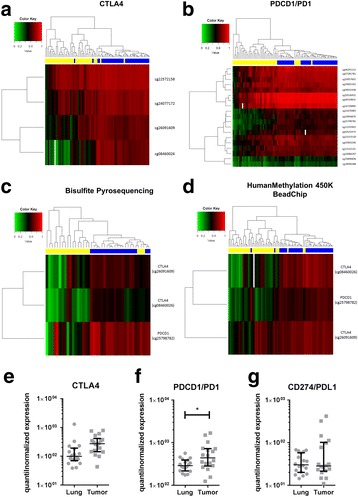
Targeting checkpoint inhibitors using monoclonal antibodies results in significantly better outcome of cancer patients compared to conventional chemotherapy. However, the current companion diagnostics to predict response is so far suboptimal, since they base on more or less reliable immunohistochemical approaches. In order to overcome these limitations, we analyzed epigenetic modifications of PDCD1 (PD1), CD274 (PD-L1), and CTLA4 in NSCLC tissues from 39 patients. Results were correlated with transcriptome data. Significant differences in the CpG-methylation patterns between tumor tissues and matched controls were observed for CTLA4 and PDCD1 (PD1) showing a decreased methylation of these genes compared to matched tumor-free tissues from the same patients. Results were confirmed by bisulfide sequencing in an independent validation cohort. Hypomethylation also resulted in increased expression of these genes as shown by transcriptome data. These epigenetic pathways as a hallmark of NSCLC might be useful to generate more precise diagnostic approaches in the future.
Overview
The claims and statistics of this paper haven’t been checked yet.
Free: it reads the open-access text and checks the first 5 claims that cite a source we can check. Create a free account to check every claim.
Integrity signals
Registry
Cites
Statistics
Figures
Verification
Claims the paper makes
The claims and statistics of this paper haven’t been checked yet.
Free: it reads the open-access text and checks the first 5 claims that cite a source we can check. Create a free account to check every claim.
Claims other papers make about this one
Each is checked against this paper’s own text: does it say what the citing paper says it does?
The source backs part of the claim, not all of it — or backs it for a different population, condition or comparison.
In the citing paper
“However, whether the epigenetic landscape of the tumor cells or T cell exhaustion is contributing to resistance is not well understood, leaving much room for further understanding of how epigenetics can lead to nonresponse to ICIs (108, 109).”
From Immune Checkpoint Inhibitors for the Treatment of Cancer: Clinical Impact and Mechanisms of Response and Resistance (2021) · cites this paper as [108]
Experimental — accuracy not yet measured
Self-check
Percentages, sums and reported differences re-computed from the paper’s own numbers.
The self-check needs the paper’s full text.
Citations
Cites
Chiappinelli, K. B., Strissel, P. L., Desrichard, A., Li, H., Henke, C., Akman, B., Hein, A., Rote, N. S., Cope, L. M., Snyder, A., et al. (2015) · Cell · doi:10.1016/j.cell.2015.07.011 · Cited by 2,022
Ogino, S., Lochhead, P., Chan, A. T., Nishihara, R., Cho, E., Wolpin, B. M., Meyerhardt, J. A., Meissner, A., Schernhammer, E. S., Fuchs, C. S., et al. (2013) · Modern Pathology · doi:10.1038/modpathol.2012.214 · Cited by 212
Marwitz, S., Depner, S., Dvornikov, D., Merkle, R., Szczygieł, M., Müller‐Decker, K., Lucarelli, P., Wäsch, M., Mairbäurl, H., Rabe, K. F., et al. (2016) · Cancer Research · doi:10.1158/0008-5472.can-15-1326 · Cited by 154 · cited 1×
“Transcriptome analysis from human tissue samples was conducted as described elsewhere [4].”
Self-citationFriemel, C., Ammerpohl, O., Gutwein, J., Schmutzler, A. G., Caliebe, A., Kautza, M., von Otte, S., Siebert, R., & Bens, S. (2014) · Fertility and Sterility · doi:10.1016/j.fertnstert.2013.12.054 · Cited by 50 · cited 1×
“described before [3]: cg25798782 (chr2: 242,795,283; forward primer: ttagggagatttaagttagagttag; reverse primer (biotinylated): accacctactcacatccct; sequencing primer: tgtagtggaggttagt), cg08460026 (chr2: 204,732,475; forward primer: atgtgtatatatagaaggtatttgaatag; reverse primer (biotinylated): aatctccacttaattatccaaatc…”
Self-citationGoldmann, T., Kügler, C., Reinmuth, N., Vollmer, E., & Reck, M. (2015) · Annals of Oncology · doi:10.1093/annonc/mdv510 · Cited by 23 · cited 7×
“In order to overcome these limitations, we analyzed epigenetic modifications of PDCD1 (PD1), CD274 (PD-L1), and CTLA4 in NSCLC tissues from 39 patients.”
Self-citationMarwitz, S., Kolarova, J., Reck, M., Reinmuth, N., Kügler, C., Schädlich, I., Haake, A., Zabel, P., Vollmer, E., Siebert, R., et al. (2014) · Laboratory Investigation · doi:10.1038/labinvest.2014.79 · Cited by 17 · cited 1×
“To investigate epigenetic modifications in tumor tissues and matched controls, DNA methylation analysis of HOPE-fixed tissues using HumanMethylation450 BeadChips was performed as described in detail elsewhere [2].”
Self-citation
Cited by
Bagchi, S., Yuan, R., & Engleman, E. G. (2021) · Annual Review of Pathology: Mechanisms of Disease · doi:10.1146/annurev-pathol-042020-042741 · Cited by 2,189
Immune checkpoint inhibitors: recent progress and potential biomarkers
Darvin, P., Toor, S. M., Sasidharan Nair, V., & Elkord, E. (2018) · Experimental & Molecular Medicine · doi:10.1038/s12276-018-0191-1 · Cited by 2,035
Regulatory mechanisms of immune checkpoints PD-L1 and CTLA-4 in cancer
Zhang, H., Dai, Z., Wu, W., Wang, Z., Zhang, N., Zhang, L., Zeng, W.-J., Liu, Z., & Cheng, Q. (2021) · Journal of Experimental & Clinical Cancer Research · doi:10.1186/s13046-021-01987-7 · Cited by 535
Immune checkpoint therapy in liver cancer
Xu, F., Jin, T., Zhu, Y., & Dai, C. (2018) · Journal of Experimental & Clinical Cancer Research · doi:10.1186/s13046-018-0777-4 · Cited by 397
“Recently, epigenetic modifications of the key immune checkpoints including PD-1, PD-L1, and CTLA-4 were analyzed in non-small cell lung cancer tissues from 39 patients [51].”
BackgroundEpigenetic modulation of antitumor immunity for improved cancer immunotherapy
Dai, E., Zhu, Z., Wahed, S., Qu, Z., Storkus, W. J., & Guo, Z. S. (2021) · Molecular Cancer · doi:10.1186/s12943-021-01464-x · Cited by 328
“Abbreviations AML: Acute myeloid leukemia; APC: Antigen presenting cells; CAR-T cells: Chimeric antigen receptor T cells; CTCL: Cutaneous T cell lymphoma; Epi-drugs: Epigenetic drug; EZH2: Enhancer of zeste homolog 2; DAMPs: Danger-associated molecular patterns; DC: Dendritic cells; DNMT: DNA methyltransferase; DNMTi:…”
BackgroundImmune checkpoints in the tumor microenvironment
Toor, S. M., Sasidharan Nair, V., Decock, J., & Elkord, E. (2020) · Seminars in Cancer Biology · doi:10.1016/j.semcancer.2019.06.021 · Cited by 236
Asgarova, A., Asgarov, K., Godet, Y., Peixoto, P., Nadaradjane, A., Boyer-Guittaut, M., Galaine, J., Guenat, D., Mougey, V., Perrard, J., et al. (2018) · OncoImmunology · doi:10.1080/2162402x.2017.1423170 · Cited by 199
“Recently, using array-based analyses, an increase expression of PD1 was also associated with a demethylation of its promoter in NSCLC tumors compared to tumor-free samples.(43) According to previous reports showing that anti-cancer therapies using DNA demethylating agents (DDA) (for a review.”
ResultCirculating tumor cells: from new biological insights to clinical practice
Gu, X., Wei, S., & Lv, X. (2024) · Signal Transduction and Targeted Therapy · doi:10.1038/s41392-024-01938-6 · Cited by 182
Nair, V. S., Salhat, H. E., Taha, R. Z., John, A., Ali, B. R., & Elkord, E. (2018) · Clinical Epigenetics · doi:10.1186/s13148-018-0512-1 · Cited by 168
“Another study showed that the PD-1, CTLA-4, and PD-L1 promoter hypomethylation has a significant impact on the course of NSCLC progression [44].”
BackgroundArmored CAR T-Cells: The Next Chapter in T-Cell Cancer Immunotherapy
Hawkins, E., D’Souza, R. R., & Klampatsa, A. (2021) · Biologics · doi:10.2147/btt.s291768 · Cited by 178
Cancer cell-intrinsic mechanisms driving acquired immune tolerance
Ghorani, E., Swanton, C., & Quezada, S. A. (2023) · Immunity · doi:10.1016/j.immuni.2023.09.004 · Cited by 127
Boyero, L., Sánchez-Gastaldo, A., Alonso, M. D., Noguera-Uclés, J. F., Molina‐Pinelo, S., & Bernabé, R. (2020) · Cancers · doi:10.3390/cancers12123729 · Cited by 112
“Thus, it has been shown that the promoter DNA methylation of PD-1, PD-L1, and CTLA-4 inversely correlates with the expression of these proteins in NSCLCs compared to normal tissues [111,112], as well as in other types of tumors.”
BackgroundRegulation of PD-L1 expression in cancer and clinical implications in immunotherapy.
Ju, X., Zhang, H., Zhou, Z., & Wang, Q. (2020) · PubMed Central · Cited by 135
Saleh, R., Toor, S. M., Nair, V. S., & Elkord, E. (2020) · Frontiers in Immunology · doi:10.3389/fimmu.2020.01469 · Cited by 121
“However, increased expression of PDL1 in NSCLC tumor tissues was not associated with DNA methylation (75).”
BackgroundCTLA4 methylation predicts response to anti–PD-1 and anti–CTLA-4 immunotherapy in melanoma patients
Goltz, D., Gevensleben, H., Vogt, T. J., Dietrich, J., Golletz, C., Bootz, F., Kristiansen, G., Landsberg, J., & Dietrich, D. (2018) · JCI Insight · doi:10.1172/jci.insight.96793 · Cited by 96
Novel Strategies for Cancer Treatment: Highlights from the 55th IACR Annual Conference
Charmsaz, S., Collins, D. M., Perry, A. S., & Prencipe, M. (2019) · Cancers · doi:10.3390/cancers11081125 · Cited by 91
“Interestingly, hypomethylation of the promoter regions of CTLA-4 and PD-1 have been associated with increased expression of these genes in the TME in lung cancer [8].”
BackgroundGenetic and Epigenetic Biomarkers of Immune Checkpoint Blockade Response
Xiao, Q., Nobre, A., Piñeiro, P., Berciano‐Guerrero, M., Alba, E., Cobo, M., Lauschke, V. M., & Barragán, I. (2020) · Journal of Clinical Medicine · doi:10.3390/jcm9010286 · Cited by 84
“01 Array-based CpG-methylation assessment Significant differences in the CpG-methylation patterns between tumor tissues and matched controls were observed [87]”
BackgroundResultFröhlich, A., Loick, S., Bawden, E., Fietz, S., Dietrich, J., Diekmann, E., Saavedra, G., Fröhlich, H., Niebel, D., Sirokay, J. D., et al. (2020) · EBioMedicine · doi:10.1016/j.ebiom.2020.102647 · Cited by 82
“Expression of the immune checkpoint CTLA-4 for example has been shown to correlate inversely with promoter methylation in diverse malignancies, supporting the use of CTLA4 hypomethylation as a biomarker for T cell exhaustion [37,39,50] and for response to immunotherapy [41].”
Gene code CD274/PD-L1 : from molecular basis toward cancer immunotherapy
Fabrizio, F. P., Trombetta, D., Rossi, A., Sparaneo, A., Castellana, S., & Muscarella, L. A. (2018) · Therapeutic Advances in Medical Oncology · doi:10.1177/1758835918815598 · Cited by 76
Molecular, clinicopathological, and immune correlates of LAG3 promoter DNA methylation in melanoma
Fröhlich, A., Sirokay, J. D., Fietz, S., Vogt, T. J., Dietrich, J., Zarbl, R., Florin, M., Kuster, P., Saavedra, G., Valladolid, S. R., et al. (2020) · EBioMedicine · doi:10.1016/j.ebiom.2020.102962 · Cited by 63
“Hypomethylation of the immune checkpoint CTLA4 has already been suggested as a biomarker for T cell exhaustion [34] and for response to immunotherapy [35].”
BackgroundProgress Toward Identifying Exact Proxies for Predicting Response to Immunotherapies
Filipović, A., Miller, G., & Bolen, J. B. (2020) · Frontiers in Cell and Developmental Biology · doi:10.3389/fcell.2020.00155 · Cited by 64
“Epigenetic studies in lung cancer have shown that promoter regions of the CTLA-4, PD1, and PDL-1 genes can be hypomethylated, which in turn associates with upregulated expression of these genes in the tumor microenvironment (Marwitz et al., 2017).”
BackgroundCatacchio, I., Scattone, A., Silvestris, N., & Mangia, A. (2018) · Translational Oncology · doi:10.1016/j.tranon.2018.04.006 · Cited by 64
“analyzed the epigenetic modification of PDC1 (PD1), CD274 (PD-L1) andCTLA4 inNSCLC tissue from 39 patients [85].”
BackgroundEpigenetic regulators of programmed death-ligand 1 expression in human cancers
Kumar, S., & Sharawat, S. K. (2018) · Translational research · doi:10.1016/j.trsl.2018.05.011 · Cited by 57
Zhu, H., Hu, X., Feng, S., Jian, Z., Xu, X., Gu, L., & Xiong, X. (2022) · Oxidative Medicine and Cellular Longevity · doi:10.1155/2022/6419695 · Cited by 46
“We assumed that among tumors showing a positive correlation between COL5A1 expression and TMB, patients with tumors presenting high COL5A1 expression and high TMB and MSI may experience a better sensitivity to ICB.”
BackgroundInfluentialAssociation of PD-1 and PD-L1 Genetic Polymorphyisms with Type 1 Diabetes Susceptibility
Qian, C., Guo, H., Chen, X., Shi, A., Li, S., Wang, X., Pan, J., & Fang, C. (2018) · Journal of Diabetes Research · doi:10.1155/2018/1614683 · Cited by 43
High IGKC-Expressing Intratumoral Plasma Cells Predict Response to Immune Checkpoint Blockade
Onieva, J. L., Xiao, Q., Berciano‐Guerrero, M., Laborda-Illanes, A., de Andrea, C., Cháves, P., Piñeiro, P., Garrido-Aranda, A., Gallego, E., Sojo, B., et al. (2022) · International Journal of Molecular Sciences · doi:10.3390/ijms23169124 · Cited by 31
Chen, H. X., Song, M., Maecker, H. T., Gnjatic, S., Patton, D. R., Lee, J. J., Adam, S. J., Moravec, R., Liu, X. S., Cerami, E. G., et al. (2021) · Clinical Cancer Research · doi:10.1158/1078-0432.ccr-20-3241 · Cited by 29
“ATAC-seq analysis can be implemented in trials studying drugs that target DNA methylation or that work via other type of epigenetic reprogramming (29, 30).”
MethodCan CpG methylation serve as surrogate markers for immune infiltration in cancer?
Bacolod, M. D., Barany, F., & Fisher, P. B. (2019) · Advances in cancer research · doi:10.1016/bs.acr.2019.03.007 · Cited by 33
Understanding and overcoming resistance to immunotherapy in genitourinary cancers
Evans, S. T., Jani, Y. C., Jansen, C. S., Yıldırım, A., Kalemoglu, E., & Bilen, M. A. (2024) · Cancer Biology & Therapy · doi:10.1080/15384047.2024.2342599 · Cited by 27
“90 Mutations and epigenetic silencing within the interferon receptor signaling pathway have been shown to negate the anti-tumor effects of IFN-γ, demonstrating how the tumor can escape immune surveillance.”
BackgroundHigh Expression of CKS2 Predicts Adverse Outcomes: A Potential Therapeutic Target for Glioma
Yu, K., Ji, Y., Liu, M., Shen, F., Xiong, X., Gu, L., Lu, T., Ye, Y., Feng, S., & He, J. (2022) · Frontiers in Immunology · doi:10.3389/fimmu.2022.881453 · Cited by 24
“Importantly, we also investigated the association between CKS2 and immune checkpoints, in which SIGLEC15, TIGIT, CTLA4, CD274, HAVCR2, LAG3, PDCD1, and PDCD1LG2 were all positively correlated with CKS2, and these markers were also associated with ICB response (48).”
BackgroundPrimary and Acquired Resistance against Immune Check Inhibitors in Non-Small Cell Lung Cancer
Sun, Q., Wei, X., Wang, Z., Zhu, Y. Y., Zhao, W., & Dong, Y. (2022) · Cancers · doi:10.3390/cancers14143294 · Cited by 24
“Hypomethylation of CTLA-4 and PD-1 in tumor tissues compared with matched controls was reported in NSCLC patients, leading to high expression [61].”
ResultTargeting cytotoxic lymphocyte antigen 4 (CTLA-4) in breast cancer
Jama, M., Tabana, Y., & Barakat, K. (2024) · European journal of medical research · doi:10.1186/s40001-024-01901-9 · Cited by 23
“The expression of CTLA-4, PD-1, and PD-L1 is enhanced by DNA hypo-methylating agents [63].”
BackgroundTumor immune checkpoints and their associated inhibitors
Gao, Z., Ling, X., Shi, C., Wang, Y., & Lin, A. (2022) · Journal of Zhejiang University SCIENCE B · doi:10.1631/jzus.b2200195 · Cited by 21
Epigenetic Drugs and Their Immune Modulating Potential in Cancers
Liang, Y., & Turcan, Ş. (2022) · Biomedicines · doi:10.3390/biomedicines10020211 · Cited by 21
“In non-small cell lung cancer, analysis of CpG-methylation assays and bisulfite sequencing revealed that CTLA-4 and PD1 methylation levels were reduced compared to normal tissues and epigenetic changes were inversely correlated with gene expression [119].”
BackgroundExosomes as a Therapeutic Strategy in Cancer: Potential Roles as Drug Carriers and Immune Modulators
Abedi, A., Moghaddam, M. M., Kachuei, R., & Fooladi, A. A. I. (2024) · Biochimica et Biophysica Acta (BBA) - Reviews on Cancer · doi:10.1016/j.bbcan.2024.189238 · Cited by 22
Immune checkpoint inhibitors and diabetes: Mechanisms and predictors
Youssef, N., Noureldein, M. H., Daoud, G., & Eid, A. A. (2020) · Diabetes & Metabolism · doi:10.1016/j.diabet.2020.09.003 · Cited by 20
Bacolod, M. D., Barany, F., Pilones, K. A., Fisher, P. B., & de Castro, R. (2019) · Advances in cancer research · doi:10.1016/bs.acr.2019.01.003 · Cited by 23
Nitschkowski, D., Marwitz, S., Kotanidou, S. A., Reck, M., Kügler, C., Rabe, K. F., Ammerpohl, O., & Goldmann, T. (2019) · Clinical Epigenetics · doi:10.1186/s13148-019-0770-6 · Cited by 19
“analyzed by transcriptome analysis as recently shown [6].”
Self-citationde Vos, L., Cano, T. M. C., Zarbl, R., Klümper, N., Ralser, D. J., Franzen, A., Herr, E., Gabrielpillai, J., Vogt, T. J., Dietrich, J., et al. (2022) · Journal of Immunotherapy · doi:10.1097/cji.0000000000000429 · Cited by 24
Niu, D., Chen, Y., Mi, H., Mo, Z., & Pang, G. (2022) · Frontiers in Genetics · doi:10.3389/fgene.2022.974416 · Cited by 19
“epigenetic signatures (Marwitz et al., 2017), have been intensively studied individually or in combination to identify more specific predictors of ICB efficacy, indicating unmet research and clinical need.”
BackgroundPrognostic Value and Immunological Role of KIFC1 in Hepatocellular Carcinoma
Li, D., Yu, T., Han, J., Xu, X., Wu, J., Song, W., Liu, G., Zhu, H., & Zeng, Z. R. (2022) · Frontiers in Molecular Biosciences · doi:10.3389/fmolb.2021.799651 · Cited by 17
“Moreover, KIFC1 may be involved in the LIHC progression partially through immune evasion and serve as a predictor of ICB therapies and chemotherapies.”
BackgroundInfluentialMichaelidou, K., Agelaki, S., & Mavridis, K. (2020) · Expert Review of Molecular Diagnostics · doi:10.1080/14737159.2020.1724785 · Cited by 17
“that there is a decreased level of CpG methylation in PD-1 and CTLA4 genes in lung tumor tissues compared to controls [89].”
BackgroundParra, E. R., Jiang, M., Rúgolo, J. R. M., Yaegashi, L. B., Prieto, T. G., Farhat, C., de Sá, V. K., Nagai, M. A., de Lima, V. C. C., Takagaki, T. Y., et al. (2020) · Archives of Pathology & Laboratory Medicine · doi:10.5858/arpa.2019-0419-oa · Cited by 18
Kumar, S., Sarthi, P., Mani, I., Ashraf, M. U., Kang, M.-H., Kumar, V., & Bae, Y. (2021) · Cells · doi:10.3390/cells10092250 · Cited by 20
“DNA methylation up‐regulates PD‐1 & CTLA4 in NSCLC PD‐1 (PDCD‐1) CTLA4 Hypo‐methylation increases PD‐1, CTLA4 expression in NSCLC Selective DNA (5hmC) inhibitors [19]”
miR ‐493 by regulating of c‐Jun targets Wnt5a/ PD‐L1 ‐inducing esophageal cancer cell development
Bian, W., Li, Y., Zhu, H., Gao, S., Niu, R., Wang, C., Zhang, H., Qin, X., & Li, S. (2021) · Thoracic Cancer · doi:10.1111/1759-7714.13950 · Cited by 15
“10 Immune checkpoint inhibitors are one of the promising treatments for cancer, especially the drugs targeting either the cytotoxic T-lymphocyte-associated protein 4 (CTLA-4) or the programmed death 1 (PD1), yet the mechanisms are still not clear [36-38].”
BackgroundHarnessing the epigenome to boost immunotherapy response in non-small cell lung cancer patients
Γκουντάκος, Α., Delfino, P., Lawlor, R. T., Scarpa, A., Corbo, V., & Bria, E. (2021) · Therapeutic Advances in Medical Oncology · doi:10.1177/17588359211006947 · Cited by 15
DNA hypomethylation mediates immune response in pan-cancer
Zhang, C., Sheng, Q., Zhao, N., Huang, S., & Zhao, Y. (2023) · Epigenetics · doi:10.1080/15592294.2023.2192894 · Cited by 14
“There is evidence that inflammation is one of the main causes of T cell exhaustion, so DNA methylation may also contribute to the exhaustion process [65].”
BackgroundRethinking Immune Check Point Inhibitors Use in Liver Transplantation: Implications and Resistance
Ortiz, V., & Loeuillard, E. J. (2024) · Cellular and Molecular Gastroenterology and Hepatology · doi:10.1016/j.jcmgh.2024.101407 · Cited by 14
Epigenetics, a key player of immunotherapy resistance
Peixoto, P., Renaude, E., Boyer‐Guittaut, M., & Hervouet, É. (2018) · Cancer Drug Resistance · doi:10.20517/cdr.2018.17 · Cited by 11
“Similar results showed an inverse correlation between promoter DNA methylation of PD1, PD-L1, CTLA4 and expression of these proteins in NSCLCs compared to normal tissues([33,34]).”
ResultRe-Sensitizing Tumor Cells to Cancer Drugs with Epigenetic Regulators
Rauscher, S., Greil, R., & Geisberger, R. (2021) · Current Cancer Drug Targets · doi:10.2174/1568009620666210108102723 · Cited by 11
The role of kinesin superfamily proteins in hepatocellular carcinoma
Ghnim, Z. S., Mahdi, M. S., Ballal, S., Chahar, M., Verma, R., Al-Nuaimi, A. M. A., Kumar, M., Al-Hussein, R. K. A., Adil, M., & Jawad, M. J. (2024) · Medical Oncology · doi:10.1007/s12032-024-02497-0 · Cited by 10
“The relationship between KIFC1 and immunological checkpoints, such as SIGLEC15, TIGIT, CTLA4, CD274, HAVCR2, LAG3, PDCD1, and PDCD1LG2, has been found to be linked to the response of immune checkpoint blockade (ICB) [87, 88].”
Relevance of PD-L1 Non-Coding Polymorphisms on the Prognosis of a Genetically Admixed NSCLC Cohort
Rúgolo, J. R. M., Prieto, T. G., Fabro, A. T., Parra, E. R., de Sá, V. K., Baldavira, C. M., Rainho, C. A., Castelli, E. C., Farhat, C., Takagaki, T. Y., et al. (2021) · Pharmacogenomics and Personalized Medicine · doi:10.2147/pgpm.s286717 · Cited by 11
Mäki‐Nevala, S., Ukwattage, S., Wirta, E., Ahtiainen, M., Ristimaki, A. P., Seppälä, T. T., Lepistö, A., Mecklin, J., & Peltomäki, P. (2021) · Biomolecules · doi:10.3390/biom11101440 · Cited by 7
“In tumors, increased [37] and decreased [38] methylation relative to the correspond‐ ing normal tissues has been noted, but the difference may not always be marked [38,39] in agreement with our observations (Figures 4 and 5).”
ResultPan-Cancer Methylated Dysregulation of Long Non-coding RNAs Reveals Epigenetic Biomarkers
Zhao, N., Guo, M., Zhang, C., Wang, C., & Wang, K. (2022) · Frontiers in Cell and Developmental Biology · doi:10.3389/fcell.2022.882698 · Cited by 10
“Methylated research in cancer patients has been shown to improve and maintain the efficiency of cancer treatment (Pauken et al., 2016; Sen et al., 2016; Marwitz et al., 2017).”
BackgroundFabrizio, F. P., Castellana, S., Centra, F., Sparaneo, A., Mastroianno, M., Mazza, T., Coco, M., Trombetta, D., Cingolani, N., Centonza, A., et al. (2022) · Frontiers in Oncology · doi:10.3389/fonc.2022.968804 · Cited by 7
Pulmonary Toxicities of Immune Check Point Inhibitors in the Management of Cancer: Mini Review
Jayakrishnan, B., Al-Moundhri, M. S., Burney, I. A., Al-Hashami, Z. S., & Al-Baimani, K. S. (2022) · Advances in respiratory medicine · doi:10.5603/arm.84782 · Cited by 7
Behrouzfar, K., Burton, K., Mutsaers, S. E., Morahan, G., Lake, R., & Fisher, S. A. (2021) · Frontiers in Oncology · doi:10.3389/fonc.2021.679609 · Cited by 6
“Additionally, epigenetic alterations of tissues derived from NSCLC patients revealed the upregulation of CTLA4, PDCD1 via hypomethylation in tumors versus non-tumor tissues (58).”
BackgroundCompanion Diagnostics in Clinical Therapy: Current Applications and Future Directions
Wu, Y., Xue, R., Luo, X., Liao, J., Zhang, Z., Deng, J., Liu, T., Li, X., Chen, Z., & Yin, M. (2026) · MedComm · doi:10.1002/mco2.70638 · Cited by 6
Immunomodulation and Immunotherapy for Patients with Prostate Cancer: An Up-to-Date Review
Murray, N. P. (2025) · Biomedicines · doi:10.3390/biomedicines13051179 · Cited by 4
“Similarly, TGF-beta has been associated with a decreased efficacy of anti-PD1 immunotherapy, increasing cancer-associated fibroblasts and as previously mentioned, this leads to a decreased infiltration of the tumour by cytotoxic T-cells [144].”
Immunomodulatory gene polymorphisms in non-small cell lung carcinoma susceptibility and survival
Dewarajan, V., Elsayed, N., Foo, J. B., Tor, Y. S., Low, S. S., & Chai, W. S. (2024) · Heliyon · doi:10.1016/j.heliyon.2024.e33003 · Cited by 2
“Tumour cells can upre-gulate immune checkpoints expression [8] and downregulate surface Major Histocompatibility Complex (MHC) class I/tumour antigen expression, in particular NSCLC tumour cells, allowing these cells to evade the immune system [9].”
BackgroundKuempers, C., Schnepf, K., Marwitz, S., Watermann, C., Scheel, A. H., Fischer, R. N., Ammerpohl, O., Perner, S., Drömann, D., & Goldmann, T. (2024) · PubMed · doi:10.14670/hh-18-731 · Cited by 4
“Of the 32 aforementioned patients, 18 (10 adNSCLC, 8 sqNSCLC) were additionally analyzed by transcriptome analysis as described elsewhere (Marwitz et al. , 2017) .”
MethodSelf-citationCirculating Tumor Cells in the Blood Microenvironment: Survival Mechanisms and Metastatic Potential
Kim, D. G., Sung, J. Y., & Kim, Y.-N. (2026) · Innovations in Acupuncture and Medicine · doi:10.1186/s44424-026-00056-0 · Cited by 1
“Indeed, several cancer models, such as lung and breast cancer, have shown increased expression of CTLA-4, mediated by epigenetic modifications [116, 117].”
Rúgolo, J. R. M., Prieto, T. G., Fabro, A. T., Cuentas, E. P., de Sá, V. K., Baldavira, C. M., Rainho, C. A., Castelli, E. C., Farhat, C., Takagaki, T. Y., et al. (2020) · doi:10.21203/rs.3.rs-40075/v1
Pasello, G., Felley‐Bosco, E., & Remon, J. (2022) · Frontiers research topics · doi:10.3389/978-2-88974-818-1
Drug Resistance in Lung Cancer
Colarusso, C., Terlizzi, M., Pinto, A., & Sorrentino, R. (2022) · Interdisciplinary cancer research · doi:10.1007/16833_2022_62
Rúgolo, J. R. M. (2023) · Digital Library of Theses and Dissertations (Universidade de São Paulo) · doi:10.11606/t.5.2023.tde-09052023-120416
The Immunoradiotherapy in Nasopharyngeal Carcinoma
Miao, J., Xiang, C., & Liu, C. (2025) · Springer eBooks · doi:10.1007/978-981-96-3659-4_6
Genetic and Epigenetic Indicators Predicting Response to Immune Checkpoint Inhibitors
Yang, J., Wang, B., Sun, Q., & Cai, D. (2025) · Bulletin of pioneering researches of medical and clinical science · doi:10.51847/jv5favsxwc
TIGIT engagement impairs antiviral effector functions of CD8⁺ T cells from people living with HIV
Ghasemi, N. (2024) · Memorial University Research Repository (Memorial University) · doi:10.48336/60pd-tg67 · Cited by 1
Additional file 1 of Regulatory mechanisms of immune checkpoints PD-L1 and CTLA-4 in cancer
Zhang, H., Dai, Z., Wu, W., Wang, Z., Zhang, N., Zhang, L., Zeng, W.-J., Liu, Z., & Cheng, Q. (2021) · Figshare · doi:10.6084/m9.figshare.14737077
Genetic and Epigenetic Regulation of Immune Checkpoints
Tayebi, L., & Abdolmaleki, M. (2026) · Springer eBooks · doi:10.1007/978-981-95-8026-2_3
Metadata
- Authors
- Marwitz, S., Scheufele, S., Perner, S., Reck, M., Ammerpohl, O., & Goldmann, T.
- Affiliations
- German Center for Lung Research (DE)
- University of Lübeck (DE)
- Christian-Albrechts-Universität zu Kiel (DE)
- Corresponding author
- Goldmann, Torsten
- Venue
- Clinical Epigenetics
- Published
- 2017-05-11
- Volume
- 9
- Issue
- 1
- Pages
- 51-51
- ISSN
- 1868-7075 (ISSN-L)
- 1868-7083
- PMC
- PMC5426039
- OpenAlex
- W2613059675
- Cited by
- 68
- References
- 6
- Citations by year
- 2026: 2 · 2025: 3 · 2024: 7 · 2023: 3 · 2022: 14 · 2021: 12 · 2020: 12 · 2019: 5 · 2018: 10
- FWCI
- 3.02
- Type
- journal article
- Language
- en
- Open access
- gold
- doi.org
- Licence
- cc-by
- Locations
- Clinical Epigenetics (publishedVersion, cc-by)
- Europe PMC (PubMed Central) (publishedVersion, cc-by)
- PubMed Central (publishedVersion, cc-by)
- PubMed (publishedVersion)
- DOAJ (DOAJ: Directory of Open Access Journals) (submittedVersion)
- Funders
- Deutsches Zentrum für Lungenforschung (82DZL001A5)
- German Ministry for Education and Research (01EY1103)
- Topics
- Life Sciences › Biochemistry, Genetics and Molecular Biology › Molecular Biology › Epigenetics and DNA Methylation
- Health Sciences › Medicine › Oncology › Cancer Immunotherapy and Biomarkers
- Life Sciences › Biochemistry, Genetics and Molecular Biology › Cancer Research › Cancer-related molecular mechanisms research
- Keywords
- non-small cell lung cancer, CTLA-4, PDCD1, PD-L1, immune checkpoint genes, DNA methylation, CpG methylation, gene hypomethylation, gene expression, immune checkpoint inhibitors, companion diagnostics, tumor tissue
- MeSH terms
- Carcinoma, Non-Small-Cell Lung, Female, Humans, Lung Neoplasms, Male, Cohort Studies, Up-Regulation, Gene Expression Regulation, Neoplastic, Sequence Analysis, RNA, CpG Islands, DNA Methylation, Gene Expression Profiling, Epigenesis, Genetic, CTLA-4 Antigen, Programmed Cell Death 1 Receptor
About these checks
Registry, retraction, Cites and statistics results are computed, not judged, with one exception: a printed reference that no index lists is read once by a model before it counts as a citation error. Claims are extracted by a model and kept only when their quote appears verbatim in the text; each cited source is then checked, with a model’s help, for whether it says what the claim relies on. Those verdicts can be wrong — read the claim’s quote and the cited source before relying on one.
Statistics and arithmetic are recomputed, not judged.
Confidence bands are shown only for fields calibrated on our annotated test set. None is calibrated yet, so no band is shown.
What counts as a claim ›How we measure confidence ›How we check this ›
Are you an author, or do you see a problem with this page? Request a review
Data sources
Bibliographic data: Semantic Scholar, OpenAlex, Crossref.
Contains information from the Semantic Scholar Academic Graph Datasets, made available under the ODC Attribution License (ODC-BY 1.0).
Semantic Scholar’s data is described in: Kinney, R., et al. (2023). The Semantic Scholar Open Data Platform. arXiv:2301.10140.
