

HLA-DR expression in clinical-grade bone marrow-derived multipotent mesenchymal stromal cells: a two-site study
Open accessThe DOI matches its Crossref record; 24 of the 24 references it cites were found in a registry or an index.
Abstract
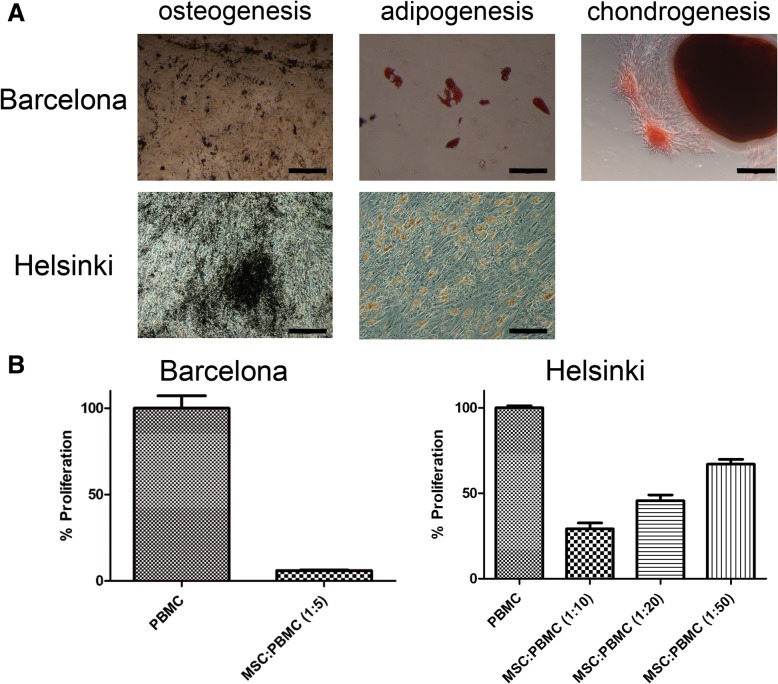
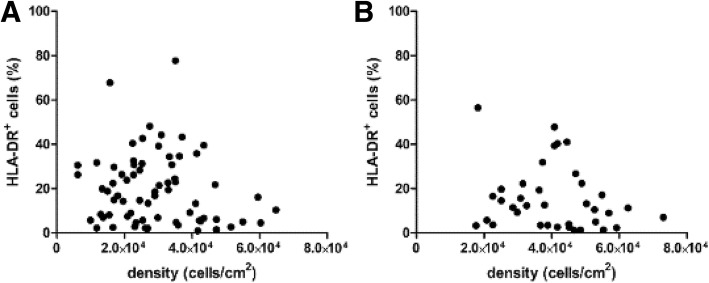
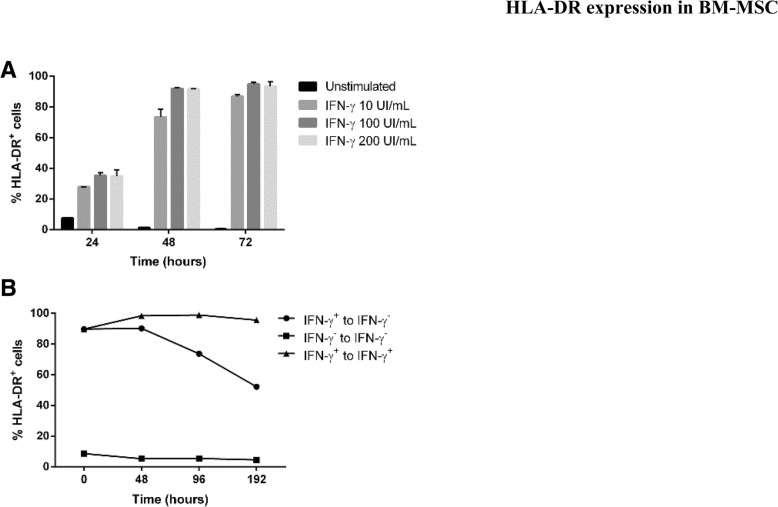
BACKGROUND: Contrary to the minimal criteria proposed by the International Society for Cell and Gene Therapy for defining multipotent mesenchymal stromal cells (MSC), human leukocyte antigen (HLA)-DR expression is largely unpredictable in ex vivo-expanded clinical-grade cultures. Although activation of MSC in culture does not appear to affect their functionality, a large study investigating the impact of HLA-DR expression on cell identity and potency is still missing in the literature. METHODS: A retrospective analysis of HLA-DR expression in 130 clinical batches of bone marrow (BM)-MSC from two independent Good Manufacturing Practice-compliant production facilities was performed in order to identify the consequences on critical quality attributes as well as potential activation cues and dynamics of MSC activation in culture. RESULTS: cells in culture were confirmed to maintain fibroblastic morphology, mesenchymal phenotype identity, multipotency in vitro, and immunomodulatory capacity. Interestingly, the use of either human sera or platelet lysate supplements resulted in similar results. CONCLUSIONS: HLA-DR expression should be considered informative rather than as a criterion to define MSC. Further work is still required to understand the impact of HLA-DR expression in the context of product specifications on BM-MSC qualities for clinical use in specific indications.
Overview
The claims and statistics of this paper haven’t been checked yet.
Free: it reads the open-access text and checks the first 5 claims that cite a source we can check. Create a free account to check every claim.
Integrity signals
Registry
Cites
Statistics
Figures
Verification
Claims the paper makes
The claims and statistics of this paper haven’t been checked yet.
Free: it reads the open-access text and checks the first 5 claims that cite a source we can check. Create a free account to check every claim.
Claims other papers make about this one
Each is checked against this paper’s own text: does it say what the citing paper says it does?
The cited source says what the claim attributes to it.
In the citing paper
“Similar findings have been previously reported by Grau-Vorster et al. who revealed variability in BM-MSC preparations for clinical applications, concluding that the absence or presence of HLA-DR does not have an impact on the overall properties of the cells [34].”
Self-check
Percentages, sums and reported differences re-computed from the paper’s own numbers.
The self-check needs the paper’s full text.
Citations
Cites
Dominici, M., Le Blanc, K., Mueller, I., Slaper-Cortenbach, I., Marini, F. C., Krause, D. S., Deans, R. J., Keating, A., Prockop, D. J., & Horwitz, E. M. (2006) · Cytotherapy · doi:10.1080/14653240600855905 · Cited by 17,766
Mesenchymal Stromal Cells: Clinical Challenges and Therapeutic Opportunities
Galipeau, J., & Sensébé, L. (2018) · Cell Stem Cell · doi:10.1016/j.stem.2018.05.004 · Cited by 1,819
Le Blanc, K., Tammik, C., Rosendahl, K., Zetterberg, E., & Ringdén, O. (2003) · Experimental Hematology · doi:10.1016/s0301-472x(03)00110-3 · Cited by 1,623
Mesenchymal stem cells: environmentally responsive therapeutics for regenerative medicine
Murphy, M. B., Moncivais, K., & Caplan, A. I. (2013) · Experimental & Molecular Medicine · doi:10.1038/emm.2013.94 · Cited by 1,231
Mesenchymal stem cells avoid allogeneic rejection
Ryan, J. M., Barry, F. P., Murphy, J. M., & Mahon, B. P. (2005) · Journal of Inflammation · doi:10.1186/1476-9255-2-8 · Cited by 714
Apoptosis in mesenchymal stromal cells induces in vivo recipient-mediated immunomodulation
Galleu, A., Riffo-Vasquez, Y., Trento, C., Lomas, C., Dolcetti, L., Cheung, T. S., von Bonin, M., Barbieri, L., Halai, K., Ward, S., et al. (2017) · Science Translational Medicine · doi:10.1126/scitranslmed.aam7828 · Cited by 646
IFN‐γ activation of mesenchymal stem cells for treatment and prevention of graft versus host disease
Polchert, D., Sobinsky, J., Douglas, G., Kidd, M., Moadsiri, A., Reina, E., Genrich, K., Mehrotra, S., Setty, S., Smith, B., et al. (2008) · European Journal of Immunology · doi:10.1002/eji.200738129 · Cited by 581
MSC-Based Product Characterization for Clinical Trials: An FDA Perspective
Mendicino, M., Bailey, A. M., Wonnacott, K., Puri, R. K., & Bauer, S. R. (2014) · Cell Stem Cell · doi:10.1016/j.stem.2014.01.013 · Cited by 497
Activation, homing, and role of the mesenchymal stem cells in the inflammatory environment
Zachar, L., Bačenková, D., & Rosocha, J. (2016) · Journal of Inflammation Research · doi:10.2147/jir.s121994 · Cited by 191
Cell, tissue and gene products with marketing authorization in 2018 worldwide
Cuende, N., RASKO, J. E. J., KOH, M. B. C., DOMINICI, M., & IKONOMOU, L. (2018) · Cytotherapy · doi:10.1016/j.jcyt.2018.09.010 · Cited by 111
Cited by
Fričová, D., Korchak, J. A., & Zubair, A. C. (2020) · npj Regenerative Medicine · doi:10.1038/s41536-020-00106-y · Cited by 74
Guadix, J. A., López-Beas, J., Clares, B., Soriano-Ruiz, J. L., Zugaza, J. L., & Gálvez-Martín, P. (2019) · Pharmaceutics · doi:10.3390/pharmaceutics11110552 · Cited by 66
Gromolak, S., Krawczenko, A., Antończyk, A., Buczak, K., Kiełbowicz, Z., & Klimczak, A. (2020) · International Journal of Molecular Sciences · doi:10.3390/ijms21249726 · Cited by 65
“They reported that the multilineage differentiation and immunomodulatory potential of MSCs was independent of their HLA DR expression level [41].”
BackgroundCalcat-i-Cervera, S., Rendra, E., Scaccia, E., Amadeo, F., Hanson, V., Wilm, B., Murray, P., O’Brien, T., Taylor, A., & Bieback, K. (2023) · Stem Cell Research & Therapy · doi:10.1186/s13287-023-03352-1 · Cited by 56
“who revealed variability in BM-MSC preparations for clinical applications, concluding that the absence or presence of HLA-DR does not have an impact on the overall properties of the cells [34].”
BackgroundImmunogenicity of mesenchymal stromal/stem cells
Chen, W., Lv, L., Chen, N., & Cui, E. (2023) · Scandinavian Journal of Immunology · doi:10.1111/sji.13267 · Cited by 58
Mesenchymal Stem Cell-Mediated Mitochondrial Transfer: a Therapeutic Approach for Ischemic Stroke
Lü, M., Guo, J., Wu, B., Zhou, Y., Wu, M., Farzaneh, M., & Khoshnam, S. E. (2020) · Translational Stroke Research · doi:10.1007/s12975-020-00853-6 · Cited by 46
“to the International Society of Cell Therapy (ISCT) criteria, MSCs can attach to plastic surfaces and express a set of cell surface markers (cluster of differentiation; CD90, CD105, and CD73), but do not express human leukocyte antigen (HLA)DR, CD11b or CD14, CD19 or CD79α, CD34, and CD45 [116, 117].”
BackgroundProgress of Mesenchymal Stem Cell-Derived Exosomes in Tissue Repair
Zhao, G., Ge, Y., Zhang, C., Zhang, L., Xu, J., Qi, L., & Li, W. (2020) · Current Pharmaceutical Design · doi:10.2174/1381612826666200420144805 · Cited by 43
Review of the potential of mesenchymal stem cells for the treatment of infectious diseases
Sharma, A., Chakraborty, A., & Jaganathan, B. G. (2021) · World Journal of Stem Cells · doi:10.4252/wjsc.v13.i6.568 · Cited by 39
Influence of age on stem cells depends on the sex of the bone marrow donor
Selle, M., Koch, J. D., Ongsiek, A., Ulbrich, L., Ye, W., Jiang, Z., Krettek, C., Neunaber, C., & Noack, S. (2022) · Journal of Cellular and Molecular Medicine · doi:10.1111/jcmm.17201 · Cited by 48
Wen, Y., Ho, Y.-C., Lee, Y.-C., Ding, D., Liu, P., & Tsai, R. (2021) · International Journal of Molecular Sciences · doi:10.3390/ijms22042117 · Cited by 37
“Therefore, they suggested that the use of HLA-DR to be a negative marker of MSC does not provide any additional value to quality control panels [35].”
BackgroundMesenchymal Stromal Cell Immunology for Efficient and Safe Treatment of Osteoarthritis
Najar, M., Martel‐Pelletier, J., Pelletier, J., & Fahmi, H. (2020) · Frontiers in Cell and Developmental Biology · doi:10.3389/fcell.2020.567813 · Cited by 43
“However, MScs may express these molecules during cell expansion (Grau-Vorster et al., 2019) and thus fail to meet all the ISCT’s requirements for MSCs.”
BackgroundMedia matters: culture medium-dependent hypervariable phenotype of mesenchymal stromal cells
Fitzgerald, J. C., Shaw, G., Murphy, J. M., & Barry, F. (2023) · Stem Cell Research & Therapy · doi:10.1186/s13287-023-03589-w · Cited by 28
“Although not observed here, other studies have reported elevated HLA-DR expression in clinical batches of MSCs expanded in PL [52].”
ResultMarote, A., Santos, D. J., Mendes-Pinheiro, B., Serre-Miranda, C., Anjo, S. I., Vieira, J., Ferreira-Antunes, F., Correia, J. S., Borges-Pereira, C., Pinho, A. G., et al. (2022) · Stem Cell Reviews and Reports · doi:10.1007/s12015-022-10453-6 · Cited by 31
Banavar, S. R., Rawal, S. Y., Paterson, I. C., Gurbind, S., Davamani, F. A., Khoo, S. P., & Tan, E. L. (2020) · The Saudi Dental Journal · doi:10.1016/j.sdentj.2020.04.007 · Cited by 23
Liêm, N. T., Dam, P. T. M., Nguyen, H.-P., Nguyen, T. S., To, H. M., Ba, H. N., Luu, N. A., & Hoang, D. M. (2021) · Stem Cell Reviews and Reports · doi:10.1007/s12015-021-10196-w · Cited by 29
Autologous mesenchymal stem cells offer a new paradigm for salivary gland regeneration
Marinkovic, M., Tran, O. N., Wang, H., Azees, P. A. A., Dean, D. D., Chen, X., & Yeh, C. (2023) · International Journal of Oral Science · doi:10.1038/s41368-023-00224-5 · Cited by 25
Cooper, T. T., Sherman, S. E., Bell, G. I., Ma, J., Kuljanin, M., Jose, S. E., Lajoie, G., & Hess, D. A. (2020) · Stem Cells · doi:10.1002/stem.3143 · Cited by 23
Summers, B. S., Broome, S. T., Pang, T. W. R., Mundell, H. D., Belic, N. K., Tom, N., Ng, M. L., Yap, M. L., Sen, M. K., Sedaghat, S., et al. (2024) · International Journal of Tryptophan Research · doi:10.1177/11786469241248287 · Cited by 30
“204 While lack of HLA-DR was included as a marker of MSCs, it was expressed when stimulated, such as by IFN-γ .”
BackgroundMareschi, K., Marini, E., Niclot, A. G. S. B., Barone, M., Pinnetta, G., Adamini, A., Spadea, M., Labanca, L., Lucania, G., Ferrero, I., et al. (2022) · International Journal of Molecular Sciences · doi:10.3390/ijms23063234 · Cited by 22
“Contrary to the minimal criteria proposed by the International Society for Cell and Gene Therapy for defining multipotent mesenchymal stromal cells (MSC), HLA-DR expression was analysed and used only for informative purposes but not for product release because it is largely unpredictable in ex vivo-expanded clinical-g…”
ResultSuliman, S., Ali, H. R. W., Karlsen, T. A., Amiaud, J., Mohamed‐Ahmed, S., Layrolle, P., Costea, D. E., Brinchmann, J. E., & Mustafa, K. (2019) · Scientific Reports · doi:10.1038/s41598-019-52442-9 · Cited by 18
Sun, C., Zhang, K., Yue, J., Meng, S., & Zhang, X. (2021) · Stem Cell Research & Therapy · doi:10.1186/s13287-020-02121-8 · Cited by 21
Wang, J., Zhou, Y., Donohoe, E., Canning, A., Moosavizadeh, S., Ryan, A. E., & Ritter, T. (2024) · Stem Cells · doi:10.1093/stmcls/sxae053 · Cited by 14
Korpershoek, J. V., Rikkers, M., de Windt, T. S., Tryfonidou, M. A., Saris, D. B. F., & Vonk, L. A. (2021) · International Journal of Molecular Sciences · doi:10.3390/ijms22168614 · Cited by 21
“Keywords: meniscus progenitors; MSCs; osteoarthritis; tissue-engineering regeneration”
BackgroundInfluentialDam, P. T. M., Hoang, V. T., Bui, H. T. H., Hang, L. M., Hoang, D. M., Nguyen, H.-P., Lien, H. T., Tran, H. T. T., Nguyen, X., & Thanh, L. N. (2021) · Stem Cell Reviews and Reports · doi:10.1007/s12015-021-10242-7 · Cited by 17
“Previous reports suggested that the HLA-DR overexpression on BMMSCs did not change their identity and potency [42, 43].”
BackgroundHyväri, L., Vanhatupa, S., Ojansivu, M., Kelloniemi, M., Pakarinen, T.-K., Hupa, L., & Miettinen, S. (2023) · Cells · doi:10.3390/cells12020224 · Cited by 14
Franco, R. A., McKenna, E., Shajib, M. S., Guillesser, B., Robey, P. G., Crawford, R., Doran, M. R., & Futrega, K. (2023) · Cells · doi:10.3390/cells13010037 · Cited by 14
“Previous studies have noted a similar expression of HLA-DR in clinical-grade BMSC, and the authors suggest that HLA-DR expression should be considered informative rather than as a criterion to define MSC [37].”
ResultHoang, D. M., Nguyen, Q. T., Phan, T. T. K., Ngo, A. T., Pham, P. T., Bach, T. Q., Le, P. T.-B., Bui, H. T. P., & Thanh, L. N. (2023) · Heliyon · doi:10.1016/j.heliyon.2023.e15946 · Cited by 13
“The popularity of this therapy originates from the unique nature of MSCs themselves, which have low immunogenicity due to a lack of HLA-DR expression, supporting their use as “allogeneic” or “off-the-shelf” products for therapeutic treatments [9].”
BackgroundAru, B., Akdeniz, F. T., Dagdeviren, H., Gürel, G., & Demirel, G. Y. (2023) · Balkan Medical Journal · doi:10.4274/balkanmedj.galenos.2022.2022-10-21 · Cited by 8
A systematic review of cell therapy modalities and outcomes in cerebral palsy
Akat, A., & Karaöz, E. (2024) · Molecular and Cellular Biochemistry · doi:10.1007/s11010-024-05072-3 · Cited by 8
“Also, MSCs can be used allogenically as they are HLA-DR negative cells and not expected to create an immune response in the receiver, whereas CB and BM-MNC products have a higher expression of HLAs and should either be used autologously or from a HLA-matched donor [117, 118].”
Illustrative Potency Assay Examples from Approved Therapies
Torrents, S., Grau-Vorster, M., & Vives, J. (2023) · Advances in experimental medicine and biology · doi:10.1007/978-3-031-30040-0_9 · Cited by 7
Self-citationVivas, D., Grau-Vorster, M., Oliver‐Vila, I., García‐López, J., & Vives, J. (2020) · Molecular Biology Reports · doi:10.1007/s11033-020-05588-z · Cited by 7
Self-citationBreitman, M., Bonfield, T. L., Caplan, A. I., Lazarus, H. M., Haghiac, M., Lasalvia, S., Reese‐Koc, J., & Singer, N. G. (2021) · ACR Open Rheumatology · doi:10.1002/acr2.11356 · Cited by 8
“Although IFNγ upregulates major histocompatibility complex (HMC) Class II in hMSCs (29,30), CM from hMSCs pretreated with IFNγ was more suppressive in comparison with CM from hMSCs pretreated with IL1β or TNFα, especially when RA CD4+ T cells were tested.”
ResultRessler, A., Ohlsbom, R., Gobbo, V. A., Hannula, M., Keck, K., Swaminathan, H., Pakarinen, T.-K., Mohammadi, M., Hyttinen, J., Massera, J., et al. (2026) · Materials Today Bio · doi:10.1016/j.mtbio.2026.103074 · Cited by 7
Muñoz-Domínguez, N., Roura, S., Prat‐Vidal, C., & Vives, J. (2021) · Pharmaceutics · doi:10.3390/pharmaceutics13091336 · Cited by 6
Self-citationHu, M., Zhang, C., Liu, J., Chen, Y., Kang, J., Zhong, J., Lin, S., Liang, Y., Cen, R., Zhu, X., et al. (2024) · Stem Cell Research & Therapy · doi:10.1186/s13287-024-04023-5 · Cited by 7
“DPSCs are also considered immunoprivi-leged due to their negligible expression or absence of major histocompatibility complex (MHC) class II molecules [8, 9].”
Jaime-Rodríguez, M., Prado-Audelo, M. L. D., Sosa-Hernández, N. A., Anaya-Trejo, D. P., Villarreal-Gómez, L. J., Cabrera-Ramírez, A. H., Ruíz-Aguirre, J. A., Núñez‐Tapia, I., Puskar, M., dos Reis, E. M., et al. (2025) · Biomolecules · doi:10.3390/biom15030345 · Cited by 6
Bonilla, X., Lara, A. M., Llano-León, M., López-González, D. A., Hernández, D. G., Bustos, R., Camacho, B., & Perdomo-Arciniegas, A. M. (2023) · International Journal of Molecular Sciences · doi:10.3390/ijms242115544 · Cited by 5
“Recent studies have demonstrated that the dynamic expression of HLA-DR in clinical-grade MSC cultures does not affect the in vitro phenotype or functionality of these cells, thereby supporting their continued classification as MSCs [26].”
BackgroundWatson, L., Chen, X. Z., Ryan, A. E., Fleming, Á., Carbin, A., O’Flynn, L., Loftus, P., Horan, E., Connolly, D., Mcdonnell, P. J., et al. (2020) · Cells · doi:10.3390/cells9061394 · Cited by 5
“The expression of MHC-II has previously been described on clinical-grade human MSCs [77], but its expression did not affect their in vitro differentiation or capacity to suppress lymphocytic proliferation.”
BackgroundBhat, S., Chiew, G. G. Y., Ng, J. X., Lin, X., & Seetharam, R. N. (2021) · Biotechnology Journal · doi:10.1002/biot.202000540 · Cited by 6
“Activation of MSCs by IFN-γ stimulates the expression of HLA-DR.[26,27] The resulting low level expression of HLA-DR in the MSCs cultured onmacrocarrierswhen compared tomonolayer culture remains elusive and requires further investigation.”
BackgroundMarolt, D., Goeschl, V., Hanetseder, D., Ogrin, L., Stetco, A.-L., Tanšek, A., Poženel, L., Bruszel, B., Mitulović, G., Oesterreicher, J., et al. (2024) · Stem Cell Research & Therapy · doi:10.1186/s13287-024-03960-5 · Cited by 4
Cabrera-Pérez, R., Ràfols-Mitjans, A., Roig-Molina, Á., Beltramone, S., Vives, J., & Batlle‐Morera, L. (2023) · Journal of Translational Medicine · doi:10.1186/s12967-023-04672-9 · Cited by 6
“…between the age and medical conditions of the donors, which can compromise the regeneration potential of the cells; and iii) the immunogenicity, because although MSC are considered to be negative for HLA-DR, varying percentages of expression are commonly found in MSC,BM cultures [17–20].”
BackgroundSelf-citationCarvalho, S., Santos, J. I., Moreira, L., Duarte, A. J., Gaspar, P., Rocha, H., Encarnação, M., Ribeiro, D., Almeida, M. B., Gonçalves, M., et al. (2024) · International Journal of Molecular Sciences · doi:10.3390/ijms25063546 · Cited by 3
Calcat-i-Cervera, S., Rendra, E., Scaccia, E., Amadeo, F., Hanson, V., Wilm, B., Murray, P. A., O’Brien, T., Taylor, A., & Bieback, K. (2022) · bioRxiv (Cold Spring Harbor Laboratory) · doi:10.1101/2022.09.14.507944 · Cited by 3
Nasab, M. H., Dehghani-Ashkezari, M., Montazeri, F., Yazd, E. F., Hajizadeh-Tafti, F., Golzadeh, J., Hoseini, S. M., & Aflatoonian, B. (2024) · Cell and Tissue Biology · doi:10.1134/s1990519x24700329 · Cited by 2
“…as IFN-γ and TNF-α ) or hypoxia to enhance the immunomodulatory capacity (Najar et al., 2020; Sarsenova et al., 2022; Hoseini et al., 2024), it also increases the immunogenicity due to the upregulation of HLA molecules, which is disturbing for their clinical application (Grau-Vorster et al., 2019).”
Śmieszek, A., Marcinkowska, K. A., Małas, Z., Sikora, M., Kępska, M., Nowakowska, B., Deperas-Kamińska, M., Smyk, M., Galindo, C. R., & Raciborska, A. (2024) · BMC Cancer · doi:10.1186/s12885-023-11807-0 · Cited by 1
“…of an interaction between stromal cells and histiocytes within the lesion microenvironment, especially considering that MSC proficiently may impede the development of dendritic cells and their capacity to generate pro-inflammatory cytokines and stimulate potent T-cell responses [44, 47].”
Urine-derived stem cells: The biomedical research of endothelial and cardiovascular tissue
Domagała, D., Chmielewski, P. P., Partyńska, A., Niebora, J., Data, K., Kulus, M., Podralska, M., Matuszewska, A., Czerny, B., Soczawa, M., et al. (2025) · Biomedicine & Pharmacotherapy · doi:10.1016/j.biopha.2025.118792 · Cited by 2
Antigen-Specific T Cells and SARS-CoV-2 Infection: Current Approaches and Future Possibilities
Nová, Z., Zemánek, T., & Botek, N. (2022) · International Journal of Molecular Sciences · doi:10.3390/ijms232315122 · Cited by 1
State-of the-art and future perspective in co-culture systems for tendon engineering
Guillaumin, S., Rossoni, A., & Zeugolis, D. I. (2025) · Biomaterials and Biosystems · doi:10.1016/j.bbiosy.2025.100110 · Cited by 3
“HLA-DR protein expression on hBM-MSCs did not have negative impact in clinical studies [208].”
Induced pluripotent stem cells–derived dental pulp stem cells
Haque, N., Kasim, N. H. A., Soesilawati, P., & Munadziroh, E. (2021) · Elsevier eBooks · doi:10.1016/b978-0-323-85545-7.00011-9
Saving the Joint: Biological Strategies to Preserve Cartilage
Rikkers, M. (2022) · Utrecht University Repository (Utrecht University) · doi:10.33540/940
Knee joint preservation: Strategies for tissue repair and regeneration
Korpershoek, J. V. (2022) · Utrecht University Repository (Utrecht University) · doi:10.33540/1207
Sakalem, M. E., Brand, H., dos Santos, N. C. D., & de Oliveira, R. G. (2024) · Elsevier eBooks · doi:10.1016/b978-0-443-15717-2.00107-4
Li, J., Huo, A., Zhou, L., Wen, X., Wen, S., & Gu, J. (2025) · International Journal of Rheumatic Diseases · doi:10.1111/1756-185x.70299
Mesenchymal Stem Cell Therapy and Its Clinical Application Potential
Zhang, L. (2025) · Biochemistry · doi:10.5772/intechopen.1012366 · Cited by 1
Sun, C., Zhang, K., Yue, J., Meng, S., & Zhang, X. (2021) · Figshare · doi:10.6084/m9.figshare.13550863
Calcat-i-Cervera, S., Rendra, E., Scaccia, E., Amadeo, F., Hanson, V., Wilm, B., Murray, P., O’Brien, T., Taylor, A., & Bieback, K. (2023) · Figshare · doi:10.6084/m9.figshare.22767212
Fitzgerald, J. C., Shaw, G., Murphy, J. M., & Barry, F. (2024) · Figshare · doi:10.6084/m9.figshare.24798124
Śmieszek, A., Marcinkowska, K. A., Małas, Z., Sikora, M., Kępska, M., Nowakowska, B., Deperas, M., Smyk, M., Galindo, C. R., & Raciborska, A. (2024) · Figshare · doi:10.6084/m9.figshare.26669274
Śmieszek, A., Marcinkowska, K. A., Małas, Z., Sikora, M., Kępska, M., Nowakowska, B., Deperas, M., Smyk, M., Galindo, C. R., & Raciborska, A. (2024) · Figshare · doi:10.6084/m9.figshare.26669271
Fitzgerald, J. C., Shaw, G., Murphy, J. M., & Barry, F. (2023) · Figshare · doi:10.6084/m9.figshare.24797932
A preliminary preclinical assessment of macromolecular crowding in tissue engineering
Spanoudes, K., Cubillo, L. T., Korntner, S. H., Gaspar, D., & Zeugolis, D. I. (2026) · Science Progress · doi:10.1177/00368504251406914 · Cited by 1
“91 Although the speci fi c mechanism is unclear at this stage, considering that various growth factors have been shown to affect HLA-DR expression, 99 – 101 we speculate that this reduction under + MMC conditions may be due to growth factor retention in the deposited ECM.”
Sciarretta, F. V., Appierto, V., Campisi, S., Jeyaraman, N., & Jeyaraman, M. (2026) · World Journal of Translational Medicine · doi:10.5528/wjtm.118113
Metadata
- Authors
- Grau-Vorster, M., Laitinen, A., Nystedt, J., & Vives, J.
- Affiliations
- Universitat Autònoma de Barcelona (ES)
- Finnish Red Cross (FI)
- Corresponding author
- Nystedt, Johanna
- Vives, Joaquim
- Venue
- Stem Cell Research & Therapy
- Published
- 2019-06-13
- Volume
- 10
- Issue
- 1
- Pages
- 164-164
- ISSN
- 1757-6512 (ISSN-L)
- PMC
- PMC6567533
- OpenAlex
- W2952930570
- Cited by
- 61
- References
- 24
- Citations by year
- 2026: 3 · 2025: 5 · 2024: 11 · 2023: 13 · 2022: 7 · 2021: 11 · 2020: 9 · 2019: 2
- FWCI
- 3.98
- Type
- journal article
- Language
- en
- Open access
- gold
- doi.org
- Licence
- cc-by
- creativecommons.org/licenses/by/4.0/ (tdm)
- creativecommons.org/licenses/by/4.0/ (vor)
- Locations
- Stem Cell Research & Therapy (publishedVersion, cc-by)
- Europe PMC (PubMed Central) (publishedVersion, cc-by)
- PubMed Central (publishedVersion, cc-by)
- PubMed (publishedVersion)
- Dipòsit Digital de Documents de la UAB (Universitat Autònoma de Barcelona) (submittedVersion, cc-by)
- LA Referencia (Red Federada de Repositorios Institucionales de Publicaciones Científicas) (submittedVersion, cc-by)
- DOAJ (DOAJ: Directory of Open Access Journals) (submittedVersion)
- Topics
- Life Sciences › Biochemistry, Genetics and Molecular Biology › Cell Biology › Mesenchymal stem cell research
- Health Sciences › Medicine › Hematology › Hematopoietic Stem Cell Transplantation
- Health Sciences › Dentistry › Periodontics › Periodontal Regeneration and Treatments
- Keywords
- HLA-DR expression, multipotent mesenchymal stromal cells, bone marrow-derived stromal cells, critical quality attributes, platelet lysate, ex vivo cell expansion
- MeSH terms
- Bone Marrow Cells, Cell Differentiation, Cell Survival, Cells, Cultured, HLA-DR Antigens, Humans, Interferon-gamma, Retrospective Studies, Apoptosis, Mesenchymal Stem Cells, Cell- and Tissue-Based Therapy
About these checks
Registry, retraction, Cites and statistics results are computed, not judged, with one exception: a printed reference that no index lists is read once by a model before it counts as a citation error. Claims are extracted by a model and kept only when their quote appears verbatim in the text; each cited source is then checked, with a model’s help, for whether it says what the claim relies on. Those verdicts can be wrong — read the claim’s quote and the cited source before relying on one.
Statistics and arithmetic are recomputed, not judged.
Confidence bands are shown only for fields calibrated on our annotated test set. None is calibrated yet, so no band is shown.
What counts as a claim ›How we measure confidence ›How we check this ›
Are you an author, or do you see a problem with this page? Request a review
Data sources
Bibliographic data: Semantic Scholar, OpenAlex, Crossref.
Contains information from the Semantic Scholar Academic Graph Datasets, made available under the ODC Attribution License (ODC-BY 1.0).
Semantic Scholar’s data is described in: Kinney, R., et al. (2023). The Semantic Scholar Open Data Platform. arXiv:2301.10140.
