

The DOI matches its Crossref record.
Guidelines for volcano-observatory operations during crises: recommendations from the 2019 volcano observatory best practices meeting
Abstract
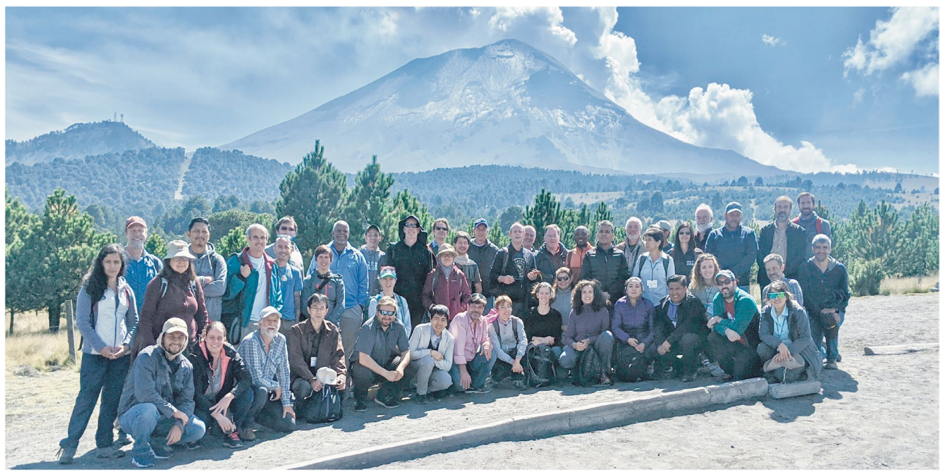
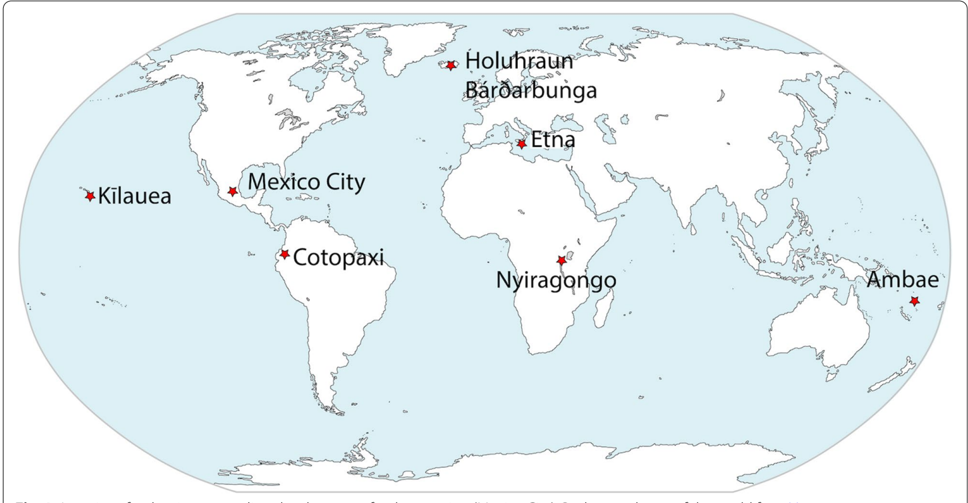
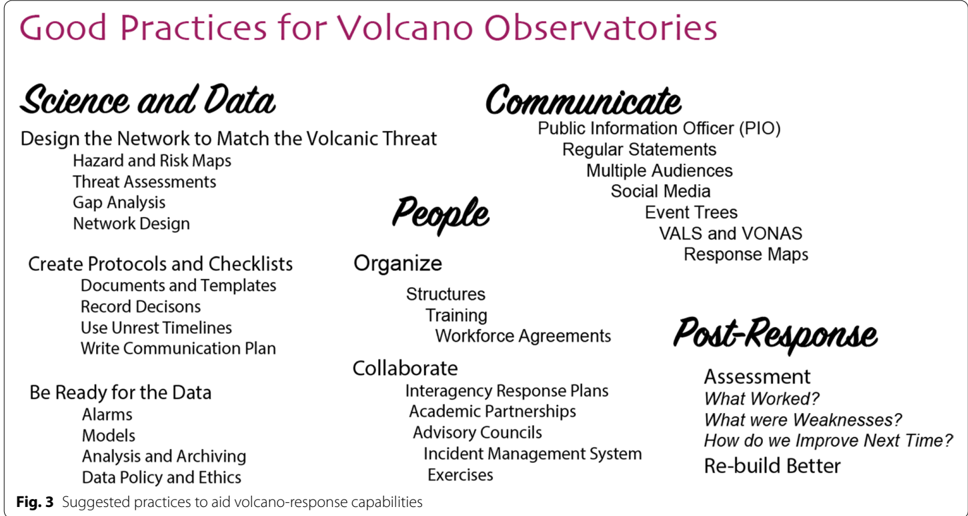
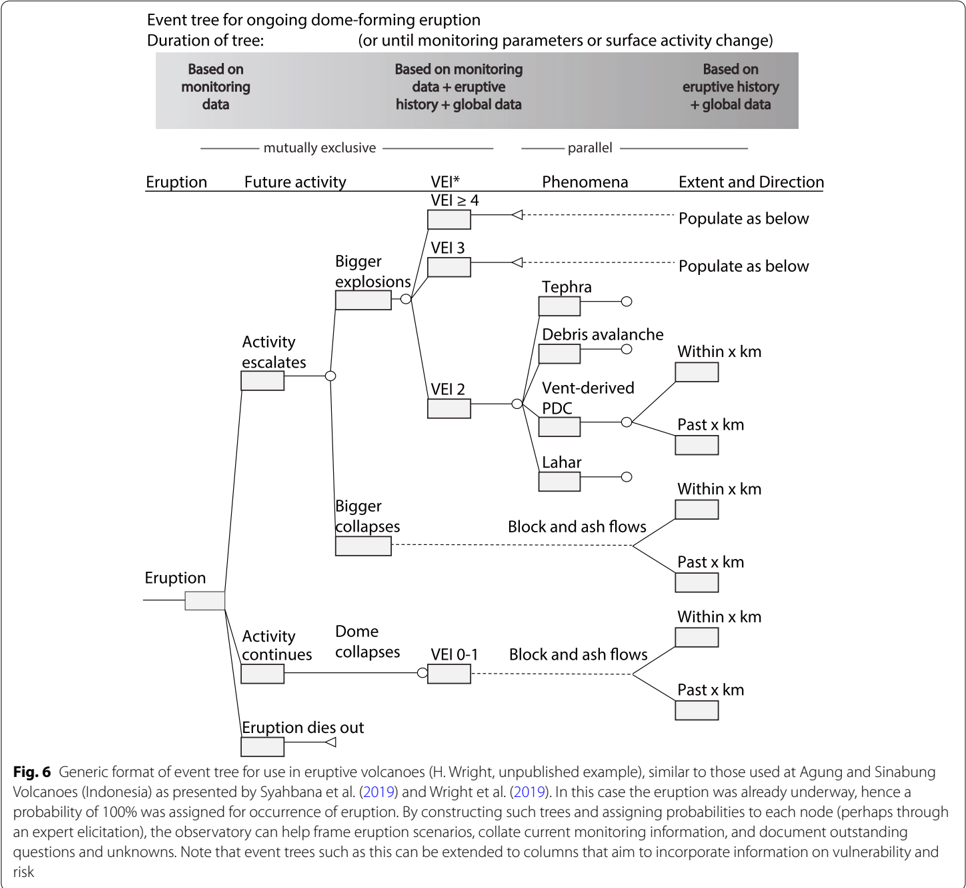
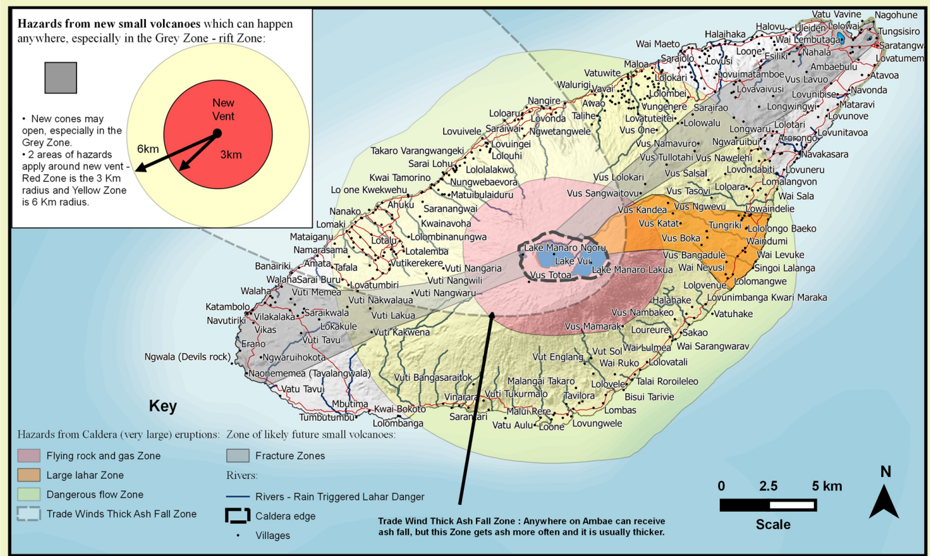
In November 2019, the fourth Volcano Observatory Best Practices workshop was held in Mexico City as a series of talks, discussions, and panels. Volcanologists from around the world offered suggestions for ways to optimize volcano-observatory crisis operations. By crisis, we mean unrest that may or may not lead to eruption, the eruption itself, or its aftermath, all of which require analysis and communications by the observatory. During a crisis, the priority of the observatory should be to acquire, process, analyze, and interpret data in a timely manner. A primary goal is to communicate effectively with the authorities in charge of civil protection. Crisis operations should rely upon exhaustive planning in the years prior to any actual unrest or eruptions. Ideally, nearly everything that observatories do during a crisis should be envisioned, prepared, and practiced prior to the actual event. Pre-existing agreements and exercises with academic and government collaborators will minimize confusion about roles and responsibilities. In the situation where planning is unfinished, observatories should prioritize close ties and communications with the land and civil-defense authorities near the most threatening volcanoes. To a large extent, volcanic crises become social crises, and any volcano observatory should have a communication strategy, a lead communicator, regular status updates, and a network of colleagues outside the observatory who can provide similar messaging to a public that desires consistent and authoritative information. Checklists permit tired observatory staff to fulfill their duties without forgetting key communications, data streams, or protocols that need regular fulfilment (Bretton et al. Volcanic Unrest. Advances in Volcanology, 2018; Newhall et al. Bull Volcanol 64:3–20, 2020). Observatory leaders need to manage staff workload to prevent exhaustion and ensure that expertise is available as needed. Event trees and regular group discussions encourage multi-disciplinary thinking, consideration of disparate viewpoints, and documentation of all group decisions and consensus. Though regulations, roles and responsibilities differ around the world, scientists can justify their actions in the wake of an eruption if they document their work, are thoughtful and conscientious in their deliberations, and carry out protocols and procedures developed prior to volcanic unrest. This paper also contains six case studies of volcanic eruptions or observatory actions that illustrate some of the topics discussed herein. Specifically, we discuss Ambae (Vanuatu) in 2017–2018, Kīlauea (USA) in 2018, Etna (Italy) in 2018, Bárðarbunga (Iceland) in 2014, Cotopaxi (Ecuador) in 2015, and global data sharing to prepare for eruptions at Nyiragongo (Democratic Republic of Congo). A Spanish-language version of this manuscript is provided as Additional file 1.
Overview
The claims and statistics of this paper haven’t been checked yet.
Run the check — free, no account needed. It reads the open-access text and checks the sources it cites.
Integrity signals
Registry
Cites
Statistics
Figures
Verification
Claims the paper makes
The claims and statistics of this paper haven’t been checked yet.
Run the check — free, no account needed. It reads the open-access text and checks the sources it cites.
Claims other papers make about this one
Each is checked against this paper’s own text: does it say what the citing paper says it does?
In the citing paper
“Many of the advances in risk management that arose from experiences during eruptions at Mount St. Helens in 1980-1986and 2004-2008 eruptions mirror those at other volcano observatories around the world (Pallister et al. 2019;Lowenstern et al. 2022).”
From Development of a volcanic risk management system at Mount St. Helens—1980 to present (2023) · cites this paper as Lowenstern et al. 2022
Self-check
Percentages, sums and reported differences re-computed from the paper’s own numbers.
The self-check needs the paper’s full text.
Citations
Cites
No references could be resolved yet.
Research works printed but not linked: 97
- Allard P, Baxter P, Halbwachs M, Kasereka M, Komorowski JC, Joron JL (2003) The most destructive effusive eruption in modern history: Nyiragongo (RD Congo), January 2002. European geophysical society, XXXVIII general assembly, Nice, France, April 2003. Geophys Res Abst 5:11970
- Andreastuti S, Subandriyo J, Sumarti S, Sayudi D (2015) The importance of communication in hazard zone areas: case study during and after 2010 Merapi eruption, Indonesia. In: Loughlin SC, Sparks RSJ, Brown SF, Jenkins SF, Vye-Brown C (eds) Global volcanic hazards and risk. Cambridge University Press, Cambridge, pp 267–271. https://doi.org/10.1017/CBO9781316276273.012 · DOI
- Annelli JF (2006) The national incident management system: a multi-agency approach to emergency response in the United States of America. Rev Sci Tech 25(1):223–231 · DOI
- Asgary A, Bonadonna C, Frischknecht C (2020) Simulation and visualization of Volcanic phenomena using Microsoft Hololens: case of Vulcano Island (Italy). IEEE Trans Eng Manag 67(3):545–553. https://doi.org/10.1109/TEM.2019.2932291 · DOI
- Aspinall W, Cooke RM (1998) Expert judgement and the Montserrat volcano eruption. In: Mosleh A (ed) Proceedings of the 4th international conference on probabilistic safety assessment and management. Springer, London, PSAM4 3, pp 13–18
- Balagizi MC, Yalire MM, Ciraba MH, Vicky BK, Minani SA, Kinja KA, Kasereka MM (2016) CO2 and SO2 emissions, temperature variations and field observations before and after the February 29, 2016 new vent inside Nyiragongo crater. Bull Volcanol 78:64. https://doi.org/10.1007/s00445-016-1055-y · DOI
- Barsotti S (2020) Probabilistic hazard maps for operational use: the case of SO2 air pollution during the Holuhraun eruption (Bárðarbunga, Iceland) in 2014–2015. Bull Volcanol 82(56) · DOI
- Barsotti S, Di Rienzo DI, Thordarson T, Björnsson BB, Karlsdóttir S (2018) Assessing impact to infrastructures due to tephra fallout from Öræfajökull volcano (Iceland) by using a scenario-based approach and a numerical model. Front Earth Sci 6:196. https://doi.org/10.3389/feart.2018.00196 · DOI
- Barsotti S, Oddsson B, Gudmundsson MT, Pfeffer MA, Parks MM, Ófeigsson BG, Sigmundsson F, Reynisson V, Jónsdóttir K, Roberts MJ, Heiðarsson EP, Jónasdóttir EB, Einarsson P, Jóhannsson T, Gylfason ÁG, Vogfjörd K (2020) Operational response and hazards assessment during the 2014–2015 volcanic crisis at Bárðarbunga volcano and associated eruption at Holuhraun. Iceland J Volcanol Geotherm Res 390:106753. https://doi.org/10.1016/j.jvolgeores.2019.106753 · DOI
- Beauducel F, Lafon D, Béguin X, Saurel J-M, Bosson A, Mallarino D, Boissier P, Brunet C, Lemarchand A, Anténor-Habazac C, Nercessian A, Fahmi AA (2020) WebObs: the volcano observatories missing link between research and real-time monitoring. Front. Earth Sci 8(48). https://doi.org/10.3389/feart.2020.00048 · DOI
- Bernard B (2013) Homemade ashmeter: a low-cost, high-efficiency solution to improve tephra field-data collection for contemporary explosive eruptions. J Appl Volc 2:1. https://doi.org/10.1186/2191-5040-2-1 · DOI
- Bernard B, Stock MJ, Coppola D, Hidalgo S, Bagnardi M, Gibson S, Hernandez S, Ramón P, Gleeson M (2019) Chronology and phenomenology of the 1982 and 2015 wolf volcano eruptions, Galápagos archipelago. J Volcanol Geotherm Res 374:26–38. https://doi.org/10.1016/j.jvolgeores.2019.02.013 · DOI
- Bonadonna C (2006) Probabilistic modelling of tephra dispersion. In: Mader HM, Coles SG, Connor CB, Connor LJ (eds) Statistics in volcanology. Spec Public IAVCEI; 1. Geol Soc, London, pp 243–259 · DOI
- Bonforte A, Guglielmino F, Puglisi G (2019) Large dyke intrusion and small eruption: the December 24, 2018 Mt. Etna eruption imaged by Sentinel-1 data. Terra Nova 31:405–412. https://doi.org/10.1111/ter.12403 · DOI
- Bretton RJ, Ciolli S, Cristiani C, Gottsmann J, Christie R, Aspinall W (2018) Volcanic unrest simulation exercises: Checklists and guidance notes. In: Gottsmann J, Neuberg J, Scheu B (eds) Volcanic Unrest. Advances in Volcanology. Springer, pp 271–298. https://doi.org/10.1007/11157_2018_34 · DOI
- Calder E, Wagner K, Ogburn S (2015) Volcanic hazard maps. In: Volcanic G (ed) S Loughlin, S Sparks, S Brown, S Jenkins C Vye-Brown. Cambridge University Press, Hazards and Risk, pp 335–342
- Camejo M, Robertson R (2013) Estimating volcanic risk in the Lesser Antilles: Univ West Indies seismic res Centre, SRC open-file report 2013-1001 p 49. Available on Vhub. https://vhub.org/resources/2910/download/RiskReport.pdf. Accessed on 25 Nov 2020
- Carn SA, Pallister JS, Lara L, Ewert JW, Watt S, Prata AJ, Thomas RJ, Villarosa G (2009) The unexpected awakening of Chaitén volcano, Chile. EOS Trans Am Geophys Union 90:205–206 · DOI
- Ciolli S, Andrade D, Ruiz M, Cristiani C (2014) VUELCO-Cotopaxi Volcano Exercise- Debriefing. Report.:9. https://doi.org/10.13140/RG.2.2.29651.58406 · DOI
- Coombs ML, Wech AG, Haney MM, Lyons JJ, Schneider DJ, Schwaiger HF, Wallace KL, Fee D, Freymueller JT (2018) Schaefer JR and Tepp G (2018) short-term forecasting and detection of explosions during the 2016–2017 eruption of Bogoslof volcano, Alaska. Front Earth Sci 6:122. https://doi.org/10.3389/feart.2018.00122 · DOI
- Costa F, Widiwijayanti C, Humaida H (2019) Data from past eruptions could reduce future volcano hazards. Eos 100. https://doi.org/10.1029/2019EO118941 · DOI
- Crosweller HS, Arora B, Brown SK et al (2012) Global database on large magnitude explosive volcanic eruptions (LaMEVE). J Appl Volcanol 1:4. https://doi.org/10.1186/2191-5040-1-4 · DOI
- Doyle EEH, Paton D, Johnston DM (2015) Enhancing scientific response in a crisis: evidence based approaches from emergency management in New Zealand. J Appl Volcanol 4(1):26. https://doi.org/10.1186/s13617-014-0020-8 · DOI
- Esposti Ongaro T, Neri A, Menconi G, de’Michieli Vitturi M, Marianelli M, Cavazzoni C, Erbacci G, Baxter PJ (2008) Transient 3D numerical simulations of column collapse and pyroclastic density current scenarios at Vesuvius. J Volcanol Geotherm Res 178:378–396 · DOI
- Ewert JW, Diefenbach AK, Ramsey DW (2018) Update to the U.S. Geological Survey national volcanic threat assessment. U.S. Geol Surv Sci Invest Report 2018–5140, p 40. https://doi.org/10.3133/sir20185140 · DOI
- Ewert JW, Guffanti M, Murray TL (2005) An assessment of volcanic threat and monitoring capabilities in the United States—Framework for a National Volcano Early Warning System. U.S. Geol Surv Open-File Report 2005–1164, p 62
- Fearnley C (2013) Assigning a volcano alert level: negotiating uncertainty, risk, and complexity in decision-making processes. Environ Plan 45:1891–1911 · DOI
- Fearnley C, Winson AEG, Pallister J, Tilling R (2017) Volcano crisis communication: challenges and solutions in the twenty-first century. In: Fearnley CJ, Bird DK, Haynes K, WJ MG, Jolly G (eds) Observing the volcano world; advances in volcanology (an official book series of the International Association of Volcanology and Chemistry of the Earth’s interior – IAVCEI, Barcelona, Spain). Springer, Cham. https://doi.org/10.1007/11157_2017_28 · DOI
- Fee D, Lyons J, Haney M, Wech A, Waythomas C, Diefenbach AL, Lopez T, Van Eaton A, Schneider D (2020) Seismo-acoustic evidence for vent drying during shallow submarine eruptions at Bogoslof volcano, Alaska. Bull Volcanol 82(1):2. https://doi.org/10.1007/s00445-019-1326-5 · DOI
- Fiske RS (1984) Volcanologists, journalists, and the concerned public: a tale of two crises in the eastern Caribbean, in explosive volcanism: inception, evolution, and hazards. National Academy Press, Washington, D.C, pp 170–176
- Francis P, Rothery D (2000) Remote sensing of active volcanoes. Annu Rev Earth Planet Sci 28(1). https://doi.org/10.1146/annurev.earth.28.1.81 · DOI
- Galle B, Johansson M, Rivera C, Zhang Y, Kihlman M, Kern C, Lehmann T, Platt U, Arellano S, Hildago S (2010) Network for observation of volcanic and atmospheric change (NOVAC) –– a global network for volcanic gas monitoring: network layout and instrument description. J Geophys Res, Atm 115(D5). https://doi.org/10.1029/2009JD011823 · DOI
- Giampiccolo E, Cocina O, De Gor P et al (2020) Dyke intrusion and stress-induced collapse of volcano flanks: the example of the 2018 event at Mt. Etna (Sicily, Italy). Sci Rep 10:6373. https://doi.org/10.1038/s41598-020-63371-3 · DOI
- Gíslason SR, Stefánsdóttir G, Pfeffer MA, Barsotti S, Jóhannsson T, Galeczka I, Bali E, Sigmarsson O, Stefánsson A, Keller NS, Sigurdsson Á, Bergsson B, Galle B, Jacobo VC, Arellano S, Aiuppa A, Jónasdóttir EB, Eiríksdóttir ES, Jakobsson S, Gudmundsson MT (2015) Environmental pressure from the 2014–15 eruption of Bárðarbunga volcano, Iceland. Geochem Perspectives Lett 1(0):84–93. https://doi.org/10.7185/geochemlet.1509 · DOI
- Global Volcanism Program. Volcanoes of the World, v. 4.9.0 (2013) (04 Jun 2020). Venzke, E (ed.). Smithsonian Institution. https://doi.org/10.5479/si.GVP.VOTW4-2013 · DOI
- Gudmundsson MT, Jónsdóttir K, Hooper A, Holohan EP, Halldórsson SA, Ófeigsson BG, Cesca S, Vogfjörd KS, Sigmundsson F, Högnadóttir T (2016) Gradual caldera collapse at Bárdarbunga volcano, Iceland, regulated by lateral magma outflow. Science 353(6296):aaf8988. https://doi.org/10.1126/science.aaf8988 · DOI
- Hall M, Ramón P, Mothes P, LePennec J, García A, Sanmiego P, Yepes H (2004) Volcanic eruptions with little warning: the case of Volcán Reventador’s surprise November 3, 2002 eruption. Ecuador Revista Geológica Chile 31(2):349–358
- Harnett CE, Thomas ME, Calder ES et al (2019) Presentation and analysis of a worldwide database for lava dome collapse events: the global archive of dome instabilities (GLADIS). Bull Volcanol 81:16. https://doi.org/10.1007/s00445-019-1276-y · DOI
- Hidalgo S, Battaglia J, Arellano S, Sierra D, Bernard B, Parra R, Kelly P, Dinger F, Barrington C, Samaniego P (2018) Evolution of the 2015 Cotopaxi eruption revealed by combined geochemical and seismic observations. Geochem Geophys Geosys 19:2087–2108. https://doi.org/10.1029/2018GC007514 · DOI
- IAVCEI Subcommittee for Crisis Protocols (Newhall C, Aramaki S, Barberi F, Blong R, Calvache M, Cheminee J-L, Punongbayan R, Siebe C, Simkin T, Sparks RSJ, Tjetjep W) (1999). Professional conduct of scientists during volcanic crises. Bull Volcanol 60:323–334 · DOI
- IAVCEI Task Group on Crisis Protocols (Giordano G, Bretton R, Calder E, Cas R, Gottsmann J, Lindsay J, Newhall C, Pallister J, Papale P, Rodriguez L) (2016) Toward IAVCEI guidelines on the roles and responsibilities of scientists involved in volcanic hazard evaluation, risk mitigation, and crisis response. Bull Volcanol 78(31):3. https://doi.org/10.1007/s00445-016-1021-8 · DOI
- Iverson RM, Schilling SP, Vallance JW (1998) Objective delineation of lahar-inundation hazard zones. Geol Soc Am Bull 110(8):972–984 · DOI
- Kelfoun K, Samaniego P, Palacios P, Barba D (2009) Testing the suitability of frictional behaviour for pyroclastic flow simulation by comparison with a well-constrained eruption at Tungurahua volcano (Ecuador). Bull Volcanol 71:1057–1075. https://doi.org/10.1007/s00445-009-0286-6 · DOI
- Komorowski JC, Tedesco D, Kasereka MC, Allard P, Papale P, Vaselli O, Durieux J et al (2003) The January 2002 flank eruption of Nyiragongo volcano (Democratic Republic of Congo): chronology, evidence for a tectonic rift trigger, and impact of lava flows on the city of Goma. Acta Vulcanol 15(1–2):27–62
- Lara LE, Clavero J, Hinojosa M, Huerta S, Wall R, Moreno H (2006) NVEWS-Chile—Sistema de clasifcación semicuantitativa de la vulnerabilidad volcánica: Congreso Geológico Chileno. Antofagasta, Chile 11(2):487–490
- Leonard GS, Johnson DM, Paton D, Christianson A, Becker J, Keys H (2008) Developing effective warning systems: ongoing research at Ruapehu volcano, New Zealand. J Volc Geothermal Res 172(3–4):199–215. https://doi.org/10.1016/j.jvolgeores.2007.12.008 · DOI
- Lowenstern JB, Ramsey DW (2017) The Volcano Disaster Assistance Program—Helping to save lives worldwide for more than 30 years. U.S. Geol Surv:2017–30716. https://doi.org/10.3133/fs20173071 · DOI · Paper page
- Marti J, Aspinall W, Sobradelo R, Felpeto A, Geyer A, Ortiz R, Baxter P, Cole P, Pacheco J, Blanco MJ (2008) Lopez C (2008) a long-term volcanic hazard event tree for Teide-Pico Viejo stratovolcanoes (Tenerife, Canary Islands). J Volcanol Geotherm Res 178:543–552. https://doi.org/10.1016/j.jvolgeores.2008.09.023 · DOI
- Marzocchi W, Sandri L, Selva J (2008) BET_EF: a probabilistic tool for long- and short-term eruption forecasting. Bull Volcanol 70:623–632. https://doi.org/10.1007/s00445-007-0157-y · DOI
- Marzocchi W, Sandri L, Selva J (2010) BET_VH: a probabilistic tool for long-term volcanic hazard assessment. Bull Volcanol 72:705–16. https://doi.org/10.1007/s00445-010-0357-8 · DOI
- Marzocchi W, Sandri L, Gasparini P, Newhall CG, Boschi E (2004) Quantifying probabilities of volcanic events: the example of volcanic hazard at Mount Vesuvius. J Geophys Res:109–B11201. https://doi.org/10.1029/2004JB003155 · DOI
- Mastin LG, Guffanti M, Servranckx R, Webley P, Barsotti S, Dean K, Durant A, Ewert JW, Neri A, Rose WI, Schneider D (2009) A multidisciplinary effort to assign realistic source parameters to models of volcanic ash-cloud transport and dispersion during eruptions. J Volcanol Geotherm Res 186(1–2):10–21. https://doi.org/10.1016/j.jvolgeores.2009.01.008 · DOI
- McCausland WA, Pallister JS, Andreastutti S, Gunawan H, Hendrasto M, Kasbani, Iguchi M, Nakada S (eds special issue 2019) Lessons learned from the recent eruptions of Sinabung and Kelud volcanoes, Indonesia. J Volc Geotherm Res 382: 1–310 · DOI
- Miller CA (2010) Threat assessment of New Zealand's volcanoes and their current and future monitoring requirements Lower Hutt, N.Z.: GNS science. GNS Sci Rep 2011(55):45 http://shop.gns.cri.nz/sr_2010-055-pdf/
- Miller CA, Jolly AD (2014) A model for developing best practice volcano monitoring: a combined threat assessment, consultation and network effectiveness approach. Nat Hazards 71:493–522. https://doi.org/10.1007/s11069-013-0928-z · DOI
- Ministry of Civil Defence and Emergency Management (2008) Exercise Ruaumoko 08, Final Exercise Report. https://dpmc.govt.nz/sites/default/files/2019-11/dpmc-roiar-oia-2019-20-0222-exercise-ruaumoko-final-report.pdf
- Moran SC, Freymueller JT, LaHusen RG, McGee KA, Poland MP, Power JA, Schmidt DA, Schneider DJ, Stephens G, Werner CA, White RA (2008) Instrumentation recommendations for volcano monitoring at U.S. volcanoes under the National Volcano Early Warning System: U.S. Geol Surv Sci Investig Rep 2008:5114 47
- Mothes P, Espín P, Hall ML, Vásconez F, Sierra D, Andrade D (2016b) Mapa Regional de Amenazas Volcánicas Potenciales del Volcán Cotopaxi - Zona Norte 2016. https://doi.org/10.13140/RG.2.2.21035.03363 · DOI
- Mothes P, Espín P, Hall ML, Vásconez F, Sierra D, Córdova M, Santamaría S (2016a) Mapa Regional de Amenazas Volcánicas Potenciales del Volcán Cotopaxi - Zona Sur. https://doi.org/10.13140/RG.2.2.24498.61129 · DOI
- Mothes PA, Ruiz MC, Viracucha EG, Ramón PA, Hernández S, Hidalgo S, Bernard B, Gaunt EH, Jarrín P, Yépez MA, Espín PA (2019) Geophysical footprints of Cotopaxi’s unrest and minor eruptions in 2015: an opportunity to test scientific and community preparedness. In: Gottsmann J, Neuberg J, Scheu B (eds) Volcanic Unrest : from science to society. Springer International Publishing, Champ, pp 241–270
- Nakada S, Miyagi Y, Kubo T, Fujita E (2019) Conveying volcano information effectively to stakeholders—a new project for promotion of next generation volcano research. J Disaster Res 14(4):623–629 · DOI
- Neal CA et al (2019) The 2018 rift eruption and summit collapse of Kīlauea volcano. Science. 363(6425):367–374. https://doi.org/10.1126/science.aav7046 · DOI
- Newhall C, Hoblitt R (2002) Constructing event trees for volcanic crises. Bull Volcanol 64(1):3–20. https://doi.org/10.1007/s004450100173 · DOI · Paper page
- Newhall C, Pallister JS, Miller CD (2020) A checklist for crisis operations within volcano observatories, Volcanic hazards, risks and disasters. In: Papale P (ed) Forecasting and planning for Volcanic hazards, risks, and disasters, chapter 13. Elsevier, pp 493–544. https://doi.org/10.1016/B978-0-12-818082-2.00013-5 · DOI · Paper page
- Newhall CG, Costa F, Ratdomopurbo A, Venezky DY, Widiwijayanti C, Win NTZ, Tan K, Fajiculay E (2017) WOVOdat — an online, growing library of worldwide volcanic unrest. J Volcanol Geotherm Res 345:184–199. https://doi.org/10.1016/j.jvolgeores.2017.08.003 · DOI
- Ogburn SE, Loughlin SC, Calder ES (2012) DomeHaz: dome-forming eruptions database v2.4. https://vhub.org/groups/domedatabase
- Orsi G, Di Vito MA, Isaia R (2004) Volcanic hazard assessment at the restless Campi Flegrei caldera. Bull Volcanol 66:514–530. https://doi.org/10.1007/s00445-003-0336-4 · DOI
- Pallister J, Papale P, Eichelberger J, Newhall C, Mandeville C, Nakada S, Marzocchi W, Loughlin S, Jolly G, Ewert J, Selva J (2019) Volcano observatory best practices (VOBP) workshops – a summary of findings and best-practice recommendations. J App Volcanol 8(2):33. https://doi.org/10.1186/s13617-019-0082-8 · DOI · Paper page
- Papale P (2017) Rational volcanic hazard forecasts and the use of volcanic alert levels. J Appl Volcanol 6:13. https://doi.org/10.1186/s13617-017-0064-7 · DOI
- Pedersen G, Höskuldsson A, Dürig T, Thordarson T, Jonsdottir I, Riishuus MS, Óskarsson BV, Dumont S, Magnússon E, Gudmundsson MT (2017) Lava field evolution and emplacement dynamics of the 2014–2015 basaltic fissure eruption at Holuhraun, Iceland. J Volcanol Geotherm Res 340:155–169. https://doi.org/10.1016/j.jvolgeores.2017.02.027 · DOI
- Perry RW (2003) Incident management systems in disaster management. Disaster Prev Manag 12(5):405–412. https://doi.org/10.1108/09653560310507226 · DOI
- Pfeffer M, Bergsson B, Barsotti S, Stefánsdóttir G, Galle B, Arellano S, Conde V, Donovan A, Ilyinskaya E, Burton M (2018) Ground-based measurements of the 2014–2015 Holuhraun Volcanic cloud (Iceland). Geosciences 8(1):29. https://doi.org/10.3390/geosciences8010029 · DOI
- Poland MP, Lopez T, Wright R et al (2020) Forecasting, detecting, and tracking Volcanic eruptions from space. Remote Sens Earth Syst Sci 3:55–94. https://doi.org/10.1007/s41976-020-00034-x · DOI
- Potter SH, Scott BJ, Fearnley CJ, Leonard GS, Gregg CE (2017) Challenges and benefits of Standardising early warning systems: a case study of New Zealand’s Volcanic alert level system. In: Fearnley CJ, Bird DK, Haynes K, McGuire WJ, Jolly G (eds) Observing the volcano world. Advances in Volcanology (An Official Book Series of the International Association of Volcanology and Chemistry of the Earth’s Interior – IAVCEI, Barcelona, Spain). Springer, Cham. https://doi.org/10.1007/11157_2017_18 · DOI
- Ramón P (1979) Tecnología y aplicación de instrumentos geofísicos en el volcanismo, ensayos en el volcán Cotopaxi. Graduate thesis, EPN, Quito-Ecuador, p 97
- Re CRA, D’Oriano C, Pompilio M (2021) Petrological monitoring of active volcanoes: a review of existing procedures to achieve best practices and operative protocols during eruptions. J Volc Geotherm Res 419:107365. https://doi.org/10.1016/j.jvolgeores.2021.107365 · DOI
- Reath K, Pritchard M, Poland M et al (2019) Thermal, deformation, and degassing remote sensing time series (CE 2000–2017) at the 47 most active volcanoes in Latin America: implications for Volcanic systems. J Geophys Res Solid Earth. https://doi.org/10.1029/2018JB016199 · DOI
- Sandri L, Costa A, Selva J, Tonini R, Macedonio G, Folch A, Sulpizio R (2016) Beyond eruptive scenarios: assessing tephra fallout hazard from Neapolitan volcanoes. Sci Rep 6:24271. https://doi.org/10.1038/srep24271 · DOI
- Sandri L, Jolly G, Lindsay J, Howe T, Marzocchi W (2012) Combining long- and short-term probabilistic volcanic hazard assessment with cost-benefit analysis to support decision making in a volcanic crisis from the Auckland Volcanic field, New Zealand. Bull Volcanol 74:705–723. https://doi.org/10.1007/s00445-011-0556-y · DOI
- Sarsito DA, Kriswati E, Meilano I, Andreas H, Pradipta D (2019) Volcano deformation monitoring using geodetic method: optimal network design. IOP Con Ser: Earth Enviro Sci 389:012039
- Sennert SSK, Klemetti EW, Bird DK (2015) Role of social media and networking in volcanic crises and communication. In: Fearnley CJ, Bird DK, Haynes K, McGuire WJ, Jolly G (eds) Observing the volcano world; advances in volcanology (an official book series of the International Association of Volcanology and Chemistry of the Earth’s interior – IAVCEI, Barcelona). Springer, Cham, pp 733–743. https://doi.org/10.1007/11157_2015_13 · DOI
- Shimano T, Nishimura T, Chiga N, Shibasaki Y, Iguchi M, Miki D, Yokoo A (2013) Development of an automatic volcanic ash sampling apparatus for active volcanoes. Bull Volcanol 75:773. https://doi.org/10.1007/s00445-013-0773-7 · DOI
- Sigmundsson F, Hooper A, Hreinsdóttir S, Vogfjörd KS, Ófeigsson BG, Heimisson ER, Dumont S, Parks M, Spaans K, Gudmundsson GB (2015) Segmented lateral dyke growth in a rifting event at Bárðarbunga volcanic system. Iceland Nature 517(7533):191–195. https://doi.org/10.1038/nature14111 · DOI
- Sparks RSJ (2003) Forecasting volcanic eruptions. Earth Planet Sci Lett 210(1–2):1–15 · DOI
- Surono et al. (2012) The 2010 explosive eruption of Java's Merapi volcano—a ‘100-year’ event. J Volcanol Geotherm Res 241–241, p 121–135. https://doi.org/10.1016/j.jvolgeores.2012.06.018 · DOI
- Syahbana D et al (2019) The 2017–19 activity at mount Agung in Bali (Indonesia): intense unrest, monitoring, crisis response, evacuation, and eruption. Sci Reports 9:8848. https://doi.org/10.1038/s41598-019-45295-9 · DOI
- Tarquini S, de’Michieli Vitturi M, Jensen E, Pedersen G, Barsotti S, Coppola D, Pfeffer MA (2018) Modeling lava flow propagation over a flat landscape by using MrLavaLoba: the case of the 2014–2015 eruption at Holuhraun, Iceland. Ann Geophys 61:28. https://doi.org/10.4401/ag-7812 · DOI
- The Research Group of the Istituto Nazionale di Geofisica e Vulcanologia-Sezione di Catania, Italy (2001) Multidisciplinary approach yields insight into mt. Etna eruption, Eos trans. AGU 82(52):653–656. https://doi.org/10.1029/01EO00376 · DOI
- Thompson MA, Lindsay JM, Leonard GS (2017) More than meets the eye: Volcanic Hazard map design and visual communication. In: Fearnley CJ, Bird DK, Haynes K, McGuire WJ, Jolly G (eds) Observing the volcano world. Advances in Volcanology (An Official Book Series of the International Association of Volcanology and Chemistry of the Earth’s Interior – IAVCEI, Barcelona). Springer, Cham
- UNDAC (2018) United Nations disaster assessment coordination (UNDAC) field handbook 7th version 2018; https://www.unocha.org/sites/unocha/files/1823826E_web.pdf
- Vásconez F, Sierra D, Almeida M, Andrade D, Marrero JM, Mothes PA, Bernard B, Encalada M (2017) Mapa preliminar de amenazas potenciales del volcán Cotopaxi—Zona oriental. https://doi.org/10.13140/RG.2.2.24418.89280 · DOI
- Venezky DY, Newhall CG (2007) WOVOdat Design Document: The Schema, Table Descriptions, and Create Table Statements for the Database of Worldwide Volcanic Unrest (WOVOdat Version 1.0). US Geol Surv Open-File Rep 2007–1117, p 177
- Voight B (1990) The 1985 Nevado del Ruiz volcano catastrophe: anatomy and retrospection. J Volcanol Geotherm Res 42:151–188 · DOI
- Williams DM, Avery VF, Coombs ML, Cox DA, Horwitz LR, McBride SK, McClymont RJ, Moran SC (2020) U.S. Geological Survey 2018 Kīlauea Volcano eruption response in Hawai'i— After-action review. U.S. Geol Surv Open-File Report 2020–1041, p 56. https://doi.org/10.3133/ofr20201041 · DOI
- Witham C, Barsotti S, Dumont S, Oddsson B, Sigmundsson F (2020) Practising an explosive eruption in Iceland: outcomes from a European exercise. J Appl Volcanol 9(1):1–16 · DOI
- Wright HNM et al (2019) Construction of probabilistic event trees for eruption forecasting at Sinabung volcano, Indonesia 2013–14. J Volc Geotherm Res 382:233–252 · DOI
- Young SR, Voight B, Sparks RSJ, Rowley K, Robertson REA, Lynch LL, Aspinall WP (1998) The Soufriere Hills eruption, Montserrat, British West Indies: introduction to special section, part 2. Geophys Res Lett 25(19):3651. https://doi.org/10.1029/98GS02437 · DOI
Cited by
Potter, S. H., Kox, T., Mills, B., Taylor, A., Robbins, J., Cerrudo, C., Wyatt, F., Harrison, S., Golding, B., Lang, W., et al. (2025) · International Journal of Disaster Risk Reduction · doi:10.1016/j.ijdrr.2025.105234 · Cited by 26
Development of a volcanic risk management system at Mount St. Helens—1980 to present
Wright, H. M. N., Driedger, C. L., Pallister, J. S., Newhall, C. G., Clynne, M. A., & Ewert, J. W. (2023) · Bulletin of Volcanology · doi:10.1007/s00445-023-01663-y · Cited by 10
Metadata
- Authors
- Lowenstern, J. B., Wallace, K., Barsotti, S., Sandri, L., Stovall, W., Bernard, B., Privitera, E., Komorowski, J.-C., Fournier, N., Balagizi, C., & Garaebiti, E.
- ORCID
- Venue
- Journal of Applied Volcanology
- Published
- 2022-01-14
- Volume
- 11
- Issue
- 1
- ISSN
- 2191-5040
- Cited by
- 43
- References
- 0
- Language
- en
- Funders
- usaid
- eurovolc (731070)
- istituto nazionale di geofisica e vulcanologia
- institut national des sciences de l'univers, centre national de la recherche scientifique
- service national d’observation en volcanology
- usgs volcano hazards program
About these checks
Registry, retraction, Cites and statistics results are computed, not judged, with one exception: a printed reference that no index lists is read once by a model before it counts as a citation error. Claims are extracted by a model and kept only when their quote appears verbatim in the text; each cited source is then checked, with a model’s help, for whether it says what the claim relies on. Those verdicts can be wrong — read the claim’s quote and the cited source before relying on one.
Statistics and arithmetic are recomputed, not judged.
Confidence bands are shown only for fields calibrated on our annotated test set. None is calibrated yet, so no band is shown.
What counts as a claim ›How we measure confidence ›How we check this ›
Are you an author, or do you see a problem with this page? Request a review
How to cite
Cite CoChat for the checks on this page, and the paper for its own findings.
- This page
- CoChat. (2026). Citation check: Guidelines for volcano-observatory operations during crises: recommendations from the 2019 volcano observatory best practices meeting. https://app.cochat.ai/papers/10.1186/s13617-021-00112-9
- The paper
- Lowenstern, J. B., Wallace, K., Barsotti, S., Sandri, L., Stovall, W., Bernard, B., Privitera, E., Komorowski, J.-C., Fournier, N., Balagizi, C., & Garaebiti, E. (2022). Guidelines for volcano-observatory operations during crises: recommendations from the 2019 volcano observatory best practices meeting. Journal of Applied Volcanology. https://doi.org/10.1186/s13617-021-00112-9
