

Rayyan-a web and mobile app for systematic reviews.
Open accessThe DOI matches its Crossref record; 15 of the 16 references it cites were found in a registry or an index; 5 of the 7 sources its claims cite were checked for support.
Abstract
BACKGROUND: Synthesis of multiple randomized controlled trials (RCTs) in a systematic review can summarize the effects of individual outcomes and provide numerical answers about the effectiveness of interventions. Filtering of searches is time consuming, and no single method fulfills the principal requirements of speed with accuracy. Automation of systematic reviews is driven by a necessity to expedite the availability of current best evidence for policy and clinical decision-making. We developed Rayyan ( http://rayyan.qcri.org ), a free web and mobile app, that helps expedite the initial screening of abstracts and titles using a process of semi-automation while incorporating a high level of usability. For the beta testing phase, we used two published Cochrane reviews in which included studies had been selected manually. Their searches, with 1030 records and 273 records, were uploaded to Rayyan. Different features of Rayyan were tested using these two reviews. We also conducted a survey of Rayyan's users and collected feedback through a built-in feature. RESULTS: Pilot testing of Rayyan focused on usability, accuracy against manual methods, and the added value of the prediction feature. The "taster" review (273 records) allowed a quick overview of Rayyan for early comments on usability. The second review (1030 records) required several iterations to identify the previously identified 11 trials. The "suggestions" and "hints," based on the "prediction model," appeared as testing progressed beyond five included studies. Post rollout user experiences and a reflexive response by the developers enabled real-time modifications and improvements. The survey respondents reported 40% average time savings when using Rayyan compared to others tools, with 34% of the respondents reporting more than 50% time savings. In addition, around 75% of the respondents mentioned that screening and labeling studies as well as collaborating on reviews to be the two most important features of Rayyan. As of November 2016, Rayyan users exceed 2000 from over 60 countries conducting hundreds of reviews totaling more than 1.6M citations. Feedback from users, obtained mostly through the app web site and a recent survey, has highlighted the ease in exploration of searches, the time saved, and simplicity in sharing and comparing include-exclude decisions. The strongest features of the app, identified and reported in user feedback, were its ability to help in screening and collaboration as well as the time savings it affords to users. CONCLUSIONS: Rayyan is responsive and intuitive in use with significant potential to lighten the load of reviewers.
Overview
CoChat Summary
## TL;DR
Rayyan is a free web and mobile app designed to speed up title/abstract screening in systematic reviews through semi-automation, filtering, collaboration, and a prediction model. In testing and user feedback, it was reported to save time and improve screening efficiency, with the authors highlighting 40% average time savings and model performance of AUC 0.87±0.09 and WSS@95 0.49±0.18.
## Key findings
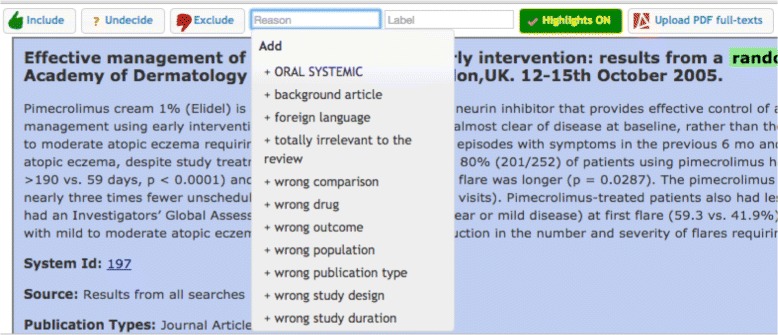
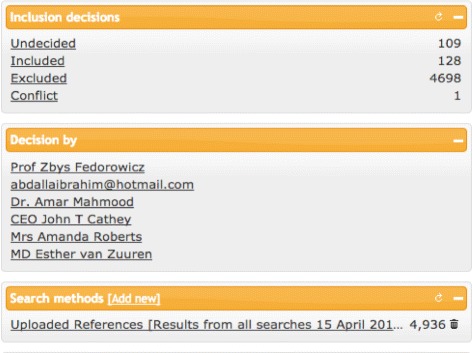
- In pilot testing on two Cochrane reviews, Rayyan was evaluated against manual selection methods using citation sets of 273 and 1030 records; the larger review required several iterations to identify the previously selected 11 trials.
- On 15 review topics used to test the prediction algorithm, the classifier achieved AUC = 0.87±0.09 and WSS@95 = 0.49±0.18, which the authors interpret as substantial time savings.
- Survey respondents reported 40% average time savings compared with other tools, and 34% reported more than 50% time savings; in another place the paper reports 37% for >50% time savings.
- Around 75% of respondents said the most important features were screening/labeling studies and collaboration on reviews.
## Methods
- The paper describes the development of Rayyan and its iterative evaluation; the app was piloted before release and then refined using user feedback from the website, in-app messages, workshops, and surveys.
- For beta testing, the authors uploaded searches from two published Cochrane reviews (with 273 and 1030 records) into Rayyan and compared the app’s screening workflow with prior manual decisions.
- To evaluate prediction quality, they used a dataset from 15 systematic review topics, applying twofold cross-validation (50% training, 50% testing), repeated 10 times, and assessed performance with AUC and WSS@95 using an SVM classifier with unigram/bigram and MeSH features.
## Limitations
- The paper states that a comprehensive comparison with other systems would require additional studies; this is an explicit limitation of the evidence presented.
- The pilot testing was not technically blinded because the tester already knew the review results; this is stated in the text.
- Evidence is based on a small number of pilot reviews for workflow testing and on a specific 15-topic dataset for algorithm evaluation, so generalizability is limited by the study design (evident from the text).
Model-written summary. Check it against the paper before relying on it.
Integrity signals
Registry
Cites
Statistics
Figures
Verification
Claims the paper makes
4 Valid · 1 Not valid · 1 Not checked · 34 Own results and interpretations
Every source the paper cites for this claim was checked and supports it.
In the paper
“Interest in the automation of systematic reviews has been driven by a necessity to expedite the availability of current best evidence for policy and clinical decision-making”
§ Rayyan—a web and mobile app for systematic reviews > Background
What the sources say
- Supportedcites [4] Wallace BC Trikalinos TA Lau J Brodley C Schmid CH Semi-automated screening of biomedical citations for systematic reviews BMC Bioinforma 2010 11 1 55 10.1186/1471-2105-11-55 PMC2824679 20102628 source
The Background > On Systematic Reviews section says reviews inform healthcare decisions from the bedside to policy-making and describes citation screening as time-consuming. The Abstract > Background and Conclusions explain that the authors pursue semi-automation to reduce that workload without compromising review quality, supporting the claim’s stated motivation. Our copy provides section labels but no page numbers. (LLM, conf=0.83)
plainstates a cause- Asserted: passes — The authors put it forward as true.
- Checkable: passes — It can be checked against evidence.
- Load-bearing: unclear — It is unclear whether the paper’s conclusions depend on it.
- Based: passes — The paper gives a reason why it holds.
- Supported
A result the paper reports from its own data — it cites no other source for it, so there is none to check. The quote shows it is in the paper.
In the paper
“around 75% of the respondents mentioned that screening and labeling studies as well as collaborating on reviews to be the two most important features of Rayyan.”
- Also stated in: § Workshops, presentations, and user feedback · plain
“around 75% of the respondents mentioned that screening and labeling studies as well as collaborating on reviews as the two most important features of Rayyan.”
§ Rayyan—a web and mobile app for systematic reviews > Abstract > Results
plain- Asserted: passes — The authors put it forward as true.
- Checkable: passes — It can be checked against evidence.
- Load-bearing: unclear — It is unclear whether the paper’s conclusions depend on it.
- Based: passes — The paper gives a reason why it holds.
- Also stated in: § Workshops, presentations, and user feedback · plain
A result the paper reports from its own data — it cites no other source for it, so there is none to check. The quote shows it is in the paper.
In the paper
“with 37% of the respondents reporting more than 50% time savings.”
§ Rayyan—a web and mobile app for systematic reviews > Results and Discussions > Workshops, presentations, and user feedback
plain- Asserted: passes — The authors put it forward as true.
- Checkable: passes — It can be checked against evidence.
- Load-bearing: unclear — It is unclear whether the paper’s conclusions depend on it.
- Based: passes — The paper gives a reason why it holds.
A result the paper reports from its own data — it cites no other source for it, so there is none to check. The quote shows it is in the paper.
In the paper
“The survey respondents reported 40% average time savings when using Rayyan compared to others tools”
- Also stated in: § Workshops, presentations, and user feedback · plain
“Our users reported a 40% average time savings when using Rayyan compared to others tools”
- Also stated in: § Conclusion · hedged
“our survey showed that our users reported time savings in the order of 40% on average compared to other tools they have been using in the past.”
§ Rayyan—a web and mobile app for systematic reviews > Abstract > Results
plainstates a cause- Asserted: passes — The authors put it forward as true.
- Checkable: passes — It can be checked against evidence.
- Load-bearing: passes — The paper’s conclusions depend on it.
- Based: passes — The paper gives a reason why it holds.
- Also stated in: § Workshops, presentations, and user feedback · plain
A result the paper reports from its own data — it cites no other source for it, so there is none to check. The quote shows it is in the paper.
In the paper
“The second review (1030 records) required several iterations to identify the previously identified 11 trials.”
- Also stated in: § Pilot testing Rayyan · plain
“Testing of the Rayyan app on the second Cochrane review (1030 records) required a few attempts to identify the 11 trials which had been previously selected by the Cochrane review authors using “manual” methods during the process of conducting the systematic review.”
§ Rayyan—a web and mobile app for systematic reviews > Abstract > Results
plain- Asserted: passes — The authors put it forward as true.
- Checkable: passes — It can be checked against evidence.
- Load-bearing: unclear — It is unclear whether the paper’s conclusions depend on it.
- Based: passes — The paper gives a reason why it holds.
- Also stated in: § Pilot testing Rayyan · plain
9 more claims
Create a free account to see all 40 claims and every source verdict.
- Probably not a substantial claim. 14
- It may state two separate claims as one. 18
- The quote only partly states this claim. 1
Claims other papers make about this one
Each is checked against this paper’s own text: does it say what the citing paper says it does?
The source backs part of the claim, not all of it — or backs it for a different population, condition or comparison.
In the citing paper
“The search results were imported into Rayyan, a validated tool with semi-automated features enabling the detection of duplicated publications from the different databases.”
From Enablers and barriers of clinical trial participation in adult patients from minority ethnic groups: a systematic review (2025) · cites this paper as [28]
Experimental — accuracy not yet measuredThe source backs part of the claim, not all of it — or backs it for a different population, condition or comparison.
In the citing paper
“As a reviewer screens some records and labels them for either inclusion, exclusion, or “maybe” relevant to the subject of the review, the tool thrives for finding patterns and similarities to give a similarity score to each of the remaining records as a five-star rating. Higher ratings reflect the computed underlying probabilities of the record being included are higher, and vice versa.”
From Abstract screening using the automated tool Rayyan: results of effectiveness in three diagnostic test accuracy systematic reviews (2022) · cites this paper as [4]
Experimental — accuracy not yet measuredThe cited source says what the claim attributes to it.
In the citing paper
“Study selection was conducted in two stages by two independent reviewers (V. DG and D. D. T.) using Rayyan systematic review software [39]: stage 1, title, and abstract screening: All retrieved citations were independently screened by both reviewers using the prespecified eligibility criteria.”
From Genetics versus environment in the pathophysiology of sagittal synostosis (2026) · cites this paper as [39]
The cited source says what the claim attributes to it.
In the citing paper
“Title and abstract screening was conducted by one reviewer (DH) using the Rayyan (Rayyan Systems, Inc) data screening tool [33]. A random sample of 20% (491/2455) was also screened by a second reviewer (AF).”
From Older Adults’ Experiences and Perceptions of Immersive Virtual Reality: Systematic Review and Thematic Synthesis (2022) · cites this paper as [33]
The cited source says what the claim attributes to it.
In the citing paper
“Following the search, all identified studies were uploaded to the latest version of the AI systematic review software Rayyan19 and 2 authors (H.T. and A.M.) evaluated the abstracts against the PICOT framework-guided15 inclusion criteria.”
From Otoplasty for prominent ear: A systematic review of surgical techniques (2026) · cites this paper as [19]
9 more claims about this paper
Create a free account to see every claim other papers make about this one.
Self-check
Percentages, sums and reported differences re-computed from the paper’s own numbers.
Self-check results appear here once an independent check has confirmed them.
Cited works that were retracted
Works this paper cites that were later retracted, from the retraction notices publishers deposit. Major when the notice came out before this paper was published.
A note, not an issue: for example, a cited work that was retracted only after this paper was published, which its authors could not have known.
In the paper
“Pedrazzi V, Oliveira-Neto JM, Sequeira P, Fedorowicz Z, Nasser M. Hand and ultrasonic instrumentation for orthograde root canal treatment of permanent teeth. Cochrane Database Syst Rev. 2008;4(CD006384). doi: 10.1002/14651858.CD006384.pub3 .”
Cited work 10.1002/14651858.cd006384.pub3 · retracted 2019-02-07 · notice 10.1002/14651858.cd006384.pub4 · this paper published 2016-12
Citations
Cites
1 retracted
Hand and ultrasonic instrumentation for orthograde root canal treatment of permanent teeth
Pedrazzi, V., Oliveira-Neto, J. M., Sequeira, P., Fedorowicz, Z., & Nasser, M. (2008) · Cochrane Database of Systematic Reviews · doi:10.1002/14651858.cd006384.pub3 · Cited by 9
Self-citationRetractedPreferred Reporting Items for Systematic Reviews and Meta-Analyses: the PRISMA statement
Moher, D., Liberati, A., Tetzlaff, J., Altman, D. G., & for the PRISMA Group (2009) · BMJ · doi:10.1136/bmj.b2535 · Cited by 83,823
Cortes, C., & Vapnik, V. (1995) · Machine Learning · doi:10.1007/bf00994018 · Cited by 59,421
Cortes, C., & Vapnik, V. (1995) · Machine-mediated learning · doi:10.1023/a:1022627411411 · Cited by 48,445 · cited 1×
“These are then used as features by a support vector machine (SVM) classifier [15].”
MethodPreferred reporting items for systematic reviews and meta-analyses: the PRISMA Statement.
(2009) · PubMed Central · Cited by 44,859
Preferred reporting items for systematic reviews and meta-analyses: The PRISMA statement
Moher, D., Liberati, A., Tetzlaff, J., Altman, D. G., & the PRISMA Group* (2009) · Annals of Internal Medicine · doi:10.7326/0003-4819-151-4-200908180-00135 · Cited by 37,554
A method for assessing the quality of a randomized control trial
Chalmers, T. C., Smith, H., Blackburn, B., Silverman, B., Schroeder, B., Reitman, D., & Ambroz, A. (1981) · Controlled Clinical Trials · doi:10.1016/0197-2456(81)90056-8 · Cited by 1,349 · cited 1×
“Randomized controlled trials (RCTs) play a pivotal role in medical research and are widely considered to be the best way of achieving results that can genuinely increase our knowledge about treatment effectiveness [1].”
BackgroundO’Mara-Eves, A., Thomas, J., McNaught, J., Miwa, M., & Ananiadou, S. (2015) · Systematic Reviews · doi:10.1186/2046-4053-4-5 · Cited by 681
Systematic review automation technologies
Tsafnat, G., Glasziou, P., Choong, M. K., Dunn, A., Galgani, F., & Coiera, E. (2014) · Systematic Reviews · doi:10.1186/2046-4053-3-74 · Cited by 472 · cited 2×
“An increasing number of projects are underway which focus on the automation of segments of the systematic review process, and although several tools and software have been developed, so far, none of them span the entire process of review production [5].”
BackgroundReducing Workload in Systematic Review Preparation Using Automated Citation Classification
Cohen, A. M., Hersh, W. R., Peterson, K., & Yen, P.-Y. (2006) · Journal of the American Medical Informatics Association · doi:10.1197/jamia.m1929 · Cited by 411 · cited 2×
“The work saved over random sampling measured at 0.95 recall (WSS@95), introduced in [16], refers to the percentage of studies that the reviewers do not have to go through because they have been screened out by the classifier at a recall of 0.95, compared to random sampling.”
MethodResultInfluential
Cited by
Items 14,801–14,900 of 25,624
van der Weyden, M. S., Shaul, Y., Merrigan, J. J., Helton, W. S., Barringer, N., Newman, K., & Martin, J. (2026) · The Journal of Strength and Conditioning Research · doi:10.1519/jsc.0000000000005437 · Cited by 3
Bravo, A. R., Cuevas, M. F., & Palavecino, C. (2026) · Drugs and Drug Candidates · doi:10.3390/ddc5020028 · Cited by 3
Zavridou, E., Busico, G., Plato, E. L., Ez-zaouy, Y., Jaworska‐Szulc, B., Szymkiewicz, A., Jovanovic, N. Z., Marc, V., Hirata, R., Mastrocicco, M., et al. (2026) · Environmental Processes · doi:10.1007/s40710-026-00831-4 · Cited by 3
“3 ), by making use of the Rayyan platform (Ouzzani et al. 2016 ), a web-based tool designed to support systematic and literature reviews.”
Villanova, L. B., Puga, B. P., & Collier, M. J. (2026) · Nature-Based Solutions · doi:10.1016/j.nbsj.2026.100335 · Cited by 3
Pokpalagon, P., Chambers, S., Singh, G. K., & Yates, P. M. (2026) · BMC Palliative Care · doi:10.1186/s12904-026-02109-w · Cited by 2
“Duplicate records were removed using automated processes in Endnote (Version X9; 2013) [40] and the web-based application “Rayyan QCRI” (artificial intelligence) [41], as well as manually.”
A Systematic Scoping Review of Team-Level Job Redesign in Organizations
Edelmann, C. M., Bakker, A. B., & Derks, D. (2026) · Human Resource Development Review · doi:10.1177/15344843261442560 · Cited by 3
Fernandes, P. E. D. N., Normando, A. G. C., de Andrade, K. R. C., Teixeira, F. D. C., Souza, P. A., Simas, P. R. P., Leite, D. F., Michelotti, F., dos Santos, M. S., Cunha, F. M. D. L. B., et al. (2026) · Epidemiologia e Serviços de Saúde · doi:10.1590/s2237-96222026v35e20250464.en · Cited by 4
Francisco, C., Silva, N., & Boon, C. J. F. (2026) · Acta Ophthalmologica · doi:10.1111/aos.70149 · Cited by 2
Trends in Early‐Onset Cancer Incidence Rates in Latin America: A Scoping Review Protocol
de Vasconcellos, V. F., D'Agostini, N. S., Grassi, J., Neto, L. C. B. S., Borges, R. P., de Azevedo, L. B., Pessanha, R. M., Minarini, E. J. C. D. S., Passos, G. A. L., Pereira, G. C., et al. (2026) · Health Science Reports · doi:10.1002/hsr2.72410 · Cited by 2
“All retrieved records will be imported into the Rayyan™ web application [10] to facilitate screening and review management.”
Dutt, S., Remmel, T. K., Rivas, C. A., et al. (2026) · Landscape Ecology · doi:10.1007/s10980-026-02354-7 · Cited by 2
“Duplicate removal using Rayyan, a web based systematic review screening tool (Ouzzani et al. 2016), eliminated 313 records, leaving 847 unique studies.”
Veltkamp, A. W., Korompoki, E., D’Anna, L., Olma, M. C., Hæusler, K. G., Endres, M., & Veltkamp, R. C. (2026) · International Journal of Stroke · doi:10.1177/17474930261449734 · Cited by 2
Bacterial quantitation in clinical infection: a systematic review
Benjamin, A., Phommasone, K., White, N. J., & Ashley, E. A. (2026) · Philosophical Transactions of the Royal Society B Biological Sciences · doi:10.1098/rstb.2024.0346 · Cited by 2
Karaosmanoglu, E., Rozendaal, M. C., Vallery, H., & Cramm, J. M. (2026) · International Journal of Social Robotics · doi:10.1007/s12369-026-01391-1 · Cited by 3
Isber, J., Liu, W., Qu, B., Dufresne, S., Stone, A., Powell, M. E., Braun, S. A., Galdyn, I. A., Golinko, M. S., Yin, Z., et al. (2026) · The Cleft Palate-Craniofacial Journal · doi:10.1177/10556656261445320 · Cited by 2
Prakash, P., Nayak, K. P., Babu, A. S., Devi, E. S., Chaudhuri, S., Pai, D., & Vimal Krishnan, S. (2026) · Journal of the American College of Emergency Physicians Open · doi:10.1016/j.acepjo.2026.100395 · Cited by 2
Dia, N., Hoffert, Y., Edwina, A. E., Tournoy, J., Spriet, I., & Dreesen, E. (2026) · Clinical Pharmacokinetics · doi:10.1007/s40262-026-01638-0 · Cited by 2
“Rayyan was used exclusively as a web-based screening support tool; no automated, machine learning (ML), or artificial intelligence (AI)-based inclusion or exclusion decisions were applied [20].”
Cera, G., Scarpelli, S., Mastrocola, S., Boltri, M., Brusa, F., Scalia, A., Gorgoni, M., Lombardi, C., Mendolicchio, L., & Gennaro, L. D. (2026) · Nature and Science of Sleep · doi:10.2147/nss.s590618 · Cited by 2
Sallam, L. A., AlOtaibi, N. G., & Baker, O. G. (2026) · SAGE Open Nursing · doi:10.1177/23779608261449326 · Cited by 2
“All relevant studies were entered into the Rayyan platform (https://new.rayyan.ai), and duplicate studies were removed manually (Ouzzani et al., 2016).”
Cuadrado, F., Tienda-Herencia, I., & Velasco, J. (2026) · Sexuality Research & Social Policy · doi:10.1007/s13178-026-01350-5 · Cited by 2
Nagraj, S. K., Hafver, T. L., Reinthaler, V., de Velde, S. V., Zaror, C., Shen, Y., Banda, S., Mpando, T., Kunje, G., Lakudzala, S., et al. (2026) · Journal of Clinical Epidemiology · doi:10.1016/j.jclinepi.2026.112313 · Cited by 3
Xiao, L. Y., Demetrovics, Z., Deery, C., Heath, C., Király, O., King, D. L., & Czakó, A. (2026) · Current Addiction Reports · doi:10.1007/s40429-026-00748-w · Cited by 3
Zafra-Palomino, L., López, L. J. G., & Jiménez-Vázquez, D. (2026) · Children and Youth Services Review · doi:10.1016/j.childyouth.2026.109037 · Cited by 2
Jennings, C., Broad, A., Godson, L., Clarke, E. L., Westhead, D. R., & Treanor, D. E. (2026) · Cancer Informatics · doi:10.1177/11769351261434523 · Cited by 15
“All stages of screening and data extraction were performed by 2 independent researchers, except for the initial duplicate screening which was performed by a single researcher (with the aid of Rayyan software 16 ), raising the possibility of incorrectly excluding studies in error.”
Arab, R. A. E., Moosa, O. A. A., Almagharbeh, W. T., Abuadas, F. H. A., Abdalla, N., Abdrbo, A. A., & Hassanein, S. E. (2026) · Journal of Medical Systems · doi:10.1007/s10916-026-02400-6 · Cited by 7
“Records from all sources were exported and imported into Rayyan [23] for citation management and blinded screening.”
Greaney, C., Cichy, N., O'Sullivan, G., Sills, D., Cahalan, R., & Tierney, A. (2026) · European Respiratory Review · doi:10.1183/16000617.0238-2025 · Cited by 3
Indicators for Measuring Circularity of Bio-based Products: A Systematic Review
Iglesias, H., Cámara-Ruiz, M., Pereira, Á., Gutiérrez, D. F., & Lara-Guillén, A. J. (2026) · Journal of Circular Economy · doi:10.55845/joce-2026-4136 · Cited by 4
“Title and abstract screening was managed in Rayyan ® (Ouzzani et al., 2016) to facilitate record handling and reviewer coordination; however, all inclusion and exclusion decisions were made manually by the authors based on the predefined eligibility criteria.”
Verrengia, M. G., Arcobelli, V. A., Lullini, G., Mellone, S., Mazzoleni, S., Chiari, L., & Orlandi, S. (2026) · Annals of Biomedical Engineering · doi:10.1007/s10439-026-04150-5 · Cited by 2
The impact of alarm sounds on patient sleep in the intensive care unit: A scoping review
Hiemstra, F. W., van Kekem, M. J., Arbous, M. S., Schoones, J. W., van Westerloo, D. J., & Kervezee, L. (2026) · Journal of Critical Care · doi:10.1016/j.jcrc.2026.155612 · Cited by 5
Oliveira, J. A., Lemos, M. J., Queiroz, L. F., Sciorilli, J. V., Tran, T., Ortiz, I. A. V., Armstrong, B. B. S., & de Oliveira, F. R. (2026) · Revista Brasileira Ginecologia e Obstetrícia · doi:10.61622/rbgo/2026rbgo108 · Cited by 3
Hubert, M. O., Ahmad, M., Crispin, A., Beyer, G., Mayerle, J., & Sirtl, S. (2026) · Digestive Diseases · doi:10.1159/000552102 · Cited by 2
Vysevkova, V., Rabinska, D., Thomas, J. M., Farrow, C. V., & Reynolds, J. P. (2026) · Journal of Environmental Psychology · doi:10.1016/j.jenvp.2026.103071 · Cited by 5
James, M. M., Manikandan, S., Nina, P. B., Balasubramani, K., Gopalan, N., & Behera, S. K. (2026) · Frontiers in Climate · doi:10.3389/fclim.2026.1804553 · Cited by 3
Zethelius, M., Bergman, L., Ekelund, A.-C., Vala, C. H., Jacobsson, B., Kuusela, P., Liljegren, A., Lindkvist, B., Petzold, M., Sjögren, P., et al. (2026) · Acta Obstetricia Et Gynecologica Scandinavica · doi:10.1111/aogs.70253 · Cited by 3
Makusha, T., Ngubo, Z., Seeley, J., et al. (2026) · Journal of the International AIDS Society · doi:10.1002/jia2.70098 · Cited by 2
“Using Rayyan [ 15 ], the reviewers recorded reasons for inclusion or exclusion, and removed any further duplicates that had not been automatically detected.”
Molina, V. E. Q., MEDINA, R. A. B., Mora, J. S. M., et al. (2026) · Journal of Robotic Surgery · doi:10.1007/s11701-026-03230-x · Cited by 2
Strauch, H., Schuil, I., Simm, S., Grubert, J., Kalamkar, S., & Meißner, K. (2026) · Journal of Medical Internet Research · doi:10.2196/78212 · Cited by 2
“All records identified through the literature search were first screened for duplicates using the online tool Rayyan [41], followed by a manual verification by one reviewer (HS) to ensure accuracy.”
Alharran, A. M., Almutairi, E. Y., Alazemi, W. B., Alnejadah, F. A., Hasan, H. S., Aloufan, L., Alsultan, A. M., AlOmar, H., Alqayem, M., Maasarani, J., et al. (2026) · European Journal of Pediatrics · doi:10.1007/s00431-026-07108-w · Cited by 3
“References were uploaded to Rayyan for screening [18].”
Musculoskeletal disorders in eSports athletes: A systematic review
Schlesiger, L., Oronowicz, J., Lutter, C., et al. (2026) · Journal of Experimental Orthopaedics · doi:10.1002/jeo2.70786 · Cited by 2
“In order to guarantee a systematic and blinded screening procedure, the screening process was conducted using the Rayyan platform [25].”
Conti, G. O., Rapisarda, P., Pulvirenti, E., Deiana, G., Coniglio, M. A., Mancini, G., Castiglia, P., Azara, A., Ferrante, M., & Dettori, M. (2026) · Microplastics · doi:10.3390/microplastics5020095 · Cited by 2
Outcomes of Pneumonia in ICUs in Low- and Middle-Income Countries — A Systematic Review
Pitrowsky, M. T., Pacheco, M. B., Ranzani, O., Amado, F., Nassar, A. P., Besen, B. A. M. P., Moralez, G. M., Martins, G. A. R., Póvoa, P. M. S. R., Silva, J. R. L. E., et al. (2026) · NEJM Evidence · doi:10.1056/evidoa2500244 · Cited by 4
Robat, E. S., Bayazi, M. H., Nayyeri, M., Yasaghi, A. A., & Taimory, S. (2026) · Nature Human Behaviour · doi:10.1038/s41562-026-02433-4 · Cited by 5
“On the basis of our predefined PICOS framework, two independent researchers (E.S.R. and M.H.B.) screened the titles and abstracts of studies using Rayyan.ai 86 , excluding duplicates and records not meeting the eligibility criteria (Table 1 and Fig.”
Menopause symptom awareness research across the globe: a scoping review
Williams, E., Terry, L., Lindeman, M., & Wright, M. E. (2026) · Frontiers in Global Women s Health · doi:10.3389/fgwh.2026.1829378 · Cited by 4
“Duplication deletion, title/abstract screening, and full text screening was completed using the Rayyan online software (Rayyan Systems Inc., Cambridge, MA, USA) (22).”
Mapping the neural patterns of verbal repetition: an activation likelihood estimation meta-analysis
Awana, A., Berthier, M. L., Torres‐Prioris, M. J., & López-Barroso, D. (2026) · Brain Structure and Function · doi:10.1007/s00429-026-03119-3 · Cited by 2
“ALE Activation Likelihood Estimation using the systematic review web application RAYYAN (Ouzzani et al. 2016).”
Din, S. U., Kemna, R., Ket, J. C. F., Iqbal, M., Bohoudi, O., Hoogendoorn, M., Beretta, E., & Lisowska, A. (2026) · Frontiers in Artificial Intelligence · doi:10.3389/frai.2026.1819422 · Cited by 8
“0.1 (Clarivate), following the Amsterdam Efficient Deduplication (AED)-method (Bramer et al., 2016) and the Bramer-method Ouzzani et al. (2016).”
InfluentialKraonual, S., Thongpeth, W., & Thongpet, T. (2026) · BMC Nursing · doi:10.1186/s12912-026-04821-7 · Cited by 2
“Two reviewers (WT and SK) independently screened titles and abstracts using Rayyan software [10], then assessed full texts for eligibility.”
Napolitano, D., Bozzetti, M., Amato, S., Genna, C., Thekkan, K. R., Benedetti, F., Petruccini, G., Petralito, M., Milani, I., & Caruso, R. (2026) · Patient Education and Counseling · doi:10.1016/j.pec.2026.109717 · Cited by 3
Konzett, V., Laskou, F., Smolen, J. S., Edwards, C. J., Aletaha, D., van der Heijde, D. M. F. M., Winthrop, K. L., Takeuchi, T., Caporali, R. F., Verschueren, P., et al. (2026) · Annals of the Rheumatic Diseases · doi:10.1016/j.ard.2026.05.006 · Cited by 5
Eeckhaut, B., Truijen, S., Leroij, C., Dévillé, J., Jacobs, L., & Saeys, W. (2026) · Journal of Clinical Medicine · doi:10.3390/jcm15114246 · Cited by 3
“…OR stiffness OR viscosity OR “visco-elastic” OR myoton OR torque OR “range of motion” OR “passive range of motion” OR ROM OR PROM OR “passive ROM”) OR ALL (electromyograph OR EMG OR reflex OR Tardieu OR TMS OR “transcranial magnetic stimulation”)) 62 https://doi.org/10.3390/jcm15114246 [23].”
InfluentialPerceptions of rewilding in European abandoned agricultural lands
Jeanroy, C. G., Smith, A. M., & Verburg, P. H. (2026) · Landscape and Urban Planning · doi:10.1016/j.landurbplan.2026.105715 · Cited by 2
Osei‐Ntiamoah, B., Apau-Danso, P. K., Iddrisu, M., Osae-Larbi, J. A., & Nartey, Y. (2026) · BMC Public Health · doi:10.1186/s12889-026-28037-1 · Cited by 2
“All identified records were imported into the Rayyan reference management system [17] and duplicates were removed.”
Mathur, A. S., Mehta, V., Bhadania, M., & Patil, P. G. (2026) · Journal of Prosthetic Dentistry · doi:10.1016/j.prosdent.2026.05.004 · Cited by 5
Zaki, H. F., Bishri, J., Muqtadir, M. A., & Abu-Zaid, A. (2026) · Experimental Eye Research · doi:10.1016/j.exer.2026.111119 · Cited by 2
Elhakim, A., Salem, M., Elbahloul, M. A., et al. (2026) · Clinical Cardiology · doi:10.1002/clc.70367 · Cited by 2
“After duplicates were removed, the records were screened against the predefined eligibility criteria using the Rayyan platform [22].”
Younis, M., Vints, W. A. J., & Bautmans, I. (2026) · Neuroscience & Biobehavioral Reviews · doi:10.1016/j.neubiorev.2026.106815 · Cited by 5
Raptis, D. A., Chiotis, S., Papamichalis, T., Bekiari, E., Τσάπας, Α., & Karagiannis, T. (2026) · Current Diabetes Reports · doi:10.1007/s11892-026-01628-3 · Cited by 4
“Study selection was performed independently by two reviewers (D.R. and T.P.) using the Rayyan web-based systematic review software [10].”
A systematic review of penetrating injuries to the superior sagittal sinus across two centuries
Prince, J. E., Yangı, K., Qureshi, K., Goyal, M., Olson, J. T., Gok, E., & Preul, M. C. (2026) · Frontiers in Neurology · doi:10.3389/fneur.2026.1789736 · Cited by 2
Moreau, D., & Lange, B. T. C.-D. (2026) · Brain Research · doi:10.1016/j.brainres.2026.150428 · Cited by 3
Franken, R. J., Hers, F., Ajraoui, R. E., Tieken, K., de Vries, M. R., Souverein, D., Nieuwdorp, M., Gerdes, V. E. A., & van de Laar, A. (2026) · Obesity Surgery · doi:10.1007/s11695-026-08766-3 · Cited by 3
“Two reviewers (FH and KT) independently screened all potentially relevant titles and abstracts for eligibility using Rayyan [12].”
Ebster, M., Lauerer, M., Nagel, E., & Schmidt, S. (2026) · European Child & Adolescent Psychiatry · doi:10.1007/s00787-026-03083-7 · Cited by 5
Kempny, C., Frings, J., Rust, P., Meister, S., & Fehring, L. (2026) · BMC Medical Research Methodology · doi:10.1186/s12874-026-02913-1 · Cited by 12
“The screening process was conducted in four sequential rounds using Rayyan software to facilitate the filtering process and systematically track inclusion and exclusion decisions [21].”
Hamed‐Hamed, D., Pérez‐Montilla, J. J., Brindisino, F., Struyf, F., & Ledesma, S. N. (2026) · Pain Research and Management · doi:10.1155/prm/3820129 · Cited by 2
Chaves-Filho, A., Medrado, M. F., Zamboni, T., Cavalcanti, A. B., Shim, S. R., Quinn, T. J., Veiga, V. C., & Mavridis, T. (2026) · Critical Care · doi:10.1186/s13054-026-06047-0 · Cited by 3
“The complete pool of retrieved studies was uploaded to the webserver for systematic reviews Rayyan [23] and deduplicated via its supervised tool.”
Santana, J. L. S., Themoteo, R. M., Allioni, G. A., Marzano, L. A. S., Bernal, H. D. M., Veiga, M. L., Sales, A. B. L., Apóstolos‐Pereira, S. L., Adoni, T., Callegaro, D., et al. (2026) · Multiple Sclerosis and Related Disorders · doi:10.1016/j.msard.2026.107330 · Cited by 4
MicroRNA ‐210 level as a biomarker for pre‐eclampsia severity: A systematic review and meta‐analysis
Márai, D., das Virgens, I. P. A., Vincze, Á., Obeidat, M., ter Hegyi, P., Bakony, M., Erdélyi, Z., Melczer, Z., & Valent, S. (2026) · International Journal of Gynecology & Obstetrics · doi:10.1002/ijgo.71145 · Cited by 2
Impacts of Trauma-Informed Approaches on Healthcare Workers: A Scoping Review
Kobina, A., & Preston, A. J. (2026) · Workplace Health & Safety · doi:10.1177/21650799261457914 · Cited by 3
Non-Invasive Brain Stimulation for Core Symptoms of Chronic Primary Pain: A Meta-Analysis of RCTs
Telesca, A., Vergallito, A., Vedani, A., Locatelli, G., Visiello, B., Pinter, G. L., & Lauro, L. J. R. (2026) · Brain Sciences · doi:10.3390/brainsci16070663 · Cited by 3
Wang, M. Y., Zeng, Y., Zhu, Z., Li, Z., Li, Y., & Sun, Y. (2026) · Intensive and Critical Care Nursing · doi:10.1016/j.iccn.2026.104494 · Cited by 3
Gibson, M., Allen, V., Adas, M. A., Muzafar, I., Muzafar, S., Suresh, N., Yoon, Y., Gracia, L. D., Chavali, R., Hussain, H., et al. (2026) · Annals of the Rheumatic Diseases · doi:10.1016/j.ard.2026.06.017 · Cited by 3
Lachowicz, M., Jamro, D., Zawadka, A., Tomala, Z., & Żurek, G. (2026) · Medical Sciences · doi:10.3390/medsci14030395 · Cited by 5
“Rayyan was used to organize records, manage screening decisions, and support documentation of the study selection process [51].”
Brugi, S., Bell, E., Budd, B., & Fish, S. (2026) · The Journal of Sexual Medicine · doi:10.1093/jsxmed/qdag218 · Cited by 3
Seifaddini, M., Beheshti, M., Richberg, S., Esebua, M., & Zachary, I. (2026) · Modern Pathology · doi:10.1016/j.modpat.2026.101043 · Cited by 5
Borges, L. H. S., de Luca, V. L., Jacumazo, J., do Amaral, L. F. M., Murakami, F. S., Lazo, R. E. L., & Carneiro, J. (2026) · Drug Development and Industrial Pharmacy · doi:10.1080/03639045.2026.2709699 · Cited by 2
“First, searches were conducted across the specified databases and imported into the free version of the Rayyan web app (Rayyan Systems, inc.) [14], where duplicate records were identified and removed. two independent reviewers (vl and lHB) assessed article titles and abstracts in the initial…”
Lawrence, R. C., Herbert, K., Georghiou, T., Mehta, R., Ng, P. L., Rolewicz, L., Morris, S., & Shand, J. (2026) · BMJ Digital Health & AI · doi:10.1136/bmjdh-2026-000120 · Cited by 3
Hammad, N., Elkasaby, M. H., Gadelmawla, A. F., Kamel, O., Abouzkaly, F., Nazmy, A., Saad, O. A., Basiony, K., Elmaraezy, A. G., Frishman, W. H., et al. (2026) · Cardiology in Review · doi:10.1097/crd.0000000000001419 · Cited by 5
Ziaeemehr, B., Ghobadi, M., Lacasse, M., et al. (2026) · Building and Environment · doi:10.1016/j.buildenv.2026.115074 · Cited by 2
Taghavi, S. P., Salmani, A. S., Karlıdağ, T., Nokay, A. E., Suresh, S. J., Conway, J. D., Hoveidaei, A. H., & Çıtak, M. (2026) · Arthroplasty · doi:10.1186/s42836-026-00417-3 · Cited by 2
“All citations were imported into Rayyan, a web-based platform for systematic review screening, and duplicates were removed using reference management software (EndNote) [12].”
Duarte, C. M. R., de Abreu, D. M. F., Gabriel, M., Pereira, S. D. O., Bittencourt, M., Novaes, D. D. S. G., & de Bortoli, M. C. (2026) · Epidemiologia e Serviços de Saúde · doi:10.1590/s2237-96222026v35e20250679.en · Cited by 2
SOUZA, S. N. D., Gomes‐Filho, I. S., Passos‐Soares, J. D. S., et al. (2026) · Epidemiologia e Serviços de Saúde · doi:10.1590/s2237-96222026v35e20250309.en · Cited by 2
School-based sexual violence prevention: A systematic review
Queiroz, M. N. R., de Oliveira, M. M., Schaedler, A. C., & de Souza, M. D. C. M. (2026) · Child Abuse & Neglect · doi:10.1016/j.chiabu.2026.108259 · Cited by 2
Muthu, S., Gurusamy, G., Parvizi, J., et al. (2026) · Global Spine Journal · doi:10.1177/21925682261442201 · Cited by 2
Zawaly, K., Fortier, R. D. W., Buetow, S., Tippett, L. J., & Kerse, N. M. (2019) · American Journal of Lifestyle Medicine · doi:10.1177/1559827619876887 · Cited by 4
Westergren, T., Ludvigsen, M. S., Audulv, Å., Aagaard, H., Hall, E. O. C., Pedersen, M. K., & Fegran, L. (2020) · JBI Evidence Synthesis · doi:10.11124/jbies-20-00004 · Cited by 3
Novelli, A., Schüttig, W., Spallek, J., Wachtler, B., Diehl, K., Moor, I., Richter, M., Dragano, N., & Sundmacher, L. (2021) · BMJ Open · doi:10.1136/bmjopen-2020-044301 · Cited by 3
Pohontsch, N. J., Meyer, T., Eisenmann, Y., Metzendorf, M., Leve, V., & Lentsch, V. (2021) · BMJ Open · doi:10.1136/bmjopen-2020-039348 · Cited by 4
Amosun, S. L., Kimmie‐Dhansay, F., Geerts, G. A. V. M., & Basson, R. (2021) · JMIR Research Protocols · doi:10.2196/27239 · Cited by 2
Postoperative Rehabilitation of Multidirectional Instability Surgery: A Systematic Review
Ayoub, C. C., Berardino, K., Tsou, H., et al. (2021) · Sports Medicine and Arthroscopy Review · doi:10.1097/jsa.0000000000000313 · Cited by 2
Campbell, J., Hobbs, M., O’Hara, L., Ballantyne, A., Heywood, A. E., & Gray, L. (2021) · BMJ Open · doi:10.1136/bmjopen-2021-050114 · Cited by 2
Hanf, M., Hirt, J., & van den Akker, M. (2021) · BMJ Open · doi:10.1136/bmjopen-2020-045657 · Cited by 2
Holmes, H. K., Afrogeh, A., Adeola, H. A., et al. (2021) · BMJ Open · doi:10.1136/bmjopen-2021-049922 · Cited by 2
Nyamaruze, P., Cowden, R. G., Padgett, R. N., & Govender, K. (2021) · BMJ Open · doi:10.1136/bmjopen-2020-045700 · Cited by 3
VIOLENCE AGAINST LESBIAN/ BISEXUAL WOMEN AND VULNERABILITY IN HEALTH: A LITERATURE REVIEW
de Souza, C., de Oliveira‐Cardoso, É. A., de Oliveira, W. A., Nascimento, L. C., Araújo, J. S., Leite, A. C. A. B., Neris, R. R., Risk, E. N., Braga, I. F., & dos Santos, M. A. (2021) · Psicologia Saúde & Doenças · doi:10.15309/21psd220210 · Cited by 9
Vasconcelos, P. E. N. S., Visacri, M. B., Pincinato, E. D. C., et al. (2021) · Biomarkers in Medicine · doi:10.2217/bmm-2021-0443 · Cited by 2
Consequências nutricionais da privação de sono em crianças e adolescentes: uma revisão integrativa
de Oliveira, J. P., Ramos, R. V., de Sousa, A. M., de Oliveira, F. C. T., & Baldoni, N. R. (2021) · Research Society and Development · doi:10.33448/rsd-v10i11.19903 · Cited by 3
Perfil e capacidade funcional de pessoas longevas: revisão integrativa
Júnior, F. A. P. L., Barbosa, R. G. B., Diniz, J. L., et al. (2021) · Revista Enfermagem UERJ · doi:10.12957/reuerj.2021.59737 · Cited by 2
van Munster, J. J. C. M., de Weerdt, V., Halperin, I. J. Y., Najafabadi, A. H. Z., van Benthem, P. P. G., Schoonman, G. G., Moojen, W. A., van den Hout, W. B., Atsma, F., & Peul, W. C. (2021) · Global Spine Journal · doi:10.1177/21925682211064855 · Cited by 2
A compact guide to the systematic review and meta-analysis of the literature in neuroscience
Bolzan, J. A., & de Oliveira, C. L. (2022) · Journal for Reproducibility in Neuroscience · doi:10.31885/jrn.2.2021.1669 · Cited by 3
Sampaio, R. V., de Figueiredo, P. H. M., Rocha, S. L., et al. (2022) · Research Society and Development · doi:10.33448/rsd-v11i2.25539 · Cited by 2
Seidu, S., Almaqhawi, A., Abdool, M., Kunutsor, S. K., Davies, M. J., & Khunti, K. (2022) · Diabetes Obesity and Metabolism · doi:10.1111/dom.14715 · Cited by 4
Pergialiotis, V., Ferousis, L., Rouvali, A., et al. (2022) · Cancer Investigation · doi:10.1080/07357907.2022.2070918 · Cited by 2
Ronellenfitsch, U., Mathis, N., Friedrichs, J., & Kleeff, J. H. (2022) · JMIR Research Protocols · doi:10.2196/35243 · Cited by 3
Metadata
- Authors
- Ouzzani, M., Hammady, H., Fedorowicz, Z., & Elmagarmid, A.
- Affiliations
- Hamad bin Khalifa University (QA)
- Corresponding author
- Ouzzani, Mourad
- Venue
- Systematic Reviews
- Published
- 2016-12
- Volume
- 5
- Issue
- 1
- Pages
- 210-210
- ISSN
- 2046-4053 (ISSN-L)
- PMC
- PMC5139140
- OpenAlex
- W2560438049
- Cited by
- 26,092
- References
- 15
- Citations by year
- 2026: 5249 · 2025: 5417 · 2024: 4818 · 2023: 3861 · 2022: 3087 · 2021: 2061 · 2020: 1022 · 2019: 395 · 2018: 144 · 2017: 27
- FWCI
- 66.17
- Type
- journal article
- Language
- en
- Open access
- gold
- doi.org
- Licence
- Locations
- Systematic Reviews (publishedVersion, cc-by)
- Europe PMC (PubMed Central) (publishedVersion, cc-by)
- PubMed Central (publishedVersion, cc-by)
- PubMed (publishedVersion)
- Figshare (submittedVersion, cc-by)
- Funders
- Qatar Foundation
- Topics
- Social Sciences › Decision Sciences › Statistics, Probability and Uncertainty › Meta-analysis and systematic reviews
- Physical Sciences › Computer Science › Information Systems › Software Engineering Techniques and Practices
- Physical Sciences › Computer Science › Information Systems › Information Retrieval and Search Behavior
- Keywords
- Rayyan, systematic review screening, semi-automation, mobile application, web application, usability, prediction model, user feedback, collaborative review, time savings, randomized controlled trials
- MeSH terms
- Feedback, Humans, Research Design, Review Literature as Topic, Time Factors, Randomized Controlled Trials as Topic, Internet, Mobile Applications
About these checks
Registry, retraction, Cites and statistics results are computed, not judged, with one exception: a printed reference that no index lists is read once by a model before it counts as a citation error. Claims are extracted by a model and kept only when their quote appears verbatim in the text; each cited source is then checked, with a model’s help, for whether it says what the claim relies on. Those verdicts can be wrong — read the claim’s quote and the cited source before relying on one.
The claim verdicts this report counts are experimental: their accuracy is not yet measured.
A language model drew the claims from the paper on 2026-09-29, under version 3 of the claim definition (model deepseek-v4.1-flash, prompt extract-v3).
A second model labelled each claim on 2026-09-29 (model jev-1.13-20260917, definition revision gold-guideline-v0.2).
Cited sources are checked with a language model’s help (gpt-6-sol).
Statistics and arithmetic are recomputed, not judged.
Confidence bands are shown only for fields calibrated on our annotated test set. None is calibrated yet, so no band is shown.
What counts as a claim ›How we measure confidence ›How we check this ›
Are you an author, or do you see a problem with this page? Request a review
Data sources
Bibliographic data: Semantic Scholar, OpenAlex, Crossref.
Contains information from the Semantic Scholar Academic Graph Datasets, made available under the ODC Attribution License (ODC-BY 1.0).
Semantic Scholar’s data is described in: Kinney, R., et al. (2023). The Semantic Scholar Open Data Platform. arXiv:2301.10140.
