

Stratified cardiovascular risk in patients with metabolic dysfunction-associated steatotic liver disease (MASLD): impact of varying metabolic risk factor burden
Open accessThe DOI matches its Crossref record; 33 of the 33 references it cites were found in a registry or an index.
Abstract
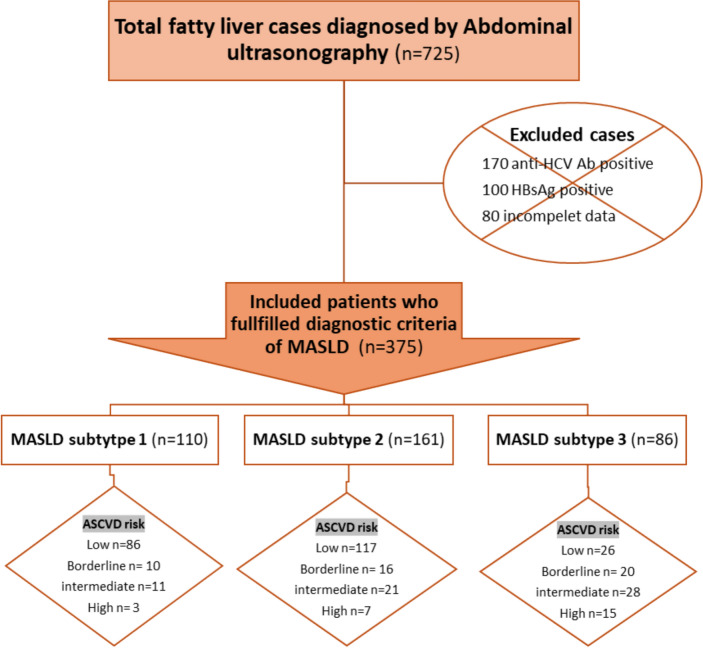
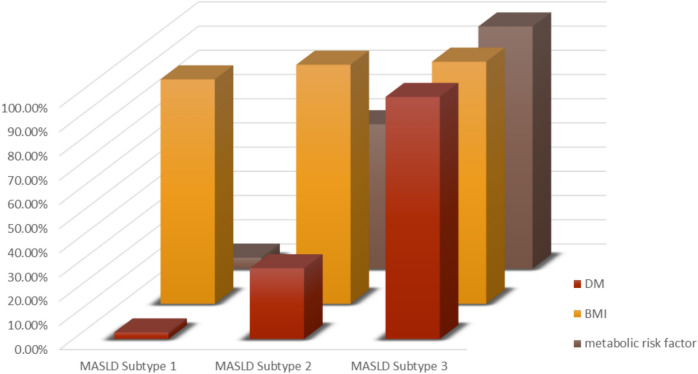
Background: Metabolic Dysfunction-Associated Steatotic Liver Disease (MASLD) is a spectrum of hepatic disorders that are closely linked to metabolic risk factors. This study aimed to investigate the stratified cardiovascular risk in patients with MASLD based on varying metabolic risk burdens. Methods: In a cross-sectional analysis, 357 patients with MASLD were classified into three subtypes based on the number of metabolic conditions used for diagnosis: subtype 1 with one metabolic risk factor (n = 110), subtype 2 with two (n = 161), and subtype 3 with three risk factors (n = 86). Clinical parameters, liver enzymes, lipid profiles, and 10-year risk of Atherosclerotic Cardiovascular Disease (ASCVD) were compared among subtypes. Results: The prevalence of diabetes and hypertension increased significantly across subtypes, with subtype 3 showing the highest burden of cardiovascular risk factors (100% diabetes, 43% hypertension). Cardiovascular risk was elevated in subtype 3 (mean ASCVD 0.112 ± 0.108, p < 0.001). Multivariate analysis identified subtype 3 (OR = 7.812, 95% CI 1.980–30.819, p = 0.003), men sex (OR = 33.549, 95% CI 11.814–95.269, p < 0.001), and age (OR = 1.171, 95% CI 1.116–1.229, p < 0.001) as independent predictors of intermediate to high cardiovascular risk. Conclusion: The metabolic burden in patients with MASLD significantly stratified cardiovascular risk. Patients with the highest metabolic dysfunction are at increased risk of cardiovascular events, underscoring the need for targeted cardiovascular prevention strategies.
Overview
The claims and statistics of this paper haven’t been checked yet.
Free: it reads the open-access text and checks the first 5 claims that cite a source we can check. Create a free account to check every claim.
Integrity signals
Registry
Cites
Statistics
Figures
Verification
Claims the paper makes
The claims and statistics of this paper haven’t been checked yet.
Free: it reads the open-access text and checks the first 5 claims that cite a source we can check. Create a free account to check every claim.
Self-check
Percentages, sums and reported differences re-computed from the paper’s own numbers.
The self-check needs the paper’s full text.
Citations
Cites
Matthews, D. R., Hosker, J. P., Rudenski, A. S., Naylor, B. A., Treacher, D. F., & Turner, R. C. (1985) · Diabetologia · doi:10.1007/bf00280883 · Cited by 31,502 · cited 2×
“…used: • Power: 80% (β = 0.20) • Significance level: 5% (α = 0.05, two-sided) • Effect size: Cohen’s f = 0.25 (moderate effect) • Number of groups: 3 (Subtypes 1, 2, and 3) • Expected variability: Standard deviation of ASCVD risk score ≈ 0.10, based on preliminary data from MASLD cohorts [8, 9].”
InfluentialToprak, O., Kurt, H., Sarı, Y., Şarkış, C., Us, H., & Kırık, A. (2017) · Kidney and Blood Pressure Research · doi:10.1159/000468530 · Cited by 29,627
Sterling, R. K., Lissen, E., Clumeck, N., Sola, R., Correa, M. C., Montaner, J., S. Sulkowski, M., Torriani, F. J., Dieterich, D. T., Thomas, D. L., et al. (2006) · Hepatology · doi:10.1002/hep.21178 · Cited by 5,021 · cited 2×
“The following indices were calculated: • HOMA-IR (Homeostasis Model Assessment of Insulin Resistance) = [fasting insulin (µU/mL) × fasting glucose (mg/dL)] / 405 [10].”
Goff, D. C., Lloyd-Jones, D. M., Bennett, G., Coady, S., D’Agostino, R. B., Gibbons, R., Greenland, P., Lackland, D. T., Levy, D., O’Donnell, C. J., et al. (2014) · Circulation · doi:10.1161/01.cir.0000437741.48606.98 · Cited by 3,697 · cited 1×
“• NFS, APRI, HIS, and FLI were calculated using standard formulas as validated in previous studies [12, 13].”
Angulo, P., Hui, J. M., Marchesini, G., Bugianesi, E., George, J., Farrell, G. C., Enders, F., Saksena, S., Burt, A. D., Bida, J. P., et al. (2007) · Hepatology · doi:10.1002/hep.21496 · Cited by 3,203 · cited 1×
“• FIB-4 = (Age × AST) / (Platelets × √ ALT) [11].”
A multisociety Delphi consensus statement on new fatty liver disease nomenclature
Rinella, M. E., Lazarus, J. V., Ratziu, V., Francque, S. M., Sanyal, A. J., Kanwal, F., Romero, D., Abdelmalek, M. F., Anstee, Q. M., Arab, J. P., et al. (2023) · Journal of Hepatology · doi:10.1016/j.jhep.2023.06.003 · Cited by 3,100
Bedogni, G., Bellentani, S., Miglioli, L., Masutti, F., Passalacqua, M., Castiglione, A., & Tiribelli, C. (2006) · BMC Gastroenterology · doi:10.1186/1471-230x-6-33 · Cited by 3,042 · cited 2×
“• NFS, APRI, HIS, and FLI were calculated using standard formulas as validated in previous studies [12, 13].”
Williams, C. D., Stengel, J., Asike, M. I., Torres, D. M., Shaw, J., Contreras, M., Landt, C. L., & Harrison, S. A. (2011) · Gastroenterology · doi:10.1053/j.gastro.2010.09.038 · Cited by 2,148 · cited 2×
“Recent studies suggest that obesity per se may not uniformly increase cardiovascular risk unless accompanied by metabolic derangements such as insulin resistance, hypertension, or dyslipidemia [26–28].”
Visceral and ectopic fat, atherosclerosis, and cardiometabolic disease: a position statement
Neeland, I. J., Ross, R., Després, J.-P., Matsuzawa, Y., Yamashita, S., Shai, I., Seidell, J., Magni, P., Santos, R. D., Arsenault, B., et al. (2019) · The Lancet Diabetes & Endocrinology · doi:10.1016/s2213-8587(19)30084-1 · Cited by 1,603 · cited 1×
“…levels, have been associated with adverse changes in body fat distribution, insulin resistance, lipid profile, and vascular function, all of which may abolish the cardioprotective advantage typically observed in premenopausal women, thereby amplifying cardiovascular risk in MASLD cohorts [22].”
Body Fat Distribution and Risk of Cardiovascular Disease: An Update
Després, J.-P. (2012) · Circulation · doi:10.1161/circulationaha.111.067264 · Cited by 1,481
Non-alcoholic fatty liver disease and risk of incident cardiovascular disease: A meta-analysis
Targher, G., Byrne, C. D., Lonardo, A., Zoppini, G., & Barbui, C. (2016) · Journal of Hepatology · doi:10.1016/j.jhep.2016.05.013 · Cited by 1,424 · cited 1×
“…atherosclerotic cardiovascular disease (ASCVD) risk was estimated using the pooled cohort equations developed by the American College of Cardiology/American Heart Association (ACC/AHA), which incorporate age, sex, total and HDL cholesterol, blood pressure, diabetes status, and smoking history [14].”
Blüher, M. (2020) · Endocrine Reviews · doi:10.1210/endrev/bnaa004 · Cited by 1,090 · cited 1×
“Hypertension and advancing age further amplify this risk, highlighting the necessity of early and comprehensive cardiometabolic screening in MASLD patients [19–21].”
Cusi, K., Isaacs, S., Barb, D., Basu, R., Caprio, S., Garvey, W. T., Kashyap, S., Mechanick, J. I., Mouzaki, M., Nadolsky, K., et al. (2022) · Endocrine Practice · doi:10.1016/j.eprac.2022.03.010 · Cited by 1,021
Metabolically healthy obesity: the low-hanging fruit in obesity treatment?
Stefan, N., Häring, H.-U., & Schulze, M. B. (2018) · The Lancet Diabetes & Endocrinology · doi:10.1016/s2213-8587(17)30292-9 · Cited by 309
Alcohol consumption and metabolic syndrome: clinical and epidemiological impact on liver disease
Åberg, F., Byrne, C. D., Pirola, C. J., Männistö, V., & Sookoian, S. (2023) · Journal of Hepatology · doi:10.1016/j.jhep.2022.08.030 · Cited by 307
Metabolic (dysfunction)-associated fatty liver disease in individuals of normal weight
Eslam, M., El-Serag, H. B., Francque, S., Sarin, S. K., Wei, L., Bugianesi, E., & George, J. (2022) · Nature Reviews Gastroenterology & Hepatology · doi:10.1038/s41575-022-00635-5 · Cited by 244 · cited 1×
“The near-ubiquitous presence of diabetes in Subtype 3, coupled with its independent association with intermediate to high ASCVD risk, corroborates the synergistic interplay between diabetes and hepatic steatosis in accelerating atherosclerosis [17, 18].”
An international multidisciplinary consensus statement on MAFLD and the risk of CVD
Zhou, X.-D., Targher, G., Byrne, C. D., Somers, V., Kim, S. U., Chahal, C. A. A., Wong, V. W.-S., Cai, J., Shapiro, M. D., Eslam, M., et al. (2023) · Hepatology International · doi:10.1007/s12072-023-10543-8 · Cited by 194 · cited 1×
“The near-ubiquitous presence of diabetes in Subtype 3, coupled with its independent association with intermediate to high ASCVD risk, corroborates the synergistic interplay between diabetes and hepatic steatosis in accelerating atherosclerosis [17, 18].”
Cardiovascular Risk in Non-Alcoholic Fatty Liver Disease: Mechanisms and Therapeutic Implications
Tana, C., Ballestri, S., Ricci, F., Di Vincenzo, A., Ticinesi, A., Gallina, S., Giamberardino, M. A., Cipollone, F., Sutton, R., Vettor, R., et al. (2019) · International Journal of Environmental Research and Public Health · doi:10.3390/ijerph16173104 · Cited by 191 · cited 1×
“Furthermore, BMI lacks the ability to distinguish between visceral and subcutaneous adiposity, the former being more closely linked to atherosclerosis and cardiometabolic complications [29, 30].”
Beygi, M., Ahi, S., Zolghadri, S., & Stanek, A. (2024) · Nutrients · doi:10.3390/nu16142220 · Cited by 78 · cited 1×
“In contrast, physical activity exerts a protective effect: leisure-time exercise is associated with lower all-cause and cardiovascular mortality in MASLD, and greater physical capacity independently correlates with reduced liver damage and lower ASCVD risk [25].”
MAFLD predicts cardiovascular disease risk better than MASLD
Pan, Z., Shiha, G. E.-S., Esmat, G., Méndez‐Sánchez, N., & Eslam, M. (2024) · Liver International · doi:10.1111/liv.15931 · Cited by 70
Metabolic dysfunction-associated steatotic liver disease as a cardiovascular risk factor
Platek, A. E., & Szymańska, A. (2023) · Clinical and Experimental Hepatology · doi:10.5114/ceh.2023.130744 · Cited by 62 · cited 1×
“Furthermore, BMI lacks the ability to distinguish between visceral and subcutaneous adiposity, the former being more closely linked to atherosclerosis and cardiometabolic complications [29, 30].”
Performance of the ACC/AHA Pooled Cohort Cardiovascular Risk Equations in Clinical Practice
Medina-Inojosa, J. R., Somers, V. K., Garcia, M., Thomas, R. J., Allison, T., Chaudry, R., Wood-Wentz, C. M., Bailey, K. R., Mulvagh, S. L., & Lopez-Jimenez, F. (2023) · Journal of the American College of Cardiology · doi:10.1016/j.jacc.2023.07.018 · Cited by 60 · cited 1×
“Smoking represents an additional aggravating factor, accelerating atherosclerosis, potentiating insulin resistance, and synergistically worsening cardiovascular outcomes in patients with metabolic liver disease [24].”
Allen, A. M., Therneau, T. M., Mara, K. C., Larson, J. J., Watt, K. D., Hayes, S. N., & Kamath, P. S. (2019) · American Journal of Gastroenterology · doi:10.14309/ajg.0000000000000401 · Cited by 51 · cited 1×
“These findings resonate with prior evidence positioning MASLD as a dominant driver of cardiovascular morbidity, often eclipsing liver-related sequelae in this population [12–16].”
Aroda, V. R., & Eckel, R. H. (2022) · Diabetes Obesity and Metabolism · doi:10.1111/dom.14830 · Cited by 43
Metabolic Dysfunction-Associated Fatty Liver Disease and Mortality: A Population-Based Cohort Study
Kim, K., Hong, S., Ahn, H. Y., & Park, C. (2023) · Diabetes & Metabolism Journal · doi:10.4093/dmj.2021.0327 · Cited by 38
ACC/AHA/AACVPR/AAFP/ANA Concepts for Clinician–Patient Shared Accountability in Performance Measures
Peterson, E. D., Ho, P. M., Barton, M., Beam, C., Burgess, L. H., Casey, D. E., Drozda, J. P., Fonarow, G. C., Goff, D., Grady, K. L., et al. (2014) · Journal of the American College of Cardiology · doi:10.1016/j.jacc.2014.09.003 · Cited by 34
Siddiqui, M. S., Muthiah, M. D., Satapathy, S. K., Patidar, K. R., Bhat, M., Brandman, D., Watt, K. D. S., & Rinella, M. E. (2023) · Hepatology · doi:10.1097/hep.0000000000000720 · Cited by 14
Song, S. J., Nogami, A., Liang, L. Y., Yoneda, M., Leung, H. H. W., Nakajima, A., Lai, J. C., Wong, G. L., Shu, S. S., Wong, V. W., et al. (2024) · Liver International · doi:10.1111/liv.15862 · Cited by 14
Wu, S. S., Lamarre, E., Scharpf, J., Prendes, B., Ku, J. A., Silver, N. L., Burkey, B. B., Woody, N. M., Campbell, S. R., Yilmaz, E., et al. (2023) · Endocrine Practice · doi:10.1016/j.eprac.2023.08.003 · Cited by 9
Increased degradation of desmosomal proteins in ACM
Huynh, K. (2023) · Nature Reviews Cardiology · doi:10.1038/s41569-023-00874-2 · Cited by 3
Javitt, N. B. (2021) · Hepatology · doi:10.1002/hep.31746 · Cited by 1
Gopanandan Parthasarathy, Camille A. Kezer, Daniel D. Penrice, David Hudson, and Juan Pablo Arab
(2023) · Hepatology · doi:10.1097/hep.0000000000000234 · Cited by 1
Burra, P., Tacke, F., Ratziu, V., Zeuzem, S., Sangro, B., & Angeli, P. (2023) · Journal of Hepatology · doi:10.1016/j.jhep.2023.10.012 · Cited by 1
Research works printed but not linked: 3
- Eslam M, El-Serag HB, Francque S, et al. Metabolic dysfunction-associated steatotic liver disease: mechanisms and heterogeneity. Lancet Gastroenterol Hepatol. 2023;8(11):927–43. 10.1016/S2468-1253(23)00183-2. · doi:10.1016/s2468-1253(23)00183-2
- Siddiqui MS, Harrison SA, Abdelmalek MF, et al. Ultrasound vs MRI-PDFF for steatosis detection in MASLD. Hepatology. 2023. 10.1097/HEP.0000000000000234.38088872 · doi:10.1097/hep.0000000000000234.38088872
- Lim S, Lee YH, Kim YJ, et al. Metabolic dysfunction–associated steatotic liver disease predicts long-term mortality and cardiovascular disease. Lancet Gastroenterol Hepatol. 2021;6(9):735–45. 10.1016/S2468-1253(21)00130-2. · doi:10.1016/s2468-1253(21)00130-2
Cited by
Eid, R. A., Hamed, A. M., Elgendy, S. O., Orayj, K. M., Ibrahim, A. S., Hamied, A. M. A., Wahsh, E. A., Youssif, M., Rabea, H., Madney, Y. M., et al. (2025) · Metabolites · doi:10.3390/metabo16010025 · Cited by 9
“This is particularly relevant to MASLD, where cardiovascular disease represents the primary cause of mortality, and patients with elevated hsCRP and LDL simultaneously face substantially higher cardiovascular event rates [58–61].”
The HepG2 Cell Line as a Model for Studying Metabolic Dysfunction-Associated Steatotic Liver Disease
Kotlyarova, A., Iskrina, A., & Kotlyarov, S. (2026) · International journal of molecular sciences · doi:10.3390/ijms27083399 · Cited by 10
Bo, Y., He, X., Yeo, Y. H., Gao, N., & Ji, F. (2025) · Journal of Hepatology · doi:10.1016/j.jhep.2025.12.017 · Cited by 2
Huang, Y.-C., Hsu, J., Wang, C.-L., Kao, Y.-C., Lai, C.-Y., Chen, H.-W., & Wu, L.-L. (2026) · BMC Nephrology · doi:10.1186/s12882-026-04840-1 · Cited by 2
“Although once considered a liver-limited disorder, growing evidence now recognizes MASLD as a multisystem disease that affects extrahepatic organs, particularly the kidney, heart, and intestine [5–7].”
Котлярова, А. А., & Kotlyarov, S. N. (2026) · International Journal of Molecular Sciences · doi:10.3390/ijms27104453 · Cited by 1
“Metabolic dysfunction-associated steatotic liver disease (MASLD) is a widespread condition [1–7] closely associated with epidemiologically significant comorbidities such as obesity, metabolic syndrome, and diabetes mellitus [8–18].”
Metadata
- Authors
- Elsabaawy, M., Torkey, M., Magdy, M., & Naguib, M.
- Affiliations
- National Liver Institute (EG)
- Corresponding author
- Elsabaawy, Maha
- Venue
- European Journal of Medical Research
- Published
- 2025-09-23
- Volume
- 30
- Issue
- 1
- Pages
- 847-847
- ISSN
- 0949-2321 (ISSN-L)
- 2047-783X
- PMC
- PMC12455753
- OpenAlex
- W4414413415
- Cited by
- 14
- References
- 32
- Citations by year
- 2026: 12 · 2025: 2
- FWCI
- 9.64
- Type
- journal article
- Language
- en
- Open access
- gold
- doi.org
- Licence
- cc-by
- creativecommons.org/licenses/by/4.0 (tdm)
- creativecommons.org/licenses/by/4.0 (vor)
- Locations
- European journal of medical research (publishedVersion, cc-by)
- Europe PMC (PubMed Central) (publishedVersion, cc-by)
- PubMed (publishedVersion)
- PubMed Central (publishedVersion, cc-by)
- DOAJ (DOAJ: Directory of Open Access Journals) (submittedVersion, cc-by-sa)
- Funders
- Minufiya University
- Topics
- Health Sciences › Medicine › Hepatology › Liver Disease Diagnosis and Treatment
- Health Sciences › Medicine › Endocrinology, Diabetes and Metabolism › Diabetes, Cardiovascular Risks, and Lipoproteins
- Health Sciences › Medicine › Cardiology and Cardiovascular Medicine › Cardiovascular Function and Risk Factors
- Keywords
- non-alcoholic fatty liver disease, cardiovascular risk, atherosclerotic cardiovascular disease, metabolic risk factors, diabetes mellitus, hypertension, risk stratification, cardiovascular risk prediction, sex differences, age, cardiovascular disease prevention
- MeSH terms
- Heart Disease Risk Factors, Adult, Aged, Cardiovascular Diseases, Cross-Sectional Studies, Diabetes Mellitus, Fatty Liver, Female, Humans, Male, Middle Aged, Risk Factors, Prevalence
About these checks
Registry, retraction, Cites and statistics results are computed, not judged, with one exception: a printed reference that no index lists is read once by a model before it counts as a citation error. Claims are extracted by a model and kept only when their quote appears verbatim in the text; each cited source is then checked, with a model’s help, for whether it says what the claim relies on. Those verdicts can be wrong — read the claim’s quote and the cited source before relying on one.
Statistics and arithmetic are recomputed, not judged.
Confidence bands are shown only for fields calibrated on our annotated test set. None is calibrated yet, so no band is shown.
What counts as a claim ›How we measure confidence ›How we check this ›
Are you an author, or do you see a problem with this page? Request a review
Data sources
Bibliographic data: Semantic Scholar, OpenAlex, Crossref.
Contains information from the Semantic Scholar Academic Graph Datasets, made available under the ODC Attribution License (ODC-BY 1.0).
Semantic Scholar’s data is described in: Kinney, R., et al. (2023). The Semantic Scholar Open Data Platform. arXiv:2301.10140.
