

The microbiota in bronchoalveolar lavage from young children with chronic lung disease includes taxa present in both the oropharynx and nasopharynx
Open accessThe DOI matches its Crossref record; 53 of the 56 references it cites were found in a registry or an index.
Abstract
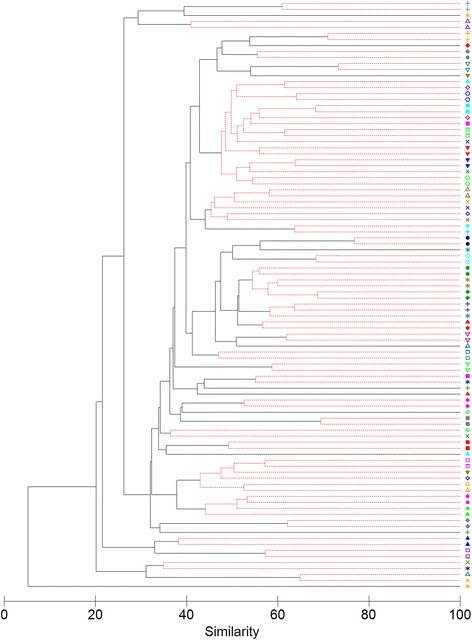
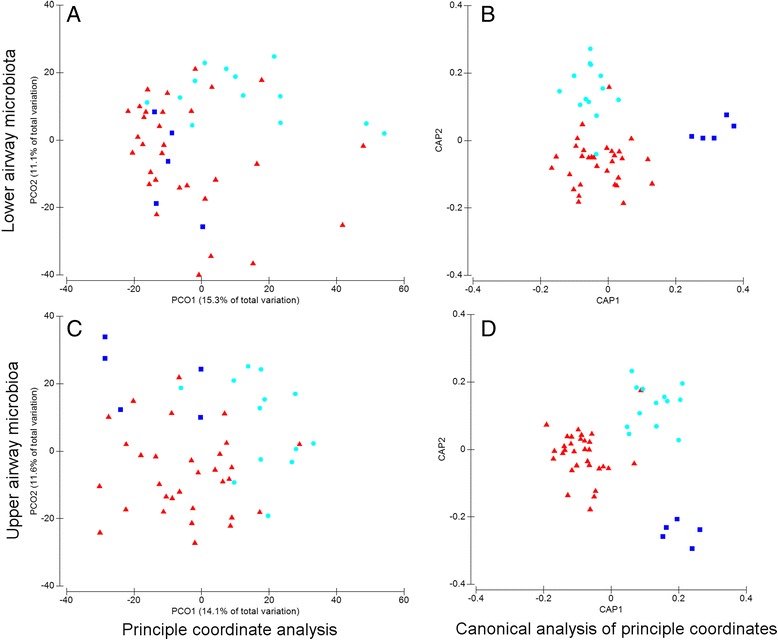
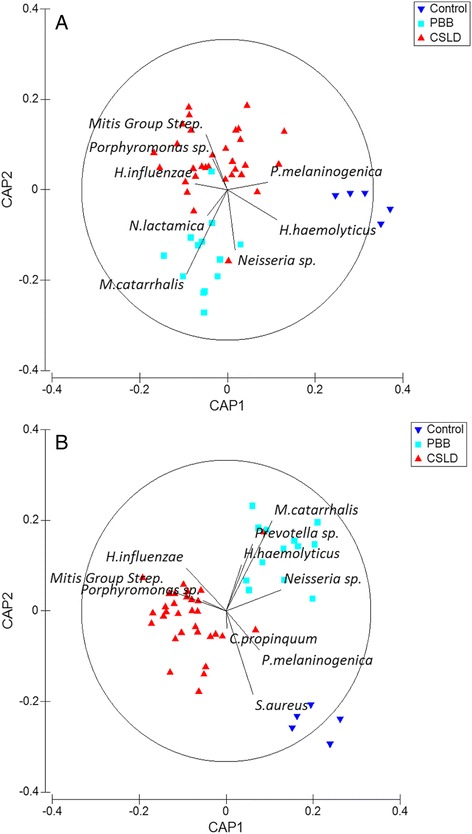
BACKGROUND: Invasive methods requiring general anaesthesia are needed to sample the lung microbiota in young children who do not expectorate. This poses substantial challenges to longitudinal study of paediatric airway microbiota. Non-invasive upper airway sampling is an alternative method for monitoring airway microbiota; however, there are limited data describing the relationship of such results with lung microbiota in young children. In this study, we compared the upper and lower airway microbiota in young children to determine whether non-invasive upper airway sampling procedures provide a reliable measure of either lung microbiota or clinically defined differences. RESULTS: The microbiota in oropharyngeal (OP) swabs, nasopharyngeal (NP) swabs and bronchoalveolar lavage (BAL) from 78 children (median age 2.2 years) with and without lung disease were characterised using 16S rRNA gene sequencing. Permutational multivariate analysis of variance (PERMANOVA) detected significant differences between the microbiota in BAL and those in both OP swabs (p = 0.0001, Pseudo-F = 12.2, df = 1) and NP swabs (p = 0.0001; Pseudo-F = 21.9, df = 1) with the NP and BAL microbiota more different than the OP and BAL, as indicated by a higher Pseudo-F value. The microbiota in combined OP and NP data (upper airways) provided a more comprehensive representation of BAL microbiota, but significant differences between the upper airway and BAL microbiota remained, albeit with a considerably smaller Pseudo-F (PERMANOVA p = 0.0001; Pseudo-F = 4.9, df = 1). Despite this overall difference, paired BAL and upper airway (OP and NP) microbiota were >50 % similar among 69 % of children. Furthermore, canonical analysis of principal coordinates (CAP analysis) detected significant differences between the microbiota from clinically defined groups when analysing either BAL (eigenvalues >0.8; misclassification rate 26.5 %) or the combined OP and NP data (eigenvalues >0.8; misclassification rate 12.2 %). CONCLUSIONS: Upper airway sampling provided an imperfect, but reliable, representation of the BAL microbiota for most children in this study. We recommend inclusion of both OP and NP specimens when non-invasive upper airway sampling is needed to assess airway microbiota in young children who do not expectorate. The results of the CAP analysis suggest lower and upper airway microbiota profiles may differentiate children with chronic suppurative lung disease from those with persistent bacterial bronchitis; however, further research is needed to confirm this observation.
Overview
The claims and statistics of this paper haven’t been checked yet.
Free: it reads the open-access text and checks the first 5 claims that cite a source we can check. Create a free account to check every claim.
Integrity signals
Registry
Cites
Statistics
Figures
Verification
Claims the paper makes
The claims and statistics of this paper haven’t been checked yet.
Free: it reads the open-access text and checks the first 5 claims that cite a source we can check. Create a free account to check every claim.
Claims other papers make about this one
Each is checked against this paper’s own text: does it say what the citing paper says it does?
The source backs part of the claim, not all of it — or backs it for a different population, condition or comparison.
In the citing paper
“Culture-independent microbiota studies have confirmed that the lung microbiota largely resembles the URT microbiota when studied in healthy individuals74,75,76.”
From The microbiota of the respiratory tract: gatekeeper to respiratory health (2017) · cites this paper as [76]
Experimental — accuracy not yet measuredThe source backs part of the claim, not all of it — or backs it for a different population, condition or comparison.
In the citing paper
“The oropharynx seems to be the main source of the lung microbiota in adults74, whereas in children the source is more likely to be both the nasopharynx and oropharynx76.”
From The microbiota of the respiratory tract: gatekeeper to respiratory health (2017) · cites this paper as [76]
Experimental — accuracy not yet measuredThe source backs part of the claim, not all of it — or backs it for a different population, condition or comparison.
In the citing paper
“A study in young children reported that although the lung microbiota was distinct from the microbiota of the URT, it was dominated by species that are also present in the URT, including Moraxella spp., Haemophilus spp., Staphylococcus spp. and Streptococcus spp., but lacked other typical URT species, such as Corynebacterium spp. and Dolosigranulum spp.76.”
From The microbiota of the respiratory tract: gatekeeper to respiratory health (2017) · cites this paper as [76]
Experimental — accuracy not yet measured
Self-check
Percentages, sums and reported differences re-computed from the paper’s own numbers.
The self-check needs the paper’s full text.
Citations
Cites
Schloss, P. D., Westcott, S. L., Ryabin, T., Hall, J. R., Hartmann, M., Hollister, E. B., Lesniewski, R. A., Oakley, B. B., Parks, D. H., Robinson, C. J., et al. (2009) · Applied and Environmental Microbiology · doi:10.1128/aem.01541-09 · Cited by 19,549 · cited 1×
“3) [51] according to the 454-SOP [52, 53] with the following modifications: the sff.”
Methodggplot2: Elegant Graphics for Data Analysis
Wickham, H. (2009) · doi:10.1007/978-0-387-98141-3 · Cited by 14,447
Reagent and laboratory contamination can critically impact sequence-based microbiome analyses
Salter, S. J., Cox, M. J., Turek, E. M., Calus, S. T., Cookson, W. O., Moffatt, M. F., Turner, P., Parkhill, J., Loman, N. J., & Walker, A. W. (2014) · BMC Biology · doi:10.1186/s12915-014-0087-z · Cited by 3,463 · cited 8×
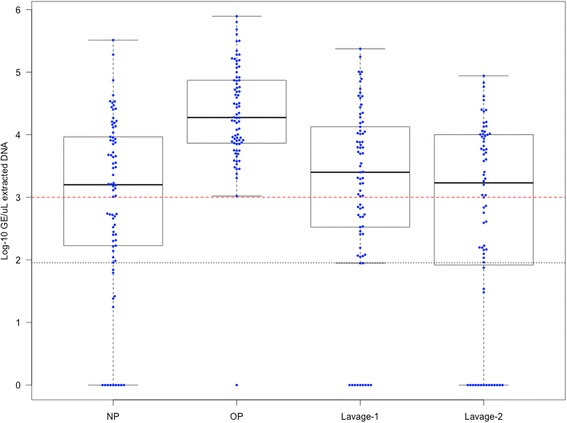
“Low bacterial load was defined as <10(3) GE/μL extracted DNA, as this level was recommended previously for 16S rRNA gene sequencing analyses [24, 25].”
BackgroundMethodResultInfluentialReducing the Effects of PCR Amplification and Sequencing Artifacts on 16S rRNA-Based Studies
Schloss, P. D., Gevers, D., & Westcott, S. L. (2011) · PLoS ONE · doi:10.1371/journal.pone.0027310 · Cited by 2,112 · cited 1×
“3) [51] according to the 454-SOP [52, 53] with the following modifications: the sff.”
MethodNadkarni, M. A., Martin, F. E., Jacques, N. A., & Hunter, N. (2002) · Microbiology · doi:10.1099/00221287-148-1-257 · Cited by 1,938
Teo, S. M., Mok, D., Pham, K., Kusel, M., Serralha, M., Troy, N., Holt, B. J., Hales, B. J., Walker, M. L., Hollams, E., et al. (2015) · Cell Host & Microbe · doi:10.1016/j.chom.2015.03.008 · Cited by 953 · cited 2×
“Several studies have reported associations between NP microbiota and lower airway diseases including pneumonia [17], bronchiolitis [33] and asthma [18].”
BackgroundBassis, C. M., Erb-Downward, J. R., Dickson, R. P., Freeman, C. M., Schmidt, T. M., Young, V. B., Beck, J. M., Curtis, J. L., & Huffnagle, G. B. (2015) · mBio · doi:10.1128/mbio.00037-15 · Cited by 839 · cited 9×
“In recent years, studies comparing upper and lower airway specimens have reported that the lower airway microbiota is more similar to that of the oropharynx than that in the nose or nasopharynx [1, 12, 13]; however, these studies have been limited to adults [1, 12]”
BackgroundResultInfluentialBiesbroek, G., Tsivtsivadze, E., Sanders, E. A. M., Montijn, R., Veenhoven, R. H., Keijser, B. J. F., & Bogaert, D. (2014) · American Journal of Respiratory and Critical Care Medicine · doi:10.1164/rccm.201407-1240oc · Cited by 572 · cited 5×
“It is unclear if these data can be extrapolated to other paediatric populations, especially as the nasopharynx is an important reservoir of lower respiratory pathogens in young children [14, 15].”
BackgroundResultInfluentialThe Lung Microbiome: New Principles for Respiratory Bacteriology in Health and Disease
Dickson, R. P., & Huffnagle, G. B. (2015) · PLOS Pathogens · doi:10.1371/journal.ppat.1004923 · Cited by 563 · cited 1×
“Seeding of the lower airways by NP microbiota during episodes of rhinorrhoea has been suggested [28], but there have been limited data to date to support this hypothesis.”
BackgroundThe role of the microbiome in exacerbations of chronic lung diseases
Dickson, R. P., Martinez, F. J., & Huffnagle, G. B. (2014) · The Lancet · doi:10.1016/s0140-6736(14)61136-3 · Cited by 495 · cited 1×
“efficiently clear or contain the microbes to prevent infection [2].”
Backgroundde Blic, J., Midulla, F., Barbato, A., Clement, A., Dab, I., Eber, E., Green, C., Grigg, J., Kotecha, S., Kurland, G., et al. (2000) · European Respiratory Journal · doi:10.1183/09031936.00.15121700 · Cited by 485
Satzke, C., Turner, P., Virolainen-Julkunen, A., Adrian, P. V., Antonio, M., Hare, K. M., Henao-Restrepo, A. M., Leach, A. J., Klugman, K. P., Porter, B. D., et al. (2013) · Vaccine · doi:10.1016/j.vaccine.2013.08.062 · Cited by 478 · cited 1×
“STGGB is a preservative media optimised for recovery of respiratory pathogens [43] and is widely used in NP carriage studies [44].”
BackgroundHill, A. T., Campbell, E. J., Hill, S. L., Bayley, D. L., & Stockley, R. A. (2000) · The American Journal of Medicine · doi:10.1016/s0002-9343(00)00507-6 · Cited by 414 · cited 1×
“The clinical significance of this observation is unclear; however, low bacterial load in airway specimens has been associated with better clinical outcomes in patients with respiratory infections [6, 41].”
BackgroundLEACH, A. J., BOSWELL, J. B., ASCHE, V., NIENHUYS, T. G., & MATHEWS, J. D. (1994) · The Pediatric Infectious Disease Journal · doi:10.1097/00006454-199411000-00009 · Cited by 345 · cited 1×
“differences in the multiplicity and density of potential respiratory pathogens colonising the nasopharynx of Indigenous compared to non-Indigenous Australian children [36, 37].”
BackgroundBisgaard, H., Hermansen, M. N., Bonnelykke, K., Stokholm, J., Baty, F., Skytt, N. L., Aniscenko, J., Kebadze, T., & Johnston, S. L. (2010) · BMJ · doi:10.1136/bmj.c4978 · Cited by 316
Armstrong, D. S., Grimwood, K., Carlin, J. B., Carzino, R., Olinsky, A., & Phenlan, P. D. (1996) · Pediatric Pulmonology · doi:10.1002/(sici)1099-0496(199605)21:5<267::aid-ppul1>3.0.co;2-k · Cited by 301 · cited 3×
“the lower airways of children <2 years of age [6].”
BackgroundMethodGoddard, A. F., Staudinger, B. J., Dowd, S. E., Joshi-Datar, A., Wolcott, R. D., Aitken, M. L., Fligner, C. L., & Singh, P. K. (2012) · Proceedings of the National Academy of Sciences · doi:10.1073/pnas.1107435109 · Cited by 256 · cited 2×
“In contrast, findings from other studies have been specific to populations of healthy adults [1]; older children, adolescents and adults with cystic fibrosis [8, 10, 13]; and patients with end-stage respiratory disease [9, 11].”
BackgroundResultO'Brien, K. L., Bronsdon, M. A., Dagan, R., Yagupsky, P., Janco, J., Elliott, J., Whitney, C. G., Yang, Y.-H., Robinson, L.-G. E., Schwartz, B., et al. (2001) · Journal of Clinical Microbiology · doi:10.1128/jcm.39.3.1021-1024.2001 · Cited by 199 · cited 1×
“STGGB is a preservative media optimised for recovery of respiratory pathogens [43] and is widely used in NP carriage studies [44].”
BackgroundBiesbroek, G., Sanders, E. A. M., Roeselers, G., Wang, X., Caspers, M. P. M., Trzciński, K., Bogaert, D., & Keijser, B. J. F. (2012) · PLoS ONE · doi:10.1371/journal.pone.0032942 · Cited by 196 · cited 5×
“Low bacterial load was defined as <10(3) GE/μL extracted DNA, as this level was recommended previously for 16S rRNA gene sequencing analyses [24, 25].”
BackgroundMethodResultInfluentialJervis-Bardy, J., Leong, L. E. X., Marri, S., Smith, R. J., Choo, J. M., Smith-Vaughan, H. C., Nosworthy, E., Morris, P. S., O’Leary, S., Rogers, G. B., et al. (2015) · Microbiome · doi:10.1186/s40168-015-0083-8 · Cited by 192 · cited 5×
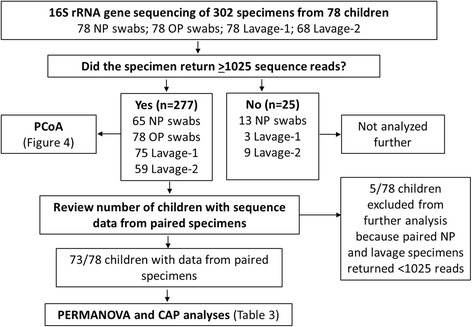
“Specimens with fewer than 1025 reads were excluded from further analysis [24, 26].”
BackgroundResultInfluentialSelf-citationVissing, N. H., Chawes, B. L. K., & Bisgaard, H. (2013) · American Journal of Respiratory and Critical Care Medicine · doi:10.1164/rccm.201302-0215oc · Cited by 170
Assessment of Airway Microbiota and Inflammation in Cystic Fibrosis Using Multiple Sampling Methods
Zemanick, E. T., Wagner, B. D., Robertson, C. E., Stevens, M. J., Szefler, S. J., Accurso, F. J., Sagel, S. D., & Harris, J. K. (2014) · Annals of the American Thoracic Society · doi:10.1513/annalsats.201407-310oc · Cited by 165 · cited 3×
“In contrast, findings from other studies have been specific to populations of healthy adults [1]; older children, adolescents and adults with cystic fibrosis [8, 10, 13]; and patients with end-stage respiratory disease [9, 11].”
BackgroundResultMackenzie, G. A., Leach, A. J., Carapetis, J. R., Fisher, J., & Morris, P. S. (2010) · BMC Infectious Diseases · doi:10.1186/1471-2334-10-304 · Cited by 165 · cited 1×
“It is unclear if these data can be extrapolated to other paediatric populations, especially as the nasopharynx is an important reservoir of lower respiratory pathogens in young children [14, 15].”
BackgroundBoutin, S., Graeber, S. Y., Weitnauer, M., Panitz, J., Stahl, M., Clausznitzer, D., Kaderali, L., Einarsson, G., Tunney, M. M., Elborn, J. S., et al. (2015) · PLOS ONE · doi:10.1371/journal.pone.0116029 · Cited by 164 · cited 4×
“In contrast, findings from other studies have been specific to populations of healthy adults [1]; older children, adolescents and adults with cystic fibrosis [8, 10, 13]; and patients with end-stage respiratory disease [9, 11].”
BackgroundResultInfluentialMeasuring nasal bacterial load and its association with otitis media
Smith-Vaughan, H., Byun, R., Nadkarni, M., Jacques, N. A., Hunter, N., Halpin, S., Morris, P. S., & Leach, A. J. (2006) · BMC Ear, Nose and Throat Disorders · doi:10.1186/1472-6815-6-10 · Cited by 154
Self-citationRogers, G. B., Carroll, M. P., Serisier, D. J., Hockey, P. M., Jones, G., Kehagia, V., Connett, G. J., & Bruce, K. D. (2006) · Journal of Clinical Microbiology · doi:10.1128/jcm.02282-05 · Cited by 150 · cited 1×
“In contrast, findings from other studies have been specific to populations of healthy adults [1]; older children, adolescents and adults with cystic fibrosis [8, 10, 13]; and patients with end-stage respiratory disease [9, 11].”
ResultChang, A. B., Bell, S. C., Byrnes, C. A., Grimwood, K., Holmes, P. W., King, P. T., Kolbe, J., Landau, L. I., Maguire, G. P., McDonald, M., et al. (2010) · The Medical Journal of Australia · doi:10.5694/j.1326-5377.2010.tb03949.x · Cited by 143
Self-citationDevelopment of the Nasopharyngeal Microbiota in Infants with Cystic Fibrosis
Prevaes, S. M. P. J., de Winter-de Groot, K. M., Janssens, H. M., de Steenhuijsen Piters, W. A. A., Tramper-Stranders, G. A., Wyllie, A. L., Hasrat, R., Tiddens, H. A., van Westreenen, M., van der Ent, C. K., et al. (2016) · American Journal of Respiratory and Critical Care Medicine · doi:10.1164/rccm.201509-1759oc · Cited by 131 · cited 1×
“Alternative extraction methods may also increase bacterial DNA yield from low biomass specimens [25] and, thus, improve microbiomic characterisation of paediatric airway specimens [42].”
BackgroundWhiteson, K. L., Bailey, B., Bergkessel, M., Conrad, D., Delhaes, L., Felts, B., Harris, J. K., Hunter, R., Lim, Y. W., Maughan, H., et al. (2014) · American Journal of Respiratory and Critical Care Medicine · doi:10.1164/rccm.201312-2129pp · Cited by 123 · cited 2×
“specimens in our study are unclear but may indicate either a role for other upper airway bacterial reservoirs in seeding the lower airways (for example, the sinuses [4, 34, 35]) or lower airway environmental pressures that select for specific microbiota [1, 8].”
BackgroundAanæs, K. (2013) · Journal of Cystic Fibrosis · doi:10.1016/s1569-1993(13)00150-1 · Cited by 122 · cited 1×
“specimens in our study are unclear but may indicate either a role for other upper airway bacterial reservoirs in seeding the lower airways (for example, the sinuses [4, 34, 35]) or lower airway environmental pressures that select for specific microbiota [1, 8].”
BackgroundDynamics of the nasal microbiota in infancy: A prospective cohort study
Mika, M., Mack, I., Korten, I., Qi, W., Aebi, S., Frey, U., Latzin, P., & Hilty, M. (2015) · Journal of Allergy and Clinical Immunology · doi:10.1016/j.jaci.2014.12.1909 · Cited by 118 · cited 1×
“Consistent with earlier reports [17, 39, 40], a high proportion (31 %) of DNA extracts in our study had bacterial loads below that recommended for 16S rRNA gene sequencing [24, 25].”
ResultHare, K. M., Grimwood, K., Leach, A. J., Smith‐Vaughan, H., Torzillo, P. J., Morris, P. S., & Chang, A. B. (2010) · The Journal of Pediatrics · doi:10.1016/j.jpeds.2010.06.002 · Cited by 117 · cited 2×
“Furthermore, the nasopharynx is an important reservoir of respiratory pathogens in paediatric populations [14, 16, 31], with NP pathogen carriage associated with the increased risk of lower airway infection [32].”
BackgroundSelf-citationProspective Characterization of Protracted Bacterial Bronchitis in Children
Wurzel, D. F., Marchant, J. M., Yerkovich, S. T., Upham, J. W., Mackay, I. M., Masters, I. B., & Chang, A. B. (2014) · CHEST Journal · doi:10.1378/chest.13-2442 · Cited by 111 · cited 1×
“, failure to thrive, chest wall deformity) and resolution of cough within 2 weeks of commencing appropriate antibiotic therapy [45].”
BackgroundSelf-citationKapur, N., Masel, J., Watson, D., Masters, I. B., & Chang, A. B. (2010) · CHEST Journal · doi:10.1378/chest.10-1763 · Cited by 108
Self-citationThree Clinically Distinct Chronic Pediatric Airway Infections Share a Common Core Microbiota
Gast, C., Cuthbertson, L., Rogers, G. B., Pope, C. E., Marsh, R. L., Redding, G. J., Bruce, K. D., Chang, A. B., & Hoffman, L. R. (2014) · Annals of the American Thoracic Society · doi:10.1513/annalsats.201312-456oc · Cited by 103 · cited 2×
“Reflecting this limitation, studies of lung microbiota in very young children have generally been cross-sectional [5].”
BackgroundResultSelf-citationNasopharyngeal Microbiota in Healthy Children and Pneumonia Patients
Sakwinska, O., Bastic Schmid, V., Berger, B., Bruttin, A., Keitel, K., Lepage, M., Moine, D., Ngom Bru, C., Brüssow, H., & Gervaix, A. (2014) · Journal of Clinical Microbiology · doi:10.1128/jcm.03280-13 · Cited by 97 · cited 2×
“Consistent with earlier reports [17, 39, 40], a high proportion (31 %) of DNA extracts in our study had bacterial loads below that recommended for 16S rRNA gene sequencing [24, 25].”
BackgroundResultCardenas, P. A., Cooper, P. J., Cox, M. J., Chico, M., Arias, C., Moffatt, M. F., & Cookson, W. O. (2012) · PLoS ONE · doi:10.1371/journal.pone.0046803 · Cited by 95
Gillis, D., & Riminton, S. (2011) · The Medical Journal of Australia · doi:10.5694/j.1326-5377.2011.tb03789.x · Cited by 89
Ciofu, O., Johansen, H. K., Aanæs, K., Wassermann, T., Alhede, M., von Buchwald, C., & Høiby, N. (2013) · Journal of Cystic Fibrosis · doi:10.1016/j.jcf.2013.02.004 · Cited by 86
Botero, L. E., Delgado-Serrano, L., Cepeda, M., Bustos, J. R., Anzola, J. M., Portillo, P. D., Robledo, J., & Zambrano, M. M. (2014) · Microbiome · doi:10.1186/2049-2618-2-29 · Cited by 85 · cited 2×
“In recent years, studies comparing upper and lower airway specimens have reported that the lower airway microbiota is more similar to that of the oropharynx than that in the nose or nasopharynx [1, 12, 13]; however, these studies have been limited to adults [1, 12]”
BackgroundResultDirectly Sampling the Lung of a Young Child with Cystic Fibrosis Reveals Diverse Microbiota
Brown, P. S., Pope, C. E., Marsh, R. L., Qin, X. G., McNamara, S., Gibson, R. L., Burns, J. L., Deutsch, G. H., & Hoffman, L. R. (2014) · Annals of the American Thoracic Society · doi:10.1513/annalsats.201311-383oc · Cited by 76 · cited 2×
“In contrast, findings from other studies have been specific to populations of healthy adults [1]; older children, adolescents and adults with cystic fibrosis [8, 10, 13]; and patients with end-stage respiratory disease [9, 11].”
BackgroundResultSelf-citationPizzutto, S. J., Grimwood, K., Bauert, P., Schutz, K. L., Yerkovich, S. T., Upham, J. W., & Chang, A. B. (2012) · Pediatric Pulmonology · doi:10.1002/ppul.22544 · Cited by 57 · cited 3×
“The study cohort was a subset of children <10 years of age sequentially enrolled in either (i) an observational study of paediatric CSLD at Royal Darwin Hospital, Darwin, Australia, between October 2011–October 2012 or (ii) an observational study of children undergoing bronchoscopy at the Royal Children’s Hospital, Br…”
MethodSelf-citationHyde, E. R., Petrosino, J. F., Piedra, P. A., Camargo, C. A., Espinola, J. A., & Mansbach, J. M. (2014) · Journal of Allergy and Clinical Immunology · doi:10.1016/j.jaci.2013.10.049 · Cited by 54 · cited 1×
“Several studies have reported associations between NP microbiota and lower airway diseases including pneumonia [17], bronchiolitis [33] and asthma [18].”
BackgroundPulmonary Innate Immunity in Children with Protracted Bacterial Bronchitis
Chang, A. B., Yerkovich, S. T., Gibson, P. G., Anderson‐James, S., Petsky, H., Carroll, M. L., Masters, I. B., Marchant, J. M., Wurzel, D. F., & Upham, J. W. (2012) · The Journal of Pediatrics · doi:10.1016/j.jpeds.2012.03.049 · Cited by 45 · cited 3×
“The study cohort was a subset of children <10 years of age sequentially enrolled in either (i) an observational study of paediatric CSLD at Royal Darwin Hospital, Darwin, Australia, between October 2011–October 2012 or (ii) an observational study of children undergoing bronchoscopy at the Royal Children’s Hospital, Br…”
MethodSelf-citationLung disease in indigenous children
Chang, A. B., Brown, N., Toombs, M. R., Marsh, R. L., & Redding, G. J. (2014) · Paediatric Respiratory Reviews · doi:10.1016/j.prrv.2014.04.016 · Cited by 45 · cited 1×
“Further study is also needed to understand whether airway microbiota in Indigenous Australian children is different to that of non-Indigenous children and whether such differences may relate to the disproportionately high rates of CSLD in Indigenous children [38].”
BackgroundSelf-citationOdutola, A. A., Antonio, M., Owolabi, O., Bojang, A., Foster-Nyarko, E., Donkor, S. A., Adetifa, I., Taylor, S., Bottomley, C., Greenwood, B. M., et al. (2013) · PLoS ONE · doi:10.1371/journal.pone.0075558 · Cited by 42 · cited 1×
“Furthermore, the nasopharynx is an important reservoir of respiratory pathogens in paediatric populations [14, 16, 31], with NP pathogen carriage associated with the increased risk of lower airway infection [32].”
BackgroundFeazel, L. M., Santorico, S. A., Robertson, C. E., Bashraheil, M. M., Scott, J. A. G., Frank, D. N., & Hammitt, L. L. (2015) · PLoS ONE · doi:10.1371/journal.pone.0128064 · Cited by 33 · cited 1×
“Consistent with earlier reports [17, 39, 40], a high proportion (31 %) of DNA extracts in our study had bacterial loads below that recommended for 16S rRNA gene sequencing [24, 25].”
ResultLambert, S. B., O’Grady, K.-A. F., Gabriel, S., Carter, R., & Nolan, T. M. (2004) · Communicable Diseases Intelligence · doi:10.33321/cdi.2004.28.59 · Cited by 32
Marsh, R. L., Binks, M., Beissbarth, J., Christensen, P. R., Morris, P. S., Leach, A. J., & Smith‐Vaughan, H. (2012) · BMC Ear Nose and Throat Disorders · doi:10.1186/1472-6815-12-11 · Cited by 28 · cited 2×
“The bacterial load was estimated using qPCR targeting the 16S rRNA gene [23], as described previously [22].”
MethodSelf-citationBalemans, W. A. F., Rovers, M. M., Schilder, A. G., Sanders, E. A. M., Kimpen, J. L. L., Zielhuis, G. A., & van der Ent, C. K. (2006) · Clinical & Experimental Allergy · doi:10.1111/j.1365-2222.2006.02423.x · Cited by 19 · cited 1×
“Episodes of rhinorrhoea associated with upper respiratory tract infection are common in young children [29, 30].”
BackgroundChappuy, H., Keitel, K., Gehri, M., Tabin, R., Robitaille, L., Raymond, F., Corbeil, J., Maspoli, V., Bouazza, N., Alcoba, G., et al. (2013) · BMC Infectious Diseases · doi:10.1186/1471-2334-13-357 · Cited by 18 · cited 1×
“Furthermore, the nasopharynx is an important reservoir of respiratory pathogens in paediatric populations [14, 16, 31], with NP pathogen carriage associated with the increased risk of lower airway infection [32].”
BackgroundChang, A. B., Smith‐Vaughan, H., Sloots, T. P., Valery, P. C., Whiley, D. M., Beissbarth, J., & Torzillo, P. J. (2015) · Pneumonia · doi:10.15172/pneu.2015.6/636 · Cited by 12
Self-citationInduced sputum in young healthy children with cystic fibrosis
Forton, J. T. (2015) · Paediatric Respiratory Reviews · doi:10.1016/j.prrv.2015.07.007 · Cited by 11 · cited 1×
“challenging as invasive procedures, such as bronchoalveolar lavage (BAL) collected via bronchoscopy, are required to sample the lower airway microbiota [3].”
Background
Research works printed but not linked: 3
- Anderson M Gorley R Clarke K PERMANOVA+ for PRIMER: guide to software and statistical methods 2008
- BLASTn. http://blast.ncbi.nlm.nih.gov/Blast.cgi. Accessed Sept 2015.
- Clarke K Gorley R PRIMER v6: user manual/tutorial 2006 Plymouth PRIMER-E
Cited by
The microbiota of the respiratory tract: gatekeeper to respiratory health
Man, W. H., de Steenhuijsen Piters, W. A. A., & Bogaert, D. (2017) · Nature Reviews Microbiology · doi:10.1038/nrmicro.2017.14 · Cited by 1,384
“The oropharynx seems to be the main source of the lung microbiota in adults 74 , whereas in children the source is more likely to be both the nasopharynx and oropharynx 76 .”
BackgroundDysbiosis of the gut and lung microbiome has a role in asthma
Hufnagl, K., Pali-Schöll, I., Roth-Walter, F., & Jensen-Jarolim, E. (2020) · Seminars in Immunopathology · doi:10.1007/s00281-019-00775-y · Cited by 364
The Impact of PM2.5 on the Host Defense of Respiratory System
Yang, L., Li, C., & Tang, X. (2020) · Frontiers in Cell and Developmental Biology · doi:10.3389/fcell.2020.00091 · Cited by 315
Bronchiectasis in children: diagnosis and treatment
Chang, A. B., Bush, A., & Grimwood, K. (2018) · The Lancet · doi:10.1016/s0140-6736(18)31554-x · Cited by 276
Self-citationInterplay between the lung microbiome and lung cancer
Mao, Q., Jiang, F., Yin, R., Wang, J., Xia, W., Dong, G., Ma, W., Yang, Y., Xu, L., & Hu, J. (2018) · Cancer Letters · doi:10.1016/j.canlet.2017.11.036 · Cited by 254
Metadata
- Authors
- Marsh, R. L., Kaestli, M., Chang, A. B., Binks, M. J., Pope, C. E., Hoffman, L. R., & Smith-Vaughan, H. C.
- Affiliations
- Charles Darwin University (AU)
- Queensland University of Technology (AU)
- University of Washington (US)
- Corresponding author
- Marsh, R. L.
- Venue
- Microbiome
- Published
- 2016-07-07
- Volume
- 4
- Issue
- 1
- Pages
- 37-37
- ISSN
- 2049-2618 (ISSN-L)
- PMC
- PMC4936249
- OpenAlex
- W2462090727
- Cited by
- 171
- References
- 56
- Citations by year
- 2026: 4 · 2025: 8 · 2024: 14 · 2023: 12 · 2022: 22 · 2021: 16 · 2020: 29 · 2019: 23 · 2018: 22 · 2017: 18 · 2016: 2
- FWCI
- 17.42
- Type
- journal article
- Language
- en
- Open access
- gold
- doi.org
- Licence
- cc-by
- Locations
- Microbiome (publishedVersion, cc-by)
- PubMed Central (publishedVersion, cc-by)
- PubMed (publishedVersion)
- QUT ePrints (Queensland University of Technology) (submittedVersion, cc-by)
- Griffith Research Online (submittedVersion, cc-by)
- Funders
- National Health and Medical Research Council (AU) (1040830)
- Channel 7 Children's Research Foundation (AU) (12500)
- Topics
- Health Sciences › Medicine › Pulmonary and Respiratory Medicine › Asthma and respiratory diseases
- Life Sciences › Biochemistry, Genetics and Molecular Biology › Molecular Biology › Gut microbiota and health
- Health Sciences › Dentistry › Periodontics › Oral microbiology and periodontitis research
- Keywords
- lung microbiome, bronchoalveolar lavage, oropharyngeal microbiota, nasopharyngeal microbiota, non-invasive sampling, chronic lung disease, preterm infants, young children, 16S rRNA gene sequencing, nasopharyngeal swab
- MeSH terms
- Bacteria, Bacterial Infections, Bronchoalveolar Lavage Fluid, Child, Preschool, DNA, Bacterial, DNA, Ribosomal, Female, Humans, Infant, Longitudinal Studies, Lung Diseases, Male, Nasopharynx, Oropharynx, Phylogeny, RNA, Ribosomal, 16S, Sequence Analysis, DNA, Microbiota
About these checks
Registry, retraction, Cites and statistics results are computed, not judged, with one exception: a printed reference that no index lists is read once by a model before it counts as a citation error. Claims are extracted by a model and kept only when their quote appears verbatim in the text; each cited source is then checked, with a model’s help, for whether it says what the claim relies on. Those verdicts can be wrong — read the claim’s quote and the cited source before relying on one.
Statistics and arithmetic are recomputed, not judged.
Confidence bands are shown only for fields calibrated on our annotated test set. None is calibrated yet, so no band is shown.
What counts as a claim ›How we measure confidence ›How we check this ›
Are you an author, or do you see a problem with this page? Request a review
Data sources
Bibliographic data: Semantic Scholar, OpenAlex, Crossref.
Contains information from the Semantic Scholar Academic Graph Datasets, made available under the ODC Attribution License (ODC-BY 1.0).
Semantic Scholar’s data is described in: Kinney, R., et al. (2023). The Semantic Scholar Open Data Platform. arXiv:2301.10140.
