

Aberrant intestinal microbiota due to IL-1 receptor antagonist deficiency promotes IL-17- and TLR4-dependent arthritis
Open accessThe DOI matches its Crossref record; 58 of the 59 references it cites were found in a registry or an index.
Abstract
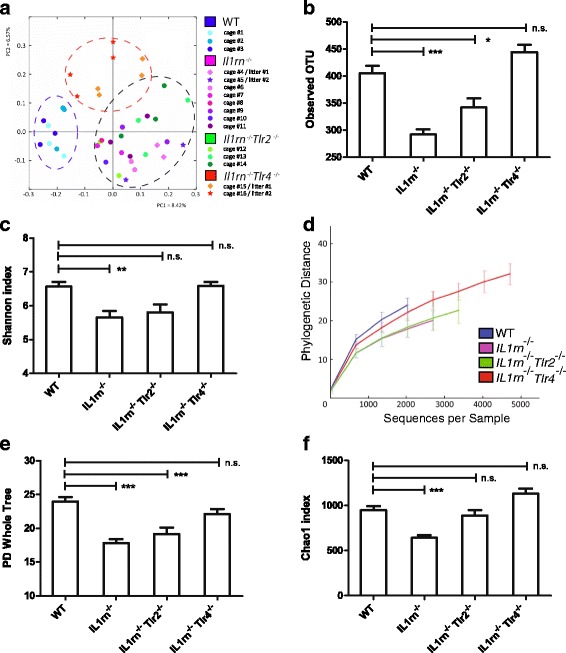
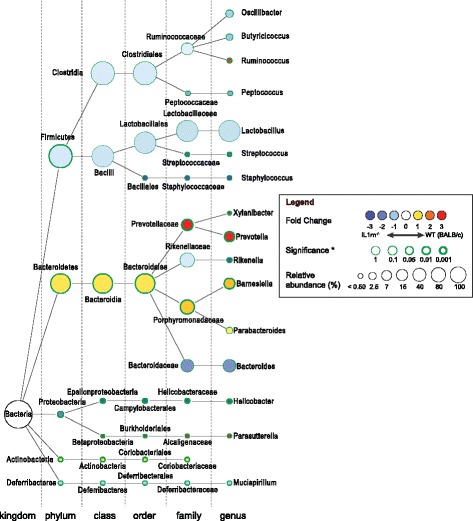
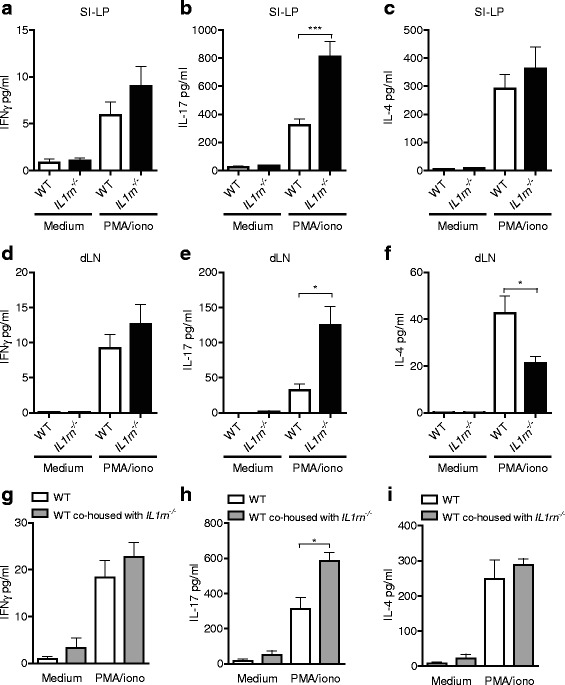
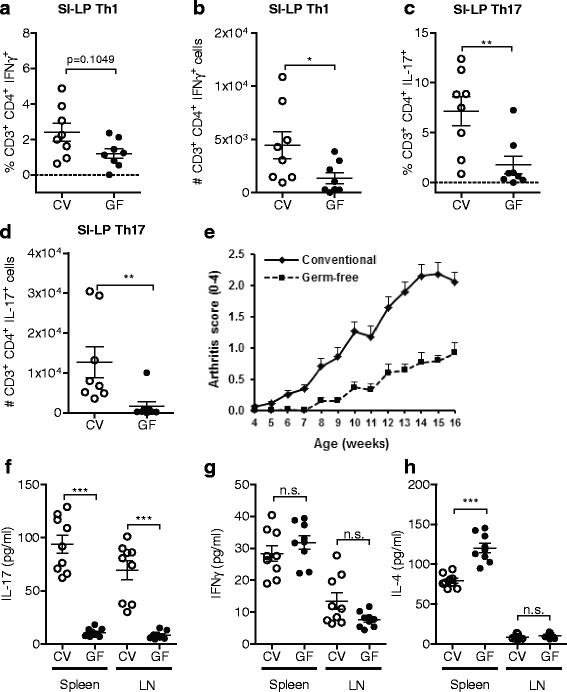
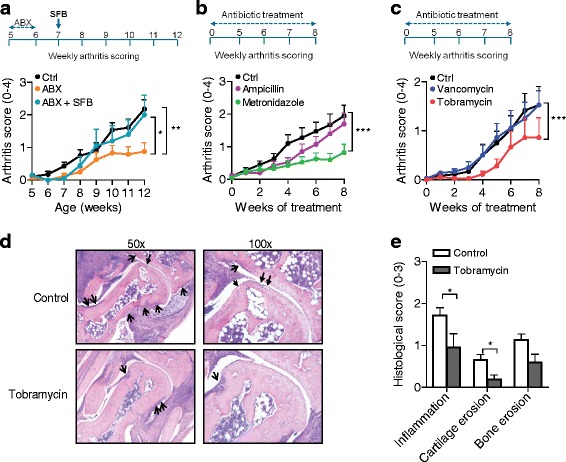
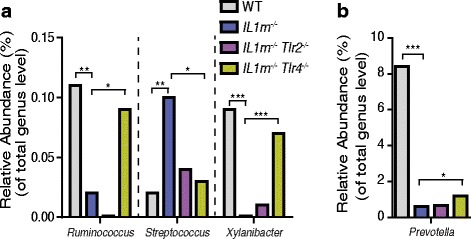
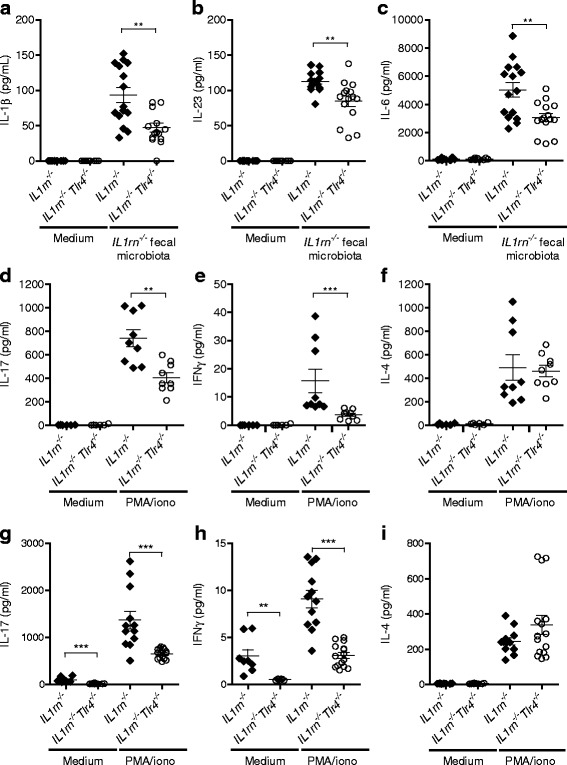
Perturbation of commensal intestinal microbiota has been associated with several autoimmune diseases. Mice deficient in interleukin-1 receptor antagonist (Il1rn −/− mice) spontaneously develop autoimmune arthritis and are susceptible to other autoimmune diseases such as psoriasis, diabetes, and encephalomyelitis; however, the mechanisms of increased susceptibility to these autoimmune phenotypes are poorly understood. We investigated the role of interleukin-1 receptor antagonist (IL-1Ra) in regulation of commensal intestinal microbiota, and assessed the involvement of microbiota subsets and innate and adaptive mucosal immune responses that underlie the development of spontaneous arthritis in Il1rn −/− mice. Using high-throughput 16S rRNA gene sequencing, we show that IL-1Ra critically maintains the diversity and regulates the composition of intestinal microbiota in mice. IL-1Ra deficiency reduced the intestinal microbial diversity and richness, and caused specific taxonomic alterations characterized by overrepresented Helicobacter and underrepresented Ruminococcus and Prevotella. Notably, the aberrant intestinal microbiota in IL1rn −/− mice specifically potentiated IL-17 production by intestinal lamina propria (LP) lymphocytes and skewed the LP T cell balance in favor of T helper 17 (Th17) cells, an effect transferable to WT mice by fecal microbiota. Importantly, LP Th17 cell expansion and the development of spontaneous autoimmune arthritis in IL1rn −/− mice were attenuated under germ-free condition. Selective antibiotic treatment revealed that tobramycin-induced alterations of commensal intestinal microbiota, i.e., reduced Helicobacter, Flexispira, Clostridium, and Dehalobacterium, suppressed arthritis in IL1rn −/− mice. The arthritis phenotype in IL1rn −/− mice was previously shown to depend on Toll-like receptor 4 (TLR4). Using the ablation of both IL-1Ra and TLR4, we here show that the aberrations in the IL1rn −/− microbiota are partly TLR4-dependent. We further identify a role for TLR4 activation in the intestinal lamina propria production of IL-17 and cytokines involved in Th17 differentiation preceding the onset of arthritis. These findings identify a critical role for IL1Ra in maintaining the natural diversity and composition of intestinal microbiota, and suggest a role for TLR4 in mucosal Th17 cell induction associated with the development of autoimmune disease in mice.
Overview
The claims and statistics of this paper haven’t been checked yet.
Free: it reads the open-access text and checks the first 5 claims that cite a source we can check. Create a free account to check every claim.
Integrity signals
Registry
Cites
Statistics
Figures
Verification
Claims the paper makes
The claims and statistics of this paper haven’t been checked yet.
Free: it reads the open-access text and checks the first 5 claims that cite a source we can check. Create a free account to check every claim.
Claims other papers make about this one
Each is checked against this paper’s own text: does it say what the citing paper says it does?
In the citing paper
“Dysbiotic microbiota from IL1rn–/– mice elicits a IL17 response by intestinal lymphocytes.175”
From Interaction between microbiota and immunity in health and disease (2020) · cites this paper as [175]
Self-check
Percentages, sums and reported differences re-computed from the paper’s own numbers.
The self-check needs the paper’s full text.
Citations
Cites
QIIME allows analysis of high-throughput community sequencing data
Caporaso, J. G., Kuczynski, J., Stombaugh, J., Bittinger, K., Bushman, F. D., Costello, E. K., Fierer, N., Peña, A. G., Goodrich, J. K., Gordon, J. I., et al. (2010) · Nature Methods · doi:10.1038/nmeth.f.303 · Cited by 34,887
A human gut microbial gene catalogue established by metagenomic sequencing
MetaHIT Consortium, Qin, J., Li, R., Raes, J., Arumugam, M., Burgdorf, K. S., Manichanh, C., Nielsen, T., Pons, N., Levenez, F., et al. (2010) · Nature · doi:10.1038/nature08821 · Cited by 11,624 · cited 5×
“However, given that SFB were not found in human adults [30, 31], it is important to investigate the involvement of other indigenous microbiota in arthritis.”
InfluentialThe Ribosomal Database Project: improved alignments and new tools for rRNA analysis
Cole, J. R., Wang, Q., Cardenas, E., Fish, J., Chai, B., Farris, R. J., Kulam-Syed-Mohideen, A. S., McGarrell, D. M., Marsh, T., Garrity, G. M., et al. (2009) · Nucleic Acids Research · doi:10.1093/nar/gkn879 · Cited by 4,762 · cited 1×
“2 was used for taxonomic classification [59].”
Induction of Intestinal Th17 Cells by Segmented Filamentous Bacteria
Ivanov, I. I., Atarashi, K., Manel, N., Brodie, E. L., Shima, T., Karaoz, U., Wei, D., Goldfarb, K. C., Santee, C. A., Lynch, S. V., et al. (2009) · Cell · doi:10.1016/j.cell.2009.09.033 · Cited by 4,554 · cited 16×
“Cell cultures and cytokine measurements SI-LP mononuclear cells (4 × 10⁵ cells/well), LN cells (2 × 10⁵ cells/well), and splenocytes (1 × 10⁵ cells/well) were cultured in round-bottom 96-well plates in the presence of PMA (50 ng/ml; Sigma) and ionomycin (1 μg/ml; Sigma) for 5 or 6 h, as indicated in the figure legends.”
InfluentialInteractions Between the Microbiota and the Immune System
Hooper, L. V., Littman, D. R., & Macpherson, A. J. (2012) · Science · doi:10.1126/science.1223490 · Cited by 4,173
Chimeric 16S rRNA sequence formation and detection in Sanger and 454-pyrosequenced PCR amplicons
Haas, B. J., Gevers, D., Earl, A. M., Feldgarden, M., Ward, D. V., Giannoukos, G., Ciulla, D., Tabbaa, D., Highlander, S. K., Sodergren, E., et al. (2011) · Genome Research · doi:10.1101/gr.112730.110 · Cited by 3,473 · cited 1×
“Additionally, reads were filtered for chimeric sequences using Chimera Slayer as described before [57].”
Takeuchi, O., Hoshino, K., Kawai, T., Sanjo, H., Takada, H., Ogawa, T., Takeda, K., & Akira, S. (1999) · Immunity · doi:10.1016/s1074-7613(00)80119-3 · Cited by 3,362
Treg induction by a rationally selected mixture of Clostridia strains from the human microbiota
Atarashi, K., Tanoue, T., Oshima, K., Suda, W., Nagano, Y., Nishikawa, H., Fukuda, S., Saito, T., Narushima, S., Hase, K., et al. (2013) · Nature · doi:10.1038/nature12331 · Cited by 2,872
Expansion of intestinal Prevotella copri correlates with enhanced susceptibility to arthritis
Scher, J. U., Sczesnak, A., Longman, R. S., Segata, N., Ubeda, C., Bielski, C., Rostron, T., Cerundolo, V., Pamer, E. G., Abramson, S. B., et al. (2013) · eLife · doi:10.7554/elife.01202 · Cited by 2,047 · cited 2×
“Importantly, loss of intestinal microbial diversity and richness also coincides with human autoimmune diseases such as diabetes and rheumatoid and psoriatic arthritis [14, 16, 35].”
Self-citationIvanov, I. I., Frutos, R. D. L., Manel, N., Yoshinaga, K., Rifkin, D. B., Sartor, R. B., Finlay, B. B., & Littman, D. R. (2008) · Cell Host & Microbe · doi:10.1016/j.chom.2008.09.009 · Cited by 1,770
Research works printed but not linked: 1
- Luckey Marietta D Luthra E Harvinder S Patel R Murray J Mangalam A Commensal gut-derived bacteria as therapy for systemic autoimmune disease Abstracts of the American College of Rheumatology/Association of Rheumatology Health Professionals Annual Scientific Meeting 2012
Cited by
Interaction between microbiota and immunity in health and disease
Zheng, D., Liwinski, T., & Elinav, E. (2020) · Cell Research · doi:10.1038/s41422-020-0332-7 · Cited by 3,947
“Dysbiotic microbiota from IL1rn mice elicits a IL17 response by intestinal lymphocytes.(175) Moreover, genetically susceptible mice colonized with dysbiotic microbiota from RA patients show an enhanced Th17 type response.”
BackgroundLongitudinal multi-omics of host–microbe dynamics in prediabetes
Zhou, W., Sailani, M. R., Contrepois, K., Zhou, Y., Ahadi, S., Leopold, S. R., Zhang, M. J., Rao, V., Avina, M., Mishra, T., et al. (2019) · Nature · doi:10.1038/s41586-019-1236-x · Cited by 583
The role of the gut microbiome in systemic inflammatory disease
Clemente, J. C., Manasson, J., & Scher, J. U. (2018) · BMJ · doi:10.1136/bmj.j5145 · Cited by 568
Self-citationThe gut–joint axis in rheumatoid arthritis
Zaiss, M. M., Joyce Wu, H.-J., Mauro, D., Schett, G., & Ciccia, F. (2021) · Nature Reviews Rheumatology · doi:10.1038/s41584-021-00585-3 · Cited by 389
Revisit gut microbiota and its impact on human health and disease
Ding, R.-X., Goh, W.-R., Wu, R.-N., Yue, X.-Q., Luo, X., Khine, W. W. T., Wu, J.-R., & Lee, Y.-K. (2019) · Journal of Food and Drug Analysis · doi:10.1016/j.jfda.2018.12.012 · Cited by 268
Host–microbiota interactions in rheumatoid arthritis
Maeda, Y., & Takeda, K. (2019) · Experimental & Molecular Medicine · doi:10.1038/s12276-019-0283-6 · Cited by 180
Mouse Models of Psoriasis: A Comprehensive Review
Gangwar, R. S., Gudjonsson, J. E., & Ward, N. L. (2022) · Journal of Investigative Dermatology · doi:10.1016/j.jid.2021.06.019 · Cited by 177
Gheorghe, C. E., Ritz, N. L., Martin, J. A., Wardill, H. R., Cryan, J. F., & Clarke, G. (2021) · Gut Microbes · doi:10.1080/19490976.2021.1941711 · Cited by 148
Macrophages Maintain Epithelium Integrity by Limiting Fungal Product Absorption
Chikina, A. S., Nadalin, F., Maurin, M., San-Roman, M., Thomas-Bonafos, T., Li, X. V., Lameiras, S., Baulande, S., Henri, S., Malissen, B., et al. (2020) · Cell · doi:10.1016/j.cell.2020.08.048 · Cited by 138
Gut microbiota in pre-clinical rheumatoid arthritis: From pathogenesis to preventing progression
Lin, L., Zhang, K., Xiong, Q., Zhang, J., Cai, B., Huang, Z., Yang, B., Wei, B., Chen, J., & Niu, Q. (2023) · Journal of Autoimmunity · doi:10.1016/j.jaut.2023.103001 · Cited by 148
Rogier, R., Evans-Marin, H., Manasson, J., van der Kraan, P. M., Walgreen, B., Helsen, M. M., van den Bersselaar, L. A., van de Loo, F. A., van Lent, P. L., Abramson, S. B., et al. (2017) · Scientific Reports · doi:10.1038/s41598-017-15802-x · Cited by 130
Self-citationExploring the role of IL-1β in inflammatory bowel disease pathogenesis
Aggeletopoulou, I., Kalafateli, M., Tsounis, E. P., & Triantos, C. K. (2024) · Frontiers in Medicine · doi:10.3389/fmed.2024.1307394 · Cited by 158
“In pre-clinical studies, IL-1Ra KO mice have shown high susceptibility to several autoimmune diseases; the study by Rogier et al. (68), reported that in IL-1Ra KO mice, the arthritis severity was significantly influenced by the composition of the commensal microbiota, indicating a strong microbial…”
BackgroundInfluentialToll-Like Receptors, Infections, and Rheumatoid Arthritis
Arleevskaya, M. I., Larionova, R., Brooks, W. H., Bettacchioli, É., & Renaudineau, Y. (2019) · Clinical Reviews in Allergy & Immunology · doi:10.1007/s12016-019-08742-z · Cited by 124
Gut microbiota and immunity relevance in eubiosis and dysbiosis
Al-Rashidi, H. E. (2022) · Saudi Journal of Biological Sciences · doi:10.1016/j.sjbs.2021.10.068 · Cited by 105
“Moreover, dysbiotic microbiota stimulates gut IL17 production in IL1rn–/– mice (Rogier et al., 2017).”
BackgroundWhole gut virome analysis of 476 Japanese revealed a link between phage and autoimmune disease
Tomofuji, Y., Kishikawa, T., Maeda, Y., Ogawa, K., Nii, T., Okuno, T., Oguro-Igashira, E., Kinoshita, M., Yamamoto, K., Sonehara, K., et al. (2021) · Annals of the Rheumatic Diseases · doi:10.1136/annrheumdis-2021-221267 · Cited by 110
Gut microbial determinants of clinically important improvement in patients with rheumatoid arthritis
Gupta, V. K., Cunningham, K. Y., Bakshi, U., Hur, B., Huang, H., Warrington, K. J., Taneja, V., Myasoedova, E., Davis, J. M., & Sung, J. (2021) · Genome Medicine · doi:10.1186/s13073-021-00957-0 · Cited by 101
“Moreover, the role of gut microbiome in RA pathogenesis is further supported by the attenuation of arthritis in Il1rn−/− mice by Tobramycin antibiotic treatment, which led to the decrease in relative abundances of gut commensals, such as Helicobacter, Flexispira, Clostridium, and Dehalobacterium [16].”
BackgroundInnate immunity as the trigger of systemic autoimmune diseases
Saferding, V., & Blüml, S. (2019) · Journal of Autoimmunity · doi:10.1016/j.jaut.2019.102382 · Cited by 121
Hohman, L. S., & Osborne, L. C. (2022) · Aging Cell · doi:10.1111/acel.13700 · Cited by 101
“This phenotype was microbiota- dependent and transferable via FMT, demonstrating that the microbiota of il1ra−/− mice is both necessary and sufficient to promote intestinal Th17 differentiation (Rogier et al., 2017).”
BackgroundIL-1 Family Antagonists in Mouse and Human Skin Inflammation
Martin, P., Goldstein, J. D., Mermoud, L., Díaz-Barreiro, A., & Palmer, G. (2021) · Frontiers in Immunology · doi:10.3389/fimmu.2021.652846 · Cited by 84
Na, H. S., Park, J., Cho, K.-H., Kwon, J. Y., Choi, J., Jhun, J., Kim, S. J., Park, S., & Cho, M. (2020) · Frontiers in Immunology · doi:10.3389/fimmu.2020.00730 · Cited by 89
Doonan, J., Tarafdar, A., Pineda, M. A., Lumb, F. E., Crowe, J., Khan, A., Hoskisson, P. A., Harnett, M. M., & Harnett, W. (2019) · Nature Communications · doi:10.1038/s41467-019-09361-0 · Cited by 76
Microbiota‐Dependent Involvement of Th17 Cells in Murine Models of Inflammatory Arthritis
Evans‐Marin, H., Rogier, R., Koralov, S. B., Manasson, J., Roeleveld, D. M., van der Kraan, P. M., Scher, J. U., Koenders, M. I., & Abdollahi‐Roodsaz, S. (2018) · Arthritis & Rheumatology · doi:10.1002/art.40657 · Cited by 70
“Modulation of the intestinal immune response by commensal microbiota affects the inflammation patterns and immunopathologic features at distal anatomic sites, including the joints (9,10,32,33).”
BackgroundMethodSelf-citationDivergent Roles for the IL-1 Family in Gastrointestinal Homeostasis and Inflammation
McEntee, C. P., Finlay, C. M., & Lavelle, E. C. (2019) · Frontiers in Immunology · doi:10.3389/fimmu.2019.01266 · Cited by 70
Impact of obesity on autoimmune arthritis and its cardiovascular complications
Raemdonck, K. V., Umar, S., Szekanecz, Z., Zomorrodi, R. K., & Shahrara, S. (2018) · Autoimmunity Reviews · doi:10.1016/j.autrev.2018.02.007 · Cited by 70
Aarts, J., Boleij, A., Pieters, B. C. H., Feitsma, A. L., van Neerven, R. J. J., ten Klooster, J. P., M’Rabet, L., Arntz, O. J., Koenders, M. I., & van de Loo, F. A. J. (2021) · Frontiers in Immunology · doi:10.3389/fimmu.2021.703277 · Cited by 68
“IL1rn−/− mice developed spontaneous arthritis associated with loss of intestinal microbial diversity and specific taxonomic alterations in the microbiota (50).”
BackgroundSelf-citationAmino Acid Metabolism in Rheumatoid Arthritis: Friend or Foe?
Panfili, E., Gerli, R., Grohmann, U., & Pallotta, M. T. (2020) · Biomolecules · doi:10.3390/biom10091280 · Cited by 61
Type 2 diabetes, gut microbiome, and systems biology: A novel perspective for a new era
Martínez-López, Y. E., Esquivel-Hernandez, D. A., Sánchez-Castañeda, J. P., Neri-Rosario, D., Guardado‐Mendoza, R., & Reséndis-Antonio, O. (2022) · Gut Microbes · doi:10.1080/19490976.2022.2111952 · Cited by 65
Role of Intestinal Microbiota on Gut Homeostasis and Rheumatoid Arthritis
Li, M., & Wang, F. (2021) · Journal of Immunology Research · doi:10.1155/2021/8167283 · Cited by 64
“In addition, when IL-1ra and TLR4 doubleknockout mice were examined, dysbiosis in IL-1ra mice was demonstrated to be TLR4 dependent in nature [48].”
BackgroundRole of Intestinal Dysbiosis and Nutrition in Rheumatoid Arthritis
Attur, M., Scher, J. U., Abramson, S. B., & Attur, M. G. (2022) · Cells · doi:10.3390/cells11152436 · Cited by 57
“This change causes an increase in Th17 cells, which are implicated in RA pathogenesis [52,53].”
BackgroundSelf-citationAn introduction of the role of probiotics in human infections and autoimmune diseases
Sales‐Campos, H., Soares, S. D. C., & Oliveira, C. J. F. (2019) · Critical Reviews in Microbiology · doi:10.1080/1040841x.2019.1621261 · Cited by 57
“In addition, the influence of intestinal microorganisms on the differentiation of immune cells and disease onset was already described in different studies (Kamiya et al. 2016; Nagashima et al. 2017; Rogier et al. 2017).”
The role of the microbiome in rheumatoid arthritis: a review
Tsetseri, M.-N., Silman, A. J., Keene, D. J., & Dakin, S. G. (2023) · Rheumatology Advances in Practice · doi:10.1093/rap/rkad034 · Cited by 57
“…dysbiosis is speculated to induce a Th17 pattern of mucosal inflammation in genetically predisposed T cells, leading to B-cell activation and the production of autoantibodies that enter the circulation, migrating to joints and contributing to the development of inflammatory joint disease [30, 33].”
BackgroundInfluentialFrom Cells to Environment: Exploring the Interplay between Factors Shaping Bone Health and Disease
Singh, S., Sarma, D. K., Verma, V., Nagpal, R., & Kumar, M. (2023) · Medicina · doi:10.3390/medicina59091546 · Cited by 57
“The delicate balance between bone formation and resorption can be disturbed by the gut microbiota by indirectly boosting or suppressing the activity of osteoblasts and osteoclasts, leading to osteoporosis, RA, OA, and other bone-related illnesses [33–40].”
BackgroundGut dysbiosis is associated with acceleration of lupus nephritis
Valiente, G. R., Munir, A., Hart, M. L., Blough, P., Wada, T. T., Dalan, E. E., Willis, W. L., Wu, L., Freud, A. G., & Jarjour, W. N. (2022) · Scientific Reports · doi:10.1038/s41598-021-03886-5 · Cited by 46
ACPA-negative rheumatoid arthritis: From immune mechanisms to clinical translation
Li, K., Wang, M., Zhao, L., Liu, Y., & Zhang, X. (2022) · EBioMedicine · doi:10.1016/j.ebiom.2022.104233 · Cited by 50
Lee, J., Zhang, J., Chung, Y., Kim, J. H., Kook, C. M., González-Navajas, J. M., Herdman, D. S., Nürnberg, B., Insel, P. A., Corr, M., et al. (2020) · eLife · doi:10.7554/elife.49416 · Cited by 42
Grüner, N., Ortlepp, A. L., & Mattner, J. (2023) · International Journal of Molecular Sciences · doi:10.3390/ijms24065161 · Cited by 40
Guo, K., Figueroa‐Romero, C., Noureldein, M. H., Hinder, L. M., Sakowski, S. A., Rumora, A. E., Petit, H. J., Savelieff, M. G., Hur, J., & Feldman, E. L. (2023) · Microbiome · doi:10.1186/s40168-022-01436-3 · Cited by 36
Stefano, L. D., D’Onofrio, B., Manzo, A., Montecucco, C., & Bugatti, S. (2021) · International Journal of Molecular Sciences · doi:10.3390/ijms222212386 · Cited by 36
“Supporting a role of microbial dysbiosis also in autoantibody-negative RA, mice deficient in interleukin (IL)-1 receptor antagonist show reduced intestinal microbial diversity and develop spontaneous arthritis through TLR activation and T helper 17 induction irrespective of autoantibodies [53].”
BackgroundHMGB3 modulates ROS production via activating TLR cascade in Apostichopus japonicus
Lv, Z., Zhang, Z., Wei, Z., Li, C., Shao, Y., Zhang, W., Zhao, X., & Xiong, J. (2017) · Developmental & Comparative Immunology · doi:10.1016/j.dci.2017.07.026 · Cited by 31
Ricciuto, A., Sherman, P. M., & Laxer, R. M. (2020) · Clinical Immunology · doi:10.1016/j.clim.2020.108415 · Cited by 37
Heo, G., Lee, Y., & Im, E. (2021) · Cancers · doi:10.3390/cancers13040734 · Cited by 32
“Additionally, LP cells from the small intestine of IL1rn−/− mice produced higher levels of IL-17 in the presence of phorbol myristate acetate and ionomycin than those from WT mice [62].”
BackgroundZhang, M., Wang, L., Zhou, C., Wang, J., Cheng, J., & Fan, Y. (2023) · Inflammation · doi:10.1007/s10753-023-01793-7 · Cited by 29
“Reports showed that the intestinal microbiota stimulated toll-like receptor (TLR)4-induced Th17 differentiation to enhance inflammatory response in experimental arthritis [11].”
BackgroundAnimal Models for Neuroinflammation and Potential Treatment Methods
Tamura, Y., Yamato, M., & Kataoka, Y. (2022) · Frontiers in Neurology · doi:10.3389/fneur.2022.890217 · Cited by 34
Ni, W., Zhang, Q., Zhang, X., Li, Y., Yu, S.-Y., Wu, H.-Y., Chen, Z., Li, A.-L., Du, P., & Li, C. (2019) · Allergologia et Immunopathologia · doi:10.1016/j.aller.2019.06.002 · Cited by 23
Antibiotic-induced gut dysbiosis and autoimmune disease: A systematic review of preclinical studies
Gobbo, M. M., Bomfim, M. B., Alves, W. Y., Oliveira, K. C., Corsetti, P. P., & de Almeida, L. A. (2022) · Autoimmunity Reviews · doi:10.1016/j.autrev.2022.103140 · Cited by 26
Microbial Influences of Mucosal Immunity in Rheumatoid Arthritis
Wilson, T. M., Trent, B. J., Kuhn, K. A., & Demoruelle, M. K. (2020) · Current Rheumatology Reports · doi:10.1007/s11926-020-00960-1 · Cited by 22
Tsai, Y.-W., Dong, J.-L., Jian, Y.-J., Fu, S., Chien, M., Liu, Y., Hsu, C.-Y., & Sytwu, H. (2021) · Microorganisms · doi:10.3390/microorganisms9091930 · Cited by 28
Neila‐Ibáñez, C., Brogaard, L., Pailler‐García, L., Martínez, J., Segalés, J., Segura, M., Heegaard, P. M. H., & Aragón, V. (2021) · Veterinary Research · doi:10.1186/s13567-021-01013-w · Cited by 22
“IL-1RA also plays a critical role in maintaining a homeostatic and balanced microbiota [39, 40].”
BackgroundGriesenauer, B., Jiang, H., Yang, J., Zhang, J., Ramadan, A. M., Egbosiuba, J., Campa, K. A., & Paczesny, S. (2019) · The Journal of Immunology · doi:10.4049/jimmunol.1800447 · Cited by 23
“ing has been shown to alter the microbiota in mice (49).”
BackgroundLi, C., Yang, S., Zhang, Y., Cao, J., & Fu, X. (2018) · International Journal of Molecular Medicine · doi:10.3892/ijmm.2018.3511 · Cited by 20
“The endogenous IL-1Ra has been shown to regulate the extent of TLR9‐induced liver damage (52), whereas IL‐1Ra deficiency can promote TLR4-dependent arthritis (53).”
Backgroundde Molon, R. S., Thurlings, R. M., Walgreen, B., Helsen, M. M. A., van der Kraan, P. M., Cirelli, J. A., & Koenders, M. I. (2019) · Mediators of Inflammation · doi:10.1155/2019/5689465 · Cited by 18
“Mice were macroscopically scored for arthritis severity 3 times a week from day 14 after the first immunization until the time of sacrifice using a previously standardized arbitrary scoring system [30, 31].”
MethodSelf-citationRogier, R., Ederveen, T. H. A., Wopereis, H., Hartog, A., Boekhorst, J., van Hijum, S. A. F. T., Knol, J., Garssen, J., Walgreen, B., Helsen, M. M. A., et al. (2019) · PLoS ONE · doi:10.1371/journal.pone.0219366 · Cited by 16
“Treatment of IL-1Ra mice with tobramycin significantly reduced arthritis severity and resulted in a near-complete elimination of Helicobacter and a highly significant reduction of Clostridium [16].”
BackgroundMethodInfluentialSelf-citationThe Gut Microbiota: Emerging Evidence in Autoimmune and Inflammatory Diseases
Zeng, L., Yang, Q., Luo, Y., Luo, Y., & Sun, L. (2026) · Research · doi:10.34133/research.1097 · Cited by 27
“Il17ra − / − mice (IL-17Ra-deficient) have reduced gut microbiota diversity, increased Helicobacter , and decreased Ruminococcus / Prevotella [ 131 ]—these changes induce TLR4 activation and Th17 cell differentiation, with effects transmissible to wild-type mice via FMT [ 132 ].”
Characterizations of the multi-kingdom gut microbiota in Chinese patients with gouty arthritis
Chen, C., Zhang, Y., Yao, X., Yan, Q., Li, S., Zhong, Q., Liu, Z., Tang, F., Liu, C., Li, H., et al. (2023) · BMC Microbiology · doi:10.1186/s12866-023-03097-0 · Cited by 15
Guan, Y., Zhao, X., Lü, Y., Zhang, Y., Lu, Y., & Wang, Y. (2025) · Frontiers in Microbiology · doi:10.3389/fmicb.2025.1528865 · Cited by 15
Zhang, J., Wang, A. X., Wu, Y., & Zhang, S. (2022) · Archives of Oral Biology · doi:10.1016/j.archoralbio.2022.105555 · Cited by 14
Remesh, A. T., & Viswanathan, R. (2024) · Food and Environmental Virology · doi:10.1007/s12560-024-09584-5 · Cited by 10
“An earlier study by Rogier et al. (2017) identified a decrease in genera Rumi-nococcus and Prevotella in autoimmune arthritis induced by interleukin-1 receptor antagonist deficiency.”
Peritoneal fluid microbiota profile of patients with deep endometriosis
Malvezzi, H., Cestari, B. A., Mendes, H., Hernandes, C., & Podgaec, S. (2024) · Microbial Pathogenesis · doi:10.1016/j.micpath.2024.107244 · Cited by 11
An in vitro intestinal model captures immunomodulatory properties of the microbiota in inflammation
Lock, J. Y., Caboni, M., Strandwitz, P., Morrissette, M., DiBona, K. C., Joughin, B. A., Lewis, K., & Carrier, R. L. (2022) · Gut Microbes · doi:10.1080/19490976.2022.2039002 · Cited by 9
Fadlallah, S. M., Bitar, E. R., Hussein, H. M., Jallad, M.-A., Matar, G. M., & Rahal, E. A. (2023) · Microbiology Spectrum · doi:10.1128/spectrum.02042-23 · Cited by 9
“This is in accordance with other studies that showed the diversity in terms of the Shannon index was decreased in arthritic mice (22, 23).”
ResultKrishnan, U., Singh, H., Tedla, N. T., Leach, S. T., & Kaakoush, N. O. (2020) · Infection and Immunity · doi:10.1128/iai.00455-20 · Cited by 11
“Of these, IL-1RA was highly correlated with several bacterial and fungal taxa, a finding of interest given that IL-1RA is known to influence gut microbiome composition and the associated immune responses (12).”
BackgroundFan, W., Lei, N., Zheng, Y., Liu, J., Cao, X., Su, T., Su, Z., & Lü, Y. (2024) · Scientific Reports · doi:10.1038/s41598-024-69132-w · Cited by 10
“However, research on the correlation between psoriasis and oral microflora is still limited 24–26 Oral flora diversity between plaque psoriasis and the normal population is now receiving increasing attention 27 .”
BackgroundMicrobiota and immune dynamics in rheumatoid arthritis: Mechanisms and therapeutic potential
Jin, J., Cai, X., Rao, P., Xu, J. Q., & Li, J. (2025) · Best Practice & Research Clinical Rheumatology · doi:10.1016/j.berh.2025.102035 · Cited by 10
Cao, H., Dai, H., Li, S., Afzal, Z., Wang, X., Wen, Z., Xiao, K., Zhao, Y., Li, J., & Yang, B. (2025) · Scientific Reports · doi:10.1038/s41598-025-05635-4 · Cited by 10
“In addition, the enrichment of Flexispira may have promoted the differentiation of intestinal lamina propria lymphocytes toward Th17 cells 42 , which is consistent with the results of our correlation analysis.”
Jiang, C., Chi, S., Wang, F., Zhao, C., Yang, X., Liu, M., Ma, B., Chen, J., Su, C., & Duan, X. (2024) · Immunobiology · doi:10.1016/j.imbio.2024.152798 · Cited by 8
Exploring the pathogenesis of RA through the gut‐articular axis‐dysbiosis a potential factor
Wang, S., Liu, Y., Zou, X., Pan, M., Wan, Q., & Chu, X. (2024) · Clinical Anatomy · doi:10.1002/ca.24215 · Cited by 8
“Lack of IL-1RA reduces the abundance and composition of the intestinal flora, indicated by an increase in representatives of Helicobacter pylori spp. and a decrease in representatives of Ruminococcus spp. and Prevotella spp. (Rogier, Ederveen, et al., 2017).”
Wu, J., Peng, Y., Tian, R., Yu, H., Hu, H., Huang, Q., Xu, Y., Liu, L., & Pan, H. (2025) · Pathogens · doi:10.3390/pathogens14040385 · Cited by 8
“No-tably, studies found higher levels of Prevotella species, particularly Prevotella copri , in the intestines of preclinical RA patients, suggesting dysbiosis may precede arthritis [12].”
Lee, H. J., Lee, S. W., Cha, H. R., Ha, E. K., Kim, J. H., Shin, S. Y., Lee, K. C., Leung, P. S. C., Han, M. Y., Choi, J. J., et al. (2023) · Journal of Autoimmunity · doi:10.1016/j.jaut.2023.102997 · Cited by 7
Gut microbiome and rheumatoid arthritis: Revisiting the gut-joint axis
Kapoor, B., & Gulati, M. (2025) · International Immunopharmacology · doi:10.1016/j.intimp.2025.115503 · Cited by 8
Gut microbiota: origin or panacea for all ills? Gut microbiota and systemic diseases
Colica, C., Vecchio, I., Aiello, E., Abenavoli, L., Scarlata, G. G. M., & Aiello, V. (2026) · Microbial Pathogenesis · doi:10.1016/j.micpath.2026.108299 · Cited by 9
Xu, X., Cheng, F., Lü, F., & Liu, S. (2022) · Applied Bionics and Biomechanics · doi:10.1155/2022/5080191 · Cited by 5
“These changes are related to the inflammatory responses [35, 36].”
BackgroundRetractedHarnett, M. M., Doonan, J., Tarafdar, A., Pineda, M. A., Duncombe-Moore, J., Buitrago, G., Pan, P., Hoskisson, P. A., Selman, C., & Harnett, W. (2024) · Frontiers in Tropical Diseases · doi:10.3389/fitd.2023.1334705 · Cited by 5
An overview of the role of the gut microbiota in rheumatoid arthritis
Poznyak, A. V., Vatlin, A. A., Pavshintsev, V. V., Mitkin, N. A., Maltseva, O. N., Utkina, A. S., & Orekhov, A. N. (2026) · Microbiome Research Reports · doi:10.20517/mrr.2025.69 · Cited by 4
Causal effects of gut microbiota on multiple sclerosis: A two‐sample Mendelian randomization study
Sun, D., Zhang, Y., Wang, R., Du, Q., Shi, Z., Chen, H., Wang, X., & Zhou, H. (2024) · Brain and Behavior · doi:10.1002/brb3.3593 · Cited by 4
“Previous studies have confirmed the association of Ruminococcus gnavus with Crohn’s disease and rheumatoid arthritis (Henke et al., 2019; Rogier et al., 2017).”
ResultKu, J. H., Hsu, J., Li, Y., & Wu, L. (2024) · Journal of Gastroenterology and Hepatology · doi:10.1111/jgh.16750 · Cited by 5
Ansari, M. M., Min, Y., Ko, E., Kwon, D., Khan, R., & Son, Y. (2026) · Advanced NanoBiomed Research · doi:10.1002/anbr.202500233 · Cited by 2
Zhou, Z., Lu, Y., Li, J., An, Y., Jiang, W., & Wang, Z. (2023) · Research Square · doi:10.21203/rs.3.rs-2505907/v1 · Cited by 1
[18F]FDG PET-MR characterization of aortitis in the IL1rn−/− mouse model of giant-cell arteritis
Deshayes, S., Baugé, C., Dupont, P., Simard, C., Rida, H., de BOYSSON, H., Manrique, A., & Aouba, A. (2023) · EJNMMI Research · doi:10.1186/s13550-023-01039-5 · Cited by 1
“Moreover, Rogier et al. [33] previously showed in the IL1rn − / − model that the onset of spontaneous arthritis was dependent on the gut microbiota, with the rheumatic symptoms being decreased under germ-free conditions and further suppressed under tobramycin therapy.”
BackgroundInfluentialAnimal Models Informing the Role of the Microbiome and its Metabolites in Rheumatoid Arthritis
Li, J., He, J., Kuhn, K. A., & Li, Z. (2025) · Rheumatic Disease Clinics of North America · doi:10.1016/j.rdc.2025.01.004 · Cited by 2
The development of early life gut microbiota in health and allergic disease
Wopereis, H. (2019) · doi:10.18174/468890
Self-citationValiente, G. R., Munir, A., Hart, M. L., Blough, P., Wada, T. T., Dalan, E. E., Willis, W. L., Wu, L., Freud, A. G., & Jarjour, W. N. (2020) · bioRxiv (Cold Spring Harbor Laboratory) · doi:10.1101/2020.10.12.310763
“7 Glomerular lesions were graded on a scale of 0–3 for increased cellularity, increased mesangial matrix, necrosis, percentage of sclerotic glomeruli, and presence of crescents [27].”
BackgroundChikina, A. S., Nadalin, F., Maurin, M., Jouve, M. J., Thomas-Bonafos, T., Li, X. V., Lameiras, S., Baulande, S., Henri, S., MALISSEN, B., et al. (2020) · SSRN Electronic Journal · doi:10.2139/ssrn.3582693
Tansathitaya, V., Sarasin, W., Phakham, T., Sawaswong, V., Chanchaem, P., & Payungporn, S. (2022) · Journal of Pure and Applied Microbiology · doi:10.22207/jpam.16.2.39 · Cited by 1
Jiang, C., Chi, S., Wang, F., Wu, L., Yang, X., Liu, M., Ma, B., Syed, U., Su, C., & Duan, X. (2022) · Research Square · doi:10.21203/rs.3.rs-2318291/v1
Microbiome and Leaky Gut Syndrome as Extra-articular Factors for Rheumatoid Arthritis
Chernyavskyi, V. V., Postemska, M., & Reshotko, D. O. (2022) · Family medicine European practices · doi:10.30841/2786-720x.4.2022.274650
“Інше дослідження на мишах з дефіцитом ІЛ-1 рецептора антагоніста підтвердило зв’язок аберантної мікробіоти із синтезом прозапальних цитокінів [28].”
Causal relationship between gut microbiota and psoriasis: a two-sample Mendelian randomization studyPreprint
Gao, C., Liu, M., & Ding, J. (2024) · Research Square · doi:10.21203/rs.3.rs-3887794/v1
Chen, C., Zhang, Y., Yao, X., Yan, Q., Li, S., Zhong, Q., Liu, Z., Tang, F., Liu, C., Li, H., et al. (2023) · Figshare · doi:10.6084/m9.figshare.24633318
Lu, Y., Dai, Y., Duan, Y., Ni, X., Li, J., Wang, Q., Cai, P., & Li, S. (2026) · Journal of Ethnopharmacology · doi:10.1016/j.jep.2026.121686
Chen, C., Zhang, Y., Yao, X., Yan, Q., Li, S., Zhong, Q., Liu, Z., Tang, F., Liu, C., Li, H., et al. (2024) · Figshare · doi:10.6084/m9.figshare.24633426
Gupta, V. K., Cunningham, K. Y., Hur, B., Bakshi, U., Huang, H., Warrington, K. J., Taneja, V., Myasoedova, E., Davis, J. M., & Sung, J. (2021) · Figshare · doi:10.6084/m9.figshare.16614551
Guo, K., Figueroa‐Romero, C., Noureldein, M. H., Hinder, L. M., Sakowski, S. A., Rumora, A. E., Petit, H. J., Savelieff, M. G., Hur, J., & Feldman, E. L. (2023) · Figshare · doi:10.6084/m9.figshare.22621370
Hablot, J. (2018) · theses.fr (ABES) · doi:10.70675/d17749f4zc773z49bfz9b8fza3be7900dbe5 · Cited by 2
Role of macrophages in colon homeostasis
Chikina, A. S. (2020) · theses.fr (ABES) · doi:10.70675/914bf102zc92ez4351zb4dbz1945d4116eea
Gut-joint axis in rheumatic diseases: Insights into pathogenesis and therapeutic strategies
Talukder, A., Deka, M., Buragohain, G., Saha, S., Bora, N. S., & Sahariah, B. J. (2026) · Medicine in Microecology · doi:10.1016/j.medmic.2026.100179
Hafezi, S., Sharif‐Askari, F. S., Sharif‐Askari, N. S., Eladham, M. W., Zayat, A. S., & Halwani, R. (2026) · Frontiers in Immunology · doi:10.3389/fimmu.2026.1884535
“These cytokines are important drivers of Th17 differentiation (104).”
柴志波, Wang, M., Zheng, J., & Yu, J. (2026) · Frontiers in Pharmacology · doi:10.3389/fphar.2026.1939732
“…integrity and greater exposure to microbial products; serum lipopolysaccharide (LPS) bioactivity tracks disease activity and remission probability; and experimental arthritis demonstrates TLR4-dependent mucosal Th17 polarization (Audo et al., 2023; Parantainen et al., 2022; Rogier et al., 2017).”
Zhang, T., Wang, P.-P., Yusuf, A., Xiong, F., & Chen, C. (2026) · Foods · doi:10.3390/foods15193568
“Interestingly, the results revealed that the genus Flexispira , which is taxonomically within the same family as Helicobacter [43], exhibited a distinct spatial pattern of relative abundance in both the contents and mucosal layers that was opposite to that of the latter.”
Metadata
- Authors
- Rogier, R., Ederveen, T. H. A., Boekhorst, J., Wopereis, H., Scher, J. U., Manasson, J., Frambach, S. J. C. M., Knol, J., Garssen, J., van der Kraan, P. M., Koenders, M. I., van den Berg, W. B., van Hijum, S. A. F. T., & Abdollahi-Roodsaz, S.
- Affiliations
- Radboud University Medical Center (NL)
- Nutricia Research (Netherlands) (NL)
- New York University (US)
- Utrecht University (NL)
- ORCID
- Venue
- Microbiome
- Published
- 2017-06-23
- Volume
- 5
- Issue
- 1
- Pages
- 63-63
- ISSN
- 2049-2618 (ISSN-L)
- PMC
- PMC5481968
- OpenAlex
- W2634993714
- Cited by
- 98
- References
- 59
- Citations by year
- 2026: 8 · 2025: 7 · 2024: 11 · 2023: 13 · 2022: 14 · 2021: 14 · 2020: 11 · 2019: 13 · 2018: 5 · 2017: 2
- FWCI
- 3.46
- Type
- journal article
- Language
- en
- Open access
- gold
- doi.org
- Licence
- cc-by
- Locations
- Microbiome (publishedVersion, cc-by)
- Europe PMC (PubMed Central) (publishedVersion, other-oa)
- PubMed Central (publishedVersion, cc-by)
- PubMed (publishedVersion)
- Socio-Environmental Systems Modeling (acceptedVersion, cc-by)
- Radboud Repository (Radboud University) (submittedVersion)
- DOAJ (DOAJ: Directory of Open Access Journals) (submittedVersion)
- Utrecht University Repository (Utrecht University) (submittedVersion, other-oa)
- Socio-Environmental Systems Modeling (submittedVersion)
- Radboud Repository (Radboud University) (submittedVersion, other-oa)
- Data Archiving and Networked Services (DANS) (submittedVersion, cc-by)
- Data Archiving and Networked Services (DANS) (submittedVersion, other-oa)
- Funders
- Netherlands Organization for Scientific Research (916.12.039)
- Top Institute Pharma (D1-101)
- Dutch Arthritis Foundation (AFS 14-1-291)
- BTCure (115142-2)
- Arthritis National Research Foundation (US) (ANRF 15-A0-00-004310)
- Topics
- Life Sciences › Biochemistry, Genetics and Molecular Biology › Molecular Biology › Gut microbiota and health
- Health Sciences › Medicine › Gastroenterology › Inflammatory Bowel Disease
- Health Sciences › Medicine › Rheumatology › Rheumatoid Arthritis Research and Therapies
- Keywords
- interleukin-1 receptor antagonist, gut microbiota, autoimmune arthritis, Th17 cells, IL-17, TLR4, Helicobacter, Ruminococcus, Prevotella, lamina propria lymphocytes, mucosal immunity, fecal microbiota transplantation, germ-free mice, antibiotic therapy, microbial diversity, commensal bacteria, interleukin-1
- MeSH terms
- Gastrointestinal Microbiome, Animals, Anti-Bacterial Agents, Arthritis, Autoimmune Diseases, Intestinal Mucosa, Mucous Membrane, RNA, Ribosomal, 16S, Genetic Variation, Helicobacter, Mice, Knockout, Prevotella, Interleukin-17, Ruminococcus, Toll-Like Receptor 4, Mice, Interleukin 1 Receptor Antagonist Protein, Hereditary Autoinflammatory Diseases, Th17 Cells, High-Throughput Nucleotide Sequencing
About these checks
Registry, retraction, Cites and statistics results are computed, not judged, with one exception: a printed reference that no index lists is read once by a model before it counts as a citation error. Claims are extracted by a model and kept only when their quote appears verbatim in the text; each cited source is then checked, with a model’s help, for whether it says what the claim relies on. Those verdicts can be wrong — read the claim’s quote and the cited source before relying on one.
Statistics and arithmetic are recomputed, not judged.
Confidence bands are shown only for fields calibrated on our annotated test set. None is calibrated yet, so no band is shown.
What counts as a claim ›How we measure confidence ›How we check this ›
Are you an author, or do you see a problem with this page? Request a review
Data sources
Bibliographic data: Semantic Scholar, OpenAlex, Crossref.
Contains information from the Semantic Scholar Academic Graph Datasets, made available under the ODC Attribution License (ODC-BY 1.0).
Semantic Scholar’s data is described in: Kinney, R., et al. (2023). The Semantic Scholar Open Data Platform. arXiv:2301.10140.
