

The DOI matches its Crossref record; 30 of the 30 references it cites were found in a registry or an index.
On the thermal effect induced in tissue samples exposed to extremely low-frequency electromagnetic field
Open accessAbstract
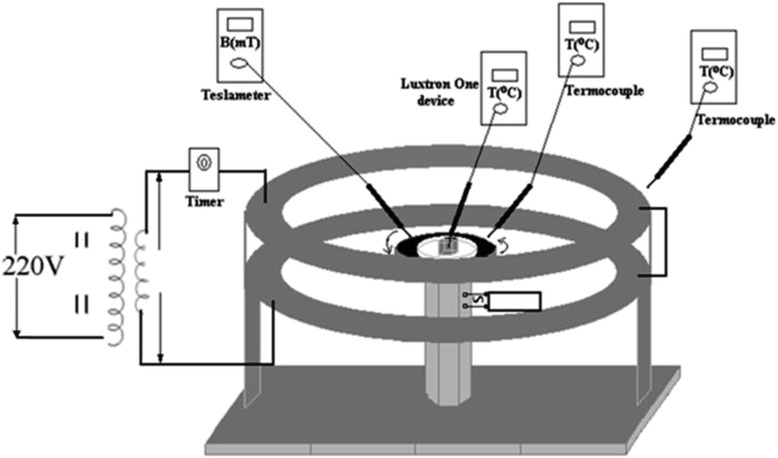
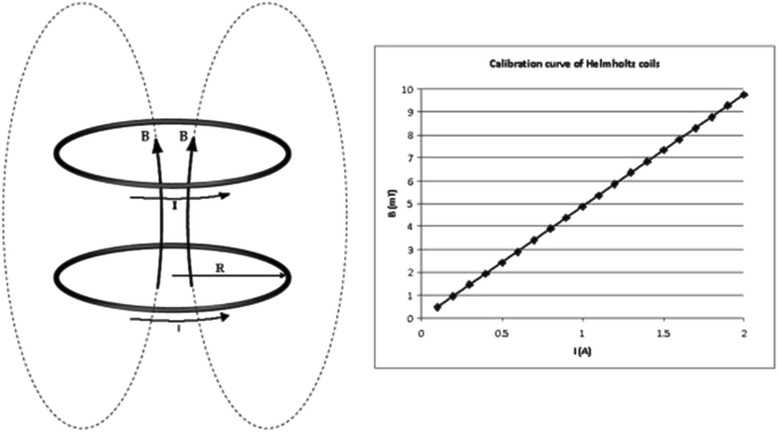
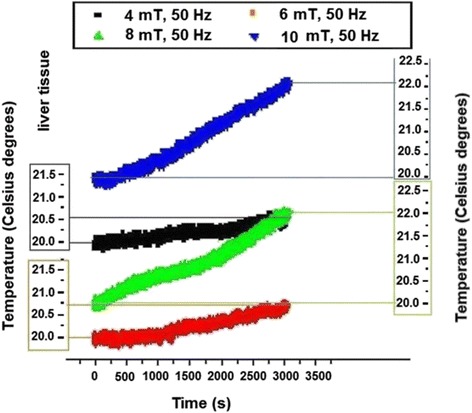
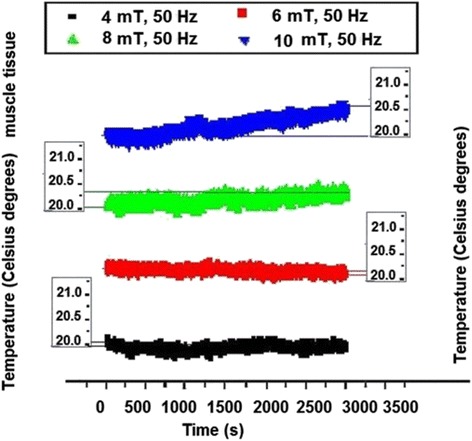
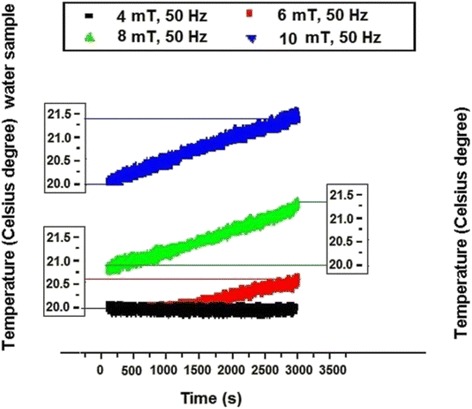
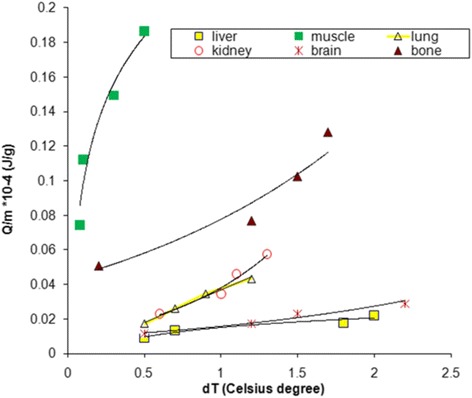
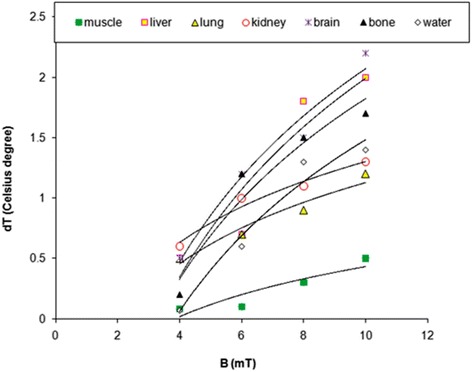
BACKGROUND: The influence of electromagnetic exposure on mammalian tissues was approached as a public health issue aiming to reveal the putative side effect of 50 Hz industrial and domestic supply source (i) during aliments storage near such sources; (ii) in people staying couple of hours in the proximity of conducting wires. MATERIALS AND METHODS: Fluorescence emission based thermal sensor was used to emphasize temperature dynamics of fresh meat samples during controlled electromagnetic exposure in Helmholtz coils adjusted to deliver 50 Hz / (4÷10) mT electromagnetic field in their inner volume. Fluoroptic temperature probe with 0.1 °C accuracy measurement and data acquisition software allowed reading temperature every second, in the tissue volume during exposure. RESULTS: The temperature dynamics curves of ex-vivo porcine tissues like liver, kidney, brain, muscle, lung, and bone, were comparatively analyzed - the choosing of the mammalian species being justified by metabolic and physiological similarities with human body. The curve slopes appear to be the same for the range of initial temperatures chosen to perform the tests (20.0 ± 0.1 °C), the temperature increase reaching around 2.0 °C for the magnetic flux density of 10 mT. Quantitative dependence was evidenced between the thermal effect and the magnetic flux density. CONCLUSIONS: The technical interpretation is based on heating effect, on bioimpedance increasing and on water vaporization during wet sample exposure. The biomedical aspects derive from the degrading effects of food heating as well as from possible in vivo effects of living body exposure.
Overview
The claims and statistics of this paper haven’t been checked yet.
Run the check — free, no account needed. It reads the open-access text and checks the sources it cites.
Integrity signals
Registry
Cites
Statistics
Figures
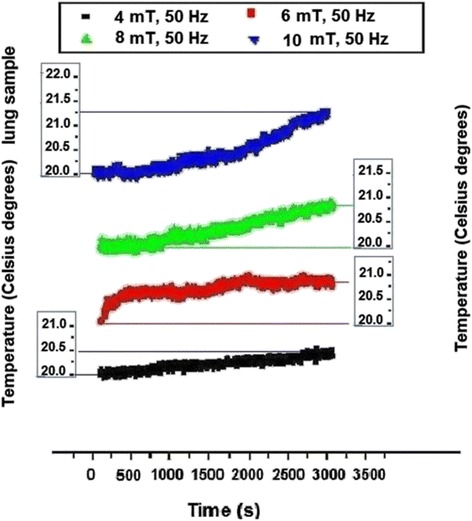
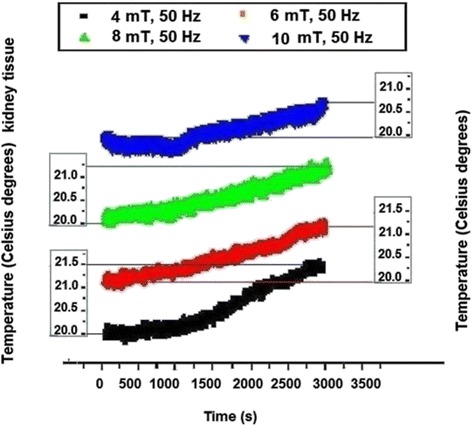
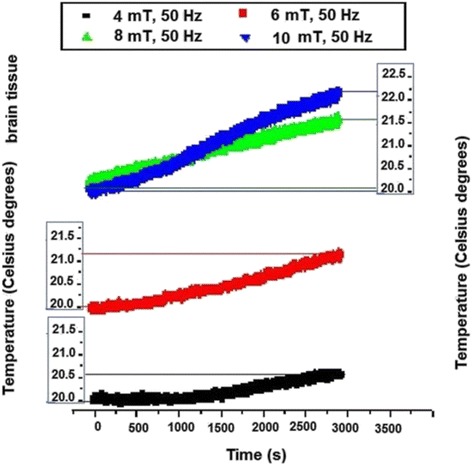
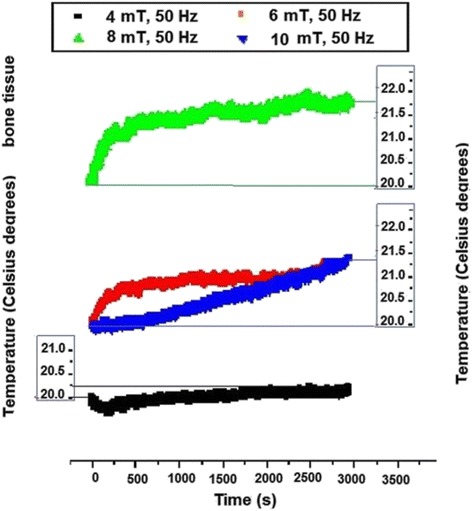
Verification
Claims the paper makes
The claims and statistics of this paper haven’t been checked yet.
Run the check — free, no account needed. It reads the open-access text and checks the sources it cites.
Claims other papers make about this one
Each is checked against this paper’s own text: does it say what the citing paper says it does?
The source backs part of the claim, not all of it — or backs it for a different population, condition or comparison.
In the citing paper
“While the frequencies used in MDF are generally considered safe, the long-term impact of continuous exposure on biological tissues is still an area of active research as mentioned in the biocompatibility section (RăcuciU et al., 2015).”
From Comparative analysis of energy transfer mechanisms for neural implants (2024) · cites this paper as RăcuciU et al., 2015
Experimental — accuracy not yet measured
Self-check
Percentages, sums and reported differences re-computed from the paper’s own numbers.
The self-check needs the paper’s full text.
Citations
Cites
The dielectric properties of biological tissues: I. Literature survey
Gabriel, C., Gabriel, S., & Corthout, E. (1996) · Physics in Medicine and Biology · doi:10.1088/0031-9155/41/11/001 · Cited by 3,168
GUIDELINES FOR LIMITING EXPOSURE TO TIME-VARYING ELECTRIC AND MAGNETIC FIELDS (1 Hz TO 100 kHz)
International Commission on Non-Ionizing Radiation Protection (2010) · Health Physics · doi:10.1097/hp.0b013e3181f06c86 · Cited by 2,167
Lin, J., Saunders, R. A., Schulmeister, K., Söderberg, P. G., Stuck, B. E., Swerdlow, A. J., Taki, M., Veyret, B., Ziegelberger, G., Repacholi, M. H., et al. (2010) · HAL · Cited by 1,261
Fraden, J. (2004) · Springer eBooks · doi:10.1007/b97321 · Cited by 1,046
Electrical conductivity of tissue at frequencies below 1 MHz
Gabriel, C., Peyman, A., & Grant, E. H. (2009) · Physics in Medicine and Biology · doi:10.1088/0031-9155/54/16/002 · Cited by 718 · cited 1×
“Other data were reported in literature discussing tissue changes under the influence of ELF-MF exposure; studies on porcine endothelial cells exposed to 50 Hz electromagnetic field showed the influence on heat shock protein levels and partial relocalization in the nucleus [21]; culture cell electroporation was demonst…”
BackgroundFraden, J. (2010) · Springer eBooks · doi:10.1007/978-1-4419-6466-3 · Cited by 498
(2003) · Annual International Conference of the IEEE Engineering in Medicine and Biology Society (EMBC) · doi:10.1109/iembs.2003.1279435 · Cited by 339
50‐Hz electromagnetic environment and the incidence of childhood tumors in Stockholm county
Tomenius, L. (1986) · Bioelectromagnetics · doi:10.1002/bem.2250070209 · Cited by 312 · cited 1×
“Also, in [4] it was reported the increasing of cancer rates * Correspondence: dorina.”
BackgroundEffect of Cell Electroporation on the Conductivity of a Cell Suspension
Pavlin, M., Kandušer, M., Reberšek, M., Pucihar, G., Hart, F. X., Magjarevićcacute, R., & Miklavčič, D. (2005) · Biophysical Journal · doi:10.1529/biophysj.104.048975 · Cited by 295 · cited 1×
“electroporated cell culture [24–26] using ELF electromag-”
Effects of a static magnetic field on water and electrolyte solutions
Hołysz, L., Szcześ, A., & Chibowski, E. (2007) · Journal of Colloid and Interface Science · doi:10.1016/j.jcis.2007.08.026 · Cited by 258
Research works printed but not linked: 1
- Ageev IM, Shishkin GG, Yeskin SM, Litvinov VN, Rybin UM. Study of weak ELF magnetic field influence on distillated water. Biomed Technol Radioel. 2007;6:59–62.
Cited by
Sorted by citations
The role of electromagnetic fields in neurological disorders
Terzi, M., Özberk, B., Deniz, Ö. G., & Kaplan, S. (2016) · Journal of Chemical Neuroanatomy · doi:10.1016/j.jchemneu.2016.04.003 · Cited by 60
Biological Effects of Magnetic Storms and ELF Magnetic Fields
Sarimov, R. M., Serov, D. A., & Gudkov, S. V. (2023) · Biology · doi:10.3390/biology12121506 · Cited by 36
Türedi, S., Keri̇moğlu, G., Mercantepe, T., & Odacı, E. (2017) · International Journal of Radiation Biology · doi:10.1080/09553002.2017.1350768 · Cited by 27
“Numerous studies have reported that the EMF emitted by mobile phones causes injury at the cellular and molecular INTERNATIONAL JOURNAL OF RADIATION BIOLOGY 993 levels in adult living tissue (Salford et al. 2003; Bas et al. 2013; Racuciu et al. 2015).”
BackgroundComparative analysis of energy transfer mechanisms for neural implants
Miziev, S., Pawlak, W. A., & Howard, N. (2024) · Frontiers in Neuroscience · doi:10.3389/fnins.2023.1320441 · Cited by 21
“While the frequencies used in MDF are generally considered safe, the long-term impact of continuous exposure on biological tissues is still an area of active research as mentioned in the biocompatibility section (RăcuciU et al., 2015).”
BackgroundSimkó, M., & Mattsson, M. (2018) · Medical Hypotheses · doi:10.1016/j.mehy.2018.10.013 · Cited by 11
“Since it is known that MF has too low energy to break molecules, the interaction can possibly be via heat development in the form of intracellular “hot spots” caused by Faraday induction of electric fields and associated currents [5]; by induced electric fields that changes the conformations of molecules such as recep…”
BackgroundHosseinabadi, M. B., & Khanjani, N. (2019) · Bioelectromagnetics · doi:10.1002/bem.22198 · Cited by 5
The effects of low power microwaves at 1800 MHz and 2100 MHz on yeast cells growth
Jain, S. S., Vojisaveljevic, V., & Pirogova, E. (2016) · IEEE MTT-S International Microwave and RF Conference (IMaRC) · doi:10.1109/imarc.2016.7939623 · Cited by 3
SAR Calculation of a Pregnant Woman Model Exposed to LTE and Wi-Fi Signals
Foroutan, F., & Noori, N. (2020) · International Symposium on Telecommunications · doi:10.1109/ist50524.2020.9345879 · Cited by 2
“Other subjects such as the thermal effects induced in tissue samples for very low frequencies [13] and the study of electromagnetic field in pregnant woman in electric vehicles [14] and the RF far-field exposure for human fetus [15] are also conducted.”
Jain, S. (2018) · RMIT Research Repository (RMIT University Library) · doi:10.25439/rmt.27597585
Metadata
- Authors
- Racuciu, M., Miclaus, S., & Creanga, D.
- Affiliations
- Alexandru Ioan Cuza University (RO)
- Corresponding author
- Creanga, D.
- ORCID
- Creanga, D.
- Venue
- Journal of Environmental Health Science and Engineering
- Published
- 2015-12
- Volume
- 13
- Issue
- 1
- Pages
- 85-85
- ISSN
- 1735-1979 (ISSN-L)
- 2052-336X
- PMC
- PMC4682274
- OpenAlex
- W2197926042
- Cited by
- 9
- References
- 30
- Citations by year
- 2024: 1 · 2023: 1 · 2020: 1 · 2019: 1 · 2018: 2 · 2017: 1 · 2016: 2
- FWCI
- 1.01
- Type
- journal article
- Language
- en
- Open access
- hybrid
- doi.org
- Licence
- Locations
- Journal of Environmental Health Science and Engineering (publishedVersion, cc-by)
- Europe PMC (PubMed Central) (publishedVersion, cc-by)
- PubMed Central (publishedVersion, cc-by)
- PubMed (publishedVersion)
- Topics
- Life Sciences › Biochemistry, Genetics and Molecular Biology › Biophysics › Electromagnetic Fields and Biological Effects
- Life Sciences › Agricultural and Biological Sciences › Agronomy and Crop Science › Magnetic and Electromagnetic Effects
- Physical Sciences › Engineering › Electrical and Electronic Engineering › Electrical and Electromagnetic Research
- Keywords
- extremely low frequency electromagnetic fields, 50 Hz magnetic field, tissue heating, thermal effects, porcine tissue, magnetic flux density, bioimpedance, water vaporization, food heating, public health risk
About these checks
Registry, retraction, Cites and statistics results are computed, not judged, with one exception: a printed reference that no index lists is read once by a model before it counts as a citation error. Claims are extracted by a model and kept only when their quote appears verbatim in the text; each cited source is then checked, with a model’s help, for whether it says what the claim relies on. Those verdicts can be wrong — read the claim’s quote and the cited source before relying on one.
Statistics and arithmetic are recomputed, not judged.
Confidence bands are shown only for fields calibrated on our annotated test set. None is calibrated yet, so no band is shown.
What counts as a claim ›How we measure confidence ›How we check this ›
Are you an author, or do you see a problem with this page? Request a review
