

Treatment of lithium intoxication: facing the need for evidence
Open accessThe DOI matches its Crossref record; 27 of the 27 references it cites were found in a registry or an index.
Abstract
Lithium has been used as the gold standard in the treatment of major depressive and bipolar disorders for decades. Due to its narrow therapeutic index, lithium toxicity is a common clinical problem. Although risk factors for lithium intoxication seem to be well-described, lacking patient education and inexperience of treatment are assumed to contribute to the probability of lithium intoxication. A review of literature shows that the treatment of lithium intoxication has not been adequately studied or standardized. The aim of this literature review is to compile and present current evidence on the treatment of lithium intoxication and contribute to a standardization regarding general treatment recommendations as well as evidence on indication for extracorporeal methods. Against the background of this common and potentially life-threatening condition, the standardization of the treatment of lithium intoxication is definitely a task for the future.
Overview
The claims and statistics of this paper haven’t been checked yet.
Free: it reads the open-access text and checks the first 5 claims that cite a source we can check. Create a free account to check every claim.
Integrity signals
Registry
Cites
Statistics
Figures
Verification
Claims the paper makes
The claims and statistics of this paper haven’t been checked yet.
Free: it reads the open-access text and checks the first 5 claims that cite a source we can check. Create a free account to check every claim.
Claims other papers make about this one
Each is checked against this paper’s own text: does it say what the citing paper says it does?
The cited source says what the claim attributes to it.
In the citing paper
“Drugs that alter renal function and general medical conditions characterized by decreased circulating volume all contribute to increased risk.827”
Self-check
Percentages, sums and reported differences re-computed from the paper’s own numbers.
The self-check needs the paper’s full text.
Citations
Cites
TIMMER, R. T., & SANDS, J. M. (1999) · Journal of the American Society of Nephrology · doi:10.1681/asn.v103666 · Cited by 360
Prevalence, Pathogenesis, and Treatment of Renal Dysfunction Associated With Chronic Lithium Therapy
Boton, R., Gaviria, M., & Batlle, D. C. (1987) · American Journal of Kidney Diseases · doi:10.1016/s0272-6386(87)80098-7 · Cited by 353
Shine, B., McKnight, R. F., Leaver, L., & Geddes, J. R. (2015) · The Lancet · doi:10.1016/s0140-6736(14)61842-0 · Cited by 313
Review of Lithium Effects on Brain and Blood
Young, W. (2009) · Cell Transplantation · doi:10.3727/096368909x471251 · Cited by 287
(2011) · doi:10.2165/11586970-000000000-00000 · Cited by 225 · cited 2×
“In addition, a positive influence on the poor compliance in long-term lithium use might be a positive side effect in a less frequent administration (Malhi and Tanious 2011).”
BackgroundLithium for prevention of mood episodes in bipolar disorders: systematic review and meta-analysis
Severus, E., Taylor, M. J., Sauer, C., Pfennig, A., Ritter, P., Bauer, M., & Geddes, J. R. (2014) · International Journal of Bipolar Disorders · doi:10.1186/s40345-014-0015-8 · Cited by 216
Self-citationClinical manifestations and management of acute lithium intoxication
Okusa, M. D., & Crystal, L. J. T. (1994) · The American Journal of Medicine · doi:10.1016/0002-9343(94)90308-5 · Cited by 213
Emergency Department Visits by Adults for Psychiatric Medication Adverse Events
Hampton, L. M., Daubresse, M., Chang, H.-Y., Alexander, G. C., & Budnitz, D. S. (2014) · JAMA Psychiatry · doi:10.1001/jamapsychiatry.2014.436 · Cited by 149
Jaeger, A., Sauder, P., Kopferschmitt, J., Tritsch, L., & Flesch, F. (1993) · Journal of Toxicology Clinical Toxicology · doi:10.3109/15563659309000411 · Cited by 112
Clinical Pharmacokinetics of Lithium
Ward, M. E., Musa, M. N., & Bailey, L. (1994) · The Journal of Clinical Pharmacology · doi:10.1002/j.1552-4604.1994.tb01994.x · Cited by 110
Research works printed but not linked: 1
- Perrone J, Chatterjee P. Lithium poisoning. In: UpToDate on http://www.uptodate.com. Wolters Kluwer Health. 2015. pp. 1–13.
Cited by
Yatham, L. N., Kennedy, S. H., Parikh, S. V., Schaffer, A., Bond, D. J., Frey, B. N., Sharma, V., Goldstein, B. I., Rej, S., Beaulieu, S., et al. (2018) · Bipolar Disorders · doi:10.1111/bdi.12609 · Cited by 1,852
Lithium side effects and toxicity: prevalence and management strategies
Gitlin, M. (2016) · International Journal of Bipolar Disorders · doi:10.1186/s40345-016-0068-y · Cited by 531
“Etiologies of lithium intoxication include intentional or accidental overdose, and any factor that alters salt and/or water balance such as the initiation of new medications that alters lithium excretion, dehydration, and infections with fever (Hansen and Amdisen 1978; Haussmann et al. 2015; Ott et al. 2016).”
BackgroundShakoor, N., Adeel, M., Ahmad, M. A., Zain, M., Waheed, U., Javaid, R. A., Haider, F. U., Azeem, I., Zhou, P., Li, Y., et al. (2023) · Environmental Science and Ecotechnology · doi:10.1016/j.ese.2023.100252 · Cited by 85
Malhi, G. S., Gershon, S., & Outhred, T. (2016) · Bipolar Disorders · doi:10.1111/bdi.12455 · Cited by 65
Barroilhet, S. A., & Ghaemi, S. N. (2020) · Acta Psychiatrica Scandinavica · doi:10.1111/acps.13202 · Cited by 57
Is lithium neuroprotective? An updated mechanistic illustrated review
Ghanaatfar, F., Ghanaatfar, A., Isapour, P., Farokhi, N., Bozorgniahosseini, S., Javadi, M., Gholami, M., Ulloa, L., Coleman‐Fuller, N., & Motaghinejad, M. (2022) · Fundamental and Clinical Pharmacology · doi:10.1111/fcp.12826 · Cited by 58
Shen, Y., Zhao, M., Zhao, P., Meng, L., Zhang, Y., Zhang, G., Taishi, Y., & Sun, L. (2024) · Frontiers in Pharmacology · doi:10.3389/fphar.2024.1408462 · Cited by 55
Lithium: Current state of the art and future directions
Gitlin, M., & Bauer, M. (2024) · International Journal of Bipolar Disorders · doi:10.1186/s40345-024-00362-7 · Cited by 38
Self-citationLithium Treatment Is Safe in Children With Intellectual Disability
Yuan, J., Song, J., Zhu, D., Sun, E., Xia, L., Zhang, X., Gao, C., Agam, G., Wang, X., Blomgren, K., et al. (2018) · Frontiers in Molecular Neuroscience · doi:10.3389/fnmol.2018.00425 · Cited by 28
“Because the therapeutic window of lithium is relatively narrow in the treatment of bipolar disorders (Haussmann et al., 2015), higher lithium concentrations are often necessary for maintaining the therapeutic effect in individuals with bipolar disorder.”
BackgroundShokeen, K., Srivathsan, A., & Kumar, S. (2020) · Virus Research · doi:10.1016/j.virusres.2020.198223 · Cited by 20
Management of lithium intoxication
Murphy, N., Redahan, L., & Lally, J. (2022) · BJPsych Advances · doi:10.1192/bja.2022.7 · Cited by 25
“Once they are decreasing they can be checked 6 – 12 hourly (Haussmann 2015).”
BackgroundInfluentialRaina, R., Grewal, M. K., Blackford, M. G., Symons, J. M., Somers, M. J. G., Licht, C. P. B., Basu, R. K., Sethi, S. K., Chand, D. H., Kapur, G., et al. (2019) · Pediatric Nephrology · doi:10.1007/s00467-019-04319-2 · Cited by 19
Nederlof, M., Kupka, R., Braam, A., Egberts, T. C. G., & Heerdink, E. R. (2018) · Bipolar Disorders · doi:10.1111/bdi.12681 · Cited by 18
Electrocardiographic changes caused by lithium intoxication in an elderly patient
Chen, Y., Zheng, L., Liu, W., Li, H., Yu, S., Chen, Q., Pan, B., Yu, H., & Yu, R. (2016) · SpringerPlus · doi:10.1186/s40064-015-1602-6 · Cited by 18
“Hemodialysis had been maintained for 5 days.”
Sachgerechte Behandlung affektiver Störungen mit Lithium
Haußmann, R., Lewitzka, U., Severus, E., & Bauer, M. (2017) · Der Nervenarzt · doi:10.1007/s00115-017-0421-0 · Cited by 18
Self-citationLithium Clinics in Berlin and Dresden: a 50-Year Experience
Felber, W., Bauer, M., Lewitzka, U., & Müller-Oerlinghausen, B. (2018) · Pharmacopsychiatry · doi:10.1055/a-0633-3450 · Cited by 15
Self-citationThe Syndrome of Irreversible Lithium-Effectuated Neurotoxicity: A Scoping Review
Konieczny, K., Detraux, J., & Bouckaert, F. (2024) · ALPHA PSYCHIATRY · doi:10.5152/alphapsychiatry.2024.231460 · Cited by 14
“2,104 Some of these factors were mentioned in the included cases like dehydration, concomitant use of diuretics or antihypertensive medications and fever/infection.”
BackgroundSeasonal and temperature effect on serum lithium concentrations
Cheng, S., Buckley, N. A., Siu, W., Chiew, A. L., Vecellio, E., & Chan, B. S. H. (2019) · Australian & New Zealand Journal of Psychiatry · doi:10.1177/0004867419889160 · Cited by 12
“It is also indicated in schizoaffective disorder, recurrent major depressive disorder and antidepressant non-responders (Haussmann et al., 2015).”
BackgroundSeñga, M. M. A., Sarapuddin, G., & Saniel, E. (2020) · Case Reports in Psychiatry · doi:10.1155/2020/5369297 · Cited by 11
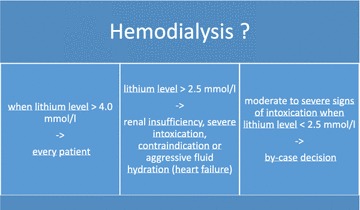
“5mEq/L when a patient shows severe signs of lithium toxicity or when there is an ongoing renal impairment that prevents is excretion [11].”
BackgroundTaskaeva, I. S., Kasatova, А. I., Surodin, D., Bgatova, N. P., & Taskaev, S. Y. (2023) · Life · doi:10.3390/life13020518 · Cited by 16
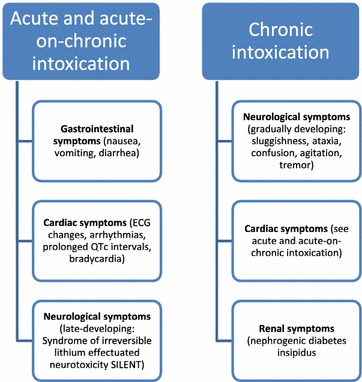
“Depending on the symptoms caused by the Li pharmacokinetics, acute, acute-onchronic and chronic lithium intoxication are distinguished [32].”
BackgroundOutcomes of patient education practices to optimize the safe use of lithium: A literature review
Zolezzi, M., Eltorki, Y. H., Almaamoon, M., Fathy, M., & Omar, N. E. (2018) · Mental Health Clinician · doi:10.9740/mhc.2018.01.041 · Cited by 10
Hanyu, S., Sugita, N., Matsuda, M., Murai, T., & Fujiwara, H. (2020) · Journal of Medical Case Reports · doi:10.1186/s13256-020-02495-6 · Cited by 9
Lithium overdosage and related tests
Pigatto, P. D. M., Dell’Osso, B. M., & Guzzi, G. (2016) · International Journal of Bipolar Disorders · doi:10.1186/s40345-015-0044-y · Cited by 8
“As the authors correctly assert, (Haussmann et al. 2015) pharmacologic management, laboratory testing, and specific recommendation should be implemented to improve effectiveness of lithium poisoning treatment.”
BackgroundAnalyse zu Risikofaktoren, Ätiologie und Behandlungsstandard der Lithiumintoxikation
Haußmann, R., Mudra, T. N., Sauer, C., von Bonin, S., Donix, M., Bauer, M., & Lewitzka, U. (2019) · Der Nervenarzt · doi:10.1007/s00115-019-0705-7 · Cited by 10
Self-citationHemodialysis Treatment for Patients with Lithium Poisoning
Liu, Y.-H., Tsai, K., Hsu, P.-C., Hsieh, M.-H., Fu, J., Wang, I., Liu, S.-H., Weng, C., Huang, W., Hsu, C., et al. (2022) · International Journal of Environmental Research and Public Health · doi:10.3390/ijerph191610044 · Cited by 8
“However, the indications and benefits of hemodialysis remain controversial [20].”
BackgroundA case of skew deviation and downbeat Nystagmus induced by Lithium
Hong, H., & Lyu, I. J. (2019) · BMC Ophthalmology · doi:10.1186/s12886-019-1270-3 · Cited by 8
Aggarwal, J., Mehdi, Z., Kaur, B., Cheema, Y. S., & Gupta, M. (2021) · Journal of Emergency Practice and Trauma · doi:10.34172/jept.2021.36 · Cited by 7
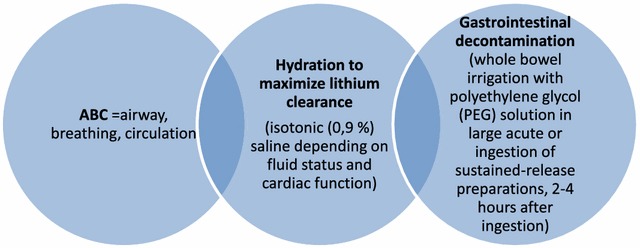
“Volume depletion irrespective of origin can cause chronic lithium intoxication and fluid replacement helps reversal by maximizing lithium clearance (5).”
BackgroundNursing Management of Patients with Psychiatric Emergencies
Gnanapragasam, A., Paul, D. D., Sebastian, J., & Sathiyaseelan, M. (2021) · Indian Journal of Continuing Nursing Education · doi:10.4103/ijcn.ijcn_40_21 · Cited by 7
“[30] Types of lithium toxicity • Acute toxicity –”
Helal, N. E., Ali, L. S., Elsaed, W. M., Berika, M. Y., Elhassan, Y. H., El-Bayoumi, K. S., Badawy, A. A., El-Agawy, M. S. E.-D., Dawood, A. F., & Eldesoqui, M. B. (2025) · Tissue and Cell · doi:10.1016/j.tice.2025.102779 · Cited by 8
Grover, S., Sarkar, S., & Avasthi, A. (2022) · Indian Journal of Psychiatry · doi:10.4103/indianjpsychiatry.indianjpsychiatry_1013_21 · Cited by 12
Hayashi, Y., Nishida, S., Takekoshi, A., Murakami, M., Yamada, M., Kimura, A., Suzuki, A., & Inuzuka, T. (2016) · Nippon Ronen Igakkai Zasshi Japanese Journal of Geriatrics · doi:10.3143/geriatrics.53.244 · Cited by 6
Seifert, J., Bleich, S., & Seifert, R. (2022) · Springer eBooks · doi:10.1007/978-3-662-66303-5_22 · Cited by 6
Lithiumtherapie zur Behandlung affektiver Störungen im höheren Lebensalter
Christl, J., & Supprian, T. (2023) · Zeitschrift für Gerontologie und Geriatrie · doi:10.1007/s00391-023-02164-5 · Cited by 6
“Ab einem Li-Spiegel von über 2,5mmol/l wird bei einer Niereninsuffizienz, einer schweren Intoxikation und Kontraindikation für Hypervolämie durch isotonische Kochsalzlösungen aufgrund von Herzinsuffizienz eine Hämodialyse empfohlen [22].”
BackgroundInadequate therapeutic drug monitoring in patients with lithium toxicity in Japan
Okada, K., Yamada, K., Usui, K., Ouchi, R., Nibuya, M., Takahashi, A., Shito, Y., Watanabe, Y., & Suzuki, E. (2020) · Psychiatry and Clinical Neurosciences · doi:10.1111/pcn.13147 · Cited by 4
“Chronic toxicity occurs in patients who have already regularly used lithium, caused by increased serum lithium concentration because of an increase in the lithium dose or a decrease in lithium excretion due to renal dysfunction.(7) Increased lithium concentrations in the serum associated with lower sodium intake have…”
BackgroundZardoost, P., Buckman, Z., Weaver, J., Elston, S., Prouty, A., Stuart, R., & Wehrum, H. L. (2024) · Clinical Case Reports · doi:10.1002/ccr3.8775 · Cited by 4
“6,7 Intermittent hemodialysis (HD) is preferred and is the most effective method of removal, influencing the multidisciplinary team's consideration of resuming this modality.”
BackgroundPerioperative management of lithium in the patient undergoing pituitary surgery: a case report
Richards, E., Pankhania, M., Thomas, C., Jolly, K., Ayuk, J., & Ahmed, S. K. (2022) · British Journal of Neurosurgery · doi:10.1080/02688697.2021.2010651 · Cited by 4
Lithium Intoxication: A Possible Interaction with Moxifloxacin
Ceran, S., Altınöz, A. E., & Ok, N. E. G. (2017) · Clinical Psychopharmacology and Neuroscience · doi:10.9758/cpn.2017.15.4.407 · Cited by 5
Kaczmarczyk, M., Batke, M., Wingenfeld, K., Deuter, C. E., & Otte, C. (2023) · Journal of Psychopharmacology · doi:10.1177/02698811231209208 · Cited by 5
“Extracorporeal methods were less frequent, which is in line with the literature (Baird-Gunning et al., 2017; Haussmann et al., 2015, 2020; Okusa and Crystal, 1994; Ott et al., 2016; Scharman, 1997; Timmer and Sands, 1999).”
BackgroundResultInfluentialLithium-Induced Arginine Vasopressin Resistance (AVP-R): A Case of Chronic Exposure to Lithium
Lopes, A. R., Campos, A. D. C., Simões, J. M., & Jordão, A. (2023) · Cureus · doi:10.7759/cureus.41677 · Cited by 3
“However, hemodialysis may be considered in patients with severe toxicity [9].”
BackgroundPractical Management of Lithium
Bauer, M., & Gitlin, M. J. (2016) · Springer eBooks · doi:10.1007/978-3-319-31214-9_11 · Cited by 3
Self-citationSeifert, J., Bleich, S., & Seifert, R. (2025) · Springer eBooks · doi:10.1007/978-3-662-70594-0_22 · Cited by 3
Medium cut-off membrane expanded hemodialysis for Lithium removal: a case report
del Valle, K. M. P., Magro, M. D. P. M., Tocora, D. G. G., Boldoba, N. B., Puncel, C. B., Obregón, A. S., Palomares, J. R. R., & de Arriba, G. (2025) · Frontiers in Toxicology · doi:10.3389/ftox.2025.1677299 · Cited by 2
“Gastric lavage may be considered in early-presenting cases with immediate-release formulations, while whole-bowel irrigation is recommended for sustained-release or massive ingestions (Haussmann et al., 2015).”
Lithium: A review of its adverse effects, toxicity and discontinuation
Prasad, S., Sharma, V., Sosal, W., Mehta, P., Fatima, A., Fekrat, S. M. M., Kolloju, S., Rocha, M., Matmusaeva, E., & Gunturu, S. (2026) · Disease-a-Month · doi:10.1016/j.disamonth.2026.102064 · Cited by 5
Update – Lithium in der Phasenprophylaxe Bipolarer Störungen
Petzold, J., Bauer, M., & Severus, E. (2018) · Fortschritte der Neurologie · Psychiatrie · doi:10.1055/a-0633-2511 · Cited by 2
Self-citationCase of Severe Acute-on-Chronic Lithium Intoxication with 8.6 mmol/l and Prompt Hemodialysis
Haußmann, R., Donix, M., Bauer, M., von Bonin, S., & Lewitzka, U. (2020) · Pharmacopsychiatry · doi:10.1055/a-1167-3267 · Cited by 2
Self-citationLithium Intoxication in an Elderly Woman
Gomes, S., Bonito, I., Santos, S., Silva, M. A., & Ponte, T. (2022) · Cureus · doi:10.7759/cureus.32997 · Cited by 2
“Furthermore, with increased toxicity, neurological symptoms prevail, evolving into coarse tremors, slurred speech, confusion, mood changes, memory, and front-to-executive dysfunction, which can culminate in seizures and stupor [3,4,6].”
BackgroundLithiumtherapie zur Behandlung affektiver Störungen im höheren Lebensalter
Christl, J., & Supprian, T. (2024) · Der Nervenarzt · doi:10.1007/s00115-023-01601-5 · Cited by 2
Martin, L. M., Bukoski, A. D., Whelchel, D. D., Evans, T. J., Wiedmeyer, C. E., Black, S. J., & Johnson, P. J. (2017) · Equine Veterinary Journal · doi:10.1111/evj.12778 · Cited by 2
de Falco, A., Lieto, M., Scarano, V., Spitaleri, D. L. A., & Palma, V. (2020) · Clinical Management Issues · doi:10.7175/cmi.v14i1.1461 · Cited by 2
“Because of its favorable pharmacokinetic parameters, the most effective treatment to remove lithium from serum is intermittent hemodialysis [12,13].”
BackgroundComplications neurologiques imputables au lithium : mise au point
Marty, T., Lebain, P., Vandevelde, A., & Madigand, J. (2020) · La Revue de Médecine Interne · doi:10.1016/j.revmed.2020.08.013 · Cited by 2
Hudak, R., & Gannon, J. M. (2022) · Current clinical practice · doi:10.1007/978-3-030-98709-1_3 · Cited by 2
Elsayed, R. A. E., Atef, M. M., Shafik, N. M., & El-Dardiry, S. A. (2023) · Tanta Medical Journal · doi:10.4103/tmj.tmj_57_22 · Cited by 2
Thangavel, M., Raj, T. S., Chinnappan, S., Anbalagan, M., Arunagirinathan, N., Kuvin, E., Pattabi, S., Paranjothy, C., & Mani, R. R. (2025) · IBRO Neuroscience Reports · doi:10.1016/j.ibneur.2025.10.003 · Cited by 3
Lithium Hemodialysis Removal-Related Recurrent Manic Episode in a Bipolar Patient
Lin, H., Kung, F.-H., Tai, Y., Huang, S., Hsu, Y., & Tzeng, N. (2021) · American Journal of Therapeutics · doi:10.1097/mjt.0000000000001382 · Cited by 1
Lewitzka, U., & Haußmann, R. (2022) · InFo Neurologie + Psychiatrie · doi:10.1007/s15005-021-2201-4 · Cited by 2
“◯ Lithium hat eine sehr lange Halbwertszeit von mehr als drei Tagen.”
InfluentialSelf-citationShah, P., Khalpada, D. B., Sangroula, D., & Sarkar, S. (2017) · Journal of Medical Cases · doi:10.14740/jmc2932e · Cited by 1
Seifert, J., Bleich, S., & Seifert, R. (2023) · Springer eBooks · doi:10.1007/978-3-662-68371-2_22 · Cited by 2
Bax, F., Cellante, G., Cella, A., Gigli, G. L., & Valente, M. (2024) · Acta Neurologica Belgica · doi:10.1007/s13760-024-02564-3 · Cited by 1
“In all other instances, hemodialysis should be discussed case-by-case [5].”
Katsuta, S., & Maeda, K. (2024) · Analytical Sciences · doi:10.1007/s44211-024-00569-9 · Cited by 2
Acute Kidney Injury induced Lithium Toxicity with Concomitant Neuroleptic Malignant Syndrome
Lai, Y. Y., Mokhtar, N. M., Samsudin, I. N., & Thambiah, S. C. (2024) · Biomedicine · doi:10.37796/2211-8039.1459 · Cited by 1
“Therefore, in lithium poisoning, when the serum lithium level is > 4.00 mmol/L or, when serious neurological manifestations with an unstable hemodynamic status are observed in a patient with serum lithium level of > 2.50 mmol/L, consideration for hemodialysis is pertinent [10].”
BackgroundInfluentialShould we prescribe lithium more often?
Nolen, W. A. (2016) · Dusunen Adam The Journal of Psychiatry and Neurological Sciences · doi:10.5350/dajpn20162902001 · Cited by 1
“to insufficient water (and salt) intake or concomitant use of other drugs lowering the excretion of lithium and thus leading to increased lithium plasma levels (11,12).”
BackgroundDie polyedrische Symptomatik einer Lithium-Intoxikation: Eine Kasuistik
Saleh, C., Horak, R., & Fehrenbach, R. A. (2020) · Fortschritte der Neurologie · Psychiatrie · doi:10.1055/a-1183-3849 · Cited by 1
Lithium Poisoning Update in Diagnosis and Treatment
Rico-Fontalvo, J. E., Daza-Arnedo, R., Leal-Martínez, V., Abuabara-Franco, E., Pájaro-Galvis, N., Correa-Guerrero, J., Raad-Sarabia, M., Pomares-Lara, A., Ayola-Rosales, D., Mercado-Anillo, K., et al. (2020) · American Journal of Internal Medicine · doi:10.11648/j.ajim.20200805.14 · Cited by 1
“However, other conditions may also vary the literacy, such as dehydration from vomiting or diarrhea, fever, excessive exercise, excessive sweating, low sodium diet and congestive heart failure (the latter increases renal reabsorption of lithium) [7, 12, 13].”
BackgroundEin Fall von Skew Deviation und Downbeat-Nystagmus infolge von Lithium-Toxizität
Hong, H., & Lyu, I. J. (2020) · Kompass Ophthalmologie · doi:10.1159/000512225
10 Anxiety and Mood Disorders in an Emergency Context
(2017) · CRC Press eBooks · doi:10.1201/9781315271149-14
Lithium Poisoning Update in Diagnosis and Treatment
Rico-Fontalvo, J. E., Daza-Arnedo, R., Leal-Martínez, V., Abuabara-Franco, E., Pájaro-Galvis, N., Correa-Guerrero, J., Raad-Sarabia, M., Pomares-Lara, A., Ayola-Rosales, D., Mercado-Anillo, K., et al. (2019) · Advanced Biomedicine · doi:10.54730/abm.2019.010201
Intoxicación por Litio. Estado del arte
Rico-Fontalvo, J. E., Cardona-Blanco, M., Daza-Arnedo, R., Torres, L. P. S., Yunda, J. C. M., Yánez, T. R., Raad-Sarabia, M., & Cerón, E. V. V. (2023) · Revista de la Sociedad Ecuatoriana de Nefrología Diálisis y Trasplante · doi:10.56867/40
Zardoost, P., Prouty, A., Buckman, Z., Elston, S., Weaver, J., & Wehrum, H. L. (2023) · doi:10.22541/au.169864386.64539741/v1
A Case of Lithium Intoxication With Severe Neurological Findings
Tuğ, T., Can, M. Ş., Altunöz, S., & Baykan, H. (2023) · Balıkesir Medical Journal · doi:10.33716/bmedj.1283985
Ardila, L. J. P., Santamaria, M. J. C., Prada, M. A. V., Romero, L. D. J., Bulla, I. K. R., Contreras, A. C. H., David, A. C. B., Medina, R. A. A., & Quintero, V. Q. (2024) · Ciencia Latina Revista Científica Multidisciplinar · doi:10.37811/cl_rcm.v8i1.9853
Adverse Drug Reactions in the Bipolar Disorder Patients Treated With Mood Stabilizers
Jankar, B. B., Gosavi, D. D., Mishra, K. K., & Sathe, H. (2024) · Annals of Indian Psychiatry · doi:10.4103/aip.aip_171_22
Current status of serum lithium concentration measurement in Japan
Ide, N., & Sako, K. (2024) · Psychiatry and Clinical Neurosciences Reports · doi:10.1002/pcn5.70037
Bauer, M., Ritter, P. S., & Gitlin, M. J. (2025) · Springer eBooks · doi:10.1007/978-3-031-85519-1_23
Self-citationSeifert, J., Bleich, S., & Seifert, R. (2026) · Springer eBooks · doi:10.1007/978-3-662-72738-6_22
Bradycardia and heart block due to lithium toxicity
Edwin, R. N. F., Velamala, B. S., Pierce, M., Harman, F., & Adhiyaman, V. (2026) · Medico-Legal Journal · doi:10.1177/00258172261439612
Lithium Intoxication Research from 2020 to 2026: A Scopus-Based Bibliometric Analysis
Erinmez, M. A. (2026) · Acta Medica Young Doctors · doi:10.66288/actamedi.2026.148
Metadata
- Authors
- Haussmann, R., Bauer, M., von Bonin, S., Grof, P., & Lewitzka, U.
- Affiliations
- University Hospital Carl Gustav Carus (DE)
- Corresponding author
- Lewitzka, U.
- Venue
- International Journal of Bipolar Disorders
- Published
- 2015-10-22
- Volume
- 3
- Issue
- 1
- Pages
- 23-23
- ISSN
- 2194-7511 (ISSN-L)
- PMC
- PMC4615994
- OpenAlex
- W2165090015
- Cited by
- 75
- References
- 27
- Citations by year
- 2026: 4 · 2025: 5 · 2024: 10 · 2023: 10 · 2022: 9 · 2021: 3 · 2020: 11 · 2019: 5 · 2018: 6 · 2017: 5 · 2016: 7
- FWCI
- 5.84
- Type
- journal article
- Language
- en
- Open access
- gold
- doi.org
- Locations
- International Journal of Bipolar Disorders (publishedVersion, cc-by)
- PubMed Central (publishedVersion, cc-by)
- PubMed (publishedVersion)
- Topics
- Health Sciences › Medicine › Emergency Medicine › Poisoning and overdose treatments
- Health Sciences › Medicine › Psychiatry and Mental health › Bipolar Disorder and Treatment
- Physical Sciences › Environmental Science › Health, Toxicology and Mutagenesis › Heavy Metal Exposure and Toxicity
- Keywords
- lithium toxicity, extracorporeal therapy, hemodialysis, peritoneal dialysis, bipolar disorder, major depressive disorder, narrow therapeutic index, treatment standardization, patient education
About these checks
Registry, retraction, Cites and statistics results are computed, not judged, with one exception: a printed reference that no index lists is read once by a model before it counts as a citation error. Claims are extracted by a model and kept only when their quote appears verbatim in the text; each cited source is then checked, with a model’s help, for whether it says what the claim relies on. Those verdicts can be wrong — read the claim’s quote and the cited source before relying on one.
Statistics and arithmetic are recomputed, not judged.
Confidence bands are shown only for fields calibrated on our annotated test set. None is calibrated yet, so no band is shown.
What counts as a claim ›How we measure confidence ›How we check this ›
Are you an author, or do you see a problem with this page? Request a review
Data sources
Bibliographic data: Semantic Scholar, OpenAlex, Crossref.
Contains information from the Semantic Scholar Academic Graph Datasets, made available under the ODC Attribution License (ODC-BY 1.0).
Semantic Scholar’s data is described in: Kinney, R., et al. (2023). The Semantic Scholar Open Data Platform. arXiv:2301.10140.
