

The DOI matches its Crossref record; 14 of the 14 references it cites were found in a registry or an index; none of the 14 sources its claims cite is checked for support yet.
Mindfulness based art therapy study protocol to determine efficacy in reducing college stress and anxiety
Open accessAbstract
Background: College students in Generation Z are among the most stressed of our time. Previous research suggests that current interventions on university campuses are primarily for students in crises, but supportive services like psychoeducation to introduce coping skills are scant. Interventions that take both financial and time pressures into account are needed to address the mental health challenges faced by students. This study is designed to determine the unique role of the arts as a proactive mental health strategy for college students. Methods: A sample of college students in Generation Z (n = 120) will be recruited. Participants will be assigned to Arts-only, mindfulness-only, mindfulness-based art interventions or a non-intervention control group. These interventions will be delivered using a minimal contact, web-based approach. Participants will be screened for eligibility requirements prior to the inclusion in the Time 1 assessment though an online survey. Once enrolled, participants will complete the Time 1 assessment, followed by the intervention. Each assessment will consist of psychological and physiological measures. The MBAT, NCT and MO groups will complete a brief self-care task twice a week for 5 weeks. Upon completion of the assigned intervention, participants will complete a Time 2 assessment and participate in the Trier Social Stress Test. Six weeks post-intervention, participants will complete the final assessment to assess the longevity of effects of the intervention. Discussion: This study will clarify the effects of Mindfulness-based Art Therapy on several biometric and physiological markers above and beyond isolated art therapy or mindfulness interventions. Qualitative data in the form of transcribed exit interviews will be analyzed to characterize the unique needs of Generation Z students, along with level of engagement, intervention acceptance and satisfaction. The results will identify the efficacy of a low-cost and easily accessible mental health intervention targeting college students experiencing stress and anxiety. Trial registration ClinicalTrials.gov, NCT04834765, 05/17/21. Retrospectively registered. © 2021, The Author(s).
Overview
CoChat Summary
TL;DR
This is a study protocol for a randomized, web-based trial testing whether mindfulness-based art therapy (MBAT) reduces stress and anxiety in 120 Generation Z college students at Florida State University. The paper describes the planned intervention, measures, and analyses, but reports no trial results.
Key findings
- Not stated in the paper.
- The planned sample is n = 120 college students in Generation Z (ages 18–26) from Florida State University.
- Participants will be randomized to MBAT, art-only/neutral clay manipulation, mindfulness-only, or non-intervention control; the intervention is delivered twice a week for 5 weeks, with 10 modules taking about 15–20 min each.
- The data plan states repeated measures ANOVA with time as the repeated measure and treatment arm as the between-subjects factor, and says power analysis indicates the sample will detect medium-sized effects (f = 0.3, power = 0.8).
Methods
- Randomized controlled study protocol using a minimal-contact, web-based design with four arms: MBAT, NCT (neutral clay task/art-only), MO (mindfulness-only), and a control group.
- Sample/recruitment: 120 students recruited through university emails, social media, and flyers; eligibility requires enrollment in an academic program and age 18–26, with exclusions for regular smoking and age over 26.
- Main measures and analysis: self-report scales (including GAD-7, PSS-10, PHQ-9, SSS-8, OLBI, FFMQ-SF, PSQI) plus saliva biomarkers (including cortisol and interleukin-6), assessed at baseline, post-intervention, and 6-week follow-up; analysis planned with repeated measures ANOVA and a TSST stress challenge.
Limitations
- The paper is a protocol, so efficacy results are not available yet; this is stated by the study design itself and evident throughout the text.
- The sample is limited to Generation Z students at one university (Florida State University), which the text makes evident and limits generalizability.
- The intervention and outcomes rely partly on self-report questionnaires and a technology-assisted, minimal-contact delivery model, which could affect engagement and measurement; this is evident from the methods, though not stated as a limitation in the paper.
Model-written summary. Check it against the paper before relying on it.
Integrity signals
Registry
Cites
Statistics
Figures
Verification
Claims the paper makes
0 Valid · 0 Not valid · 8 Not checked · 9 Own results and interpretations
A result the paper reports from its own data — it cites no other source for it, so there is none to check. The quote shows it is in the paper.
In the paper
“MBAT receiving students reported reduced anxiety and perceived stress as compared to controls performing a neutral-valence task.”
§ Mindfulness based art therapy study protocol to determine efficacy in reducing college stress and anxiety > Background Generation Z make up nearly half (41%) of the total number of enrolled students at degree-granting universities in the U.S. [1]. They are also considered the most stressed generation of our time, with 91% of Gen Z respondents saying they have experienced at least one physical or emotional symptom due to stress in the last month compared to 74% of adults overall [2]. In the assessment of life stressors, 73% of respondents identified academics as the number one endorser of stressful periods. In the National Alliance on Mental Illness [3] survey, 73% of college student respondents reported having experienced at least one mental health crisis in college. Unfortunately, the increased burden placed on university counseling centers has forced universities to implement waitlists and limit the number of free sessions per student. Even after a student moves beyond the stigma of seeking help, they can experience a waiting time of 2–3 weeks before a counselor even sees them. After which, the counselor may determine that the student does not qualify for intensive intervention, and only offer group therapy or monthly sessions. This national mental health crisis has been getting attention over the last few years, as the Center for Collegiate Mental Health [4] identified the growing prevalence of student anxiety concerns as a substantial challenge for colleges and universities, and stated that developing supportive services to the general student body needs to be a top priority. Currently, most mental health programming for college students focuses on interventions that are reactive in nature, and only address those in acute situations or crisis. According to the National Alliance on Mental Illness [3], American college students believe there is a need for mental health programs that provide psychoeducation about risk factors of anxiety, provide coping mechanisms for stress, and prioritize mental health at the same level as physical health. Additionally, strategies must be constructed to address the time restrictions and financial burden that college students experience. One possible modality to address this request is an online mindfulness based art therapy. Mindfulness-based Art Therapy (MBAT) is an approach that incorporates mindfulness practices like meditation and yoga into the practice of art therapy to promote health, wellness and adaptive responses to stress. MBAT deeply embodies the Bodymind model as it quite literally and concurrently activates body and mind processes. In this theoretical orientation, the emphasis is placed on the deeply interdependent relationship between the body and the mind; for example, neurocognitive research indicates that emotions are accessed through interoceptive and sensory mechanisms [5]. There is one standardized MBAT protocol that has been published to date and has demonstrated positive results in a real-world setting for women with breast cancer; these results include psychosocial adjustment and positive changes to cerebral blood flow [6–8]. MBAT-receiving participants demonstrated significant increases in blood flow at rest and during meditation in multiple limbic brain regions, including the insula, amygdala, hippocampus, and caudate nuclei. Moreover, responses to a stressful cue resulted in reduced activation of the posterior cingulate cortex in MBAT-receiving participants, demonstrating MBAT’s regulation of a specific neural circuit. Unfortunately, this MBAT protocol consists of 2-h sessions weekly for 8 weeks [9], which is more time- and cost-intensive than even CBT. Validation of more abbreviated and efficient MBAT approaches is crucial in determining whether this therapeutic approach can be effective in large-scale deployments. However, to validate this premise an investigation is required into the specific mechanisms at play in MBAT. While separately the literature supports both art and mindfulness for anxiety and stress management, the two mechanisms have not yet been studied where their combined effects are compared to their isolated effects. Therefore, our randomized-controlled research design is structured to tease apart the unique outcomes elicited by art and mindfulness separately, and determine if they have a super-additive relationship when combined. This study is an extension of previous work [10, 11] with the addition of control groups to better understand the effects of MBAT on several psychological variables including stress and anxiety. We seek to determine the utility and biological substrates of a straightforward, reproducible, and easily deployable technology-assisted MBAT intervention on anxiety and related symptoms in young adults, college students in particular. Rising economic and academic pressures have exacerbated the prevalence of mood disorders among this group, but most college students still avoid traditional mental health services because of stigma. In preliminary studies, we have demonstrated the feasibility of a minimal contact, technology-delivered MBAT intervention. MBAT receiving students reported reduced anxiety and perceived stress as compared to controls performing a neutral-valence task. We also observed reductions in salivary stress hormone levels. In this project, we seek to leverage these intriguing data to validate a more intense MBAT intervention in a sensitive subpopulation with high initial anxiety. In the process, we will also use the Trier Social Stress Test (TSST) to experimentally induce a stress response and measure differences in reactivity, anxiety, and activation of the hypothalamic pituitary-adrenal axis. Saliva will be analyzed for multiple potential biological mediators including cytokines, inflammatory markers, and stress hormones. We predict that our MBAT intervention will produce sustained reduction of anxiety and perceived stress and reduced perceived stress responses to the TSST, mediated at least in part by reduced secretion of stress-related molecular signals. To reach the general population of college students, a technology-assisted approach is paramount. This multidisciplinary project will tease apart the mechanisms of change and implications of employing art-based approaches for anxiety and stress reduction in college students at much more nuanced level than we have previously tested using the MBAT approach we designed and comparing it to its main components as isolated interventions. Based on our previous two studies and the accumulated research explored, the following study aims and hypotheses will guide our proposed study.
plainstates a cause- Asserted: passes — The authors put it forward as true.
- Checkable: passes — It can be checked against evidence.
- Load-bearing: passes — The paper’s conclusions depend on it.
- Based: passes — The paper gives a reason why it holds.
A result the paper reports from its own data — it cites no other source for it, so there is none to check. The quote shows it is in the paper.
In the paper
“From our first pilot study to our second, intervention delivery was condensed from once a week for 10 weeks to twice a week for five weeks, doubling our retention rate.”
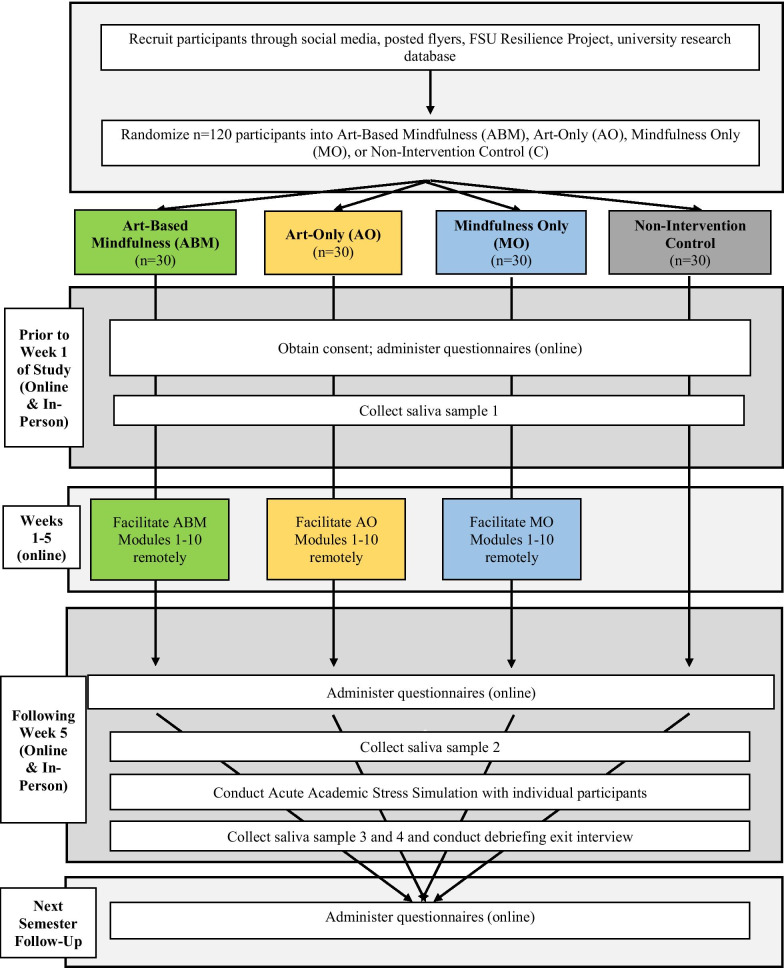
§ Mindfulness based art therapy study protocol to determine efficacy in reducing college stress and anxiety > Methods > Procedure Participants will be randomized into the experimental MBAT group condition, a neutral clay-manipulating task (NCT), a mindfulness only group (MO), or a control group condition. The study will be conducted over the course of 10 weeks within two academic semesters and used a minimal contact, technology assisted approach. The MBAT, NCT and MO groups are asked to complete a brief self-care task twice a week; these techniques were dubbed “self-care challenges” and were designed to only take 15 min. The MBAT group’s self-care challenges consisted of a 5-min mindfulness practice and 10 min of intentional art making with earth-based clay. The NCT group’s self-care challenges were identical from week to week, and consisted of a NCT, where they were given the same clay as experimental participants and told to “manipulate the clay in any way you wish for 15 min.” The MO group’s self-care challenges consisted of the same 5-min mindfulness practice as those in the MBAT group. The control group will participate in no self-care challenges during the 5 weeks. The study coordinator will meet with the individuals separately before Week 1 during which time quantitative data are collected in the form of saliva samples and a self-report questionnaire packet. For the 5 weeks in between face-to-face meetings, participants will check in through the study’s online platform, a learning management system, to complete the self-care challenges. Qualtrics© is used to administer the self-report assessments remotely. To demonstrate their continued participation in the study, participants assigned to the MBAT and NCT groups will upload images of their artwork each week within the online platform. Each of the 10 modules is designed to take approximately 15–20 min and they are provided over the course of five weeks, a direct replication of our second pilot study, when preliminary data was gathered. From our first pilot study to our second, intervention delivery was condensed from once a week for 10 weeks to twice a week for five weeks, doubling our retention rate. All MBAT modules include a brief mindfulness practice of meditation, guided imagery, or yoga with a complementary clay-based art directive. The MO modules consist of only the mindfulness practices from the MBAT intervention. The NCT modules consist of an open-ended art-making exercise, with minimal direction. The NCT intervention is designed as an ‘art for art’s sake’ intervention with the focus on the art-making and less on outcome or product. All modules are completed through the online platform. Each of the MBAT modules are described in detail:
plainstates a cause- Asserted: passes — The authors put it forward as true.
- Checkable: passes — It can be checked against evidence.
- Load-bearing: passes — The paper’s conclusions depend on it.
- Based: passes — The paper gives a reason why it holds.
A result the paper reports from its own data — it cites no other source for it, so there is none to check. The quote shows it is in the paper.
In the paper
“We also observed reductions in salivary stress hormone levels.”
§ Mindfulness based art therapy study protocol to determine efficacy in reducing college stress and anxiety > Background Generation Z make up nearly half (41%) of the total number of enrolled students at degree-granting universities in the U.S. [1]. They are also considered the most stressed generation of our time, with 91% of Gen Z respondents saying they have experienced at least one physical or emotional symptom due to stress in the last month compared to 74% of adults overall [2]. In the assessment of life stressors, 73% of respondents identified academics as the number one endorser of stressful periods. In the National Alliance on Mental Illness [3] survey, 73% of college student respondents reported having experienced at least one mental health crisis in college. Unfortunately, the increased burden placed on university counseling centers has forced universities to implement waitlists and limit the number of free sessions per student. Even after a student moves beyond the stigma of seeking help, they can experience a waiting time of 2–3 weeks before a counselor even sees them. After which, the counselor may determine that the student does not qualify for intensive intervention, and only offer group therapy or monthly sessions. This national mental health crisis has been getting attention over the last few years, as the Center for Collegiate Mental Health [4] identified the growing prevalence of student anxiety concerns as a substantial challenge for colleges and universities, and stated that developing supportive services to the general student body needs to be a top priority. Currently, most mental health programming for college students focuses on interventions that are reactive in nature, and only address those in acute situations or crisis. According to the National Alliance on Mental Illness [3], American college students believe there is a need for mental health programs that provide psychoeducation about risk factors of anxiety, provide coping mechanisms for stress, and prioritize mental health at the same level as physical health. Additionally, strategies must be constructed to address the time restrictions and financial burden that college students experience. One possible modality to address this request is an online mindfulness based art therapy. Mindfulness-based Art Therapy (MBAT) is an approach that incorporates mindfulness practices like meditation and yoga into the practice of art therapy to promote health, wellness and adaptive responses to stress. MBAT deeply embodies the Bodymind model as it quite literally and concurrently activates body and mind processes. In this theoretical orientation, the emphasis is placed on the deeply interdependent relationship between the body and the mind; for example, neurocognitive research indicates that emotions are accessed through interoceptive and sensory mechanisms [5]. There is one standardized MBAT protocol that has been published to date and has demonstrated positive results in a real-world setting for women with breast cancer; these results include psychosocial adjustment and positive changes to cerebral blood flow [6–8]. MBAT-receiving participants demonstrated significant increases in blood flow at rest and during meditation in multiple limbic brain regions, including the insula, amygdala, hippocampus, and caudate nuclei. Moreover, responses to a stressful cue resulted in reduced activation of the posterior cingulate cortex in MBAT-receiving participants, demonstrating MBAT’s regulation of a specific neural circuit. Unfortunately, this MBAT protocol consists of 2-h sessions weekly for 8 weeks [9], which is more time- and cost-intensive than even CBT. Validation of more abbreviated and efficient MBAT approaches is crucial in determining whether this therapeutic approach can be effective in large-scale deployments. However, to validate this premise an investigation is required into the specific mechanisms at play in MBAT. While separately the literature supports both art and mindfulness for anxiety and stress management, the two mechanisms have not yet been studied where their combined effects are compared to their isolated effects. Therefore, our randomized-controlled research design is structured to tease apart the unique outcomes elicited by art and mindfulness separately, and determine if they have a super-additive relationship when combined. This study is an extension of previous work [10, 11] with the addition of control groups to better understand the effects of MBAT on several psychological variables including stress and anxiety. We seek to determine the utility and biological substrates of a straightforward, reproducible, and easily deployable technology-assisted MBAT intervention on anxiety and related symptoms in young adults, college students in particular. Rising economic and academic pressures have exacerbated the prevalence of mood disorders among this group, but most college students still avoid traditional mental health services because of stigma. In preliminary studies, we have demonstrated the feasibility of a minimal contact, technology-delivered MBAT intervention. MBAT receiving students reported reduced anxiety and perceived stress as compared to controls performing a neutral-valence task. We also observed reductions in salivary stress hormone levels. In this project, we seek to leverage these intriguing data to validate a more intense MBAT intervention in a sensitive subpopulation with high initial anxiety. In the process, we will also use the Trier Social Stress Test (TSST) to experimentally induce a stress response and measure differences in reactivity, anxiety, and activation of the hypothalamic pituitary-adrenal axis. Saliva will be analyzed for multiple potential biological mediators including cytokines, inflammatory markers, and stress hormones. We predict that our MBAT intervention will produce sustained reduction of anxiety and perceived stress and reduced perceived stress responses to the TSST, mediated at least in part by reduced secretion of stress-related molecular signals. To reach the general population of college students, a technology-assisted approach is paramount. This multidisciplinary project will tease apart the mechanisms of change and implications of employing art-based approaches for anxiety and stress reduction in college students at much more nuanced level than we have previously tested using the MBAT approach we designed and comparing it to its main components as isolated interventions. Based on our previous two studies and the accumulated research explored, the following study aims and hypotheses will guide our proposed study.
plainstates a cause- Asserted: passes — The authors put it forward as true.
- Checkable: passes — It can be checked against evidence.
- Load-bearing: passes — The paper’s conclusions depend on it.
- Based: passes — The paper gives a reason why it holds.
A result the paper reports from its own data — it cites no other source for it, so there is none to check. The quote shows it is in the paper.
In the paper
“In preliminary studies, we have demonstrated the feasibility of a minimal contact, technology-delivered MBAT intervention.”
§ Mindfulness based art therapy study protocol to determine efficacy in reducing college stress and anxiety > Background Generation Z make up nearly half (41%) of the total number of enrolled students at degree-granting universities in the U.S. [1]. They are also considered the most stressed generation of our time, with 91% of Gen Z respondents saying they have experienced at least one physical or emotional symptom due to stress in the last month compared to 74% of adults overall [2]. In the assessment of life stressors, 73% of respondents identified academics as the number one endorser of stressful periods. In the National Alliance on Mental Illness [3] survey, 73% of college student respondents reported having experienced at least one mental health crisis in college. Unfortunately, the increased burden placed on university counseling centers has forced universities to implement waitlists and limit the number of free sessions per student. Even after a student moves beyond the stigma of seeking help, they can experience a waiting time of 2–3 weeks before a counselor even sees them. After which, the counselor may determine that the student does not qualify for intensive intervention, and only offer group therapy or monthly sessions. This national mental health crisis has been getting attention over the last few years, as the Center for Collegiate Mental Health [4] identified the growing prevalence of student anxiety concerns as a substantial challenge for colleges and universities, and stated that developing supportive services to the general student body needs to be a top priority. Currently, most mental health programming for college students focuses on interventions that are reactive in nature, and only address those in acute situations or crisis. According to the National Alliance on Mental Illness [3], American college students believe there is a need for mental health programs that provide psychoeducation about risk factors of anxiety, provide coping mechanisms for stress, and prioritize mental health at the same level as physical health. Additionally, strategies must be constructed to address the time restrictions and financial burden that college students experience. One possible modality to address this request is an online mindfulness based art therapy. Mindfulness-based Art Therapy (MBAT) is an approach that incorporates mindfulness practices like meditation and yoga into the practice of art therapy to promote health, wellness and adaptive responses to stress. MBAT deeply embodies the Bodymind model as it quite literally and concurrently activates body and mind processes. In this theoretical orientation, the emphasis is placed on the deeply interdependent relationship between the body and the mind; for example, neurocognitive research indicates that emotions are accessed through interoceptive and sensory mechanisms [5]. There is one standardized MBAT protocol that has been published to date and has demonstrated positive results in a real-world setting for women with breast cancer; these results include psychosocial adjustment and positive changes to cerebral blood flow [6–8]. MBAT-receiving participants demonstrated significant increases in blood flow at rest and during meditation in multiple limbic brain regions, including the insula, amygdala, hippocampus, and caudate nuclei. Moreover, responses to a stressful cue resulted in reduced activation of the posterior cingulate cortex in MBAT-receiving participants, demonstrating MBAT’s regulation of a specific neural circuit. Unfortunately, this MBAT protocol consists of 2-h sessions weekly for 8 weeks [9], which is more time- and cost-intensive than even CBT. Validation of more abbreviated and efficient MBAT approaches is crucial in determining whether this therapeutic approach can be effective in large-scale deployments. However, to validate this premise an investigation is required into the specific mechanisms at play in MBAT. While separately the literature supports both art and mindfulness for anxiety and stress management, the two mechanisms have not yet been studied where their combined effects are compared to their isolated effects. Therefore, our randomized-controlled research design is structured to tease apart the unique outcomes elicited by art and mindfulness separately, and determine if they have a super-additive relationship when combined. This study is an extension of previous work [10, 11] with the addition of control groups to better understand the effects of MBAT on several psychological variables including stress and anxiety. We seek to determine the utility and biological substrates of a straightforward, reproducible, and easily deployable technology-assisted MBAT intervention on anxiety and related symptoms in young adults, college students in particular. Rising economic and academic pressures have exacerbated the prevalence of mood disorders among this group, but most college students still avoid traditional mental health services because of stigma. In preliminary studies, we have demonstrated the feasibility of a minimal contact, technology-delivered MBAT intervention. MBAT receiving students reported reduced anxiety and perceived stress as compared to controls performing a neutral-valence task. We also observed reductions in salivary stress hormone levels. In this project, we seek to leverage these intriguing data to validate a more intense MBAT intervention in a sensitive subpopulation with high initial anxiety. In the process, we will also use the Trier Social Stress Test (TSST) to experimentally induce a stress response and measure differences in reactivity, anxiety, and activation of the hypothalamic pituitary-adrenal axis. Saliva will be analyzed for multiple potential biological mediators including cytokines, inflammatory markers, and stress hormones. We predict that our MBAT intervention will produce sustained reduction of anxiety and perceived stress and reduced perceived stress responses to the TSST, mediated at least in part by reduced secretion of stress-related molecular signals. To reach the general population of college students, a technology-assisted approach is paramount. This multidisciplinary project will tease apart the mechanisms of change and implications of employing art-based approaches for anxiety and stress reduction in college students at much more nuanced level than we have previously tested using the MBAT approach we designed and comparing it to its main components as isolated interventions. Based on our previous two studies and the accumulated research explored, the following study aims and hypotheses will guide our proposed study.
boosted- Asserted: passes — The authors put it forward as true.
- Checkable: passes — It can be checked against evidence.
- Load-bearing: passes — The paper’s conclusions depend on it.
- Based: passes — The paper gives a reason why it holds.
In the paper
“neurocognitive research indicates that emotions are accessed through interoceptive and sensory mechanisms [5].”
§ Mindfulness based art therapy study protocol to determine efficacy in reducing college stress and anxiety > Background Generation Z make up nearly half (41%) of the total number of enrolled students at degree-granting universities in the U.S. [1]. They are also considered the most stressed generation of our time, with 91% of Gen Z respondents saying they have experienced at least one physical or emotional symptom due to stress in the last month compared to 74% of adults overall [2]. In the assessment of life stressors, 73% of respondents identified academics as the number one endorser of stressful periods. In the National Alliance on Mental Illness [3] survey, 73% of college student respondents reported having experienced at least one mental health crisis in college. Unfortunately, the increased burden placed on university counseling centers has forced universities to implement waitlists and limit the number of free sessions per student. Even after a student moves beyond the stigma of seeking help, they can experience a waiting time of 2–3 weeks before a counselor even sees them. After which, the counselor may determine that the student does not qualify for intensive intervention, and only offer group therapy or monthly sessions. This national mental health crisis has been getting attention over the last few years, as the Center for Collegiate Mental Health [4] identified the growing prevalence of student anxiety concerns as a substantial challenge for colleges and universities, and stated that developing supportive services to the general student body needs to be a top priority. Currently, most mental health programming for college students focuses on interventions that are reactive in nature, and only address those in acute situations or crisis. According to the National Alliance on Mental Illness [3], American college students believe there is a need for mental health programs that provide psychoeducation about risk factors of anxiety, provide coping mechanisms for stress, and prioritize mental health at the same level as physical health. Additionally, strategies must be constructed to address the time restrictions and financial burden that college students experience. One possible modality to address this request is an online mindfulness based art therapy. Mindfulness-based Art Therapy (MBAT) is an approach that incorporates mindfulness practices like meditation and yoga into the practice of art therapy to promote health, wellness and adaptive responses to stress. MBAT deeply embodies the Bodymind model as it quite literally and concurrently activates body and mind processes. In this theoretical orientation, the emphasis is placed on the deeply interdependent relationship between the body and the mind; for example, neurocognitive research indicates that emotions are accessed through interoceptive and sensory mechanisms [5]. There is one standardized MBAT protocol that has been published to date and has demonstrated positive results in a real-world setting for women with breast cancer; these results include psychosocial adjustment and positive changes to cerebral blood flow [6–8]. MBAT-receiving participants demonstrated significant increases in blood flow at rest and during meditation in multiple limbic brain regions, including the insula, amygdala, hippocampus, and caudate nuclei. Moreover, responses to a stressful cue resulted in reduced activation of the posterior cingulate cortex in MBAT-receiving participants, demonstrating MBAT’s regulation of a specific neural circuit. Unfortunately, this MBAT protocol consists of 2-h sessions weekly for 8 weeks [9], which is more time- and cost-intensive than even CBT. Validation of more abbreviated and efficient MBAT approaches is crucial in determining whether this therapeutic approach can be effective in large-scale deployments. However, to validate this premise an investigation is required into the specific mechanisms at play in MBAT. While separately the literature supports both art and mindfulness for anxiety and stress management, the two mechanisms have not yet been studied where their combined effects are compared to their isolated effects. Therefore, our randomized-controlled research design is structured to tease apart the unique outcomes elicited by art and mindfulness separately, and determine if they have a super-additive relationship when combined. This study is an extension of previous work [10, 11] with the addition of control groups to better understand the effects of MBAT on several psychological variables including stress and anxiety. We seek to determine the utility and biological substrates of a straightforward, reproducible, and easily deployable technology-assisted MBAT intervention on anxiety and related symptoms in young adults, college students in particular. Rising economic and academic pressures have exacerbated the prevalence of mood disorders among this group, but most college students still avoid traditional mental health services because of stigma. In preliminary studies, we have demonstrated the feasibility of a minimal contact, technology-delivered MBAT intervention. MBAT receiving students reported reduced anxiety and perceived stress as compared to controls performing a neutral-valence task. We also observed reductions in salivary stress hormone levels. In this project, we seek to leverage these intriguing data to validate a more intense MBAT intervention in a sensitive subpopulation with high initial anxiety. In the process, we will also use the Trier Social Stress Test (TSST) to experimentally induce a stress response and measure differences in reactivity, anxiety, and activation of the hypothalamic pituitary-adrenal axis. Saliva will be analyzed for multiple potential biological mediators including cytokines, inflammatory markers, and stress hormones. We predict that our MBAT intervention will produce sustained reduction of anxiety and perceived stress and reduced perceived stress responses to the TSST, mediated at least in part by reduced secretion of stress-related molecular signals. To reach the general population of college students, a technology-assisted approach is paramount. This multidisciplinary project will tease apart the mechanisms of change and implications of employing art-based approaches for anxiety and stress reduction in college students at much more nuanced level than we have previously tested using the MBAT approach we designed and comparing it to its main components as isolated interventions. Based on our previous two studies and the accumulated research explored, the following study aims and hypotheses will guide our proposed study.
What the sources say
- Not checked — no full text of the sourcecites [5] Kruk KA, Aravich PF, Deaver SP, deBeus R. Comparison of brain activity during drawing and clay sculpting: a preliminary qEEG study. Art Ther. 2014;31(2):52–60. source
hedgedstates a cause- Asserted: passes — The authors put it forward as true.
- Checkable: passes — It can be checked against evidence.
- Load-bearing: unclear — It is unclear whether the paper’s conclusions depend on it.
- Based: passes — The paper gives a reason why it holds.
3 more claims
Create a free account to see all 17 claims and to verify the 3 references still open.
- Probably not a substantial claim. 7
- It may state two separate claims as one. 3
Citations
Cites
Kirschbaum, C., Pirke, K.-M., & Hellhammer, D. H. (2008) · Neuropsychobiology · doi:10.1159/000119004 · Cited by 6,093 · cited 1×
“The TSST has reliably produced heightened cortisol levels, above baseline levels [12].”
BackgroundNational Center for Education Statistics
(2008) · Encyclopedia of Educational Psychology · doi:10.4135/9781412963848.n192 · Cited by 4,546
American Psychological Association (APA)
Kaslow, N. J., & Doran, J. M. (2017) · Encyclopedia of Clinical Neuropsychology · doi:10.1007/978-3-319-56782-2_593-3 · Cited by 585
A randomized, controlled trial of mindfulness‐based art therapy (MBAT) for women with cancer
Monti, D. A., Peterson, C., Kunkel, E. J. S., Hauck, W. W., Pequignot, E., Rhodes, L., & Brainard, G. C. (2006) · Psycho-Oncology · doi:10.1002/pon.988 · Cited by 378
Basso, J. C., McHale, A., Ende, V., Oberlin, D. J., & Suzuki, W. A. (2019) · Behavioural Brain Research · doi:10.1016/j.bbr.2018.08.023 · Cited by 255
The bodymind model: a platform for studying the mechanisms of change induced by art therapy
Czamanski-Cohen, J., & Weihs, K. L. (2016) · The Arts in Psychotherapy · doi:10.1016/j.aip.2016.08.006 · Cited by 209
Hoge, E. A., Bui, E., Palitz, S. A., Schwarz, N. R., Owens, M. E., Johnston, J. M., Pollack, M. H., & Simon, N. M. (2018) · Psychiatry Research · doi:10.1016/j.psychres.2017.01.006 · Cited by 193
Comparison of Brain Activity During Drawing and Clay Sculpting: A Preliminary qEEG Study
Kruk, K. A., Aravich, P. F., Deaver, S. P., & deBeus, R. (2014) · Art Therapy · doi:10.1080/07421656.2014.903826 · Cited by 86 · cited 1×
“In this theoretical orientation, the emphasis is placed on the deeply interdependent relationship between the body and the mind; for example, neurocognitive research indicates that emotions are accessed through interoceptive and sensory mechanisms [5].”
BackgroundHenze, G., Zänkert, S., Urschler, D. F., Hiltl, T.-J., Kudielka, B. M., Pruessner, J. C., & Wüst, S. (2016) · Psychoneuroendocrinology · doi:10.1016/j.psyneuen.2016.10.002 · Cited by 84
Monti, D. A., Kash, K. M., Kunkel, E. J. S., Brainard, G., Wintering, N., Moss, A. S., Rao, H., Zhu, S., & Newberg, A. B. (2012) · Stress and Health · doi:10.1002/smi.2470 · Cited by 80
Research works printed but not linked: 1
- Stull OA. Mindfulness based art therapy eight session manual. Olivia A. Stull; 2016.
Cited by
Art‐based mindfulness at school: A culturally responsive approach to school mental health
Jones, J. M., & Lee, L. H. (2022) · Psychology in the Schools · doi:10.1002/pits.22660 · Cited by 28
Wang, J., Kang, D.-X., Zhang, A., & Li, B. (2024) · World Journal of Psychiatry · doi:10.5498/wjp.v14.i1.8 · Cited by 18
Art Therapy: A Healing Tool in Health Care
Mitra, A., Mandal, I., & Mondal, L. (2022) · doi:10.31674/book.2022se.008 · Cited by 9
Ong, E. K., Tan, U.-T. E., Chiam, M., & Sim, W. S. (2024) · BMC Palliative Care · doi:10.1186/s12904-024-01414-6 · Cited by 16
“Art therapists (ATs), equipped with training in both the arts and clinical practice, play a crucial role in bridging potential gaps in ideologies, curricular implementation, and research between medical education and the humanities [29–30].”
BackgroundCheshure, A., & Lith, T. V. (2023) · Journal of American College Health · doi:10.1080/07448481.2022.2155462 · Cited by 8
“18 This component is a complementary qualitative analysis seeking additional knowledge about the impact of the intervention from participants to identify key beneficial components in order to inform future MBAT-related interventions.”
InfluentialSelf-citation
Metadata
- Authors
- Van Lith, T., Cheshure, A., Pickett, S. M., Stanwood, G. D., & Beerse, M.
- Affiliations
- Florida State University (US)
- Venue
- BMC Psychology
- Published
- 2021-09-03
- Volume
- 9
- Issue
- 1
- Pages
- 134-134
- ISSN
- 2050-7283 (ISSN-L)
- PMC
- PMC8414753
- OpenAlex
- W3196304034
- Cited by
- 28
- References
- 14
- Citations by year
- 2026: 5 · 2025: 7 · 2024: 12 · 2023: 2 · 2022: 2
- FWCI
- 25.39
- Type
- journal article
- Language
- en
- Open access
- gold
- doi.org
- Licence
- cc-by
- creativecommons.org/licenses/by/4.0 (tdm)
- creativecommons.org/licenses/by/4.0 (vor)
- Locations
- BMC Psychology (publishedVersion, cc-by)
- PubMed Central (publishedVersion, cc-by)
- PubMed (publishedVersion)
- DOAJ (DOAJ: Directory of Open Access Journals) (submittedVersion, cc-by-sa)
- Figshare (submittedVersion, cc-by)
- La Trobe University (cc-by)
- Funders
- national endowment of the arts (1863328-38-20)
- Topics
- Social Sciences › Psychology › Clinical Psychology › Art Therapy and Mental Health
- Social Sciences › Psychology › Clinical Psychology › Mindfulness and Compassion Interventions
- Social Sciences › Psychology › Social Psychology › Music Therapy and Health
- Keywords
- mindfulness-based art therapy, college student stress, anxiety, Generation Z, university mental health, online intervention, Trier Social Stress Test, self-care, intervention efficacy
- MeSH terms
- Anxiety, Art Therapy, Clinical Trials as Topic, Humans, Students, Universities, Mindfulness
About these checks
Registry, retraction, Cites and statistics results are computed, not judged, with one exception: a printed reference that no index lists is read once by a model before it counts as a citation error. Claims are extracted by a model and kept only when their quote appears verbatim in the text; each cited source is then checked, with a model’s help, for whether it says what the claim relies on. Those verdicts can be wrong — read the claim’s quote and the cited source before relying on one.
A language model drew the claims from the paper on 2026-10-11, under version 3 of the claim definition (model deepseek-v4.1-flash, prompt extract-v3).
A second model labelled each claim on 2026-10-11 (model jev-1.13-20260917, definition revision gold-guideline-v0.2).
Statistics and arithmetic are recomputed, not judged.
Confidence bands are shown only for fields calibrated on our annotated test set. None is calibrated yet, so no band is shown.
What counts as a claim ›How we measure confidence ›How we check this ›
Are you an author, or do you see a problem with this page? Request a review
How to cite
Cite CoChat for the checks on this page, and the paper for its own findings.
- This page
- CoChat. (2026). Citation check: Mindfulness based art therapy study protocol to determine efficacy in reducing college stress and anxiety. https://app.cochat.ai/papers/10.1186/s40359-021-00634-2
- The paper
- Van Lith, T., Cheshure, A., Pickett, S. M., Stanwood, G. D., & Beerse, M. (2021). Mindfulness based art therapy study protocol to determine efficacy in reducing college stress and anxiety. BMC Psychology. https://doi.org/10.1186/s40359-021-00634-2
Data sources
Bibliographic data: Semantic Scholar, OpenAlex, Crossref.
Contains information from the Semantic Scholar Academic Graph Datasets, made available under the ODC Attribution License (ODC-BY 1.0).
Semantic Scholar’s data is described in: Kinney, R., et al. (2023). The Semantic Scholar Open Data Platform. arXiv:2301.10140.
