

The DOI matches its Crossref record; 4 of the 4 references it cites were found in a registry or an index.
Explainable machine learning models for mortality prediction in patients with sepsis in tertiary care hospital ICU in low- to middle-income countries
Open accessAbstract
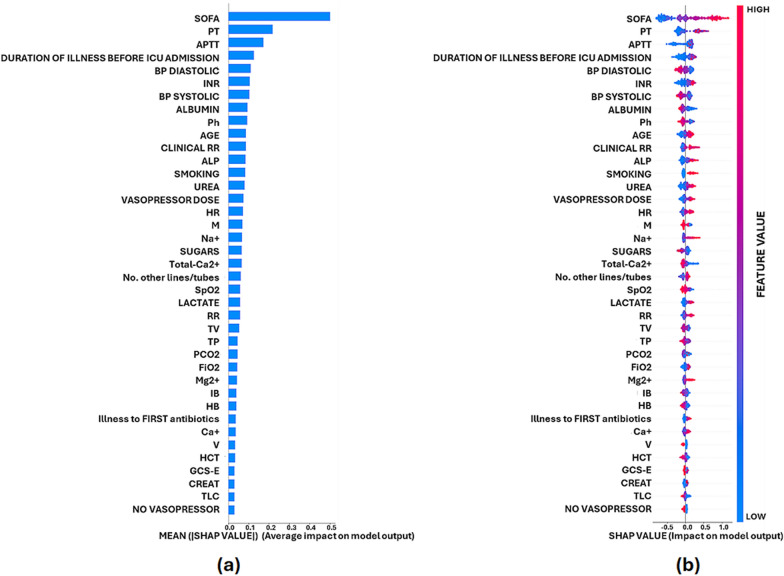
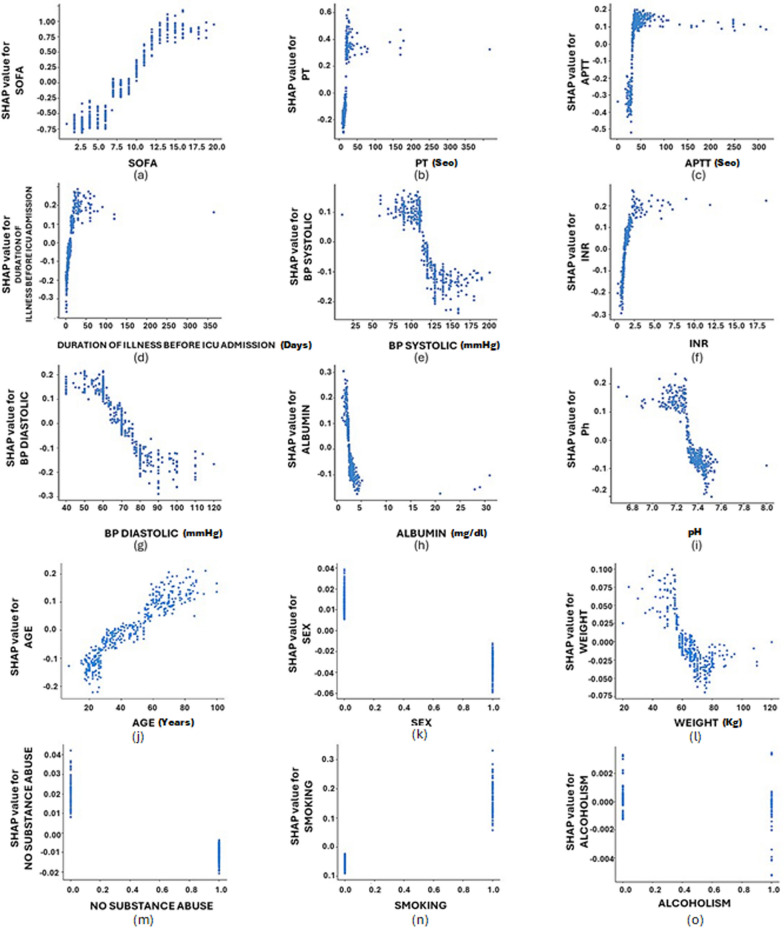
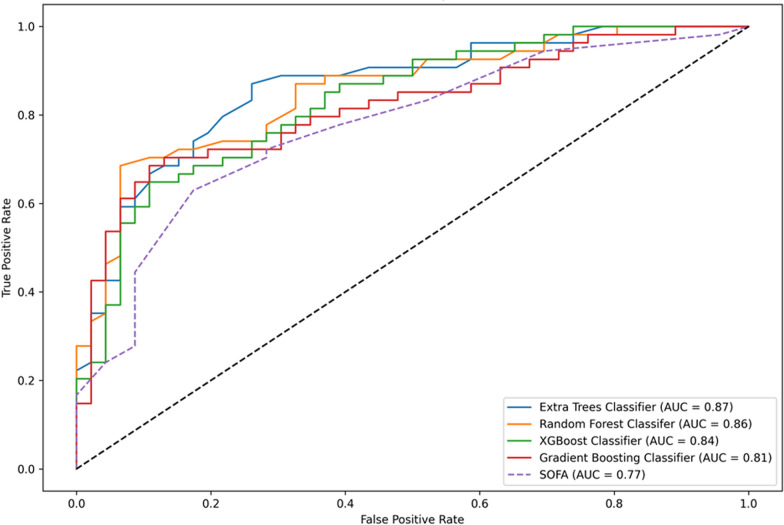
Introduction: Mortality in sepsis patients remains a challenging condition due to its complex nature. It is an even more prevalent health problem in low- and middle-income countries demanding costly treatment and management. This study proposes an explainable artificial intelligence-based approach towards mortality prediction for patients with sepsis admitted to intensive care unit (ICU). Methods: A total of 500 patients (N = 500, male: female = 262:238, age = 45.96 ± 20.92 years) with sepsis were analyzed retrospectively. We utilize SHapley Additive exPlanations (SHAP) method to gain insights into the preliminary model’s learnings regarding the wide array of demographic, clinical, radiological, and laboratory features. The clinical insights were used for feature selection to fetch the top t = 80% feature spread as well as to derive empirical findings from feature dependence plots which could find application in periphery hospital settings. Four machine learning algorithms, Random Forest, XGBoost, Extra Trees and Gradient Boosting classifiers were trained for the binary classification task (discharge from ICU and death in ICU) with the selected influential feature set. Results: The Extra Trees Classifier showed the best overall performance with AUROC score: 0.87 (95% CI 0.80–0.93), Accuracy: 0.79 (95% CI 0.71–0.86), F1 score: 0.78 (95% CI 0.69–0.86), Precision: 0.88 (95% CI 0.78–0.98) and Recall: 0.70 (95% CI 0.57–0.82). All four models perform significantly well on dataset with AUROC scores ranging from 0.81 (CI 0.73–0.89) to 0.87 (CI 0.80–0.93) and F1 scores ranging 0.74 (CI 0.64–0.83) to 0.78 (CI 0.69–0.86) on the hold-out test set and were stable over fivefold cross-validation prior to testing. Conclusions: The proposed approach could provide preemptive estimations into prognostication and outcome prediction of patients with sepsis in low-resource settings. This will aid in clinical decision-making, resource allocation and research for new treatment modalities.
Overview
The claims and statistics of this paper haven’t been checked yet.
Run the check — free, no account needed. It reads the open-access text and checks the sources it cites.
Integrity signals
Registry
Cites
Statistics
Figures
Verification
Claims the paper makes
The claims and statistics of this paper haven’t been checked yet.
Run the check — free, no account needed. It reads the open-access text and checks the sources it cites.
Claims other papers make about this one
Each is checked against this paper’s own text: does it say what the citing paper says it does?
The cited source says what the claim attributes to it.
In the citing paper
“For instance, Diwan et al. developed explainable machine learning models for predicting sepsis mortality in a tertiary care hospital ICU, where the Extra Trees classifier achieved an AUROC of 0.87 and maintained consistent results across the cross‑validation folds. [35].”
From Explainable AI for critical care: a systematic review of interpretable models for sepsis and ICU mortality prediction (2026) · cites this paper as [35]
Self-check
Percentages, sums and reported differences re-computed from the paper’s own numbers.
The self-check needs the paper’s full text.
Citations
Cites
Tabular data: Deep learning is not all you need
Shwartz-Ziv, R., & Armon, A. (2022) · Information Fusion · doi:10.1016/j.inffus.2021.11.011 · Cited by 2,172
Incidence and trends of sepsis in US hospitals using clinical vs claims data, 2009-2014.
Rhee, C., Dantes, R., Epstein, L., Murphy, D. J., Seymour, C. W., Iwashyna, T. J., Kadri, S. S., Angus, D. C., Danner, R. L., Fiore, A. E., et al. (2017) · JAMA · doi:10.1001/jama.2017.13836 · Cited by 1,884
Using machine learning methods to predict in-hospital mortality of sepsis patients in the ICU
Kong, G., Lin, K., & Hu, Y. (2020) · BMC Medical Informatics and Decision Making · doi:10.1186/s12911-020-01271-2 · Cited by 180
Impact of a deep learning sepsis prediction model on quality of care and survival
Boussina, A., Shashikumar, S. P., Malhotra, A., Owens, R. L., El-Kareh, R., Longhurst, C. A., Quintero, K., Donahue, A., Chan, T. C., Nemati, S., et al. (2024) · npj Digital Medicine · doi:10.1038/s41746-023-00986-6 · Cited by 170
Research works printed but not linked: 47
- Pieroni M, Olier I, Ortega-Martorell S, Johnston BW, Welters ID (2022) In-hospital mortality of sepsis differs depending on the origin of infection: an investigation of predisposing factors. Front Med. https://doi.org/10.3389/fmed.2022.915224 · DOI
- Rudd KE, Johnson SC, Agesa KM, Shackelford KA, Tsoi D, Kievlan DR, Colombara DV, Ikuta KS, Kissoon N, Finfer S, Fleischmann-Struzek C, Machado FR, Reinhart KK, Rowan K, Seymour CW, Watson RS, West TE, Marinho F, Hay SI, Lozano R, Lopez AD, Angus DC, Murray CJL, Naghavi M (2020) Global, regional, and national sepsis incidence and mortality, 1990–2017: analysis for the global burden of disease study. Lancet 395:200–211. https://doi.org/10.1016/S0140-6736(19)32989-7 · DOI · Paper page
- Gaieski DF, Edwards JM, Kallan MJ, Carr BG (2013) Benchmarking the incidence and mortality of severe sepsis in the United States. Crit Care Med 41:1167–1174. https://doi.org/10.1097/CCM.0B013E31827C09F8 · DOI
- Klompas M, Rhee C (2016) Sepsis and the theory of relativity: measuring a moving target with a moving measuring stick. Crit Care 20:1–3. https://doi.org/10.1186/S13054-016-1559-Z/METRICS · DOI
- Shankar-Hari M, Phillips GS, Levy ML, Seymour CW, Liu VX, Deutschman CS, Angus DC, Rubenfeld GD, Singer M (2016) Developing a new definition and assessing new clinical criteria for septic shock: for the third international consensus definitions for sepsis and septic shock (Sepsis-3). JAMA 315:775–787. https://doi.org/10.1001/JAMA.2016.0289 · DOI
- Rhee C, Gohil S, Klompas M (2014) Regulatory mandates for sepsis care—reasons for caution. N Engl J Med 370:1673–1676. https://doi.org/10.1056/NEJMP1400276 · DOI
- Jafarzadeh SR, Thomas BS, Marschall J, Fraser VJ, Gill J, Warren DK (2016) Quantifying the improvement in sepsis diagnosis, documentation, and coding: the marginal causal effect of year of hospitalization on sepsis diagnosis. Ann Epidemiol 26:66–70. https://doi.org/10.1016/J.ANNEPIDEM.2015.10.008 · DOI
- Li A, Ling L, Qin H, Arabi YM, Myatra SN, Egi M, Kim JH, Basri M, Nor M, Son N, Fang W-F, Wahyuprajitno B, Hashmi M, Faruq MO, Patjanasoontorn B, Jaffer M, Bahrani A, Shrestha BR, Shrestha U, Mahmood K, Nafees K, Sann KK, Emmanuel J, Palo M, Mendsaikhan N, Konkayev A, Detleuxay K, Chan YH, Du B, Divatia JV, Koh Y, Gomersall CD, Phua J (2022) Epidemiology, management, and outcomes of sepsis in ICUs among countries of differing national wealth across Asia. Am J Respir Crit Care Med. https://doi.org/10.1164/rccm.202112-2743OC · DOI
- Jeganathan N (2022) Burden of sepsis in India. Chest 161:1438–1439. https://doi.org/10.1016/j.chest.2022.02.008 · DOI
- Vincent J-L, Moreno R, Takala J, Willatts S, de Mendona A, Bruining H, Reinhart CK, Suter PM, Thijs LG, De Mendonga A, Suter RM (1996) The SOFA (Sepsis.related organ failure assessment) score to describe organ dysfunction/failure. Intensive Care Med 22:707–710 · DOI · Paper page
- Gil Cebrian J, Bello Cámara MP, Diaz-Alersi R (1987) APACHE II: a severity of disease classification system. Intensive Care Med 13:143. https://doi.org/10.1097/00003465-198603000-00013 · DOI
- Do SN, Dao CX, Nguyen TA, Nguyen MH, Pham DT, Nguyen NT, Huynh DQ, Hoang QTA, Van Bui C, Vu TD, Bui HN, Nguyen HT, Hoang HB, Le TTP, Nguyen LTB, Duong PT, Nguyen TD, Le VH, Pham GTT, Bui GTH, Van Bui T, Pham TTN, Van Nguyen C, Nguyen AD, Phua J, Li A, Luong CQ (2023) Sequential organ failure assessment (SOFA) score for predicting mortality in patients with sepsis in Vietnamese intensive care units: a multicentre, cross-sectional study. BMJ Open. https://doi.org/10.1136/bmjopen-2022-064870 · DOI
- Mirijello A, Fontana A, Greco AP, Tosoni A, D’Agruma A, Labonia M, Copetti M, Piscitelli P, De Cosmo S (2023) on behalf of the internal medicine sepsis study group, identifying predictors associated with risk of death or admission to intensive care unit in internal medicine patients with sepsis: a comparison of statistical models and machine learning algorithms. Antibiotics. https://doi.org/10.3390/antibiotics12050925 · DOI
- Choi MH, Kim D, Choi EJ, Jung YJ, Choi YJ, Cho JH, Jeong SH (2022) Mortality prediction of patients in intensive care units using machine learning algorithms based on electronic health records. Sci Rep. https://doi.org/10.1038/s41598-022-11226-4 · DOI
- Greco M, Caruso PF, Spano S, Citterio G, Desai A, Molteni A, Aceto R, Costantini E, Voza A, Cecconi M (2023) Machine learning for early outcome prediction in septic patients in the emergency department. Algorithms. https://doi.org/10.3390/a16020076 · DOI
- Zhang Y, Xu W, Yang P, Zhang A (2023) Machine learning for the prediction of sepsis-related death: a systematic review and meta-analysis. BMC Med Inform Decis Mak. https://doi.org/10.1186/s12911-023-02383-1 · DOI
- Petch J, Di S, Nelson W (2022) Opening the black box: the promise and limitations of explainable machine learning in cardiology. Can J Cardiol 38:204–213. https://doi.org/10.1016/J.CJCA.2021.09.004 · DOI · Paper page
- Amann J, Blasimme A, Vayena E, Frey D, Madai VI (2020) Explainability for artificial intelligence in healthcare: a multidisciplinary perspective. BMC Med Inform Decis Mak 20:310. https://doi.org/10.1186/s12911-020-01332-6 · DOI · Paper page
- Reddy S (2022) Explainability and artificial intelligence in medicine, lancet digit. Health 4:e214–e215. https://doi.org/10.1016/S2589-7500(22)00029-2 · DOI
- Bao C, Deng F, Zhao S (2023) Machine-learning models for prediction of sepsis patients mortality. Medicina Intensiva 47:315–325. https://doi.org/10.1016/j.medine.2022.06.024 · DOI
- X. Lu, J. Zhu, J. Gui, Q. Li, Prediction of All-cause Mortality with Sepsis-associated Encephalopathy in the ICU Based on Interpretable Machine Learning, in: 2022 IEEE International Conference on Mechatronics and Automation, ICMA 2022, Institute of Electrical and Electronics Engineers Inc., 2022: pp. 298–302. https://doi.org/10.1109/ICMA54519.2022.9856126. · DOI
- van Poucke S, Zhang Z, Schmitz M, Vukicevic M, Vander Laenen M, Celi LA, de Deyne C (2016) Scalable predictive analysis in critically ill patients using a visual open data analysis platform. PLoS One. https://doi.org/10.1371/journal.pone.0145791 · DOI
- Taylor RA, Pare JR, Venkatesh AK, Mowafi H, Melnick ER, Fleischman W, Hall MK (2016) Prediction of in-hospital mortality in emergency department patients with sepsis: a local big data-driven, machine learning approach. Acad Emerg Med 23:269–278. https://doi.org/10.1111/acem.12876 · DOI
- Z. Zhang, Y. Hong, Development of a novel score for the prediction of hospital mortality in patients with severe sepsis: the use of electronic healthcare records with LASSO regression, 2017. www.impactjournals.com/oncotarget. · DOI
- J.W. Choi, J.W. Kim, J.H. Nam, J.Y. Maeng, K.H. Kim, S. Park, Artificial Intelligence for Predicting Mortality Due to Sepsis, in: Digest of Technical Papers - IEEE International Conference on Consumer Electronics, Institute of Electrical and Electronics Engineers Inc., 2023. https://doi.org/10.1109/ICCE56470.2023.10043540. · DOI
- Ribas Ripoll VJ, Vellido A, Romero E, Ruiz-Rodríguez JC (2014) Sepsis mortality prediction with the quotient basis kernel. Artif Intell Med 61:45–52. https://doi.org/10.1016/j.artmed.2014.03.004 · DOI
- J. Shin, Y. Li, Y. Luo, Early Prediction of Mortality in Critical Care Setting in Sepsis Patients Using Structured Features and Unstructured Clinical Notes, Proceedings - 2021 IEEE International Conference on Bioinformatics and Biomedicine, BIBM 2021 (2021) 2885–2890. https://doi.org/10.1109/BIBM52615.2021.9669822. · DOI
- M. Shukla, J. Lin, O. Seneviratne, Collaboratively Learning Optimal Patient Outcomes Using Smart Contracts in Limited Data Settings, in: Proceedings - 2022 IEEE/ACM International Conference on Connected Health: Applications, Systems and Engineering Technologies, CHASE 2022, Institute of Electrical and Electronics Engineers Inc., 2022: pp. 133–137. https://doi.org/10.1145/3551455.3559600. · DOI
- Yong L, Zhenzhou L (2024) Deep learning-based prediction of in-hospital mortality for sepsis. Sci Rep. https://doi.org/10.1038/s41598-023-49890-9 · DOI
- Cheng C-Y, Kung C-T, Chen F-C, Chiu I-M, Lin C-HR, Chu C-C, Kung CF, Su C-M (2022) Machine learning models for predicting in-hospital mortality in patient with sepsis: analysis of vital sign dynamics. Front Med. https://doi.org/10.3389/fmed.2022.964667 · DOI
- Johnson AEW, Pollard TJ, Shen L, Lehman LWH, Feng M, Ghassemi M, Moody B, Szolovits P, Anthony Celi L, Mark RG (2016) MIMIC-III, a freely accessible critical care database. Sci Data. https://doi.org/10.1038/sdata.2016.35 · DOI · Paper page
- Steinmeyer C, Wiese L (2020) Sampling methods and feature selection for mortality prediction with neural networks. J Biomed Inform 111:103580. https://doi.org/10.1016/J.JBI.2020.103580 · DOI
- Mazurowski MA, Habas PA, Zurada JM, Lo JY, Baker JA, Tourassi GD (2008) Training neural network classifiers for medical decision making: the effects of imbalanced datasets on classification performance. Neural Netw 21:427–436. https://doi.org/10.1016/j.neunet.2007.12.031 · DOI
- Aushev A, Ripoll VR, Vellido A, Aletti F, Pinto BB, Herpain A, Post EH, Medina ER, Ferrer R, Baselli G, Bendjelid K (2018) Feature selection for the accurate prediction of septic and cardiogenic shock ICU mortality in the acute phase. PLoS ONE 13:e0199089. https://doi.org/10.1371/JOURNAL.PONE.0199089 · DOI
- Remeseiro B, Bolon-Canedo V (2019) A review of feature selection methods in medical applications. Comput Biol Med 112:103375. https://doi.org/10.1016/j.compbiomed.2019.103375 · DOI
- S.M. Lundberg, P.G. Allen, S.-I. Lee, A Unified Approach to Interpreting Model Predictions, Adv Neural Inf Process Syst 30 (2017). https://github.com/slundberg/shap (accessed April 17, 2024).
- Shankar-Hari M, Phillips GS, Levy ML, Seymour CW, Liu VX, Deutschman CS, Angus DC, Rubenfeld GD, Singer M (2016) Developing a new definition and assessing new clinical criteria for septic shock: for the third international consensus definitions for sepsis and septic shock (sepsis-3). JAMA - J Am Med Assoc 315:775–787. https://doi.org/10.1001/jama.2016.0289 · DOI
- J. Krause, A. Perer, K. Ng, Interacting with Predictions: Visual Inspection of Black-box Machine Learning Models, (n.d.). https://doi.org/10.1145/2858036.2858529. · DOI · Paper page
- Nielsen RL, Monfeuga T, Kitchen RR et al (2024) Data-driven identification of predictive risk biomarkers for subgroups of osteoarthritis using interpretable machine learning. Nat Commun 15:2817. https://doi.org/10.1038/s41467-024-46663-4 · DOI
- Lundberg SM, Erion G, Chen H, DeGrave A, Prutkin JM, Nair B, Katz R, Himmelfarb J, Bansal N, Lee SI (2020) From local explanations to global understanding with explainable AI for trees. Nat Mach Intell 2:56–67. https://doi.org/10.1038/s42256-019-0138-9 · DOI · Paper page
- T. Chen, C. Guestrin, XGBoost: A Scalable Tree Boosting System, in: Proceedings of the 22nd ACM SIGKDD International Conference on Knowledge Discovery and Data Mining, Association for Computing Machinery, New York, NY, USA, 2016: pp. 785–794. https://doi.org/10.1145/2939672.2939785. · DOI · Paper page
- Chatterjee S, Bhattacharya M (2017) Epidemiology of adult-population sepsis in India: a single center 5 year experience, Indian. J Crit Care Med 21:573–577. https://doi.org/10.4103/ijccm.ijccm_240_17 · DOI
- Divatia JV, Amin PR, Ramakrishnan N, Kapadia FN, Todi S, Sahu S, Govil D, Chawla R, Kulkarni AP, Samavedam S, Jani CK, Rungta N, Samaddar DP, Mehta S, Venkataraman R, Hegde A, Bande BD, Dhanuka S, Singh V, Tewari R, Zirpe K, Sathe P, Sivakumar MN, Kansal S, Gurav S, Kulkarni S, Ray S, Rajhans P, Choudhary S, Singhvi T, Toraskar K, Pande R, Gupta S, Rao SM, Kujore R, Kumar Mani A, Sinha V, Kulkarni A, Moulick ND, Shah C, Lakhani J, Myatra SN, Sircar M, Shah RJ, Singh DK, Shenoy A, Dubey PK, Joshi K, Dewan A, Kumar V, Goel C, Tyagi RS, Bhutada K, Mishra S, Pasha SA, Nangia V, Deka AK, Munjal M, Arunkumar AS, Chavda MP, Hartalkar AR, Kar A, Shrivas VK, Sarna MK, Singh AK, Sahasrabudhe S, Daniel B, Sharma S, Agrawal A, Gopinath R, Sathiakumar DBD, Kadapatti K, Sharma J, Lahkar B, Chaudhry D, Azim A, Prayag S, Talekar S, Patil S, Tipparaju SS, Kola VR, Ashok E, Joad SHK, Jeswani D, Bose N, Mannari JG, Karnad DR, Clerk A, Pattnaik S, Shanbhag V, Barokar R, Nakra CM, Venugopal M, Ramasubban S, Gupta A, Gupta B, Aditya T, Prasad R, Joshi MM, Dey A, Kulkarni V, Sunder S, Bhavsar A, David E, Jaju M, Pandya ST, Balasubramani VM, Dinaker M, Khunteta S, Shah H, Srinivasulu B, Gautam PL, Sood P, Acharya K, Jindal VB, Yadgire R, Bhattacharyya S, John JK, Nanda A, Giri S, Oza PL, Shah J, Aghara D, Singh M, Sahu SP, Patil P, Tulara N, Chafle S, Timane J, Tandon K, Benjarge PV, Thakur VK, Mehta J, Singhvi GR, Parashar VK, Malani A, Sivakumar MN, Singh DK, Singh AK, Gopinath R, Sathiakumar DBD, Ashok E, Venugopal M, Aditya T, Balasubramani VM, Dinaker M, Srinivasulu B, Gautam PL, Jindal VB, Thakur VK, Singhvi GR, Parashar VK (2016) intensive care in India: the Indian intensive care case mix and practice patterns study. Ind J Crit Care Med 20:216–225. https://doi.org/10.4103/0972-5229.180042 · DOI
- Jabri A, Fowler C, Dhamija Y, Alzubi J, Bhatia S, Al-abdouh A, Alameh A, Alfahel H, Haddadin F, Shahrori Z, Nasser F, Ababneh A (2022) Demographic undertones for sepsis mortality in a community-based hospital. J Clin Med Res 14:28–33. https://doi.org/10.1474/jocmr4618 · DOI
- Stenberg H, Li X, Pello-Esso W, Larsson Lönn S, Thønnings S, Khoshnood A, Knudsen JD, Sundquist K, Jansåker F (2023) The effects of sociodemographic factors and comorbidities on sepsis: a nationwide Swedish cohort study. Prev Med Rep. https://doi.org/10.1016/j.pmedr.2023.102326 · DOI
- Lindström AC, Eriksson M, Mårtensson J, Oldner A, Larsson E (2021) Nationwide case–control study of risk factors and outcomes for community-acquired sepsis. Sci Rep. https://doi.org/10.1038/s41598-021-94558-x · DOI
- Zhang Z, Jin P, Feng M et al (2022) Causal inference with marginal structural modeling for longitudinal data in laparoscopic surgery: a technical note. Laparosc Endosc Robot Surg 5(4):146–152. https://doi.org/10.1016/j.lers.2022.10.002 · DOI
Cited by
Athukorala, V. S., & Ilmini, W. M. K. S. (2026) · BMC Medical Informatics and Decision Making · doi:10.1186/s12911-026-03344-0 · Cited by 10
“Diwan et al. [35] applied explainable machine learning in low-and middle-income countries, showing that transparent models can be effectively used even in resource-constrained ICUs.”
Metadata
- Authors
- Diwan, S., Gandhi, V., Baidya Kayal, E., Khanna, P., & Mehndiratta, A.
- Affiliations
- Emory University (US)
- All India Institute of Medical Sciences (IN)
- Corresponding author
- Mehndiratta, Amit
- Venue
- Intensive Care Medicine Experimental
- Published
- 2025-06-03
- Volume
- 13
- Issue
- 1
- Pages
- 56-56
- ISSN
- 2197-425X (ISSN-L)
- PMC
- PMC12133658
- OpenAlex
- W4411006812
- Cited by
- 17
- References
- 4
- Citations by year
- 2026: 13 · 2025: 4
- FWCI
- 11.78
- Type
- journal article
- Language
- en
- Open access
- gold
- doi.org
- Locations
- Intensive Care Medicine Experimental (publishedVersion, cc-by)
- Europe PMC (PubMed Central) (publishedVersion, cc-by)
- PubMed Central (publishedVersion, cc-by)
- PubMed (publishedVersion)
- DOAJ (DOAJ: Directory of Open Access Journals) (submittedVersion, cc-by-sa)
- Topics
- Health Sciences › Medicine › Critical Care and Intensive Care Medicine › Sepsis Diagnosis and Treatment
- Physical Sciences › Computer Science › Artificial Intelligence › Machine Learning in Healthcare
- Health Sciences › Health Professions › Health Information Management › Artificial Intelligence in Healthcare
- Keywords
- sepsis, mortality prediction, explainable AI, SHAP, intensive care unit, low- and middle-income countries, extra trees, feature selection, clinical decision support, resource-limited settings, outcome prediction, random forest, XGBoost, gradient boosting, radiological features, demographic factors, model interpretability
About these checks
Registry, retraction, Cites and statistics results are computed, not judged, with one exception: a printed reference that no index lists is read once by a model before it counts as a citation error. Claims are extracted by a model and kept only when their quote appears verbatim in the text; each cited source is then checked, with a model’s help, for whether it says what the claim relies on. Those verdicts can be wrong — read the claim’s quote and the cited source before relying on one.
Statistics and arithmetic are recomputed, not judged.
Confidence bands are shown only for fields calibrated on our annotated test set. None is calibrated yet, so no band is shown.
What counts as a claim ›How we measure confidence ›How we check this ›
Are you an author, or do you see a problem with this page? Request a review
How to cite
Cite CoChat for the checks on this page, and the paper for its own findings.
- This page
- CoChat. (2026). Citation check: Explainable machine learning models for mortality prediction in patients with sepsis in tertiary care hospital ICU in low- to middle-income countries. https://app.cochat.ai/papers/10.1186/s40635-025-00765-5
- The paper
- Diwan, S., Gandhi, V., Baidya Kayal, E., Khanna, P., & Mehndiratta, A. (2025). Explainable machine learning models for mortality prediction in patients with sepsis in tertiary care hospital ICU in low- to middle-income countries. Intensive Care Medicine Experimental. https://doi.org/10.1186/s40635-025-00765-5
Data sources
Bibliographic data: Semantic Scholar, OpenAlex, Crossref.
Contains information from the Semantic Scholar Academic Graph Datasets, made available under the ODC Attribution License (ODC-BY 1.0).
Semantic Scholar’s data is described in: Kinney, R., et al. (2023). The Semantic Scholar Open Data Platform. arXiv:2301.10140.
