

Annotation inconsistencies beyond sequence similarity-based function prediction – phylogeny and genome structure
Open accessThe DOI matches its Crossref record; 24 of the 24 references it cites were found in a registry or an index.
Abstract
The function annotation process in computational biology has increasingly shifted from the traditional characterization of individual biochemical roles of protein molecules to the system-wide detection of entire metabolic pathways and genomic structures. The so-called genome-aware methods broaden misannotation inconsistencies in genome sequences beyond protein function assignments, encompassing phylogenetic anomalies and artifactual genomic regions. We outline three categories of error propagation in databases by providing striking examples – at various levels of appreciation by the community from traditional to emerging, thus raising awareness for future solutions.
Overview
The claims and statistics of this paper haven’t been checked yet.
Free: it reads the open-access text and checks the first 5 claims that cite a source we can check. Create a free account to check every claim.
Integrity signals
Registry
Cites
Statistics
Figures

Verification
Claims the paper makes
The claims and statistics of this paper haven’t been checked yet.
Free: it reads the open-access text and checks the first 5 claims that cite a source we can check. Create a free account to check every claim.
Claims other papers make about this one
Each is checked against this paper’s own text: does it say what the citing paper says it does?
The source backs part of the claim, not all of it — or backs it for a different population, condition or comparison.
In the citing paper
“Articles with wrongly annotated nucleotide sequence reagents could contribute to the spread of misinformation with the gene research literature, as described for incorrectly annotated genes (61, 62).”
From Identification of human gene research articles with wrongly identified nucleotide sequences (2022) · cites this paper as [61]
Experimental — accuracy not yet measuredThe cited source says what the claim attributes to it.
In the citing paper
“Such erroneous gene calls may (i) become the cause of downstream gene-prediction or annotation errors, (ii) generate false positive predictions for gene/protein associations and (iii) hinder large-scale genome evolution studies (115,116).”
From Tandem repeats lead to sequence assembly errors and impose multi-level challenges for genome and protein databases (2019) · cites this paper as [116]
Self-check
Percentages, sums and reported differences re-computed from the paper’s own numbers.
The self-check needs the paper’s full text.
Citations
Cites
Pfam: the protein families database
Finn, R. D., Bateman, A., Clements, J., Coggill, P., Eberhardt, R. Y., Eddy, S. R., Heger, A., Hetherington, K., Holm, L., Mistry, J., et al. (2014) · Nucleic Acids Research · doi:10.1093/nar/gkt1223 · Cited by 6,148
Genomic sequence of the pathogenic and allergenic filamentous fungus Aspergillus fumigatus
Nierman, W. C., Pain, A., Anderson, M. J., Wortman, J. R., Kim, H. S., Arroyo, J., Berriman, M., Abe, K., Archer, D. B., Bermejo, C., et al. (2005) · Nature · doi:10.1038/nature04332 · Cited by 1,391 · cited 1×
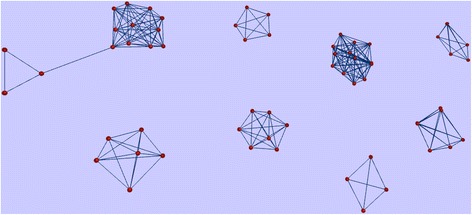
“Six of the eight displayed families originate from a single genome project [23] particular NGS short reads and their assemblies – which follows, as the main focus of this commentary.”
BackgroundSchaffer, A. A. (2001) · Nucleic Acids Research · doi:10.1093/nar/29.14.2994 · Cited by 1,386 · cited 1×
“Network view of sequence similarities detected by BlastP [21], generated with BioLayout [22].”
MethodThe Universal Protein Resource (UniProt): an expanding universe of protein information
Wu, C. H. (2006) · Nucleic Acids Research · doi:10.1093/nar/gkj161 · Cited by 1,110 · cited 2×
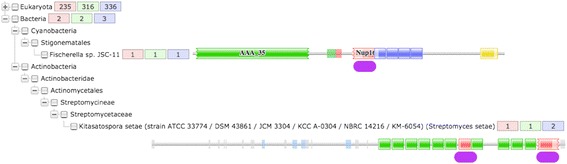
“These phylogenetic anomalies are present both in Pfam (PF11715) [24], as well as the corresponding UniProt entries [14].”
BackgroundAnnotation Error in Public Databases: Misannotation of Molecular Function in Enzyme Superfamilies
Schnoes, A. M., Brown, S. D., Dodevski, I., & Babbitt, P. C. (2009) · PLoS Computational Biology · doi:10.1371/journal.pcbi.1000605 · Cited by 698 · cited 1×
“Ways to address this general issue are community-based initiatives for model organisms, from which most other annotations are drawn using various computational methods [3], as well as manual curation of individual families within superfamilies [12].”
BackgroundAutomated protein function prediction--the genomic challenge
Friedberg, I. (2006) · Briefings in Bioinformatics · doi:10.1093/bib/bbl004 · Cited by 366
Intrinsic errors in genome annotation
DEVOS, D., & VALENCIA, A. (2001) · Trends in Genetics · doi:10.1016/s0168-9525(01)02348-4 · Cited by 294 · cited 1×
“The strategy of sequence similarity-based function prediction is well-understood, as the general categories of intrinsic errors for genome-wide annotation have been identified [7].”
BackgroundA survey of error-correction methods for next-generation sequencing
Yang, X., Chockalingam, S. P., & Aluru, S. (2013) · Briefings in Bioinformatics · doi:10.1093/bib/bbs015 · Cited by 249 · cited 1×
“In this new era of shotgun sequencing and assembly, short-sequence read collections and incomplete genome surveys, additional checks are absolutely inevit-able [17], to ensure that those – once considered groundbreaking – genome-aware methods achieve their full potential [9].”
BackgroundNeumann, N., Lundin, D., & Poole, A. M. (2010) · PLoS ONE · doi:10.1371/journal.pone.0013241 · Cited by 169 · cited 1×
“Case in point are the Y-Nups, previously verified to be phylogenetically restricted to eukaryotic genomes: in fact, extensive searches across Bacteria and Archaea have never revealed any single instance of a detectable sequence similarity beyond Eukaryotes [15].”
BackgroundModeling the percolation of annotation errors in a database of protein sequences
Gilks, W. R., Audit, B., De Angelis, D., Tsoka, S., & Ouzounis, C. A. (2002) · Bioinformatics · doi:10.1093/bioinformatics/18.12.1641 · Cited by 164 · cited 1×
“The properties of error propagation across databases have been studied with a number of approaches and statistical models [5].”
BackgroundSelf-citation
Cited by
Guidelines for the use and interpretation of assays for monitoring autophagy (4th edition) 1
Klionsky, D. J., Abdel-Aziz, A. K., Abdelfatah, S., Abdellatif, M., Abdoli, A., Abel, S., Abeliovich, H., Abildgaard, M. H., Abudu, Y. P., Acevedo-Arozena, A., et al. (2021) · Autophagy · doi:10.1080/15548627.2020.1797280 · Cited by 2,897
Tørresen, O. K., Star, B., Mier, P., Andrade-Navarro, M. A., Bateman, A., Jarnot, P., Gruca, A., Grynberg, M., Kajava, A. V., Promponas, V. J., et al. (2019) · Nucleic Acids Research · doi:10.1093/nar/gkz841 · Cited by 347
“Such erroneous gene calls may (i) become the cause of downstream gene-prediction or annotation errors, (ii) generate false positive predictions for gene/protein associations and (iii) hinder large-scale genome evolution studies (115,116).”
BackgroundSelf-citationRavcheev, D. A., & Thiele, I. (2017) · Frontiers in Genetics · doi:10.3389/fgene.2017.00111 · Cited by 148
“Thus, a search of orthologs as described in Approach, Tools, and Databases is often incorrectly applied to large protein families containing proteins with different functions (Rodionov, 2007; Promponas et al., 2015).”
BackgroundDanchin, A., Ouzounis, C., Tokuyasu, T., & Zucker, J. (2018) · Microbial Biotechnology · doi:10.1111/1751-7915.13284 · Cited by 56
“In parallel, many experiments revealed that annotation by similarity kept producing errors that percolated throughout databases (Promponas et al. , 2015).”
BackgroundSelf-citationFunctional Annotations of Paralogs: A Blessing and a Curse
Zallot, R., Harrison, K., Kolaczkowski, B., & de Crécy‐Lagard, V. (2016) · Life · doi:10.3390/life6030039 · Cited by 56
“Once made, functional annotation errors can be difficult to correct in large sequence databases and can often “propagate” themselves to newly sequenced genomes through “(mis)annotation transfer” [36–39].”
BackgroundUncovering missing pieces: duplication and deletion history of arrestins in deuterostomes
Indrischek, H., Prohaska, S. J., Gurevich, V. V., Gurevich, E. V., & Stadler, P. F. (2017) · BMC Evolutionary Biology · doi:10.1186/s12862-017-1001-4 · Cited by 56
“methodology for annotation and orthology predictions is a necessity in computational biology [57, 58].”
MethodMantis: flexible and consensus-driven genome annotation
Queirós, P., Delogu, F., Hickl, O., May, P., & Wilmes, P. (2021) · GigaScience · doi:10.1093/gigascience/giab042 · Cited by 48
Homeolog expression quantification methods for allopolyploids
Kuo, T. C.-Y., Hatakeyama, M., Tameshige, T., Shimizu, K. K., & Sese, J. (2018) · Briefings in Bioinformatics · doi:10.1093/bib/bby121 · Cited by 46
Propagation, detection and correction of errors using the sequence database network
Goudey, B., Geard, N. L., Verspoor, K. M., & Zobel, J. (2022) · Briefings in Bioinformatics · doi:10.1093/bib/bbac416 · Cited by 43
“Error propagation Propagating errors from one record to one another [15] Staleness Failing to update a record when source record changes -”
BackgroundResultInfluentialIbrahim, S. T., Li, M., Patel, J., & Katapally, T. R. (2025) · Computers in Biology and Medicine · doi:10.1016/j.compbiomed.2025.109859 · Cited by 43
PTBP1 mRNA isoforms and regulation of their translation
de Tacca, L. A., Pulos-Holmes, M. C., Floor, S. N., & Cate, J. H. D. (2019) · RNA · doi:10.1261/rna.070193.118 · Cited by 42
“However, cases in which the annotations of isoforms are inconsistent across databases are not uncommon (Promponas et al. 2015; Brenner 1999; Schnoes et al. 2009).”
BackgroundIdentification of human gene research articles with wrongly identified nucleotide sequences
Park, Y., West, R. A., Pathmendra, P., Favier, B., Stoeger, T., Capes-Davis, A., Cabanac, G., Labbé, C., & Byrne, J. A. (2022) · Life Science Alliance · doi:10.26508/lsa.202101203 · Cited by 37
“research literature, as described for incorrectly annotated genes (61, 62).”
Functional characterization of prokaryotic dark matter: the road so far and what lies ahead
Escudeiro, P., Henry, C. S., & Dias, R. P. M. (2022) · Current Research in Microbial Sciences · doi:10.1016/j.crmicr.2022.100159 · Cited by 33
Strategies to improve usability and preserve accuracy in biological sequence databases
Bengtsson‐Palme, J., Boulund, F., Edström, R., Feizi, A., Johnning, A., Jönsson, V., Karlsson, F. H., Pal, C., Pereira, M. B., Rehammar, A., et al. (2016) · PROTEOMICS · doi:10.1002/pmic.201600034 · Cited by 30
Update on the Epidemiological Typing Methods for Acinetobacter Baumannii
Rafei, R., Osman, M., Dabboussi, F., & Hamzé, M. (2019) · Future Microbiology · doi:10.2217/fmb-2019-0134 · Cited by 27
ARGDIT: a validation and integration toolkit for Antimicrobial Resistance Gene Databases
Chiu, J. K. H., & Ong, R. T. (2018) · Bioinformatics · doi:10.1093/bioinformatics/bty987 · Cited by 19
Bacterial riboproteogenomics: the era of N-terminal proteoform existence revealed
Fijałkowska, D., Fijałkowski, I., Willems, P. J., & Damme, P. V. (2020) · FEMS Microbiology Reviews · doi:10.1093/femsre/fuaa013 · Cited by 17
Vázquez, N., López-Fernández, H., Vieira, C. P., Fdez‐Riverola, F., Vieira, J., & Reboiro‐Jato, M. (2019) · Interdisciplinary Sciences Computational Life Sciences · doi:10.1007/s12539-019-00320-3 · Cited by 17
Cooper, A. L., Wong, A., Tamber, S., Blais, B. W., & Carrillo, C. D. (2024) · Microorganisms · doi:10.3390/microorganisms12040709 · Cited by 16
Open Issues for Protein Function Assignment in Haloferax volcanii and Other Halophilic Archaea
Pfeiffer, F., & Dyall‐Smith, M. (2021) · Genes · doi:10.3390/genes12070963 · Cited by 16
“Genome annotations are frequently compromised by annotation errors (Schnoes et al., 2009, Pfeiffer and Oesterhelt, 2015, Promponas et al., 2015, Danchin et al., 2018).”
BackgroundBéchade, B., Hu, Y., Sanders, J. G., Cabuslay, C., Łukasik, P., Williams, B. R. M., Fiers, V. J., Lu, R., Wertz, J. T., & Russell, J. A. (2022) · FEMS Microbiology Ecology · doi:10.1093/femsec/fiac068 · Cited by 14
Bouadjenek, M. R., Verspoor, K. M., & Zobel, J. (2017) · Journal of Biomedical Informatics · doi:10.1016/j.jbi.2017.06.015 · Cited by 13
Grasso, S., van Rij, T., & van Dijl, J. M. (2020) · Briefings in Bioinformatics · doi:10.1093/bib/bbaa302 · Cited by 12
“Other types of annotation should be considered with care [24] and have in extreme cases led to the propagation of mistakes [25, 26].”
BackgroundAccelerating Biological Insight for Understudied Genes
Reynolds, K. A., Rosa‐Molinar, E., Ward, R. E., Zhang, H., Urbanowicz, B. R., & Settles, A. M. (2021) · Integrative and Comparative Biology · doi:10.1093/icb/icab029 · Cited by 11
Comparative gene annotation and orthology assignments across 301 species of Drosophilidae
Dhakad, P., Kim, B. Y., Petrov, D. A., & Obbard, D. J. (2026) · PLoS Biology · doi:10.1371/journal.pbio.3003663 · Cited by 6
Tanigaki, Y., Higashi, T., Nagano, A. J., Honjo, M. N., & Fukuda, H. (2017) · Environment Control in Biology · doi:10.2525/ecb.55.77 · Cited by 6
“Methods such as genome-wide annotation to consider the similarity of the sequence in the global analysis cyclopedically are also established (Promponas et al., 2015).”
BackgroundThe impact of transitive annotation on the training of taxonomic classifiers
Muralidharan, H. S., Fox, N. Y., & Pop, M. (2024) · Frontiers in Microbiology · doi:10.3389/fmicb.2023.1240957 · Cited by 5
Paley, S., Keseler, I. M., Krummenacker, M., & Karp, P. D. (2021) · Frontiers in Microbiology · doi:10.3389/fmicb.2021.614355 · Cited by 5
“…which is based on a variety of methods (including sequence similarity, protein family assignment and protein domain identification, Haft et al., 2017), is vulnerable to transitive annotation errors and errors in specificity (Promponas et al., 2015), and may not reflect the most up-to-date knowledge.”
Misannotations of the genes encoding sugar N ‐formyltransferases
Girardi, N. M., Thoden, J. B., & Holden, H. M. (2019) · Protein Science · doi:10.1002/pro.3807 · Cited by 5
“Questions arise, however, as to the extent of possible misannotations, how these affect database quality and utility, and how they are propagated to additional database entries.(1,2) Indeed, this concern was raised as early as 1999 by Kyrpides and Ouzounis who admonished against the use of “overambitious annotation pr…”
BackgroundMonjot, A., Rousseau, J., Bittner, L., & Lepère, C. (2025) · Microbiome · doi:10.1186/s40168-024-02027-0 · Cited by 4
“However, the transitive transfer of annotations remains debatable [66, 67] and could be completed by further SSN-based prediction tools to substantially improve the consistency and accuracy of annotations.”
Ioannides, A. N., Katsani, K. R., Ouzounis, C., & Promponas, V. J. (2023) · NAR Genomics and Bioinformatics · doi:10.1093/nargab/lqad025 · Cited by 2
“In addition, several eukaryotic genomes may have substantial gaps and / or suffer from other quality issues (e.g. assembly errors, protein coding gene detection errors) which might affect any downstream analyses (45,46).”
Self-citationFunctional genomics of Chlamydomonas reinhardtii
Blaby, I. K., Soto, M. J., & Blaby, C. (2023) · Elsevier eBooks · doi:10.1016/b978-0-12-822457-1.00013-3 · Cited by 2
Cuív, P. Ó., Burman, S., Pottenger, S., & Morrison, M. (2016) · Springer eBooks · doi:10.1007/978-3-319-46326-1_3 · Cited by 1
Baltsavia, I., Stamoulos, G., Tziavaras, K., Bouas, C., Katikaridou, I., Dermaris, A., Kothari, A., Iliopoulos, I., Caspi, R., Karp, P. D., et al. (2024) · iScience · doi:10.1016/j.isci.2024.111546 · Cited by 1
Self-citationRequena, E., Veloso, J., Espeso, E. A., & Larena, I. (2025) · IMA Fungus · doi:10.3897/imafungus.16.145175 · Cited by 1
“Failure to review such predictions can lead to the accumulation of errors in subsequent processes (Promponas et al. 2015).”
Lakin, S. M., Abdo, Z., Rajopadhye, S. V., Stenglein, M., & Stewart, J. (2021) · Digital Collections of Colorado (Colorado State University) · doi:10.25675/3.05015 · Cited by 1
Chu, C. M. J., Kamal, S., Huang, H., Bayly, C. L., Beletsky, M. J., Mar, S., Chen, S.-Y., Omur, M. E., Wasserman, W. W., Lynn, F. C., et al. (2025) · bioRxiv (Cold Spring Harbor Laboratory) · doi:10.1101/2025.02.12.637990 · Cited by 1
“Ligand-receptor databases contain many entries that are likely not true ligands or receptors due to a combination of incorrect functional or locational annotations 25-27 and/or excessively broad definitions of the terms “ligand” and “receptor”.”
Large Numbers of New Human Paralogs DiscoveredPreprint
Pradeep, B. K., Deng, W., Hemmat, M. A., Daniels, I., & Jernigan, R. L. (2025) · bioRxiv (Cold Spring Harbor Laboratory) · doi:10.1101/2025.10.15.680306 · Cited by 1
“14 Compounding this challenge, many proteins, even in some closely related genomes, have not yet been annotated.”
Scalzitti, N. (2021) · theses.fr (ABES) · doi:10.70675/b0086ce5zb815z4b06z81e2z51de2097fcfd · Cited by 1
Improved Functional Prediction of Hypothetical Proteins from Listeria monocytogenes 08-5578
LaGier, M. J., Bowman, B., Brend, K., Hobbs, K., Foggia, M., & McDaniel, M. A. (2014) · Proceedings of the Iowa Academy of Science · doi:10.17833/121-03.1
“Automated annotation pipelines, when not supported by comprehensive manual annotation efforts to verify the automated data, may lead to erroneous functional predictions (Schnoes et al., 2009; Poptsova and Gogarten, 2010; Promponas et al., 2015).”
MethodGenomic and transcriptomic analysis of Lactobacillus rhamnosus LC705
Duru, I. C. (2017) · Helda - University of Helsinki Institutional Repository
Bennett, C. G., Thornton, M. A., Park, C., Henry, G. H., Zhang, Y., Malladi, V. S., & Kim, D. (2022) · Bioinformatics · doi:10.1093/bioinformatics/btac050
Lin, H., Shui, H., Huang, K., Lin, W.-Z., Chang, H., Lee, H., Lin, Y., Huang, Y., Chen, G., Yang, Y.-T., et al. (2022) · Biology · doi:10.3390/biology11081210
“However, some studies have shown that with the widespread use of systematic automated annotations, the proportion of sequences that are misannotated in public databases is also increasing; thus, future solutions for misannotation are indispensable [4,5].”
BackgroundDevelopment of data integration tools within functional genomics
TEIXEIRA QUEIROS, P. (2022) · Open Repository and Bibliography (University of Luxembourg)
González, N. V. (2019) · Investigo Institutional repository of UVigo (Universidade de Vigo)
PhageLysData: an evidence-aware and AI-ready dataset of phage lytic enzymes and depolymerases
Medina-Ortiz, D., Olivera‐Nappa, Á., Lienqueo, M. E., Opazo, R., & Romero, J. (2026) · Frontiers in Bioinformatics · doi:10.3389/fbinf.2026.1976298 · Cited by 1
Evolutionary reconstruction of thiamine biosynthesis pathway: An integrative bioinformatics workflow
de Toledo, N. A., Sluys, M. V., & Dias, H. M. (2026) · Methods in enzymology on CD-ROM/Methods in enzymology · doi:10.1016/bs.mie.2026.06.014
Palma, J. A. (2026) · Queensland University of Technology · doi:10.5204/thesis.eprints.268714
Muralidharan, H. S., Fox, N. Y., & Pop, M. (2024) · doi:10.3389/fmicb.2023.1240957.s002
Metadata
- Authors
- Promponas, V. J., Iliopoulos, I., & Ouzounis, C. A.
- Affiliations
- University of Cyprus (CY)
- University of Crete (GR)
- Centre for Research and Technology Hellas (GR)
- Corresponding author
- Ouzounis, Christos A.
- Venue
- Standards in Genomic Sciences
- Published
- 2015-11-19
- Volume
- 10
- Issue
- 1
- Pages
- 108-108
- ISSN
- 1944-3277 (ISSN-L)
- PMC
- PMC4653902
- OpenAlex
- W2184129002
- Cited by
- 43
- References
- 24
- Citations by year
- 2026: 2 · 2025: 4 · 2024: 3 · 2023: 2 · 2022: 6 · 2021: 8 · 2020: 2 · 2019: 5 · 2018: 3 · 2017: 4 · 2016: 3
- FWCI
- 1.45
- Type
- journal article
- Language
- en
- Open access
- gold
- doi.org
- Licence
- cc-by
- creativecommons.org/licenses/by/4.0 (tdm)
- creativecommons.org/licenses/by/4.0 (vor)
- Locations
- Standards in Genomic Sciences (publishedVersion, cc-by)
- PubMed Central (publishedVersion, cc-by)
- PubMed (publishedVersion)
- Funders
- University of Miami
- University of Toronto
- University of California, San Francisco
- Topics
- Life Sciences › Biochemistry, Genetics and Molecular Biology › Molecular Biology › Genomics and Phylogenetic Studies
- Life Sciences › Biochemistry, Genetics and Molecular Biology › Molecular Biology › Bioinformatics and Genomic Networks
- Life Sciences › Biochemistry, Genetics and Molecular Biology › Molecular Biology › Machine Learning in Bioinformatics
- Keywords
- functional annotation, annotation inconsistency, protein function prediction, sequence similarity, genome structure, metabolic pathway prediction, error propagation, genomic databases
About these checks
Registry, retraction, Cites and statistics results are computed, not judged, with one exception: a printed reference that no index lists is read once by a model before it counts as a citation error. Claims are extracted by a model and kept only when their quote appears verbatim in the text; each cited source is then checked, with a model’s help, for whether it says what the claim relies on. Those verdicts can be wrong — read the claim’s quote and the cited source before relying on one.
Statistics and arithmetic are recomputed, not judged.
Confidence bands are shown only for fields calibrated on our annotated test set. None is calibrated yet, so no band is shown.
What counts as a claim ›How we measure confidence ›How we check this ›
Are you an author, or do you see a problem with this page? Request a review
Data sources
Bibliographic data: Semantic Scholar, OpenAlex, Crossref.
Contains information from the Semantic Scholar Academic Graph Datasets, made available under the ODC Attribution License (ODC-BY 1.0).
Semantic Scholar’s data is described in: Kinney, R., et al. (2023). The Semantic Scholar Open Data Platform. arXiv:2301.10140.
