

The DOI matches its Crossref record; 57 of the 57 references it cites were found in a registry or an index.
Mental Health In Elite Athletes: Increased Awareness Requires An Early Intervention Framework to Respond to Athlete Needs
Open accessAbstract
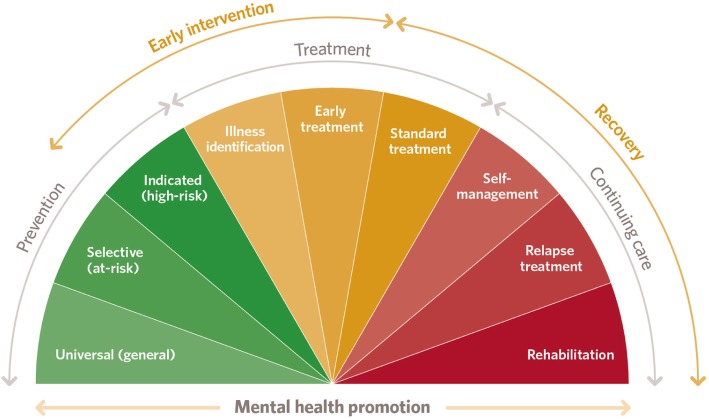
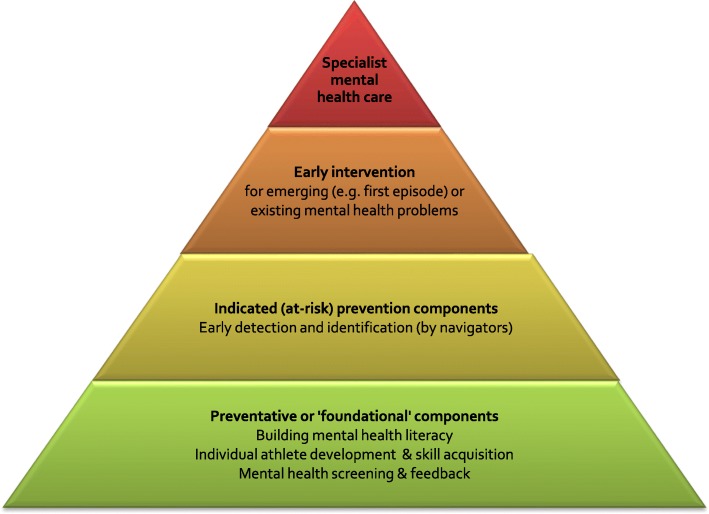
The current ‘state of play’ in supporting elite athlete mental health and wellbeing has centred mostly on building mental health literacy or awareness of the signs of mental ill-health amongst athletes. Such awareness is necessary, but not sufficient to address the varied mental health needs of elite athletes. We call for a new model of intervention and outline the backbone of a comprehensive mental health framework to promote athlete mental health and wellbeing, and respond to the needs of athletes who are at-risk of developing, or already experiencing mental health symptoms or disorders. Early detection of, and intervention for, mental health symptoms is essential in the elite sporting context. Such approaches help build cultures that acknowledge that an athlete’s mental health needs are as important as their physical health needs, and that both are likely to contribute to optimising the athlete’s overall wellbeing in conjunction with performance excellence. The proposed framework aims at (i) helping athletes develop a range of self-management skills that they can utilise to manage psychological distress, (ii) equipping key stakeholders in the elite sporting environment (such as coaches, sports medicine and high-performance support staff) to better recognise and respond to concerns regarding an athlete’s mental health and (iii) highlighting the need for specialist multi-disciplinary teams or skilled mental health professionals to manage athletes with severe or complex mental disorders. Combined, these components ensure that elite athletes receive the intervention and support that they need at the right time, in the right place, with the right person.
Overview
The claims and statistics of this paper haven’t been checked yet.
Run the check — free, no account needed. It reads the open-access text and checks the sources it cites.
Integrity signals
Registry
Cites
Statistics
Figures
Verification
Claims the paper makes
The claims and statistics of this paper haven’t been checked yet.
Run the check — free, no account needed. It reads the open-access text and checks the sources it cites.
Claims other papers make about this one
Each is checked against this paper’s own text: does it say what the citing paper says it does?
The cited source says what the claim attributes to it.
In the citing paper
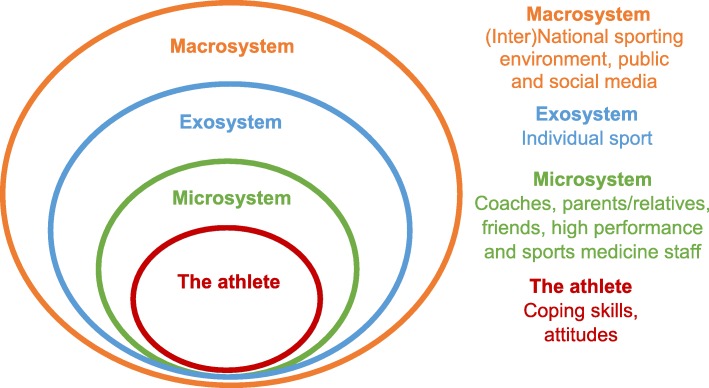
“This socioecological approach asserts that an athlete’s mental health is influenced by factors that operate at the individual, microsystem (interpersonal), exosystem (organisational) and macrosystem (societal) level.”
From The Mental Health of Elite-Level Coaches: A Systematic Scoping Review (2024) · cites this paper as [38]
The cited source says what the claim attributes to it.
In the citing paper
“In line with the socioecological approach described by Purcell and colleagues [38], this review identified a variety of factors influencing coach mental health from within the broader ecology of elite sport (see Additional file 5).”
From The Mental Health of Elite-Level Coaches: A Systematic Scoping Review (2024) · cites this paper as [38]
Self-check
Percentages, sums and reported differences re-computed from the paper’s own numbers.
The self-check needs the paper’s full text.
Citations
Cites
Kessler, R. C., Berglund, P., Demler, O., Jin, R., Merikangas, K. R., & Walters, E. E. (2005) · Archives of General Psychiatry · doi:10.1001/archpsyc.62.6.593 · Cited by 20,391
McCrory, P., Meeuwisse, W., Dvorak, J., Aubry, M., Bailes, J., Broglio, S., Cantu, R. C., Cassidy, D., Echemendia, R. J., Castellani, R. J., et al. (2017) · British Journal of Sports Medicine · doi:10.1136/bjsports-2017-097699 · Cited by 3,568
Bronfenbrenner, U. (2000) · Oxford University Press eBooks · doi:10.1037/10518-046 · Cited by 3,197
Reducing Risks for Mental Disorders: Frontiers for Preventive Intervention Research
(1994) · doi:10.17226/2139 · Cited by 2,073
Mental health in elite athletes: International Olympic Committee consensus statement (2019)
Reardon, C. L., Hainline, B., Aron, C. M., Baron, D., Baum, A. L., Bindra, A., Budgett, R., Campriani, N., Castaldelli-Maia, J. M., Currie, A., et al. (2019) · British Journal of Sports Medicine · doi:10.1136/bjsports-2019-100715 · Cited by 1,277
Self-citationThe Mental Health of Elite Athletes: A Narrative Systematic Review
Rice, S. M., Purcell, R., De Silva, S., Mawren, D., McGorry, P. D., & Parker, A. G. (2016) · Sports Medicine · doi:10.1007/s40279-016-0492-2 · Cited by 1,205
Self-citationSaw, A. E., Main, L. C., & Gastin, P. B. (2015) · British Journal of Sports Medicine · doi:10.1136/bjsports-2015-094758 · Cited by 1,077
PHYSICAL ACTIVITY AND MENTAL HEALTH: THE ASSOCIATION BETWEEN EXERCISE AND MOOD
Peluso, M. A. M., & Andrade, L. H. (2005) · Clinics · doi:10.1590/s1807-59322005000100012 · Cited by 804
Gulliver, A., Griffiths, K. M., & Christensen, H. (2012) · BMC Psychiatry · doi:10.1186/1471-244x-12-157 · Cited by 611
Gouttebarge, V., Castaldelli-Maia, J. M., Gorczynski, P., Hainline, B., Hitchcock, M. E., Kerkhoffs, G. M., Rice, S. M., & Reardon, C. L. (2019) · British Journal of Sports Medicine · doi:10.1136/bjsports-2019-100671 · Cited by 604
Self-citation
Research works printed but not linked: 3
- Frank R, Nixdorf I, Beckmann J. Depression among elite athletes: prevalence and psychological factors. Deut Z Sportmed. 2013;64:320–6.
- Brown GT, Hainline B, Kroshus E, Wilfert M. Mind, body and sport: understanding and supporting student-athlete mental wellness. IN: NCAA: Indianapolis; 2014.
- Thompson R, Sherman R. Managing student-athletes’ mental health issues. National Collegiate Athletic Association: Indianapolis; 2007.
Cited by
Sorted by citations
An Evidence-Informed Framework to Promote Mental Wellbeing in Elite Sport
Purcell, R., Pilkington, V., Carberry, S., Reid, D., Gwyther, K., Hall, K., Deacon, A., Manon, R., Walton, C. C., & Rice, S. (2022) · Frontiers in Psychology · doi:10.3389/fpsyg.2022.780359 · Cited by 156
Self-citationMental health management of elite athletes during COVID-19: a narrative review and recommendations
Reardon, C. L., Bindra, A., Blauwet, C. A., Budgett, R., Campriani, N., Currie, A., Gouttebarge, V., Mcduff, D. R., Mountjoy, M. L., Purcell, R., et al. (2020) · British Journal of Sports Medicine · doi:10.1136/bjsports-2020-102884 · Cited by 161
Self-citationPsychological safety in sport: a systematic review and concept analysis
Vella, S. A., Mayland, E. C., Schweickle, M. J., Sutcliffe, J., McEwan, D., & Swann, C. (2022) · International Review of Sport and Exercise Psychology · doi:10.1080/1750984x.2022.2028306 · Cited by 164
Intelligent Wearable Systems: Opportunities and Challenges in Health and Sports
Yang, L., Amin, O., & Shihada, B. (2024) · ACM Computing Surveys · doi:10.1145/3648469 · Cited by 159
Vella, S. A., Schweickle, M. J., Sutcliffe, J., & Swann, C. (2021) · Psychology of sport and exercise · doi:10.1016/j.psychsport.2021.101946 · Cited by 123
Metadata
- Authors
- Purcell, R., Gwyther, K., & Rice, S. M.
- Affiliations
- The University of Melbourne (AU)
- Corresponding author
- Rice, Simon M.
- Venue
- Sports Medicine - Open
- Published
- 2019-11-28
- Volume
- 5
- Issue
- 1
- Pages
- 46-46
- ISSN
- 2198-9761 (ISSN-L)
- 2199-1170
- PMC
- PMC6883009
- OpenAlex
- W2991538927
- Cited by
- 394
- References
- 57
- Citations by year
- 2026: 73 · 2025: 66 · 2024: 76 · 2023: 59 · 2022: 64 · 2021: 43 · 2020: 11
- FWCI
- 53.57
- Type
- journal article
- Language
- en
- Open access
- gold
- doi.org
- Locations
- Sports Medicine - Open (publishedVersion, cc-by)
- PubMed Central (publishedVersion, cc-by)
- PubMed (publishedVersion)
- Minerva Access (University of Melbourne) (submittedVersion, cc-by)
- Funders
- National Health and Medical Research Council (APP115888)
- Topics
- Social Sciences › Psychology › Developmental and Educational Psychology › Sport Psychology and Performance
- Social Sciences › Psychology › Clinical Psychology › Psychological Treatments and Assessments
- Social Sciences › Psychology › Clinical Psychology › COVID-19 and Mental Health
- Keywords
- athlete well-being, early intervention, mental health literacy, mental health awareness, psychological distress, self-management skills, coach education, mental health screening, elite sport
About these checks
Registry, retraction, Cites and statistics results are computed, not judged, with one exception: a printed reference that no index lists is read once by a model before it counts as a citation error. Claims are extracted by a model and kept only when their quote appears verbatim in the text; each cited source is then checked, with a model’s help, for whether it says what the claim relies on. Those verdicts can be wrong — read the claim’s quote and the cited source before relying on one.
Statistics and arithmetic are recomputed, not judged.
Confidence bands are shown only for fields calibrated on our annotated test set. None is calibrated yet, so no band is shown.
What counts as a claim ›How we measure confidence ›How we check this ›
Are you an author, or do you see a problem with this page? Request a review
