

A co-production approach guided by the behaviour change wheel to develop an intervention for reducing sedentary behaviour after stroke
Open accessPublished version of a preprint
The DOI matches its Crossref record; 28 of the 29 references it cites were found in a registry or an index.
Abstract
Background: Stroke survivors are highly sedentary; thus, breaking up long uninterrupted bouts of sedentary behaviour could have substantial health benefit. However, there are no intervention strategies specifically aimed at reducing sedentary behaviour tailored for stroke survivors. The purpose of this study was to use co-production approaches to develop an intervention to reduce sedentary behaviour after stroke. Methods: A series of five co-production workshops with stroke survivors, their caregivers, stroke service staff, exercise professionals, and researchers were conducted in parallel in two-stroke services (England and Scotland). Workshop format was informed by the behaviour change wheel (BCW) framework for developing interventions and incorporated systematic review and empirical evidence. Taking an iterative approach, data from activities and audio recordings were analysed following each workshop and findings used to inform subsequent workshops, to inform both the activities of the next workshop and ongoing intervention development. Findings: Co-production workshop participants ( n = 43) included 17 staff, 14 stroke survivors, six caregivers and six researchers. The target behaviour for stroke survivors is to increase standing and moving, and the target behaviour for caregivers and staff is to support and encourage stroke survivors to increase standing and moving. The developed intervention is primarily based on co-produced solutions to barriers to achieving the target behaviour. The developed intervention includes 34 behaviour change techniques. The intervention is to be delivered through stroke services, commencing in the inpatient setting and following through discharge into the community. Participants reported that taking part in intervention development was a positive experience. Conclusions: To our knowledge, this is the first study that has combined the use of co-production and the BCW to develop an intervention for use in stroke care. In-depth reporting of how a co-production approach was combined with the BCW framework, including the design of bespoke materials for workshop activities, should prove useful to other researchers and practitioners involved in intervention development in stroke.
Overview
The claims and statistics of this paper haven’t been checked yet.
Free: it reads the open-access text and checks the first 5 claims that cite a source we can check. Create a free account to check every claim.
Integrity signals
Registry
Cites
Statistics
Figures
Verification
Claims the paper makes
The claims and statistics of this paper haven’t been checked yet.
Free: it reads the open-access text and checks the first 5 claims that cite a source we can check. Create a free account to check every claim.
Claims other papers make about this one
Each is checked against this paper’s own text: does it say what the citing paper says it does?
The source backs part of the claim, not all of it — or backs it for a different population, condition or comparison.
In the citing paper
“Opportunity variables identified for clinicians were primarily extraneous and outside of the clinician’s control. These consisted of environmental variables such as: the patient’s life situation [15, 16], time allocated with the patient [16, 17, 19], patient access to intervention resources and services [17, 19, 20, 22, 23], and subjective social norms [16, 17, 19].”
From Identifying the factors affecting ‘patient engagement’ in exercise rehabilitation (2022) · cites this paper as [19]
Experimental — accuracy not yet measuredIn the citing paper
“Clinicians interviewed in three studies also placed emphasis on the importance of effective communication skills to relate information to patients and facilitate behaviour change [16, 17, 19].”
From Identifying the factors affecting ‘patient engagement’ in exercise rehabilitation (2022) · cites this paper as [19]
Self-check
Percentages, sums and reported differences re-computed from the paper’s own numbers.
The self-check needs the paper’s full text.
Citations
Cites
Michie, S., van Stralen, M. M., & West, R. (2011) · Implementation Science · doi:10.1186/1748-5908-6-42 · Cited by 13,697 · cited 2×
“The underutilisation of theory to inform intervention development may be related to the limited guidance available on how to select theory to suit the context [9].”
BackgroundDeveloping and evaluating complex interventions: the new Medical Research Council guidance
Craig, P., Dieppe, P., Macintyre, S., Michie, S., Nazareth, I., & Petticrew, M. (2008) · BMJ · doi:10.1136/bmj.a1655 · Cited by 10,995 · cited 2×
“be evaluated for effectiveness in a multi-site cluster randomised controlled trial [7].”
BackgroundMichie, S., Richardson, M., Johnston, M., Abraham, C., Francis, J., Hardeman, W., Eccles, M. P., Cane, J., & Wood, C. E. (2013) · Annals of Behavioral Medicine · doi:10.1007/s12160-013-9486-6 · Cited by 7,629
Cane, J., O’Connor, D., & Michie, S. (2012) · Implementation Science · doi:10.1186/1748-5908-7-37 · Cited by 4,888 · cited 1×
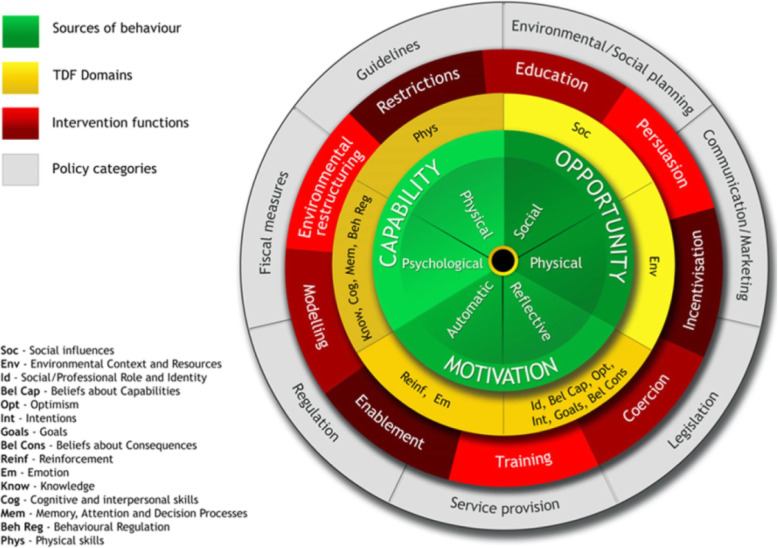
“The theoretical domains framework (TDF [10];), consisting of 14 psychological domains that influence behaviour, can be used alongside the COM-B model.”
MethodSedentary Behavior Research Network (SBRN)—Terminology Consensus Project process and outcome
on behalf of SBRN Terminology Consensus Project Participants, Tremblay, M. S., Aubert, S., Barnes, J. D., Saunders, T. J., Carson, V., Latimer-Cheung, A. E., Chastin, S. F. M., Altenburg, T. M., & Chinapaw, M. J. M. (2017) · International Journal of Behavioral Nutrition and Physical Activity · doi:10.1186/s12966-017-0525-8 · Cited by 3,793 · cited 2×
“in a sitting, reclining or lying posture that is characterised by low energy expenditure [1].”
BackgroundBiswas, A., Oh, P. I., Faulkner, G. E., Bajaj, R. R., Silver, M. A., Mitchell, M. S., & Alter, D. A. (2015) · Annals of Internal Medicine · doi:10.7326/m14-1651 · Cited by 2,726
A Systematic Review of Co-Creation and Co-Production: Embarking on the social innovation journey
Voorberg, W. H., Bekkers, V. J. J. M., & Tummers, L. G. (2015) · Public Management Review · doi:10.1080/14719037.2014.930505 · Cited by 2,315
(2014) · Cited by 2,276
Taxonomy of approaches to developing interventions to improve health: a systematic methods overview
O’Cathain, A., Croot, L., Sworn, K., Duncan, E., Rousseau, N., Turner, K., Yardley, L., & Hoddinott, P. (2019) · Pilot and Feasibility Studies · doi:10.1186/s40814-019-0425-6 · Cited by 576
Power dynamics and collaborative mechanisms in co-production and co-design processes
Farr, M. (2018) · Critical Social Policy · doi:10.1177/0261018317747444 · Cited by 306
Research works printed but not linked: 1
- 16. Slay J, Stevens L. Co-production in mental health: a literature review. London: New Economics Foundation. 2013. https://b.3cdn.net/ nefoundation/ca0975b7cd88125c3e\_ywm6bp3l1.pdf. Accessed 13 th August 2019.
Cited by
Moore, S. A., Boyne, P., Fulk, G. D., Verheyden, G., & Fini, N. A. (2022) · Stroke · doi:10.1161/strokeaha.122.038956 · Cited by 145
Identifying the factors affecting ‘patient engagement’ in exercise rehabilitation
Teo, J. L., Zheng, Z., & Bird, S. R. (2022) · BMC Sports Science, Medicine and Rehabilitation · doi:10.1186/s13102-022-00407-3 · Cited by 96
“[19] Cardiovascular disease Stroke victims Qualitative Clinician and patient workshops CF, CB CF, CB CF, CB”
BackgroundInfluentialCo-creation and stroke rehabilitation: a scoping review
Dobe, J., Gustafsson, L. A., & Walder, K. (2022) · Disability and Rehabilitation · doi:10.1080/09638288.2022.2032411 · Cited by 35
Behavior Change Techniques in Digital Health Interventions for Midlife Women: Systematic Review
Sediva, H., Cartwright, T., Robertson, C. E., & Deb, S. K. (2022) · JMIR mhealth and uhealth · doi:10.2196/37234 · Cited by 41
Paterson, S. J., Dawes, H., Winward, C. E., Bartram, E., Dodds, E., McKinon, J., Gaskell, H., & Collett, J. (2024) · Clinical Rehabilitation · doi:10.1177/02692155231224365 · Cited by 38
“The COM-B has been used to develop rehabilitation interventions after stroke 52,53 but this is the fi rst time it has been used as a framework for synthesis of intervention components.”
MethodWray, F., Clarke, D. J., Cruice, M. N., & Förster, A. (2021) · PLoS ONE · doi:10.1371/journal.pone.0259103 · Cited by 29
Self-citationGheduzzi, E., Masella, C., Morelli, N., & Graffigna, G. (2021) · Research Involvement and Engagement · doi:10.1186/s40900-021-00259-0 · Cited by 24
Creaser, A. V., Bingham, D. D., Bennett, H. A. J., Costa, S., & Clemes, S. A. (2023) · Public Health · doi:10.1016/j.puhe.2023.01.018 · Cited by 22
Bielinska, A.-M., Archer, S., Darzi, A. W., & Urch, C. (2022) · BMJ Open · doi:10.1136/bmjopen-2021-055347 · Cited by 21
Reicherzer, L., Wirz, M., Wieber, F., & Graf, E. S. (2022) · Frontiers in Psychology · doi:10.3389/fpsyg.2022.982302 · Cited by 22
Ioannou, E., Chen, H. L., Bromley, V., Fosker, S., Ali, K., Fernando, A. M., Mensah, E., & Fowler‐Davis, S. (2023) · BMC Geriatrics · doi:10.1186/s12877-023-04005-x · Cited by 18
Boland, P., Connell, L., Thetford, C., & Janssen, J. (2020) · Disability and Rehabilitation · doi:10.1080/09638288.2020.1817986 · Cited by 19
“Despite criticism that some components of the BCW are not well defined [28], the COM-B model and the BCW have generally been regarded as a useful framework within intervention development [28,32,33].”
BackgroundMethodMoffat, A., Cook, E., & Chater, A. (2022) · Frontiers in Public Health · doi:10.3389/fpubh.2022.1016076 · Cited by 16
Co-creation experiences among adults in diverse contexts: A Health CASCADE scoping review
McCaffrey, L., McCann, B., Giné‐Garriga, M., An, Q., Cardon, G., CHASTIN, S. F. M., Chrifou, R., Lippke, S., Loisel, Q. E. A., Longworth, G. R., et al. (2024) · Public Health · doi:10.1016/j.puhe.2024.11.002 · Cited by 17
Vogelsang, M., McCaffrey, L., Ryde, G. C., Verloigne, M., & Dall, P. (2025) · Public Health · doi:10.1016/j.puhe.2025.02.036 · Cited by 14
“53,58 The variety of available methods complicates selection, especially as the desired stakeholder participation level may vary at different stages.”
da Silva, A. A., Granger, C. L., Abo, S., Sheehan, J., Barson, E., Beach, L. J., Pound, G. M., Abdelhamid, Y. A., Fetterplace, K., Fini, N. A., et al. (2024) · Annals of the American Thoracic Society · doi:10.1513/annalsats.202307-599oc · Cited by 12
McGrath, A., Lambe, B., Matthews, E., McDonnell, K., Harrison, M., & Kehoe, B. (2024) · BMC Family Practice · doi:10.1186/s12875-024-02440-2 · Cited by 15
“This is consistent with evidence highlighting the importance of incorporating BCTs to enhance PA engagement and maintenance [55].”
BackgroundKwah, L. K., Doshi, K., Wai, E., Hollis, J., Bird, M., Pua, Y., Thumboo, J., Low, L. L., He, H. G., Silva, D. A. D., et al. (2024) · BMC Public Health · doi:10.1186/s12889-024-20403-1 · Cited by 16
“These outcomes include improving PA [43–46] and reducing sedentary behaviour [42].”
BackgroundBodilsen, S. S., Aadahl, M., Wienecke, T., & Thomsen, T. H. (2023) · Frontiers in Rehabilitation Sciences · doi:10.3389/fresc.2023.1114537 · Cited by 10
Using Co-Production to Develop “Sit Less at Work” Interventions in a Range of Organisations
Mackenzie, K., Such, E., Norman, P. E., & Goyder, E. (2021) · International Journal of Environmental Research and Public Health · doi:10.3390/ijerph18157751 · Cited by 10
Coffey, T., Williamson, P. R., & Gillies, K. (2024) · Trials · doi:10.1186/s13063-024-07968-3 · Cited by 9
“Others have taken a similar epistemological approach in combining the CFIR and COM-B (and the related Theoretical Domains Framework) to investigate challenges in other contexts [14, 25–27].”
MethodHall, J., Rashid, R., Rafiq, A., Fatima, K., Barber, S., & Dogra, S. A. (2024) · International Journal of Behavioral Nutrition and Physical Activity · doi:10.1186/s12966-024-01610-w · Cited by 13
“…and acceptability of co-producing health interventions to advance knowledge about how best to design co-production processes in different contexts to maximise benefits, such as increased motivation/ownership for supporting delivery of the intervention and/or engaging in the target behaviour [14].”
BackgroundSelf-citationWhat is “good” co-production in the context of planetary health research, and how is it enabled?
Black, D., Bates, G., Gibson, A., Pain, K., Rosenberg, G., & White, J. (2024) · Earth System Governance · doi:10.1016/j.esg.2024.100229 · Cited by 9
Brennan, C., O’Donoghue, G., Keogh, A., Rhodes, R. E., & Matthews, J. J. (2025) · JMIR Pediatrics and Parenting · doi:10.2196/62795 · Cited by 8
Co-design of a personalised physical activity intervention for stroke survivors
Fini, N. A., Ramage, E. R., Bernhardt, J. A., Bicknell, E., Tzefronis, C., Fink, P., Godecke, E., Francis, J., Wood, R., Li, N., et al. (2025) · Physiotherapy · doi:10.1016/j.physio.2025.101817 · Cited by 8
Self-citationMorton, S., Hall, J., Fitzsimons, C. F., Hall, J. F., English, C., Förster, A., Lawton, R., Patel, A. K., Mead, G. E., & Clarke, D. J. (2021) · Disability and Rehabilitation · doi:10.1080/09638288.2021.1955307 · Cited by 9
Self-citationJohnsson, C., Jakobsson, E., Hagströmer, M., Guidetti, S. G. E., Patomella, A., & Asaba, E. (2025) · Research Involvement and Engagement · doi:10.1186/s40900-025-00676-5 · Cited by 7
Development of a behavioural support intervention for e-bike use in Australia
McVicar, J., Nourse, R. A., Keske, M. A., & Maddison, R. (2022) · BMC Public Health · doi:10.1186/s12889-022-14693-6 · Cited by 13
“The BCW can be used to systematically design and develop theory-based behaviour change interventions [22–25] and has been used alongside co-design methodologies [26] to further promote acceptance of the resulting intervention.”
MethodHansen, A. B. G., Hansen, M. L., Golubovic, S., Bloch, P., Lorenzen, J. K., Almdal, T., Ried‐Larsen, M., & Thorsen, I. K. (2023) · Research Involvement and Engagement · doi:10.1186/s40900-023-00495-6 · Cited by 9
“Another limitation of co-production is the well-established fact that participants in co-creative workshops are not necessarily representative of the general population for whom the interventions are designed [40, 41].”
BackgroundMcIlroy, S., Bearne, L., Weinman, J. A., & Norton, S. (2025) · Scientific Reports · doi:10.1038/s41598-025-87894-9 · Cited by 10
Tadrous, R., Förster, A., Farrin, A. J., Coventry, P. A., & Clegg, A. P. (2025) · BMC Geriatrics · doi:10.1186/s12877-025-05844-6 · Cited by 6
“With reference to the methodology described by Hall et al. [39], we conducted four semi-structured focus groups between October and December 2022 at the Bradford Institute for Health Research with adults aged ≥ 75 years to co-produce an intervention to reduce sedentary behaviour [40].”
Hall, P., Asaba, E., Peniche, P. D. C., McCartan, D., O’Callaghan, G., & Lennon, O. C. (2025) · Design for Health · doi:10.1080/24735132.2025.2506311 · Cited by 5
“…et al. 2020), health-care provider education (Jakobsson et al. 2025), and mobile app development (Marwaa et al. 2023), co-creation in intervention refinement (Johnsson et al. 2025), and co-production of a theory informed intervention to reduce sedentary behaviour (hall et al. 2020).”
Tadrous, R., Förster, A., Farrin, A. J., Coventry, P. A., & Clegg, A. P. (2025) · BMC Public Health · doi:10.1186/s12889-025-23793-y · Cited by 6
“Semi-structured topic guides (Supplemental) were created in anticipation of each focus group and were informed by a preceding mixed-method review and discussions with researchers experienced in conducting focus groups about sedentary behaviour [24].”
Burton, L.-J., Förster, A., Johnson, J., Crocker, T. F., & Clarke, D. J. (2025) · PLoS ONE · doi:10.1371/journal.pone.0317087 · Cited by 4
Self-citationIdentifying The Factors Affecting ‘Patient Engagement’ In Exercise RehabilitationPreprint
Teo, J. L., Zheng, Z., & Bird, S. R. (2021) · Research Square · doi:10.21203/rs.3.rs-753800/v1 · Cited by 3
Curran, F., Matthews, J. J., & O’Donoghue, G. (2025) · PLoS ONE · doi:10.1371/journal.pone.0338196 · Cited by 5
“However, with few exceptions to date [30,31], theoretical constructs are rarely reported or embedded in the design and delivery of SB interventions [19,24].”
Anthony, J., Breen, K. C., King, J. A., Papathomas, A., & Kinnafick, F. (2026) · Mental health and physical activity · doi:10.1016/j.mhpa.2026.100754 · Cited by 4
Jones, N. L., Mawson, S., Drummond, A. E., Booth, L., Sedman, P., Horner, E., Allen, M., & O’Cathain, A. (2026) · BMC Health Services Research · doi:10.1186/s12913-026-14977-2 · Cited by 2
“EBCD brings patients, carers, and healthcare professionals together to collaboratively design services using experiential evidence, including narrative triggers such as lived-experience videos [21, 27, 28].”
InfluentialAirlie, J., Burton, L.-J., Copsey, B. J., English, C., Farrin, A. J., Fitzsimons, C. F., Holloway, I., Horrocks, J. A., Johansson, J. F., Mead, G. E., et al. (2023) · BMJ Open · doi:10.1136/bmjopen-2023-074607 · Cited by 3
Self-citationJohansson, J. F., Shannon, R., Mossabir, R., Airlie, J., Ozer, S., Moreau, L. A., Farrin, A. J., Mead, G. E., English, C., Fitzsimons, C. F., et al. (2023) · BMJ Open · doi:10.1136/bmjopen-2023-075363 · Cited by 4
Self-citationJames, J., Hardeman, W., Goodall, M., Eborall, H., & Wilding, J. P. H. (2024) · Physiotherapy · doi:10.1016/j.physio.2024.101451 · Cited by 2
Wilde, N., Foster, J., Jones, V., Kossivas, A.-H., Çakmak, J., Knight, O. C., Grzywacz, M., Foxcroft, D., & Davies, E. (2025) · Health Expectations · doi:10.1111/hex.70400 · Cited by 3
“The process presented builds on previous work that has combined the BCW framework with co ‐ production approaches [19 – 21], providing insight into its feasibility within a new context.”
InfluentialD’Cruz, K., Rothman, R., Oliver, S., Antonopoulos, S., Douglas, J. M., & Winkler, D. (2025) · Brain Impairment · doi:10.1071/ib25027 · Cited by 4
Freene, N., Martin, A. O., Flood, A., Bousie, J. A., & Ball, N. B. (2025) · Health Education Journal · doi:10.1177/00178969251344397 · Cited by 1
“These factors are proposed to improve success and outcomes of co-design and should promote longevity of the project (Hall et al., 2020).”
Espernberger, K., Peiris, C. L., Ramage, E. R., Suttie, L., Symington, M., Brunker, R., & Fini, N. A. (2025) · Disability and Rehabilitation · doi:10.1080/09638288.2025.2527944 · Cited by 2
“The use of co-design is considered a necessary component of research and clinical practice for people recovering from stroke [30], and recent research has implemented this methodology in the pursuit of end-user informed practice aimed at improving outcomes for stroke survivors [15,18,31,32].”
Bibliometric Analysis of the Application of the Behavior Change Wheel in the Medical Field
Song, Z. (2025) · Psychology · doi:10.4236/psych.2025.1611081 · Cited by 1
Sediva, H., Cartwright, T., Robertson, C. A., & Deb, S. (2022) · doi:10.2196/preprints.37234
Visualising Lived Experience: Learning from a Master Narrative Framing
Elshehaly, M., Reljan-Delaney, M., Dykes, J. A., Slingsby, A., Wood, J., & Spiegel, S. J. (2024) · IEEE Evaluation and Beyond - Methodological Approaches for Visualization (BELIV) · doi:10.1109/beliv64461.2024.00006
Bretherton, C., Al-Saadawi, A., Sandhu, H. K., Baird, J., & Griffin, X. L. (2025) · MUSCULOSKELETAL SURGERY · doi:10.1007/s12306-025-00881-1
“After identifying the behavioural problem, phases two and three of the BCW utilise a qualitative approach, consisting of interviews and workshops, to gain deeper insight into the nature of the behavioural problem and develop effective solutions with stakeholders [12–14].”
Bretherton, C., Al-Saadawi, A., Sandhu, H. K., Baird, J., & Griffin, X. L. (2025) · MUSCULOSKELETAL SURGERY · doi:10.1007/s12306-025-00887-9
“Ten patients may not have provided a representative sample for the consensus, although this is a relatively large sample for the design of BCW-based intervention compared to previously published studies [16, 18].”
Labbé, A., Guillaumie, L., Olivier-d’Avignon, M., David, P., Lauzier, S., & Laverdière, I. (2025) · Journal of Pediatric Hematology/Oncology Nursing · doi:10.1177/27527530251337037
Bakker, M., Schuling, R., Dekker, R., Krops, L. A., & de Jong, J. (2025) · PLoS ONE · doi:10.1371/journal.pone.0329948
“For instance, Hall et al. [43] conducted a series of co-production workshops involving stroke patients, caregivers, and clinicians to co-develop an intervention aimed at reducing sedentary behaviour.”
Stenlund, A.-L., Ängerud, K. H., Lilja, M., Otten, J., & Jutterström, L. (2025) · doi:10.2196/preprints.85748
McGrath, A., Lambe, B., Matthews, E., McDonnell, K., Harrison, M., & Kehoe, B. (2024) · Figshare · doi:10.6084/m9.figshare.25918974
Hansen, A. B. G., Hansen, M. L., Golubovic, S., Bloch, P., Lorenzen, J. K., Almdal, T., Ried‐Larsen, M., & Thorsen, I. K. (2024) · Figshare · doi:10.6084/m9.figshare.26617525
Hall, J., Rashid, R., Rafiq, A., Fatima, K., Barber, S., & Dogra, S. A. (2024) · Figshare · doi:10.6084/m9.figshare.26733205
Self-citationCoffey, T., Williamson, P. R., & Gillies, K. (2024) · Figshare · doi:10.6084/m9.figshare.26684595
Teo, J. L., Zheng, Z., & Bird, S. R. (2022) · Figshare · doi:10.6084/m9.figshare.19135984
McGrath, A., Lambe, B., Matthews, E., McDonnell, K., Harrison, M., & Kehoe, B. (2024) · Figshare · doi:10.6084/m9.figshare.25919080
Hall, J., Rashid, R., Rafiq, A., Fatima, K., Barber, S., & Dogra, S. A. (2024) · Figshare · doi:10.6084/m9.figshare.26733214
Self-citationHansen, A. B. G., Hansen, M. L., Golubovic, S., Bloch, P., Lorenzen, J. K., Almdal, T., Ried‐Larsen, M., & Thorsen, I. K. (2024) · Figshare · doi:10.6084/m9.figshare.26617522
Coffey, T., Williamson, P. R., & Gillies, K. (2024) · Figshare · doi:10.6084/m9.figshare.26684598
Coffey, T., Williamson, P. R., & Gillies, K. (2024) · Figshare · doi:10.6084/m9.figshare.26684592
Hall, J., Rashid, R., Rafiq, A., Fatima, K., Barber, S., & Dogra, S. A. (2024) · Figshare · doi:10.6084/m9.figshare.26733211
Self-citationHall, J., Rashid, R., Rafiq, A., Fatima, K., Barber, S., & Dogra, S. A. (2024) · Figshare · doi:10.6084/m9.figshare.26733208
Self-citationCooper, D. L., Warland, A., Norris, E., Kilbride, C., Paddison, S., & Bailey, D. P. (2025) · medRxiv · doi:10.64898/2025.12.02.25338957
Shimizu, N., Ishigaki, T., Ogawa, T., Kimura, Y., Kinoshita, A., Kubo, H., Ikeda, K., Ashizawa, R., Masuda, Y., Yanagida, H., et al. (2026) · Research Square · doi:10.21203/rs.3.rs-8556119/v1
Skidmore, A. G., MacDonald, A., Herbert, A. J., Lewis, K., & Gough, L. A. (2026) · Healthcare · doi:10.3390/healthcare14040440
“…nutrition could then be applied in practice, which may be delivered by clinicians, charities, and/or industry professionals, providing the “capability” for PA/E. Previous research has shown the success of using co-production in such interventions in non-PKU populations for increasing PA/E [76,77].”
Stenlund, A.-L., Ängerud, K. H., Lilja, M., Otten, J., & Jutterström, L. (2026) · JMIR Diabetes · doi:10.2196/85748
“It facilitates joint problem identification, shared understanding, and context-specific solutions [15] and enhances the effective development of interventions [14].”
Lindert, L. T., van Meijeren-Pont, W., Meesters, J. J. L., Schoones, J. W., Allonsius, F., Mennema, Å., Dekker, R., & de Rooij, A. (2026) · Disability and Rehabilitation · doi:10.1080/09638288.2026.2686317
Förster, A., Ozer, S., Hall, J. F., Moreau, L. A., Airlie, J., Patel, A. K., Mead, G. E., Fitzsimons, C. F., Copsey, B. J., Yaziji, N., et al. (2026) · Programme Grants for Applied Research · doi:10.3310/gjaf0918 · Cited by 1
Self-citationAtkinson, T., Brundle, C., Best, K., Jacob, I., Patel, I. A., Prescott, M., Ellwood, A., Clegg, A. P., Förster, A., Foster, M., et al. (2026) · doi:10.2196/preprints.109462
Self-citationCharalambous, M., Özkan, H., Belson, S., Nelson, M., Werring, D. J., Wilkie, A., Proios, H., & Drummond, A. E. (2026) · Research Square · doi:10.21203/rs.3.rs-11321105/v1
Marcu, A., Marke, L., Ream, E., & Armes, J. (2026) · Health Expectations · doi:10.1111/hex.70936
“…discussion, it is worth noting that the analysis and the application of theoretical concepts are research processes that take place outside of the co‐ production sessions, something that other researchers have noted when applying the Behaviour Change Wheel in co‐production research [40, 42].”
Cooper, D. E., Warland, A., Norris, E., Kilbride, C., Paddison, S., & Bailey, D. P. (2026) · Clinical Rehabilitation · doi:10.1177/02692155261498670 · Cited by 1
Social Participation in Community Dwelling Minority Stroke Survivors: Decolonizing Research
Melifonwu, R., Atwal, A., Flood, C., & Wills, J. (2026) · Current Neurology and Neuroscience Reports · doi:10.1007/s11910-026-01527-w
“…to increase activity in stroke care [64 ]; as “a behaviour change wheel to develop an intervention for reducing sedentary behaviour after stroke” [ 65 ]; as a collaborative research model that includes stakeholders such as patients, professionals, service providers, policy makers [66].”
Metadata
- Authors
- Hall, J., Morton, S., Hall, J., Clarke, D. J., Fitzsimons, C. F., English, C., Forster, A., Mead, G. E., & Lawton, R.
- Affiliations
- University of Leeds (GB)
- University of Edinburgh (GB)
- University of Newcastle Australia (AU)
- Corresponding author
- Hall, Jennifer
- Hall, Jessica
- ORCID
- Venue
- Pilot and Feasibility Studies
- Published
- 2020-08-17
- Volume
- 6
- Issue
- 1
- Pages
- 115-115
- ISSN
- 2055-5784 (ISSN-L)
- PMC
- PMC7429798
- OpenAlex
- W3049073448
- Semantic Scholar
- 44bb42e8bb37c448ea55564d5dd260345a0c1473
- Cited by
- 77
- References
- 29
- Citations by year
- 2026: 11 · 2025: 21 · 2024: 22 · 2023: 7 · 2022: 10 · 2021: 5 · 2020: 1
- FWCI
- 3.46
- Type
- journal article
- Language
- en
- Open access
- gold
- doi.org
- Licence
- cc-by
- creativecommons.org/licenses/by/4.0 (tdm)
- creativecommons.org/licenses/by/4.0 (vor)
- Locations
- Pilot and Feasibility Studies (publishedVersion, cc-by)
- Research Square (acceptedVersion, cc-by)
- PubMed Central (publishedVersion, cc-by)
- PubMed (publishedVersion)
- White Rose Research Online (University of Leeds, The University of Sheffield, University of York) (acceptedVersion)
- DOAJ (DOAJ: Directory of Open Access Journals) (submittedVersion, cc-by-sa)
- Figshare (submittedVersion, cc-by)
- Edinburgh Research Explorer (University of Edinburgh) (submittedVersion, cc-by)
- NOVA (University of Newcastle Australia) (submittedVersion, cc-by)
- Funders
- Programme Grants for Applied Research (RP-PG-0615-20019)
- Topics
- Health Sciences › Medicine › Public Health, Environmental and Occupational Health › Physical Activity and Health
- Health Sciences › Medicine › Rehabilitation › Stroke Rehabilitation and Recovery
- Health Sciences › Health Professions › General Health Professions › Health Policy Implementation Science
- Keywords
- sedentary behavior, stroke survivors, co-production, Behaviour Change Wheel, intervention development, behaviour change techniques, stroke care, caregivers, barriers to physical activity
About these checks
Registry, retraction, Cites and statistics results are computed, not judged, with one exception: a printed reference that no index lists is read once by a model before it counts as a citation error. Claims are extracted by a model and kept only when their quote appears verbatim in the text; each cited source is then checked, with a model’s help, for whether it says what the claim relies on. Those verdicts can be wrong — read the claim’s quote and the cited source before relying on one.
Statistics and arithmetic are recomputed, not judged.
Confidence bands are shown only for fields calibrated on our annotated test set. None is calibrated yet, so no band is shown.
What counts as a claim ›How we measure confidence ›How we check this ›
Are you an author, or do you see a problem with this page? Request a review
Data sources
Bibliographic data: Semantic Scholar, OpenAlex, Crossref.
Contains information from the Semantic Scholar Academic Graph Datasets, made available under the ODC Attribution License (ODC-BY 1.0).
Semantic Scholar’s data is described in: Kinney, R., et al. (2023). The Semantic Scholar Open Data Platform. arXiv:2301.10140.
