

Screening for social determinants of health in clinical care: moving from the margins to the mainstream
Open accessThe DOI matches its Crossref record; 70 of the 71 references it cites were found in a registry or an index.
Abstract
BACKGROUND: Screening for the social determinants of health in clinical practice is still widely debated. METHODS: A scoping review was used to (1) explore the various screening tools that are available to identify social risk, (2) examine the impact that screening for social determinants has on health and social outcomes, and (3) identify factors that promote the uptake of screening in routine clinical care. RESULTS: Over the last two decades, a growing number of screening tools have been developed to help frontline health workers ask about the social determinants of health in clinical care. In addition to clinical practice guidelines that recommend screening for specific areas of social risk (e.g., violence in pregnancy), there is also a growing body of evidence exploring the use of screening or case finding for identifying multiple domains of social risk (e.g., poverty, food insecurity, violence, unemployment, and housing problems). CONCLUSION: There is increasing traction within the medical field for improving social history taking and integrating more formal screening for social determinants of health within clinical practice. There is also a growing number of high-quality evidence-based reviews that identify interventions that are effective in promoting health equity at the individual patient level, and at broader community and structural levels.
Overview
The claims and statistics of this paper haven’t been checked yet.
Free: it reads the open-access text and checks the first 5 claims that cite a source we can check. Create a free account to check every claim.
Integrity signals
Registry
Cites
Statistics
Figures
Verification
Claims the paper makes
The claims and statistics of this paper haven’t been checked yet.
Free: it reads the open-access text and checks the first 5 claims that cite a source we can check. Create a free account to check every claim.
Self-check
Percentages, sums and reported differences re-computed from the paper’s own numbers.
The self-check needs the paper’s full text.
Citations
Cites
Frenk, J., Chen, L., Bhutta, Z. A., Cohen, J., Crisp, N., Evans, T., Fineberg, H., Garcia, P., Ke, Y., Kelley, P., et al. (2010) · The Lancet · doi:10.1016/s0140-6736(10)61854-5 · Cited by 5,960 · cited 1×
“Indeed, with the Lancet Commission on the Education of Health Professionals for the 21st Century highlighting the need for increasing emphasis on social accountability in medical education [8], as well as expanding networks of equity-focused medical educators such as Towards Unity for Health (TUFH), there is a strong…”
BackgroundClosing the gap in a generation: health equity through action on the social determinants of health
Marmot, M., Friel, S., Bell, R., Houweling, T. A., & Taylor, S. (2008) · The Lancet · doi:10.1016/s0140-6736(08)61690-6 · Cited by 3,247
A scoping review of scoping reviews: advancing the approach and enhancing the consistency
Pham, M. T., Rajić, A., Greig, J. D., Sargeant, J. M., Papadopoulos, A., & McEwen, S. A. (2014) · Research Synthesis Methods · doi:10.1002/jrsm.1123 · Cited by 3,078 · cited 1×
“Methods The scoping review followed commonly used methodology as described elsewhere [9].”
MethodClosing the gap in a generation: health equity through action on the social determinants of health
Reading, R. (2009) · Child: Care, Health and Development · doi:10.1111/j.1365-2214.2008.00935_10.x · Cited by 2,387
The Spirit Level: Why More Equal Societies Almost always do Better
Johnston, R. (2009) · Political Geography · doi:10.1016/j.polgeo.2009.10.003 · Cited by 2,045 · cited 2×
“Wilkinson RG, Pickett K.”
BackgroundStatistics notes: Absence of evidence is not evidence of absence
Altman, D. G., & Bland, J. M. (1995) · BMJ · doi:10.1136/bmj.311.7003.485 · Cited by 1,946
Kindig, D., & Stoddart, G. (2003) · American Journal of Public Health · doi:10.2105/ajph.93.3.380 · Cited by 1,046 · cited 1×
“The factors influencing people’s daily living conditions are generally political and structural [6].”
BackgroundAndermann, A. (2008) · Bulletin of the World Health Organization · doi:10.2471/blt.07.050112 · Cited by 903 · cited 1×
“More research is still needed in this area to be able to demonstrate whether screening for social risk, and especially for multiple domains of social risk, which require complex and individually tailored interventions, often developed through participatory and community-informed approaches to address local contextual…”
BackgroundSelf-citationAndermann, A. (2016) · Canadian Medical Association Journal · doi:10.1503/cmaj.160177 · Cited by 710 · cited 1×
“They consider that action on the social determinants must occur beyond the health sector, but perhaps do not sufficiently appreciate the potential catalyzing role of frontline health workers in advocating and partnering for broader social change, whether at the grassroots community level or at the broader societal lev…”
BackgroundSelf-citationAddressing Social Determinants of Health at Well Child Care Visits: A Cluster RCT
Garg, A., Toy, S., Tripodis, Y., Silverstein, M., & Freeman, E. (2015) · Pediatrics · doi:10.1542/peds.2014-2888 · Cited by 643 · cited 2×
“A cluster RCT conducted by Garg and colleagues [51] demonstrated that screening for social determinants of health during well child care visits led to greater referral to social support resources, greater odds of being employed and having child care at 12 months of follow-up, and lower odds of being in a shelter.”
BackgroundReducing violence using community-based advocacy for women with abusive partners
Sullivan, C. M., & Bybee, D. I. (1999) · Journal of Consulting and Clinical Psychology · doi:10.1037/0022-006x.67.1.43 · Cited by 500 · cited 1×
“There is fair evidence to refer women who have spent at least 1 night in a shelter to a structured program of advocacy services [42].”
BackgroundAvoiding the Unintended Consequences of Screening for Social Determinants of Health
Garg, A., Boynton-Jarrett, R., & Dworkin, P. H. (2016) · JAMA · doi:10.1001/jama.2016.9282 · Cited by 463 · cited 1×
“quences of screening for social determinants, particularly in the absence of available referral networks to address identified social needs [60].”
BackgroundScreening women for intimate partner violence in healthcare settings
O'Doherty, L., Hegarty, K., Ramsay, J., Davidson, L. L., Feder, G., & Taft, A. (2015) · Cochrane Database of Systematic Reviews · doi:10.1002/14651858.cd007007.pub3 · Cited by 452
Feder, G., Ramsay, J., Dunne, D., Rose, M., Arsene, C., Norman, R., Kuntze, S., Spencer, A., Bacchus, L., Hague, G., et al. (2009) · Health Technology Assessment · doi:10.3310/hta13160 · Cited by 333
Chung, E. K., Siegel, B. S., Garg, A., Conroy, K., Gross, R. S., Long, D. A., Lewis, G., Osman, C. J., Jo Messito, M., Wade, R., et al. (2016) · Current Problems in Pediatric and Adolescent Health Care · doi:10.1016/j.cppeds.2016.02.004 · Cited by 307 · cited 1×
“mote awareness among frontline clinicians, and either encourage screening [52] or at least incorporate a social determinants approach in clinical care and be aware of opportunities”
BackgroundO’Campo, P., Kirst, M., Tsamis, C., Chambers, C., & Ahmad, F. (2011) · Social Science & Medicine · doi:10.1016/j.socscimed.2010.12.019 · Cited by 270 · cited 1×
“Four program components that help to increase clinician self-efficacy for screening include institutional support, clear screening protocols, initial and ongoing trainings, and facilitation of access to onsite and/or offsite referral and support services [55].”
BackgroundThe effectiveness of early childhood home visitation in preventing violence
Bilukha, O., Hahn, R. A., Crosby, A., Fullilove, M. T., Liberman, A., Moscicki, E., Snyder, S., Tuma, F., Corso, P., Schofield, A., et al. (2005) · American Journal of Preventive Medicine · doi:10.1016/j.amepre.2004.10.004 · Cited by 269
Cohen, E., Mackenzie, R. G., & Yates, G. L. (1991) · Journal of Adolescent Health · doi:10.1016/0197-0070(91)90084-y · Cited by 228 · cited 1×
“For specific population subgroups, such as adolescents, the HEADSS psychosocial screening tool has been used for several decades and examines (1) the home environment, (2) education and employment, (3) activities, (4) drugs, (5) sexuality, and (6) suicide and depression [29].”
MethodBehforouz, H. L., Drain, P. K., & Rhatigan, J. J. (2014) · New England Journal of Medicine · doi:10.1056/nejmp1404846 · Cited by 220 · cited 2×
“Adapted from reference [27] Andermann Public Health Reviews (2018) 39:19 Page 8 of 17”
BackgroundMethodMiller, E., McCaw, B., Humphreys, B. L., & Mitchell, C. (2015) · Journal of Women's Health · doi:10.1089/jwh.2014.4870 · Cited by 181 · cited 1×
“propriate referral pathways, and timely follow-up [38].”
Wathen, C. N., & MacMillan, H. L. (2003) · PubMed Central · Cited by 158
Grant, C. (2000) · BMJ · doi:10.1136/bmj.320.7232.419 · Cited by 150
(2013) · Journal of Adolescent Health · doi:10.1016/j.jadohealth.2013.01.015 · Cited by 126
Preventive health care, 2000 update: prevention of child maltreatment.
MacMillan, H. L. (2000) · Europe PMC (PubMed Central) · Cited by 121
Mercer, S. W., Fitzpatrick, B., Gourlay, G., Vojt, G., McConnachie, A., & Watt, G. C. (2007) · British Journal of General Practice · doi:10.3399/096016407782604910 · Cited by 115 · cited 1×
“There is also evidence that more time to address complex issues, even simply adding a few minutes onto the consultation, is helpful [58], and in primary health care, there is continuity of care and ongoing opportunities to address these issues over time as well as sharing the responsibility for care with a broader cli…”
BackgroundDevelopment of a Tool to Identify Poverty in a Family Practice Setting: A Pilot Study
Brcic, V., Eberdt, C., & Kaczorowski, J. (2011) · International Journal of Family Medicine · doi:10.1155/2011/812182 · Cited by 114 · cited 1×
““do you have trouble making ends meet at the end of the month” [23].”
BackgroundScreening tools for identification of elder abuse: a systematic review
Gallione, C., Dal Molin, A., Cristina, F. V. B., Ferns, H., Mattioli, M., & Suardi, B. (2017) · Journal of Clinical Nursing · doi:10.1111/jocn.13721 · Cited by 103 · cited 1×
“For instance, Gallione and colleagues conducted a systematic review of screening tools for elder abuse and identified 11 such tools, some of which had been tested and validated [18].”
BackgroundTransforming the Healthcare Response to Intimate Partner Violence and Taking Best Practices to Scale
Decker, M. R., Frattaroli, S., McCaw, B., Coker, A. L., Miller, E., Sharps, P., Lane, W. G., Mandal, M., Hirsch, K., Strobino, D. M., et al. (2012) · Journal of Women's Health · doi:10.1089/jwh.2012.4058 · Cited by 101
Screening women for intimate partner violence in health care settings
Taft, A., Hegarty, K., Ramsay, J., Feder, G., Carter, Y., Davidson, L., & Warburton, A. (2008) · Cochrane Database of Systematic Reviews · doi:10.1002/14651858.cd007007 · Cited by 101
Barriers to primary care responsiveness to poverty as a risk factor for health
Bloch, G. C., Rozmovits, L., & Giambrone, B. (2011) · BMC Family Practice · doi:10.1186/1471-2296-12-62 · Cited by 97 · cited 1×
“Similarly, unless clinicians ask their patients whether they will be able to afford the medicines being prescribed, this can lead to medication non-compliance and worsening of the health condition [68].”
BackgroundOlive, P. (2007) · Journal of Clinical Nursing · doi:10.1111/j.1365-2702.2007.01746.x · Cited by 90 · cited 1×
“In terms of screening for violence, which is generally more developed than other social determinants of health content domains, there are publications on screening as it relates to a variety of settings, from the emergency department [19] to the operating room [20].”
BackgroundMorone, J. F. (2017) · Journal of Pediatric Nursing · doi:10.1016/j.pedn.2017.08.022 · Cited by 88 · cited 1×
“cused on a limited number of domains and used heterogeneous approaches for identifying patients at increased risk [25].”
BackgroundNaz, A., Rosenberg, E., Andersson, N., Labonté, R., & Andermann, A. A. J. (2016) · PubMed Central · Cited by 86
Self-citationEffective strategies for suicide prevention in New Zealand: a review of the evidence.
Beautrais, A. L., Fergusson, D. M., Coggan, C. A., Collings, S. C., Doughty, C., Ellis, P., Hatcher, S., Horwood, L. J., Merry, S., Mulder, R., et al. (2007) · PubMed · Cited by 83
Screening and Counseling for Intimate Partner Violence: A Vision for the Future
Ghandour, R. M., Campbell, J. C., & Lloyd, J. (2015) · Journal of Women's Health · doi:10.1089/jwh.2014.4885 · Cited by 80 · cited 1×
“The US Affordable Care Act includes screening and brief counseling for intimate partner violence as part of required free preventive services for women [57].”
BackgroundProfessional Decision Making on Elder Abuse: Systematic Narrative Review
Killick, C., & Taylor, B. J. (2009) · Journal of Elder Abuse & Neglect · doi:10.1080/08946560902997421 · Cited by 77 · cited 1×
“issues in clinical care can be complex and often raises certain ethical challenges [37] and requires a broader systems approach to ensure patient-centered care, access to ap-”
BackgroundShould Health Professionals Screen All Women for Domestic Violence?
Taket, A., Wathen, C. N., & MacMillan, H. (2004) · PLoS Medicine · doi:10.1371/journal.pmed.0010004 · Cited by 65 · cited 1×
“disclose abuse and for greater emphasis on training health professionals to respond appropriately to such disclosures [36].”
BackgroundHealth in All Policies: Evaluating the South Australian Approach to Intersectoral Action for Health
Lawless, A. P., Williams, C., Hurley, C. J., Wildgoose, D., Sawford, A., & Kickbusch, I. (2012) · Canadian Journal of Public Health · doi:10.1007/bf03404454 · Cited by 64 · cited 1×
“ating supportive environments for health) [71], as well as broader intersectoral and whole of government action on the social determinants of health [72].”
BackgroundStrong, B. L., Shipper, A. G., Downton, K. D., & Lane, W. G. (2016) · Journal of Trauma and Acute Care Surgery · doi:10.1097/ta.0000000000001222 · Cited by 60 · cited 2×
“In addition to improving social outcomes, studies have also shown improvements in health outcomes, such as Strong and colleagues [45] who found that screening for social determinants, and particularly for violence exposure, among youth presenting with injuries led to a reduction in recurrent presentations to clinical…”
BackgroundStayton, C. D., & Duncan, M. M. (2005) · Trauma, Violence, & Abuse · doi:10.1177/1524838005277439 · Cited by 53
McKay, M. M., Alicea, S., Elwyn, L., McClain, Z. R. B., Parker, G., Small, L. A., & Mellins, C. A. (2014) · Journal of Clinical Child & Adolescent Psychology · doi:10.1080/15374416.2014.893519 · Cited by 46 · cited 1×
“More research is still needed in this area to be able to demonstrate whether screening for social risk, and especially for multiple domains of social risk, which require complex and individually tailored interventions, often developed through participatory and community-informed approaches to address local contextual…”
BackgroundA Scoping Review of Intimate Partner Violence Screening Programs for Health Care Professionals
Sprague, S., Slobogean, G. P., Spurr, H., McKay, P., Scott, T., Arseneau, E., Memon, M., Bhandari, M., & Swaminathan, A. (2016) · PLoS ONE · doi:10.1371/journal.pone.0168502 · Cited by 46 · cited 1×
“There are many evaluations of screening for single domains of social risk and, in particular, a large literature on screening for different types of violence, particularly intimate partner violence [31], as well as suicide (self harm), child abuse, and elder abuse .”
BackgroundA scoping review of definitions and frameworks of intersectoral action
Dubois, A., St-Pierre, L., & Véras, M. M. S. (2015) · Ciência & Saúde Coletiva · doi:10.1590/1413-812320152010.01222014 · Cited by 45 · cited 1×
“These experts in the field rightly point out that making an impact on social determinants requires broad intersectoral action and whole of government approaches [5].”
BackgroundBright, M. A., Thompson, L. A., Esernio-Jenssen, D. D., Alford, S. M., & Shenkman, E. A. (2015) · Journal of Health Care for the Poor and Underserved · doi:10.1353/hpu.2015.0080 · Cited by 44 · cited 1×
“childhood experiences [14], intimate partner violence [15, 16], and elder abuse [17].”
BackgroundScreening for Violence Risk in Military Veterans: Predictive Validity of a Brief Clinical Tool
Elbogen, E. B., Cueva, M., Wagner, H. R., Sreenivasan, S., Brancu, M., Beckham, J. C., & Male, L. M. V. (2014) · American Journal of Psychiatry · doi:10.1176/appi.ajp.2014.13101316 · Cited by 41
Roffman, R. A., L.Edleson, J., Neighbors, C., Mbilinyi, L. F., & Walker, D. D. (2008) · Violence Against Women · doi:10.1177/1077801208315526 · Cited by 38
Hawkins, E. J., Grossbard, J. R., Benbow, J., Nacev, V., & Kivlahan, D. R. (2012) · Military Medicine · doi:10.7205/milmed-d-12-00125 · Cited by 32 · cited 1×
“are an increasing number of screening tools for single and multiple dimensions of social risk and also for specific populations ranging from veterans [63] to the LGBT com-”
BackgroundWilliams, J. R., Halstead, V., Salani, D. A., & Koermer, N. (2016) · Women s Health Issues · doi:10.1016/j.whi.2016.03.006 · Cited by 32 · cited 1×
“prenatal care and pediatrics) are variable [35].”
Screening for Social Determinants of Health in Pediatric Primary Care
Silverstein, M., Conroy, K., & Sandel, M. (2008) · Pediatric Annals · doi:10.3928/00904481-20081101-11 · Cited by 30 · cited 1×
“Already a decade ago, Silverstein and colleagues from Boston University had conducted a review on screening for social determinants of health in pediatric primary care, including identifying factors such as maternal depression, domestic and intimate partner violence, school readiness and eligibility for early learning…”
BackgroundSocial Risk Screening for Pediatric Inpatients
Pai, N., Kandasamy, S., Uleryk, E. M., & Maguire, J. L. (2015) · Clinical Pediatrics · doi:10.1177/0009922815623498 · Cited by 29 · cited 1×
“Canada, also conducted a review to identify social risk screening tools for pediatric inpatients, and among 44 instruments identified, 61% focused on a single social risk theme, only 18% covered more than 5 themes, and none met the criteria for a valid content and methodologically strong social risk screening instrume…”
BackgroundKonijnendijk, A. A. J., Boere-Boonekamp, M. M., Fleuren, M. A. H., Haasnoot, M. E., & Need, A. (2016) · Child Abuse & Neglect · doi:10.1016/j.chiabu.2015.11.006 · Cited by 28 · cited 1×
“In the Netherlands, while most clinicians were aware of guidelines to identify and address child abuse, fewer than half routinely used the guideline in clinical care, largely because they were not in the habit of doing so [53].”
BackgroundViolence against women: integrating the evidence into clinical practice.
MacMillan, H. L., & Wathen, C. N. (2003) · Europe PMC (PubMed Central) · Cited by 27
Konijnendijk, A., Boere‐Boonekamp, M. M., Haasnoot‐Smallegange, R. M. E., & Need, A. (2014) · Journal of Evaluation in Clinical Practice · doi:10.1111/jep.12155 · Cited by 27 · cited 1×
“Factors that prevented clinicians from using the guidelines included being unaware of the content, lacking self-efficacy or confidence in being able to apply the guidelines properly, and not having pre-established linkages with referral resources [54].”
BackgroundScreening for Social Determinants of Health
Gottlieb, L. M., Fichtenberg, C., & Adler, N. E. (2016) · JAMA · doi:10.1001/jama.2016.16915 · Cited by 25
Cohen-Silver, J., Laher, N., Freeman, S. J., Mistry, N., & Sgro, M. D. (2016) · Clinical Pediatrics · doi:10.1177/0009922816657152 · Cited by 22 · cited 1×
“Similarly, the Family First screening tool has been used in school-based medical clinics to assess (1) maternal age; (2) education, income, and employment; (3) mental health problems and addictions; (4) parental attachment; (5) marital discord; and (6) social isolation [30].”
MethodElder abuse and the community nurse: supporting the patient
Phelan, A. A. (2010) · British Journal of Community Nursing · doi:10.12968/bjcn.2010.15.10.78727 · Cited by 21 · cited 1×
“childhood experiences [14], intimate partner violence [15, 16], and elder abuse [17].”
BackgroundThomas, B., Fitzpatrick, S., Sidani, S., & Gucciardi, E. (2017) · Canadian Journal of Diabetes · doi:10.1016/j.jcjd.2017.06.004 · Cited by 21
WHO Regional Office for the Eastern Mediterranean, & Vogel, J. (2013) · Eastern Mediterranean Health Journal · doi:10.26719/2013.19.3.219 · Cited by 15 · cited 1×
“childhood experiences [14], intimate partner violence [15, 16], and elder abuse [17].”
BackgroundBigrigg, A., Nandwani, R., Ilett, R., Thow, C., Lamont, M., Bankowska, U., & Brechin, S. J. G. (2005) · The European Journal of Contraception & Reproductive Health Care · doi:10.1080/13625180500039191 · Cited by 15 · cited 1×
“Since this is an emerging area of research, there are mostly primary studies available including non-RCT design [49], as well as a smaller number of RCTs but focusing on di-”
BackgroundAery, A., Rucchetto, A., Singer, A. G., Halas, G., Bloch, G. C., Goel, R., Raza, D., Upshur, R. E. G., Bellaire, J., Katz, A., et al. (2017) · BMJ Open · doi:10.1136/bmjopen-2017-015947 · Cited by 15 · cited 1×
“rently in the process of being evaluated in primary care [24].”
BackgroundTackling malnutrition among older people in the community
Denny, A. (2007) · British Journal of Community Nursing · doi:10.12968/bjcn.2007.12.3.23036 · Cited by 14 · cited 1×
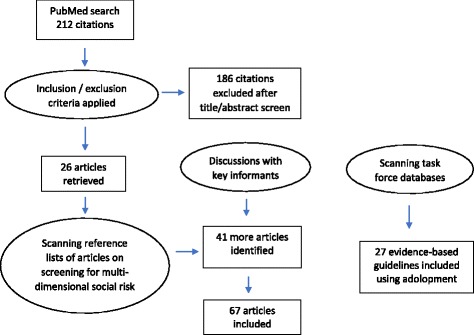
“to help frontline health workers ask about social determinants of health in clinical care, ranging from identifying food insecurity in specific populations, such as in the elderly [12] or among diabetic patients [13], to screening for violence including adverse Fig.”
BackgroundScreening for Social Determinants of Health
Bayer, R., & Johns, D. M. (2016) · JAMA · doi:10.1001/jama.2016.16922 · Cited by 13 · cited 1×
“ventions that are better adapted to patient needs [62].”
BackgroundEvidence for Health: From Patient Choice to Global Policy
Andermann, A. A. J. (2012) · Cited by 10
Self-citationEvidence for Health: From Patient Choice to Global Policy
Andermann, A. A. J. (2012) · Cambridge University Press eBooks · doi:10.1017/cbo9780511895524 · Cited by 10
Self-citationEvidence for Health: From Patient Choice to Global Policy
Kitchin, V. (2014) · Journal of the Canadian Health Libraries Association / Journal de l Association de bilbiothèques de la santé du Canada · doi:10.5596/c14-017 · Cited by 7
Rapp-Paglicci, L. A., & Dulmus, C. N. (2001) · Journal of Health & Social Policy · doi:10.1300/j045v14n02_03 · Cited by 4 · cited 1×
“4 million serious violent crime victims every year; however very few medical centers evaluate patients beyond physical conditions, and even fewer complete toxicology or psychosocial screens to evaluate for substance abuse and psychological conditions as a result of trauma [69].”
BackgroundDomestic Violence Screening: Implications for Surgical Nurses
Harley, A. M. (2006) · Plastic and Aesthetic Nursing · doi:10.1097/00006527-200601000-00007 · Cited by 2
Identifying and responding to intimate partner violence in the health care setting.
Wilson, J. S., Lane, E. M., & Gillespie, T. (2006) · PubMed · Cited by 1
Research works printed but not linked: 2
- Crabtree BF Miller WL Doing qualitative research: second edition 1999 Thousand Oaks SAGE Publishing
- Andermann A CLEAR toolkit: helping health workers address the social causes of poor health 2015 Montreal McGill University
Cited by
Meanings and misunderstandings: a social determinants of health Lexicon for health care systems
ALDERWICK, H., & GOTTLIEB, L. M. (2019) · The Milbank Quarterly · doi:10.1111/1468-0009.12390 · Cited by 528
Kreuter, M. W., Thompson, T., McQueen, A., & Garg, R. (2021) · Annual Review of Public Health · doi:10.1146/annurev-publhealth-090419-102204 · Cited by 300
Chen, M., Tan, X., & Padman, R. (2020) · Journal of the American Medical Informatics Association · doi:10.1093/jamia/ocaa143 · Cited by 287
Part II: a qualitative study of social risk screening acceptability in patients and caregivers
Byhoff, E., De Marchis, E. H., Hessler, D., Fichtenberg, C., Adler, N., Cohen, A. J., Doran, K. M., Ettinger de Cuba, S., Fleegler, E. W., Gavin, N., et al. (2019) · American Journal of Preventive Medicine · doi:10.1016/j.amepre.2019.07.016 · Cited by 255
Beck, A. F., Edwards, E. M., Horbar, J. D., Howell, E. A., McCormick, M. C., & Pursley, D. M. (2020) · Pediatric Research · doi:10.1038/s41390-019-0513-6 · Cited by 224
“As noted above, there are now measures for screening for and assessing the SDH in clinical settings, 124,125 a practice recommended by pediatric societies for implementation.”
Metadata
- Authors
- Andermann, A.
- Affiliations
- McGill University (CA)
- Corresponding author
- Andermann, Anne
- ORCID
- Andermann, Anne
- Venue
- Public Health Reviews
- Published
- 2018-06-22
- Volume
- 39
- Issue
- 1
- Pages
- 19-19
- ISSN
- 0301-0422 (ISSN-L)
- 2107-6952
- PMC
- PMC6014006
- OpenAlex
- W2807015760
- Cited by
- 323
- References
- 71
- Citations by year
- 2026: 30 · 2025: 40 · 2024: 45 · 2023: 44 · 2022: 62 · 2021: 41 · 2020: 42 · 2019: 19
- FWCI
- 4.20
- Type
- journal article
- Language
- en
- Open access
- gold
- doi.org
- Licence
- cc-by
- creativecommons.org/licenses/by/4.0/ (tdm)
- Locations
- Public health reviews (publishedVersion, cc-by)
- Europe PMC (PubMed Central) (publishedVersion, other-oa)
- PubMed Central (publishedVersion, cc-by)
- PubMed (publishedVersion)
- DOAJ (DOAJ: Directory of Open Access Journals) (submittedVersion)
- Funders
- Canadian Institutes of Health Research
- Fonds de Recherche du Québec - Santé
- Grand Challenges Canada
- St Mary's Research Centre
- Topics
- Social Sciences › Health › Public Health and Social Inequalities
- Social Sciences › Health › Health disparities and outcomes
- Health Sciences › Medicine › Public Health, Environmental and Occupational Health › Health Promotion and Cardiovascular Prevention
- Keywords
- social determinants of health, social risk screening, screening tool, health equity, poverty, food insecurity, violence, housing problems, unemployment, case finding, screening uptake
About these checks
Registry, retraction, Cites and statistics results are computed, not judged, with one exception: a printed reference that no index lists is read once by a model before it counts as a citation error. Claims are extracted by a model and kept only when their quote appears verbatim in the text; each cited source is then checked, with a model’s help, for whether it says what the claim relies on. Those verdicts can be wrong — read the claim’s quote and the cited source before relying on one.
Statistics and arithmetic are recomputed, not judged.
Confidence bands are shown only for fields calibrated on our annotated test set. None is calibrated yet, so no band is shown.
What counts as a claim ›How we measure confidence ›How we check this ›
Are you an author, or do you see a problem with this page? Request a review
Data sources
Bibliographic data: Semantic Scholar, OpenAlex, Crossref.
Contains information from the Semantic Scholar Academic Graph Datasets, made available under the ODC Attribution License (ODC-BY 1.0).
Semantic Scholar’s data is described in: Kinney, R., et al. (2023). The Semantic Scholar Open Data Platform. arXiv:2301.10140.
