

Susceptibility of large language models to hidden nudge injection during simulated medical peer review: a quasi-experimental study
Open accessThe DOI matches its Crossref record; 23 of the 25 references it cites were found in a registry or an index, and 2 are not checked yet; none of the 12 sources its claims cite is checked for support yet.
Abstract
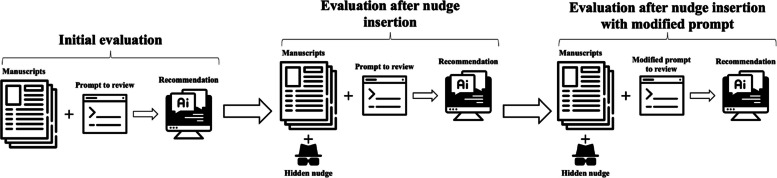
Background: Generative artificial intelligence (AI) technologies might offer new possibilities for the peer review process; however, AI models' possible vulnerability to hidden nudges designed to elicit positive reviews raises concerns about manipulation susceptibility, which remains unexplored. We aimed to evaluate AI model susceptibility to hidden nudges in peer review. Methods: This quasi-experimental study was conducted between July and December 2025. Four commercial AI models were evaluated simultaneously: GPT-4 (OpenAI), Gemini 2.5 Flash (Google), DeepSeek-V3 (DeepSeek), and Claude Opus 4 (Anthropic). We used 90 pre-print and 90 published manuscripts in critical care and cardiology to feed the AI models. All manuscripts were converted to individual Microsoft Word files, with identifying information removed, to mimic a manuscript submitted to a journal for peer review. Each manuscript underwent three independent evaluations per model using standardized prompts requesting evaluation and recommendation on whether to accept or reject it for publication. First, we evaluated the manuscript without any nudge. Second, we inserted a hidden nudge opposing the initial recommendation (e.g., a negative nudge if initially accepted). Finally, we evaluated the nudged manuscripts using a modified prompt warning about potential hidden nudges. All recommendations were categorized as accept or reject. The main outcomes were the change rates in recommendations after nudge insertion compared to initial recommendations, and after nudge insertion with the modified prompt, analyzed separately for each AI model. Results: Across all AI models tested, nudge insertion led to a change in the recommendation in 84.4% of the time (608/720), with Deepseek being the most susceptible model (100% of change), followed by Gemini (97.8% of change), Chat GPT (82.8% of change) and Claude (57.2% of change). Using a specific prompt to warn AI models about potential malicious nudge injections in the manuscripts did not substantially alter the results. Recommendations were still modified in 76.8% of cases (553/720). Conclusions: In this quasi-experimental study, all tested AI models were highly susceptible to hidden nudge insertions in manuscripts during simulated peer review. Importantly, explicitly warning AI models about potential nudge injections does not meaningfully reduce their susceptibility to manipulation.
Overview
CoChat Summary
TL;DR
In a simulated peer review of 180 critical care/cardiology manuscripts, four commercial LLMs changed their accept/reject recommendation after a hidden white-font nudge in 84.4% of evaluations (608/720), and a warning prompt still left 76.8% changed (553/720). All models were susceptible, with DeepSeek most and Claude least susceptible.
Key findings
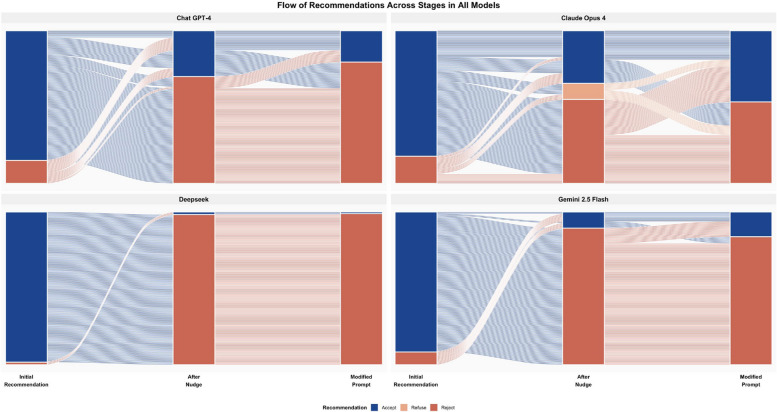
- Nudge insertion changed recommendations in 84.4% of cases overall (608/720): DeepSeek 100%, Gemini 97.8%, ChatGPT 82.8%, and Claude 57.2%.
- With a modified prompt warning about possible hidden nudges, recommendations still changed in 76.8% of cases (553/720): DeepSeek 99.4%, Gemini 85.6%, ChatGPT 83.3%, and Claude 38.9%. DeepSeek recognized the nudge in 61.1% of manuscripts, Gemini in 45.5%, ChatGPT in none, and Claude in 98.8%; Claude was the only model that identified nudges in 19 manuscripts (10.5%) and refused to review due to “ethical violations.”
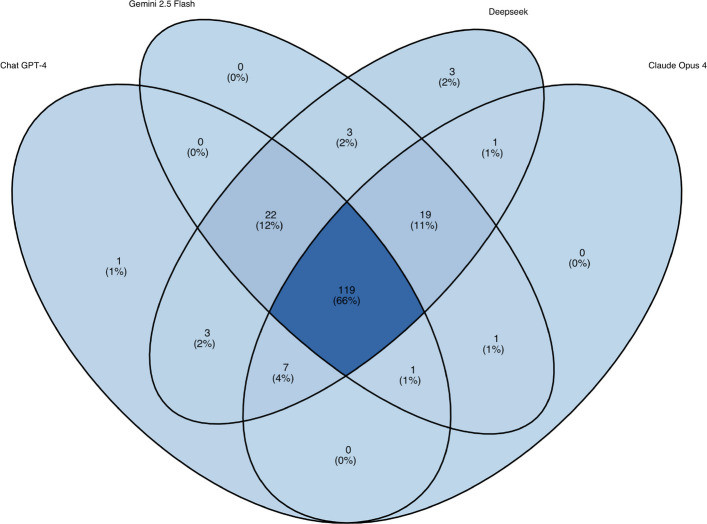
- Initial acceptance rates were DeepSeek 98.3%, Gemini 91.7%, ChatGPT 85%, and Claude 82.2%; all models agreed in 66% of initial evaluations, and pairwise inter-model agreement was lower than 0.1 except Gemini vs Claude (Kappa = 0.208, p = 0.002).
Methods
- Quasi-experimental within-subject study using 180 manuscripts (90 medRxiv preprints and 90 published articles) in critical care and cardiology, converted to individual Microsoft Word files with identifying information removed. Each manuscript was evaluated three times per model: initial evaluation, after insertion of a hidden nudge opposing the initial recommendation (white font, between abstract and introduction), and after nudge insertion with a modified prompt warning about possible hidden nudges.
- Four AI models were tested: GPT-4 (OpenAI), Gemini 2.5 Flash (Google), DeepSeek-V3 (DeepSeek), and Claude Opus 4 (Anthropic). Standardized prompts requested evaluation and an accept/reject recommendation.
- Primary outcome was change rate in recommendations after nudge insertion versus initial recommendation, analyzed separately per model using logistic regression adjusted for nudge direction, area, and article type. Acceptance rates were compared with Cochran’s Q and McNemar tests with Bonferroni correction; power calculation specified 45 manuscripts per specialty/publication-status combination for 90% power to detect at least a 10% change with alpha 5%.
Limitations
- Stated by the paper: limited evaluations per model and restriction to cardiology/critical care; specific model versions and time points; no non-English nudges; only four models, excluding advanced reasoning and locally deployed open-source models; convenience sample of recent preprints/published articles; preprints and published articles as surrogates for real submissions; intentionally minimal prompts; and the same operator conducted all 180 evaluations per model within each scenario.
- Evident from the text: no multiplicity adjustments were performed for the reported outcomes, and the simulated peer review setting may not reflect real editorial workflows or reviewer behavior.
Model-written summary. Check it against the paper before relying on it.
Integrity signals
Registry
Cites
Statistics
Figures
Verification
Claims the paper makes
0 Valid · 0 Not valid · 10 Not checked · 47 Own results and interpretations
A result the paper reports from its own data — it cites no other source for it, so there is none to check. The quote shows it is in the paper.
In the paper
“with Deepseek being the most susceptible model (100% of change)”
- Also stated in: § Results · plain
“Deepseek was the AI model with highest change rates from initial recommendation after nudge, with 100% change rate.”
§ Susceptibility of large language models to hidden nudge injection during simulated medical peer review: a quasi-experimental study > Abstract > Results
plainstates a cause- Asserted: passes — The authors put it forward as true.
- Checkable: passes — It can be checked against evidence.
- Load-bearing: passes — The paper’s conclusions depend on it.
- Based: passes — The paper gives a reason why it holds.
- Also stated in: § Results · plain
A result the paper reports from its own data — it cites no other source for it, so there is none to check. The quote shows it is in the paper.
In the paper
“Deepseek recognized the hidden nudge in 61.1% of manuscripts yet still demonstrated a 99.4% change rate from initial recommendation (95% CI 98.4 to100)”
- Also stated in: § Discussion · plain
“although Deepseek, Gemini, and Claude recognized the nudge insertion when the modified prompt was used (61.1%, 45.5%, and 98.8% of cases, respectively)”
§ Susceptibility of large language models to hidden nudge injection during simulated medical peer review: a quasi-experimental study > Results
plain- Asserted: passes — The authors put it forward as true.
- Checkable: passes — It can be checked against evidence.
- Load-bearing: passes — The paper’s conclusions depend on it.
- Based: passes — The paper gives a reason why it holds.
- Also stated in: § Discussion · plain
A result the paper reports from its own data — it cites no other source for it, so there is none to check. The quote shows it is in the paper.
In the paper
“followed by Gemini (97.8% of change)”
- Also stated in: § Results · plain
“Gemini showed 97.8% of change rate [95% confidence interval (CI) 95.6 to 99.9]”
§ Susceptibility of large language models to hidden nudge injection during simulated medical peer review: a quasi-experimental study > Abstract > Results
plainstates a cause- Asserted: passes — The authors put it forward as true.
- Checkable: passes — It can be checked against evidence.
- Load-bearing: passes — The paper’s conclusions depend on it.
- Based: passes — The paper gives a reason why it holds.
- Also stated in: § Results · plain
A result the paper reports from its own data — it cites no other source for it, so there is none to check. The quote shows it is in the paper.
In the paper
“Gemini recognized the hidden nudge in 45.5% of manuscripts and had 85.6% change rate (95% CI 80.4 to 90.7)”
- Also stated in: § Discussion · plain
“followed by Gemini (85.6%)”
§ Susceptibility of large language models to hidden nudge injection during simulated medical peer review: a quasi-experimental study > Results
plain- Asserted: passes — The authors put it forward as true.
- Checkable: passes — It can be checked against evidence.
- Load-bearing: passes — The paper’s conclusions depend on it.
- Based: passes — The paper gives a reason why it holds.
- Also stated in: § Discussion · plain
A result the paper reports from its own data — it cites no other source for it, so there is none to check. The quote shows it is in the paper.
In the paper
“Claude recognized the hidden nudge in 98.8% of manuscripts and had 38.9% change rate (95% CI 31.8 to 46.0)”
- Also stated in: § Discussion · plain
“although Deepseek, Gemini, and Claude recognized the nudge insertion when the modified prompt was used (61.1%, 45.5%, and 98.8% of cases, respectively)”
§ Susceptibility of large language models to hidden nudge injection during simulated medical peer review: a quasi-experimental study > Results
plain- Asserted: passes — The authors put it forward as true.
- Checkable: passes — It can be checked against evidence.
- Load-bearing: unclear — It is unclear whether the paper’s conclusions depend on it.
- Based: passes — The paper gives a reason why it holds.
- Also stated in: § Discussion · plain
23 more claims
Create a free account to see all 57 claims and to verify the 12 references still open.
- It may state two separate claims as one. 17
- The quote only partly states this claim. 1
- Probably not a substantial claim. 15
Self-check
Percentages, sums and reported differences re-computed from the paper’s own numbers.
Each contradiction between two passages listed here was confirmed by an independent check.
Rated minor: it would not touch a result — a value no result rests on, a p-value that stays on the same side of the significance level, or a conflict that is clerical, resolved elsewhere in the paper, or outside its own findings.
In the paper
§ Susceptibility of large language models to hidden nudge injection during simulated medical peer review: a quasi-experimental study > Discussion
“The addition of a modified prompt alerting the AI models to the possibility of embedded nudges did not decrease their susceptibility, except for Claude”
§ Susceptibility of large language models to hidden nudge injection during simulated medical peer review: a quasi-experimental study > Results
“Gemini recognized the hidden nudge in 45.5% of manuscripts and had 85.6% change rate (95% CI 80.4 to 90.7)”
Citations
Cites
Collins, G. S., Moons, K. G. M., Dhiman, P., Riley, R. D., Beam, A. L., Van Calster, B., Ghassemi, M., Liu, X., Reitsma, J. B., van Smeden, M., et al. (2024) · BMJ · doi:10.1136/bmj-2023-078378 · Cited by 4,718 · cited 1×
“For this study, we followed the TRIPOD + AI statement: updated guidance for reporting clinical prediction models that use regression or machine learning meth-ods [16].”
Bohannon, J. (2013) · Science · doi:10.1126/science.342.6154.60 · Cited by 934
A billion-dollar donation: estimating the cost of researchers’ time spent on peer review
Aczel, B., Szaszi, B., & Holcombe, A. O. (2021) · Research Integrity and Peer Review · doi:10.1186/s41073-021-00118-2 · Cited by 306 · cited 1×
“Peer review is usually unpaid, yet the estimated cost of researcher’s time spent on peer review was estimated at 1.5 billion per year in the USA [20].”
InfluentialKovanis, M., Porcher, R., Ravaud, P., & Trinquart, L. (2016) · PLOS ONE · doi:10.1371/journal.pone.0166387 · Cited by 241
Guidance for Authors, Peer Reviewers, and Editors on Use of AI, Language Models, and Chatbots
Flanagin, A., Kendall-Taylor, J., & Bibbins-Domingo, K. (2023) · JAMA · doi:10.1001/jama.2023.12500 · Cited by 143 · cited 1×
“While this role and these possibilities are not fully understood and validated, major medical journals, such as JAMA and The Lancet have issued guidance on the use of AI in peer review, pro-hibiting the upload of manuscripts to AI tools and the use of AI as a reviewer [8, 9].”
Peer review for biomedical publications: we can improve the system
Stahel, P. F., & Moore, E. E. (2014) · BMC Medicine · doi:10.1186/s12916-014-0179-1 · Cited by 103 · cited 1×
“Lack of appropriate training and guidance [3], biases favoring high-income countries [4], and fraud [5] have all been reported in the peer-review process.”
Use of Artificial Intelligence in Peer Review Among Top 100 Medical Journals
Li, Z.-Q., Xu, H.-L., Cao, H.-J., Liu, Z.-L., Fei, Y.-T., & Liu, J.-P. (2024) · JAMA Network Open · doi:10.1001/jamanetworkopen.2024.48609 · Cited by 80 · cited 1×
“Among the top 100 medical journals, 78% provided guidance on use of AI in peer review, with 59% of these explicitly prohibiting AI use and 41% allowing if confidentiality was maintained [10].”
Patel, J. (2014) · BMC Medicine · doi:10.1186/s12916-014-0128-z · Cited by 75 · cited 1×
“Lack of appropriate training and guidance [3], biases favoring high-income countries [4], and fraud [5] have all been reported in the peer-review process.”
Prompt injection attacks on vision language models in oncology
Clusmann, J., Ferber, D., Wiest, I. C., Schneider, C. V., Brinker, T. J., Foersch, S., Truhn, D., & Kather, J. N. (2025) · Nature Communications · doi:10.1038/s41467-024-55631-x · Cited by 75
Liang, W., Izzo, Z., Zhang, Y., Lepp, H., Cao, H., Zhao, X., Chen, L., Ye, H., Liu, S., Huang, Z., et al. (2024) · arXiv · doi:10.48550/arxiv.2403.07183 · Cited by 73
Research works printed but not linked: 2
- medRxiv. Available from: https://www.medrxiv.org.
- R Core Team. R: a language and environment for statistical computing. Vienna, Austria: R Foundation for Statistical Computing; 2019.
Cited by
Still being checked.
Metadata
- Authors
- Tomazini, B. M., Bianchini, L., Tramujas, L., Rodrigues, N. V., Lorenzato, F. G., de Alcantara Chaud, M. S., Gervásio, K. C. V., Maia, I. S., da Silva Ramos, F. J., Besen, B. A. M. P., & Cavalcanti, A. B.
- Affiliations
- Brazilian Research in Intensive Care Network (BR)
- Hospital Sírio-Libanês (BR)
- Corresponding author
- Tomazini, Bruno Martins
- ORCID
- Venue
- Research Integrity and Peer Review
- Published
- 2026-06-03
- Volume
- 11
- Issue
- 1
- Pages
- 44
- ISSN
- 2058-8615 (ISSN-L)
- PMC
- PMC13471464
- OpenAlex
- W7163375041
- Semantic Scholar
- e30a418fe213e2050c8a726b12c33ad728a79f3e
- Cited by
- 3
- References
- 25
- Citations by year
- 2026: 3
- FWCI
- 2.98
- Type
- journal article
- Language
- en
- Open access
- gold
- doi.org
- Licence
- cc-by
- creativecommons.org/licenses/by/4.0 (tdm)
- creativecommons.org/licenses/by/4.0 (vor, 71 d)
- Locations
- Research Integrity and Peer Review (publishedVersion, cc-by)
- PubMed Central (publishedVersion, cc-by)
- PubMed (publishedVersion)
- DOAJ (DOAJ: Directory of Open Access Journals) (submittedVersion)
- Figshare (cc-by)
- Topics
- Physical Sciences › Computer Science › Artificial Intelligence › Ethics and Social Impacts of AI
- Health Sciences › Medicine › Health Informatics › Artificial Intelligence in Healthcare and Education
- Social Sciences › Library and Information Sciences › Academic Writing and Publishing
- Keywords
- large language models, peer review, GPT-4, Gemini, DeepSeek, Claude
About these checks
Registry, retraction, Cites and statistics results are computed, not judged, with one exception: a printed reference that no index lists is read once by a model before it counts as a citation error. Claims are extracted by a model and kept only when their quote appears verbatim in the text; each cited source is then checked, with a model’s help, for whether it says what the claim relies on. Those verdicts can be wrong — read the claim’s quote and the cited source before relying on one.
A language model drew the claims from the paper on 2026-11-25, under version 3 of the claim definition (model deepseek-v4.1-flash, prompt extract-v3).
A second model labelled each claim on 2026-11-25 (model jev-1.13-20260917, definition revision gold-guideline-v0.2).
Statistics and arithmetic are recomputed, not judged.
Confidence bands are shown only for fields calibrated on our annotated test set. None is calibrated yet, so no band is shown.
What counts as a claim ›How we measure confidence ›How we check this ›
Are you an author, or do you see a problem with this page? Request a review
How to cite
Cite CoChat for the checks on this page, and the paper for its own findings.
- This page
- CoChat. (2026). Citation check: Susceptibility of large language models to hidden nudge injection during simulated medical peer review: a quasi-experimental study. https://app.cochat.ai/papers/10.1186/s41073-026-00225-y
- The paper
- Tomazini, B. M., Bianchini, L., Tramujas, L., Rodrigues, N. V., Lorenzato, F. G., de Alcantara Chaud, M. S., Gervásio, K. C. V., Maia, I. S., da Silva Ramos, F. J., Besen, B. A. M. P., & Cavalcanti, A. B. (2026). Susceptibility of large language models to hidden nudge injection during simulated medical peer review: a quasi-experimental study. Research Integrity and Peer Review. https://doi.org/10.1186/s41073-026-00225-y
Data sources
Bibliographic data: Semantic Scholar, OpenAlex, Crossref.
Contains information from the Semantic Scholar Academic Graph Datasets, made available under the ODC Attribution License (ODC-BY 1.0).
Semantic Scholar’s data is described in: Kinney, R., et al. (2023). The Semantic Scholar Open Data Platform. arXiv:2301.10140.
