

Precision education with statistical learning and deep learning: a case study in Taiwan.
Open accessThe DOI matches its Crossref record; 18 of the 18 references it cites were found in a registry or an index.
Abstract
The low birth rate in Taiwan has led to a severe challenge for many universities to enroll a sufficient number of students. Consequently, a large number of students have been admitted to universities regardless of whether they have an aptitude for academic studies. Early diagnosis of students with a high dropout risk enables interventions to be provided early on, which can help these students to complete their studies, graduate, and enhance their future competitiveness in the workplace. Effective prelearning interventions are necessary, therefore students’ learning backgrounds should be thoroughly examined. This study investigated how big data and artificial intelligence can be used to help universities to more precisely understand student backgrounds, according to which corresponding interventions can be provided. For this study, 3552 students from a university in Taiwan were sampled. A statistical learning method and a machine learning method based on deep neural networks were used to predict their probability of dropping out. The results revealed that student academic performance (regarding the dynamics of class ranking percentage), student loan applications, the number of absences from school, and the number of alerted subjects successfully predicted whether or not students would drop out of university with an accuracy rate of 68% when the statistical learning method was employed, and 77% for the deep learning method, in the case of giving first priority to the high sensitivity in predicting dropouts. However, when the specificity metric was preferred, then the two approaches both reached more than 80% accuracy rates. These results may enable the university to provide interventions to students for assisting course selection and enhancing their competencies based on their aptitudes, potentially reducing the dropout rate and facilitating adaptive learning, thereby achieving a win-win situation for both the university and the students. This research offers a feasible direction for using artificial intelligence applications on the basis of a university’s institutional research database.
Overview
The claims and statistics of this paper haven’t been checked yet.
Free: it reads the open-access text and checks the first 5 claims that cite a source we can check. Create a free account to check every claim.
Integrity signals
Registry
Cites
Statistics
Figures
Verification
Claims the paper makes
The claims and statistics of this paper haven’t been checked yet.
Free: it reads the open-access text and checks the first 5 claims that cite a source we can check. Create a free account to check every claim.
Claims other papers make about this one
Each is checked against this paper’s own text: does it say what the citing paper says it does?
In the citing paper
“Education is progressively moving from a one-size-fits-all approach to precision education or personalized learning”
From Challenges and Future Directions of Big Data and Artificial Intelligence in Education (2020) · cites this paper as Tsai et al., 2020
Self-check
Percentages, sums and reported differences re-computed from the paper’s own numbers.
The self-check needs the paper’s full text.
Citations
Cites
A fast learning algorithm for deep belief nets
Hinton, G. E., Osindero, S., & Teh, Y.-W. (2006) · Neural Computation · doi:10.1162/neco.2006.18.7.1527 · Cited by 16,336 · cited 1×
“Hinton, Osindero, and Teh (2006) proposed deep belief nets, an unsupervised, greedy layer-by-layer pretraining scheme that targeted the vanishing gradient effect so as to make machine learning more accurate and outstanding.”
BackgroundTensorFlow: Large-Scale Machine Learning on Heterogeneous Distributed Systems
Abadi, M., Agarwal, A., Barham, P., Brevdo, E., Chen, Z., Citro, C., Corrado, G. S., Davis, A., Dean, J., Devin, M., et al. (2016) · arXiv · doi:10.48550/arxiv.1603.04467 · Cited by 9,408 · cited 2×
“The deep learning framework used was the TensorFlow, open-source software developed by Google (Abadi et al., 2016) and Keras, a high-level deep learning library that is based on Python under the license of the Massachusetts Institute of Technology.”
MethodZawacki-Richter, O., Marín, V. I., Bond, M., & Gouverneur, F. (2019) · International Journal of Educational Technology in Higher Education · doi:10.1186/s41239-019-0171-0 · Cited by 7,242
A New Initiative on Precision Medicine
Collins, F. S., & Varmus, H. (2015) · New England Journal of Medicine · doi:10.1056/nejmp1500523 · Cited by 5,202
Gardner, M. W., & Dorling, S. R. (1998) · Atmospheric Environment · doi:10.1016/s1352-2310(97)00447-0 · Cited by 3,324 · cited 1×
“Deep learning: Using deep neural networks, a multilayer perceptron algorithm (Gardner & Dorling, 1998) was employed to establish an efficient and convenient prediction model.”
MethodArdila, D., Kiraly, A. P., Bharadwaj, S., Choi, B., Reicher, J. J., Peng, L., Tse, D., Etemadi, M., Ye, W., Corrado, G., et al. (2019) · Nature Medicine · doi:10.1038/s41591-019-0447-x · Cited by 2,167 · cited 1×
“The network ’ s prediction capacity is comparable to or even higher than the diagnostic capacity of a trained radiologist; an early diagnosis can increase patient survival rate by 40% (Ardila et al., 2019).”
Learning multiple layers of representation
Hinton, G. E. (2007) · Trends in Cognitive Sciences · doi:10.1016/j.tics.2007.09.004 · Cited by 1,011 · cited 1×
“…networks have grown considerably in terms of high complexity problems and algorithmic efficiency in the recent decade; deep learning provides the most advanced and accurate performance in some challenging real-world machine learning tasks (Fiser, Berkes, Orbán, & Lengyel, 2010; Hinton, 2007).”
BackgroundKintu, M. J., Zhu, C., & Kagambe, E. (2017) · International Journal of Educational Technology in Higher Education · doi:10.1186/s41239-017-0043-4 · Cited by 764 · cited 1×
“Although Kintu, Zhu, and Kagambe ’ s (2017) study did not use AI algorithms, they investigated the effectiveness of a blended learning environment supported by a learning management system, Moodle, through exploring the relationships among student characteristics/backgrounds and academic…”
BackgroundA Deep Learning Mammography-based Model for Improved Breast Cancer Risk Prediction
Yala, A., Lehman, C., Schuster, T., Portnoi, T., & Barzilay, R. (2019) · Radiology · doi:10.1148/radiol.2019182716 · Cited by 758
Statistically optimal perception and learning: from behavior to neural representations
Fiser, J., Berkes, P., Orbán, G., & Lengyel, M. (2010) · Trends in Cognitive Sciences · doi:10.1016/j.tics.2010.01.003 · Cited by 672 · cited 1×
“…networks have grown considerably in terms of high complexity problems and algorithmic efficiency in the recent decade; deep learning provides the most advanced and accurate performance in some challenging real-world machine learning tasks (Fiser, Berkes, Orbán, & Lengyel, 2010; Hinton, 2007).”
Research works printed but not linked: 2
- Lu, O. H. T., Huang, A. Y. Q., Huang, J. C. H., Lin, A. J. Q., Ogata, H., & Yang, S. J. H. (2018). Applying learning analytics for the early prediction of students' academic performance in blended learning. Educational Technology & Society, 21(2), 220-232.
- Wu, T.-N., Chen, C.-H., & Tsai, S.-C. (2018, November). Study on intelligent prognosis system for learning [智慧型學習預後系統 之研究]. Paper presented at the Conference on Institutional Research and Teaching Practice 2018, Taichung, Taiwan.
Cited by
A Review of Artificial Intelligence (AI) in Education from 2010 to 2020
Zhai, X., Chu, X., Chai, C. S., Jong, M. S. Y., Istenic, A., Spector, M., Liu, J.-B., Yuan, J., & Li, Y. (2021) · Complexity · doi:10.1155/2021/8812542 · Cited by 1,364
“[105] DEE Deep neural networks Disciplinary knowledge 3552 students from a university in Taiwan SUR 0 89 Alyahyan and Dustegor [106] Constructing guidelines to apply data mining techniques to predict student success”
BackgroundChiu, T. K. F., Xia, Q., Zhou, X., Chai, C. S., & Cheng, M. (2023) · Computers and Education: Artificial Intelligence · doi:10.1016/j.caeai.2022.100118 · Cited by 1,181
Chiu, T. K. F. (2024) · Interactive Learning Environments · doi:10.1080/10494820.2023.2253861 · Cited by 852
“For example, they used student data to predict the probability of students discontinuing their courses and assist students with course/activity selection (Cukurova et al., 2020; Tsai et al., 2020; Villegas-Ch et al., 2020).”
Challenges and Future Directions of Big Data and Artificial Intelligence in Education
Luan, H., Geczy, P., Lai, H., Gobert, J., Yang, S. J. H., Ogata, H., Baltes, J., Guerra, R., Li, P., & Tsai, C.-C. (2020) · Frontiers in Psychology · doi:10.3389/fpsyg.2020.580820 · Cited by 667
“(1) Education is progressively moving from a one-size-fits-all approach to precision education or personalized learning (Lu et al., 2018; Tsai et al., 2020).”
BackgroundAI‐driven adaptive learning for sustainable educational transformation
Strielkowski, W., Grebennikova, V., Lisovskiy, A., Rakhimova, G., & Vasileva, T. (2025) · Sustainable Development · doi:10.1002/sd.3221 · Cited by 581
Mhlongo, S., Mbatha, K., Ramatsetse, B., & Dlamini, R. (2023) · Heliyon · doi:10.1016/j.heliyon.2023.e16348 · Cited by 337
“There is clear evidence that education is gradually shifting away from a one-size-fits-all approach towards precision education that is tailored towards the needs of learners from diverse backgrounds [120,121].”
Exploring the impact of AI on teacher leadership: regressing or expanding?
Ghamrawi, N., Shal, T., & Ghamrawi, N. A. R. (2024) · Education and Information Technologies · doi:10.1007/s10639-023-12174-w · Cited by 207
“Furthermore, AI-powered educational systems are believed to be capable of analyzing classroom dynamics and student engagement to identify at-risk students and intervene in a timely manner (Tsai et al., 2020 ).”
Wu, T.-T., Lee, H.-Y., Li, P.-H., Huang, C.-N., & Huang, Y.-M. (2024) · Journal of Educational Computing Research · doi:10.1177/07356331231191125 · Cited by 249
“This fi nding aligns with previous research emphasizing the signi fi cance of timely problem-solving for knowledge construction (A fi ni Normadhi et al., 2019; Tsai et al., 2020; Xu and Ouyang, 2022).”
ResultSelf-citationLatif, S., Driss, M., Boulila, W., Huma, Z. E., Jamal, S. S., Idrees, Z., & Ahmad, J. (2021) · Sensors · doi:10.3390/s21227518 · Cited by 161
“[91] MLP University’s institutional research database Precision education To help universities to more precisely understand student backgrounds”
BackgroundYun, G., Ravi, R. V., & Jumani, A. K. (2022) · Progress in Artificial Intelligence · doi:10.1007/s13748-021-00272-0 · Cited by 152
“Shuo-Chang Tsai et al. [28] tested a predictive learning approach and used a deep-neural network machine learning method to forecast their likelihood of abandonment.”
MethodArtificial intelligence in higher education: a bibliometric analysis and topic modeling approach
Maphosa, V., & Maphosa, M. (2023) · Applied Artificial Intelligence · doi:10.1080/08839514.2023.2261730 · Cited by 100
“This approach takes account of learner differences and prevailing learning environments, predicts student performance, and timely interventions to optimize the learning process (Tsai et al. 2020).”
BackgroundCheah, Y. H., Lu, J., & Kim, J. (2025) · Computers and Education: Artificial Intelligence · doi:10.1016/j.caeai.2025.100363 · Cited by 134
Khan, M. A., Khojah, M., & Vivek (2022) · Education Research International · doi:10.1155/2022/1263555 · Cited by 98
RetractedQushem, U. B., Christopoulos, A., Oyelere, S. S., Ogata, H., & Laakso, M.-J. (2021) · Education Sciences · doi:10.3390/educsci11070338 · Cited by 94
“A proposed solution to the concerns mentioned earlier emerges after considering the approach that researchers from precision medicine follow, which aims to classify and treat disorders in a more personalized way [7].”
BackgroundMethodTriola, M. M., & Burk-Rafel, J. (2023) · Academic Medicine · doi:10.1097/acm.0000000000005227 · Cited by 111
Huynh-Cam, T.-T., Chen, L., & Le, H. (2021) · Algorithms · doi:10.3390/a14110318 · Cited by 106
“RF operates classification, regression, and other tasks by constructing multiple decision trees during training [41–43].”
MethodAteş, H. (2024) · Education and Information Technologies · doi:10.1007/s10639-024-12970-y · Cited by 99
“The system must be able to accurately analyze student performance (Chan & Zary, 2019), identify areas where additional instruction or guidance is needed, and provide personalized feedback in real-time (Chen et al., 2021; Tsai et al., 2020).”
Systematic Review: AI's Impact on Higher Education - Learning, Teaching, and Career Opportunities
Slimi, Z., & Villarejo-Carballido, B. (2023) · TEM Journal · doi:10.18421/tem123-44 · Cited by 99
“Several studies, such as those conducted by [3], [15], [19], [24], [25], [36], [47], [48], [49], [52],”
Alonso, R. R., Carvajal, K. A., & Acevedo, N. R. (2024) · RIED Revista Iberoamericana de Educación a Distancia · doi:10.5944/ried.28.1.41538 · Cited by 94
Qazi, S., Kadri, M. B., Naveed, M., Khawaja, B. A., Khan, S. Z., Alam, M. M., & Su’ud, M. M. (2024) · Computers, materials & continua/Computers, materials & continua (Print) · doi:10.32604/cmc.2024.048893 · Cited by 101
Could the Use of AI in Higher Education Hinder Students With Disabilities? A Scoping Review
Pierrès, O., Christen, M., Schmitt-Koopmann, F. M., & Darvishy, A. (2024) · IEEE Access · doi:10.1109/access.2024.3365368 · Cited by 59
“The output could be a probability to fail [49], [54], [58], [60], [63] or a categorical variable indicating that the student was at risk or not [52], [55], [59], [61], [20].”
BackgroundInfluentialPotential Benefits and Risks of Artificial Intelligence in Education
Özer, M. (2024) · Bartın University Journal of Faculty of Education · doi:10.14686/buefad.1416087 · Cited by 98
“These systems can assist students in selecting courses/activities based on their preferences, determine the likelihood of attending these courses/activities, and aid school administrations in decision-making and recommendations (Tsai et al., 2020; Villegas-Ch et al., 2020; Chiu, 2023).”
BackgroundStasolla, F., Zullo, A., Maniglio, R., Passaro, A., Gioia, M. D., Curcio, E., & Martini, E. (2025) · AI · doi:10.3390/ai6020040 · Cited by 87
Artificial Intelligence in Higher Education: A Bibliometric Approach
Kavitha, K., Joshith, V. P., Rajeev, N. P., & Asha, S. (2024) · European Journal of Educational Research · doi:10.12973/eu-jer.13.3.1121 · Cited by 72
Lee, H.-Y., Lin, C.-J., Wang, W.-S., Chang, W.-C., & Huang, Y.-M. (2023) · International Journal of STEM Education · doi:10.1186/s40594-023-00444-5 · Cited by 44
“Consequently, countries like Taiwan and the United Kingdom have integrated it as a compulsory subject within the K-12 curriculum to foster the cultivation of higher-order cognitive skills such as problem-solving (Tsai et al., 2020).”
BackgroundMethodResultChen, C.-H., Yang, S. J. H., Weng, J.-X., Ogata, H., & Su, C. (2021) · Australasian Journal of Educational Technology · doi:10.14742/ajet.6116 · Cited by 71
“…addresses how predicting students’ performance has become an essential research topic in different academic disciplines (e.g., Lu et al., 2018; Tsai et al., 2020), and the goal of being able to predict levels for students learning performance, score, ability or mark from specific…”
BackgroundSelf-citationReimagining the machine learning life cycle to improve educational outcomes of students
Liu, L. T., Wang, S., Britton, T., & Abebe, R. (2023) · Proceedings of the National Academy of Sciences · doi:10.1073/pnas.2204781120 · Cited by 70
Slimi, Z. (2021) · Research Square · doi:10.21203/rs.3.rs-1081043/v1 · Cited by 54
Türk, N., Batuk, B., Kaya, A., & YILDIRIM, O. (2025) · BMC Psychology · doi:10.1186/s40359-025-03559-2 · Cited by 50
Liu, C.-H. S., Horng, J., Chou, S.-F., Yu, T., Lee, M.-T., & Lapuz, M. C. B. (2023) · The International Journal of Management Education · doi:10.1016/j.ijme.2023.100835 · Cited by 48
Shiao, Y., Chen, C.-H., Wu, K.-F., Chen, B., Chou, Y.-H., & Wu, T.-N. (2023) · Smart Learning Environments · doi:10.1186/s40561-023-00274-6 · Cited by 42
“The purpose of predicting student learning outcomes through learning analytics is to identify potential learning problems, such as the aforementioned, and provide immediate intervention or relevant measures (Tsai et al., 2020).”
BackgroundMethodInfluentialSelf-citationThe Effect of Artificial Intelligence (AI) on Students' Learning
Ma’amor, H., Achim, N., Ahmad, N. L., Roszaman, N. S., Anuar, N. N. K., Azwa, N. C. A. K., Rahman, S. N. A., & Hamjah, N. A. A. (2024) · Information Management and Business Review · doi:10.22610/imbr.v16i3s(i)a.4178 · Cited by 56
“They have been able to establish the learning state of the students, assist program officers or teachers in academic intervention, and eventually reduce students’ dropping out (Tsai et al, 2020; Villegas-Ch et al, 2021).”
BackgroundArtificial Intelligence Threatens Critical Thinking in Education Systems
Özer, M., Tanberkan, H., & Perc, M. (2025) · Journal of Higher Education and Science · doi:10.5961/higheredusci.1747885 · Cited by 47
Burk-Rafel, J., Sebok-Syer, S. S., Santen, S. A., Jiang, J., Caretta-Weyer, H. A., Iturrate, E., Kelleher, M., Warm, E. J., Schumacher, D. J., & Kinnear, B. (2023) · Perspectives on Medical Education · doi:10.5334/pme.1013 · Cited by 38
Empirical Research on AI Technology-Supported Precision Teaching in High School Science Subjects
Hao, M., Wang, Y., & Peng, J. (2024) · Applied Sciences · doi:10.3390/app14177544 · Cited by 41
Analysis of AI Precision Education Strategy for Small Private Online Courses
Lin, Y., & Lai, Y.-H. (2021) · Frontiers in Psychology · doi:10.3389/fpsyg.2021.749629 · Cited by 34
“Precision education is an educational philosophy and behavior based on big data analysis (Makhluf, 2020; Tsai et al., 2020).”
Semi-Supervised Object Detection: A Survey on Progress from CNN to Transformer
Shehzadi, T., Ifza, I., Liwicki, M., Stricker, D., & Afzal, M. Z. (2026) · Sensors · doi:10.3390/s26010310 · Cited by 33
“Deep learning [42], [43], [44], [45] has become an active area of research with numerous applications in various fields such as pattern recognition [46], [47], data mining [48], [49], statistical learning [50], [51], computer vision [52], [53], and natural language processing [54], [54], [55].”
Artificial Intelligence in Education (AIEd): Publication Patterns, Keywords, and Research Focuses
Zhu, W., Wei, L., & Qin, Y. (2025) · Information · doi:10.3390/info16090725 · Cited by 35
Early prediction models and crucial factor extraction for first-year undergraduate student dropouts
Huynh-Cam, T.-T., Chen, L., & Lu, T.-C. (2024) · Journal of Applied Research in Higher Education · doi:10.1108/jarhe-10-2023-0461 · Cited by 28
Esparza, D. M. C., Terven, J. R., Romero-González, J.-A., Córdova-Esparza, K.-E., Martínez, R. E. L., Ramírez, M. T. G., & Sánchez, R. C. (2025) · Information · doi:10.3390/info16040326 · Cited by 34
“Local contexts, from Taiwan [78] to Nigeria [93] to Ecuador [53], demonstrate that region-specific features (cultural, socioeconomic, infrastructural) must be integrated into models to maximize impact.”
InfluentialChen, S.-Y., & Chien, W.-C. (2022) · Frontiers in Psychology · doi:10.3389/fpsyg.2022.786314 · Cited by 29
“Deep learning is a subcategory of artificial intelligence and is seen as one of the channels for providing precision education (García et al., 2007; Tsai et al., 2020).”
BackgroundEducational Data Mining for Dropout Prediction: Trends, Opportunities, and Challenges
Colpo, M. P., Primo, T. T., de Aguiar, M. S., & Cechinel, C. (2024) · Revista Brasileira de Informática na Educação · doi:10.5753/rbie.2024.3559 · Cited by 24
How Do EFL Teachers Utilize AI Tools in Their Language Teaching?
Zhou, C., & Hou, F. (2025) · Theory and Practice in Language Studies · doi:10.17507/tpls.1502.10 · Cited by 32
Artificial Intelligence in Education: Transforming Learning and Teaching
Delello, J. A., Bailey, J., & Garcia-Lopez, A. (2024) · Advances in business information systems and analytics book series · doi:10.4018/979-8-3693-3003-6.ch001 · Cited by 27
Lin, C., Wang, W., Lee, H., Li, P., Huang, Y., & Wu, T. (2025) · Journal of Research on Technology in Education · doi:10.1080/15391523.2025.2504358 · Cited by 23
Self-citationVitale, A., & Iacono, U. D. (2024) · European Public & Social Innovation Review · doi:10.31637/epsir-2024-672 · Cited by 27
“…individual needs of students by empowering teachers to use of pedagogical models, learning domain models, and learning models (Luckin et al. 2016) for producing interactive lessons, analyzing in detail the performance of the class, and engaging students through dynamic learning (Tsai et al., 2020).”
BackgroundDhankhar, A., Solanki, K., Dalal, S., & Omdev (2021) · Lecture notes on data engineering and communications technologies · doi:10.1007/978-981-15-9651-3_11 · Cited by 27
Zhao, F., Hwang, G., & Yin, C. (2021) · DOAJ (DOAJ: Directory of Open Access Journals) · Cited by 25
Martínez-Líbano, J., & Yeomans‐Cabrera, M. (2023) · Frontiers in Education · doi:10.3389/feduc.2023.1293259 · Cited by 25
Asad, R., Altaf, S., Ahmad, S., Mohamed, A. S. N., Huda, S., & Iqbal, S. (2023) · Sustainability · doi:10.3390/su15032714 · Cited by 22
How AI shapes self-regulated learning in foreign language education
Hou, F., & Zhou, C. (2025) · Discover Computing · doi:10.1007/s10791-025-09801-0 · Cited by 23
Jiménez, O., Jesús, A., & Wong, L. (2023) · Conference of Open Innovations Association (FRUCT) · doi:10.23919/fruct58615.2023.10143068 · Cited by 17
“[11] Logistic regression (LR) Uses information on the student's context (work, class attendance) and academic performance.”
MethodUso de la inteligencia artificial entre profesores de educación básica superior en Ecuador
Banchon, A. V. J., & Ramirez‐Anormaliza, R. (2024) · Revista Conectividad · doi:10.37431/conectividad.v5i3.148 · Cited by 19
Predictive Modeling in Higher Education: Determining Factors of Academic Performance
Gafarov, F. M., Rudneva, Y. B., & Sharifov, U. Y. (2023) · Высшее образование в России · doi:10.31992/0869-3617-2023-32-1-51-70 · Cited by 20
Khurshid, S., Khurshid, S., & Toor, H. K. (2026) · Qualitative Research Journal · doi:10.1108/qrj-02-2024-0045 · Cited by 6
Janardhanan, A. K., Rajamohan, K., Manu, K. S., & Rangasamy, S. (2023) · Elsevier eBooks · doi:10.1016/b978-0-323-95500-3.00001-8 · Cited by 18
Institutional Data Analysis and Machine Learning Prediction of Student Performance
Suleiman, R., & Anane, R. (2022) · International Conference on Computer Supported Cooperative Work in Design (CSCWD) · doi:10.1109/cscwd54268.2022.9776102 · Cited by 14
Chatbot de IA para prevenir el abandono de la educación superior: una revisión de la literatura
Segovia-García, N., & García, L. S. (2024) · Education in the Knowledge Society (EKS) · doi:10.14201/eks.31416 · Cited by 16
Esteban, C. L. (2023) · Ediciones Universidad de Salamanca eBooks · doi:10.14201/0aq0347 · Cited by 17
Lin, C. J.-Y. (2023) · Humanities and Social Sciences Communications · doi:10.1057/s41599-023-02344-z · Cited by 17
Yusof, M. H. M., & Khalid, I. A. (2021) · International Conference of Technology, Science and Administration (ICTSA) · doi:10.1109/ictsa52017.2021.9406525 · Cited by 13
“Precision education was inspired by the precision medicine concept that was first coined in 2015 by Barack Obama, the former president of the United States as stated in [1].”
BackgroundMethodInfluentialKuleto, V., Ilić, M. P., Dedić, V., & Raketić, K. (2021) · EdTech Journal · doi:10.18485/edtech.2021.1.1.2 · Cited by 18
A Machine Learning Approach to Predicting On-Time Graduation in Indonesian Higher Education
Pawitra, M. A. S., Hung, H.-C., & Jati, H. (2024) · Elinvo (Electronics Informatics and Vocational Education) · doi:10.21831/elinvo.v9i2.77052 · Cited by 16
“On-time graduation has been linked to better employment prospects, higher earning potential, and better overall life satisfaction [4], [5].”
Predictive Academic Performance Model to Support, Prevent and Decrease the University Dropout Rate
Bustamante, D., & García-Bedoya, O. (2021) · Communications in computer and information science · doi:10.1007/978-3-030-89654-6_16 · Cited by 12
Recent systematic review on student performance prediction using backpropagation algorithms
Ismanto, E., Ghani, H. A., Saleh, N. I. M., Amien, J. A., & Gunawan, R. (2022) · TELKOMNIKA (Telecommunication Computing Electronics and Control) · doi:10.12928/telkomnika.v20i3.21963 · Cited by 12
Li, T. (2025) · International Journal of Computational Intelligence Systems · doi:10.1007/s44196-025-00775-x · Cited by 13
“However, the complexity of deep learning depends on various factors because the educational data is heterogeneous [7].”
Probabilistic Analysis of Pile Foundation in Cohesive Soil
Mustafa, R., Suman, S., Kumar, A., Ranjan, R., Kumar, P., & Ghani, S. (2024) · Journal of The Institution of Engineers (India) Series A · doi:10.1007/s40030-024-00785-6 · Cited by 11
“RF uses numerous decision trees built during training to perform tasks like regression, classification, and other operations [31].”
Gawe, A., & Gudyanga, A. (2025) · Cogent Education · doi:10.1080/2331186x.2025.2539217 · Cited by 10
“Research conducted in high schools Nguyen et al., 2023; Thinh et al., 2022; Tsai et al., 2020) highlights the importance of interactive learning approaches involving robots and AI applications.”
AI and BDA impact on Stakeholders' Responses to Education Technology Adoption
Elshamly, A., & Gameel, Z. A. A. (2023) · MIGRATION LETTERS · doi:10.59670/ml.v20i8.5738 · Cited by 10
“…al., 2016; Goksel & Bozkurt, 2019; Guan et al., 2020; Joshi et al., 2021; Luan et al., 2020; Nye, 2014; Popenici & Kerr, 2017; Renz & Hilbig, 2020; Renz et al., 2020; Smutny & Schreiberova, 2020; Starčič, 2019; Tsai et al., 2020; Webb et al., 2020; Zawacki-Richter et al., 2019; Zhai et al., 2021).”
InfluentialAI TOOLS IN FOREIGN LANGUAGE TEACHING: PROS AND CONS OF UKRAINIAN AND FOREIGN PRACTICES
Martynyuk, O. (2024) · Comparative Professional Pedagogy · doi:10.31891/2308-4081/2024-14(2)-7 · Cited by 9
Trustworthy Data Science Framework for Non-Invasive Nutritional Screening Using Computer Vision
Hiskiawan, P., Geasela, Y. M., Heryanto, H., Stephanie, E., Ardianti, M., & Sukarno, F. A. (2025) · International Conference on Informatics, Multimedia, Cyber and Information System (ICIMCIS) · doi:10.1109/icimcis68501.2025.11327268 · Cited by 8
“The dataset integrates biometric variables with computer-vision-derived pose and facial landmarks, simulating realistic conditions for non-invasive health assessment [33][34].”
Le, N. T., & Tang, C. W. (2022) · Journal of Multilingual and Multicultural Development · doi:10.1080/01434632.2022.2117366 · Cited by 8
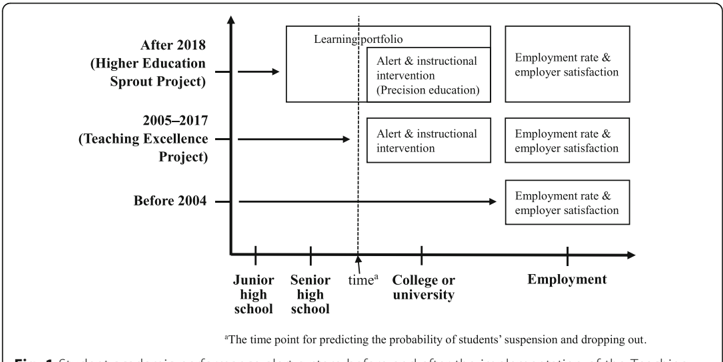
“The ‘ Higher Education SPOUT project 2018 – 2022 ’ of Taiwan ’ s Ministry of Education (MOE) and the ‘ 2030 Bilingual Country Project ’ also facilitate EMI programmes in Taiwan to keep such development going in the future (Lo and Hou 2019; Tsai et al. 2020).”
Riinawati, R. (2024) · AL-TANZIM JURNAL MANAJEMEN PENDIDIKAN ISLAM · doi:10.33650/al-tanzim.v8i1.6281 · Cited by 9
“Recording student attendance also becomes faster and more accurate (Tsai et al., 2020).”
BackgroundJayachandran, N., Abdrabou, A., Yamane, N., & Al‐Dulaimi, A. (2024) · Computers · doi:10.3390/computers13080198 · Cited by 10
Doğan, E., & Şahin, F. (2024) · Participatory Educational Research · doi:10.17275/per.24.96.11.6 · Cited by 12
Kavramdan Sınıfa: Yapay Zekânın Keşfi ve Eğitime Yansımaları
Deniz, S., & Bağçeci, B. (2025) · Elektronik Sosyal Bilimler Dergisi · doi:10.17755/esosder.1554996 · Cited by 11
Han, B., Guo, L., Wang, J., Zhang, Z., Zhang, G., & Jia, S. (2022) · Measurement · doi:10.1016/j.measurement.2022.111136 · Cited by 8
Wijayaningrum, V. N., Kirana, A. P., & Putri, I. K. (2024) · Jurnal Ilmiah KURSOR · doi:10.21107/kursor.v12i3.356 · Cited by 8
Han, F., & Ellis, R. A. (2021) · DOAJ (DOAJ: Directory of Open Access Journals) · Cited by 33
Applications of deep learning in mathematics education: A review
Li, Z. (2024) · Applied and Computational Engineering · doi:10.54254/2755-2721/71/20241644 · Cited by 7
“Furthermore, combining statistical learning with deep learning has enhanced the accuracy of predicting student learning failures [9].”
Feng, X., & Yamada, M. (2021) · DOAJ (DOAJ: Directory of Open Access Journals) · Cited by 7
Big Data, Artificial Intelligence, and Machine Learning Support for E-Learning Frameworks
Arumugam, S. K., Reddy, A. V. D., & Tyagi, A. K. (2023) · Advances in educational technologies and instructional design book series · doi:10.4018/978-1-6684-9285-7.ch011 · Cited by 7
The Adventure of Artificial Intelligence in Educational Research from the Past to the Present
Kaya, D. (2024) · Sakarya University Journal of Education · doi:10.19126/suje.1474955 · Cited by 7
Comparative evaluation of CNN architectures for wheat rust diseases classification
Tegegne, A. G., Walle, Y. M., Haile, M. B., Yehulu, G. T., & Yohannes, S. T. (2025) · Discover Applied Sciences · doi:10.1007/s42452-025-07334-1 · Cited by 6
“Precision involves dividing the number of true positives by the number of true positives plus the number of false positives [45].”
Artificial intelligence in higher education-Opportunities, Challenges and Preventions
Das, P. K. (2024) · Asian Journal of Management · doi:10.52711/2321-5763.2024.00037 · Cited by 5
Low, D. Y. S., Shaw, K. M., & Balan, P. (2025) · Sustainable Development · doi:10.1002/sd.70446 · Cited by 5
A survey of adversarial attacks on machine learning
Yerlikaya, F. A., & Bahtıyar, Ş. (2026) · Neurocomputing · doi:10.1016/j.neucom.2025.132573 · Cited by 6
Santana-Soriano, E. (2025) · Ciencia y Educación · doi:10.22206/ciened.2025.v9i1.3255 · Cited by 10
Revathy, M., & Kamalakkannan, S. (2021) · International Conference on Artificial Intelligence and Smart Energy (ICAIS) · doi:10.1109/icais50930.2021.9395912 · Cited by 5
Kuppusamy, P., & Joseph, K. S. (2022) · Advances in intelligent systems and computing · doi:10.1007/978-981-16-5652-1_6 · Cited by 5
Changes In English Language Education And Strategies For Coping Against Chat GPT's Effects
Wei, Q. (2023) · Advances in Education Humanities and Social Science Research · doi:10.56028/aehssr.6.1.471.2023 · Cited by 5
Personalized Learning with AI, Eye-Tracking Studies and Precision Education
Khine, M. S. (2024) · Springer eBooks · doi:10.1007/978-981-97-9350-1_2 · Cited by 5
Identifying Critical Factors When Predicting Remedial Mathematics Completion Rates
Mgonja, T., & Robles, F. (2022) · Journal of College Student Retention Research Theory & Practice · doi:10.1177/15210251221083314 · Cited by 6
“This has sometimes been referred to as “ precision education ” (Lu et al., 2018; Tsai et al., 2020).”
Ma, R., & Xiao, L. (2025) · Discover Artificial Intelligence · doi:10.1007/s44163-025-00607-z · Cited by 5
Classical Machine-Learning Classifiers to Predict Employee Turnover
Maria-Carmen, L. (2022) · Smart innovation, systems and technologies · doi:10.1007/978-981-16-8866-9_25 · Cited by 5
A Machine Learning-based Automatic Model to Predicting Performance of Students
Garg, A., Garg, N. B., Ghosh, P., Bansal, A., Lilhore, U. K., & Simaiya, S. (2022) · IEEE International Conference on Current Development in Engineering and Technology (CCET) · doi:10.1109/ccet56606.2022.10080607 · Cited by 4
Purchases Insights using Alteryx as Self-Service Analytics
Samuel, J., & Maheswaran, C. P. (2023) · International Conference on Communication and Electronics Systems (ICCES) · doi:10.1109/icces57224.2023.10192692 · Cited by 4
“With regards to educational institutions, the alteryx and machine learning combination can be used for early diagnosis to predict students dropping out [11].”
MethodMachine Learning-based Model to Predict Student's success in Higher Education
Garg, A., Garg, N. B., Lilhore, U. K., Popli, R., Simaiya, S., & Bansal, A. (2023) · International Conference ICT for Digital, Smart and Sustainable Development · doi:10.4108/eai.24-3-2022.2318766 · Cited by 4
“Authors in[9],[10], [11] focused on artificial and ML technologies.”
BackgroundTaqatqeh, S., & Agoyi, M. (2026) · PeerJ Computer Science · doi:10.7717/peerj-cs.3792 · Cited by 3
Vasu, S. D., Taddese, E. T., Gebresilase, B. M., Berhanu, K. Z., Elka, Z. Z., & Shorouk, A. (2026) · Discover Education · doi:10.1007/s44217-026-01647-y · Cited by 3
Metadata
- Authors
- Tsai, S.-C., Chen, C.-H., Shiao, Y.-T., Ciou, J.-S., & Wu, T.-N.
- Affiliations
- Asia University (TW)
- Corresponding author
- Wu, Trong-Neng
- Venue
- International Journal of Educational Technology in Higher Education
- Published
- 2020-04-08
- Volume
- 17
- Issue
- 1
- ISSN
- 2365-9440 (ISSN-L)
- OpenAlex
- W3029251081
- Cited by
- 139
- References
- 18
- Citations by year
- 2026: 11 · 2025: 31 · 2024: 29 · 2023: 32 · 2022: 15 · 2021: 19 · 2020: 2
- FWCI
- 15.51
- Type
- journal article
- Language
- en
- Open access
- diamond
- doi.org
- Licence
- cc-by
- creativecommons.org/licenses/by/4.0 (tdm)
- creativecommons.org/licenses/by/4.0 (vor)
- Locations
- International Journal of Educational Technology in Higher Education (publishedVersion, cc-by)
- DOAJ (DOAJ: Directory of Open Access Journals) (submittedVersion, cc-by-sa)
- Funders
- Ministry of Education
- Asia University
- Topics
- Physical Sciences › Computer Science › Computer Science Applications › Online Learning and Analytics
- Social Sciences › Education › Evasion and Academic Success Factors
- Social Sciences › Education › Higher Education Research Studies
- Keywords
- student dropout prediction, academic performance, school absenteeism, course selection, adaptive learning, student aptitude, institutional research data, low birth rate, higher education enrollment
About these checks
Registry, retraction, Cites and statistics results are computed, not judged, with one exception: a printed reference that no index lists is read once by a model before it counts as a citation error. Claims are extracted by a model and kept only when their quote appears verbatim in the text; each cited source is then checked, with a model’s help, for whether it says what the claim relies on. Those verdicts can be wrong — read the claim’s quote and the cited source before relying on one.
Statistics and arithmetic are recomputed, not judged.
Confidence bands are shown only for fields calibrated on our annotated test set. None is calibrated yet, so no band is shown.
What counts as a claim ›How we measure confidence ›How we check this ›
Are you an author, or do you see a problem with this page? Request a review
Data sources
Bibliographic data: Semantic Scholar, OpenAlex, Crossref.
Contains information from the Semantic Scholar Academic Graph Datasets, made available under the ODC Attribution License (ODC-BY 1.0).
Semantic Scholar’s data is described in: Kinney, R., et al. (2023). The Semantic Scholar Open Data Platform. arXiv:2301.10140.
