

Psychological complications of the children exposed to domestic violence: a systematic review
Open accessThe DOI matches its Crossref record; 54 of the 55 references it cites were found in a registry or an index, and 1 are not checked yet; 3 of the 28 sources its claims cite were checked for support.
Abstract
This systematic review explored the psychological consequences of child exposure to domestic violence.
Verified 2026-11-22 · 1 reference not checked yet
Overview
CoChat Summary
## TL;DR
This systematic review synthesized 18 original studies on children exposed to domestic violence and found consistent psychological, behavioral, and educational harms. The most commonly reported outcomes were internalizing problems, depression, PTSD symptoms, aggressive/externalizing behaviors, and reduced social and academic functioning.
## Key findings
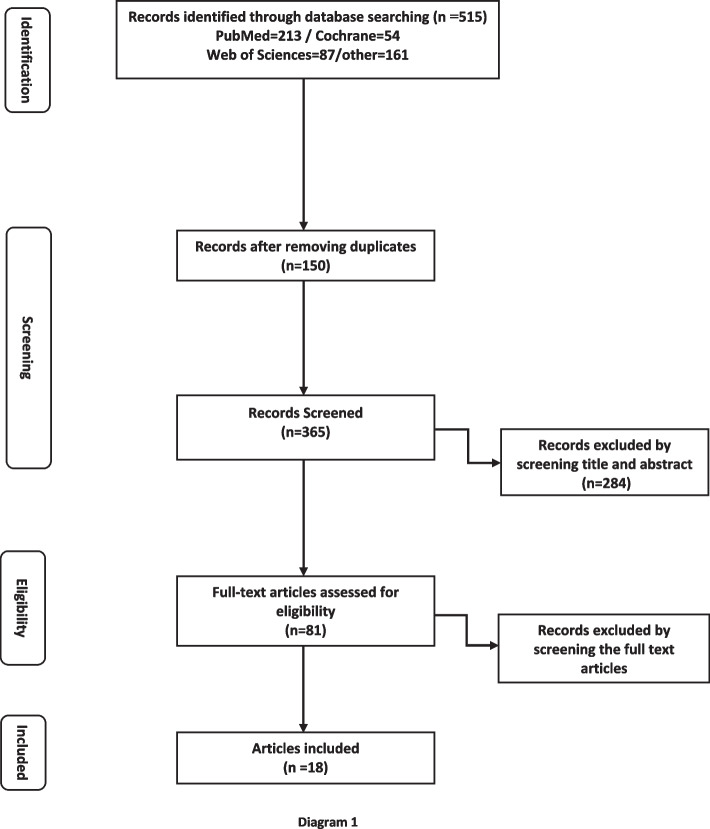
- The search across four databases identified 2,740 potentially relevant articles; after screening, 18 peer-reviewed original studies were included in the final review.
- Across the included studies, children exposed to domestic violence showed psychological, mental, and behavioral complications that could be short- or long-lasting and moderate or severe.
- Reported outcomes included internalization problems, depression, PTSD symptoms, externalizing symptoms such as aggressive behaviors, declined educational performance and social abilities, and even lower IQ.
- Individual studies cited in the review reported, for example, 120 women and their children in Levendosky and Bermann (2001), 100 women and 3–5-year-old children in Huth-Bocks et al. (2001), 62 preschool-age children in Levendosky et al. (2002), 1,019 children in Spilsbury et al. (2008), and 907 boys and girls in Forke et al. (2018).
## Methods
- Systematic review of English-language original research studies published from January 2000 to 2022, using MeSH-based searches in PubMed/MEDLINE, Thomson Reuters, Cochrane, and Google Scholar.
- Two reviewers independently extracted data from included papers; extracted items included author, year, country, sample size, and main findings.
- The results were not pooled statistically because of heterogeneity in study types, populations, and outcomes; findings were synthesized narratively in the discussion.
## Limitations
- The paper states that the data collection method “might lead to sampling bias,” and that some eligible studies may have been missed.
- The review included only original research studies identified by MeSH keywords and did not evaluate systematic reviews, narrative reviews, or meta-analyses.
- Evident from the text: the review did not perform a statistical meta-analysis because the included studies were too heterogeneous.
Model-written summary. Check it against the paper before relying on it.
Integrity signals
Registry
Cites
Statistics
Figures
Verification
Claims the paper makes
2 Valid · 0 Not valid · 11 Not checked · 9 Own results and interpretations
The cited sources support only part of this claim — read each source’s verdict below.
In the paper
“Children exposed to domestic violence may show declined educational performance and social abilities.”
- Also stated in: § Conclusions · hedged
“Children exposed to DV may deal with declined educational performance and social abilities.”
- Also stated in: § Discussion · hedged
“As the social activities of children are impacted by the mentioned mental and psychological problems, DV may cause decline in social activity of children who are victims or witnesses of DV (Howarth et al. 2019, Wahyuni et al. 2019).”
§ Psychological complications of the children exposed to domestic violence: a systematic review > Abstract > Main body
What the sources say
- Partly supportedcites Howarth et al. 2019 matched to “Towards an ecological understanding of readiness to engage with interventions for children exposed to domestic violence and abuse: Systematic review and qualitative synthesis of perspectives of children, parents and practitioners” (2019) sourceExperimental — accuracy not yet measured
Section 1.1 (p. 3) links childhood exposure to domestic violence and abuse with aggression and adjustment difficulties. Those findings are relevant to social functioning, but the paper does not specifically report a decline in children's social abilities. (LLM, conf=0.76)
- Supportedcites Wahyuni et al. 2019 matched to “The Impacts of Verbal Violence by Family Members on Children's Social Emotional Aspects” (2019) source
The section on social impacts reports aggressive behavior and difficulty yielding to peers among children aged 2–4 exposed to verbal violence. The Emotional section also describes reduced confidence in cooperating with friends or others. These passages support the hedged claim about social abilities, specifically for verbal violence by family members. (LLM, conf=0.88)
hedgedstates a possible cause- Asserted: passes — The authors put it forward as true.
- Checkable: passes — It can be checked against evidence.
- Load-bearing: passes — The paper’s conclusions depend on it.
- Based: passes — The paper gives a reason why it holds.
- Also stated in: § Conclusions · hedged
The cited sources support only part of this claim — read each source’s verdict below.
In the paper
“Internalization problems, depression, post-traumatic stress disorders symptoms, and externalization symptoms such as aggressive behaviors and even lower levels of IQ are of most important reported complications of domestic violence in children.”
- Also stated in: § Conclusions · hedged
“Psychological complications may be internalization problems, depression, post-traumatic stress disorders, and externalization symptoms such as aggressive behaviors and even lower levels of IQ.”
- Also stated in: § Discussion · plain
“Post-traumatic stress disorder (PTSD) was another reported consequences of DV in children witnesses of domestic violence (Rigterink et al. 2010, Paul 2019).”
§ Psychological complications of the children exposed to domestic violence: a systematic review > Abstract > Main body
What the sources say
- Partly supportedcites Rigterink et al. 2010 matched to “Domestic Violence and Longitudinal Associations With Children’s Physiological Regulation Abilities” (2010) sourceExperimental — accuracy not yet measured
The Abstract reports increased internalizing and externalizing problems among children exposed to domestic violence. The “DV and ER” section discusses PTSD in maltreated children, but does not say that children exposed to domestic violence have PTSD symptoms; its DV-specific findings concern physiological responses. (LLM, conf=0.76)
- Not checked — no full text of the sourcecites Paul 2019 matched to “Perceptions of Family Relationships and Post-Traumatic Stress Symptoms of Children Exposed to Domestic Violence” (2019) source
plainstates a possible cause- Asserted: passes — The authors put it forward as true.
- Checkable: passes — It can be checked against evidence.
- Load-bearing: passes — The paper’s conclusions depend on it.
- Based: passes — The paper gives a reason why it holds.
- Also stated in: § Conclusions · hedged
None of the sources cited for this claim have been checked yet.
In the paper
“Children exposed to DV may show anxiety, aggressive behavior, juvenile delinquency, interpersonal, and affective features of psychopathy as well as later psychopathic traits (Dargis and Koenigs 2017, Cho 2018, Maji 2018).”
§ Psychological complications of the children exposed to domestic violence: a systematic review > Discussion
What the sources say
- Not checked — no full text of the sourcecites Dargis and Koenigs 2017 matched to “Witnessing domestic violence during childhood is associated with psychopathic traits in adult male criminal offenders.” (2017) source
- Not checked yetcites Cho 2018 matched to “A Study on The Psycho-Social Disturbance of Children Who Are Exposed to Domestic Violence : Focusing on Hierarchical Analysis Verification” (2018) source
- Not matchedcites Maji 2018
An author–year citation the paper’s reference list doesn’t settle. We don’t search these by name.
hedgedstates a possible cause- Asserted: passes — The authors put it forward as true.
- Checkable: passes — It can be checked against evidence.
- Load-bearing: passes — The paper’s conclusions depend on it.
- Based: passes — The paper gives a reason why it holds.
In the paper
“Children exposed to domestic violence may show declined educational performance and social abilities.”
- Also stated in: § Conclusions · hedged
“Children exposed to DV may deal with declined educational performance and social abilities.”
- Also stated in: § Discussion · hedged
“Such children may have poor school and educational performance that may be due to affected verbal and intellectual abilities (Huth-Bocks et al. 2001).”
§ Psychological complications of the children exposed to domestic violence: a systematic review > Abstract > Main body
What the sources say
- Not checked — no full text of the sourcecites Huth-Bocks et al. 2001 matched to “The Direct and Indirect Effects of Domestic Violence on Young Children's Intellectual Functioning” (2001) source
hedgedstates a possible cause- Asserted: passes — The authors put it forward as true.
- Checkable: passes — It can be checked against evidence.
- Load-bearing: passes — The paper’s conclusions depend on it.
- Based: passes — The paper gives a reason why it holds.
- Also stated in: § Conclusions · hedged
In the paper
“Internalization problems, depression, post-traumatic stress disorders symptoms, and externalization symptoms such as aggressive behaviors and even lower levels of IQ are of most important reported complications of domestic violence in children.”
- Also stated in: § Conclusions · hedged
“Psychological complications may be internalization problems, depression, post-traumatic stress disorders, and externalization symptoms such as aggressive behaviors and even lower levels of IQ.”
- Also stated in: § Discussion · hedged
“The children exposed to DV also may show to have lower IQ levels (Koenen et al. 2003).”
§ Psychological complications of the children exposed to domestic violence: a systematic review > Abstract > Main body
What the sources say
- Not checked — no full text of the sourcecites Koenen et al. 2003 matched to “Domestic violence is associated with environmental suppression of IQ in young children” (2003) source
plainstates a possible cause- Asserted: passes — The authors put it forward as true.
- Checkable: passes — It can be checked against evidence.
- Load-bearing: passes — The paper’s conclusions depend on it.
- Based: passes — The paper gives a reason why it holds.
- Also stated in: § Conclusions · hedged
7 more claims
Create a free account to see all 22 claims and to verify the 3 references still open.
- It may state two separate claims as one. 8
- Probably not a substantial claim. 6
Self-check
Percentages, sums and reported differences re-computed from the paper’s own numbers.
Self-check results appear here once an independent check has confirmed them.
Cited works that were retracted
Works this paper cites that were later retracted, from the retraction notices publishers deposit. Major when the notice came out before this paper was published.
Rated major: it would touch a result — a value a result rests on, reported and recomputed p-values on opposite sides of the significance level, two passages that conflict with no sign which is right, or a cited work retracted before this paper was published.
Cited work 10.3402/gha.v7.25519 · retracted 2016-02-08 · notice 10.3402/gha.v9.30899 · this paper published 2023-05-26
Citations
Cites
1 retracted
Ferrari, G., Agnew-Davies, R., Bailey, J., Howard, L., Howarth, E., Peters, T. J., Sardinha, L., & Feder, G. (2014) · Global Health Action · doi:10.3402/gha.v7.25519 · Cited by 91
RetractedDomestic Violence During the COVID-19 Pandemic: A Systematic Review
Kourti, A., Stavridou, A., Panagouli, E., Psaltopoulou, T., Spiliopoulou, C., Tsolia, M., Sergentanis, T. N., & Tsitsika, A. (2023) · Trauma, Violence, & Abuse · doi:10.1177/15248380211038690 · Cited by 467
Parenting in Battered Women: The Effects of Domestic Violence on Women and Their Children
Levendosky, A. A., & Graham-Bermann, S. A. (2001) · Journal of Family Violence · doi:10.1023/a:1011111003373 · Cited by 450
Beyond “Witnessing”: Children’s Experiences of Coercive Control in Domestic Violence and Abuse
Callaghan, J. E. M., Alexander, J. H., Sixsmith, J., & Fellin, L. C. (2018) · Journal of Interpersonal Violence · doi:10.1177/0886260515618946 · Cited by 328
Domestic violence is associated with environmental suppression of IQ in young children
KOENEN, K. C., MOFFITT, T. E., CASPI, A., TAYLOR, A., & PURCELL, S. (2003) · Development and Psychopathology · doi:10.1017/s0954579403000166 · Cited by 316
Resilience Among Children Exposed to Domestic Violence: The Role of Risk and Protective Factors
Martinez-Torteya, C., Anne Bogat, G., Von Eye, A., & Levendosky, A. A. (2009) · Child Development · doi:10.1111/j.1467-8624.2009.01279.x · Cited by 313
Heron, R. L., & Eisma, M. C. (2021) · Health & Social Care in the Community · doi:10.1111/hsc.13282 · Cited by 259 · cited 1×
“Victims of DV may suffer various physical or mental health complications (Hegarty 2011, Heron and Eisma 2021).”
BackgroundYount, K. M., DiGirolamo, A. M., & Ramakrishnan, U. (2011) · Social Science & Medicine · doi:10.1016/j.socscimed.2011.02.042 · Cited by 224
Male Victims of Domestic Violence
Drijber, B. C., Reijnders, U. J. L., & Ceelen, M. (2013) · Journal of Family Violence · doi:10.1007/s10896-012-9482-9 · Cited by 219
Trauma Symptoms in Preschool-Age Children Exposed to Domestic Violence
Levendosky, A. A., Huth-Bocks, A. C., Semel, M. A., & Shapiro, D. L. (2002) · Journal of Interpersonal Violence · doi:10.1177/0886260502017002003 · Cited by 215 · cited 1×
“Altered behavior in developing children Huth-Bocks et al. (2001) 2001 USA 100 Poorer verbal and intellectual abilities Levendosky et al. (2002) 2002 USA 62 Trauma symptoms as common reactions in children who witness DV. Recommendation for clinicians and school counselors to screen DV in children…”
Background
Research works printed but not linked: 6
- Gholamzadeh S Epidemiology of husband abuse in fars province among people referred to forensic medicine administrations of Shiraz from 2012 to 2014: a short report J Rafsanjan Univ Med Sci 2018 17 8 781 788
- Hussain D he effects of psychological domestic violence on the quality of life of the children Pakistan J Soc Educ Lang 2019 5 2 120 132
- Shayan A, Masoumi SZ, Yazdi-Ravandi S, Zarenezhad M (2015) Factors affecting spouse abuse in women referred to the Shiraz legal medicine center in 2013. umsha-psj 14(1):39–48
- Walters AC The forgotten children: victims of domestic violence, victims of the system Alb Gov't L Rev 2018 12 286
- Yakob T Consequences of child maltreatment and witnessing domestic violence and the role of attachment in young children, University of Twente 2018
- Zarenezhad M, Valee M, Gholamzadeh S, Malekpour A, Keshavarz P (2016) Severe and Unusual domestic Violence; A Case Report and Review of Literature. J Case Rep Stud 15(6):601
Cited by
Abate, B. B., Sendekie, A. K., Faris, A. M., Abebe, G. K., Azmeraw, M., Alamaw, A. W., Zemariam, A. B., Kitaw, T. A., Kassaw, A., Wodaynew, T., et al. (2024) · Neuropsychobiology · doi:10.1159/000542392 · Cited by 75
“Gallo EAG et al 2018 [41] Gallo EAG et al 2018 [41] Jonas L et al 2022 [42] Xiao Z et al 2022 [46] Sands A et al 2016 [ Research shows that adverse childhood events, such as domestic abuse, increase the likelihood of future mental health issues by 4.13 times [2, 71, 72].”
InfluentialLegendre, M., Milot, T., Rousseau, M., Lemieux, R., Garon‐Bissonnette, J., & Berthelot, N. (2024) · Frontiers in Psychiatry · doi:10.3389/fpsyt.2024.1358475 · Cited by 12
Ray, J. K., Stürmlinger, L. L., von Krause, M., Lux, U., & Zietlow, A. (2023) · Development and Psychopathology · doi:10.1017/s0954579423001335 · Cited by 9
Ghanamah, R. (2025) · Societies · doi:10.3390/soc15110306 · Cited by 8
“The more stress and violence children experience, the greater the difficulties they face in mental health, learning, and relationships [70].”
Associations of adverse childhood experiences with mental health and behaviors among adolescents
Al‐Mamun, F., Habib, A. A., Abedin, M. J., ALmerab, M. M., Atroszko, P. A., & Mamun, M. A. (2025) · BMC Public Health · doi:10.1186/s12889-025-25246-y · Cited by 8
“Children in such environments often experience heightened arousal, hypervigilance, and difficulty with attention and impulse control, which are core features of hyperactivity [48, 49].”
Page, S., McCormack, F., Oldfield, S., Whitehead, S. M., & Jeffery, H. (2025) · International Journal of Environmental Research and Public Health · doi:10.3390/ijerph22101584 · Cited by 4
“Evidence from Australia shows that PTSD is a common symptom in survivors of domestic abuse [34], including for children who have survived living in violent households [41].”
Ralph, B., Roberts, S., Lukamto, W., Fitz‐Gibbon, K., & Meyer, S. (2025) · British Journal of Sociology · doi:10.1111/1468-4446.70022 · Cited by 5
Blake, J. A., Thomas, H. J., Mathews, B., Lawrence, D. M., Haslam, D. M., Higgins, D. J., Malacova, E., Erskine, H. E., & Scott, J. G. (2025) · The British Journal of Psychiatry · doi:10.1192/bjp.2025.10362 · Cited by 6
“17,18 Compounding children ’ s EDV are common feelings of being powerless, having no agency over their own lives and not being taken seriously or being involved in decision-making post-separation.”
Mayrhofer, A. M., Alderson, H., Sarma, K., Jackson, C., Olive, P., Toma, M., Mansuri, N., Waterfield, A., Crossen, S., Parker, D., et al. (2024) · Journal of Family Violence · doi:10.1007/s10896-024-00755-3 · Cited by 2
“The devastating psychological impact on women and children is well documented (Doroudchi et al., 2023).”
Ferrera-Silva, M., Bueso‐Izquierdo, N., Barbosa‐Torres, C., & Manso, J. M. M. (2024) · Current Psychology · doi:10.1007/s12144-024-07018-w · Cited by 2
“The consequences of this type of violence have been studied in recent years by numerous researchers (Bender et al., 2022; Doroudchi et al., 2023; Pearson et al., 2023; Schubert, 2022; Zihao & Xu, 2023).”
Tonsing, J. C. (2025) · Child Abuse Review · doi:10.1002/car.70034 · Cited by 3
McGovern, R., Mayrhofer, A. M., Sarma, K., Smiles, C., Alderson, H., Toma, M., Mansuri, N., Akeju, D., Forder, J., Gabbay, M., et al. (2025) · Journal of Family Violence · doi:10.1007/s10896-025-00937-7 · Cited by 1
Legendre, M., Garon‐Bissonnette, J., Lemieux, R., Milot, T., & Berthelot, N. (2025) · FACETS · doi:10.1139/facets-2025-0019 · Cited by 1
Uçar, S., & Coşkun, U. H. (2025) · Journal of Forensic Psychology Research and Practice · doi:10.1080/24732850.2025.2594538 · Cited by 1
Yunusa, R., Jaman, P. B., Tureczek, A., Joof, P. O., & Mukasa, D. (2026) · The Open Public Health Journal · doi:10.2174/0118749445451237260226051346 · Cited by 2
Il Counselor nel team diabetologico
Luzi, L., & Azman, M. (2023) · il Diabete · doi:10.30682/ildia2302c
Chokprajakchat, S., Techagaisiyavanit, W., Mulaphong, D., Iyavarakul, T., & Kuanliang, A. (2025) · Safer Communities · doi:10.1108/sc-06-2024-0033
Asad, M. M., Ka, S. K., & Asad, O. E. (2025) · Safer Communities · doi:10.1108/sc-07-2024-0047 · Cited by 3
Carrizo, M., Domínguez, F., & Torres–Lista, V. (2025) · LATAM Revista Latinoamericana de Ciencias Sociales y Humanidades · doi:10.56712/latam.v6i2.3783 · Cited by 2
Barter, C., Howarth, E., Foster, H. R., & Stanley, N. (2025) · Journal of Family Violence · doi:10.1007/s10896-025-00873-6
Devapramod, V. B. (2025) · Sinergi International Journal of Psychology · doi:10.61194/psychology.v2i2.509 · Cited by 1
“…are expected to inform educators, policymakers, and stakeholders about the existing gaps in inclusive education and the steps necessary to foster a more supportive learning environment for children with behavioral disorders (Doroudchi et al., 2023; Jones et al., 2019; Mercier et al., 2022).”
Rangarasu, P., Flower, F. X. L. L., & Dharani, G. S. (2024) · Shanlax International Journal of Arts Science and Humanities · doi:10.34293/sijash.v12is1-sep.8192 · Cited by 2
Engagement in a Statewide Implementation of F4C: The Positive Impact of Coparent Involvement
McCaskill, C. W., Char, S., Fish, M., Buck, K., Beebe, R., & Stover, C. S. (2025) · Journal of Family Violence · doi:10.1007/s10896-025-00888-z
Alvarez‐Segura, M., Butjosa, A., Navarro, M. A., Jiménez, E. M. O., Richart, T., Rose, P. D., Sperandini, V., & Lacasa, F. (2025) · Academia Mental Health and Well-Being · doi:10.20935/mhealthwellb7698
Managing domestic violence abuse (DVA) trauma in schools – implications for school-based provision
Cantle, C. (2025) · Pastoral Care in Education · doi:10.1080/02643944.2025.2515917
Egorova, A. A., Vinokurova, A. I., Chelberdirova, N. M., & Тихоновна, А. Ю. (2025) · Science for Education Today · doi:10.15293/2658-6762.2503.09 · Cited by 3
Aile İçi Şiddetin Estetik-Etik İlişkisi Açısından Değerlendirilmesi
Turhan, G. (2025) · Journal of The Near East University Faculty of Theology · doi:10.32955/neu.ilaf.2025.11.1.08
Ayowole, D. J., Adebajo, G. O., Olasehinde, I. A., & Ayowole, P. T. (2025) · Discover Mental Health · doi:10.1007/s44192-025-00247-w · Cited by 3
Nkadimeng, C., Mphasha, M. H., & Skaal, L. (2025) · Social Sciences & Humanities Open · doi:10.1016/j.ssaho.2025.102115 · Cited by 2
Zuccotti, G., Dilillo, D., Agosto, A., Brazzoduro, V., Marinelli, E. B. L., & Calcaterra, V. (2026) · JMIR Research Protocols · doi:10.2196/89128
“Witnessed violence, in which a child is exposed to aggressive acts within the family environment, produces psychological effects comparable to those observed in direct survivors [25-27].”
Ekspozycja dzieci na przemoc domową – kontekst psychologiczny i prawny
Frankowiak, J. K. (2025) · Praca Socjalna · doi:10.71358/ps.2672
The intertwining of the present and the past: accounts of women about violence
Marcon, S. S., Balestre, M. E., da Silva, M. E. P., Logullo, V. V., Izepato, A. F. D. S., da Costa, R. F., & Mantovani, E. B. (2025) · Cogitare Enfermagem · doi:10.1590/ce.v30i0.100994en
O entrelaçar entre o presente e o passado: relatos de mulheres sobre violência
Marcon, S. S., Balestre, M. E., da Silva, M. E. P., Logullo, V. V., Izepato, A. F. D. S., da Costa, R. F., & Mantovani, E. B. (2025) · Cogitare Enfermagem · doi:10.1590/ce.v30i0.100994pt
El entrelazado entre el presente y el pasado: relatos de mujeres sobre violencia
Marcon, S. S., Balestre, M. E., da Silva, M. E. P., Logullo, V. V., Izepato, A. F. D. S., da Costa, R. F., & Mantovani, E. B. (2025) · Cogitare Enfermagem · doi:10.1590/ce.v30i0.100994es
Amir‐ud‐Din, R., Zafar, S., & Andlib, Z. (2026) · Child Abuse Review · doi:10.1002/car.70084
Alaswad, N. K., Hassan, S. M. S., Elhay, H. A. A., Ahmed, M. R., & Ali, A. A. M. (2026) · BMC Psychology · doi:10.1186/s40359-025-03763-0
“A systematic review by Doroudchi et al. [13] reported that children exposed to domestic violence commonly experience a range of psychological complications, including internalizing problems such as depression, anxiety, and post-traumatic stress symptoms, as well as externalizing behaviors such as…”
Sabawoon, A., Keyes, K. M., Hermosilla, S., Sexton, E. L., Karam, E. G., & Kovess–Masféty, V. (2026) · International Journal of Social Psychiatry · doi:10.1177/00207640251415514
“…of interpersonal violence as a risk factor among boys is consistent with decades of literature that exposure to factors such as violence within the family is a strong risk factor for child mental health problems (Doroudchi et al., 2023; McCloskey et al., 1995; McFarlane et al., 2014).”
Bains, S., Dunk, E., Harewell, J. L., Barbosa, E. C., Barter, C., Fulton, E., Jackson, Y., Kimber, M., McIntyre, A., Skripkauskaitė, S., et al. (2026) · Frontiers in Sociology · doi:10.3389/fsoc.2026.1680919
The relationship between violence against children and psychological distress, Southern Ethiopia
Sona, B. D. (2026) · Discover Psychology · doi:10.1007/s44202-026-00644-4
Magnusson, M., & Joleby, M. (2026) · Child Abuse & Neglect · doi:10.1016/j.chiabu.2026.108013 · Cited by 1
McGlade, D., McFaul, C., Crowley, M. J., Wu, J., Rutherford, H. J. V., & Stover, C. S. (2026) · Social Neuroscience · doi:10.1080/17470919.2026.2654445
“…IPV-exposed children are more likely to receive harsh parenting (Grasso et al., 2016) and maltreatment (Ahmadabadi et al., 2018), and witnessing IPV is associated with poorer educational attainment, mental health problems, and IPV use as an adult (Doroudchi et al., 2023; Kimber et al., 2018).”
From Fear to Disorder: Epidemiological Insights Into the Burden of Violence Against Women
Murty, K. S., Palipudi, S. S., & Palipudi, M. (2026) · IGI Global eBooks · doi:10.4018/979-8-3373-4903-9.ch001
Elgamri, A. I., Sultan, H. K. A., Albahrani, H., Alsaleh, K., Daniyal, M., Alharbi, H. F., & Mutair, A. S. A. (2026) · BMC Public Health · doi:10.1186/s12889-026-27611-x
“We acknowledge that quantitative and biomedical studies from Saudi Arabia and the broader region have examined related dimensions of DV, including women’s help-seeking patterns, physiological stress responses, and outcomes among school-aged children [5, 20].”
Chally, O. N., & Uzun, G. Ö. (2026) · SAGE Open · doi:10.1177/21582440261453450
“In line with Ce´nat et al. (2015), Doroudchi et al. (2023), and Shraddha (2022), their study reveals that ‘‘children exposed to domestic violence suffer various psychological, mental, and behavioral complications which may be short-and long-lasting.’’”
Chiang, C.-H. A., Huang, C., & Shen, A. C. (2026) · Child and Adolescent Social Work Journal · doi:10.1007/s10560-026-01148-9
Descartes, C. H. (2026) · Journal of Family Trauma Child Custody & Child Development · doi:10.1080/26904586.2026.2712003
Oger, N., & Glowacz, F. (2026) · International Journal of Environmental Research and Public Health · doi:10.3390/ijerph23091109
Jud, A., Eicher, N. F., Wallimann, M. S., Larenza, O., Maci, F., Gianella, E., Friedli, F., & Erard, V. J. (2025) · Praxis der Rechtspsychologie · doi:10.1026/0939-9062/a000041
Noman, A., Hossain, S., Islam, M. R., Ahmed, S., Salveen, N. E., Roy, B. R., Hossain, A., Tofail, F., Hamadani, J. D., Hossain, S. J., et al. (2026) · Acta Psychologica · doi:10.1016/j.actpsy.2026.107864
Sex Differences in Aggressive Traits and Superior Temporal Cortical Responses to Monetary Loss
Li, G., Yingjie, C., Yang, Y., Zhang, X., Li, B., Sun, H., Huang, S., Gao, M., Bin, G., & Li, C. R. (2026) · Behavioral Sciences · doi:10.3390/bs16101778
Metadata
- Authors
- Doroudchi, A., Zarenezhad, M., Hosseininezhad, H., Malekpour, A., Ehsaei, Z., Kaboodkhani, R., & Valiei, M.
- Affiliations
- Iranian Legal Medicine Organization (IR)
- Shiraz University of Medical Sciences (IR)
- Corresponding author
- Zarenezhad, Mohammad
- ORCID
- Venue
- Egyptian Journal of Forensic Sciences
- Published
- 2023-05-26
- Volume
- 13
- Issue
- 1
- Pages
- 26-26
- ISSN
- 2090-536X (ISSN-L)
- 2090-5939
- PMC
- PMC10213576
- OpenAlex
- W4378469052
- Cited by
- 51
- References
- 54
- Citations by year
- 2026: 18 · 2025: 26 · 2024: 5 · 2023: 2
- FWCI
- 2.51
- Type
- journal article
- Language
- en
- Open access
- diamond
- doi.org
- Licence
- cc-by
- creativecommons.org/licenses/by/4.0 (tdm)
- creativecommons.org/licenses/by/4.0 (vor)
- Locations
- Egyptian Journal of Forensic Sciences (publishedVersion, cc-by)
- PubMed Central (publishedVersion, cc-by)
- PubMed (publishedVersion)
- DOAJ (DOAJ: Directory of Open Access Journals) (submittedVersion, cc-by-sa)
- Topics
- Social Sciences › Health › Intimate Partner and Family Violence
- Social Sciences › Psychology › Clinical Psychology › Child Abuse and Trauma
- Social Sciences › Psychology › Clinical Psychology › Child and Adolescent Psychosocial and Emotional Development
- Keywords
- domestic violence, children exposed to domestic violence, psychological impact, child abuse, post-traumatic stress disorder, depression, internalizing problems, externalizing problems, aggression, academic performance, IQ, school counselors, parent education programs
About these checks
Registry, retraction, Cites and statistics results are computed, not judged, with one exception: a printed reference that no index lists is read once by a model before it counts as a citation error. Claims are extracted by a model and kept only when their quote appears verbatim in the text; each cited source is then checked, with a model’s help, for whether it says what the claim relies on. Those verdicts can be wrong — read the claim’s quote and the cited source before relying on one.
The claim verdicts this report counts are experimental: their accuracy is not yet measured.
A language model drew the claims from the paper on 2026-10-10, under version 3 of the claim definition (model deepseek-v4.1-flash, prompt extract-v3).
A second model labelled each claim on 2026-10-10 (model jev-1.13-20260917, definition revision gold-guideline-v0.2).
Cited sources are checked with a language model’s help (gpt-6-sol).
Statistics and arithmetic are recomputed, not judged.
Confidence bands are shown only for fields calibrated on our annotated test set. None is calibrated yet, so no band is shown.
What counts as a claim ›How we measure confidence ›How we check this ›
Are you an author, or do you see a problem with this page? Request a review
Data sources
Bibliographic data: Semantic Scholar, OpenAlex, Crossref.
Contains information from the Semantic Scholar Academic Graph Datasets, made available under the ODC Attribution License (ODC-BY 1.0).
Semantic Scholar’s data is described in: Kinney, R., et al. (2023). The Semantic Scholar Open Data Platform. arXiv:2301.10140.
