

LDL subclass lipidomics in atherogenic dyslipidemia: effect of statin therapy on bioactive lipids and dense LDL
Open accessThe DOI matches its Crossref record; 80 of the 80 references it cites were found in a registry or an index.
Abstract
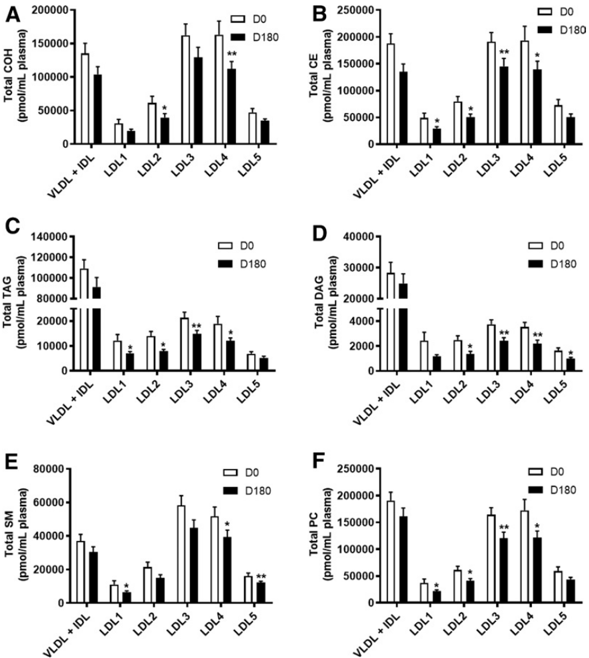
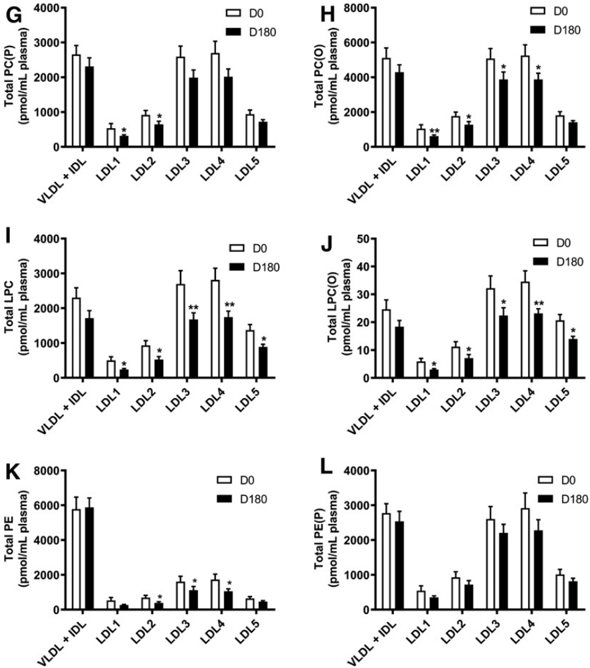
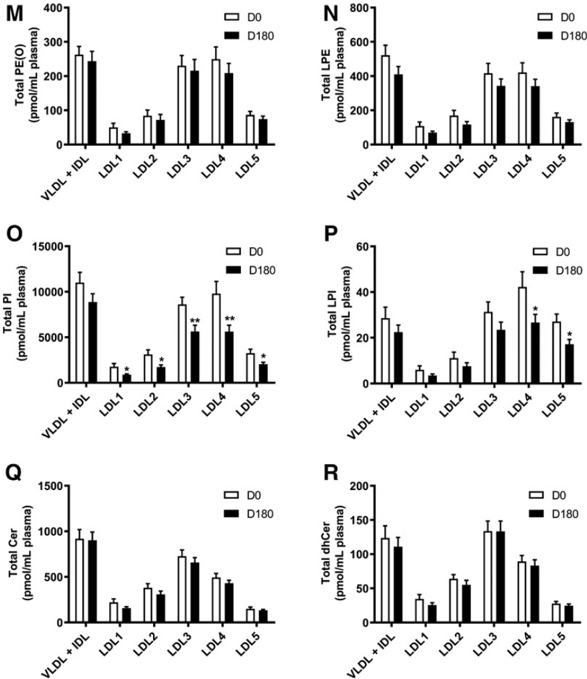
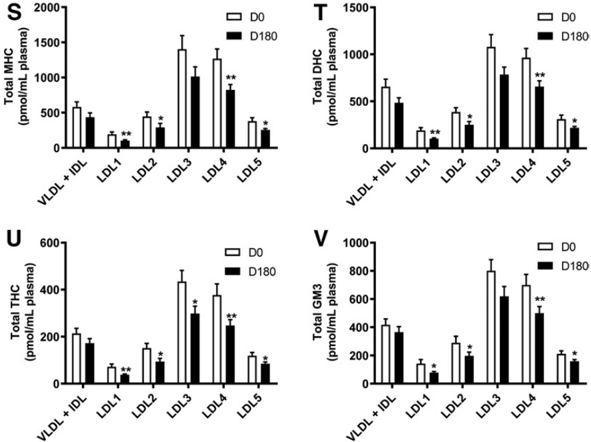
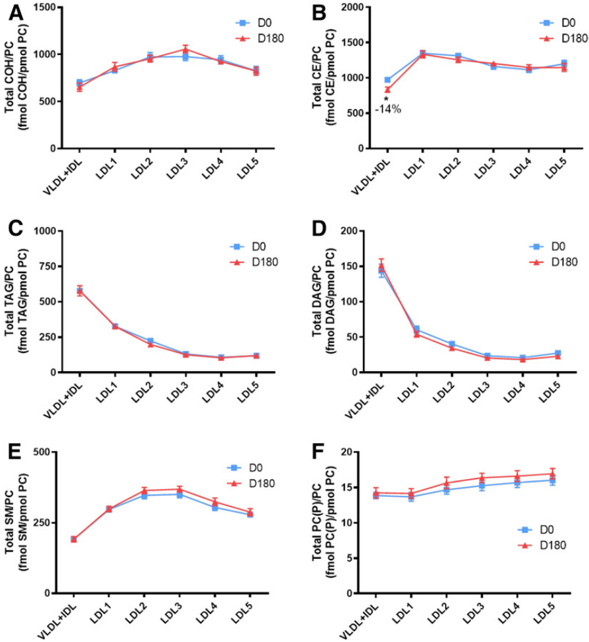
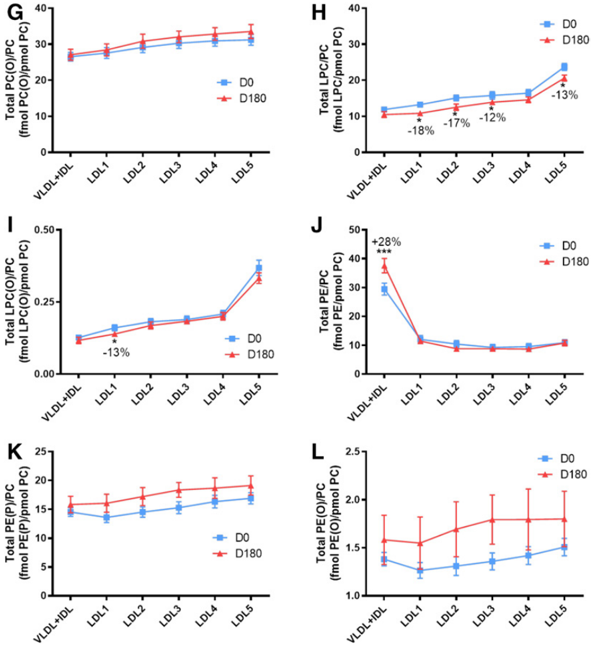
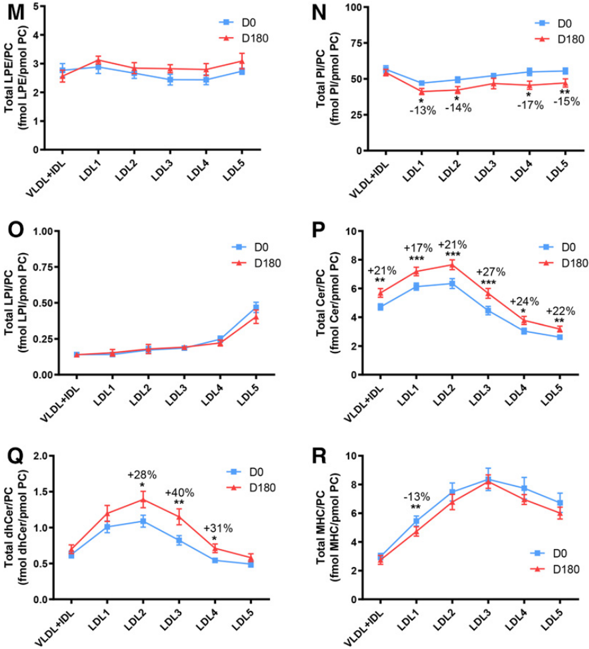
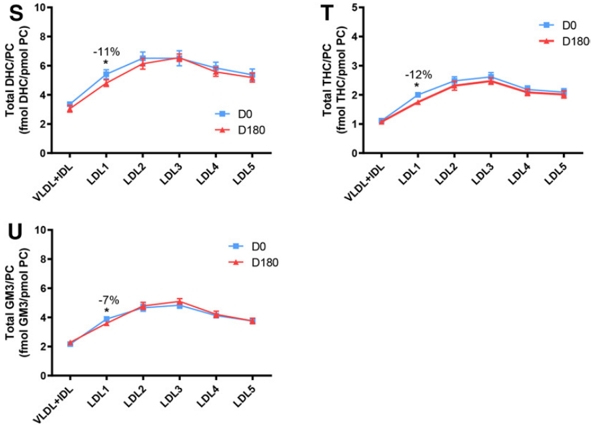
Atherogenic LDL particles are physicochemically and metabolically heterogeneous. Can bioactive lipid cargo differentiate LDL subclasses, and thus potential atherogenicity? What is the effect of statin treatment? Obese hypertriglyceridemic hypercholesterolemic males [n = 12; lipoprotein (a) <10 mg/dl] received pitavastatin calcium (4 mg/day) for 180 days in a single-phase unblinded study. The lipidomic profiles (23 lipid classes) of five LDL subclasses fractionated from baseline and post-statin plasmas were determined by LC-MS. At baseline and on statin treatment, very small dense LDL (LDL5) was preferentially enriched (up to 3-fold) in specific lysophospholipids {LPC, lysophosphatidylinositol (LPI), lysoalkylphosphatidylcholine [LPC(O)]; 9, 0.2, and 0.14 mol per mole of apoB, respectively; all P < 0.001 vs. LDL1-4}, suggesting elevated inflammatory potential per particle. In contrast, lysophosphatidylethanolamine was uniformly distributed among LDL subclasses. Statin treatment markedly reduced absolute plasma concentrations of all LDL subclasses (up to 33.5%), including LPC, LPI, and LPC(O) contents (up to −52%), consistent with reduction in cardiovascular risk. Despite such reductions, lipotoxic ceramide load per particle in LDL1-5 (1.5–3 mol per mole of apoB; 3–7 mmol per mole of PC) was either conserved or elevated. Bioactive lipids may constitute biomarkers for the cardiometabolic risk associated with specific LDL subclasses in atherogenic dyslipidemia at baseline, and with residual risk on statin therapy.
Overview
The claims and statistics of this paper haven’t been checked yet.
Free: it reads the open-access text and checks the first 5 claims that cite a source we can check. Create a free account to check every claim.
Integrity signals
Registry
Cites
Statistics
Figures
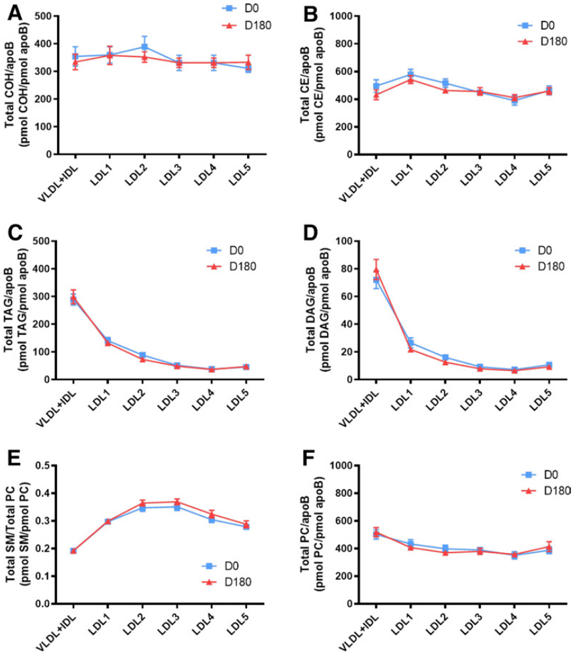
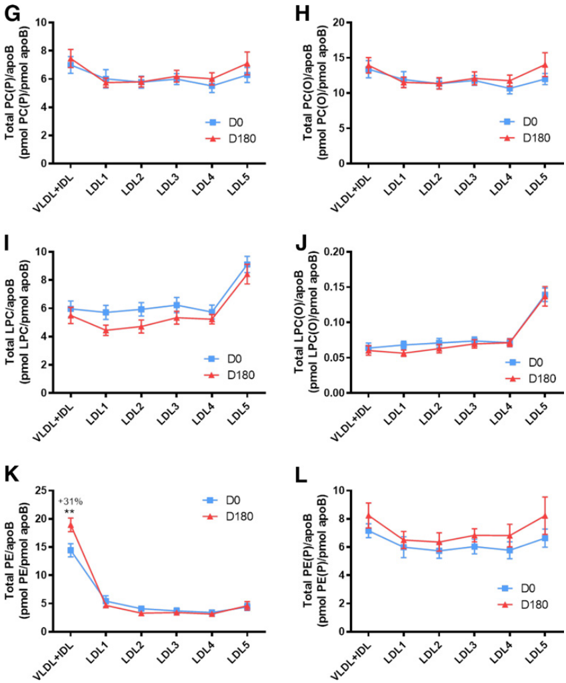
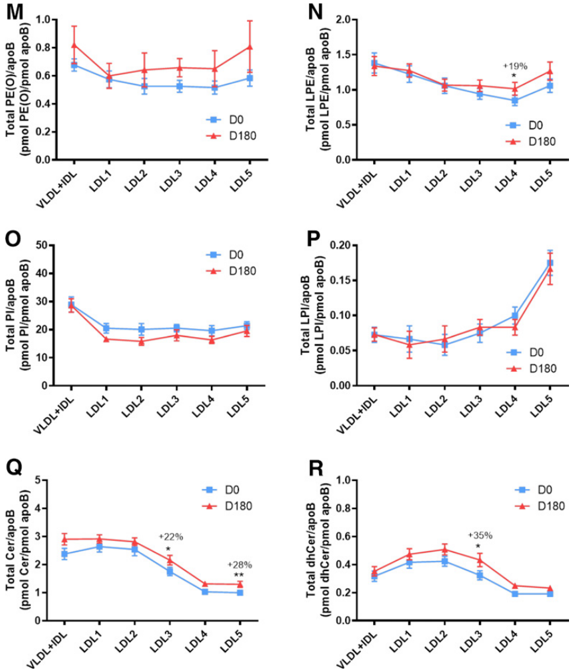
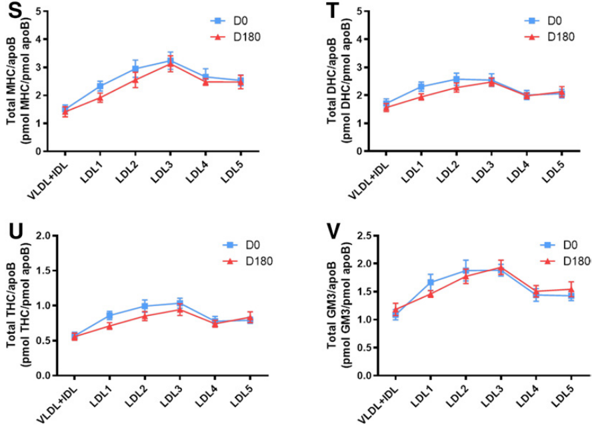
Verification
Claims the paper makes
The claims and statistics of this paper haven’t been checked yet.
Free: it reads the open-access text and checks the first 5 claims that cite a source we can check. Create a free account to check every claim.
Claims other papers make about this one
Each is checked against this paper’s own text: does it say what the citing paper says it does?
In the citing paper
“Variants in the LpL gene that cause partial LOF of the LpL enzyme, or in other genes affecting LpL activity, also lower the rate of TG removal from VLDL and chylomicrons, resulting in elevated plasma TG levels and remnant accumulation even when TRL secretion is normal (Figure 5).5,44,66”
Self-check
Percentages, sums and reported differences re-computed from the paper’s own numbers.
The self-check needs the paper’s full text.
Citations
Cites
Mach, F., Baigent, C., Catapano, A. L., Koskinas, K. C., Casula, M., Badimon, L., Chapman, M. J., De Backer, G. G., Delgado, V., Ference, B. A., et al. (2020) · European Heart Journal · doi:10.1093/eurheartj/ehz455 · Cited by 8,961
Self-citationAlberti, K. G. M. M., Zimmet, P., & Shaw, J. (2006) · Diabetic Medicine · doi:10.1111/j.1464-5491.2006.01858.x · Cited by 6,597 · cited 1×
“Details of the clinical protocol, cohort of MetS subjects, inclusion and exclusion criteria, dietary counseling, and compliance are detailed in the supplemental data and have been reported previously (22, 37, 40, 41, 45).”
MethodGrundy, S. M., Stone, N. J., Bailey, A. L., Beam, C., Birtcher, K. K., Blumenthal, R. S., Braun, L. T., de Ferranti, S., Faiella-Tommasino, J., Forman, D. E., et al. (2019) · Circulation · doi:10.1161/cir.0000000000000625 · Cited by 6,185
Mach, F., Baigent, C., Catapano, A. L., Koskinas, K. C., Casula, M., Badimon, L., Chapman, M. J., De Backer, G. G., Delgado, V., Ference, B. A., et al. (2019) · Atherosclerosis · doi:10.1016/j.atherosclerosis.2019.08.014 · Cited by 4,854
Self-citationFerence, B. A., Ginsberg, H. N., Graham, I., Ray, K. K., Packard, C. J., Bruckert, E., Hegele, R. A., Krauss, R. M., Raal, F. J., Schunkert, H., et al. (2017) · European Heart Journal · doi:10.1093/eurheartj/ehx144 · Cited by 3,962
Self-citationGrundy, S. M., Stone, N. J., Bailey, A. L., Beam, C., Birtcher, K. K., Blumenthal, R. S., Braun, L. T., de Ferranti, S., Faiella-Tommasino, J., Forman, D. E., et al. (2019) · Journal of the American College of Cardiology · doi:10.1016/j.jacc.2018.11.002 · Cited by 1,751
Phosphoinositides: Tiny Lipids With Giant Impact on Cell Regulation
Balla, T. (2013) · Physiological Reviews · doi:10.1152/physrev.00028.2012 · Cited by 1,638 · cited 2×
“cell interface and in cell signaling cascades (61).”
BackgroundBorén, J., Chapman, M. J., Krauss, R. M., Packard, C. J., Bentzon, J. F., Binder, C. J., Daemen, M. J., Demer, L. L., Hegele, R. A., Nicholls, S. J., et al. (2020) · European Heart Journal · doi:10.1093/eurheartj/ehz962 · Cited by 1,601
Self-citationPleiotropic Effects of Statins on the Cardiovascular System
Oesterle, A., Laufs, U., & Liao, J. K. (2017) · Circulation Research · doi:10.1161/circresaha.116.308537 · Cited by 1,247
A Century of Cholesterol and Coronaries: From Plaques to Genes to Statins
Goldstein, J. L., & Brown, M. S. (2015) · Cell · doi:10.1016/j.cell.2015.01.036 · Cited by 1,233 · cited 2×
“cardiovascular risk in prediabetic MetS subjects and in type 2 diabetes, and reduce levels of all LDL subclasses, including sdLDL, by 30% or more (1, 3, 4, 22, 34, 35).”
Background
Cited by
Ginsberg, H. N., Packard, C. J., Chapman, M. J., Borén, J., Aguilar-Salinas, C. A., Averna, M., Ference, B. A., Gaudet, D., Hegele, R. A., Kersten, S., et al. (2021) · European Heart Journal · doi:10.1093/eurheartj/ehab551 · Cited by 979
“In addition, several studies have indicated that TRL ceramide species may be predictive of cardio-vascular events and mortality 66,160–162 ( Box 5 ).”
BackgroundInfluentialSelf-citationApolipoprotein B and Cardiovascular Disease: Biomarker and Potential Therapeutic Target
Behbodikhah, J., Ahmed, S., Elyasi, A., Kasselman, L. J., De Leon, J., Glass, A. D., & Reiss, A. B. (2021) · Metabolites · doi:10.3390/metabo11100690 · Cited by 270
“Data are supplied on individual subfractions within apoB-containing particles and the extent of oxidation of phospholipids on apoB particles can be determined [192,272,273].”
BackgroundApolipoprotein B-containing lipoproteins in atherogenesis
Borén, J., Packard, C. J., & Binder, C. J. (2025) · Nature Reviews Cardiology · doi:10.1038/s41569-024-01111-0 · Cited by 120
“This higher atherogenic-ity despite a lower cholesterol content per particle 3,165 is potentially explained by the greater ability of small, dense LDL to bind to artery wall proteoglycans 3,166,167 .”
Dyslipidemia in rheumatoid arthritis: the possible mechanisms
Yan, J., Yang, S., Han, L., Ba, X., Shen, P., Lin, W., Li, T., Zhang, R., Huang, Y., Huang, Y., et al. (2023) · Frontiers in Immunology · doi:10.3389/fimmu.2023.1254753 · Cited by 114
“Because of this, LDLR is incapable of recognizing sdLDL, making it easier to be absorbed by macrophages and become foam cells, which promotes atherosclerosis development and occurrence (139) (Figure 4).”
BackgroundJin, X., Yang, S., Lu, J., & Wu, M. (2022) · Frontiers in Cardiovascular Medicine · doi:10.3389/fcvm.2021.804214 · Cited by 111
“LDL is cleared after binding to LDL-C receptors, but apoB-100 on the surface of sdLDLC molecules and LDL-C receptors has a low affinity, which makes it difficult for the receptors to recognize sdLDL-C, and is more likely to be absorbed by phagocytes, which develop into foam cells and promote the occurrence and develop…”
BackgroundPhospholipid-derived lysophospholipids in (patho)physiology
Prabutzki, P., Schiller, J., & Engel, K. M. (2024) · Atherosclerosis · doi:10.1016/j.atherosclerosis.2024.118569 · Cited by 79
Small dense low-density lipoprotein particles: clinically relevant?
Krauss, R. M. (2022) · Current Opinion in Lipidology · doi:10.1097/mol.0000000000000824 · Cited by 71
“These include prolonged plasma residence time [23] reflecting reduced LDL receptor binding [24] due to conformational changes in apoB [25], increased susceptibility to oxidative modification [26] and glycation [27], preferential enrichment in lipoprotein-associated phospholipase A2 [28] and the pro-inflammatory protei…”
BackgroundAhluwalia, K., Ebright, B., Chow, K. V., Dave, P., Mead, A., Poblete, R. A., Louie, S. G., & Asante, I. (2022) · Metabolites · doi:10.3390/metabo12040333 · Cited by 64
Circulating Sphingolipids in Insulin Resistance, Diabetes and Associated Complications
Hammad, S. M., & Lopes-Virella, M. F. (2023) · International Journal of Molecular Sciences · doi:10.3390/ijms241814015 · Cited by 56
“…concentrations of LDL-cholesterol, the traditional risk factor for CVD, and lactosylceramide concentrations [154], further suggesting that sphingolipids are independent risk factors of CVD and may be part of the CVD residual risk that remains after statin therapy, as proposed by Chapman [124].”
Rizvi, A. A., Stoian, A. P., Janež, A., & Rizzo, M. (2021) · Biomedicines · doi:10.3390/biomedicines9111579 · Cited by 55
“Beyond the known effects of traditional lipid-lowering and oral glucose-lowering drugs [38,39], novel antidiabetic therapies with cardiovascular benefit may also reduce sdLDL concentrations [40].”
BackgroundLong-term fasting improves lipoprotein-associated atherogenic risk in humans
Grundler, F., Plonné, D., Mesnage, R., Müller, D., Sirtori, C. R., Ruscica, M., & de Toledo, F. W. (2021) · European Journal of Nutrition · doi:10.1007/s00394-021-02578-0 · Cited by 47
“063 g/ml, further sub-classified into large buoyant LDL1, intermediate LDL2 and small dense LDL3 (sdLDL) [22].”
BackgroundRecent advances towards mass spectrometry-based clinical lipidomics
Salihović, S., Lamichhane, S., Hyötyläinen, T., & Orešič, M. (2023) · Current Opinion in Chemical Biology · doi:10.1016/j.cbpa.2023.102370 · Cited by 44
Hirano, T. (2025) · Journal of Diabetes Investigation · doi:10.1111/jdi.14398 · Cited by 44
“18 expanded this classi fi cation into fi ve subspecies: LDL-1, -II, -III, -IV, and, -”
Chapman, M. J., Packard, C. J., Björnson, E., Ginsberg, H. N., & Borén, J. (2025) · Atherosclerosis · doi:10.1016/j.atherosclerosis.2025.120529 · Cited by 39
Self-citationWhite, J. B., Trim, P. J., Salagaras, T., Long, A., Psaltis, P. J., Verjans, J. W. H., & Snel, M. F. (2022) · Analytical Chemistry · doi:10.1021/acs.analchem.1c03770 · Cited by 36
Sphingolipid Profiling: A Promising Tool for Stratifying the Metabolic Syndrome-Associated Risk
Berkowitz, L., Cabrera-Reyes, F., Salazar, C., Ryff, C. D., Coe, C. L., & Rigotti, A. (2022) · Frontiers in Cardiovascular Medicine · doi:10.3389/fcvm.2021.785124 · Cited by 36
“Interestingly, a recent study showed that statin therapy did not significantly lower circulating concentrations of these two sphingolipids (128).”
BackgroundRecent Advances in Targeted Management of Inflammation In Atherosclerosis: A Narrative Review
Zubirán, R., Neufeld, E. B., Dasseux, A., Remaley, A. T., & Sorokin, A. V. (2024) · Cardiology and Therapy · doi:10.1007/s40119-024-00376-3 · Cited by 33
The Role of Advanced Glycation End Products on Dyslipidemia
Vekić, J., Vujčić, S., Bufan, B., Bojanin, D., Al-Hashmi, K., Al‐Rasadi, K., Stoian, A. P., Zeljković, A., & Rizzo, M. (2023) · Metabolites · doi:10.3390/metabo13010077 · Cited by 34
“Furthermore, newer research indicates that the altered proteome and lipidome of smaller LDL particles also influence their atherogenic properties [49,50].”
BackgroundMetabolic View on Human Healthspan: A Lipidome-Wide Association Study
Carrard, J., Gallart‐Ayala, H., Infanger, D., Teav, T., Wagner, J., Knaier, R., Colledge, F., Streese, L., Königstein, K., Hinrichs, T., et al. (2021) · Metabolites · doi:10.3390/metabo11050287 · Cited by 31
Xu, K., Shao, Y., Saaoud, F., Gillespie, A., Drummer, C., Liu, L., Lu, Y., Sun, Y., Xi, H., Tükel, Ç., et al. (2021) · Frontiers in Cardiovascular Medicine · doi:10.3389/fcvm.2021.773473 · Cited by 30
“Lysophospholipids are a group of bioactive lipids; some of which are pro-inflammatory molecules (31, 32), such as lysophosphatidylcholines (LPCs, lysoPC) (23, 33, 34), lysophosphatidic acid (LPA) (34–36), lysophosphatidylinositols (LPIs, lysoPIs) (19), and sphingosine-1-phosphate (37).”
BackgroundPapazoglou, Α. S., Stalikas, N., Moysidis, D. V., Otountzidis, N., Κάρτας, Α., Karagiannidis, E., Giannakoulas, G. A., & Sianos, G. (2022) · Journal of clinical lipidology · doi:10.1016/j.jacl.2022.02.001 · Cited by 29
Krauss, R. M., Remaley, A. T., & Chapman, M. J. (2022) · Journal of clinical lipidology · doi:10.1016/j.jacl.2022.02.007 · Cited by 23
Self-citationSphingosine-1-phosphate: metabolism, transport, atheroprotection and effect of statin treatment
Thérond, P., & Chapman, M. J. (2022) · Current Opinion in Lipidology · doi:10.1097/mol.0000000000000825 · Cited by 23
“REVIEW CURRENTOPINION Sphingosine-1-phosphate: metabolism, transport, atheroprotection and effect of statin treatment aAP-HP, CHU Bicêtre, Laboratory of Hospital, Le Kremlin-Bicetre, bEA7357 nay-Malabry, cFaculty of Medicine, Sor and Cardiovascular Disease Prevention pital and eNational Institute for Health a Paris, F…”
BackgroundInfluentialSelf-citationNieddu, G., Formato, M., & Lepedda, A. J. (2023) · International Journal of Molecular Sciences · doi:10.3390/ijms242015175 · Cited by 22
“Besides this, both statin treatment [147] and phytosterol and omega-3 diet supplementation [148] were found to induce changes in LDL lipidome, resulting in a decreased cardiovascular risk.”
BackgroundHilvo, M., Dhar, I., Lääperi, M., Lysne, V., Sulo, G., Tell, G. S., Jousilahti, P., Nygard, O. K., Brenner, H., Schöttker, B., et al. (2021) · European Journal of Preventive Cardiology · doi:10.1093/eurjpc/zwab075 · Cited by 22
How Ceramides Orchestrate Cardiometabolic Health—An Ode to Physically Active Living
Carrard, J., Gallart‐Ayala, H., Weber, N., Colledge, F., Streese, L., Hanssen, H., Schmied, C. M., Ivanišević, J., & Schmidt‐Trucksäss, A. (2021) · Metabolites · doi:10.3390/metabo11100675 · Cited by 23
“The authors of this study hypothesized that ceramides might be responsible for residual cardiovascular risk on statin therapy [57].”
BackgroundNieddu, G., Michelucci, E., Formato, M., Ciampelli, C., Obino, G., Signore, G., Giorgi, N. D., Rocchiccioli, S., & Lepedda, A. J. (2022) · International Journal of Molecular Sciences · doi:10.3390/ijms232012449 · Cited by 22
“In addition, changes in the LDL lipidome and a consequent reduction of cardiovascular risk were obtained with statin treatment [37] or following phytosterol and omega-3 diet supplementation [38].”
BackgroundCardiovascular Risk Factor and Atherosclerosis in Rheumatoid Arthritis (RA)
Kattamuri, L. P. V., Duggal, S., Aparece, J. P., & Sairam, S. (2025) · Current Cardiology Reports · doi:10.1007/s11886-025-02198-8 · Cited by 18
“The reduced affinity for LDL receptors (LDLR) increases sdLDL in circulation, increasing macrophage uptake and foam cell formation, key steps in atherosclerotic plaque development [63 ].”
Akyol, Ö., Chiang, H., Burns, A. R., Yang, C.-Y., Woodside, D. G., Sawamura, T., Sánchez‐Quesada, J. L., Gotto, A. M., & Chen, C. (2025) · Frontiers in Cardiovascular Medicine · doi:10.3389/fcvm.2025.1649759 · Cited by 17
“Advanced lipidomic approaches now allow for more precise characterization of these features, offering the potential to transform LDL subclass analysis from a descriptive tool into a quantitative, decision-support metric (80, 81).”
Silbernagel, G., Scharnagl, H., Saely, C. H., Reinthaler, M., Rief, M., Kleber, M. E., LARCHER, B., Chapman, J., Schaefer, J. R., Drexel, H., et al. (2022) · Biomedicines · doi:10.3390/biomedicines10061302 · Cited by 16
“Finally, cardiovascular risk associated with small, dense LDLs may be due to an unfavorable lipid composition compared with LDLs of larger size [31].”
BackgroundModeling cholesterol metabolism and atherosclerosis
Auley, M. T. M. (2021) · WIREs Mechanisms of Disease · doi:10.1002/wsbm.1546 · Cited by 17
Effect of Diets on Plasma and Aorta Lipidome: A Study in the apoE Knockout Mouse Model
Busnelli, M., Manzini, S., Colombo, A., Franchi, E., Lääperi, M., Laaksonen, R., & Chiesa, G. (2022) · Molecular Nutrition & Food Research · doi:10.1002/mnfr.202200367 · Cited by 14
Tale of two systems: the intertwining duality of fibrinolysis and lipoprotein metabolism
Dai, W., Castleberry, M., & Zheng, Z. (2023) · Journal of Thrombosis and Haemostasis · doi:10.1016/j.jtha.2023.08.004 · Cited by 15
Hammad, S. M., Hunt, K. J., Baker, N. L., Klein, R. L., & Lopes-Virella, M. F. (2022) · Journal of clinical lipidology · doi:10.1016/j.jacl.2021.12.004 · Cited by 14
One-Year Effects of High-Intensity Statin on Bioactive Lipids: Findings From the JUPITER Trial
Hoshi, R. A., Alotaibi, M., Liu, Y., Watrous, J. D., Ridker, P. M., Glynn, R. J., Serhan, C. N., Luttmann‐Gibson, H., Moorthy, M. V., Jain, M., et al. (2024) · Arteriosclerosis Thrombosis and Vascular Biology · doi:10.1161/atvbaha.124.321058 · Cited by 13
Jakubauskas, D., Jansen, M., Lyngsø, J., Cheng, Y., Pedersen, J. S., & Cárdenas, M. (2020) · Nanomedicine Nanotechnology Biology and Medicine · doi:10.1016/j.nano.2020.102318 · Cited by 9
Kim, H., Hong, J., Ahn, S., Lee, W., Chun, S., & Min, W. (2022) · Journal of Clinical Laboratory Analysis · doi:10.1002/jcla.24807 · Cited by 8
Pitavastatin treatment remodels the HDL subclass lipidome and proteome in hypertriglyceridemia
Chapman, M. J., Orsoni, A., Mellett, N. A., Nguyen, A., Robillard, P., Shaw, J. E., Giral, P., Thérond, P., Swertfeger, D. K., Davidson, W. S., et al. (2023) · Journal of Lipid Research · doi:10.1016/j.jlr.2023.100494 · Cited by 8
“Key phenotypic features of the dyslipidemic subjects, the clinical protocol, inclusion and exclusion criteria, dietary counseling, and compliance have been detailed previously and are summarized in Supplemental material (33 – 35); essential features are summarised below and in supplemental Fig.”
BackgroundMethodInfluentialSelf-citationCirculating Lipoprotein Sphingolipids in Chronic Kidney Disease with and without Diabetes
Lopes-Virella, M. F., Hammad, S. M., Baker, N. L., Klein, R. L., & Hunt, K. J. (2024) · Biomedicines · doi:10.3390/biomedicines12010190 · Cited by 7
Delgado-Alarcón, J. M., Morante, J. J. H., Avilés, F., Albaladejo-Otón, M. D., & Morillas-Ruiz, J. M. (2020) · Nutrients · doi:10.3390/nu12061695 · Cited by 7
“Several recent studies have shown independent relationships between levels of LDL and HDL subclasses and risk of both coronary artery and cerebrovascular disease [7,8].”
BackgroundNew targets for treating hypertriglyceridemia
Parhofer, K. G. (2022) · Current Opinion in Endocrinology Diabetes and Obesity · doi:10.1097/med.0000000000000714 · Cited by 5
The Essence of Lipoproteins in Cardiovascular Health and Diseases Treated by Photodynamic Therapy
Wańczura, P. M., Aebisher, D., Iwański, M. A., Myśliwiec, A., Dynarowicz, K., & Bartusik‐Aebisher, D. (2024) · Biomedicines · doi:10.3390/biomedicines12050961 · Cited by 5
Lyu, L., Kao, C., Su, J., Yu, Y., Zhang, X., Lyu, J., Che, J., & Zhang, J. (2026) · Lipids in Health and Disease · doi:10.1186/s12944-025-02852-8 · Cited by 4
“Substantial evidence indicates that small, dense LDL particles possess greater arterial wall retention and increased susceptibility to oxidation, thereby directly explaining the steeply increasing risk [29–32].”
Mohsen, Y., Twitto‐Greenberg, R., Cohen, A., Leichner, G. S., Mahler, L., Cohen, H., Kamari, Y., Shaish, A., Harari, A., Leikin-Frenkel, A. I., et al. (2025) · Cancer & Metabolism · doi:10.1186/s40170-025-00390-6 · Cited by 4
“For example, specific low-density lipoprotein (LDL) lipid composition patterns were identified in clinical states like atherosclerosis and renal failure [12, 13].”
Fatty Acids - From Biosynthesis to Human Health
Froyen, E. (2022) · Biochemistry · doi:10.5772/intechopen.100947 · Cited by 5
Zambon, A., Gentile, L., Galimberti, F., Manzato, E., Giaccari, A., Sesti, G., Belfiore, A., Norata, G. D., Temporelli, P. L., Frulloni, L., et al. (2025) · Nutrition Metabolism and Cardiovascular Diseases · doi:10.1016/j.numecd.2025.104214 · Cited by 3
Production and Metabolism of Triglyceride-Rich Lipoproteins: Impact of Diabetes
Pirillo, A., Norata, G. D., & Catapano, A. L. (2023) · Contemporary diabetes · doi:10.1007/978-3-031-26681-2_7 · Cited by 3
Webb, R. J., Lodge, J. K., Scott, S., & Davies, I. G. (2025) · Metabolites · doi:10.3390/metabo15020068 · Cited by 2
“The study also relied on the putative identification of metabolites based on established databases and followed level 2 of the Metabolomics Standards Initiative.”
InfluentialLipidomic Signature of Abdominal Aortic Aneurysm and Peripheral Artery Disease
Ferreira, H. B., van Merrienboer, T. A. R., Guerra, I. M. S., Melo, T., Yeung, K. K., Ayyalasomayajula, V. S. R. K., Trindade, F., Nogueira‐Ferreira, R., Leite-Moreira, A. F., Goracci, L., et al. (2025) · Journal of Proteome Research · doi:10.1021/acs.jproteome.5c00293 · Cited by 1
Chen, Z., Li, M., Xia, Y., Hou, S., Li, J., Wang, B., & Wang, Y. (2026) · Neurological Sciences · doi:10.1007/s10072-025-08730-6 · Cited by 2
Koba, S., Yokota, Y., Satoh, N., Ito, Y., Tsunoda, F., Sakai, K., Nakamura, Y., Shoji, M., Hirano, T., & Shinke, T. (2026) · Circulation Journal · doi:10.1253/circj.cj-25-0805 · Cited by 1
Chapman, M. J., Thérond, P., & Meikle, P. J. (2026) · Pharmacology & Therapeutics · doi:10.1016/j.pharmthera.2026.109050 · Cited by 1
Self-citationMyśliwiec, A., Leksa, D., Bartusik‐Aebisher, D., & Aebisher, D. (2026) · Journal of Applied Biomedicine · doi:10.32725/jab.2026.007 · Cited by 1
Lipidomics as a Tool in the Diagnosis and Clinical Therapy
Álvarez-Sánchez, M. E., Nolasco-Ontiveros, E., Arreola, R., Espinosa‐González, A. M., García‐Bores, A. M., López–Urrutia, E., Castro, I. P., Sánchez‐Correa, M. D. S., & Estrella-Parra, E. A. (2022) · Biochemistry · doi:10.5772/intechopen.105857 · Cited by 3
Chang, Y.-H., Lin, D.-Y., Tsai, C.-L., Liang, C.-H., Yu, Y., Hsieh, Y., Chuang, J.-Y., Chen, Y., Yeh, H., & Lin, C. (2022) · Journal of Personalized Medicine · doi:10.3390/jpm13010068 · Cited by 1
“HTG also results in the formation of small, dense LDLs that have a high atherogenicity because of their longer residence time in circulation and bioactive inflammatory lysolipids [20].”
BackgroundGinsberg, H. N. (2023) · Elsevier eBooks · doi:10.1016/b978-0-323-88286-6.00031-5
Razali, N. A. A., Shibraumalisi, N. A., Ismail, Z., Kadir, S. H. S. A., Abdul-Razak, S., Shariff, R. E. R., & Rahman, T. H. A. (2023) · IIUM Medical Journal Malaysia · doi:10.31436/imjm.v22i3.2297
Salamin, O., Carrard, J., Teav, T., Schmidt‐Trucksäss, A., Gallart‐Ayala, H., & Ivanišević, J. (2023) · Learning materials in biosciences · doi:10.1007/978-3-031-44256-8_12
Deciphering Acute Coronary Syndromes Pathobiology Through Proteomics
Nieddu, G., Formato, M., & Lepedda, A. J. (2025) · Journal of Cardiovascular Development and Disease · doi:10.3390/jcdd12050188 · Cited by 1
“Furthermore, treatments such as statins [152] and dietary interventions with phytosterols and omega-3 fatty acids [153] have been shown to induce changes in the LDL lipidome, leading to a reduction in cardiovascular risk.”
Morimoto, N., Yamämoto, Y., Toragai, R., Kuroshima, T., Watanabe, Y., Ito, Y., & Ai, M. (2025) · Journal of Atherosclerosis and Thrombosis · doi:10.5551/jat.65852
The effect of statins on PCSK9 and LDLR gene expression in experimentally dyslipidemic rats
Alhafidh, N. N., Халаф, М. М., & Muustafa, N. G. (2025) · Regulatory Mechanisms in Biosystems · doi:10.15421/0226001
The Potential Role and Mechanism of RBM47-Mediated Genes in Atherosclerosis
Hu, J., Ren, C., Chen, W., Zhong, Y., & Xu, M. (2026) · DNA and Cell Biology · doi:10.1177/10445498261471113
“Statin treatment markedly reduced the plasma concentrations of all LDL subclasses, including LPC, LPI, and LPC (Chapman et al., 2020).”
Free Fatty Acids Carried by Lipoproteins: Revisiting the Overlooked Cargo
Henderson, G. C., Buhman, K. K., & Tomoo, K. (2026) · Acta Physiologica · doi:10.1111/apha.70296
Levinson, S. S. (2026) · Laboratory Medicine · doi:10.1093/labmed/lmag054
Huang, M., Tacad, D. K., Shen, T., Keim, N. L., Bennett, B. J., & Newman, J. W. I. (2026) · bioRxiv (Cold Spring Harbor Laboratory) · doi:10.64898/2026.09.20.753050
“51,52 In parallel, fasting TG levels, reflecting the burden of TG-rich lipoproteins and their remnants, have been consistently associated with increased CVD risk, including in populations with otherwise controlled LDLc levels.”
Metadata
- Authors
- Chapman, M. J., Orsoni, A., Tan, R., Mellett, N. A., Nguyen, A., Robillard, P., Giral, P., Thérond, P., & Meikle, P. J.
- Affiliations
- Baker Heart and Diabetes Institute (AU)
- Université Paris-Saclay (FR)
- Inserm (FR)
- Corresponding author
- Chapman, M. John
- ORCID
- Venue
- Journal of Lipid Research
- Publisher
- Elsevier BV
- Published
- 2020-06
- Volume
- 61
- Issue
- 6
- Pages
- 911-932
- ISSN
- 0022-2275 (ISSN-L)
- PMC
- PMC7269759
- OpenAlex
- W3016440532
- Cited by
- 65
- References
- 80
- Citations by year
- 2026: 8 · 2025: 12 · 2024: 5 · 2023: 11 · 2022: 17 · 2021: 10 · 2020: 2
- FWCI
- 9.14
- Type
- journal article
- Language
- en
- Open access
- hybrid
- doi.org
- Licence
- cc-by
- www.elsevier.com/tdm/userlicense/1.0/ (tdm)
- creativecommons.org/licenses/by/4.0/ (vor, 159 d)
- Locations
- Journal of Lipid Research (publishedVersion, cc-by)
- PubMed Central (publishedVersion)
- PubMed (publishedVersion)
- HAL (submittedVersion, other-oa)
- DOAJ (DOAJ: Directory of Open Access Journals) (submittedVersion, cc-by-sa)
- Funders
- Inserm
- Topics
- Health Sciences › Medicine › Cardiology and Cardiovascular Medicine › Lipoproteins and Cardiovascular Health
- Life Sciences › Biochemistry, Genetics and Molecular Biology › Biochemistry › Cholesterol and Lipid Metabolism
- Health Sciences › Medicine › Cardiology and Cardiovascular Medicine › Lipid metabolism and disorders
- Keywords
- LDL subclasses, atherogenic dyslipidemia, statin therapy, pitavastatin, bioactive lipids, lysophospholipids, lysophosphatidylinositol, lysophosphatidylethanolamine, ceramide, lipotoxicity, lipoprotein heterogeneity, cardiovascular risk markers
- MeSH terms
- Lipidomics, Female, Humans, Lipoproteins, LDL, Male, Middle Aged, Hydroxymethylglutaryl-CoA Reductase Inhibitors, Dyslipidemias, Atherosclerosis
About these checks
Registry, retraction, Cites and statistics results are computed, not judged, with one exception: a printed reference that no index lists is read once by a model before it counts as a citation error. Claims are extracted by a model and kept only when their quote appears verbatim in the text; each cited source is then checked, with a model’s help, for whether it says what the claim relies on. Those verdicts can be wrong — read the claim’s quote and the cited source before relying on one.
Statistics and arithmetic are recomputed, not judged.
Confidence bands are shown only for fields calibrated on our annotated test set. None is calibrated yet, so no band is shown.
What counts as a claim ›How we measure confidence ›How we check this ›
Are you an author, or do you see a problem with this page? Request a review
Data sources
Bibliographic data: Semantic Scholar, OpenAlex, Crossref.
Contains information from the Semantic Scholar Academic Graph Datasets, made available under the ODC Attribution License (ODC-BY 1.0).
Semantic Scholar’s data is described in: Kinney, R., et al. (2023). The Semantic Scholar Open Data Platform. arXiv:2301.10140.
