

Datopotamab Deruxtecan in Advanced or Metastatic Non–Small Cell Lung Cancer With Actionable Genomic Alterations: Results From the Phase II TROPION-Lung05 Study
Open accessThe DOI matches its Crossref record; 33 of the 34 references it cites were found in a registry or an index; none of the 20 sources its claims cite is checked for support yet.
Abstract
PURPOSE: Datopotamab deruxtecan (Dato-DXd) is a trophoblast cell-surface antigen-2–directed antibody-drug conjugate with a highly potent topoisomerase I inhibitor payload. The TROPION-Lung05 phase II trial (ClinicalTrials.gov identifier: NCT04484142 ) evaluated the safety and clinical activity of Dato-DXd in patients with advanced/metastatic non–small cell lung cancer (NSCLC) with actionable genomic alterations progressing on or after targeted therapy and platinum-based chemotherapy. PATIENTS AND METHODS: Patients received Dato-DXd 6 mg/kg once every 3 weeks. The primary end point was objective response rate (ORR) by blinded independent central review. Secondary end points included duration of response (DOR), safety, tolerability, and survival. RESULTS: Among 137 patients who received at least 1 dose of Dato-DXd, 71.5% received at least three lines of prior therapies for advanced/metastatic disease. Overall, 56.9% had EGFR mutations and 24.8% had ALK rearrangements. Median treatment duration was 4.4 months (range, 0.7-20.6). The confirmed ORR was 35.8% (95% CI, 27.8 to 44.4) overall, and 43.6% (95% CI, 32.4 to 55.3) and 23.5% (95% CI, 10.7 to 41.2) in those with EGFR mutations and ALK rearrangements, respectively. The median DOR was 7.0 months (95% CI, 4.2 to 9.8), and the overall disease control rate was 78.8% (95% CI, 71.0 to 85.3). Grade ≥3 treatment-related adverse events (TRAEs) occurred in 28.5% of patients. The most common TRAE was stomatitis (preferred term; any grade: 56.2%; grade ≥3: 9.5%). Five (3.6%) patients experienced adjudicated treatment-related interstitial lung disease/pneumonitis, with 1 (0.7%) grade 5 event. CONCLUSION: Encouraging and durable antitumor activity was observed with Dato-DXd in this heavily pretreated advanced/metastatic NSCLC population with actionable genomic alterations. The rate of treatment-related grade ≥3 toxicities was comparable with previous observations, and no new safety signals were observed.
Overview
CoChat Summary
## TL;DR
This phase II single-arm study found that datopotamab deruxtecan (Dato-DXd) had clinically meaningful activity in heavily pretreated advanced/metastatic NSCLC with actionable genomic alterations, with a confirmed objective response rate (ORR) of 35.8% overall. Safety was manageable, though oral mucositis/stomatitis was common and adjudicated treatment-related ILD/pneumonitis occurred in 5 patients (3.6%), including 1 death.
## Key findings
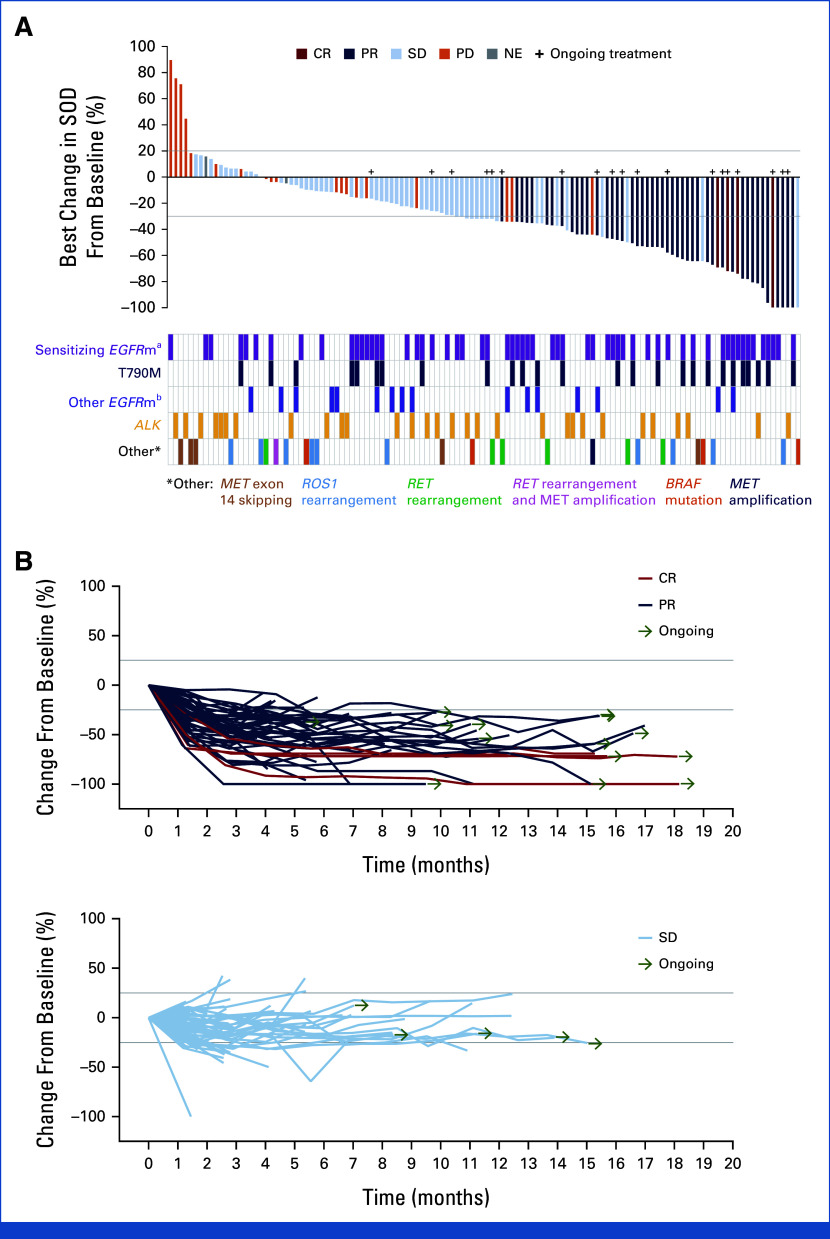
- Among 137 treated patients, the confirmed ORR was 35.8% (95% CI, 27.8 to 44.4), including 4 complete responses (2.9%) and 45 partial responses (32.8%).
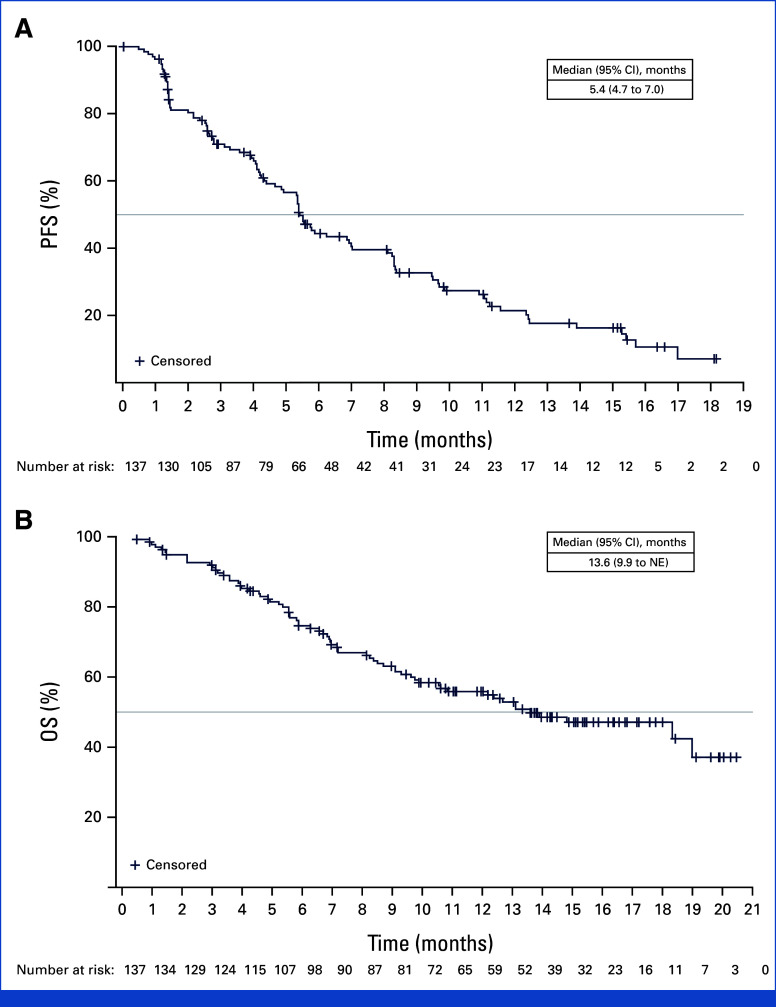
- Disease control rate was 78.8% (95% CI, 71.0 to 85.3); median duration of response was 7.0 months (95% CI, 4.2 to 9.8), median progression-free survival was 5.4 months (95% CI, 4.7 to 7.0), and median overall survival was 13.6 months (95% CI, 9.9 to not evaluable).
- In the EGFR-mutated subgroup (n = 78), ORR was 43.6% (95% CI, 32.4 to 55.3), with all four complete responders in the study coming from this subgroup; among those with sensitizing or T790M mutations previously treated with osimertinib, ORR was 49.1% (95% CI, 35.4 to 62.9).
- In the ALK-rearranged subgroup (n = 34), ORR was 23.5% (95% CI, 10.7 to 41.2), median DOR was 7.0 months (95% CI, 2.8 to 8.4), and median OS was 9.3 months (95% CI, 5.8 to 18.3).
## Methods
- Design: Phase II, global, single-arm, open-label study (TROPION-Lung05; NCT04484142) of Dato-DXd in advanced/metastatic NSCLC with actionable genomic alterations after progression on targeted therapy and platinum-based chemotherapy.
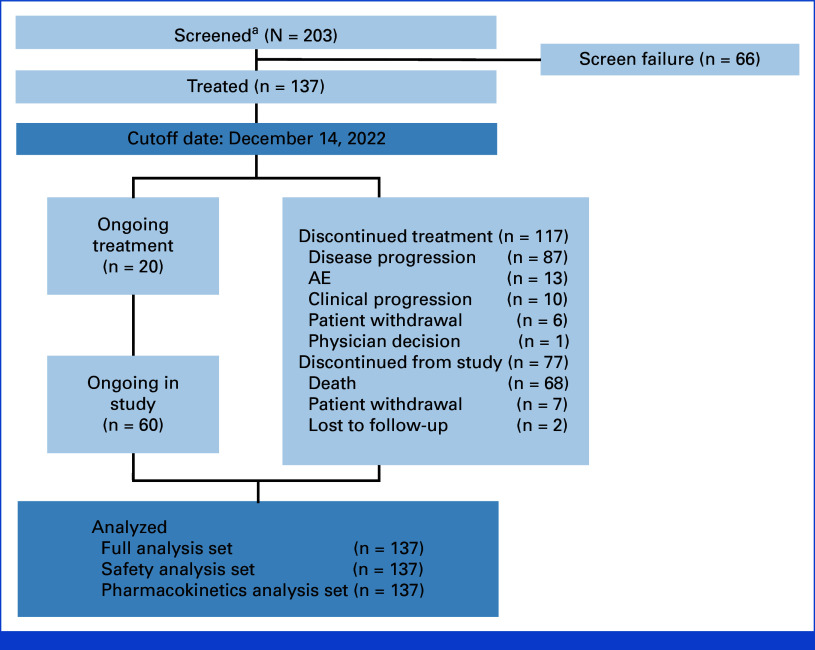
- Sample/data: 137 adults treated between March 29, 2021, and December 14, 2022; required actionable alterations included EGFR, ALK, ROS1, NTRK, BRAF, MET exon 14 skipping, or RET. Patients had measurable disease and ECOG performance status 0 or 1.
- Analysis: Primary endpoint was ORR by blinded independent central review per RECIST v1.1; DOR, DCR, PFS, OS, and safety were secondary endpoints. ORR used Clopper-Pearson exact CIs; time-to-event outcomes used Kaplan-Meier methods.
## Limitations
- The study was single-arm and open-label, so there was no randomized control group for direct comparative efficacy assessment; this is stated by the study design and is evident from the text.
- The paper notes that comparative assessment is complicated because post-progression treatment histories, especially after osimertinib and chemotherapy, are limited and heterogeneous; this is stated in the discussion.
- The analysis reports subgroup findings for small numbers in some alteration groups beyond EGFR and ALK, but those subgroup results are not detailed in the main text; this is evident from the text.
Model-written summary. Check it against the paper before relying on it.
Integrity signals
Registry
Cites
Statistics
Figures
Verification
Claims the paper makes
0 Valid · 0 Not valid · 14 Not checked · 54 Own results and interpretations
A result the paper reports from its own data — it cites no other source for it, so there is none to check. The quote shows it is in the paper.
In the paper
“The most common grade ≥3 TRAEs were stomatitis (preferred term; 9.5%), amylase increase (5.1%), anemia (2.9%), nausea (2.2%), and decreased appetite (2.2%).”
plainn = 137- Asserted: passes — The authors put it forward as true.
- Checkable: passes — It can be checked against evidence.
- Load-bearing: unclear — It is unclear whether the paper’s conclusions depend on it.
- Based: passes — The paper gives a reason why it holds.
A result the paper reports from its own data — it cites no other source for it, so there is none to check. The quote shows it is in the paper.
In the paper
“Baseline TROP2 tumor membrane expression by immunohistochemistry was moderate to high in most patients, regardless of genomic alteration status, and did not show a significant association with either response or PFS (Data Supplement, Figs S2A and S2B).”
plain- Asserted: passes — The authors put it forward as true.
- Checkable: passes — It can be checked against evidence.
- Load-bearing: unclear — It is unclear whether the paper’s conclusions depend on it.
- Based: passes — The paper gives a reason why it holds.
A result the paper reports from its own data — it cites no other source for it, so there is none to check. The quote shows it is in the paper.
In the paper
“In 34 patients harboring ALK rearrangements, the ORR was 23.5% (95% CI, 10.7 to 41.2), comprising eight patients who achieved a PR, with a median DOR of 7.0 months (95% CI, 2.8 to 8.4) and DCR of 73.5% (95% CI, 55.6 to 87.1).”
plainn = 34- Asserted: passes — The authors put it forward as true.
- Checkable: passes — It can be checked against evidence.
- Load-bearing: unclear — It is unclear whether the paper’s conclusions depend on it.
- Based: passes — The paper gives a reason why it holds.
A result the paper reports from its own data — it cites no other source for it, so there is none to check. The quote shows it is in the paper.
In the paper
“Median PFS was 5.8 months (95% CI, 5.4 to 8.3) in patients with EGFR mutations and 4.3 months (95% CI, 2.6 to 6.9) in patients with ALK rearrangements (Table 2 ).”
plainn = 78- Asserted: passes — The authors put it forward as true.
- Checkable: passes — It can be checked against evidence.
- Load-bearing: unclear — It is unclear whether the paper’s conclusions depend on it.
- Based: passes — The paper gives a reason why it holds.
A result the paper reports from its own data — it cites no other source for it, so there is none to check. The quote shows it is in the paper.
In the paper
“Median OS was 18.3 (95% CI, 12.4 to NE) and 9.3 (95% CI, 5.8 to 18.3) months for patients with EGFR mutations and ALK rearrangements, respectively.”
plain- Asserted: passes — The authors put it forward as true.
- Checkable: passes — It can be checked against evidence.
- Load-bearing: passes — The paper’s conclusions depend on it.
- Based: passes — The paper gives a reason why it holds.
32 more claims
Create a free account to see all 68 claims and to verify the 20 references still open.
- Probably not a substantial claim. 22
- It may state two separate claims as one. 16
Claims other papers make about this one
Each is checked against this paper’s own text: does it say what the citing paper says it does?
The source backs part of the claim, not all of it — or backs it for a different population, condition or comparison.
In the citing paper
“Ocular surface and pulmonary toxicities are also commonly associated with trophoblast cell surface antigen 2 directed antibody-drug conjugates. 11 13 29”
From Sacituzumab tirumotecan versus docetaxel for previously treated EGFR -mutated advanced non-small cell lung cancer: multicentre, open label, randomised controlled trial (2025) · cites this paper as [11]
Experimental — accuracy not yet measuredIn the citing paper
“Two trophoblast cell surface antigen 2 directed antibody-drug conjugates, sacituzumab govitecan and datopotamab deruxtecan, have both shown promising clinical activity in advanced NSCLC in phase 1 and phase 2 trials.”
In the citing paper
“As an on-target toxicity, stomatitis is also observed at a relatively high frequency with trophoblast cell surface antigen 2 directed antibody-drug conjugates such as datopotamab deruxtecan. 11”
Self-check
Percentages, sums and reported differences re-computed from the paper’s own numbers.
Each contradiction between two passages listed here was confirmed by an independent check.
Rated minor: it would not touch a result — a value no result rests on, a p-value that stays on the same side of the significance level, or a conflict that is clerical, resolved elsewhere in the paper, or outside its own findings.
In the paper
“The median study duration was 15.2 months (range, 9.1-20.5), and the median treatment duration was 4.4 months (range, 0.7-20.6).”
“Study duration was defined as the interval between the first dose and data cutoff, and treatment duration was defined as the interval between the first and last dose.”
Citations
Cites
New response evaluation criteria in solid tumours: revised RECIST guideline (version 1.1)
Eisenhauer, E. A., Therasse, P., Bogaerts, J., Schwartz, L. H., Sargent, D., Ford, R., Dancey, J., Arbuck, S., Gwyther, S., Mooney, M., et al. (2009) · European Journal of Cancer · doi:10.1016/j.ejca.2008.10.026 · Cited by 29,534
Siegel, R. L., Miller, K. D., Fuchs, H. E., & Jemal, A. (2021) · CA: A Cancer Journal for Clinicians · doi:10.3322/caac.21654 · Cited by 16,522 · cited 1×
“%) and a history of liver metastases (35.3% v 20.5%); patients with ALK rearrangements had also received more prior therapies in the advanced/metastatic setting (median [range], 4 [2-9] v 3 [1-5]).”
InfluentialOsimertinib in Untreated EGFR -Mutated Advanced Non–Small-Cell Lung Cancer
Soria, J.-C., Ohe, Y., Vansteenkiste, J., Reungwetwattana, T., Chewaskulyong, B., Lee, K. H., Dechaphunkul, A., Imamura, F., Nogami, N., Kurata, T., et al. (2018) · New England Journal of Medicine · doi:10.1056/nejmoa1713137 · Cited by 5,508 · cited 1×
“15,16 After progression on osimertinib, treatment options are complex and depend on the nature of the resistance mechanism; a recent study revealed that both EGFR-dependent and independent mechanisms are common, including the emergence of EGFR C797X mutation, MET alterations, small cell lung cancer…”
Self-citationOverall Survival with Osimertinib in Untreated, EGFR -Mutated Advanced NSCLC
Ramalingam, S. S., Vansteenkiste, J., Planchard, D., Cho, B. C., Gray, J. E., Ohe, Y., Zhou, C., Reungwetwattana, T., Cheng, Y., Chewaskulyong, B., et al. (2020) · New England Journal of Medicine · doi:10.1056/nejmoa1913662 · Cited by 2,914 · cited 5×
“5,6 First-line and second-line treatment approaches for NSCLC with actionable genomic alterations consist mostly of targeted treatment with tyrosine kinase inhibitors (TKIs).”
InfluentialSelf-citationHendriks, L. E., Kerr, K. M., Menis, J., Mok, T. S., Nestle, U., Passaro, A., Peters, S., Planchard, D., Smit, E. F., Solomon, B. J., et al. (2023) · Annals of Oncology · doi:10.1016/j.annonc.2022.12.009 · Cited by 853
Self-citationZhang, Y.-L., Yuan, J.-Q., Wang, K.-F., Fu, X.-H., Han, X.-R., Threapleton, D., Yang, Z.-Y., Mao, C., & Tang, J.-L. (2016) · Oncotarget · doi:10.18632/oncotarget.12587 · Cited by 799 · cited 1×
“%) and a history of liver metastases (35.3% v 20.5%); patients with ALK rearrangements had also received more prior therapies in the advanced/metastatic setting (median [range], 4 [2-9] v 3 [1-5]).”
InfluentialTargeting ALK: Precision Medicine Takes on Drug Resistance
Lin, J. J., Riely, G. J., & Shaw, A. T. (2017) · Cancer Discovery · doi:10.1158/2159-8290.cd-16-1123 · Cited by 522 · cited 1×
“6,23,24 This represents a substantial need for novel therapeutic approaches beyond speci fi c resistance mechanisms.”
Passaro, A., Wang, J., Wang, Y., Lee, S.-H., Melosky, B., Shih, J.-Y., Wang, J., Azuma, K., Juan-Vidal, O., Cobo, M., et al. (2024) · Annals of Oncology · doi:10.1016/j.annonc.2023.10.117 · Cited by 440
Self-citationSchoenfeld, A. J., Chan, J. M., Kubota, D., Sato, H., Rizvi, H., Daneshbod, Y., Chang, J. C., Paik, P. K., Offin, M., Arcila, M. E., et al. (2020) · Clinical Cancer Research · doi:10.1158/1078-0432.ccr-19-3563 · Cited by 411
Okajima, D., Yasuda, S., Maejima, T., Karibe, T., Sakurai, K., Aida, T., Toki, T., Yamaguchi, J., Kitamura, M., Kamei, R., et al. (2021) · Molecular Cancer Therapeutics · doi:10.1158/1535-7163.mct-21-0206 · Cited by 339
Cited by
Items 101–124 of 124
Datopotamab deruxtecan in solid tumors: Recent research progress and clinical applications
Cao, Y., Mo, L.-Q., Liu, Y., & Zhang, Z. X. (2026) · Frontiers in Oncology · doi:10.3389/fonc.2026.1870658 · Cited by 1
Lee, M., & Lovly, C. M. (2026) · Frontiers in Oncology · doi:10.3389/fonc.2026.1814095 · Cited by 1
Guo, H., Liu, L., Lindberg, V., Xue, Y., & Baak, J. P. A. (2026) · Frontiers in Oncology · doi:10.3389/fonc.2026.1810131
An, X., Li, F., Xia, C., Li, Y., Li, H., & Xie, F. (2026) · In Silico Pharmacology · doi:10.1007/s40203-026-00701-9 · Cited by 1
“Supported by data from the TROPION-Lung01 and Lung05 trials (which confirmed an ORR of 45% in patients with EGFR-mutated NSCLC previously treated with targeted therapy and chemotherapy), accelerated FDA approval for Dato-DXd was granted on June 23, 2025 (Sands et al. 2025 ).”
TROP-2 in solid tumors: From oncogenic driver to therapeutic target with antibody-drug conjugates
Liu, J., Zhang, M., Liu, J., Tan, S., Guo, X., Li, Z., Luo, X., Wang, L., Zhang, W., & Zeng, H. (2026) · Critical Reviews in Oncology/Hematology · doi:10.1016/j.critrevonc.2026.105478 · Cited by 1
Taing, K., Lam, H. Y., & Hsu, R. C. (2026) · Cancers · doi:10.3390/cancers18142285
“…for EGFR -mutant NSCLC with MET alterations and disease progression, as well as datopotamab deruxtecan (Dato-DXd) (TROPION-Lung05 trial, phase II), which was recently FDA-approved for EGFR -mutant NSCLC in patients with disease progression after platinum-based chemotherapy and osimertinib [72,73].”
InfluentialRecent advances in EGFR-targeted therapies for non-small cell lung cancer
Lucente, L., Barcellini, L., Pollone, B. R., Filipazzi, C. L., Coco, S., Puppo, M., Marconi, S., Santamaria, S., Tagliamento, M., Rossi, G., et al. (2026) · Expert Opinion on Pharmacotherapy · doi:10.1080/14656566.2026.2702380 · Cited by 1
“…clinically meaningful activity in an exploratory pooled analysis [178] of the EGFR -mutated subsets of two different studies: the TROPION-Lung05 [194], which was a single-arm phase II study that enrolled patients with action-able genomic alterations after prior targeted therapy and PBC, and the…”
Bonanno, L., Ronchi, A., Bao, L. C., Pante, F., Sangiorgi, S., Pasello, G., Indraccolo, S., & Guarneri, V. (2026) · Pharmaceutics · doi:10.3390/pharmaceutics18080905
“The patients included were heavily pre-treated, and the vast majority of the overall study population had previously received more than three lines of systemic treatment [30].”
InfluentialAntibody–drug conjugates in solid tumors: Efficacy, challenges, and opportunities
Shah, N. M., & Meric‐Bernstam, F. (2026) · The Journal of Experimental Medicine · doi:10.1084/jem.20252603 · Cited by 3
Nassar, A. H., Halawi, J., & Herbst, R. S. (2026) · The Cancer Journal · doi:10.1097/ppo.0000000000000834
Zhang, J., Zha, L., Liang, R., & Li, T. (2026) · Cancers · doi:10.3390/cancers18152417
“…chemotherapy (e.g., carboplatin plus pemetrexed) if not previously administered, and datopotamab deruxtecan, a trophoblast cell-surface antigen 2 (TROP2)-directed antibody–drug conjugate (ADC), which significantly improved PFS versus docetaxel, particularly in nonsquamous NSCLC [116,117].”
Park, Y., Kim, S., Kim, T. M., Kim, M., Youk, J., Kim, D., & Keam, B. (2026) · Translational Oncology · doi:10.1016/j.tranon.2026.102958
“Clinical studies in NSCLC have shown that TROP2-targeted ADCs have promising antitumor activity, particularly in patients with AGAs or prior immunotherapy resistance, although consistent statistical significance in the overall population has not been shown [10 – 12].”
William, W. N., Brungs, D., Castro, E. F. S. E., Loong, H. H.-F., Yang, J. C. H., Park, K.-A., Şendur, M. A. N., Mokhtar, M., Lee, S.-H., Rajappa, S. J., et al. (2026) · Therapeutic Advances in Medical Oncology · doi:10.1177/17588359261469539 · Cited by 1
Exploiting Tumor-Targeted Drug Delivery Strategies
Kumar, A., Tuteja, D., Yadav, A. K., Borasi, H., & Bhatia, D. D. (2026) · Springer eBooks · doi:10.1007/978-981-92-0477-9_16
The role of FGFR signaling in SCLC and NSCLC: Current insights and therapeutic perspectives
Kim, B. C., Lee, G. T., Jeong, M., Choi, H. J., & Kim, K. (2026) · iScience · doi:10.1016/j.isci.2026.117135
Li, Z., Zhou, Z., He, Z.-Y., Han, L., Fang, J., Sun, H.-M., Liu, H.-F., Wang, M.-X., Liu, Y.-B., Qu, X., et al. (2026) · Cancer Cell · doi:10.1016/j.ccell.2026.07.012 · Cited by 2
Philipovskiy, A. V., Shurmur, S. W., & Abid, M. B. (2026) · Cancers · doi:10.3390/cancers18162652
Zhang, Y., Liu, Q., Ma, C., et al. (2026) · The EANM Journal · doi:10.1016/j.eanmj.2026.100242
Antibody–Drug Conjugates in Lung Cancer: Promise, Progress, and Persistent Challenges
Paliogiannis, P., Fara, G., Zinellu, A., Fois, A. G., & Palmieri, G. (2026) · Current Issues in Molecular Biology · doi:10.3390/cimb48090868
“Similarly, although generally associated with a favorable safety profile, Dato-DXd has been linked to stomatitis, pneumonitis, and grade ≥ 3 treatment-related adverse events in more than one-quarter of patients enrolled in TROPION-Lung05 [104].”
Antibody therapeutics: A new era for EGFR-mutant NSCLC treatment
Chen, X., Liang, J., Zhu, J., Huang, X., Hu, Y., Lin, Z., & Zhan, C. (2026) · Biochimica et Biophysica Acta (BBA) - Reviews on Cancer · doi:10.1016/j.bbcan.2026.189709 · Cited by 2
Hong, Y., Laughlin, A. M. M., Pan, Y., Hietala, S. F., Peigné, S., Chargualaf, M., Tang, Z., Zhou, D., Tajima, N., Abutarif, M. A., et al. (2026) · Clinical Pharmacology & Therapeutics · doi:10.1002/cpt.70477
Fantozzi, P. J., Sonis, S. T., Botticelli, A., Scagnoli, S., Verrico, M., Bianchini, G., Bonomo, M. V., Bonadonna, C., Casagrande, M., Borghetti, L., et al. (2026) · The Oncologist · doi:10.1093/oncolo/oyag359
“–32 Our observed OM frequency among patients receiving SG (14.8”
InfluentialZhou, S., Tan, J., Patel, V., Kishi, N., Akhtar, K., Benjamin, S., Homsi, J., & Tsao, C. (2026) · Lung Cancer · doi:10.1016/j.lungcan.2026.109638
Wu, Q., Qiu, L., An, J., Xu, W., Ding, X., Shi, H., Hua, Y., Zheng, X., Guo, Y., Cao, B., et al. (2026) · Frontiers in Immunology · doi:10.3389/fimmu.2026.1973923
Metadata
- Authors
- Sands, J., Ahn, M.-J., Lisberg, A., Cho, B. C., Blumenschein, G., Shum, E., Pons Tostivint, E., Goto, Y., Yoh, K., Heist, R., Shimizu, J., Lee, J.-S., Baas, P., Planchard, D., Pérol, M., Felip, E., Su, W.-C., Zebger-Gong, H., Lan, L., Liu, C., Howarth, P., Chiaverelli, R., & Paz-Ares, L.
- Affiliations
- Dana-Farber Cancer Institute (US)
- Dana-Farber Cancer Institute, Boston, MA
- National Cancer Center Hospital East (JP)
- Harvard University (US)
- Aichi Cancer Center (JP)
- Seoul National University Bundang Hospital (KR)
- Daiichi Sankyo Europe GmbH, Munich, Germany
- Daiichi Sankyo (United States) (US)
- Corresponding author
- Heist, Rebecca
- Lee, Jong-Seok
- Lan, Lan
- Liu, Chelsea
- Howarth, Paul
- Chiaverelli, Rachel
- ORCID
- Venue
- Journal of Clinical Oncology
- Published
- 2025-04
- Volume
- 43
- Issue
- 10
- Pages
- 1254-1265
- ISSN
- 0732-183X (ISSN-L)
- 1527-7755
- PMC
- PMC11949215
- OpenAlex
- W4406090459
- Cited by
- 130
- References
- 34
- Citations by year
- 2026: 77 · 2025: 53
- FWCI
- 84.85
- Type
- journal article
- Language
- en
- Open access
- hybrid
- doi.org
- Licence
- cc-by-nc-nd
- Locations
- Journal of Clinical Oncology (publishedVersion, cc-by-nc-nd)
- Europe PMC (PubMed Central) (publishedVersion, cc-by-nc-nd)
- PubMed Central (publishedVersion, cc-by-nc-nd)
- PubMed (publishedVersion)
- Leiden Repository (Leiden University) (submittedVersion, cc-by-nc-nd)
- Funders
- Daiichi Sankyo Europe
- Topics
- Health Sciences › Medicine › Pulmonary and Respiratory Medicine › Lung Cancer Treatments and Mutations
- Health Sciences › Medicine › Oncology › Lung Cancer Research Studies
- Health Sciences › Medicine › Pulmonary and Respiratory Medicine › Lung Cancer Diagnosis and Treatment
- Keywords
- datopotamab deruxtecan, trophoblast cell surface antigen 2, antibody-drug conjugates, topoisomerase I inhibitor, non-small cell lung cancer, actionable genomic alterations, EGFR mutation, ALK rearrangement, objective response rate, duration of response, stomatitis, interstitial lung disease, treatment-related adverse events
- MeSH terms
- Adult, Aged, Aged, 80 and over, Camptothecin, Carcinoma, Non-Small-Cell Lung, Female, Humans, Lung Neoplasms, Male, Middle Aged, Mutation, Immunoconjugates
About these checks
Registry, retraction, Cites and statistics results are computed, not judged, with one exception: a printed reference that no index lists is read once by a model before it counts as a citation error. Claims are extracted by a model and kept only when their quote appears verbatim in the text; each cited source is then checked, with a model’s help, for whether it says what the claim relies on. Those verdicts can be wrong — read the claim’s quote and the cited source before relying on one.
A language model drew the claims from the paper on 2026-10-11, under version 3 of the claim definition (model deepseek-v4.1-flash, prompt extract-v3).
A second model labelled each claim on 2026-10-11 (model jev-1.13-20260917, definition revision gold-guideline-v0.2).
Statistics and arithmetic are recomputed, not judged.
Confidence bands are shown only for fields calibrated on our annotated test set. None is calibrated yet, so no band is shown.
What counts as a claim ›How we measure confidence ›How we check this ›
Are you an author, or do you see a problem with this page? Request a review
Data sources
Bibliographic data: Semantic Scholar, OpenAlex, Crossref.
Contains information from the Semantic Scholar Academic Graph Datasets, made available under the ODC Attribution License (ODC-BY 1.0).
Semantic Scholar’s data is described in: Kinney, R., et al. (2023). The Semantic Scholar Open Data Platform. arXiv:2301.10140.
