

Epileptic spasms are a feature of DEPDC5 mTORopathy
Open accessThe DOI matches its Crossref record; 24 of the 24 references it cites were found in a registry or an index.
Abstract
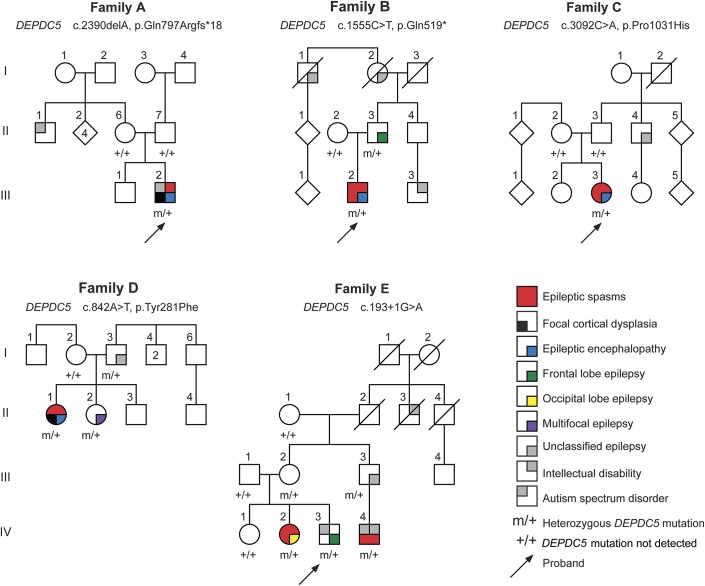
OBJECTIVE: To assess the presence of DEPDC5 mutations in a cohort of patients with epileptic spasms. METHODS: We performed DEPDC5 resequencing in 130 patients with spasms, segregation analysis of variants of interest, and detailed clinical assessment of patients with possibly and likely pathogenic variants. RESULTS: We identified 3 patients with variants in DEPDC5 in the cohort of 130 patients with spasms. We also describe 3 additional patients with DEPDC5 alterations and epileptic spasms: 2 from a previously described family and a third ascertained by clinical testing. Overall, we describe 6 patients from 5 families with spasms and DEPDC5 variants; 2 arose de novo and 3 were familial. Two individuals had focal cortical dysplasia. Clinical outcome was highly variable. CONCLUSIONS: While recent molecular findings in epileptic spasms emphasize the contribution of de novo mutations, we highlight the relevance of inherited mutations in the setting of a family history of focal epilepsies. We also illustrate the utility of clinical diagnostic testing and detailed phenotypic evaluation in characterizing the constellation of phenotypes associated with DEPDC5 alterations. We expand this phenotypic spectrum to include epileptic spasms, aligning DEPDC5 epilepsies more with the recognized features of other mTORopathies.
Overview
The claims and statistics of this paper haven’t been checked yet.
Free: it reads the open-access text and checks the first 5 claims that cite a source we can check. Create a free account to check every claim.
Integrity signals
Registry
Cites
Statistics
Figures
Verification
Claims the paper makes
The claims and statistics of this paper haven’t been checked yet.
Free: it reads the open-access text and checks the first 5 claims that cite a source we can check. Create a free account to check every claim.
Claims other papers make about this one
Each is checked against this paper’s own text: does it say what the citing paper says it does?
The cited source says what the claim attributes to it.
In the citing paper
“DEPDC5 pathogenic variants were first reported in familial focal epilepsies 127,128 , and later associated with DEEs 129 .”
From Developmental and epileptic encephalopathies (2024) · cites this paper as [129]
Self-check
Percentages, sums and reported differences re-computed from the paper’s own numbers.
The self-check needs the paper’s full text.
Citations
Cites
Berg, A. T., Berkovic, S. F., Brodie, M. J., Buchhalter, J., Cross, J. H., Van Emde Boas, W., Engel, J., French, J., Glauser, T. A., Mathern, G. W., et al. (2010) · Epilepsia · doi:10.1111/j.1528-1167.2010.02522.x · Cited by 4,363 · cited 2×
“We used molecular inversion probes to capture all exons and 5 base pairs of flanking intronic DEPDC5 sequence; next-generation sequencing and data analysis were performed as described previously in 130 patients with epileptic spasms of unknown etiology.(15,18) Known epileptic encephalopathy genes had been excluded in…”
BackgroundMethodSelf-citationDe novo mutations in epileptic encephalopathies
Epi4K Consortium, & Epilepsy Phenome/Genome Project (2013) · Nature · doi:10.1038/nature12439 · Cited by 1,514
Bar-Peled, L., Chantranupong, L., Cherniack, A. D., Chen, W. W., Ottina, K. A., Grabiner, B. C., Spear, E. D., Carter, S. L., Meyerson, M., & Sabatini, D. M. (2013) · Science · doi:10.1126/science.1232044 · Cited by 1,080
Targeted resequencing in epileptic encephalopathies identifies de novo mutations in CHD2 and SYNGAP1
Carvill, G. L., Heavin, S. B., Yendle, S. C., McMahon, J. M., O'Roak, B. J., Cook, J., Khan, A., Dorschner, M. O., Weaver, M., Calvert, S., et al. (2013) · Nature Genetics · doi:10.1038/ng.2646 · Cited by 687 · cited 3×
“We used molecular inversion probes to capture all exons and 5 base pairs of flanking intronic DEPDC5 sequence; next-generation sequencing and data analysis were performed as described previously in 130 patients with epileptic spasms of unknown etiology.(15,18) Known epileptic encephalopathy genes had been excluded in…”
BackgroundMethodSelf-citationMutations in DEPDC5 cause familial focal epilepsy with variable foci
Dibbens, L. M., de Vries, B., Donatello, S., Heron, S. E., Hodgson, B. L., Chintawar, S., Crompton, D. E., Hughes, J. N., Bellows, S. T., Klein, K. M., et al. (2013) · Nature Genetics · doi:10.1038/ng.2599 · Cited by 373 · cited 5×
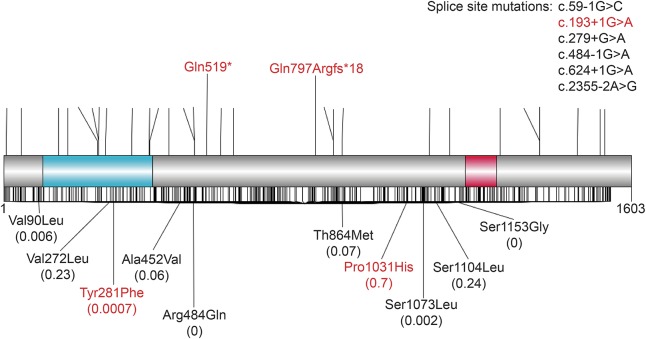
“This may also be true for several reported missense mutations also present in controls at low frequencies (figure 2).(1,8) It will be important to develop robust functional experiments to assess the pathogenicity of these missense variants in the future.”
BackgroundInfluentialSelf-citationFamilial focal epilepsy with focal cortical dysplasia due to DEPDC5 mutations
Baulac, S., Ishida, S., Marsan, E., Miquel, C., Biraben, A., Nguyen, D. K., Nordli, D., Cossette, P., Nguyen, S., Lambrecq, V., et al. (2015) · Annals of Neurology · doi:10.1002/ana.24368 · Cited by 293
D'Gama, A. M., Geng, Y., Couto, J. A., Martin, B., Boyle, E. A., LaCoursiere, C. M., Hossain, A., Hatem, N. E., Barry, B. J., Kwiatkowski, D. J., et al. (2015) · Annals of Neurology · doi:10.1002/ana.24357 · Cited by 290
Mutations of DEPDC5 cause autosomal dominant focal epilepsies
Ishida, S., Picard, F., Rudolf, G., Noé, E., Achaz, G., Thomas, P., Genton, P., Mundwiller, E., Wolff, M., Marescaux, C., et al. (2013) · Nature Genetics · doi:10.1038/ng.2601 · Cited by 269 · cited 2×
“Autosomal dominant mutations in DEPDC5 cause familial focal epilepsy with variable foci (FFEVF).(1,2) FFEVF is characterized by seizures arising from different cortical regions in different family members, and onset ranges from infancy to adulthood.”
BackgroundOsborne, J. P., Lux, A. L., Edwards, S. W., Hancock, E., Johnson, A. L., Kennedy, C. R., Newton, R. W., Verity, C. M., & O’Callaghan, F. J. K. (2010) · Epilepsia · doi:10.1111/j.1528-1167.2010.02695.x · Cited by 239 · cited 2×
“The etiology of infantile spasms is an important determinant of developmental outcome but is unknown in one-third of cases.(16,17) Given that spasms are a frequent feature in TSC and we observed spasms in 1 family in our initial report of DEPDC5 in FFEVF,(1) we systematically searched for DEPDC5 variation in 130 patie…”
BackgroundScheffer, I. E., Heron, S. E., Regan, B. M., Mandelstam, S., Crompton, D. E., Hodgson, B. L., Licchetta, L., Provini, F., Bisulli, F., Vadlamudi, L., et al. (2014) · Annals of Neurology · doi:10.1002/ana.24126 · Cited by 229 · cited 1×
“It has been hypothesized that the presence of a “second hit” is required for the development of these lesions.(11) This scenario would be analogous to TSC, in which a second mutation in the mTOR regulators TSC1 and TSC2 is reported in some tumors of patients with TSC.”
BackgroundSelf-citation
Cited by
The landscape of epilepsy-related GATOR1 variants
Baldassari, S., Picard, F., Verbeek, N. E., van Kempen, M., Brilstra, E. H., Lesca, G., Conti, V., Guerrini, R., Bisulli, F., Licchetta, L., et al. (2019) · Genetics in Medicine · doi:10.1038/s41436-018-0060-2 · Cited by 240
Review: Mechanistic target of rapamycin (mTOR) pathway, focal cortical dysplasia and epilepsy
Marsan, E., & Baulac, S. (2018) · Neuropathology and Applied Neurobiology · doi:10.1111/nan.12463 · Cited by 191
Developmental and epileptic encephalopathies
Scheffer, I. E., Zuberi, S., Mefford, H. C., Guerrini, R., & McTague, A. (2024) · Nature Reviews Disease Primers · doi:10.1038/s41572-024-00546-6 · Cited by 158
“DEPDC5 pathogenic variants were first reported in familial focal epilepsies 127, 128 , and later associated with DEEs 129 .”
Self-citationEpilepsy surgery for patients with genetic refractory epilepsy: a systematic review
Stevelink, R., Sanders, M. W., Tuinman, M. P., Brilstra, E. H., Koeleman, B. P., Jansen, F. E., & Braun, K. P. (2018) · Epileptic Disorders · doi:10.1684/epd.2018.0959 · Cited by 128
Epilepsy in the mTORopathies: opportunities for precision medicine
Moloney, P. B., Cavalleri, G. L., & Delanty, N. (2021) · Brain Communications · doi:10.1093/braincomms/fcab222 · Cited by 125
Epilepsy genetics: Current knowledge, applications, and future directions
Myers, K. A., Johnstone, D. L., & Dyment, D. A. (2018) · Clinical Genetics · doi:10.1111/cge.13414 · Cited by 130
Yuskaitis, C. J., Jones, B. M., Wolfson, R. L., Super, C. E., Dhamne, S. C., Rotenberg, A., Sabatini, D. M., Sahin, M., & Poduri, A. (2018) · Neurobiology of Disease · doi:10.1016/j.nbd.2017.12.010 · Cited by 113
Blümcke, I., Coras, R., Busch, R. M., Morita‐Sherman, M., Lal, D., Prayson, R., Cendes, F., Lopes‐Cendes, I., Rogerio, F., Almeida, V. S., et al. (2021) · Epilepsia · doi:10.1111/epi.16899 · Cited by 96
Iffland, P. H., Carson, V., Bordey, A., & Crino, P. B. (2019) · Epilepsia · doi:10.1111/epi.16370 · Cited by 84
mTOR signaling pathway genes in focal epilepsies
Baulac, S. (2016) · Progress in Brain Research · doi:10.1016/bs.pbr.2016.04.013 · Cited by 84
Second‐hit DEPDC5 mutation is limited to dysmorphic neurons in cortical dysplasia type IIA
Lee, W. S., Stephenson, S. E. M., Howell, K. B., Pope, K., Gillies, G., Wray, A., Maixner, W., Mandelstam, S. A., Berkovic, S. F., Scheffer, I. E., et al. (2019) · Annals of Clinical and Translational Neurology · doi:10.1002/acn3.50815 · Cited by 78
Self-citationGATOR1 complex: the common genetic actor in focal epilepsies
Baldassari, S., Licchetta, L., Tinuper, P., Bisulli, F., & Pippucci, T. (2016) · Journal of Medical Genetics · doi:10.1136/jmedgenet-2016-103883 · Cited by 80
Precision medicine in genetic epilepsies: break of dawn?
Reif, P. S., Tsai, M., Helbig, I., Rosenow, F., & Klein, K. M. (2016) · Expert Review of Neurotherapeutics · doi:10.1080/14737175.2017.1253476 · Cited by 79
The mTOR Pathway in Treatment of Epilepsy: A clinical update
Griffith, J. L., & Wong, M. (2018) · Future Neurology · doi:10.2217/fnl-2018-0001 · Cited by 76
Two definite cases of sudden unexpected death in epilepsy in a family with a DEPDC5 mutation
Nascimento, F. A., Borlot, F., Cossette, P., Minassian, B. A., & Andrade, D. M. (2015) · Neurology Genetics · doi:10.1212/nxg.0000000000000028 · Cited by 63
Widespread genomic influences on phenotype in Dravet syndrome, a ‘monogenic’ condition
Martins Custodio, H., Clayton, L. M., Bellampalli, R., Pagni, S., Silvennoinen, K., Caswell, R., Genomics England Research Consortium, Ambrose, J. C., Arumugam, P., Bevers, R., et al. (2023) · Brain · doi:10.1093/brain/awad111 · Cited by 62
Self-citationSomatic mutation: The hidden genetics of brain malformations and focal epilepsies
Ye, Z., McQuillan, L., Poduri, A., Green, T. E., Matsumoto, N., Mefford, H. C., Scheffer, I. E., Berkovic, S. F., & Hildebrand, M. S. (2019) · Epilepsy Research · doi:10.1016/j.eplepsyres.2019.106161 · Cited by 66
Self-citationDEPDC5-related epilepsy: A comprehensive review
Samanta, D. (2022) · Epilepsy & Behavior · doi:10.1016/j.yebeh.2022.108678 · Cited by 64
Hu, S., Knowlton, R. C., Watson, B. O., Glanowska, K. M., Murphy, G. G., Parent, J. M., & Wang, Y. (2018) · Annals of Neurology · doi:10.1002/ana.25272 · Cited by 55
Yuskaitis, C. J., Rossitto, L.-A. M., Gurnani, S. D., Bainbridge, E., Poduri, A., & Şahin, M. (2019) · Human Molecular Genetics · doi:10.1093/hmg/ddz123 · Cited by 54
“Pathogenic loss-of-function variants in DEPDC5 have been identified in autosomal dominant familial focal epilepsy (OMIM# 604364) (2–4), sporadic focal epilepsy (5), infantile spasms (6) and focal epileptic brain malformations (7–9).”
BackgroundDawson, R., Guil, A. F. N., Robertson, L. J., Piltz, S., Hughes, J. N., & Thomas, P. Q. (2019) · Neurobiology of Disease · doi:10.1016/j.nbd.2019.104640 · Cited by 54
“Interestingly, the majority of GATOR1 variants screened did not have significantly altered functional ability in the current in vitro assay despite previous predictions of their pathogenic nature (Carvill et al., 2015; Dibbens et al., 2013; Ricos et al., 2016).”
BackgroundDEPDC5 as a potential therapeutic target for epilepsy
Myers, K. A., & Scheffer, I. E. (2017) · Expert Opinion on Therapeutic Targets · doi:10.1080/14728222.2017.1316715 · Cited by 51
“DEPDC5 mutations have also been found with FCD and epilepsy [73,74].”
BackgroundSelf-citationEriksson, M. H., Whitaker, K. J., Booth, J., Piper, R. J., Chari, A., Sanfilippo, P. M., Caballero, A. P., Menzies, L. A., McTague, A., Adler, S., et al. (2023) · Epilepsia · doi:10.1111/epi.17670 · Cited by 48
Klofas, L. K., Short, B. P., Zhou, C., & Carson, R. P. (2020) · Human Molecular Genetics · doi:10.1093/hmg/ddaa068 · Cited by 44
Genomic and Epigenetic Advances in Focal Cortical Dysplasia Types I and II: A Scoping Review
Jesus‐Ribeiro, J., Pires, L. M., Melo, J. D., Ribeiro, I. P., Rebelo, O., Sales, F., Freire, A., & Melo, J. B. (2021) · Frontiers in Neuroscience · doi:10.3389/fnins.2020.580357 · Cited by 52
Lee, W. S., Baldassari, S., Stephenson, S. E. M., Lockhart, P. J., Baulac, S., & Leventer, R. J. (2022) · International Journal of Molecular Sciences · doi:10.3390/ijms23031344 · Cited by 45
Self-citationDEPDC5 mutations in familial and sporadic focal epilepsy
Tsai, M., Chan, C. ‐., Chang, Y. ‐., Yu, Y., Chuang, S. ‐., Fan, W., Li, S. ‐., Fu, T. ‐., Chang, W. ‐., Liou, C.-W., et al. (2017) · Clinical Genetics · doi:10.1111/cge.12992 · Cited by 46
“(ADNFLE, recently renamed as autosomal dominant sleep-related hypermotor epilepsy),(3,4) familial mesial and lateral temporal lobe epilepsy,(5,6) focal epilepsy due to various malformations of cortical development, and less commonly in childhood epilepsies including benign epilepsy with centrotemporal spikes (BECTS)(1…”
BackgroundGenetic characterization identifies bottom-of-sulcus dysplasia as an mTORopathy
Lee, W. S., Stephenson, S. E. M., Pope, K., Gillies, G., Maixner, W. J., Macdonald‐Laurs, E., MacGregor, D. P., D’Arcy, C. E., Jackson, G. D., Harvey, A. S., et al. (2020) · Neurology · doi:10.1212/wnl.0000000000010670 · Cited by 42
Self-citationBenign epilepsy with centrotemporal spikes – Current concepts of diagnosis and treatment
Dryżałowski, P., Jóźwiak, S., Franckiewicz, M., & Strzelecka, J. (2018) · Neurologia i Neurochirurgia Polska · doi:10.1016/j.pjnns.2018.08.010 · Cited by 41
“Families may show patterns that are effectively subsets of FFEVF, individuals with BECTS have also been described [59,60].”
BackgroundLiu, L., Chen, Z., Xu, H.-Q., Liu, D.-T., Mao, Y., Liu, H.-K., Liu, X., Zhou, P., Lin, S., Li, B., et al. (2020) · Frontiers in Neuroscience · doi:10.3389/fnins.2020.00821 · Cited by 42
Mechanistic Target of Rapamycin Pathway in Epileptic Disorders
Kim, J., & Lee, J. H. (2019) · Journal of Korean Neurosurgical Society · doi:10.3340/jkns.2019.0027 · Cited by 39
Ultra‐Low Level Somatic Mutations and Structural Variations in Focal Cortical Dysplasia Type II
Kim, J. H., Park, J., Lee, J., Park, J. W., Kim, H. J., Chang, W. S., Kim, D., Ju, Y. S., Aronica, E., & Lee, J. H. (2023) · Annals of Neurology · doi:10.1002/ana.26609 · Cited by 35
“Germline heterozygous defects in the GATOR1 complex have been reported in FCDII.10 Heterozygous germline variants in GATOR1-encoding genes (DEPDC5, NPRL2, and NPRL3) have been found across the phenotypic spectrum, including familial focal epilepsies, Rolandic epilepsy, or infantile spasm, as well as FCD.10,35,36 In a…”
BackgroundContribution of ultrarare variants in mTOR pathway genes to sporadic focal epilepsies
Pippucci, T., Licchetta, L., Baldassari, S., Marconi, C., Luise, M. D., Myers, C. T., Nardi, E., Provini, F., Cameli, C., Minardi, R., et al. (2019) · Annals of Clinical and Translational Neurology · doi:10.1002/acn3.722 · Cited by 27
“We identified only one case with such a variant in DEPDC5 that had been previously reported to segregate in a FE family.(26) The identification of the same variant also in three of our controls suggests that it has higher frequency in the Italian population than in ExAC/gnomAD, and therefore diminishes its potential i…”
BackgroundSelf-citationWang, H., Liu, W., Zhang, Y., Liu, Q., Cai, L., & Jiang, Y. (2023) · Epilepsia Open · doi:10.1002/epi4.12770 · Cited by 27
Sahly, A. N., Whitney, R., Costain, G., Chau, V., Otsubo, H., Ochi, A., Donner, E. J., Cunningham, J., Jones, K., Widjaja, E., et al. (2023) · Seizure · doi:10.1016/j.seizure.2023.03.004 · Cited by 24
Genetic investigations of the epileptic encephalopathies
Myers, C. T., & Mefford, H. C. (2016) · Progress in brain research · doi:10.1016/bs.pbr.2016.04.006 · Cited by 26
Self-citationCanavati, C., Klein, K. M., Afawi, Z., Pendziwiat, M., Rayyan, A. A., Kamal, L., Zahdeh, F., Qaysia, I., Helbig, I., & Kanaan, M. N. (2019) · Epilepsia · doi:10.1111/epi.15665 · Cited by 27
Lee, S., Kim, S. H., Kim, B., Lee, S., Choi, J. R., Kim, H. D., Lee, J. S., & Kang, H. (2020) · Epilepsy Research · doi:10.1016/j.eplepsyres.2020.106323 · Cited by 22
Multimodal mapping of regional brain vulnerability to focal cortical dysplasia
Lee, H. M., Hong, S., Gill, R. S., Caldairou, B., Wang, Z. I., Zhang, J., Deleo, F., Schrader, D. V., Bartoloméi, F., Guye, M., et al. (2023) · Brain · doi:10.1093/brain/awad060 · Cited by 23
Liao, Z., Wang, X., Zeng, Y., & Zou, Q. (2016) · Scientific Reports · doi:10.1038/srep39655 · Cited by 25
Zhang, X., Huang, Z., Liu, J., Li, M., Zhao, X., Ye, J., & Wang, Y. (2021) · Frontiers in Neurology · doi:10.3389/fneur.2021.641019 · Cited by 19
“DEPDC5-related epilepsy comprises a range of epilepsy syndromes, including familial focal epilepsy (FFE) with variable foci (FFEVF), autosomal dominant sleep-related hypermotor epilepsy (ADSHE), familial mesial and lateral temporal lobe epilepsy (TLE), benign epilepsy with centrotemporal spikes (BECTS), and infantile…”
BackgroundEarly-onset genetic epilepsies reaching adult clinics
Lewis‐Smith, D., Ellis, C. A., Helbig, I., & Thomas, R. H. (2020) · Brain · doi:10.1093/brain/awaa029 · Cited by 17
Garner, G. L., Streetman, D. R., Fricker, J. G., Bui, N. E., Yang, C., Patel, N., Brown, N. J., Shahrestani, S., Rangel, I. C., Singh, R., et al. (2022) · Interdisciplinary Neurosurgery · doi:10.1016/j.inat.2022.101635 · Cited by 16
“DEPDC5 is a gene which provides instructions for making a protein that is part from the protein complex GATOR1.”
BackgroundInfluentialErickson, R. P. (2016) · Mutation Research/Reviews in Mutation Research · doi:10.1016/j.mrrev.2015.12.002 · Cited by 15
Li, Y., Zhao, X., Wang, S., Xu, K., Zhao, X., Huang, S., & Zhu, S. (2021) · Frontiers in Genetics · doi:10.3389/fgene.2021.766354 · Cited by 13
“In addition, several epileptic syndromes, such as nocturnal frontal lobe epilepsy (NFLE) and benign epilepsy in children with centrotemporal spikes, were also associated with NPRL3 (Carvill et al., 2015; Baldassari et al., 2016; Korenke et al., 2016; Baldassari et al., 2019).”
BackgroundNovel treatments in epilepsy guided by genetic diagnosis
Marini, C., & Giardino, M. (2021) · British Journal of Clinical Pharmacology · doi:10.1111/bcp.15139 · Cited by 14
Dainelli, A., Iacomino, M., Rossato, S., Bugin, S., Traverso, M., Severino, M., Gustincich, S., Capra, V., Duca, M. D., Zara, F., et al. (2023) · Epilepsia Open · doi:10.1002/epi4.12798 · Cited by 12
DEPDC5 plays a vital role in epilepsy: Genotypic and phenotypic features in cohort and literature
Gu, C., Wei, X., Yan, D., Cai, Y., Li, D., Shu, J., & Cai, C. (2024) · Epileptic Disorders · doi:10.1002/epd2.20223 · Cited by 11
Identification and treatment of surgically-remediable causes of infantile epileptic spasms syndrome
Macdonald‐Laurs, E., Dzau, W., Warren, A. E. L., Coleman, M., Mignone, C., Stephenson, S. E. M., & Howell, K. B. (2024) · Expert Review of Neurotherapeutics · doi:10.1080/14737175.2024.2360117 · Cited by 11
“In individuals with unknown cause, a family history of mTOR pathway-associated lesions including TSC or FCD [116] and predisposing factors for stroke such as collagenopathies should be sought, and the skin should be examined for neurocutaneous stigmata.”
BackgroundSelf-citationGuzman, S., Ruggiero, S. M., Ganesan, S., Ellis, C. A., Harrison, A., Sullivan, K. R., Stark, Z., Brown, N. J., Kana, S. L., Tuttle, A., et al. (2025) · The American Journal of Human Genetics · doi:10.1016/j.ajhg.2025.04.011 · Cited by 12
Ochoa‐Urrea, M., Butler, E., Brünger, T., Leu, C., Boßelmann, C. M., Najm, I., Lhatoo, S. D., & Lal, D. (2025) · Neurology · doi:10.1212/wnl.0000000000214235 · Cited by 11
Novel GATOR1 variants in focal epilepsy
Kovačević, M., Janković, M. Z., Branković, M., Milicevic, O. S., Novaković, I. V., Sokić, D. V., Ristić, A. J., Shamsani, J., & Vojvodić, N. M. (2023) · Epilepsy & Behavior · doi:10.1016/j.yebeh.2023.109139 · Cited by 9
Baulac, S., & Weckhuysen, S. (2016) · University of Washington, Seattle eBooks · Cited by 12
Epilepsy Surgery: Special Circumstances
Marashly, A., Karia, S. R., & Zonjy, B. (2021) · Seminars in Pediatric Neurology · doi:10.1016/j.spen.2021.100921 · Cited by 8
The role of copy number variants in the genetic architecture of common familial epilepsies
Epi4K Consortium (2023) · Epilepsia · doi:10.1111/epi.17860 · Cited by 7
“Loss-of-function variants in DEPDC5 cause familial epilepsy with variable foci (FEVF) which, in small families, typically presents with a mixture of frontal lobe and/or temporal lobe epilepsies though other focal epilepsies and epileptic spasms are also recognized 24–26 .”
Li, M., Huang, Z., Zhang, X., Duan, Y., Jia, Y., Ye, J., & Wang, Y. (2019) · Epileptic Disorders · doi:10.1684/epd.2019.1066 · Cited by 7
van Vliet, E. A., Hildebrand, M. S., Mills, J. D., Brennan, G. P., Eid, T., Masino, S. A., Whittemore, V., Bîndilă, L., Wang, K., Patel, M., et al. (2022) · Epilepsia Open · doi:10.1002/epi4.12640 · Cited by 8
Partial deletion of DEPDC 5 in a child with focal epilepsy
Bonaglia, M. C., Giorda, R., Epifanio, R., Bertuzzo, S., Marelli, S., Gérard, M., Andrieux, J., Zanotta, N., & Zucca, C. (2016) · Epilepsia Open · doi:10.1002/epi4.12012 · Cited by 3
Jansen, L. A. (2018) · Epiliepsy currents/Epilepsy currents · doi:10.5698/1535-7597.18.3.197 · Cited by 3
Liu, J., Huang, R., Tang, F., Ma, Y., & Kwan, P. (2025) · Neurobiology of Disease · doi:10.1016/j.nbd.2025.106842 · Cited by 3
Gibt es operative Behandlungsoptionen bei genetischen fokalen Epilepsien?
Antonio‐Arce, V. S. (2019) · Clinical Epileptology · doi:10.1007/s10309-019-0268-4 · Cited by 3
D’Gama, A. M., & Walsh, C. A. (2020) · Elsevier eBooks · doi:10.1016/b978-0-12-814409-1.00012-4 · Cited by 2
DEPDC5 variant in focal cortical dysplasia: a case report and review of the literature
Jesus‐Ribeiro, J., Pereira, C., Robalo, C., Pereira, D. J., Duro, D., Ramos, F. V., Freire, A., & Melo, J. B. (2021) · Oxford Medical Case Reports · doi:10.1093/omcr/omab027 · Cited by 2
Edwards, R., Murphy, G., Owens, J. W., Erickson, C. A., Hopkin, R. J., & Shillington, A. (2025) · Case Reports in Genetics · doi:10.1155/crig/4501466 · Cited by 1
Zhou, C., Wei, X., Xiang, Q., Mai, J., & Wang, J. (2026) · Neurogenetics · doi:10.1007/s10048-026-00890-7 · Cited by 1
Tokorodani, C., Nishiuchi, R., Miya, F., Kobayashi, K., & Kato, M. (2024) · Brain and Development Case Reports · doi:10.1016/j.bdcasr.2024.100044 · Cited by 1
[Research advances in hereditary epilepsy and precision drug therapy].
Lyu, G., & Han, Y.-L. (2017) · PubMed · doi:10.7499/j.issn.1008-8830.2017.10.017
Sleep-Related Epilepsy, Dysautonomia, and Sudden Nocturnal Death
Proserpio, P., Giacomini, T., Agostoni, E. C., & Nobili, L. (2021) · Springer eBooks · doi:10.1007/978-3-030-62263-3_19 · Cited by 1
The Spectrum of DEPDC5-Related Epilepsy
Salomone, G., Comella, M., Portale, A., Pecora, G., Costanza, G., Bianco, M. L., Sciuto, S., Praticò, E. R., & Falsaperla, R. (2021) · Journal of Pediatric Neurology · doi:10.1055/s-0041-1727139
Prabhakaran, R., Rajendran, M. S., & Kannappan, P. (2021) · Authorea · doi:10.22541/au.161901708.85870828/v1
DEPDC5-related familial focal epilepsy
Kozhanova, T. V., Сергеевна, Ж. С., Марленовна, С. Л., Геннадьевна, Л. Е., Осипова, К. В., Krapivkin, A. I., & Zavadenko, N. N. (2023) · Epilepsy and Paroxysmal Conditions · doi:10.17749/2077-8333/epi.par.con.2023.159
GATOR1 gene variants in focal epilepsy
Kovačević, M., Vojvodić, N. M., & Novaković, I. V. (2024) · Medicinski podmladak · doi:10.5937/mp75-45140
“It is therefore no surprise that infantile spasms are frequently associated with GATOR1 gene variants (42), and up to 10% of carriers present with infantile spasms (22).”
Wang, S., Li, H., Zhao, X., Li, T., & Zhang, L. (2025) · Research Square · doi:10.21203/rs.3.rs-7874206/v1
Cortical organoid model of DEPDC5-related focal cortical dysplasia and epilepsy
Maletić, M. (2022) · theses.fr (ABES) · doi:10.70675/ce51a4c6zec09z49b3z8571zd518d7fa745c
Ruan, Y., Hill, E., Bahmanpour, Z., Badner, B., Caldairou, B., Bernasconi, A., Bernasconi, N., Baillet, S., Srour, M., Dufresne, D., et al. (2026) · Journal of Neurosurgery Case Lessons · doi:10.3171/case26127
Li, L., Bao, Y., Huo, L., Ji, X., & Chen, Q. (2026) · International Journal of Molecular Sciences · doi:10.3390/ijms27219773
Metadata
- Authors
- Carvill, G. L., Crompton, D. E., Regan, B. M., McMahon, J. M., Saykally, J., Zemel, M., Schneider, A. L., Dibbens, L., Howell, K. B., Mandelstam, S., Leventer, R. J., Harvey, A. S., Mullen, S. A., Berkovic, S. F., Sullivan, J., Scheffer, I. E., & Mefford, H. C.
- Affiliations
- Royal Children's Hospital (AU)
- Corresponding author
- Scheffer, Ingrid E.
- Mefford, Heather C.
- ORCID
- Venue
- Neurology Genetics
- Published
- 2015-08
- Volume
- 1
- Issue
- 2
- Pages
- e17-e17
- ISSN
- 2376-7839 (ISSN-L)
- PMC
- PMC4807908
- OpenAlex
- W2268666612
- Semantic Scholar
- 5520a85ca6d7c88cb29426e766543fcd91a8027c
- Cited by
- 76
- References
- 24
- Citations by year
- 2026: 1 · 2025: 5 · 2024: 6 · 2023: 10 · 2022: 5 · 2021: 11 · 2020: 6 · 2019: 10 · 2018: 8 · 2017: 5 · 2016: 8 · 2015: 1
- FWCI
- 5.96
- Type
- journal article
- Language
- en
- Open access
- gold
- doi.org
- Licence
- cc-by-nc-nd
- Locations
- Neurology Genetics (publishedVersion, cc-by-nc-nd)
- Europe PMC (PubMed Central) (publishedVersion, cc-by-nc-nd)
- PubMed Central (publishedVersion, cc-by-nc-nd)
- PubMed (publishedVersion)
- Minerva Access (University of Melbourne) (submittedVersion, cc-by-nc-nd)
- UniSA Research Outputs Repository (University of South Australia) (submittedVersion, other-oa)
- Funders
- U.S. Department of Defense
- Burroughs Wellcome Fund
- Simons Foundation
- American Epilepsy Society
- American Thoracic Society
- Epilepsy Foundation
- Citizens United for Research in Epilepsy
- GlaxoSmithKline
- Sanofi
- American Academy of Neurology
- University of Washington
- International Parkinson and Movement Disorder Society
- Jack Brockhoff Foundation
- Zogenix
- Simons Foundation Autism Research Initiative
- Marinus Pharmaceuticals
- Australian Academy of Science
- University of Melbourne
- Eisai
- Epilepsy Society
- Shepherd Foundation
- National Institutes of Health
- Intellectual and Developmental Disabilities Research Center
- Sanofi China Investment Company
- Medical Research Council
- National Health and Medical Research Council (1068278, 1059666)
- Health Research Council of New Zealand
- National Institute of Neurological Disorders and Stroke (R01NS069605, K99NS089858)
- Eunice Kennedy Shriver National Institute of Child Health and Human Development (U54HD083091)
- European Maritime and Fisheries Fund
- UCB Pharma
- Cilag
- Topics
- Health Sciences › Medicine › Clinical Neurology › Epilepsy research and treatment
- Health Sciences › Medicine › Genetics (clinical) › Tuberous Sclerosis Complex Research
- Life Sciences › Biochemistry, Genetics and Molecular Biology › Genetics › Genetics and Neurodevelopmental Disorders
- Keywords
- DEPDC5, epileptic spasms, mTORopathies, focal cortical dysplasia, de novo mutations, inherited mutations, phenotypic spectrum, focal epilepsy
About these checks
Registry, retraction, Cites and statistics results are computed, not judged, with one exception: a printed reference that no index lists is read once by a model before it counts as a citation error. Claims are extracted by a model and kept only when their quote appears verbatim in the text; each cited source is then checked, with a model’s help, for whether it says what the claim relies on. Those verdicts can be wrong — read the claim’s quote and the cited source before relying on one.
Statistics and arithmetic are recomputed, not judged.
Confidence bands are shown only for fields calibrated on our annotated test set. None is calibrated yet, so no band is shown.
What counts as a claim ›How we measure confidence ›How we check this ›
Are you an author, or do you see a problem with this page? Request a review
Data sources
Bibliographic data: Semantic Scholar, OpenAlex, Crossref.
Contains information from the Semantic Scholar Academic Graph Datasets, made available under the ODC Attribution License (ODC-BY 1.0).
Semantic Scholar’s data is described in: Kinney, R., et al. (2023). The Semantic Scholar Open Data Platform. arXiv:2301.10140.
