

Clinically Relevant Changes for Cognitive Outcomes in Preclinical and Prodromal Cognitive Stages: Implications for Clinical Alzheimer Trials
Open accessThe DOI matches its Crossref record, with a small difference in title or year; 49 of the 49 references it cites were found in a registry or an index.
Abstract
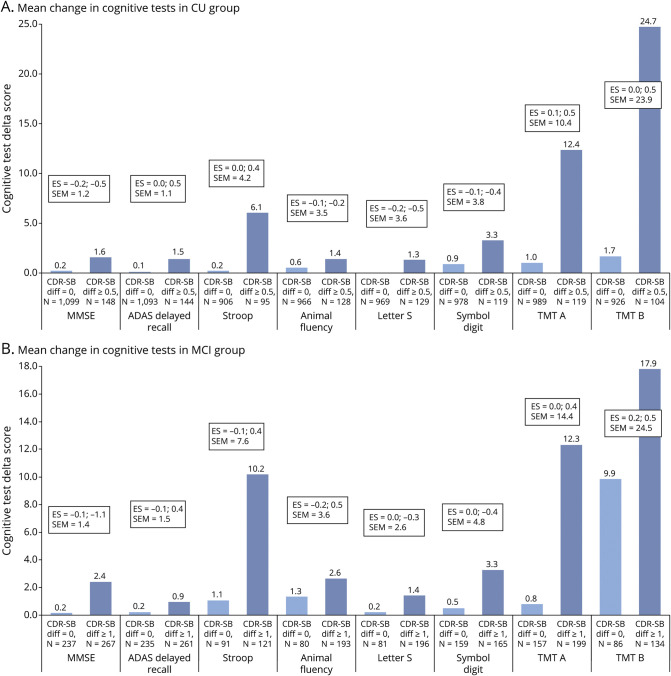
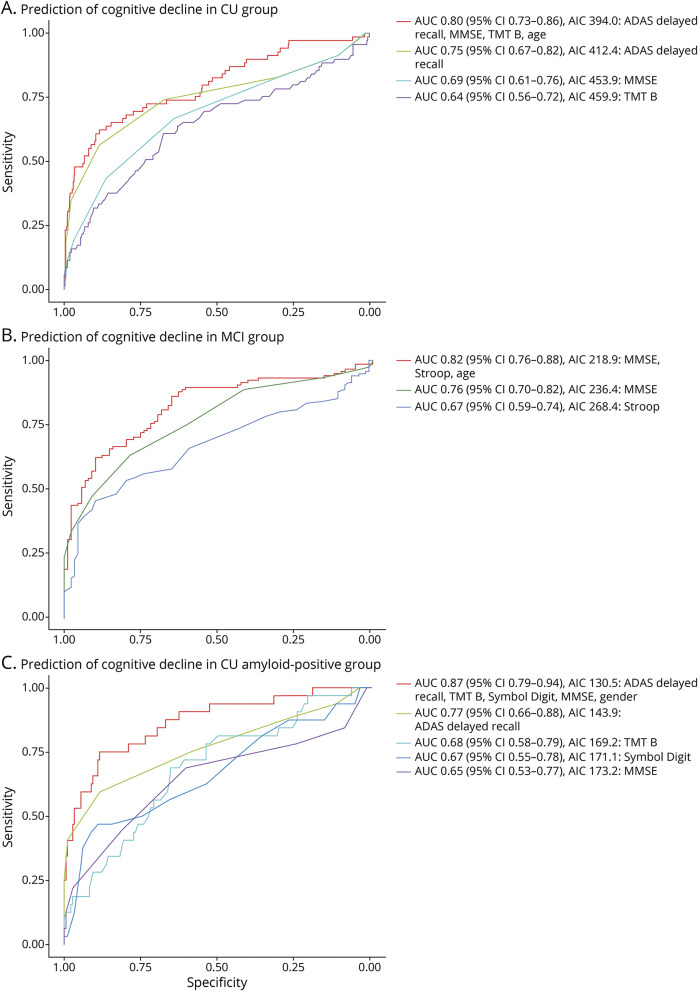
BACKGROUND AND OBJECTIVES: Identifying a clinically meaningful change in cognitive test score is essential when using cognition as an outcome in clinical trials. This is especially relevant because clinical trials increasingly feature novel composites of cognitive tests. Our primary objective was to establish minimal clinically important differences (MCIDs) for commonly used cognitive tests, using anchor-based and distribution-based methods, and our secondary objective was to investigate a composite cognitive measure that best predicts a minimal change in the Clinical Dementia Rating-Sum of Boxes (CDR-SB). METHODS: From the Swedish BioFINDER cohort study, we consecutively included cognitively unimpaired (CU) individuals with and without subjective or mild cognitive impairment (MCI). We calculated MCIDs associated with a change of ≥0.5 or ≥1.0 on CDR-SB for Mini-Mental State Examination (MMSE), ADAS-Cog delayed recall 10-word list, Stroop, Letter S Fluency, Animal Fluency, Symbol Digit Modalities Test (SDMT) and Trailmaking Test (TMT) A and B, and triangulated MCIDs for clinical use for CU, MCI, and amyloid-positive CU participants. For investigating cognitive measures that best predict a change in CDR-SB of ≥0.5 or ≥1.0 point, we conducted receiver operating characteristic analyses. RESULTS: Our study included 451 cognitively unimpaired individuals, 90 with subjective cognitive decline and 361 without symptoms of cognitive decline (pooled mean follow-up time 32.4 months, SD 26.8, range 12-96 months), and 292 people with MCI (pooled mean follow-up time 19.2 months, SD 19.0, range 12-72 months). We identified potential triangulated MCIDs (cognitively unimpaired; MCI) on a range of cognitive test outcomes: MMSE -1.5, -1.7; ADAS delayed recall 1.4, 1.1; Stroop 5.5, 9.3; Animal Fluency: -2.8, -2.9; Letter S Fluency -2.9, -1.8; SDMT: -3.5, -3.8; TMT A 11.7, 13.0; and TMT B 24.4, 20.1. For amyloid-positive CU, we found the best predicting composite cognitive measure included gender and changes in ADAS delayed recall, MMSE, SDMT, and TMT B. This produced an AUC of 0.87 (95% CI 0.79-0.94, sensitivity 75%, specificity 88%). DISCUSSION: Our MCIDs may be applied in clinical practice or clinical trials for identifying whether a clinically relevant change has occurred. The composite measure can be useful as a clinically relevant cognitive test outcome in preclinical AD trials.
Overview
The claims and statistics of this paper haven’t been checked yet.
Free: it reads the open-access text and checks the first 5 claims that cite a source we can check. Create a free account to check every claim.
Integrity signals
Registry
Cites
Statistics
Figures
Verification
Claims the paper makes
The claims and statistics of this paper haven’t been checked yet.
Free: it reads the open-access text and checks the first 5 claims that cite a source we can check. Create a free account to check every claim.
Claims other papers make about this one
Each is checked against this paper’s own text: does it say what the citing paper says it does?
The cited source says what the claim attributes to it.
In the citing paper
“Changes in Trails B by 20 s was suggested to be a clinically meaningful change in a cohort of older adults with MCI.50”
From A pilot study of senolytics to improve cognition and mobility in older adults at risk for Alzheimer's disease (2025) · cites this paper as [50]
Self-check
Percentages, sums and reported differences re-computed from the paper’s own numbers.
The self-check needs the paper’s full text.
Citations
Cites
Multimodel Inference: Understanding AIC and BIC in Model Selection
Burnham, K. P., & Anderson, D. R. (2004) · Sociological Methods & Research · doi:10.1177/0049124104268644 · Cited by 11,648
A New Clinical Scale for the Staging of Dementia
Hughes, C. P., Berg, L., Danziger, W., Coben, L. A., & Martin, R. L. (1982) · British Journal of Psychiatry · doi:10.1192/bjp.140.6.566 · Cited by 7,056 · cited 1×
“5 = questionable, 1 = mild, 2 = moderate, and 3 = severe) in domains (box scores) of memory, orientation, judgment and problem solving, community affairs, home and hobbies, and personal care.(9,10) Participants in this study were rated on the CDR by a thorough review of patient records where dementia experts assessed…”
Effect size estimates: Current use, calculations, and interpretation.
Fritz, C. O., Morris, P. E., & Richler, J. J. (2012) · Journal of Experimental Psychology: General · doi:10.1037/a0024338 · Cited by 5,199
Measurement of Functional Activities in Older Adults in the Community
Pfeffer, R. I., Kurosaki, T. T., Harrah, C. H., Chance, J. M., & Filos, S. (1982) · Journal of Gerontology · doi:10.1093/geronj/37.3.323 · Cited by 2,972
Revicki, D., Hays, R. D., Cella, D., & Sloan, J. (2008) · Journal of Clinical Epidemiology · doi:10.1016/j.jclinepi.2007.03.012 · Cited by 2,362 · cited 1×
“35 between the change score and the anchor.(40) In our study, Animal Fluency (CU only), Letter S (CU andMCI), and TMTB (MCI only) had correlations <0.”
Cerebrospinal fluid and plasma biomarkers in Alzheimer disease
Blennow, K., Hampel, H., Weiner, M., & Zetterberg, H. (2010) · Nature Reviews Neurology · doi:10.1038/nrneurol.2010.4 · Cited by 1,863 · cited 1×
“Determining Amyloid Positivity The procedure and analysis of CSF followed the Alzheimer Association Flowchart for CSF biomarkers.(15,16) We used the ratio for Aβ42/40 that we establish acquire through CSF analysis.”
mixtools: An R Package for Analyzing Finite Mixture Models
Benaglia, T., Chauveau, D., Hunter, D. R., & Young, D. (2009) · Journal of Statistical Software · doi:10.18637/jss.v032.i06 · Cited by 1,271
The Preclinical Alzheimer Cognitive Composite: Measuring Amyloid-Related Decline
Donohue, M. C., Sperling, R. A., Salmon, D. P., Rentz, D. M., Raman, R., Thomas, R. G., Weiner, M., & Aisen, P. S. (2014) · JAMA Neurology · doi:10.1001/jamaneurol.2014.803 · Cited by 860
The A4 Study: Stopping AD Before Symptoms Begin?
Sperling, R. A., Rentz, D. M., Johnson, K. A., Karlawish, J., Donohue, M., Salmon, D. P., & Aisen, P. (2014) · Science Translational Medicine · doi:10.1126/scitranslmed.3007941 · Cited by 760 · cited 1×
“In addition to examining the second aim in cognitively unimpaired (CU) participants and participants with mild cognitive impairment (MCI), we also examined this in Aβpositive CU participants because this is a group of special interest in present and future clinical AD trials.(7)”
Middel, B., & Van Sonderen, E. (2002) · International Journal of Integrated Care · doi:10.5334/ijic.65 · Cited by 464 · cited 1×
“8 a large change.(21,22) The standardized response mean (SRM) is an effect size used to measure the responsiveness of outcome measures (the ability to detect change over time), defined as mean difference in score divided by SD of the change from previous visit score.”
Research works printed but not linked: 3
- 46. Ramsamy S, Singhal S, Patel R, Gruener A. Reader response: Association of amount of weight lost after bariatric surgery with intracranial pressure in women with idiopathic intracranial hypertension. Neurology. 2023;100(11):542-543.
- 48. Mollan SP, Mitchell JL, Ottridge RS, et al. Effectiveness of bariatric surgery vs community weight management intervention for the treatment of idiopathic intracranial hypertension: a randomized clinical trial. JAMA Neurol. 2021;78(6):678-686. doi:10.1001/jamaneurol.2021.0659. · DOI · Paper page
- 51. Mitchell JL, Lyons HS, Walker JK, et al. The effect of GLP-1RA exenatide on idiopathic intracranial hypertension: randomised clinical trial. medRxiv. 2022:2022.05.24.22275518.
Cited by
A comprehensive head-to-head comparison of key plasma phosphorylated tau 217 biomarker tests
Warmenhoven, N., Salvadó, G., Janelidze, S., Mattsson-Carlgren, N., Bali, D., Orduña Dolado, A., Kolb, H., Triana-Baltzer, G., Barthélemy, N. R., Schindler, S. E., et al. (2025) · Brain · doi:10.1093/brain/awae346 · Cited by 150
Self-citationMinimal clinically important difference in Alzheimer's disease: Rapid review
Muir, R. T., Hill, M. D., Black, S. E., & Smith, E. E. (2024) · Alzheimer s & Dementia · doi:10.1002/alz.13770 · Cited by 127
Millar, C. L., Iloputaife, I., Baldyga, K., Norling, A. M., Boulougoura, A., Vichos, T., Tchkonia, T., Deisinger, A., Pirtskhalava, T., Kirkland, J. L., et al. (2025) · EBioMedicine · doi:10.1016/j.ebiom.2025.105612 · Cited by 88
“50 Furthermore, those with lower cognitive scores at baseline and thus with the most potential to improve, had a signi fi cant increase of approximately 2 points in MoCA scores at fi nal follow-up compared to baseline.”
Minimal Clinically Important Differences of Spatiotemporal Gait Variables in Parkinson Disease
Baudendistel, S. T., Haussler, A. M., Rawson, K. S., & Earhart, G. M. (2023) · Gait & Posture · doi:10.1016/j.gaitpost.2023.11.016 · Cited by 56
Pagali, S. R., Kumar, R., LeMahieu, A., Basso, M. R., Boeve, B. F., Croarkin, P. E., Geske, J. R., Hassett, L. C., Huston, J., Kung, S., et al. (2024) · International Psychogeriatrics · doi:10.1017/s1041610224000085 · Cited by 60
Evaluation of clinical benefits of treatments for Alzheimer's disease
Liu, K. Y., Walsh, S., Brayne, C., Merrick, R., Richard, E., & Howard, R. (2023) · The Lancet Healthy Longevity · doi:10.1016/s2666-7568(23)00193-9 · Cited by 31
Salemme, S., Ancidoni, A., Locuratolo, N., Piscopo, P., Lacorte, E., Canevelli, M., & Vanacore, N. (2023) · Expert Review of Neurotherapeutics · doi:10.1080/14737175.2023.2284305 · Cited by 28
“Although other studies evaluated MCID thresholds for outcomes used in AD clinical trials, only one focused on prodromal AD, identifying a change of 2.7 points as an MCID for MMSE [87].”
InfluentialAluminum exposure and cognitive performance: A meta-analysis
Vlasak, T., Dujlovic, T., & Barth, A. (2023) · The Science of The Total Environment · doi:10.1016/j.scitotenv.2023.167453 · Cited by 35
Yu, D., Li, X., He, S., Zhu, H., Lam, F. M. H., & Pang, M. Y. C. (2023) · Clinical Rehabilitation · doi:10.1177/02692155231216621 · Cited by 40
Krootnark, K., Chaikeeree, N., Saengsirisuwan, V., & Boonsinsukh, R. (2024) · Frontiers in Medicine · doi:10.3389/fmed.2024.1392429 · Cited by 35
Ioannou, K., Bucci, M., Tzortzakakis, A., Savitcheva, I., Nordberg, A. K., Chiotis, K., & Initiative, A. D. N. (2024) · Molecular Psychiatry · doi:10.1038/s41380-024-02672-9 · Cited by 37
Gutiérrez-Reguero, H., Buendía-Romero, Á., Franco-López, F., Martínez-Cava, A., Hernández-Belmonte, A., Courel-Ibáñez, J., Ara, I., Alcazar, J., & Pallarés, J. G. (2024) · The Journal of nutrition, health and aging · doi:10.1016/j.jnha.2024.100208 · Cited by 22
A feature-aware multimodal framework with auto-fusion for Alzheimer’s disease diagnosis
Zhang, M., Cui, Q., Lü, Y., & Li, W. (2024) · Computers in Biology and Medicine · doi:10.1016/j.compbiomed.2024.108740 · Cited by 30
Zonneveld, M. H., Kuhaili, N. A., Mooijaart, S. P., Slagboom, P. E., Jukema, J. W., Noordam, R., & Trompet, S. (2024) · GeroScience · doi:10.1007/s11357-024-01391-x · Cited by 21
“Moreover, the minimally clinically important difference (MCID) of the Stroop test is 5.5 to 9.3 s [14].”
InfluentialRetinal thickness predicts the risk of cognitive decline over five years
Eppenberger, L. S., Li, C., Wong, D. W. K., Tan, B., Garhöfer, G., Hilal, S., Chong, E. J. Y., Toh, A. Q., Venketasubramanian, N., Chen, C., et al. (2024) · Alzheimer s Research & Therapy · doi:10.1186/s13195-024-01627-0 · Cited by 22
Rabl, M., Zullo, L., Lewczuk, P., Kornhuber, J., Karikari, T. K., Blennow, K., Zetterberg, H., Bavato, F., Quednow, B. B., Seifritz, E., et al. (2024) · Alzheimer s Research & Therapy · doi:10.1186/s13195-024-01526-4 · Cited by 26
“To evaluate the performance of baseline NPS, single biomarkers, and combinations thereof to predict cognitive and functional decline (defined as worsening of the CDRSB > 0.5/year [45]) or the presence of cerebral AD pathology, the same approach using ROC analysis as mentioned above was used.”
InfluentialThe Effect of Dysautonomia on Motor, Behavioral, and Cognitive Fluctuations in Parkinson's Disease
Mahajan, A., Morrow, C. B., Seemiller, J., Mills, K. A., & Pontone, G. M. (2024) · Movement Disorders · doi:10.1002/mds.30044 · Cited by 20
Rabl, M., Clark, C., Dayon, L., Bowman, G. L., & Popp, J. (2022) · Journal of Neurochemistry · doi:10.1111/jnc.15715 · Cited by 15
“For capturing clinically meaningfully changes, a CDR- SoB score of >0.5 was proposed to be used for clinical AD trials (Borland et al., 2022).”
InfluentialStoeckel, L. E., Fazio, E. M., Hardy, K. K., Kidwiler, N., McLinden, K. A., & Williams, B. (2025) · Alzheimer s & Dementia Translational Research & Clinical Interventions · doi:10.1002/trc2.70058 · Cited by 19
Clifford, A. M., Cheung, P. S., Malley, N. O., Byrne, S., Whiston, A., Kennelly, B., Mphepo, T., Eshghimanesh, Z., Thabane, L., Louw, Q. A., et al. (2024) · Archives of Gerontology and Geriatrics · doi:10.1016/j.archger.2024.105371 · Cited by 12
Zhu, M., Ying, Q., Wang, L., Zhou, R., & Mei, Y. (2024) · BMC Geriatrics · doi:10.1186/s12877-024-05543-8 · Cited by 14
Baltussen, J. C., Derks, M. G. M., Lemij, A. A., de Glas, N. A., Fiocco, M. F., Linthorst-Niers, E., Vulink, A. J. E., van Gerven, L., Guicherit, O. R., van Dalen, T., et al. (2023) · European Journal of Cancer · doi:10.1016/j.ejca.2023.02.008 · Cited by 12
Loss, K. L., Fandino, W., Almarie, B., Bazan-Perkins, B. M., Minetto, J., Aranis, N., Monaco, T., Aladab, A., Pacheco‐Barrios, K., & Fregni, F. (2024) · Dialogues in Health · doi:10.1016/j.dialog.2024.100183 · Cited by 9
Brogaard, N. J., Hahn‐Pedersen, J. H., Gundgaard, J., Polavieja, P., Bray, B., Chan, M. S., Hoang, M. T., & Trépel, D. (2025) · Alzheimer s & Dementia · doi:10.1002/alz.70163 · Cited by 8
Treating Alzheimer’s Disease: Focusing on Neurodegenerative Consequences
Sun, M., & Alkon, D. L. (2024) · Journal of Alzheimer s Disease · doi:10.3233/jad-240479 · Cited by 9
Falkenreck, J. M., Kunkler, M. C., Ophey, A., Weigert, H., Friese, A., Jahr, P., Nelles, G., Kalbe, E., & Polidori, M. C. (2023) · Journal of Alzheimer s Disease · doi:10.3233/jad-220619 · Cited by 8
Mahajan, A., Morrow, C. B., Seemiller, J., Mills, K. A., & Pontone, G. M. (2025) · Movement Disorders Clinical Practice · doi:10.1002/mdc3.70100 · Cited by 6
Sharma, V. K., & Malek‐Ahmadi, M. H. (2023) · Alzheimer Disease & Associated Disorders · doi:10.1097/wad.0000000000000568 · Cited by 7
Opportunities and challenges with decentralized trials in Neuroscience
Burger, H. U., de Casteele, T. V., Rantell, K. R., Corey‐Lisle, P. K., Sfikas, N., Abt, M., & the Working group on Decentralized Trials as part of the European Scientific Interest Group (ESIG) in Neuroscience (2023) · Biometrical Journal · doi:10.1002/bimj.202200370 · Cited by 7
“Taking the example of CDR-SoB, a population mean difference of 0.5 points in the scale may already be clinically relevant (Borland et al., 2022; Haeberlein et al., 2022) and studies so far were powered for relative differences (with respect to placebo) in the range of 25–30% (Haeberlein et al.,…”
InfluentialBilly, C. L. S., Hiko, C. Y. C., Zheng, Y., Kwok, M. M. Y., Eugenie, Y. K. M., Fabiola, M. T., Gerald, C. N. N., Nicco, N. L. S., Stella, W. S. T., & Shamay, S. M. N. (2024) · Experimental Gerontology · doi:10.1016/j.exger.2024.112605 · Cited by 9
Scandiffio, J., Langer, L. K., Senthilnathan, V., Feng, G., Sureshkumar, A., Bromberg, M., Babineau, J., Donkers, S. J., Knox, K. B., Bruno, T. R., et al. (2025) · Journal of Neurology · doi:10.1007/s00415-025-13315-6 · Cited by 9
Bermudo-Gallaguet, A., Ariza, M., Agudelo, D., Camins-Vila, N., Boldo, M., Ferrer-Uris, B., Busquets, A., Pera, G., Cáceres, C. M., Gomis, M., et al. (2025) · Annals of Physical and Rehabilitation Medicine · doi:10.1016/j.rehab.2025.102008 · Cited by 7
Ahmad, S. N. S., Shojaedin, S. S., & Tazji, M. K. (2025) · BMJ Open · doi:10.1136/bmjopen-2024-086941 · Cited by 7
“Our power calculations are based on Borland et al , 63 who identified the minimal clinically important difference (MCID) of SDMT for mild cognitive impairment.”
Faini, C., Sen, A., & Romoli, M. (2025) · Epilepsia Open · doi:10.1002/epi4.70091 · Cited by 9
Utilizing MCID for evaluating clinical relevance of AD therapeutic interventions
Hamilton, J. L., Fuller, R. L. M., Modi, N., & Sampaio, C. (2025) · Alzheimer s & Dementia Translational Research & Clinical Interventions · doi:10.1002/trc2.70138 · Cited by 5
The Evolution of Randomized Clinical Trial Designs to Assess Therapeutics in Alzheimer Disease
Aumont, É., Therriault, J., Kwan, A. T. H., Carello‐Collar, G., Arfaie, S., Hall, B. J., Ferrari‐Souza, J. P., Woo, M. S., Macedo, A. C., Tissot, C., et al. (2025) · JAMA Network Open · doi:10.1001/jamanetworkopen.2025.29665 · Cited by 4
Han, X., Zhu, S., Zhang, H., Xia, T., & Gu, X. (2026) · The FASEB Journal · doi:10.1096/fj.202504014r · Cited by 5
“Cognitive decline during follow-up was defined as a clinically meaningful worsening in the CDR-SB, with a ΔCDR-SB > 0.5 indicating a significant deterioration over time [17].”
InfluentialAlhasan, A. S., Alhasan, M. S., Milburn, J. M., Ghunaim, H. A., Khalil, M., Almaghraby, A., Alharthi, O. A., Hamoud, S., Essibayi, M. A., Elhassan, Y. H., et al. (2026) · The journal of nutrition health & aging · doi:10.1016/j.jnha.2026.100823 · Cited by 4
Saeed, A., Niazi, I. K., Alzahrani, A., Trager, R. J., Haavik, H., & Amjad, I. (2024) · Mental health and physical activity · doi:10.1016/j.mhpa.2024.100637 · Cited by 7
Ortega, N., Mueller, N. J., Dehghan, A., de Crom, T. O. E., von Gunten, A., Preisig, M., Marques-Vidal, P. M., Vinceti, M., Voortman, T., Rodondi, N., et al. (2025) · Nutrition Journal · doi:10.1186/s12937-025-01083-y · Cited by 6
Intensive assessment of executive functions derived from performance in cognitive training games
Soldevila‐Domenech, N., Toma, I. D., Forcano, L., Diaz‐Pellicer, P., Cuenca‐Royo, A., Fagundo, A. B., Lorenzo, T., Gomis‐González, M., Sánchez‐Benavides, G., Fauria, K., et al. (2023) · iScience · doi:10.1016/j.isci.2023.106886 · Cited by 5
Sugimoto, T., Crane, P. K., Choi, S., Fujita, K., Gallée, J., Kuroda, Y., Lee, M. K., Matsumoto, N., Nakamura, A., Noma, H., et al. (2025) · Journal of Aging Research and Lifestyle · doi:10.1016/j.jarlif.2025.100016 · Cited by 4
Joyce, O., McHugh, C., Mockler, D., Wilson, F., & Kelly, Á. M. (2025) · PLoS ONE · doi:10.1371/journal.pone.0327408 · Cited by 3
Salemme, S., Ancidoni, A., & Vanacore, N. (2023) · Brain Communications · doi:10.1093/braincomms/fcad276 · Cited by 3
Popp, Z., Ang, T. F. A., Hwang, P. H., Au, R., & Chen, J. (2025) · Journal of Alzheimer s Disease · doi:10.1177/13872877251352216 · Cited by 5
“41,42 The main effect of time observed in this study (2.2 per year) matched this threshold of signi fi cance.”
InfluentialSaposnik, G., Sánchez‐Benavides, G., García-Arcelay, E., Macías, E. F., Bensi, C., Carmelingo, S., Allegri, R., Pérez-Martínez, D. A., & Mauriño, J. (2023) · Neurology and Therapy · doi:10.1007/s40120-023-00466-9 · Cited by 4
Müller, K., Poppele, I., Ottiger, M., Weber, R.-C., Stegbauer, M., & Schlesinger, T. (2025) · Frontiers in Psychiatry · doi:10.3389/fpsyt.2025.1460097 · Cited by 3
López‐Martos, D., Cacciaglia, R., Suárez‐Calvet, M., Salvadó, G., Shekari, M., González‐Escalante, A., Milà‐Alomà, M., Brugulat‐Serrat, A., Minguillón, C., Tonietto, M., et al. (2026) · The Journal of Prevention of Alzheimer s Disease · doi:10.1016/j.tjpad.2026.100612 · Cited by 3
Validation of a Brief Physical Activity Assessment Tool for Adults With Limited Resources
Li, C. L., Auld, G., Crouter, S. E., & Palmer‐Keenan, D. (2024) · Journal of Nutrition Education and Behavior · doi:10.1016/j.jneb.2024.10.011 · Cited by 2
Clinically Relevant Changes for Cognitive Outcomes in Preclinical and Prodromal Cognitive Stages
(2023) · Neurology · doi:10.1212/wnl.0000000000206876 · Cited by 2
Development of a Cognitive Composite for Preclinical Alzheimer’s Disease in Korean Older Adults
Kim, M., Yi, D., Byun, M. S., Ahn, H., Jung, J. H., Kong, N., Chang, Y., Choi, H., Choi, J.-M., Kim, K. T., et al. (2023) · Journal of Alzheimer s Disease · doi:10.3233/jad-230263 · Cited by 2
Cognitive impairment in tuberculous meningitis: Systematic review & meta-analysis
Ashwin, J. V., Verma, R. K., Shahi, M. K., Singh, B. P., & Kamble, A. A. (2025) · Indian Journal of Tuberculosis · doi:10.1016/j.ijtb.2025.06.003 · Cited by 1
Subclinical Myocardial Injury and Global Cognitive Performance
Tomar, S., Lidani, K. C. F., de Moraes, A. A. I., Huang, S., Oakley, C. T., Nasir, K., Blaha, M. J., Heckbert, S. R., Hughes, T. M., deFilippi, C. R., et al. (2025) · JACC Advances · doi:10.1016/j.jacadv.2025.101894 · Cited by 1
Noseworthy, M. W., Falck, R. S., Galea, L. A. M., Handy, T. C., & Liu-Ambrose, T. Y. L. (2025) · Scientific Reports · doi:10.1038/s41598-025-05047-4 · Cited by 2
“…300 m, was also associated with better set-shifting among males than among females, although the difference—a 0.284-sec greater improvement in TMT B-A score per 10% increment in residential nature exposure—was much less than the MCID of 12.7 s reported for cognitively unimpaired older adults 67 .”
InfluentialCerin, E., Soloveva, M. V., Molina, M. A., Schroers, R., Wu, Y., Sachdev, P. S., Knibbs, L. D., Cherbuin, N., Jalaludin, B. B., Mavoa, S., et al. (2025) · The Science of The Total Environment · doi:10.1016/j.scitotenv.2025.180354 · Cited by 1
Filip, P., McCarten, J. R., Hemmy, L. S., Crocker, J., Wolf, M., Thotland, J., Caycı, Z., Kes, T., Michaeli, S., Terpstra, M., et al. (2025) · Journal of Neurochemistry · doi:10.1111/jnc.70241 · Cited by 2
Yousefian, Z., Hosseini, S. H., Nazari, M. A., Kazemi, R., Jafarabadi, M. A., Ghazvini, H., Rafaiee, R., & Tamijani, S. M. S. (2025) · Brain and Behavior · doi:10.1002/brb3.71017 · Cited by 2
Yen, P.-Y., Hou, H., Chiou, J., Chen, Y., & Chen, J.-H. (2025) · Journal of the Formosan Medical Association · doi:10.1016/j.jfma.2025.12.033 · Cited by 1
Hilvert, A. M., Sundrani, S. C., Baker, C. R., Chao, A., Vanleuven, J., Ye, E., Hughes, N., Long, I. C., Battula, S., Li, R., et al. (2026) · Neurosurgery · doi:10.1227/neu.0000000000003893 · Cited by 1
Tallapragada, B., Markovic, S. J., Marston, K. J., Brown, B. M., Galna, B., Shishegar, R., Gross, A. L., Lim, Y. Y., Fripp, J., Doecke, J. D., et al. (2026) · Journal of Alzheimer s Disease · doi:10.1177/13872877261433044 · Cited by 1
Janelsins, M. C., Alieldin, R., Holler, T., Sun, H., Lin, P., Shayne, M., Huston, A. J., Doyle, K., Porto, M., Tejani, M. A., et al. (2026) · Cancer · doi:10.1002/cncr.70323 · Cited by 1
Apathy in Parkinson's Disease: Distinguishing Overlapping Symptoms Via Network Analysis
Seemiller, J., Mahajan, A., Morrow, C. B., Mcguire, J. F., Bowers, D., Mills, K. A., & Pontone, G. M. (2026) · Movement Disorders Clinical Practice · doi:10.1002/mdc3.70698 · Cited by 1
Computerized cognitive remediation of Long COVID in older adults
Lindbergh, C. A., Altizer, R., Grady, J. J., Diniz, B. S., Kamath, J., Steffens, D. C., & Morimoto, S. S. (2024) · International Psychogeriatrics · doi:10.1017/s1041610224000139 · Cited by 1
Federated Learning for Predicting Mild Cognitive Impairment to Dementia Conversion
Sharma, G., Moradi, E., Pajula, J., Hilvo, M., & Tohka, J. (2025) · Annual International Conference of the IEEE Engineering in Medicine and Biology Society (EMBC) · doi:10.1109/embc58623.2025.11254632 · Cited by 1
Li, C., Li, L., & Yuan, X. (2026) · Clinical Nutrition · doi:10.1016/j.clnu.2026.106631 · Cited by 1
Adapted Home-Based Exercises in Dementia: An Exploratory Pre-post Pilot and Feasibility Study
Carrard, S., Eyer, S., Hilfiker, R., & Hager, A.-G. M. (2024) · American Journal of Alzheimer s Disease & Other Dementias® · doi:10.1177/15333175241263741 · Cited by 2
Middleton, L. E., Vucea, V., Liu, G., Bethell, J., Cooke, H. A., Keller, H., Liu-Ambrose, T. Y. L., O’Connell, M. E., Stapleton, J. E., Waldron, I. R. G., et al. (2024) · PLoS ONE · doi:10.1371/journal.pone.0310690 · Cited by 1
Schworer, E., Handen, B., Krinsky-McHale, S., Hom, C., Clare, I., Harp, J., Pulsifer, M., Mapstone, M., Head, E., Christian, B., et al. (2025) · Journal of Intellectual Disability Research · doi:10.1111/jir.13237
Hamad, H. K. A., & Sathian, B. (2025) · Geriatrics and gerontology international/Geriatrics & gerontology international · doi:10.1111/ggi.70131
Cognitive sequelae in post-COVID-syndrome: a Danish-Swedish case-control study
Christensen, J. F. M. M., Meyer, R., Holmqvist, M., Carlson, K. B., Palmqvist, S., Kahn, F., The CHRONIC-19-study Group, Jűrgens, G., Meyer, C. N., Rasmussen, K. B., et al. (2025) · Scandinavian Journal of Infectious Diseases · doi:10.1080/23744235.2025.2551665 · Cited by 1
Self-citationMultimodal biomarker characterization of amnestic objective subtle cognitive declinePreprint
López‐Martos, D., Cacciaglia, R., Suárez‐Calvet, M., Salvadó, G., Shekari, M., González‐Escalante, A., Milà‐Alomà, M., Brugulat‐Serrat, A., Minguillón, C., Tonietto, M., et al. (2025) · medRxiv · doi:10.1101/2025.10.27.25338711
“20 28 Previously, we combined these methods to develop robust biomarker-based longitudinal neuropsychological references, demonstrating greater sensitivity in detecting significant cognitive decline, particularly in episodic memory.”
Zhang, Y. (2026) · Journal of the Formosan Medical Association · doi:10.1016/j.jfma.2026.01.058
Lee, H. S., Sohn, M. K., Lee, J., Kim, D. Y., Shin, Y.-I., Oh, G., Lee, Y.-S., Joo, M. C., Lee, S. Y., Song, M., et al. (2026) · The Lancet Regional Health - Western Pacific · doi:10.1016/j.lanwpc.2026.101800
Kim, G.-M., 최재원, Han, C., Bae, M., Park, J., Wang, I. J., Kim, B., Song, C., & Huh, U. (2026) · Life · doi:10.3390/life16030441
Schweitzer, N., Son, S. J., Iordanova, B. E., Fitz, N. F., Costa, A. P., Li, J., Chen, C., Yang, S., Hong, C. H., Roh, H. W., et al. (2026) · Alzheimer s & Dementia Diagnosis Assessment & Disease Monitoring · doi:10.1002/dad2.70256 · Cited by 1
Zhang, Y., Ma, L., Ma, Y., Chang, J., Zhao, Y., Gao, X. J., Wu, Y., Xing, Y., Guo, Y., Ma, L., et al. (2026) · Frontiers in Neurology · doi:10.3389/fneur.2026.1787145
Cao, Y., Lee, J., Seol, J., Tsunoda, K., Shibuya, K., Yoon, J., Arai, T., & Okura, T. (2026) · Geriatrics · doi:10.3390/geriatrics11020032 · Cited by 1
Webster-Cordero, F., & Giménez‐Llort, L. (2026) · Research Square · doi:10.21203/rs.3.rs-9059640/v1
A Biomarker Out of Context: Understanding High p-tau217 in the Developing Brain
Pal, A., Yadav, H., Yadav, D., Goel, F., & Rajput, M. S. (2026) · Molecular Neurobiology · doi:10.1007/s12035-026-05968-9
Bu-yu, L., Zhuang, C., & Ruan, H. (2026) · Frontiers in Aging Neuroscience · doi:10.3389/fnagi.2026.1866613
Moncion, K., Rodrigues, L., Bon, A., Sutoski, A., Sikorska, K., Allison, E. Y., Abreu, J., Golchi, S., Arbour, N., Gauthier, C. J., et al. (2026) · BMJ Open · doi:10.1136/bmjopen-2026-123336
Arabpour, Z., Arabpour, Z., & Jazayeri, S. (2026) · Nutrition Reviews · doi:10.1093/nutrit/nuaf286 · Cited by 1
Biondi, M., Ronold, E. H., Mossige, I., Oltedal, L., Ousdal, O. T., Abbott, C. C., Ødegaard, K. J., Grüner, R., & Keßler, U. (2026) · NeuroImage Clinical · doi:10.1016/j.nicl.2026.104078
Metadata
- Authors
- Borland, E., Edgar, C., Stomrud, E., Cullen, N., Hansson, O., & Palmqvist, S.
- Affiliations
- Lund University (SE)
- Corresponding author
- Borland, Emma
- Venue
- Neurology
- Published
- 2022-09-13
- Volume
- 99
- Issue
- 11
- Pages
- e1142-e1153
- ISSN
- 0028-3878 (ISSN-L)
- 1526-632X
- PMC
- PMC9536741
- OpenAlex
- W4285495175
- Semantic Scholar
- 3486936d1db88186bfa29efeb351367f060e177b
- Cited by
- 83
- References
- 44
- Citations by year
- 2026: 20 · 2025: 27 · 2024: 21 · 2023: 14 · 2022: 1
- FWCI
- 10.25
- Type
- journal article
- Language
- en
- Update notices
- correction (2023-01-23)
- Open access
- hybrid
- doi.org
- Licence
- cc-by
- Locations
- Neurology (publishedVersion, cc-by)
- PubMed Central (publishedVersion, cc-by)
- PubMed (publishedVersion)
- Lund University Publications (Lund University) (submittedVersion)
- Funders
- Australian Government
- Lunds Universitet
- Knut och Alice Wallenbergs Stiftelse (2017‐0383)
- Vetenskapsrådet (2016-00906, FO2021-0293, 2018-, 2018-02052, 2017-00383)
- Konung Gustaf V:s och Drottning Victorias Frimurarestiftelse (2020-O000028, 2020-0314)
- Skånes universitetssjukhus (2020-O000028)
- Marcus och Amalia Wallenbergs minnesfond (2015.0125)
- Parkinsonfonden (1280/20)
- Topics
- Health Sciences › Medicine › Psychiatry and Mental health › Dementia and Cognitive Impairment Research
- Health Sciences › Medicine › Oncology › Cancer-related cognitive impairment studies
- Social Sciences › Psychology › Applied Psychology › Psychological Testing and Assessment
- Keywords
- minimal clinically important difference, cognitive outcome measures, mild cognitive impairment, subjective cognitive decline, prodromal Alzheimer's disease, CDR-SB, Mini-Mental State Examination, Symbol Digit Modalities Test, Trail Making Test, Stroop task, cognitive decline prediction
- MeSH terms
- Alzheimer Disease, Cognition, Humans, Neuropsychological Tests, Cohort Studies, Cognitive Dysfunction, Prodromal Symptoms
About these checks
Registry, retraction, Cites and statistics results are computed, not judged, with one exception: a printed reference that no index lists is read once by a model before it counts as a citation error. Claims are extracted by a model and kept only when their quote appears verbatim in the text; each cited source is then checked, with a model’s help, for whether it says what the claim relies on. Those verdicts can be wrong — read the claim’s quote and the cited source before relying on one.
Statistics and arithmetic are recomputed, not judged.
Confidence bands are shown only for fields calibrated on our annotated test set. None is calibrated yet, so no band is shown.
What counts as a claim ›How we measure confidence ›How we check this ›
Are you an author, or do you see a problem with this page? Request a review
Data sources
Bibliographic data: Semantic Scholar, OpenAlex, Crossref.
Contains information from the Semantic Scholar Academic Graph Datasets, made available under the ODC Attribution License (ODC-BY 1.0).
Semantic Scholar’s data is described in: Kinney, R., et al. (2023). The Semantic Scholar Open Data Platform. arXiv:2301.10140.
