

The DOI matches its Crossref record; 42 of the 42 references it cites were found in a registry or an index.
Rivers and Reconciliation
Abstract
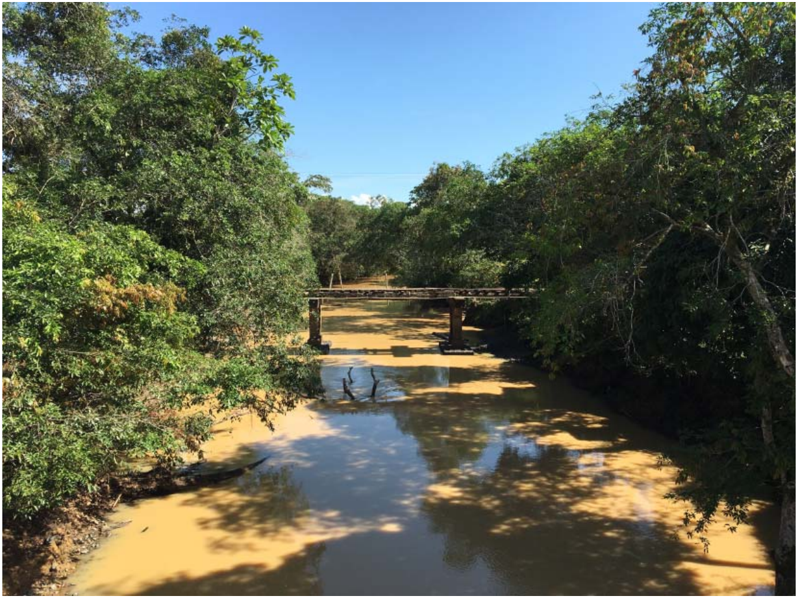
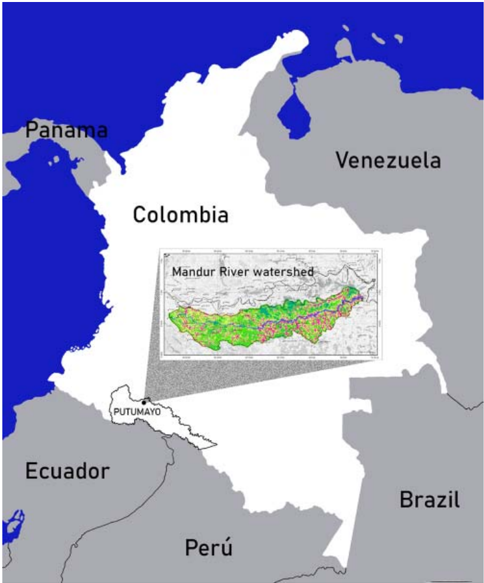
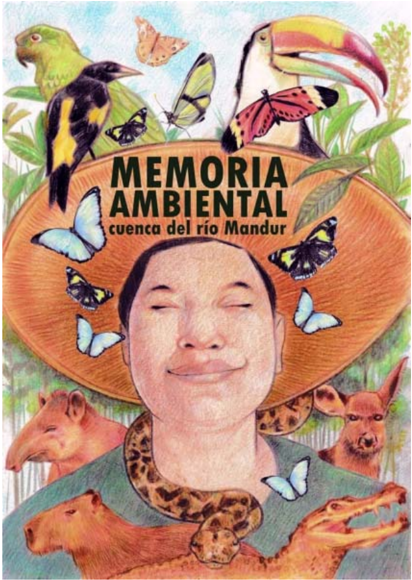
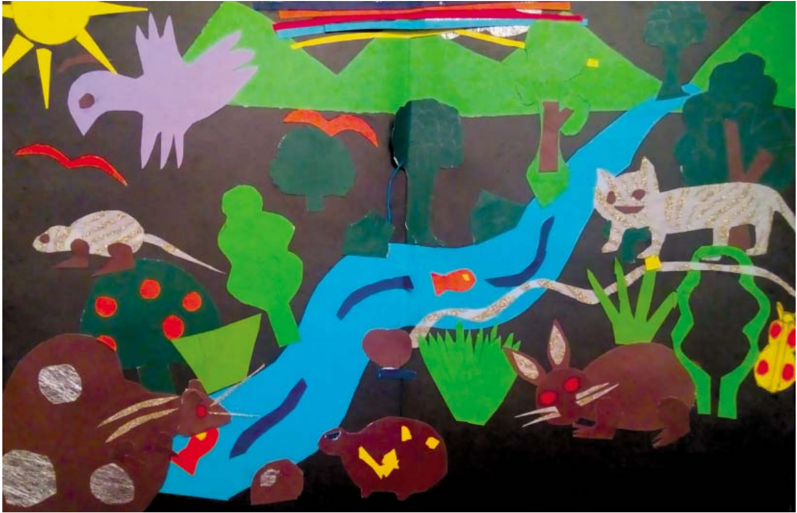
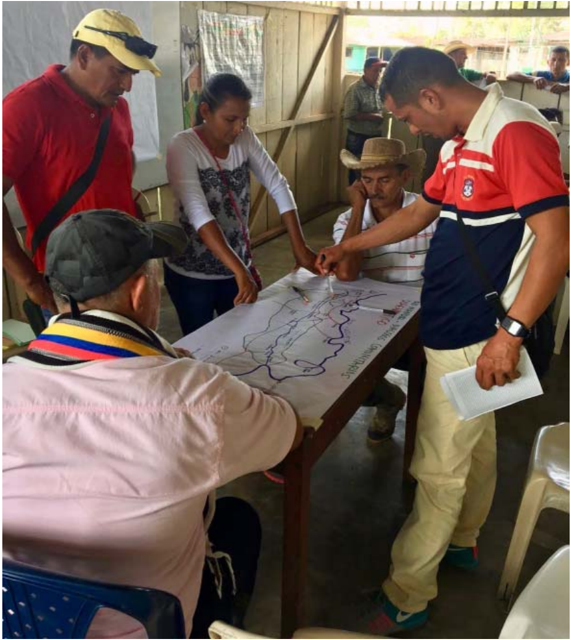
This article presents an ethnographic and participatory action research project to reconstruct the “socioecological memory” of the Mandur River watershed in the Colombian Amazon. The objective of this project was to create conditions for community dialogues over the territorial ordering, recovery, and conservation of the watershed in the midst of ongoing socio-environmental conflicts. The author introduces the proposal to engage in what grassroots organizations call “profound reconciliation” along with the ethical stakes of reconciliatory processes that tend to human and more-than-human relations damaged by the interconnected dynamics of structural violence and decades of war. The author presents the environmental humanities-based methodologies that emerged in the collective process to elaborate the memory of the Mandur. The article also discusses the importance of fostering spaces for bettering conflict and offers reflections about the challenges posed for public engaged scholarship when a post–peace accord transition shifts toward the perpetuation of violence and militarized forms of conservation. Scientific and arts-based practices provided distinct evidentiary and speculative tools for analyzing the current conditions of the watershed and imagining future reparative strategies. The article argues that these methods allowed communities to not only diagnose the problems at hand but also hesitantly ask “What else is possible?” in a context of economic precarity, chronic insecurity, and institutional omission.
Overview
The claims and statistics of this paper haven’t been checked yet.
Run the check — free, no account needed. It reads the open-access text and checks the sources it cites.
Integrity signals
Registry
Cites
Statistics
Figures
Verification
Claims the paper makes
The claims and statistics of this paper haven’t been checked yet.
Run the check — free, no account needed. It reads the open-access text and checks the sources it cites.
Claims other papers make about this one
Each is checked against this paper’s own text: does it say what the citing paper says it does?
In the citing paper
“Thirdly, counter-mapping generally takes on multi-genre, multi-media formats, combining Western mapping techniques with spatial, narrative, and performative modes of knowledge production incongruent with Western cartography.”
From Counter‐Mapping, Counter‐Histories, and Insurgencies of Subjugated Knowledges in the Fisher Struggle for Ennore Creek (2025) · cites this paper as Lyons 2023
Self-check
Percentages, sums and reported differences re-computed from the paper’s own numbers.
The self-check needs the paper’s full text.
Citations
Cites
A Thousand Plateaus: Capitalism and Schizophrenia
Gilman, S. L., Deleuze, G., Guattari, F., & Massumi, B. (1989) · Journal of Interdisciplinary History · doi:10.2307/203963 · Cited by 22,692
Dis-agreement : politics and philosophy
Rancière, J., & Rose, J. (1998) · Cited by 3,479
Stengers, I. (2005) · Dépôt institutionnel de l'Université libre de Bruxelles (Université Libre de Bruxelles) · Cited by 674
SENTIPENSAR CON LA TIERRA. NUEVAS LECTURAS SOBRE DESARROLLO, TERRITORIO Y DIFERENCIA
Escobar, A. A. (2015) · Redalyc (Universidad Autónoma del Estado de México) · Cited by 520
Inventing the Truth: The Art and Craft of Memoir
Baker, W., & Zinsser, W. (1988) · The Antioch Review · doi:10.2307/4611853 · Cited by 446
Forensic Architecture: Violence at the Threshold of Detectability
Weizman, E. (2017) · doi:10.2307/j.ctv14gphth · Cited by 446
Haunting legacies: violent histories and transgenerational trauma
(2011) · Choice Reviews Online · doi:10.5860/choice.48-5519 · Cited by 444
Memory Frictions: Localizing the Truth and Reconciliation Commission in Sierra Leone
Shaw, R. (2007) · International Journal of Transitional Justice · doi:10.1093/ijtj/ijm008 · Cited by 330
Standing With and Speaking as Faith: A Feminist-Indigenous Approach to Inquiry
TallBear, K. (2014) · DOAJ (DOAJ: Directory of Open Access Journals) · Cited by 329
Unfinished: The Anthropology of Becoming
(2017) · Duke University Press eBooks · doi:10.1215/9780822372455 · Cited by 305
Ciencia propia y colonialismo intelectual
Borda, O. F. (1968) · Dialnet (Universidad de la Rioja) · Cited by 264
The Make-Believe Space: Affective Geography in a Postwar Polity
Akçalı, E. (2013) · Social & Cultural Geography · doi:10.1080/14649365.2013.821285 · Cited by 227
Against Forgetting: Twentieth-Century Poetry of Witness
Wronsky, G. F., & Forché, C. (1994) · The Antioch Review · doi:10.2307/4613024 · Cited by 179
Vital Decomposition: Soil Practitioners and Life Politics
Lyons, K. (2020) · Project Muse (Johns Hopkins University) · Cited by 168
Self-citationReconciliation after Ethnic Cleansing: Listening, Retribution, Affiliation
Borneman, J. (2002) · Public Culture · doi:10.1215/08992363-14-2-281 · Cited by 141
Routledge Handbook of Interdisciplinary Research Methods
Lury, C., Fensham, R., Heller-Nicholas, A., et al. (2018) · Routledge eBooks · doi:10.4324/9781315714523 · Cited by 113
The Promise of Multispecies Justice
(2022) · Duke University Press eBooks · doi:10.1515/9781478023524 · Cited by 109
Blasted Landscapes (and the Gentle Arts of Mushroom Picking)
Tsing, A. (2014) · Duke University Press eBooks · doi:10.1215/9780822376989-005 · Cited by 101
Chemical warfare in Colombia, evidentiary ecologies and senti-actuando practices of justice
Lyons, K. (2018) · Social Studies of Science · doi:10.1177/0306312718765375 · Cited by 100
Self-citationS trategic A rts‐ B ased P eacebuilding
Shank, M., & Schirch, L. (2008) · Peace & Change · doi:10.1111/j.1468-0130.2008.00490.x · Cited by 97
Governance, Natural Resources, and Post-Conflict Peacebuilding
(2016) · Routledge eBooks · doi:10.4324/9780203109793 · Cited by 90
Ruiz‐Serna, D. (2017) · Revista Colombiana de Antropología · doi:10.22380/2539472x.118 · Cited by 88
Kirksey, E., Shapiro, N., & Brodine, M. (2013) · Social Science Information · doi:10.1177/0539018413479468 · Cited by 85
Cowards Don't Make History : Orlando Fals Borda and the Origins of Participatory Action Research
Rappaport, J. (2020) · Project Muse (Johns Hopkins University) · Cited by 83
Crapanzano, V. (2011) · University of Chicago Press eBooks · doi:10.7208/chicago/9780226118789.001.0001 · Cited by 66
The Archive in the Witness: Documentation in Settings of Chronic Insecurity
Riano-Alcala, P., & Baines, E. K. (2011) · International Journal of Transitional Justice · doi:10.1093/ijtj/ijr025 · Cited by 62
Science by the People: Participation, Power, and the Politics of Environmental Knowledge
Kimura, A. H., & Kinchy, A. J. (2019) · doi:10.36019/9780813595115 · Cited by 44
Remembering Place: Memory and Violence in Medellin, Colombia
Riaño‐Alcalá, P. (2002) · The Journal of Latin American and Caribbean Anthropology · doi:10.1525/jlat.2002.7.1.276 · Cited by 42
Olarte-Olarte, M. C. (2019) · Revista de Estudios Sociales · doi:10.7440/res67.2019.03 · Cited by 39
Transmissions: critical tactics for making and communicating research
Jungnickel, K. (2020) · Cited by 39
Garavito, C. R., Franco, D. R., & Crane, H. D. (2017) · Dejusticia eBooks · doi:10.2307/jj.16192146 · Cited by 31
Todd, Z. (2016) · TOPIA Canadian Journal of Cultural Studies · doi:10.3138/topia.36.43 · Cited by 29
“Nature” and territories as victims: Decolonizing Colombia's transitional justice process
Lyons, K. (2022) · American Anthropologist · doi:10.1111/aman.13798 · Cited by 29
Self-citationGobernanza del agua: pensar desde las fluctuaciones, los enmarañamientos y políticas del día a día
Bocarejo Suescún, D. (2018) · Revista de Estudios Sociales · doi:10.7440/res63.2018.09 · Cited by 22
Lyons, K. (2018) · City & Society · doi:10.1111/ciso.12191 · Cited by 10
Self-citationMisalignment of watershed and jurisdictional boundaries: the importance of scale
Grigg, N. S. (2015) · Water Policy · doi:10.2166/wp.2015.174 · Cited by 9
Cusato, E. (2017) · International Community Law Review · doi:10.1163/18719732-12340030 · Cited by 6
Ware, V., Lauterjung, J., & McSolvin, S. H. (2021) · European Journal of Development Research · doi:10.1057/s41287-021-00416-x · Cited by 6
The Wake of Crows: Living and Dying in Shared Worlds
Jones, J. (2021) · Environmental Philosophy · doi:10.5840/envirophil2021182118 · Cited by 4
Art and Memory as Reconciliation Tool? Re-Thinking Reconciliation Strategies in the Western Balkans
Savić-Bojanić, M., & Kalemaj, I. (2021) · Southeastern Europe · doi:10.30965/18763332-45030001 · Cited by 4
Lyons, K., Pinto‐García, L., & Ruiz‐Serna, D. (2019) · Maguaré · doi:10.15446/mag.v33n2.88069 · Cited by 4
Self-citationTironi, M. (2018) · Routledge eBooks · doi:10.4324/9781315714523-39 · Cited by 3
Research works printed but not linked: 18
- Ahmed, 2017, Living a Feminist Life
- Balée, 2013, The Cultural Forests of Amazonia
- Cancimance López, 2014, Echar raíces en medio del conflicto armado: Resistencias cotidianas de colonos en Putumayo
- CENSAT Agua Viva, 2019, Memoria ambiental y reconciliación: La enunciación de la Vida
- CNMH (Centro Nacional de Memoria Histórica), 2018, Narrativas de la guerra a través del paisaje
- CNMH (Centro Nacional de Memoria Histórica), 2013, Remembering and Narrating Conflict: Resources for Doing Historical Memory Work
- Gnecco, 2000, Historias hegemónicas, historias disidentes: La domesticación política de la memoria social, 171
- Grodzins Gold, 2002, In the Time of Trees and Sorrow: Nature, Power, and Memory in Rajastan
- Lyons, 2022, Rights of the Amazon in Cosmopolitical Worlds, 54
- Morrison, 1995, The Site of Memory, 83
- Mouffe, 2005, On the Political
- Rancière, 1998, Disagreement: On Politics and Philosophy
- Roa, 2015, La cuestión ambiental: Asunto clave en el proceso de paz
- Shaw, 2010, Local Transitional Justice: Interventions and Priorities after Mass Violence
- Stewart, 2007, Ordinary Affects
- Wilches-Chaux, 2016, Base ambiental para la paz: La necesidad de hacerle gestión de riesgo la paz-conflicto
- Zambrano, 2000, Introducción: El pasado como política de la historia, 11
- Zuleta, 2017, Elogia de la dificultad y otros ensayos
Cited by
Jayaraman, N., Bremner, L., Coelho, K., Kumar, P., & Kasinathan, S. (2025) · Antipode · doi:10.1111/anti.13103 · Cited by 8
Metadata
- Authors
- Lyons, K.
- Affiliations
- Department of Anthropology / School of Arts and Sciences, University of Pennsylvania, United States
- Venue
- Environmental Humanities
- Publisher
- Duke University Press
- Published
- 2023-03-01
- Volume
- 15
- Issue
- 1
- Pages
- 141-163
- ISSN
- 2201-1919
- Cited by
- 8
- References
- 42
- Language
- en
About these checks
Registry, retraction, Cites and statistics results are computed, not judged, with one exception: a printed reference that no index lists is read once by a model before it counts as a citation error. Claims are extracted by a model and kept only when their quote appears verbatim in the text; each cited source is then checked, with a model’s help, for whether it says what the claim relies on. Those verdicts can be wrong — read the claim’s quote and the cited source before relying on one.
Statistics and arithmetic are recomputed, not judged.
Confidence bands are shown only for fields calibrated on our annotated test set. None is calibrated yet, so no band is shown.
What counts as a claim ›How we measure confidence ›How we check this ›
Are you an author, or do you see a problem with this page? Request a review
Data sources
Bibliographic data: Semantic Scholar, OpenAlex, Crossref.
Contains information from the Semantic Scholar Academic Graph Datasets, made available under the ODC Attribution License (ODC-BY 1.0).
Semantic Scholar’s data is described in: Kinney, R., et al. (2023). The Semantic Scholar Open Data Platform. arXiv:2301.10140.
