

The DOI matches its Crossref record; 3 of the 3 references it cites were found in a registry or an index.
Construction of a human hTERT RPE-1 cell line with inducible Cre for editing of endogenous genes
Abstract
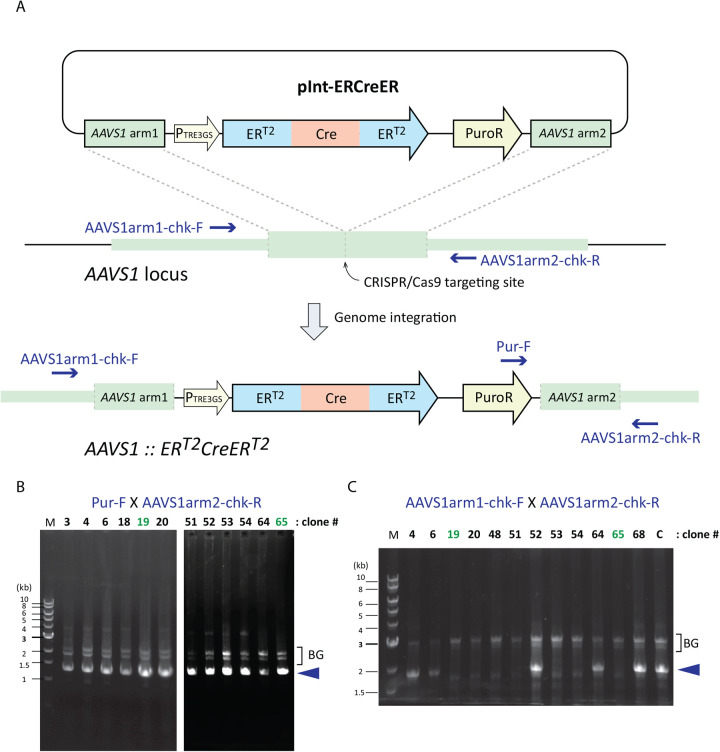
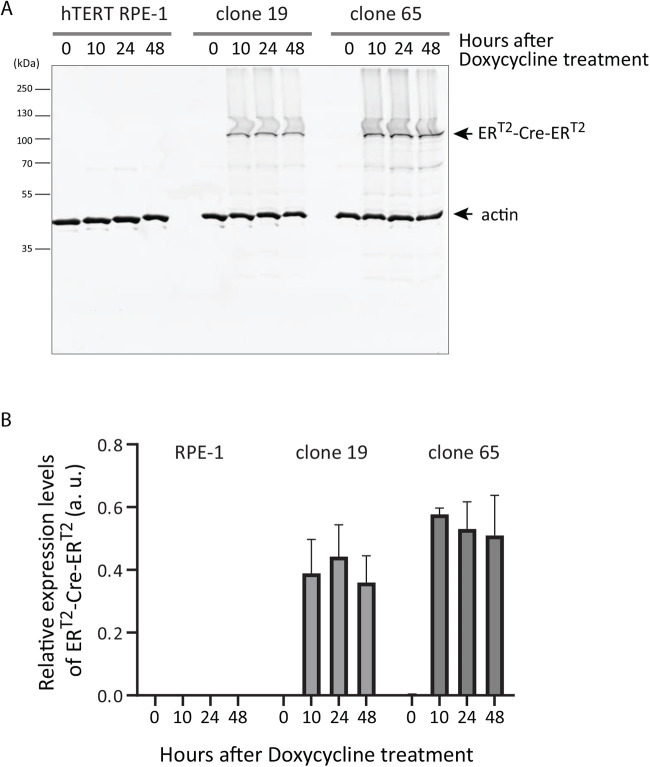
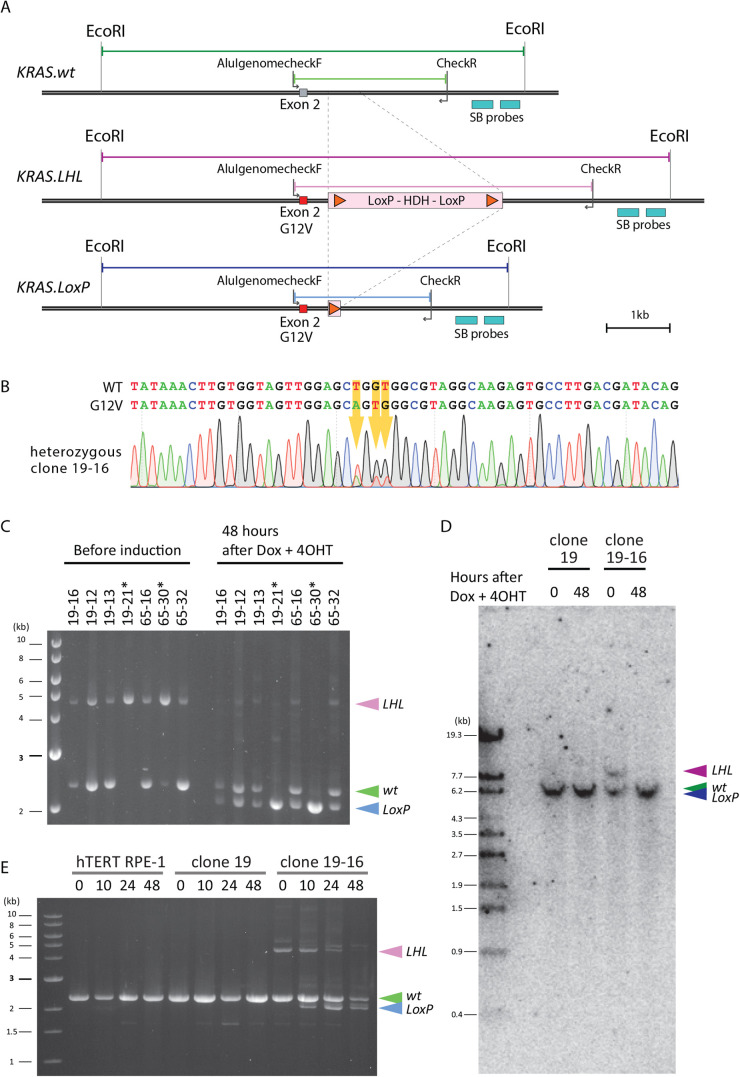
The human retinal pigment epithelial RPE-1 cell line immortalized with hTERT retains a stable karyotype with a modal chromosome number of 46 and has been widely used to study physiological events in human cell culture systems. To facilitate inducible knock-out or knock-in experiments in this cell line, we have modified the AAVS1 locus to harbour a DNA fragment encoding ERT2-Cre-ERT2 fusion protein under regulation of a Tet-On expression system. In the generated cell line, active Cre recombinase was induced by simple addition of doxycycline and tamoxifen to the culture medium. As proof of concept, we successfully introduced an oncogenic point mutation to the endogenous KRAS gene locus of this cell line. The cell line will serve as a powerful tool to conduct functional analyses of human genes.
Overview
The claims and statistics of this paper haven’t been checked yet.
Run the check — free, no account needed. It reads the open-access text and checks the sources it cites.
Integrity signals
Registry
Cites
Statistics
Figures
Verification
Claims the paper makes
The claims and statistics of this paper haven’t been checked yet.
Run the check — free, no account needed. It reads the open-access text and checks the sources it cites.
Claims other papers make about this one
Each is checked against this paper’s own text: does it say what the citing paper says it does?
In the citing paper
“Human primary cells that have been immortalized by increasing hTERT expression in fibroblasts [122], choroidal melanocytes [31], endothelial cells [123], dermal keratinocytes, mammary epithelial cells, osteoblasts, and pancreatic cells [124].”
From Cell Immortality: In Vitro Effective Techniques to Achieve and Investigate Its Applications and Challenges (2024) · cites this paper as [31]
Self-check
Percentages, sums and reported differences re-computed from the paper’s own numbers.
The self-check needs the paper’s full text.
Citations
Cites
Metzger, D., Clifford, J., Chiba, H., & Chambon, P. (1995) · Proceedings of the National Academy of Sciences · doi:10.1073/pnas.92.15.6991 · Cited by 570 · cited 1×
“To regulate its recombination activity, Cre can be fused with the ligand-binding domain (LBD) of the estrogen receptor (ER) so that it only becomes active when estrogen is provided (Metzger et al., 1995).”
BackgroundImproved Tet-responsive promoters with minimized background expression
Loew, R., Heinz, N., Hampf, M., Bujard, H., & Gossen, M. (2010) · BMC Biotechnology · doi:10.1186/1472-6750-10-81 · Cited by 246
Optimization of the Tet-On system for regulated gene expression through viral evolution
Zhou, X., Vink, M., Klaver, B., Berkhout, B., & Das, A. T. (2006) · Gene Therapy · doi:10.1038/sj.gt.3302780 · Cited by 224
Research works printed but not linked: 32
- Abremski, 1984, Bacteriophage P1 site-specific recombination. Purification and properties of the Cre recombinase protein, J. Biol. Chem., 259, 1509, 10.1016/S0021-9258(17)43437-5 · DOI
- Bodnar, 1998, Extension of life-span by introduction of telomerase into normal human cells, Science, 279, 349, 10.1126/science.279.5349.349 · DOI · Paper page
- Casanova, 2002, ER-based double iCre fusion protein allows partial recombination in forebrain, Genesis, 34, 208, 10.1002/gene.10153 · DOI
- Cong, 2013, Multiplex genome engineering using CRISPR/Cas systems, Science, 339, 819, 10.1126/science.1231143 · DOI · Paper page
- Das, 2016, Tet-on systems for doxycycline-inducible gene expression, Curr. Gene Ther., 16, 156, 10.2174/1566523216666160524144041 · DOI · Paper page
- Feil, 1997, Regulation of Cre recombinase activity by mutated estrogen receptor ligand-binding domains, Biochem. Biophys. Res. Commun., 237, 752, 10.1006/bbrc.1997.7124 · DOI
- Hoess, 1982, P1 site-specific recombination: nucleotide sequence of the recombining sites, Proc. Natl. Acad. Sci. USA, 79, 3398, 10.1073/pnas.79.11.3398 · DOI
- Jiang, 1999, Telomerase expression in human somatic cells does not induce changes associated with a transformed phenotype, Nat. Genet., 21, 111, 10.1038/5056 · DOI
- Katoh, 2017, Practical method for targeted disruption of cilia-related genes by using CRISPR/Cas9-mediated, homology-independent knock-in system, Mol. Biol. Cell, 28, 898, 10.1091/mbc.e17-01-0051 · DOI
- Kotin, 1992, Characterization of a preferred site on human chromosome 19q for integration of adeno-associated virus DNA by non-homologous recombination, EMBO J., 11, 5071, 10.1002/j.1460-2075.1992.tb05614.x · DOI
- Laemmli, 1970, Cleavage of structural proteins during the assembly of the head of bacteriophage T4, Nature, 227, 680, 10.1038/227680a0 · DOI · Paper page
- Lakso, 1992, Targeted oncogene activation by site-specific recombination in transgenic mice, Proc. Natl. Acad. Sci. USA, 89, 6232, 10.1073/pnas.89.14.6232 · DOI
- Mali, 2013, RNA-guided human genome engineering via Cas9, Science, 339, 823, 10.1126/science.1232033 · DOI · Paper page
- Miyamoto, 2015, The microtubule-depolymerizing activity of a mitotic kinesin protein KIF2A drives primary cilia disassembly coupled with cell proliferation, Cell Rep, 10, 664, 10.1016/j.celrep.2015.01.003 · DOI
- Natsume, 2016, Rapid protein depletion in human cells by auxin-inducible degron tagging with short homology donors, Cell Rep, 15, 210, 10.1016/j.celrep.2016.03.001 · DOI · Paper page
- Ogata, 2003, Identification of an insulator in AAVS1, a preferred region for integration of adeno-associated virus DNA, J. Virol., 77, 9000, 10.1128/JVI.77.16.9000-9007.2003 · DOI
- Orban, 1992, Tissue- and site-specific DNA recombination in transgenic mice, Proc. Natl. Acad. Sci. USA, 89, 6861, 10.1073/pnas.89.15.6861 · DOI
- Rogakou, 1998, DNA double-stranded breaks induce histone H2AX phosphorylation on serine 139, J. Biol. Chem., 273, 5858, 10.1074/jbc.273.10.5858 · DOI · Paper page
- Sauer, 1988, Site-specific DNA recombination in mammalian cells by the Cre recombinase of bacteriophage P1, Proc. Natl. Acad. Sci. USA, 85, 5166, 10.1073/pnas.85.14.5166 · DOI · Paper page
- Schindelin, 2012, Fiji: an open-source platform for biological-image analysis, Nat. Methods, 9, 676, 10.1038/nmeth.2019 · DOI · Paper page
- Schmidt, 2000, Illegitimate Cre-dependent chromosome rearrangements in transgenic mouse spermatids, Proc. Natl. Acad. Sci. USA, 97, 13702, 10.1073/pnas.240471297 · DOI
- Sengupta, 2017, Viral Cre-LoxP tools aid genome engineering in mammalian cells, J Biol Eng, 11, 45, 10.1186/s13036-017-0087-y · DOI
- Senmatsu, 2021, lncRNA transcription induces meiotic recombination through chromatin remodelling in fission yeast, Commun. Biol., 4, 295, 10.1038/s42003-021-01798-8 · DOI
- Silver, 2001, Self-excising retroviral vectors encoding the Cre recombinase overcome Cre-mediated cellular toxicity, Mol. Cell, 8, 233, 10.1016/S1097-2765(01)00295-7 · DOI
- Smith, 2008, Robust, persistent transgene expression in human embryonic stem cells is achieved with AAVS1-targeted integration, Stem Cells, 26, 496, 10.1634/stemcells.2007-0039 · DOI
- Sternberg, 1981, Bacteriophage P1 site-specific recombination. I. Recombination between loxP sites, J. Mol. Biol., 150, 467, 10.1016/0022-2836(81)90375-2 · DOI · Paper page
- Uhl, 2015, Mouse models as predictors of human responses: evolutionary medicine, Curr Pathobiol Rep, 3, 219, 10.1007/s40139-015-0086-y · DOI
- Van Duyne, 2001, A structural view of cre-loxp site-specific recombination, Annu. Rev. Biophys. Biomol. Struct., 30, 87, 10.1146/annurev.biophys.30.1.87 · DOI
- Vara, 1986, Expression in mammalian cells of a gene from Streptomyces alboniger conferring puromycin resistance, Nucleic Acids Res., 14, 4617, 10.1093/nar/14.11.4617 · DOI
- Wang, 2009, Cre transgenic mouse lines, Methods Mol. Biol., 561, 265, 10.1007/978-1-60327-019-9_17 · DOI
- Weinrich, 1997, Reconstitution of human telomerase with the template RNA component hTR and the catalytic protein subunit hTRT, Nat. Genet., 17, 498, 10.1038/ng1297-498 · DOI · Paper page
- Zhang, 1996, Inducible site-directed recombination in mouse embryonic stem cells, Nucleic Acids Res., 24, 543, 10.1093/nar/24.4.543 · DOI
Cited by
Chalak, M., Hesaraki, M., Mirbahari, S. N., Yeganeh, M., Abdi, S., Rajabi, S., & Hemmatzadeh, F. (2024) · Life · doi:10.3390/life14030417 · Cited by 66
Metadata
- Authors
- Hindul, N. L., Jhita, A., Oprea, D. G., Hussain, T. A., Gonchar, O., Campillo, M. A. M., O'Regan, L., Kanemaki, M. T., Fry, A. M., Hirota, K., & Tanaka, K.
- Venue
- Biology Open
- Publisher
- The Company of Biologists
- Published
- 2022-02-15
- Volume
- 11
- Issue
- 2
- ISSN
- 2046-6390
- PMC
- PMC8864296
- Cited by
- 12
- References
- 3
- Language
- en
- Funders
- JSPS (JP20H04337, JP16H01314, JP19KK0210)
- University of Leicester
About these checks
Registry, retraction, Cites and statistics results are computed, not judged, with one exception: a printed reference that no index lists is read once by a model before it counts as a citation error. Claims are extracted by a model and kept only when their quote appears verbatim in the text; each cited source is then checked, with a model’s help, for whether it says what the claim relies on. Those verdicts can be wrong — read the claim’s quote and the cited source before relying on one.
Statistics and arithmetic are recomputed, not judged.
Confidence bands are shown only for fields calibrated on our annotated test set. None is calibrated yet, so no band is shown.
What counts as a claim ›How we measure confidence ›How we check this ›
Are you an author, or do you see a problem with this page? Request a review
