

Effects of Experimental Cryptorchidism on Sperm Motility and Testicular Endocrinology in Adult Male Rats
Open accessThe DOI matches its Crossref record; 52 of the 52 references it cites were found in a registry or an index; none of the 24 sources its claims cite is checked for support yet.
Abstract
The effect of induced cryptorchidism on testicular function and sperm motility was investigated. Bilateral cryptorchidism was created surgically in adult male rats (treated group), and sham-operated rats were used as a control group. Five rats from each group were sacrificed on days 1, 3, 5, and 7 after surgery. The percentage of motile spermatozoa began to decrease 1 day after the operation, followed by an abrupt decline 3 and 5 days later in cryptorchid rats. Furthermore, there were significant decreases in the other sperm motility parameters 5 days after inducement of cryptorchidism. In cryptorchid rats, plasma concentrations of LH, FSH, testosterone, and inhibin B were significantly lower than in the control group 1 day after the operation. Thereafter, plasma concentrations of LH, FSH, and testosterone gradually increased in the cryptorchid rats. On the other hand, plasma concentrations of inhibin B showed a further decline from day 3 after the operation onward. Concentrations of immunoreactive (ir)-inhibin, but not testosterone, in testicular interstitial fluid were remarkably increased until 3 days after surgery in the cryptorchid rats, and declined thereafter. Testicular response to human chorionic gonadotropin (hCG) for testosterone release was decreased in the cryptorchid rats compared with the control rats, indicating that heat stress to testes resulted in a reduction of the activity of Leydig cells and Sertoli cells. These results clearly indicate that heat stress to the testes resulted in a significant reduction of sperm activity within 3 days, and this was followed by changes in testicular endocrine function.
Overview
CoChat Summary
TL;DR
In adult male rats, surgically induced bilateral cryptorchidism rapidly reduced epididymal sperm motility and altered testicular endocrine function, with motile sperm percentage declining by day 3 and five motility parameters falling by day 5. Heat stress also suppressed Leydig-cell testosterone response to hCG and caused early increases then declines in testicular ir-inhibin, while plasma inhibin B fell progressively.
Key findings
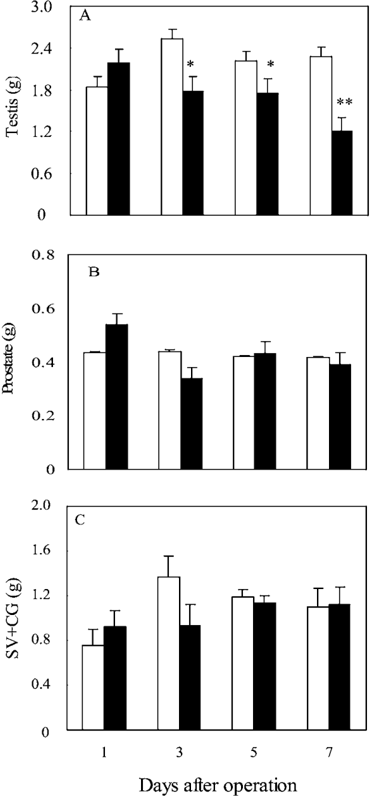
- Testis weight decreased significantly from day 3 postoperation; by day 7, cryptorchid testes weighed about 50% of control testes. Prostate and seminal vesicle + coagulating gland weights showed no significant changes.
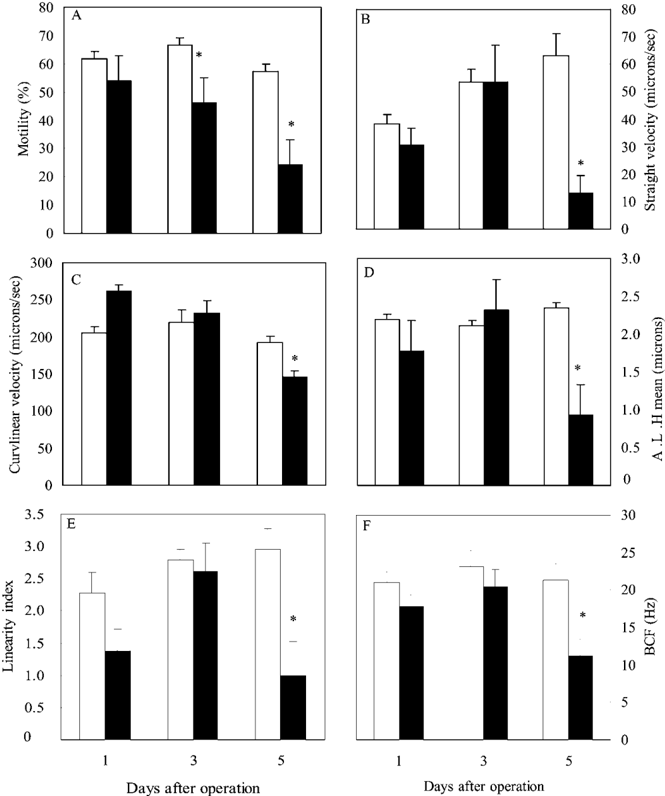
- The percentage of motile spermatozoa began to decrease 1 day after cryptorchidism (not significant), decreased significantly by day 3, and reached about 50% of control levels on day 5. VSL, VCL, ALH, linearity index, and BCF were unchanged at day 3 but significantly decreased by day 5; no sperm were available in the cauda epididymis for motility analysis after 7 days in the cryptorchid group.
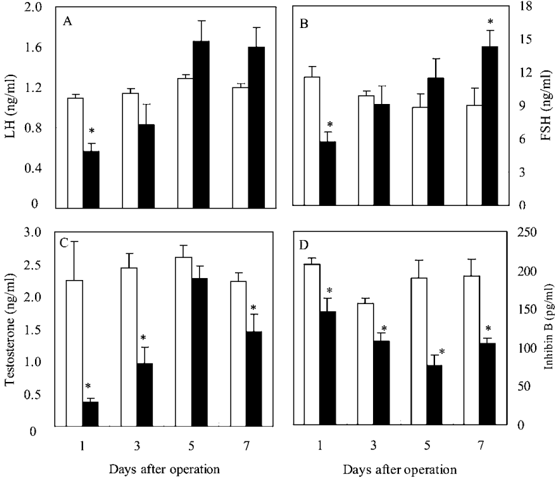
- Plasma LH, FSH, testosterone, and inhibin B were significantly lower than controls on day 1. LH then rose gradually (higher on days 5 and 7 but not statistically significant), FSH was significantly higher on day 7, testosterone recovered on day 5 but decreased significantly again on day 7, and inhibin B declined further on days 5 and 7.
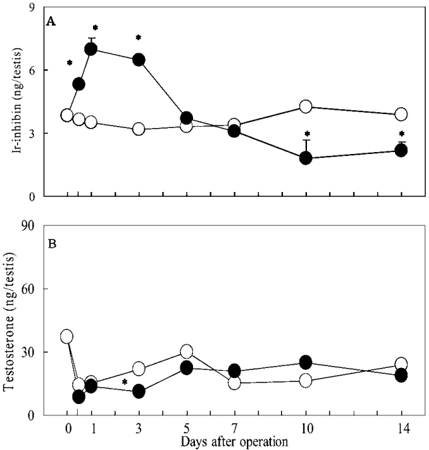
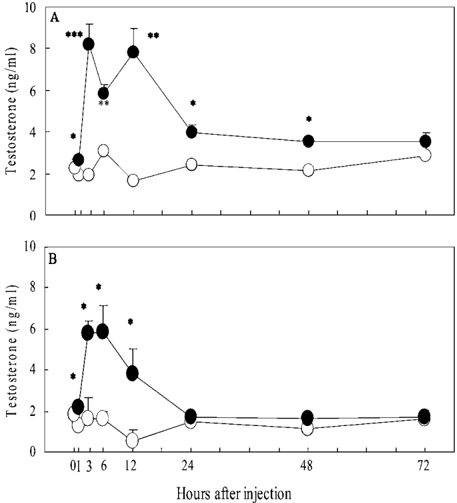
- Testicular interstitial fluid ir-inhibin increased versus controls at day 0.5, peaked on day 1, then declined abruptly and was significantly low on days 10 and 14; interstitial testosterone showed no significant changes except on day 3. hCG-stimulated testosterone release was suppressed in cryptorchid rats, falling to saline-control levels by 24 h, whereas control rats maintained significantly high levels until 48 h.
Methods
- Adult male Wistar Imamichi strain rats weighing 250–350 g and aged 3–4 months were used. Bilateral cryptorchidism was surgically induced by displacing the testes into the abdomen and closing the internal inguinal ring; sham-operated rats served as controls. Five rats per group were sacrificed on days 1, 3, 5, and 7.
- Testicular interstitial fluid was collected before and 0.5, 1, 3, 5, 7, 10, and 14 days after operation. One week after operation, rats received 10 IU hCG intravenously, with blood sampled at 0, 1, 3, 6, 12, 24, 48, and 72 h for testosterone.
- Sperm from the cauda epididymidis were analyzed by computer-assisted sperm analysis for percentage motile, VSL, VCL, linearity index, ALH, and BCF. FSH, LH, ir-inhibin, and testosterone were measured by RIA; inhibin B by ELISA. One-way ANOVA and Student’s t-test were used, with P<0.05 considered significant.
Limitations
- The paper states no limitations section. Evident: the sample size was small (five animals per group per time point), and no blinding is reported.
- Evident: some supporting findings are described as “data not shown” (Sertoli cell vacuoles and germ cell loss), and no sperm were available for motility analysis after 7 days in the cryptorchid group, limiting later motility assessment.
- Evident: the hCG challenge was performed only one week after operation, and the study is restricted to adult male rats, so developmental or longer-term recovery effects are not addressed. Surgical stress may also affect hormones; sham controls were used, but the paper notes that stress can acutely suppress these hormones.
Model-written summary. Check it against the paper before relying on it.
Integrity signals
Registry
Cites
Statistics
Figures
Verification
Claims the paper makes
0 Valid · 0 Not valid · 16 Not checked · 49 Own results and interpretations
A result the paper reports from its own data — it cites no other source for it, so there is none to check. The quote shows it is in the paper.
In the paper
“On the other hand, there were no significant changes in the concentration of testosterone, except on day 3 after the operation, in the testicular interstitial fluid (Fig. 4B).”
§ Effects of Experimental Cryptorchidism on Sperm Motility and Testicular Endocrinology in Adult Male Rats > Ir-inhibin and testosterone concentrations in testicular interstitial fluid
plain- Asserted: passes — The authors put it forward as true.
- Checkable: passes — It can be checked against evidence.
- Load-bearing: unclear — It is unclear whether the paper’s conclusions depend on it.
- Based: passes — The paper gives a reason why it holds.
A result the paper reports from its own data — it cites no other source for it, so there is none to check. The quote shows it is in the paper.
In the paper
“T h e r e a ft e r , t h o s e f i v e s p e r m m o t i l i t y parameters were significantly decreased in the cryptorchidism group as compared with the controls on day 5 after operation.”
§ Effects of Experimental Cryptorchidism on Sperm Motility and Testicular Endocrinology in Adult Male Rats > Sperm motility
plainstates a cause- Asserted: passes — The authors put it forward as true.
- Checkable: passes — It can be checked against evidence.
- Load-bearing: passes — The paper’s conclusions depend on it.
- Based: passes — The paper gives a reason why it holds.
A result the paper states — it cites no source for it, so there is none to check. The quote shows it is in the paper.
In the paper
“The weight of cryptorchid testes showed a rapid decrease starting on day 3 after the surgery, and this may be due to the loss of germ cells (data not shown).”
§ Effects of Experimental Cryptorchidism on Sperm Motility and Testicular Endocrinology in Adult Male Rats > Discussion
plainstates a cause- Asserted: passes — The authors put it forward as true.
- Checkable: passes — It can be checked against evidence.
- Load-bearing: unclear — It is unclear whether the paper’s conclusions depend on it.
- Based: passes — The paper gives a reason why it holds.
A result the paper reports from its own data — it cites no other source for it, so there is none to check. The quote shows it is in the paper.
In the paper
“Plasma concentrations of FSH were significantly lower in the cryptorchid rats on day 1 postoperation than in the control group, as was seen for LH (Fig. 3B).”
§ Effects of Experimental Cryptorchidism on Sperm Motility and Testicular Endocrinology in Adult Male Rats > Plasma concentrations of LH and FSH
plain- Asserted: passes — The authors put it forward as true.
- Checkable: passes — It can be checked against evidence.
- Load-bearing: unclear — It is unclear whether the paper’s conclusions depend on it.
- Based: passes — The paper gives a reason why it holds.
A result the paper reports from its own data — it cites no other source for it, so there is none to check. The quote shows it is in the paper.
In the paper
“Plasma concentrations of testosterone increased significantly in control rats compared with saline-treated control rats 1 h after the hCG treatment (Fig. 5A).”
§ Effects of Experimental Cryptorchidism on Sperm Motility and Testicular Endocrinology in Adult Male Rats > Effect of cryptorchidism on testicular response to hCG
plainstates a cause- Asserted: passes — The authors put it forward as true.
- Checkable: passes — It can be checked against evidence.
- Load-bearing: passes — The paper’s conclusions depend on it.
- Based: passes — The paper gives a reason why it holds.
24 more claims
Create a free account to see all 65 claims and to verify the 24 references still open.
- It may state two separate claims as one. 29
- Probably not a substantial claim. 11
Claims other papers make about this one
Each is checked against this paper’s own text: does it say what the citing paper says it does?
In the citing paper
“These studies suggest that Leydig cells in cryptorchid testes adapt to heat stress and maintain steroid production.”
From Role of Heat Shock Factor 1 in Conserving Cholesterol Transportation in Leydig Cell Steroidogenesis via Steroidogenic Acute Regulatory Protein (2017) · cites this paper as [17]
In the citing paper
“Leydig cells can acclimate to chronic heat stress and can regain StAR synthesis, which may explain the recovery of serum testosterone levels over time after induction of experimental cryptorchidism (17,39).”
From Role of Heat Shock Factor 1 in Conserving Cholesterol Transportation in Leydig Cell Steroidogenesis via Steroidogenic Acute Regulatory Protein (2017) · cites this paper as [17]
In the citing paper
“which may explain the recovery of serum testosterone levels over time after induction of experimental cryptorchidism (17,39).”
From Role of Heat Shock Factor 1 in Conserving Cholesterol Transportation in Leydig Cell Steroidogenesis via Steroidogenic Acute Regulatory Protein (2017) · cites this paper as [17]
Self-check
Percentages, sums and reported differences re-computed from the paper’s own numbers.
Each contradiction between two passages listed here was confirmed by an independent check.
Rated minor: it would not touch a result — a value no result rests on, a p-value that stays on the same side of the significance level, or a conflict that is clerical, resolved elsewhere in the paper, or outside its own findings.
In the paper
§ Effects of Experimental Cryptorchidism on Sperm Motility and Testicular Endocrinology in Adult Male Rats > Discussion
“However, in the present study, the plasma inhibin B level was significantly lower in the cryptorchid rats than in the sham-operation control group s t a r t i n g o n d a y 3 a f t e r i n d u c e m e n t o f cryptorchidism.”
§ Effects of Experimental Cryptorchidism on Sperm Motility and Testicular Endocrinology in Adult Male Rats > Plasma concentrations of testosterone and inhibin B
“There was a significant decrease in plasma concentration of testosterone and inhibin B on days 1 and 3 postoperation in the cryptorchid rats as compared with the control rats (Figs.3C and D).”
Rated minor: it would not touch a result — a value no result rests on, a p-value that stays on the same side of the significance level, or a conflict that is clerical, resolved elsewhere in the paper, or outside its own findings.
In the paper
§ Effects of Experimental Cryptorchidism on Sperm Motility and Testicular Endocrinology in Adult Male Rats > Abstract
“Thereafter, plasma concentrations of LH, FSH, and testosterone gradually increased in the cryptorchid rats.”
§ Effects of Experimental Cryptorchidism on Sperm Motility and Testicular Endocrinology in Adult Male Rats > Plasma concentrations of testosterone and inhibin B
“However, plasma concentrations of testosterone in the cryptorchid rats significantly decreased again 7 days after the operation as compared with the c o n t r o l r a t s .”
Citations
Cites
Measurement of dimeric inhibin B throughout the human menstrual cycle
Groome, N. P. (1996) · Journal of Clinical Endocrinology & Metabolism · doi:10.1210/jc.81.4.1401 · Cited by 946
Relative Impact of Oxidative Stress on Male Reproductive Function
Sikka, S. (2001) · Current Medicinal Chemistry · doi:10.2174/0929867013373039 · Cited by 601
The endocrine stress-response and social status in the wild baboon
Sapolsky, R. M. (1982) · Hormones and Behavior · doi:10.1016/0018-506x(82)90027-7 · Cited by 445
Plasma Testosterone, Dominance Rank and Aggressive Behaviour in Male Rhesus Monkeys
ROSE, R. M., HOLADAY, J. W., & BERNSTEIN, I. S. (1971) · Nature · doi:10.1038/231366a0 · Cited by 389
Taya, K., Watanabe, G., & Sasamoto, S. (1985) · The Japanese journal of animal reproduction · doi:10.1262/jrd1977.31.186 · Cited by 312
Self-citationJensen, T. K., Andersson, A.-M., Hjollund, N. H. I., Scheike, T., Kolstad, H., Giwercman, A., Henriksen, T. B., Ernst, E., Bonde, J. P., Olsen, J., et al. (1997) · The Journal of Clinical Endocrinology & Metabolism · doi:10.1210/jcem.82.12.4456 · Cited by 303
Stress-Induced Suppression of Testicular Function in the Wild Baboon: Role of Glucocorticoids*
SAPOLSKY, R. M. (1985) · Endocrinology · doi:10.1210/endo-116-6-2273 · Cited by 298
Exogenous lactate is essential for metabolic activities in isolated rat spermatocytes and spermatids
Jutte, N. H. P. M., Grootegoed, J. A., Rommerts, F. F. G., & van der Molen, H. J. (1981) · Reproduction · doi:10.1530/jrf.0.0620399 · Cited by 238
Serum LH and FSH During Sexual Maturation in the Male Rat: Effect of Castration and Cryptorchidism
SWERDLOFF, R. S., WALSH, P. C., JACOBS, H. S., & ODELL, W. D. (1971) · Endocrinology · doi:10.1210/endo-88-1-120 · Cited by 214
Radioimmunoassay of inhibin in various mammals
Hamada, T., Watanabe, G., Kokuho, T., Taya, K., Sasamoto, S., Hasegawa, Y., Miyamoto, K., & Igarashi, M. (1989) · Journal of Endocrinology · doi:10.1677/joe.0.1220697 · Cited by 194
Self-citation
Research works printed but not linked: 1
- Grootegoed JA, Den Boer PJ. Energy metabolism of spermatids. In: Hamilton DW, GM. W (eds.), Scientific Basis of Fertility Regulation. Cellular and Molecular Events in Spermiogenesis. Cambridge University; 1989: 193-216.
Cited by
Kanter, M., Aktaş, C., & Erboğa, M. (2011) · Toxicology and Industrial Health · doi:10.1177/0748233711425082 · Cited by 173
Heat stress response of somatic cells in the testis
Aldahhan, R. A., & Stanton, P. G. (2021) · Molecular and Cellular Endocrinology · doi:10.1016/j.mce.2021.111216 · Cited by 91
Rasooli, A., Jalali, M. T., Nouri, M., Mohammadian, B., & Barati, F. (2009) · Animal Reproduction Science · doi:10.1016/j.anireprosci.2009.03.012 · Cited by 86
Ghrelin attenuates heat-induced degenerative effects in the rat testis
Kheradmand, A., Dezfoulian, O., & Tarrahi, M. J. (2011) · Regulatory Peptides · doi:10.1016/j.regpep.2010.12.002 · Cited by 46
A morphological study on Leydig cells of scrotal hyperthermia applied rats in short-term
Aktaş, C., & Kanter, M. (2009) · Journal of Molecular Histology · doi:10.1007/s10735-009-9210-9 · Cited by 52
Cryptorchidism and Semen Quality: A TEM and Molecular Study
Moretti, E., Cairano, G. D., Capitani, S., Scapigliati, G., Baccetti, B., & Collodel, G. (2007) · Journal of Andrology · doi:10.2164/jandrol.106.000828 · Cited by 44
Leydig cell insufficiency in hypospermatogenesis: a paracrine effect of activin–inhibin signaling?
Winters, S. J., Moore, J. P., & Clark, B. J. (2018) · Andrology · doi:10.1111/andr.12459 · Cited by 39
Electroacupuncture enhances spermatogenesis in rats after scrotal heat treatment
Gao, J., Zuo, Y., So, K. K. H., Yeung, W. S. B., Ng, E. H. Y., & Lee, C. (2012) · Spermatogenesis · doi:10.4161/spmg.19282 · Cited by 38
Kanter, M., & Aktaş, C. (2009) · Journal of Molecular Histology · doi:10.1007/s10735-009-9222-5 · Cited by 37
Hejmej, A., & Bilińska, B. (2008) · PubMed · Cited by 35
Almeida, J., Conley, A. J., & Ball, B. A. (2013) · Equine Veterinary Journal · doi:10.1111/evj.12013 · Cited by 34
Al-Zahrani, S. (2012) · Journal of Medicinal Plants Research · doi:10.5897/jmpr11.1252 · Cited by 34
Alleviating effect ofMallotus roxburghianusin heat-induced testicular dysfunction in Wistar rats
Roy, V. K., Marak, T. R., & Gurusubramanian, G. (2015) · Pharmaceutical Biology · doi:10.3109/13880209.2015.1091480 · Cited by 33
Oka, S., Shiraishi, K., Fujimoto, M., Katiyar, A., Takii, R., Nakai, A., & Matsuyama, H. (2017) · Endocrinology · doi:10.1210/en.2017-00132 · Cited by 32
KAWAKAMI, E., Hirano, T., Tatsuya, H. O. R. I., & TSUTSUI, T. (2007) · Journal of Veterinary Medical Science · doi:10.1292/jvms.69.1259 · Cited by 26
Germ cell removal after induction of cryptorchidism in adult rats
Liu, F., Huang, H., Xu, Z., Qian, X., & Qiu, W. (2012) · Tissue and Cell · doi:10.1016/j.tice.2012.04.005 · Cited by 24
Aldahhan, R. A., Stanton, P. G., Ludlow, H., de Kretser, D. M., & Hedger, M. P. (2021) · Reproductive Sciences · doi:10.1007/s43032-021-00616-0 · Cited by 22
Kopalli, S. R., Cha, K.-M., Lee, S., Ryu, J.-H., Hwang, S., Jeong, M.-S., Sung, J.-H., & Kim, S. (2016) · Journal of Ginseng Research · doi:10.1016/j.jgr.2016.12.001 · Cited by 19
ElGhamrawy, T. A., Helmy, D., & Elall, H. F. A. (2014) · Folia Morphologica · doi:10.5603/fm.2014.0050 · Cited by 19
Heat and Oxidative Stress in the Germ Line
Shiraishi, K. (2012) · Humana Press eBooks · doi:10.1007/978-1-61779-776-7_8 · Cited by 16
Frączek, M., Wojnar, Ł., Kamieniczna, M., Piasecka, M., Gill, K., Kupś, M., Chopyak, V. V., Havrylyuk, A. M., Nakonechnyy, J., Nakonechnyy, A., et al. (2020) · International Journal of Molecular Sciences · doi:10.3390/ijms21176427 · Cited by 16
Absalan, F., Movahedin, M., & Mowla, S. J. (2008) · TSpace (University of Toronto) · Cited by 15
Assisi, L., Pelagalli, A., Squillacioti, C., Liguori, G., Annunziata, C., & Mirabella, N. (2019) · Frontiers in Endocrinology · doi:10.3389/fendo.2019.00816 · Cited by 14
Effects of Pantothenic Acid on Testicular Function in Male Rats
Yamamoto, T., Jaroenporn, S., Pan, L., Azumano, I., Onda, M., Nakamura, K., Watanabe, G., & Taya, K. (2009) · Journal of Veterinary Medical Science · doi:10.1292/jvms.001427 · Cited by 14
Self-citationBingöl‐Koloğlu, M., Bahadır, G. B., Vargün, R., Ilkay, H., Bağrıaçık, E. Ü., Yolbakan, S., Güven, C., Tanır, T. E., Hasırcı, N., & Dindar, H. (2009) · Urology · doi:10.1016/j.urology.2009.04.017 · Cited by 14
Hydroxysteroid Dehydrogenases – Localization, Function and Regulation in the Testis
Kotula-Balak, M., Hejmej, A., & Bilinsk, B. (2012) · InTech eBooks · doi:10.5772/47740 · Cited by 12
Hwang, D.-S., Kim, H. G., Park, S., Hong, N. D., Ryu, J. H., & Oh, M. S. (2015) · Evidence-based Complementary and Alternative Medicine · doi:10.1155/2015/950829 · Cited by 12
Heat stress induces Cdc2 protein decrease prior to mouse spermatogenic cell apoptosis
Zhang, Y., Yang, X., Cao, H., Chen, Z.-K., Du, Y., & Kong, W. (2008) · Acta Histochemica · doi:10.1016/j.acthis.2007.11.005 · Cited by 12
Afolabi, A. (2014) · Annual Research & Review in Biology · doi:10.9734/arrb/2014/6078 · Cited by 12
Pathirana, I., Ashida, Y., Kawate, N., Tanaka, K., Tsuji, M., Takahashi, M., Hatoya, S., Inaba, T., & Tamada, H. (2011) · Animal Reproduction Science · doi:10.1016/j.anireprosci.2011.02.014 · Cited by 12
Xavier, G. C., Soares, P. C., da Silva, V. A., de Torres, S. M., Maymone, A. C. M., de Morais, R. N., Moura, C. S., & Guerra, M. M. P. (2016) · ACTA SCIENTIAE VETERINARIAE · doi:10.22456/1679-9216.81171 · Cited by 11
Babaei, H., Azari, O., Kheirandish, R., Abshenas, J., & Mohammadi, N. (2010) · Iranian journal of veterinary surgery · Cited by 9
Pharmacological Effects and Immune Mechanisms of Oriental Medicines in Restoring Male Infertility
Qu, N. (2025) · International Journal of Molecular Sciences · doi:10.3390/ijms26104642 · Cited by 7
Yon, J., Kim, J. S., Lin, C., Park, S. G., Gwon, L. W., Lee, J. G., Baek, I., Nahm, S., & Nam, S.-Y. (2019) · Korean Journal of Veterinary Research · doi:10.14405/kjvr.2019.59.2.59 · Cited by 6
Asl, H. F., Mashayekhi, F. J., Bayat, M., Habibi, D., Zendedel, A., & Baazm, M. (2019) · Iranian Red Crescent Medical Journal · doi:10.5812/ircmj.86806 · Cited by 6
Effect of warm‐rearing and heat acclimation on pituitary‐gonadal axis in male rats
Kurowicka, B., Gajewska, A., Amarowicz, R., & Kotwica, G. (2008) · International Journal of Andrology · doi:10.1111/j.1365-2605.2007.00812.x · Cited by 6
Soltani, M., Rahmati, M., Nikravesh, M. R., Nejat, S. S., & Jalali, M. (2023) · Journal of Tropical Medicine · doi:10.1155/2023/6890815 · Cited by 4
Sex Reversal Syndrome in an Egyptian Arabian Horse Detected Using Genomic Data – A case report
Nogueira, P. P. D. O., Amorim, G., de Oliveira, O. M., Demyda-Peyrás, S., Santos, B. M., & da Mota, L. S. L. S. (2021) · Journal of Equine Veterinary Science · doi:10.1016/j.jevs.2021.103692 · Cited by 4
Re: Wet heat exposure: a potentially reversible cause of low semen quality in infertile men
Filho, P. A. H. (2007) · International braz j urol · doi:10.1590/s1677-55382007000200023 · Cited by 4
Liguori, G., Tafuri, S., Pelagalli, A., Alì, S., Russo, M., Mirabella, N., & Squillacioti, C. (2024) · Veterinary Sciences · doi:10.3390/vetsci11010021 · Cited by 3
Cryptorchidism and infertility: what do we know so far?
Liu, Y., & Zhang, H.-Y. (2026) · Asian Journal of Andrology · doi:10.4103/aja202548 · Cited by 3
Soltani, M., Rahmati, M., Nikravesh, M. R., Nejat, S. S., & Jalali, M. (2024) · Journal of Food Biochemistry · doi:10.1155/2024/9060893 · Cited by 3
Yates, D. T., Montoya, A., Yates, L., Warner, C. A., Otis, A. R., Lankford, L., Halalsheh, R., Hallford, D. M., & Ross, T. T. (2010) · Journal of Veterinary Medicine and Animal Health · Cited by 3
Histoarchitectural studies of gonads of rat pups following brief exposure to hyperthermia in-utero
Ogundoyin, O. O., & Oluwatunase, G. O. (2020) · Anatomy Journal of Africa · doi:10.4314/aja.v9i1.5 · Cited by 1
Norouzi‐Ghalehbala, A., Rezaei‐Varmaziar, M., Taati, M., Soleimanzadeh, A., Raisi, A., Davoodi, F., & Shahbazfar, A. A. (2026) · Animal Models and Experimental Medicine · doi:10.1002/ame2.70253
Barazvan, B., Cheraghi, O., Mohammadnejad, D., Abedelahi, A., Seghinsara, A. M., & Nasrabadi, H. T. (2026) · Phytomedicine Plus · doi:10.1016/j.phyplu.2026.101020
de Souza, N. P. (2015) · Aleph UCLA Undergraduate Research Journal for the Humanities and Social Sciences
Heat stress and antioxidant agents : effects on gamete development
Maya Soriano, M. J., & Animals, U. A. D. B. D. D. S. I. D. (2012) · Tesis Doctorals en Xarxa (Consorci de Serveis Universitaris de Catalunya)
Studies on the Reproductive Functions in the Bull
Bhuminand, D. (2007) · Institutional Repositories DataBase (IRDB)
de Souza, N. P. (2015) · Acervo Digital da Universidade Estadual Paulista (Universidade Estadual Paulista)
Researches Regarding Mice Spermatogenesis after Surgical Cryptorchidy
Ciupe, M., GROZA, I. S., Páll, E., Adrian Florin, G. A. L., Cenariu, M., Bogdan, L., Matei, S., Borzan, M. M., & Andrei, S. (2009) · Bulletin of University of Agricultural Sciences and Veterinary Medicine Cluj-Napoca Veterinary Medicine · doi:10.15835/buasvmcn-vm:66:2:4188
Células germinativas e células de Leydig em modelo de dano testicular no rato
Lima, T. R. R. (2018) · Americanae (AECID Library)
Hemant Kumar, N. S., Siddiqui, N., & Qamar, A. (2024) · Medical Forum Monthly
Metadata
- Authors
- REN, L., MEDAN, M. S., OZU, M., LI, C., WATANABE, G., & TAYA, K.
- Affiliations
- Yanbian University (CN)
- Suez Canal University (EG)
- Tokyo University of Agriculture and Technology (JP)
- Gifu University (JP)
- Corresponding author
- TAYA, Kazuyoshi
- Venue
- Journal of Reproduction and Development
- Published
- 2006
- Volume
- 52
- Issue
- 2
- Pages
- 219-228
- ISSN
- 0916-8818 (ISSN-L)
- 1348-4400
- OpenAlex
- W2005624109
- Cited by
- 53
- References
- 52
- Citations by year
- 2026: 3 · 2025: 1 · 2024: 3 · 2023: 1 · 2021: 3 · 2020: 2 · 2019: 3 · 2018: 2 · 2017: 1 · 2016: 2 · 2015: 4 · 2014: 2 · 2013: 1 · 2012: 6
- FWCI
- 3.08
- Type
- journal article
- Language
- en
- Open access
- gold
- doi.org
- Licence
- cc-by-nc-nd
- Locations
- Journal of Reproduction and Development (publishedVersion, cc-by-nc-nd)
- PubMed (publishedVersion)
- Funders
- Colorado State University (GDN 250)
- Ministry of Education, Culture, Sports, Science and Technology (03338)
- Japan Society for the Promotion of Science
- Topics
- Health Sciences › Medicine › Reproductive Medicine › Sperm and Testicular Function
- Health Sciences › Medicine › Reproductive Medicine › Reproductive Biology and Fertility
- Health Sciences › Medicine › Reproductive Medicine › Hypothalamic control of reproductive hormones
- Keywords
- cryptorchidism, sperm motility, Leydig cells, Sertoli cells, inhibin B, luteinizing hormone, follicle-stimulating hormone, testosterone, testicular interstitial fluid, male fertility
- MeSH terms
- Animals, Cryptorchidism, Disease Models, Animal, Endocrine System, Enzyme-Linked Immunosorbent Assay, Follicle Stimulating Hormone, Chorionic Gonadotropin, Inhibins, Leydig Cells, Luteinizing Hormone, Male, Sertoli Cells, Sperm Motility, Testis, Testosterone, Time Factors, Rats, Wistar, Rats
About these checks
Registry, retraction, Cites and statistics results are computed, not judged, with one exception: a printed reference that no index lists is read once by a model before it counts as a citation error. Claims are extracted by a model and kept only when their quote appears verbatim in the text; each cited source is then checked, with a model’s help, for whether it says what the claim relies on. Those verdicts can be wrong — read the claim’s quote and the cited source before relying on one.
A language model drew the claims from the paper on 2026-11-27, under version 3 of the claim definition (model deepseek-v4.1-flash, prompt extract-v3).
A second model labelled each claim on 2026-11-27 (model jev-1.13-20260917, definition revision gold-guideline-v0.2).
Statistics and arithmetic are recomputed, not judged.
Confidence bands are shown only for fields calibrated on our annotated test set. None is calibrated yet, so no band is shown.
What counts as a claim ›How we measure confidence ›How we check this ›
Are you an author, or do you see a problem with this page? Request a review
Data sources
Bibliographic data: Semantic Scholar, OpenAlex, Crossref.
Contains information from the Semantic Scholar Academic Graph Datasets, made available under the ODC Attribution License (ODC-BY 1.0).
Semantic Scholar’s data is described in: Kinney, R., et al. (2023). The Semantic Scholar Open Data Platform. arXiv:2301.10140.
