

Motor Fuels and Energy – Producing Fuels Generation Based on the Processing of Municipal Solid Waste Organic Components
Open accessThe DOI matches its Crossref record; 11 of the 11 references it cites were found in a registry or an index.
Abstract
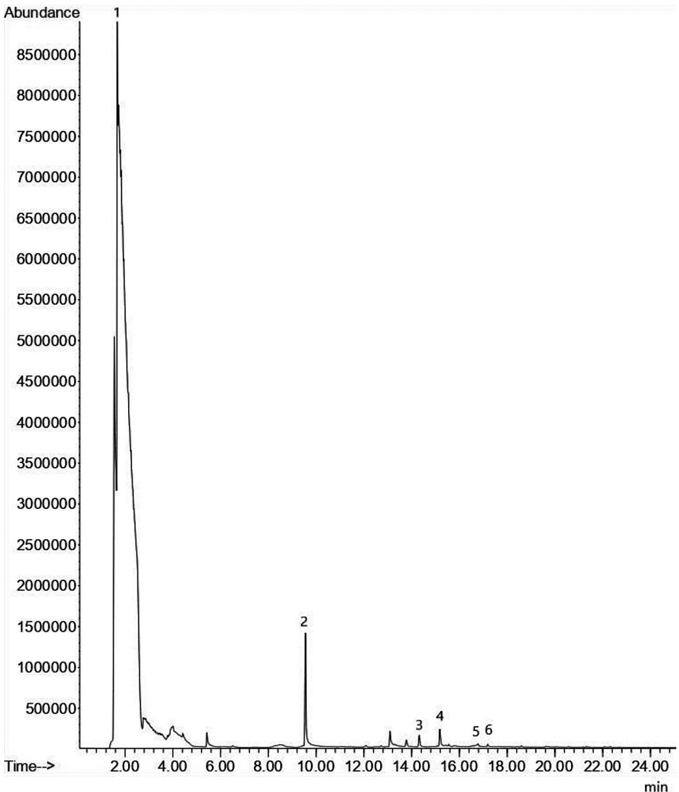
Municipal solid waste management and its disposal are considered one of the major challenges facing the urban communities around the world.Effective solid waste treatment involves a variety of approaches, treatment technologies and concepts to ensure the protection of public health and the environment.Waste landfill is the method most commonly used worldwide, despite all the significant environmental, health and economic consequences.Thus, alternative methods such as the municipal solid waste pretreatment, fermentation, ethanol fermentation and anaerobic fermentation have been the focus of heightened attention.Using these methods, an alcohol-containing liquid was obtained from 1.5 kg of the organic fraction of municipal solid waste (OFMSW), which had an ethanol percentage of 97.45%.Consequently, if properly managed and used, municipal solid waste can be a viable source of energy rather than a source of pollution.
Overview
The claims and statistics of this paper haven’t been checked yet.
Free: it reads the open-access text and checks the first 5 claims that cite a source we can check. Create a free account to check every claim.
Integrity signals
Registry
Cites
Statistics
Figures

Verification
Claims the paper makes
The claims and statistics of this paper haven’t been checked yet.
Free: it reads the open-access text and checks the first 5 claims that cite a source we can check. Create a free account to check every claim.
Claims other papers make about this one
Each is checked against this paper’s own text: does it say what the citing paper says it does?
The source backs part of the claim, not all of it — or backs it for a different population, condition or comparison.
In the citing paper
“Biogas generated by AD can be a sustainable solution for providing renewable energy, particularly for local poor areas, replacing unsafe home-based energy generation, e.g., from inefficient wood combustion in enclosed spaces (Temirbekova et al., 2021).”
From A critical review for the impact of anaerobic digestion on the sustainable development goals (2024) · cites this paper as Temirbekova et al., 2021
Experimental — accuracy not yet measured
Self-check
Percentages, sums and reported differences re-computed from the paper’s own numbers.
The self-check needs the paper’s full text.
Citations
Cites
Pretreatment of Lignocellulosic Wastes to Improve Ethanol and Biogas Production: A Review
Taherzadeh, M. J., & Karimi, K. (2008) · International Journal of Molecular Sciences · doi:10.3390/ijms9091621 · Cited by 2,634 · cited 1×
“…pretreatment is an Keywords: municipal solid waste, bioethanol, fermentation, ethanol fermentation. environmentally friendly process because it uses no chemicals; this treatment removes most of the hemicellulose and improves the enzyme availability for cellulose [Taherzadeh and Karimi, 2008].”
BackgroundGlobal potential bioethanol production from wasted crops and crop residues
Kim, S., & Dale, B. E. (2004) · Biomass and Bioenergy · doi:10.1016/j.biombioe.2003.08.002 · Cited by 1,930 · cited 1×
“There is growing interest in the ethanol production from abundant and low-cost waste, for example, agricultural waste [Kim and Dale, 2004; Reijnders, 2008; Sarkar et al., 2012], municipal solid waste and food waste [Ma et al., 2017; Yan et al., 2011] in the modern world.”
BackgroundBioethanol production from agricultural wastes: An overview
Sarkar, N., Ghosh, S. K., Bannerjee, S., & Aikat, K. (2012) · Renewable Energy · doi:10.1016/j.renene.2011.06.045 · Cited by 1,781 · cited 9×
“There is growing interest in the ethanol production from abundant and low-cost waste, for example, agricultural waste [Kim and Dale, 2004; Reijnders, 2008; Sarkar et al., 2012], municipal solid waste and food waste [Ma et al., 2017; Yan et al., 2011] in the modern world.”
BackgroundInfluentialMunicipal solid waste characteristics and management in Allahabad, India
Sharholy, M., Ahmad, K., Vaishya, R. C., & Gupta, R. D. (2007) · Waste Management · doi:10.1016/j.wasman.2006.03.001 · Cited by 301 · cited 1×
“Solid waste generated in developing countries every year, contains 40–88% food waste [Sharholy et al., 2007; Talyan et al., 2008; Yousuf and Rahman, 2007], indicating that the organic fraction of the waste consists mainly of starch, lignocellulose, and lipids.”
BackgroundState of municipal solid waste management in Delhi, the capital of India
Talyan, V., Dahiya, R. P., & Sreekrishnan, T. R. (2008) · Waste Management · doi:10.1016/j.wasman.2007.05.017 · Cited by 267 · cited 1×
“Solid waste generated in developing countries every year, contains 40–88% food waste [Sharholy et al., 2007; Talyan et al., 2008; Yousuf and Rahman, 2007], indicating that the organic fraction of the waste consists mainly of starch, lignocellulose, and lipids.”
BackgroundMunicipal solid waste management in Rasht City, Iran
Alavi Moghadam, M. R., Mokhtarani, N., & Mokhtarani, B. (2009) · Waste Management · doi:10.1016/j.wasman.2008.02.029 · Cited by 244 · cited 1×
“It should be noted that various factors, including culture, location, weather conditions, as well as the degree of economy and development of a given society, affect the composition of municipal solid waste [Alavi Moghadam et al., 2009].”
BackgroundEnzymatical hydrolysis of food waste and ethanol production from the hydrolysate
Yan, S., Li, J., Chen, X., Wu, J., Wang, P., Ye, J., & Jianming, Y. (2010) · Renewable Energy · doi:10.1016/j.renene.2010.08.020 · Cited by 139 · cited 1×
“There is growing interest in the ethanol production from abundant and low-cost waste, for example, agricultural waste [Kim and Dale, 2004; Reijnders, 2008; Sarkar et al., 2012], municipal solid waste and food waste [Ma et al., 2017; Yan et al., 2011] in the modern world.”
BackgroundMonitoring quantity and characteristics of municipal solid waste in Dhaka City
Yousuf, T. B., & Rahman, M. M. (2007) · Environmental Monitoring and Assessment · doi:10.1007/s10661-007-9710-6 · Cited by 116 · cited 1×
“Solid waste generated in developing countries every year, contains 40–88% food waste [Sharholy et al., 2007; Talyan et al., 2008; Yousuf and Rahman, 2007], indicating that the organic fraction of the waste consists mainly of starch, lignocellulose, and lipids.”
BackgroundAn integrated engineering system for maximizing bioenergy production from food waste
Ma, Y., Cai, W., & Liu, Y. (2017) · Applied Energy · doi:10.1016/j.apenergy.2017.08.190 · Cited by 99 · cited 1×
“There is growing interest in the ethanol production from abundant and low-cost waste, for example, agricultural waste [Kim and Dale, 2004; Reijnders, 2008; Sarkar et al., 2012], municipal solid waste and food waste [Ma et al., 2017; Yan et al., 2011] in the modern world.”
BackgroundMahmoodi, P., Karimi, K., & Taherzadeh, M. J. (2018) · Bioresource Technology · doi:10.1016/j.biortech.2018.03.115 · Cited by 96 · cited 1×
“The fermentation was followed by ethanol fermentation, for this purpose alcoholic yeast (15 g) is added to the liquid part for ethanol production [Mahmoodia et al., 2018].”
MethodEthanol production from crop residues and soil organic carbon
Reijnders, L. (2007) · Resources Conservation and Recycling · doi:10.1016/j.resconrec.2007.08.007 · Cited by 64 · cited 1×
“There is growing interest in the ethanol production from abundant and low-cost waste, for example, agricultural waste [Kim and Dale, 2004; Reijnders, 2008; Sarkar et al., 2012], municipal solid waste and food waste [Ma et al., 2017; Yan et al., 2011] in the modern world.”
Background
Cited by
A critical review for the impact of anaerobic digestion on the sustainable development goals
Piadeh, F., Offie, I., Behzadian, K., Rizzuto, J. P., Bywater, A., Córdoba-Pachón, J.-R., & Walker, M. (2024) · Journal of Environmental Management · doi:10.1016/j.jenvman.2023.119458 · Cited by 177
“Biogas generated by AD can be a sustainable solution for providing renewable energy, particularly for local poor areas, replacing unsafe home-based energy generation, e.g., from inefficient wood combustion in enclosed spaces (Temirbekova et al., 2021).”
Sesay, R. E. V., & Fang, P. (2025) · Journal of Environmental Protection · doi:10.4236/jep.2025.162003 · Cited by 71
Artificial intelligence-aided new paradigm of environmental research
Chen, Z., Yuan, J., Liu, J., Zhang, D., Guo, H., Wu, P., & Zhuang, S. (2026) · Artificial Intelligence & Environment · doi:10.66178/aie-0026-0004 · Cited by 2
Metadata
- Authors
- Temirbekova, M., Wojcik, W., & Stoyak, V.
- Affiliations
- Almaty University of Power Engineering and Telecommunications (KZ)
- Corresponding author
- Temirbekova, Marzhan
- Venue
- Journal of Ecological Engineering
- Published
- 2021-07-06
- Volume
- 22
- Issue
- 7
- Pages
- 73-79
- ISSN
- 2081-139X (ISSN-L)
- 2299-8993
- OpenAlex
- W3175137846
- Cited by
- 2
- References
- 11
- Citations by year
- 2025: 1 · 2023: 1
- FWCI
- 0.15
- Type
- journal article
- Language
- en
- Open access
- gold
- doi.org
- Licence
- cc-by
- creativecommons.org/licenses/by/4.0/ (vor)
- creativecommons.org/licenses/by/4.0/ (am)
- creativecommons.org/licenses/by/4.0/ (tdm)
- Locations
- Journal of Ecological Engineering (publishedVersion, cc-by)
- DOAJ (DOAJ: Directory of Open Access Journals) (submittedVersion, cc-by-sa)
- Topics
- Physical Sciences › Environmental Science › Waste Management and Disposal › Municipal Solid Waste Management
- Physical Sciences › Energy › Renewable Energy, Sustainability and the Environment › Anaerobic Digestion and Biogas Production
- Physical Sciences › Engineering › Biomedical Engineering › Biofuel production and bioconversion
- Keywords
- municipal solid waste, organic fraction of municipal solid waste, ethanol production, anaerobic fermentation, alcoholic fermentation, waste pretreatment, biofuels, waste-to-energy
About these checks
Registry, retraction, Cites and statistics results are computed, not judged, with one exception: a printed reference that no index lists is read once by a model before it counts as a citation error. Claims are extracted by a model and kept only when their quote appears verbatim in the text; each cited source is then checked, with a model’s help, for whether it says what the claim relies on. Those verdicts can be wrong — read the claim’s quote and the cited source before relying on one.
Statistics and arithmetic are recomputed, not judged.
Confidence bands are shown only for fields calibrated on our annotated test set. None is calibrated yet, so no band is shown.
What counts as a claim ›How we measure confidence ›How we check this ›
Are you an author, or do you see a problem with this page? Request a review
Data sources
Bibliographic data: Semantic Scholar, OpenAlex, Crossref.
Contains information from the Semantic Scholar Academic Graph Datasets, made available under the ODC Attribution License (ODC-BY 1.0).
Semantic Scholar’s data is described in: Kinney, R., et al. (2023). The Semantic Scholar Open Data Platform. arXiv:2301.10140.
