

Sensitivity Analysis of Intracellular Signaling Pathway Kinetics Predicts Targets for Stem Cell Fate Control
Open accessThe DOI matches its Crossref record; 46 of the 46 references it cites were found in a registry or an index.
Abstract
Directing stem cell fate requires knowledge of how signaling networks integrate temporally and spatially segregated stimuli. We developed and validated a computational model of signal transducer and activator of transcription-3 (Stat3) pathway kinetics, a signaling network involved in embryonic stem cell (ESC) self-renewal. Our analysis identified novel pathway responses; for example, overexpression of the receptor glycoprotein-130 results in reduced pathway activation and increased ESC differentiation. We used a systematic in silico screen to identify novel targets and protein interactions involved in Stat3 activation. Our analysis demonstrates that signaling activation and desensitization (the inability to respond to ligand restimulation) is regulated by balancing the activation state of a distributed set of parameters including nuclear export of Stat3, nuclear phosphatase activity, inhibition by suppressor of cytokine signaling, and receptor trafficking. This knowledge was used to devise a temporally modulated ligand delivery strategy that maximizes signaling activation and leads to enhanced ESC self-renewal.
Overview
The claims and statistics of this paper haven’t been checked yet.
Free: it reads the open-access text and checks the first 5 claims that cite a source we can check. Create a free account to check every claim.
Integrity signals
Registry
Cites
Statistics
Figures
Verification
Claims the paper makes
The claims and statistics of this paper haven’t been checked yet.
Free: it reads the open-access text and checks the first 5 claims that cite a source we can check. Create a free account to check every claim.
Claims other papers make about this one
Each is checked against this paper’s own text: does it say what the citing paper says it does?
The cited source says what the claim attributes to it.
In the citing paper
“For example, for the signal transduction and activation of transcription‐3 (Stat3), two important parameter interactions, i.e., the nuclear export and docking of Stat‐3 to the activated receptor, were identified using sensitivity analysis.52”
From Sobol Sensitivity Analysis: A Tool to Guide the Development and Evaluation of Systems Pharmacology Models (2015) · cites this paper as [52]
Self-check
Percentages, sums and reported differences re-computed from the paper’s own numbers.
The self-check needs the paper’s full text.
Citations
Cites
Efficient selection for high-expression transfectants with a novel eukaryotic vector
Hitoshi, N., Ken-ichi, Y., & Jun-ichi, M. (1991) · Gene · doi:10.1016/0378-1119(91)90434-d · Cited by 5,134
Principles of interleukin (IL)-6-type cytokine signalling and its regulation
HEINRICH, P. C., BEHRMANN, I., HAAN, S., HERMANNS, H. M., MÜLLER-NEWEN, G., & SCHAPER, F. (2003) · Biochemical Journal · doi:10.1042/bj20030407 · Cited by 3,272 · cited 1×
“In this model, we assumed pre-association of Jak with the receptors according to literature [21,22], and we have assumed reversible kinetics as shown by double arrows in Figure 1 [20].”
MethodDerivation of completely cell culture-derived mice from early-passage embryonic stem cells.
Nagy, A., Rossant, J., Nagy, R., Abramow-Newerly, W., & Roder, J. C. (1993) · Proceedings of the National Academy of Sciences · doi:10.1073/pnas.90.18.8424 · Cited by 2,329 · cited 1×
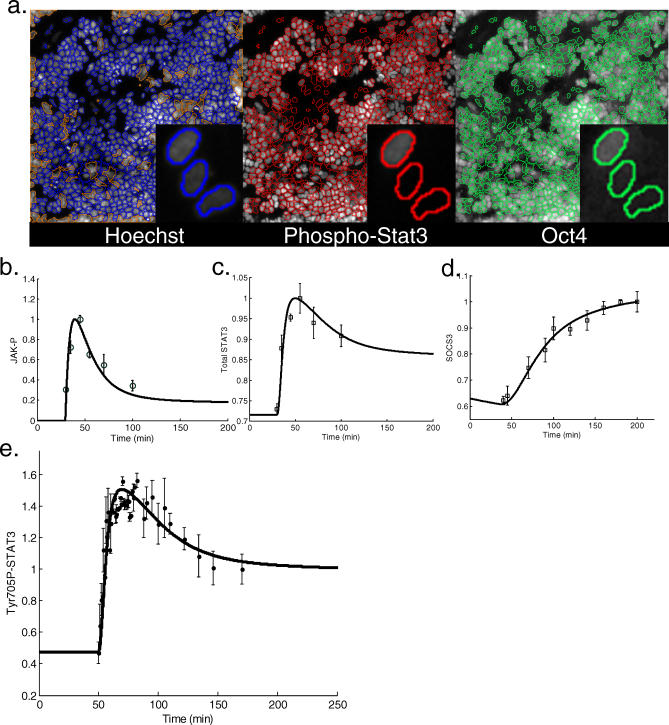
“Model consistency with experimental output was determined by quantitative image analysis of mouse ESCs [1].”
Myeloid leukaemia inhibitory factor maintains the developmental potential of embryonic stem cells
Williams, R. L., Hilton, D. J., Pease, S., Willson, T. A., Stewart, C. L., Gearing, D. P., Wagner, E. F., Metcalf, D., Nicola, N. A., & Gough, N. M. (1988) · Nature · doi:10.1038/336684a0 · Cited by 1,997 · cited 1×
“Jak/Stat3 (Janus kinase / signal transducer and activator of transcription-3) pathway [5].”
BackgroundSelf-renewal of pluripotent embryonic stem cells is mediated via activation of STAT3
Niwa, H., Burdon, T., Chambers, I., & Smith, A. (1998) · Genes & Development · doi:10.1101/gad.12.13.2048 · Cited by 1,549 · cited 1×
“in mouse ESCs [6–8].”
A Road Map for Those Who Don't Know JAK-STAT
Aaronson, D. S., & Horvath, C. M. (2002) · Science · doi:10.1126/science.1071545 · Cited by 1,337 · cited 7×
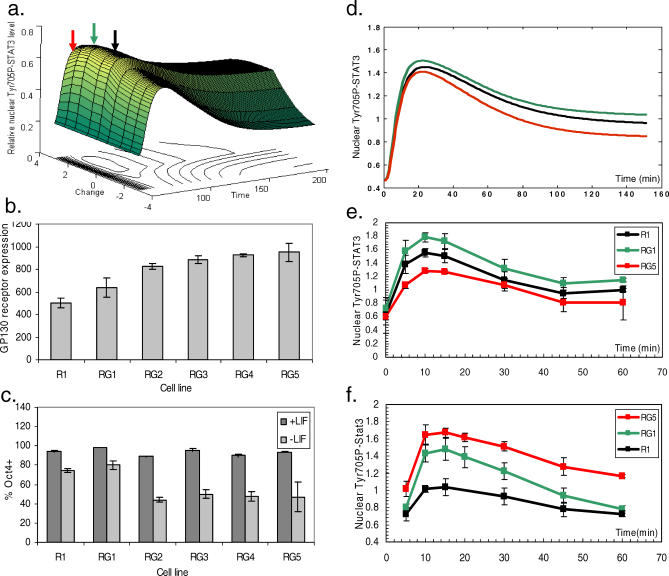
“In silico analysis suggested that transient formation of LIFR and GP130 nonsignaling receptor heterodimers, and sequestering of LIFR by GP130 in the overexpressing cells, is responsible for the observed results, which is consistent with previous reports [28].”
BackgroundInfluentialA comprehensive pathway map of epidermal growth factor receptor signaling
Oda, K., Matsuoka, Y., Funahashi, A., & Kitano, H. (2005) · Molecular Systems Biology · doi:10.1038/msb4100014 · Cited by 1,158
Dissecting self-renewal in stem cells with RNA interference
Ivanova, N., Dobrin, R., Lu, R., Kotenko, I., Levorse, J., DeCoste, C., Schafer, X., Lun, Y., & Lemischka, I. R. (2006) · Nature · doi:10.1038/nature04915 · Cited by 959
Schoeberl, B., Eichler-Jonsson, C., Gilles, E. D., & Müller, G. (2002) · Nature Biotechnology · doi:10.1038/nbt0402-370 · Cited by 950 · cited 2×
“Trafficking was assumed to be similar for all surface receptors [38].”
BackgroundResultSTAT3 activation is sufficient to maintain an undifferentiated state of mouse embryonic stem cells
Matsuda, T. (1999) · The EMBO Journal · doi:10.1093/emboj/18.15.4261 · Cited by 895 · cited 1×
“in mouse ESCs [6–8].”
Receptors; models for binding, trafficking and signaling
(1997) · General Pharmacology: The Vascular System · doi:10.1016/s0306-3623(97)90087-2 · Cited by 855
IL-6 signal transduction and its physiological roles: the signal orchestration model
Kamimura, D., Ishihara, K., & Hirano, T. (2003) · Reviews of Physiology, Biochemistry and Pharmacology · doi:10.1007/s10254-003-0012-2 · Cited by 673 · cited 1×
“interlukin-6 (IL-6)–type family [9].”
Minimum information requested in the annotation of biochemical models (MIRIAM)
Novère, N. L., Finney, A., Hucka, M., Bhalla, U. S., Campagne, F., Collado-Vides, J., Crampin, E. J., Halstead, M., Klipp, E., Mendes, P., et al. (2005) · Nature Biotechnology · doi:10.1038/nbt1156 · Cited by 622 · cited 1×
“The equations for this SBML-compatible [36] system are included in Figure S1, and Table S1 describes the parameters according to MIRIAM standards [37].”
MethodSOCS3 regulates the plasticity of gp130 signaling
Lang, R., Pauleau, A.-L., Parganas, E., Takahashi, Y., Mages, J., Ihle, J. N., Rutschman, R., & Murray, P. J. (2003) · Nature Immunology · doi:10.1038/ni932 · Cited by 439 · cited 1×
“SOCS3 is under transcription control of Stat3 [26,27], binds to the activated receptor complex of LIF and GP130 by binding to the Tyr974 of the GP130 receptor in the complex, and renders it inactive by removing the ability of Jak to phosphorylate Stat3 [25,26].”
BackgroundEssential role of STAT3 for embryonic stem cell pluripotency
Raz, R., Lee, C.-K., Cannizzaro, L. A., d’Eustachio, P., & Levy, D. E. (1999) · Proceedings of the National Academy of Sciences · doi:10.1073/pnas.96.6.2846 · Cited by 404 · cited 1×
“in mouse ESCs [6–8].”
STAT3 nuclear import is independent of tyrosine phosphorylation and mediated by importin-α3
Liu, L., McBride, K. M., & Reich, N. C. (2005) · Proceedings of the National Academy of Sciences · doi:10.1073/pnas.0501643102 · Cited by 348 · cited 3×
“Stat3 is predominantly dimeric [17–19] and cytoplasmic [15,17] in its unphosphorylated form, and translocates to the nucleus upon phosphorylation by using the importin machinery, in particular importin a3–5 [15,24].”
BackgroundMaintenance of Pluripotency in Human Embryonic Stem Cells Is STAT3 Independent
Humphrey, R. K., Beattie, G. M., Lopez, A. D., Bucay, N., King, C. C., Firpo, M. T., Rose‐John, S., & Hayek, A. (2004) · STEM CELLS · doi:10.1634/stemcells.22-4-522 · Cited by 319 · cited 1×
“Model dependency on starting conditions [39] was determined (see Figure S3), and showed stability over a large range of values.”
BackgroundSwameye, I., Müller, T. G., Timmer, J., Sandra, O., & Klingmüller, U. (2003) · Proceedings of the National Academy of Sciences · doi:10.1073/pnas.0237333100 · Cited by 316 · cited 1×
“Previous attempts to model the Jak/Stat pathway have either focused on steady state responses or on capturing the transient activation profile of the pathway to understand its kinetics [31–35].”
BackgroundLineage choice and differentiation in mouse embryos and embryonic stem cells
Loebel, D. A. F., Watson, C. M., De Young, R. A., & Tam, P. P. L. (2003) · Developmental Biology · doi:10.1016/s0012-1606(03)00390-7 · Cited by 247 · cited 1×
“temporally modulated manner [2–4].”
STATs Dimerize in the Absence of Phosphorylation
Braunstein, J., Brutsaert, S., Olson, R., & Schindler, C. (2003) · Journal of Biological Chemistry · doi:10.1074/jbc.m304531200 · Cited by 209 · cited 2×
“Stat3 is predominantly dimeric [17–19] and cytoplasmic [15,17] in its unphosphorylated form, and translocates to the nucleus upon phosphorylation by using the importin machinery, in particular importin a3–5 [15,24].”
BackgroundControl of MAPK signalling: from complexity to what really matters
Hornberg, J. J., Binder, B., Bruggeman, F. J., Schoeberl, B., Heinrich, R., & Westerhoff, H. V. (2005) · Oncogene · doi:10.1038/sj.onc.1208817 · Cited by 199 · cited 1×
“Previous attempts to model the Jak/Stat pathway have either focused on steady state responses or on capturing the transient activation profile of the pathway to understand its kinetics [31–35].”
BackgroundAsthagiri, A. R., & Lauffenburger, D. A. (2001) · Biotechnology Progress · doi:10.1021/bp010009k · Cited by 187 · cited 1×
“In this model, we assumed pre-association of Jak with the receptors according to literature [21,22], and we have assumed reversible kinetics as shown by double arrows in Figure 1 [20].”
MethodControl mechanism of JAK/STAT signal transduction pathway
Yamada, S., Shiono, S., Joo, A., & Yoshimura, A. (2003) · FEBS Letters · doi:10.1016/s0014-5793(02)03842-5 · Cited by 184 · cited 1×
“] (K9), followed by reversible nuclear translocation of both phosphorylated and unphosphorylated Stat3. We used a set of lumped parameters for all nuclear transport events (K13–17) where import rates are similar [”
MethodRegulation of Stat3 nuclear export
Bhattacharya, S., & Schindler, C. (2003) · Journal of Clinical Investigation · doi:10.1172/jci15372 · Cited by 146 · cited 2×
“In addition to ligand-mediated nuclear import of Stat3 [15,16], there is a basal level of nuclear–cytoplasmic shuttling of unphosphorylated Stat3 [15,17], and dephosphorylation of phosphorylated nuclear Stat3 leads to its CRM-1 dependent nuclear export [14].”
BackgroundResultThe JAK-STAT Signaling Network in the Human B-Cell: An Extreme Signaling Pathway Analysis
Papin, J. A., & Palsson, B. Ø. (2004) · Biophysical Journal · doi:10.1529/biophysj.103.029884 · Cited by 133 · cited 1×
“Previous attempts to model the Jak/Stat pathway have either focused on steady state responses or on capturing the transient activation profile of the pathway to understand its kinetics [31–35].”
BackgroundZandstra, P. W., Lauffenburger, D. A., & Eaves, C. J. (2000) · Blood · doi:10.1182/blood.v96.4.1215 · Cited by 127
Self-citationDifferent protein turnover of interleukin‐6‐type cytokine signalling components
Siewert, E., Müller‐Esterl, W., Starr, R., Heinrich, P. C., & Schaper, F. (1999) · European Journal of Biochemistry · doi:10.1046/j.1432-1327.1999.00719.x · Cited by 121 · cited 1×
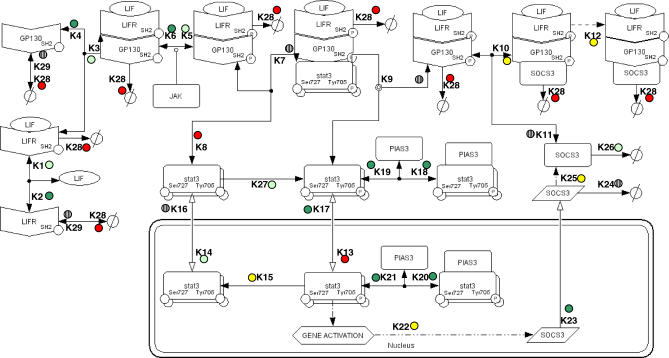
“Trafficking of the receptors GP130 and LIFR is also implemented in the model, and all surface receptors can be internalized with the same rate constant (K28), there is a fixed rate of receptor production using rate constant K29, and internalized complexes do not signal and are degraded [11,28,29].”
BackgroundHilton, D. J., Nicola, N. A., & Metcalf, D. (1991) · Journal of Cellular Physiology · doi:10.1002/jcp.1041460204 · Cited by 120 · cited 12×
“Signal propagation starts with binding of LIF to its LIFR [10,11]; this is followed by recruitment of the glycoprotein 130 (GP130) receptor to form a stabilized heterodimeric receptor complex on the cell surface.”
BackgroundInfluentialIn silico identification of the key components and steps in IFN‐γ induced JAK‐STAT signaling pathway
Zi, Z., Cho, K.-H., Sung, M.-H., Xia, X., Zheng, J., & Sun, Z. (2005) · FEBS Letters · doi:10.1016/j.febslet.2005.01.009 · Cited by 117 · cited 2×
“Global sensitivity analysis of the system was performed by considering two parameter interactions; this approach covered the entire solution space of these interactions and provided a computationally feasible method to perform this analysis compared with previous attempts [31].”
BackgroundMethodA Novel Sequence in the Coiled-coil Domain of Stat3 Essential for Its Nuclear Translocation
Ma, J., Zhang, T., Novotny-Diermayr, V., Tan, A. L. C., & Cao, X. (2003) · Journal of Biological Chemistry · doi:10.1074/jbc.m304196200 · Cited by 110
KRETZSCHMAR, A. K., DINGER, M. C., HENZE, C., BROCKE-HEIDRICH, K., & HORN, F. (2004) · Biochemical Journal · doi:10.1042/bj20030708 · Cited by 109 · cited 2×
“Stat3 is predominantly dimeric [17–19] and cytoplasmic [15,17] in its unphosphorylated form, and translocates to the nucleus upon phosphorylation by using the importin machinery, in particular importin a3–5 [15,24].”
BackgroundViswanathan, S., Benatar, T., Rose‐John, S., Lauffenburger, D. A., & Zandstra, P. W. (2002) · STEM CELLS · doi:10.1634/stemcells.20-2-119 · Cited by 92 · cited 1×
“In agreement with previous reports [40], there was little difference in Stat3 activation between 500 and 1,000 pM LIF.”
ResultSelf-citationOrabona, C., Belladonna, M. L., Vacca, C., Bianchi, R., Fallarino, F., Volpi, C., Gizzi, S., Fioretti, M. C., Grohmann, U., & Puccetti, P. (2005) · The Journal of Immunology · doi:10.4049/jimmunol.174.11.6582 · Cited by 87 · cited 2×
“Knockdown of SOCS3 using siRNA [42] verified that it is responsible for signal attenuation (see Figure S9).”
BackgroundDimerization of the cytokine receptors gp130 and LIFR analysed in single cells
Giese, B., Roderburg, C., Sommerauer, M., Wortmann, S. B., Metz, S., Heinrich, P. C., & Müller-Newen, G. (2005) · Journal of Cell Science · doi:10.1242/jcs.02628 · Cited by 81 · cited 3×
“Based on model results, sequestering of LIFR by GP130 to form a nonsignaling heterodimer, which has been shown to exist transiently [12], can account for this behavior.”
BackgroundLIF‐mediated control of embryonic stem cell self‐renewal emerges due to an autoregulatory loop
Davey, R. E., Onishi, K., Mahdavi, A., & Zandstra, P. W. (2007) · The FASEB Journal · doi:10.1096/fj.06-7852com · Cited by 79 · cited 1×
“temporally modulated manner [2–4].”
Self-citationDynamics of the gp130 cytokine complex: A model for assembly on the cellular membrane
Schroers, A., Hecht, O., Kallen, K., Pachta, M., Rose‐John, S., & Grötzinger, J. (2005) · Protein Science · doi:10.1110/ps.041117105 · Cited by 78 · cited 2×
“Trafficking of the receptors GP130 and LIFR is also implemented in the model, and all surface receptors can be internalized with the same rate constant (K28), there is a fixed rate of receptor production using rate constant K29, and internalized complexes do not signal and are degraded [11,28,29].”
BackgroundResultFISCHER, P., LEHMANN, U., SOBOTA, R. M., SCHMITZ, J., NIEMAND, C., LINNEMANN, S., HAAN, S., BEHRMANN, I., YOSHIMURA, A., JOHNSTON, J. A., et al. (2004) · Biochemical Journal · doi:10.1042/bj20030893 · Cited by 72 · cited 7×
“The second inhibitor of the pathway, PIAS3, has been shown to be present in both nuclear and cytoplasmic compartments, to bind directly to phosphorylated Stat3, is believed not to be under the transcription control of Stat3, and removes the DNA binding ability of phospho-Stat3 [26].”
BackgroundResultInfluentialHilton, D. J., & Nicola, N. A. (1992) · Journal of Biological Chemistry · doi:10.1016/s0021-9258(19)50009-6 · Cited by 67 · cited 12×
“Signal propagation starts with binding of LIF to its LIFR [10,11]; this is followed by recruitment of the glycoprotein 130 (GP130) receptor to form a stabilized heterodimeric receptor complex on the cell surface.”
BackgroundInfluentialDavey, R. E., & Zandstra, P. W. (2006) · STEM CELLS · doi:10.1634/stemcells.2006-0216 · Cited by 62 · cited 1×
“This response may be attributed either to reduced Stat3 activation from endogenously produced GP130 ligands [44] or possibly to increased activation of ERK by SHP2 through the GP130 receptors contributing to the response [25,45].”
BackgroundSelf-citationForrai, A., Boyle, K., Hart, A. H., Hartley, L., Rakar, S., Willson, T. A., Simpson, K. M., Roberts, A. W., Alexander, W. S., Voss, A. K., et al. (2006) · Stem Cells · doi:10.1634/stemcells.2005-0323 · Cited by 60 · cited 1×
“This response may be attributed either to reduced Stat3 activation from endogenously produced GP130 ligands [44] or possibly to increased activation of ERK by SHP2 through the GP130 receptors contributing to the response [25,45].”
BackgroundAnalysis of Receptor Internalization as a Mechanism for Modulating Signal Transduction
Haugh, J. M., & Lauffenburger, D. A. (1998) · Journal of Theoretical Biology · doi:10.1006/jtbi.1998.0791 · Cited by 55 · cited 1×
“We modeled these events by reversible binding of Stat3 to activated receptor complexes (rate constants K7, K8), nonreversible phosphorylation and dissociation of Stat3 from the receptor complex [13] (K9), followed by reversible nuclear translocation of both phosphorylated and unphosphorylated Stat3.”
MethodMolecular dynamics of STAT3 on IL-6 signaling pathway in living cells
Watanabe, K., Saito, K., Kinjo, M., Matsuda, T., Tamura, M., Kon, S., Miyazaki, T., & Uede, T. (2004) · Biochemical and Biophysical Research Communications · doi:10.1016/j.bbrc.2004.09.187 · Cited by 48 · cited 2×
“We used a set of lumped parameters for all nuclear transport events (K13–17) where import rates are similar [34,38]; however, the export rate of phosphorylated Stat3 is lower, in accordance with previous work [14,41].”
BackgroundResultGiese, B., Au-Yeung, C.-K., Herrmann, A., Diefenbach, S., Haan, C., Küster, A., Wortmann, S. B., Roderburg, C., Heinrich, P. C., Behrmann, I., et al. (2003) · Journal of Biological Chemistry · doi:10.1074/jbc.m303347200 · Cited by 48 · cited 1×
“In this model, we assumed pre-association of Jak with the receptors according to literature [21,22], and we have assumed reversible kinetics as shown by double arrows in Figure 1 [20].”
MethodSchröder, M., Kroeger, K. M., Volk, H.-D., Eidne, K. A., & Grütz, G. (2004) · Journal of Leukocyte Biology · doi:10.1189/jlb.1003496 · Cited by 41 · cited 2×
“Stat3 is predominantly dimeric [17–19] and cytoplasmic [15,17] in its unphosphorylated form, and translocates to the nucleus upon phosphorylation by using the importin machinery, in particular importin a3–5 [15,24].”
BackgroundZhang, T., Seow, K. T., Ong, C. T., & Cao, X. (2002) · Journal of Biological Chemistry · doi:10.1074/jbc.m105525200 · Cited by 28 · cited 1×
“The transcription factor Stat3 then docks on the phosphorylated SH2 domains of the receptor heterodimer and is phosphorylated at Tyr705 by Jak [23].”
BackgroundClahsen, T., Lehmann, U., Stroß, C., Hermanns, H. M., Volkmer, R., Schneider‐Mergener, J., Heinrich, P. C., & Schaper, F. (2004) · Cellular Signalling · doi:10.1016/j.cellsig.2004.09.016 · Cited by 21 · cited 9×
“In silico analysis suggested that transient formation of LIFR and GP130 nonsignaling receptor heterodimers, and sequestering of LIFR by GP130 in the overexpressing cells, is responsible for the observed results, which is consistent with previous reports [28].”
BackgroundInfluential
Cited by
Zhang, X., Trame, M., Lesko, L., & Schmidt, S. (2015) · CPT: Pharmacometrics & Systems Pharmacology · doi:10.1002/psp4.6 · Cited by 467
“, the nuclear export and docking of Stat-3 to the activated receptor, were identified using sensitivity analysis.(52) Although most of the sensitivity analysis focused on the intracellular signaling pathway at a single scale, more and more multiscale systems pharmacology models are developed to understand the drug act…”
BackgroundChen, W. W., Schoeberl, B., Jasper, P. J., Niepel, M., Nielsen, U. B., Lauffenburger, D. A., & Sorger, P. K. (2009) · Molecular Systems Biology · doi:10.1038/msb.2008.74 · Cited by 391
“This method of calculating average local sensitivity has been discussed previously (Cukier et al , 1973; Bentele, 2004; Mahdavi, 2007) and has two advantages over simple sensitivity: (i) it accounts for the possibility that a fit does not precisely hit a nearby minimum due to problems with…”
MethodThe Systematic Production of Cells for Cell Therapies
Kirouac, D. C., & Zandstra, P. W. (2008) · Cell Stem Cell · doi:10.1016/j.stem.2008.09.001 · Cited by 301
“As a recent concrete example of the usefulness of such analysis, we have devised a temporal ligand delivery strategy to maximize ESC selfrenewal via modulating JAK-STAT3 pathway kinetics based purely on in silico analysis (Mahdavi et al., 2007).”
MethodSelf-citationBraun, D. A., Fribourg, M., & Sealfon, S. C. (2013) · Journal of Biological Chemistry · doi:10.1074/jbc.m112.386573 · Cited by 168
“These models build on previously developed JAK/STAT models (17–19) and used parameter values frompreviousmodels of STAT3 signaling (17).”
MethodGraf, U., Casanova, E. A., & Cinelli, P. (2011) · Genes · doi:10.3390/genes2010280 · Cited by 109
“[9] [10] [15] [13]”
Metadata
- Authors
- Mahdavi, A., Davey, R. E., Bhola, P., Yin, T., & Zandstra, P. W.
- Affiliations
- University of Toronto (CA)
- Corresponding author
- Zandstra, Peter W
- Venue
- PLoS Computational Biology
- Publisher
- Public Library of Science (PLoS)
- Published
- 2007-07-06
- Volume
- 3
- Issue
- 7
- Pages
- e130
- ISSN
- 1553-734X (ISSN-L)
- 1553-7358
- PMC
- PMC1913098
- OpenAlex
- W2015711590
- Cited by
- 65
- References
- 46
- Citations by year
- 2023: 2 · 2020: 1 · 2019: 1 · 2018: 3 · 2017: 1 · 2016: 2 · 2015: 4 · 2014: 3 · 2013: 8 · 2012: 9
- FWCI
- 4.20
- Type
- journal article
- Language
- en
- Open access
- gold
- doi.org
- Locations
- PLoS Computational Biology (publishedVersion, cc-by)
- Europe PMC (PubMed Central) (publishedVersion, cc-by)
- PubMed Central (publishedVersion, cc-by)
- PubMed (publishedVersion)
- DOAJ (DOAJ: Directory of Open Access Journals) (submittedVersion, cc-by-sa)
- Figshare (submittedVersion, cc-by)
- Funders
- Stem Cell Network
- Topics
- Life Sciences › Immunology and Microbiology › Immunology › Cytokine Signaling Pathways and Interactions
- Life Sciences › Biochemistry, Genetics and Molecular Biology › Molecular Biology › Gene Regulatory Network Analysis
- Life Sciences › Biochemistry, Genetics and Molecular Biology › Molecular Biology › Pluripotent Stem Cells Research
- Keywords
- STAT3 signaling, embryonic stem cell self-renewal, stem cell fate control, receptor tyrosine kinase signaling, gp130, suppressor of cytokine signaling, receptor trafficking, signaling network modeling
- MeSH terms
- Animals, Cell Differentiation, Computer Simulation, Enzyme Activation, Gene Expression Regulation, Kinetics, Ligands, Models, Biological, Sensitivity and Specificity, Stem Cells, Time Factors, Signal Transduction, Gene Expression, Cytokines, Active Transport, Cell Nucleus, STAT3 Transcription Factor, Cytokine Receptor gp130, Mice
About these checks
Registry, retraction, Cites and statistics results are computed, not judged, with one exception: a printed reference that no index lists is read once by a model before it counts as a citation error. Claims are extracted by a model and kept only when their quote appears verbatim in the text; each cited source is then checked, with a model’s help, for whether it says what the claim relies on. Those verdicts can be wrong — read the claim’s quote and the cited source before relying on one.
Statistics and arithmetic are recomputed, not judged.
Confidence bands are shown only for fields calibrated on our annotated test set. None is calibrated yet, so no band is shown.
What counts as a claim ›How we measure confidence ›How we check this ›
Are you an author, or do you see a problem with this page? Request a review
Data sources
Bibliographic data: Semantic Scholar, OpenAlex, Crossref.
Contains information from the Semantic Scholar Academic Graph Datasets, made available under the ODC Attribution License (ODC-BY 1.0).
Semantic Scholar’s data is described in: Kinney, R., et al. (2023). The Semantic Scholar Open Data Platform. arXiv:2301.10140.
