

The DOI matches its Crossref record; 125 of the 130 references it cites were found in a registry or an index.
BEAST 2.5: An advanced software platform for Bayesian evolutionary analysis
Open accessPublished version of a preprint
Abstract
Abstract Elaboration of Bayesian phylogenetic inference methods has continued at pace in recent years with major new advances in nearly all aspects of the joint modelling of evolutionary data. It is increasingly appreciated that some evolutionary questions can only be adequately answered by combining evidence from multiple independent sources of data, including genome sequences, sampling dates, phenotypic data, radiocarbon dates, fossil occurrences, and biogeographic range information among others. Including all relevant data into a single joint model is very challenging both conceptually and computationally. Advanced computational software packages that allow robust development of compatible (sub-)models which can be composed into a full model hierarchy have played a key role in these developments. Developing such software frameworks is increasingly a major scientific activity in its own right, and comes with specific challenges, from practical software design, development and engineering challenges to statistical and conceptual modelling challenges. BEAST 2 is one such computational software platform, and was first announced over 4 years ago. Here we describe a series of major new developments in the BEAST 2 core platform and model hierarchy that have occurred since the first release of the software, culminating in the recent 2.5 release. Author summary Bayesian phylogenetic inference methods have undergone considerable development in recent years, and joint modelling of rich evolutionary data, including genomes, phenotypes and fossil occurrences is increasingly common. Advanced computational software packages that allow robust development of compatible (sub-)models which can be composed into a full model hierarchy have played a key role in these developments. Developing scientific software is increasingly crucial to advancement in many fields of biology. The challenges range from practical software development and engineering, distributed team coordination, conceptual development and statistical modelling, to validation and testing. BEAST 2 is one such computational software platform for phylogenetics, population genetics and phylodynamics, and was first announced over 4 years ago. Here we describe the full range of new tools and models available on the BEAST 2.5 platform, which expand joint evolutionary inference in many new directions, especially for joint inference over multiple data types, non-tree models and complex phylodynamics.
Overview
The claims and statistics of this paper haven’t been checked yet.
Run the check — free, no account needed. It reads the open-access text and checks the sources it cites.
Integrity signals
Registry
Cites
Statistics
Figures
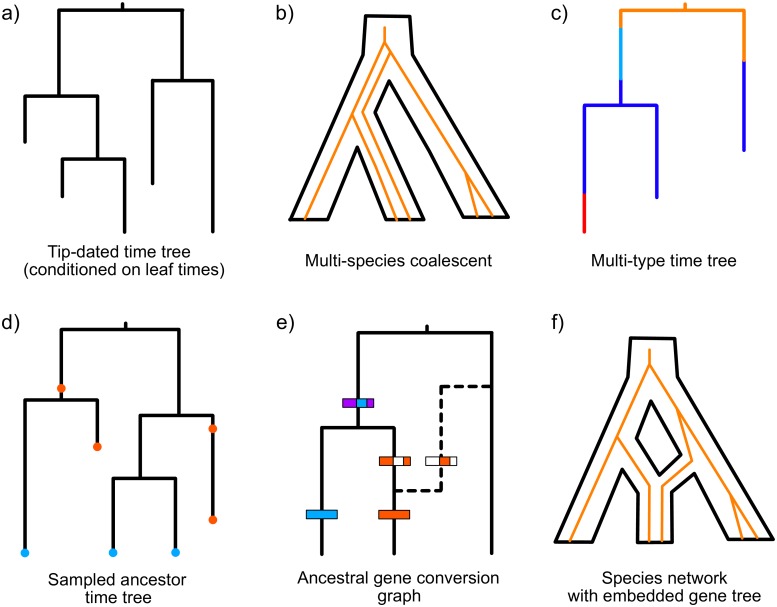
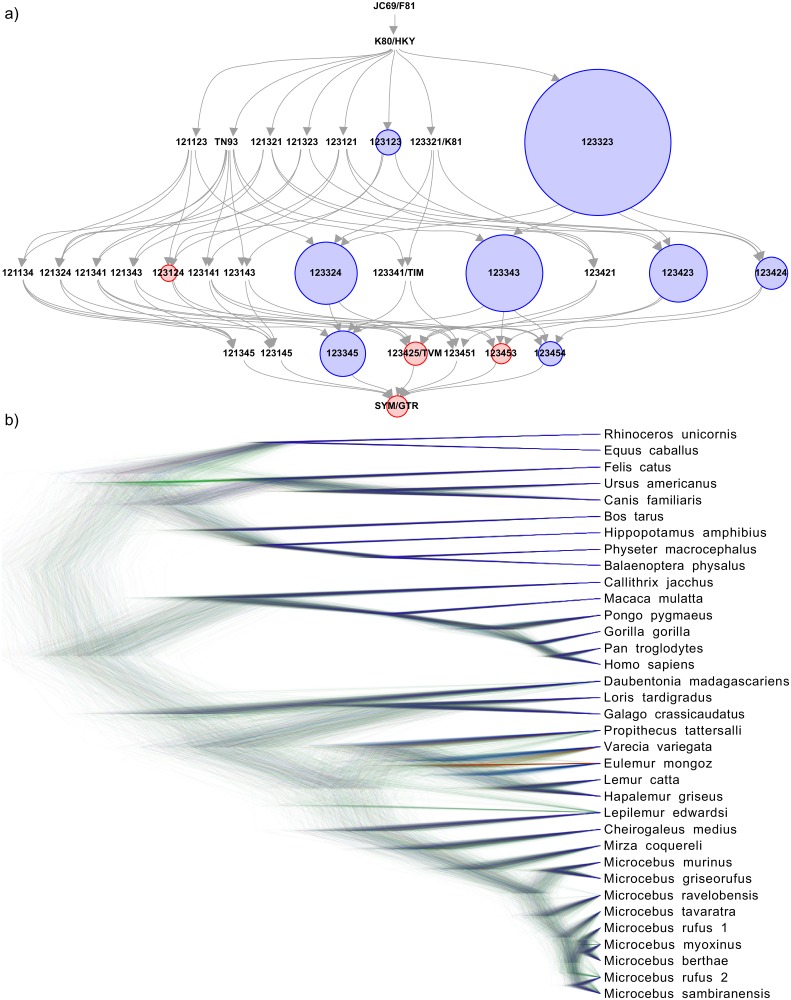
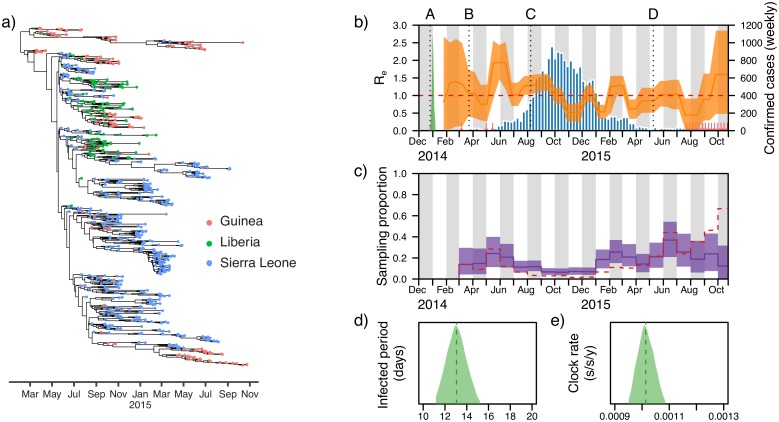
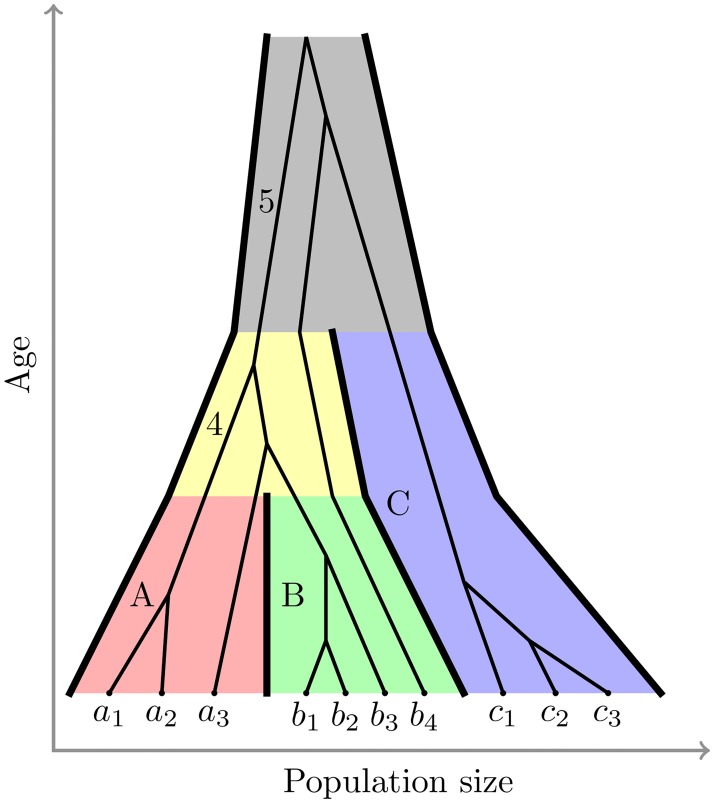
Verification
Claims the paper makes
The claims and statistics of this paper haven’t been checked yet.
Run the check — free, no account needed. It reads the open-access text and checks the sources it cites.
Claims other papers make about this one
Each is checked against this paper’s own text: does it say what the citing paper says it does?
In the citing paper
“Methods for inferring these latent phylogenetic trees continue to be of substantial interest 92-94, but are frustrated by long run times and poor scalability to large datasets.”
From Learning the protein language: Evolution, structure, and function (2021) · cites this paper as [94]
Self-check
Percentages, sums and reported differences re-computed from the paper’s own numbers.
The self-check needs the paper’s full text.
Citations
Cites
Gelman, A., Carlin, J. B., Stern, H. S., & Rubin, D. B. (2003) · doi:10.1201/9780429258480 · Cited by 27,276
BEAST: Bayesian evolutionary analysis by sampling trees
Drummond, A. J., & Rambaut, A. (2007) · BMC Evolutionary Biology · doi:10.1186/1471-2148-7-214 · Cited by 13,104
Self-citationA contribution to the mathematical theory of epidemics
Kermack, W. O., & McKendrick, A. G. (1927) · Proceedings of the Royal Society of London Series A Containing Papers of a Mathematical and Physical Character · doi:10.1098/rspa.1927.0118 · Cited by 11,854
BEAST 2: a software platform for Bayesian evolutionary analysis
Bouckaert, R., Heled, J., Kühnert, D., Vaughan, T., Wu, C.-H., Xie, D., Suchard, M. A., Rambaut, A., & Drummond, A. J. (2014) · PLoS Computational Biology · doi:10.1371/journal.pcbi.1003537 · Cited by 6,527
Self-citationRelaxed Phylogenetics and Dating with Confidence
Drummond, A. J., Ho, S. Y. W., Phillips, M. J., & Rambaut, A. (2006) · PLoS Biology · doi:10.1371/journal.pbio.0040088 · Cited by 6,463 · cited 1×
“The core BEAST 2 package already provides the relaxed [53] and random local [54] clock models to model substitution rate heterogeneity along a phylogeny.”
MethodSelf-citationBayesian phylogenetic and phylodynamic data integration using BEAST 1.10
Suchard, M. A., Lemey, P., Baele, G., Ayres, D. L., Drummond, A. J., & Rambaut, A. (2018) · Virus Evolution · doi:10.1093/ve/vey016 · Cited by 3,749
Self-citationA likelihood approach to estimating phylogeny from discrete morphological character data
Lewis, P. O. (2001) · Systematic Biology · doi:10.1080/106351501753462876 · Cited by 2,929
Inference of human population history from individual whole-genome sequences
Li, H., & Durbin, R. (2011) · Nature · doi:10.1038/nature10231 · Cited by 2,590
Bayesian inference of species trees from multilocus data
Heled, J., & Drummond, A. J. (2010) · Molecular Biology and Evolution · doi:10.1093/molbev/msp274 · Cited by 2,453
Self-citationCodon-substitution models for heterogeneous selection pressure at amino acid sites
Yang, Z., Nielsen, R., Goldman, N., & Pedersen, A.-M. K. (2000) · Genetics · doi:10.1093/genetics/155.1.431 · Cited by 2,286
Research works printed but not linked: 2
- Vaughan TG, Leventhal GE, Rasmussen DA, Drummond AJ, Welch D, Stadler T. Directly estimating epidemic curves from genomic data. bioRxiv. 2017; p. 142570.
- Matzke NJ, Wright A. Ground truthing tip-dating methods using fossil Canidae reveals major differences in performance. bioRxiv. 2016; p. 049643.
Cited by
Sorted by citations
Rapid epidemic expansion of the SARS-CoV-2 Omicron variant in southern Africa
Viana, R. P. E. S., Moyo, S. M., Amoako, D. G., Tegally, H., Scheepers, C., Althaus, C. L., Anyaneji, U. J., Bester, P. A., Boni, M. F., Chand, M., et al. (2022) · Nature · doi:10.1038/s41586-022-04411-y · Cited by 1,678
Self-citationEvaluating the Effects of SARS-CoV-2 Spike Mutation D614G on Transmissibility and Pathogenicity
Volz, E., Hill, V., McCrone, J. T., Price, A., Jorgensen, D., O’Toole, Á., Southgate, J., Johnson, R., Jackson, B., Nascimento, F. F., et al. (2021) · Cell · doi:10.1016/j.cell.2020.11.020 · Cited by 1,006
Self-citationHyPhy 2.5—A Customizable Platform for Evolutionary Hypothesis Testing Using Phylogenies
Pond, S. L. K., Poon, A. F. Y., Velazquez, R., Weaver, S., Hepler, N. L., Murrell, B., Shank, S. D., Magalis, B. R., Bouvier, D., Nekrutenko, A., et al. (2019) · Molecular Biology and Evolution · doi:10.1093/molbev/msz197 · Cited by 767
Transmission, infectivity, and neutralization of a spike L452R SARS-CoV-2 variant
Deng, X., Garcia-Knight, M. A., Khalid, M. M., Servellita, V., Wang, C., Morris, M. K., Sotomayor-González, A., Glasner, D. R., Reyes, K. R., Gliwa, A. S., et al. (2021) · Cell · doi:10.1016/j.cell.2021.04.025 · Cited by 651
Phylogenetic tree building in the genomic age
Kapli, P., Yang, Z., & Telford, M. J. (2020) · Nature Reviews Genetics · doi:10.1038/s41576-020-0233-0 · Cited by 533
Metadata
- Authors
- Bouckaert, R., Vaughan, T. G., Barido-Sottani, J., Duchêne, S., Fourment, M., Gavryushkina, A., Heled, J., Jones, G., Kühnert, D., De Maio, N., Matschiner, M., Mendes, F. K., Müller, N. F., Ogilvie, H. A., du Plessis, L., Popinga, A., Rambaut, A., Rasmussen, D., Siveroni, I., Suchard, M. A., Wu, C.-H., Xie, D., Zhang, C., Stadler, T., & Drummond, A. J.
- Affiliations
- University of Auckland (NZ)
- SIB Swiss Institute of Bioinformatics (CH)
- The University of Melbourne (AU)
- University of Technology Sydney (AU)
- University of Otago (NZ)
- University of Gothenburg (SE)
- Max Planck Institute of Geoanthropology (DE)
- University of Basel (CH)
- Rice University (US)
- University of Oxford (GB)
- University of Edinburgh (GB)
- North Carolina State University (US)
- Imperial College London (GB)
- University of California, Los Angeles (US)
- Chinese Academy of Sciences (CN)
- Corresponding author
- Bouckaert, Remco
- Vaughan, Timothy G.
- Duchêne, Sebastián
- Fourment, Mathieu
- Gavryushkina, Alexandra
- Heled, Joseph
- Jones, Graham
- Kühnert, Denise
- Matschiner, Michael
- Mendes, Fábio K.
- Müller, Nicola F.
- Ogilvie, Huw A.
- du Plessis, Louis
- Popinga, Alex
- Rambaut, Andrew
- Rasmussen, David
- Siveroni, Igor
- Suchard, Marc A.
- Wu, Chieh-Hsi
- Xie, Dong
- Zhang, Chi
- Stadler, Tanja
- Drummond, Alexei J.
- ORCID
- Bouckaert, Remco
- Vaughan, Timothy G.
- Barido-Sottani, Joëlle
- Duchêne, Sebastián
- Fourment, Mathieu
- Gavryushkina, Alexandra
- Heled, Joseph
- Jones, Graham
- Kühnert, Denise
- De Maio, Nicola
- Matschiner, Michael
- Mendes, Fábio K.
- Müller, Nicola F.
- Ogilvie, Huw A.
- du Plessis, Louis
- Popinga, Alex
- Rambaut, Andrew
- Rasmussen, David
- Siveroni, Igor
- Suchard, Marc A.
- Wu, Chieh-Hsi
- Xie, Dong
- Zhang, Chi
- Stadler, Tanja
- Drummond, Alexei J.
- Venue
- PLOS Computational Biology
- Publisher
- Public Library of Science (PLoS)
- Published
- 2019-04-08
- Volume
- 15
- Issue
- 4
- Pages
- e1006650
- ISSN
- 1553-734X (ISSN-L)
- 1553-7358
- PMC
- PMC6472827
- OpenAlex
- W2901954177
- Cited by
- 4,556
- References
- 130
- Citations by year
- 2026: 607 · 2025: 744 · 2024: 694 · 2023: 667 · 2022: 721 · 2021: 638 · 2020: 435 · 2019: 47
- FWCI
- 152.40
- Type
- journal article
- Language
- en
- Update notices
- new_version (2019-04-18)
- Open access
- gold
- doi.org
- Licence
- Locations
- PLoS Computational Biology (publishedVersion, cc-by)
- bioRxiv (Cold Spring Harbor Laboratory) (acceptedVersion, cc-by)
- PubMed Central (publishedVersion, cc-by)
- PubMed (publishedVersion)
- Repository for Publications and Research Data (ETH Zurich) (publishedVersion, cc-by)
- Zurich Open Repository and Archive (University of Zurich) (acceptedVersion, cc-by)
- RePEc: Research Papers in Economics (submittedVersion)
- DOAJ (DOAJ: Directory of Open Access Journals) (submittedVersion, cc-by-sa)
- ePrints Soton (University of Southampton) (submittedVersion)
- eScholarship (California Digital Library) (submittedVersion)
- eScholarship (California Digital Library) (submittedVersion, cc-by)
- Minerva Access (University of Melbourne) (submittedVersion, cc-by)
- UTS ePRESS (University of Technology Sydney) (submittedVersion)
- UTS ePRESS (University of Technology Sydney) (submittedVersion, cc-by)
- Edinburgh Research Explorer (University of Edinburgh) (submittedVersion, cc-by)
- MPG.PuRe (Max Planck Society) (submittedVersion, other-oa)
- Rice Research Repository (Rice University) (submittedVersion, cc-by)
- ResearchSpace (University of Auckland) (submittedVersion, cc-by)
- Spiral (Imperial College London) (submittedVersion, other-oa)
- Zurich Open Repository and Archive (University of Zurich) (submittedVersion, cc-by)
- ETH Zürich Research Collection (cc-by)
- Zurich Open Repository and Archive (University of Zurich)
- Funders
- Marsden Fund (16-UOA-277)
- Topics
- Life Sciences › Biochemistry, Genetics and Molecular Biology › Molecular Biology › Genomics and Phylogenetic Studies
- Life Sciences › Biochemistry, Genetics and Molecular Biology › Genetics › Genetic diversity and population structure
- Life Sciences › Biochemistry, Genetics and Molecular Biology › Genetics › Evolution and Genetic Dynamics
- Keywords
- BEAST2, Bayesian phylogenetics, model hierarchy, software design, model compatibility, genome sequence, sampling date, radiocarbon dates, fossil occurrences, phenotypic data
- MeSH terms
- Animals, Bayes Theorem, Computer Simulation, Biological Evolution, Humans, Markov Chains, Models, Genetic, Monte Carlo Method, Phylogeny, Software, Evolution, Molecular, Computational Biology
About these checks
Registry, retraction, Cites and statistics results are computed, not judged, with one exception: a printed reference that no index lists is read once by a model before it counts as a citation error. Claims are extracted by a model and kept only when their quote appears verbatim in the text; each cited source is then checked, with a model’s help, for whether it says what the claim relies on. Those verdicts can be wrong — read the claim’s quote and the cited source before relying on one.
Statistics and arithmetic are recomputed, not judged.
Confidence bands are shown only for fields calibrated on our annotated test set. None is calibrated yet, so no band is shown.
What counts as a claim ›How we measure confidence ›How we check this ›
Are you an author, or do you see a problem with this page? Request a review
