

A neural field model for color perception unifying assimilation and contrast
Open accessThe DOI matches its Crossref record; 87 of the 88 references it cites were found in a registry or an index.
Abstract
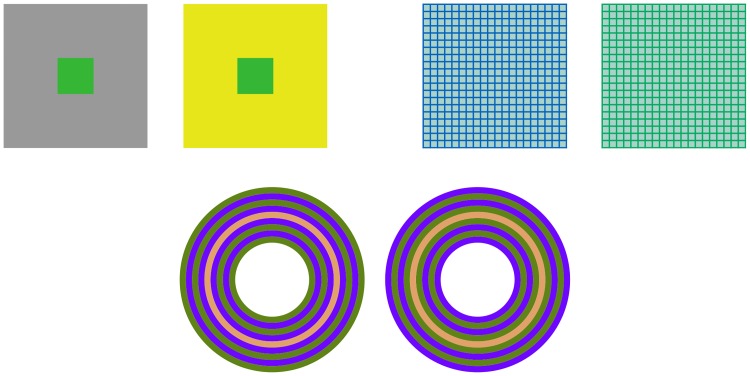
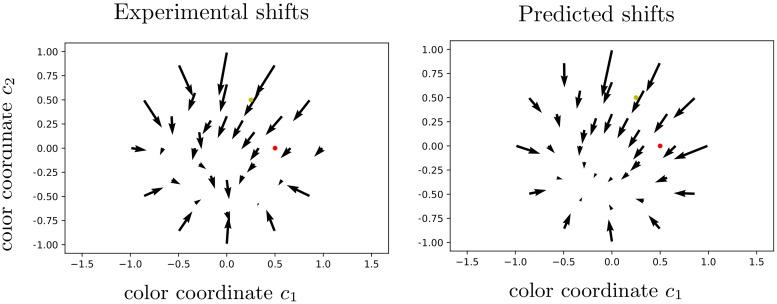
We address the question of color-space interactions in the brain, by proposing a neural field model of color perception with spatial context for the visual area V1 of the cortex. Our framework reconciles two opposing perceptual phenomena, known as simultaneous contrast and chromatic assimilation. They have been previously shown to act synergistically, so that at some point in an image, the color seems perceptually more similar to that of adjacent neighbors, while being more dissimilar from that of remote ones. Thus, their combined effects are enhanced in the presence of a spatial pattern, and can be measured as larger shifts in color matching experiments. Our model supposes a hypercolumnar structure coding for colors in V1, and relies on the notion of color opponency introduced by Hering. The connectivity kernel of the neural field exploits the balance between attraction and repulsion in color and physical spaces, so as to reproduce the sign reversal in the influence of neighboring points. The color sensation at a point, defined from a steady state of the neural activities, is then extracted as a nonlinear percept conveyed by an assembly of neurons. It connects the cortical and perceptual levels, because we describe the search for a color match in asymmetric matching experiments as a mathematical projection on color sensations. We validate our color neural field alongside this color matching framework, by performing a multi-parameter regression to data produced by psychophysicists and ourselves. All the results show that we are able to explain the nonlinear behavior of shifts observed along one or two dimensions in color space, which cannot be done using a simple linear model.
Overview
The claims and statistics of this paper haven’t been checked yet.
Free: it reads the open-access text and checks the first 5 claims that cite a source we can check. Create a free account to check every claim.
Integrity signals
Registry
Cites
Statistics
Figures



Verification
Claims the paper makes
The claims and statistics of this paper haven’t been checked yet.
Free: it reads the open-access text and checks the first 5 claims that cite a source we can check. Create a free account to check every claim.
Self-check
Percentages, sums and reported differences re-computed from the paper’s own numbers.
The self-check needs the paper’s full text.
Citations
Cites
(1982) · Trends in Neurosciences · doi:10.1016/0166-2236(82)90076-5 · Cited by 9,089
Receptive fields of single neurones in the cat's striate cortex
Hubel, D. H., & Wiesel, T. N. (1959) · The Journal of Physiology · doi:10.1113/jphysiol.1959.sp006308 · Cited by 4,653
Handbook of perception and human performance
Boff, K. R., Kaufman, L., & Thomas, J. P. (1986) · Wiley eBooks · Cited by 4,129
Land, E. H., & McCann, J. J. (1971) · Journal of the Optical Society of America · doi:10.1364/josa.61.000001 · Cited by 4,095 · cited 1×
“The phenomenon of color constancy, first studied by E. Land who proposed the Retinex algorithm [70,71], has since been the subject of much research.”
BackgroundSegregation of Form, Color, Movement, and Depth: Anatomy, Physiology, and Perception
Livingstone, M., & Hubel, D. (1988) · Science · doi:10.1126/science.3283936 · Cited by 3,355 · cited 2×
“nlinearly with respect to cones [23, 31, 32]. As such, they may have a prominent function in encoding color in the cortex, as proposed in [33, 34]. Most of them were found to be double-opponent cells [2, 35, 36]. Single- and double-opponent cells are very likely to play a fundamental role in color processing in the br…”
BackgroundNeuronal Population Coding of Movement Direction
Georgopoulos, A. P., Schwartz, A. B., & Kettner, R. E. (1986) · Science · doi:10.1126/science.3749885 · Cited by 3,161 · cited 1×
“S This idea had already been suggested in the context of population coding [65–67], but with different perspectives (where preferred stimuli are integrated over several neurons to deduce the preferred stimulus of the whole population, while here dynamic activities elicited by one stimulus are…”
BackgroundDynamics of pattern formation in lateral-inhibition type neural fields
Amari, S.-I. (1977) · Biological Cybernetics · doi:10.1007/bf00337259 · Cited by 2,060 · cited 1×
“The main thrust of this article is twofold : first, we put forward an evolution model for the dynamics of neural activities, considered as a spatial and color neural field [1, 14, 5, 11].”
BackgroundZagrean, L. (2014) · Acta Endocrinologica (Bucharest) · doi:10.4183/aeb.2014.529 · Cited by 1,909
A mathematical theory of the functional dynamics of cortical and thalamic nervous tissue
Wilson, H. R., & Cowan, J. D. (1973) · Kybernetik · doi:10.1007/bf00288786 · Cited by 1,850 · cited 1×
“We assume that the neural activity a : Ω × Copp × I → [0, 1] is solution to an integrodifferential equation of Wilson-Cowan type ([51]):”
MethodAnatomy and physiology of a color system in the primate visual cortex
Livingstone, M., & Hubel, D. (1984) · The Journal of Neuroscience · doi:10.1523/jneurosci.04-01-00309.1984 · Cited by 1,628 · cited 2×
“As prominent function in encoding color in the cortex, as proposed in them were found to be double-opponent cells [2,35,36]. double-opponent cells are very likely to play a fundamental role in brain [2,23].”
BackgroundChromatic mechanisms in lateral geniculate nucleus of macaque.
Derrington, A. M., Krauskopf, J., & Lennie, P. (1984) · The Journal of Physiology · doi:10.1113/jphysiol.1984.sp015499 · Cited by 1,608 · cited 4×
“Supposing such a simple relationship between physiology of the cells and psychology related to hue pureness was indeed criticized [23,30,62].”
BackgroundResultInfluentialSpatial and chromatic interactions in the lateral geniculate body of the rhesus monkey.
Wiesel, T. N., & Hubel, D. H. (1966) · Journal of Neurophysiology · doi:10.1152/jn.1966.29.6.1115 · Cited by 1,275
Kandel, E. R., Koester, J. D., Mack, S. H., & Siegelbaum, S. A. (1985) · Cited by 1,180
Theory of orientation tuning in visual cortex.
Ben-Yishai, R., Bar-Or, R. L., & Sompolinsky, H. (1995) · Proceedings of the National Academy of Sciences · doi:10.1073/pnas.92.9.3844 · Cited by 1,086 · cited 2×
“Orientation tuning has been addressed in an important paper by Ben-Yishai and colleagues [48].”
BackgroundAn opponent-process theory of color vision.
Hurvich, L. M., & Jameson, D. (1957) · Psychological Review · doi:10.1037/h0041403 · Cited by 1,040 · cited 1×
“ed, in view of the physiological results exposed in the Introduction, it is now accepted that L, M, S signals are recombined in area V1 into Yellow-Blue, Red-Green and Achromatic independent channels [61], although the right choice of the opposite axes has been debated [62]. Our model does not depend in a decisive man…”
BackgroundChromaticity diagram showing cone excitation by stimuli of equal luminance
MacLeod, D. I. A., & Boynton, R. M. (1979) · Journal of the Optical Society of America · doi:10.1364/josa.69.001183 · Cited by 952
Neural networks as spatio-temporal pattern-forming systems
Ermentrout, B. (1998) · Reports on Progress in Physics · doi:10.1088/0034-4885/61/4/002 · Cited by 679 · cited 1×
“The main thrust of this article is twofold : first, we put forward an evolution model for the dynamics of neural activities, considered as a spatial and color neural field [1, 14, 5, 11].”
BackgroundSpatial and temporal contrast sensitivity of neurones in areas 17 and 18 of the cat's visual cortex.
Movshon, J. A., Thompson, I. D., & Tolhurst, D. J. (1978) · The Journal of Physiology · doi:10.1113/jphysiol.1978.sp012490 · Cited by 667
(1988) · Differential and Integral Calculus · doi:10.1002/9781118033241.scard · Cited by 648
Analysis of Response Patterns of LGN Cells*
De Valois, R. L., Abramov, I., & Jacobs, G. H. (1966) · Journal of the Optical Society of America · doi:10.1364/josa.56.000966 · Cited by 625
Outlines of a theory of the light sense
Hering, E. (1964) · Medical Entomology and Zoology · Cited by 569
Digital video and HDTV algorithms and interfaces
(2003) · Choice Reviews Online · doi:10.5860/choice.40-6437 · Cited by 545
Color Science: Concepts and Methods, Quantitative Data and Formulas
Cohen, J., Wyszecki, G., & Stiles, W. S. (1968) · The American Journal of Psychology · doi:10.2307/1420820 · Cited by 518
Foster, D. H. (2011) · Vision Research · doi:10.1016/j.visres.2010.09.006 · Cited by 505 · cited 3×
“While papers on color constancy work on the link between Equations (16) and (17) ([15],[4]), our paper concentrates on the relationship between Equations (17) and (18).”
InfluentialEbner, M. (2007) · Cited by 482
Brightness constancy and the nature of achromatic colors.
Wallach, H. (1948) · Journal of Experimental Psychology · doi:10.1037/h0053804 · Cited by 479 · cited 1×
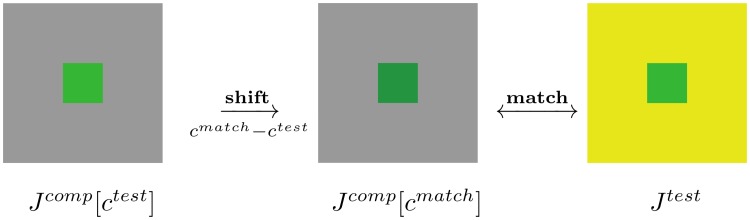
“test and comparison backgrounds filled with Yellow (HSL = (60˚, 50%, 50%)) and Gray (HSL = (0˚, 0%, 50%)), respectively. A.S. performed color matching experiments as in Fig 3 (in a spirit similar to [3] who worked with achromatic colors). Experiments used a standard computer screen, in a dark room. Squares were presen…”
MethodColor Categories in Thought and Language
(1997) · Cambridge University Press eBooks · doi:10.1017/cbo9780511519819 · Cited by 456 · cited 1×
“scribe the color sensation, as introduced in this work. In practice, none of these tasks is trivial, even regarding color naming, since thought and language related to color involve complex cognition [72]. Summarizing the previous ideas, the three punctual relationships Rx1 1 R x2 2 Cx1 1 � C x2 2 � S x1 1 S 2 2 are i…”
BackgroundBressloff, P. C., Cowan, J. D., Golubitsky, M., Thomas, P. J., & Wiener, M. C. (2001) · Philosophical Transactions of the Royal Society of London. Series B: Biological Sciences · doi:10.1098/rstb.2000.0769 · Cited by 419
Spatiotemporal dynamics of continuum neural fields
Bressloff, P. C. (2012) · Journal of Physics A: Mathematical and Theoretical · doi:10.1088/1751-8113/45/3/033001 · Cited by 414 · cited 1×
“The main thrust of this article is twofold : first, we put forward an evolution model for the dynamics of neural activities, considered as a spatial and color neural field [1, 14, 5, 11].”
BackgroundThe spatial transformation of color in the primary visual cortex of the macaque monkey
Johnson, E. N., Hawken, M. J., & Shapley, R. (2001) · Nature Neuroscience · doi:10.1038/86061 · Cited by 381 · cited 2×
“Edges are thought to have an important role due to “visual edge contrast” [80] in the perception of a colored surface, and to be selectively processed in V1 [79].”
BackgroundColor in the Cortex: single- and double-opponent cells
Shapley, R., & Hawken, M. J. (2011) · Vision Research · doi:10.1016/j.visres.2011.02.012 · Cited by 336
Color spaces for computer graphics
Joblove, G. H., & Greenberg, D. (1978) · Proceedings of the 5th annual conference on Computer graphics and interactive techniques · doi:10.1145/800248.807362 · Cited by 260 · cited 2×
“The HSL color space is extensively used in computer graphics and defined in [21].”
BackgroundMethodColor appearance depends on the variance of surround colors
Brown, R. O., & MacLeod, D. I. A. (1997) · Current Biology · doi:10.1016/s0960-9822(06)00372-1 · Cited by 256 · cited 1×
“It has been well established that the spatial context heavily influences the color perception of a central point in an image, be it a uniform inducing surround ([9], [43], [48], just to cite a few) or a geometrically more complex surround ([30], [7], [50], [21], [8], [44], [24] and many others.”
BackgroundRepresentation of Color Stimuli in Awake Macaque Primary Visual Cortex
Wachtler, T., Sejnowski, T. J., & Albright, T. D. (2003) · Neuron · doi:10.1016/s0896-6273(03)00035-7 · Cited by 244 · cited 1×
“S This idea had already been suggested in the context of population coding [65–67], but with different perspectives (where preferred stimuli are integrated over several neurons to deduce the preferred stimulus of the whole population, while here dynamic activities elicited by one stimulus are…”
BackgroundAnatomical Substrates for Functional Columns in Macaque Monkey Primary Visual Cortex
Lund, J. S. (2003) · Cerebral Cortex · doi:10.1093/cercor/13.1.15 · Cited by 239
Neural Fields: Theory and Applications
Coombes, S. (2014) · Springer eBooks · doi:10.1007/978-3-642-54593-1 · Cited by 230
Color spaces for computer graphics
Joblove, G. H., & Greenberg, D. (1978) · ACM SIGGRAPH Computer Graphics · doi:10.1145/965139.807362 · Cited by 223
Review Lecture. Pigments and signals in colour vision
Rushton, W. A. H. (1972) · The Journal of Physiology · doi:10.1113/jphysiol.1972.sp009719 · Cited by 220
Mathematical definition and analysis of the Retinex algorithm
Provenzi, E., Marini, D., De Carli, L., & Rizzi, A. (2005) · Journal of the Optical Society of America A · doi:10.1364/josaa.22.002613 · Cited by 207 · cited 1×
“Land who proposed the Retinex algorithm ([27],[39]), has since produced a lot of research.”
BackgroundThe Orientation Selectivity of Color-Responsive Neurons in Macaque V1
Johnson, E. N., Hawken, M. J., & Shapley, R. (2008) · The Journal of Neuroscience · doi:10.1523/jneurosci.1404-08.2008 · Cited by 197
Advances in Color Science: From Retina to Behavior
Conway, B. R., Chatterjee, S., Field, G. D., Horwitz, G. D., Johnson, E. N., Koida, K., & Mancuso, K. (2010) · The Journal of Neuroscience · doi:10.1523/jneurosci.4348-10.2010 · Cited by 177
It's not really red, green, yellow, blue: an inquiry into perceptual color space
Jameson, K., & D'Andrade, R. G. (1997) · Color Categories in Thought and Language · doi:10.1017/cbo9780511519819.014 · Cited by 159
Digital color image processing within the framework of a human visual model
Faugeras, O. D. (1979) · IEEE Transactions on Acoustics Speech and Signal Processing · doi:10.1109/tassp.1979.1163262 · Cited by 157 · cited 2×
“esigned to make the image perceptually better (contrast enhancement, histogram equalization, etc.) and allow for image compression, in accordance with various perceptual criteria, an early work being [74] for example. Some of them are computational models simulating perception, and inspired by neural mechanisms underl…”
BackgroundSelf-citationChichilnisky, E. J., & Wandell, B. A. (1995) · Vision Research · doi:10.1016/0042-6989(94)00122-3 · Cited by 155 · cited 2×
“For reviews on contrast, see [49] and [9]).”
BackgroundWalraven, J. (1973) · Vision Research · doi:10.1016/0042-6989(73)90091-6 · Cited by 150 · cited 1×
“It has been well established that the spatial context heavily influences the color perception of a central point in an image, be it a uniform inducing surround ([9], [43], [48], just to cite a few) or a geometrically more complex surround ([30], [7], [50], [21], [8], [44], [24] and many others.”
BackgroundHue maps in primate striate cortex
Xiao, Y., Casti, A., Xiao, J., & Kaplan, E. (2006) · NeuroImage · doi:10.1016/j.neuroimage.2006.11.059 · Cited by 109 · cited 2×
“…/ 3 and 4 A ) of the visual cortex LGN cells have been found to respond to linear combinations of L, M, S stimuli [23,30]. contrast to them, cells clustered inside or around Cytochrome layer 2 / 3 of V1 are sensitive to a continuum of colors instead , nonlinearly with respect to cones [23,31,32].”
BackgroundWaves in Neural Media: From Single Neurons to Neural Fields
Bressloff, P. C. (2013) · Lecture notes on mathematical modelling in the life sciences · doi:10.1007/978-1-4614-8866-8 · Cited by 108
Mechanisms of simultaneous color induction
Krauskopf, J., Zaidi, Q., & Mandlert, M. B. (1986) · Journal of the Optical Society of America A · doi:10.1364/josaa.3.001752 · Cited by 104
Changes in perceived color due to chromatic interactions
Ware, C., & Cowan, W. B. (1982) · Vision Research · doi:10.1016/0042-6989(82)90225-5 · Cited by 94 · cited 1×
“We obtained a vector field of color shifts in the HSL space associated to the pairs ( c test , c match ), as seen in Fig 5 (note that representing shifts as a vector field is not new [9]).”
MethodOutlines of a Theory of the Light Sense
MacLeod, R. B., Hering, E., Hurvich, L. M., & Jamieson, D. (1967) · The American Journal of Psychology · doi:10.2307/1420566 · Cited by 88
Quantitative properties of achromatic color induction: An edge integration analysis
Rudd, M. E., & Zemach, I. K. (2004) · Vision Research · doi:10.1016/j.visres.2003.12.004 · Cited by 85
Local/Global Analysis of the Stationary Solutions of Some Neural Field Equations
Veltz, R., & Faugeras, O. D. (2010) · SIAM Journal on Applied Dynamical Systems · doi:10.1137/090773611 · Cited by 85 · cited 1×
“Just as neural field models for the vision of orientations, we can study the bifurcations of the solutions to equation (7) around stationary states ([6], [10], [46], [45]).”
BackgroundSelf-citationA spherical model for orientation and spatial–frequency tuning in a cortical hypercolumn
Bressloff, P. C., & Cowan, J. D. (2002) · Philosophical Transactions of the Royal Society B Biological Sciences · doi:10.1098/rstb.2002.1109 · Cited by 77 · cited 1×
“and colleagues [49]. The problem was then revisited by Bressloff [50–52], and later by two of the authors of the present paper [53]. Spatial frequency tuning has been addressed by Bressloff and Cowan [54, 55], and by Chossat and Faugeras [56]. The combination of orientation tuning in binocular vision giving rise to ri…”
BackgroundDifferential geometry and color perception
Resnikoff, H. L. (1974) · Journal of Mathematical Biology · doi:10.1007/bf00275798 · Cited by 70 · cited 1×
“A nice and rigorous construction of this space is given in [13]; a more classical construction is given in [26], which we summarize in its simplest form.”
BackgroundNeural field model of binocular rivalry waves
Bressloff, P. C., & Webber, M. A. (2011) · Journal of Computational Neuroscience · doi:10.1007/s10827-011-0351-y · Cited by 70 · cited 1×
“tuning has been addressed by Bressloff and Cowan [54, 55], and by Chossat and Faugeras [56]. The combination of orientation tuning in binocular vision giving rise to rivalry waves has been studied in [57]. These simpler models have the benefit of explicit knowledge regarding feature preference maps (image orientations…”
BackgroundThe watercolor effect: a new principle of grouping and figure–ground organization
Pinna, B., Werner, J. S., & Spillmann, L. (2002) · Vision Research · doi:10.1016/s0042-6989(02)00132-3 · Cited by 69 · cited 1×
“In particular, they may contribute to watercolor effects [81], in which a local feature (two thin borders of dissimilar colors) spreads into a global impression (one of the delimited area seems to be faintly colored by the inner border).”
BackgroundSpatially periodic modulation of cortical patterns by long-range horizontal connections
Bressloff, P. C. (2003) · Physica D Nonlinear Phenomena · doi:10.1016/s0167-2789(03)00238-0 · Cited by 64
The functional geometry of local and horizontal connections in a model of V1
Bressloff, P. C., & Cowan, J. D. (2003) · Journal of Physiology-Paris · doi:10.1016/j.jphysparis.2003.09.017 · Cited by 61
Corresponding-pair procedure: a new approach to simulation of dichromatic color perception
Capilla, P., Díez-Ajenjo, M. A., Cobija, M. J. L., & Malo, J. (2004) · Journal of the Optical Society of America A · doi:10.1364/josaa.21.000176 · Cited by 59 · cited 1×
“S Finally, note that considering matching as a projection is an idea quite close to that of inversion in the corresponding-pair procedure proposed in [68], which predicts colors that produce the same sensation in dichromat and trichromat viewers.”
BackgroundHyperbolic Planforms in Relation to Visual Edges and Textures Perception
Chossat, P., & Faugeras, O. D. (2009) · PLoS Computational Biology · doi:10.1371/journal.pcbi.1000625 · Cited by 59 · cited 2×
“Just as for neural field models modeling orientation vision, we can study bifurcations of solutions of Eq (3) around stationary states [49,53,56,82].”
BackgroundMethodSelf-citationChromatic induction from S-cone patterns
Monnier, P., & Shevell, S. K. (2004) · Vision Research · doi:10.1016/j.visres.2003.11.004 · Cited by 57 · cited 10×
“This representation is a variant of the one proposed in [20], and is used in [32]: s = S L+M l = L L+M Y = L+M + S (5)”
BackgroundMethodInfluentialTs’o, D. Y., Zarella, M. D., & Burkitt, G. (2009) · The Journal of Physiology · doi:10.1113/jphysiol.2009.171082 · Cited by 53 · cited 4×
“…/ 3 and 4 A ) of the visual cortex LGN cells have been found to respond to linear combinations of L, M, S stimuli [23,30]. contrast to them, cells clustered inside or around Cytochrome layer 2 / 3 of V1 are sensitive to a continuum of colors instead , nonlinearly with respect to cones [23,31,32].”
BackgroundInfluentialThe role of spatial frequency in color induction
Smith, V. C., Jin, P. Q., & Pokorny, J. (2001) · Vision Research · doi:10.1016/s0042-6989(01)00031-1 · Cited by 52 · cited 1×
“It has been well established that the spatial context heavily influences the color perception of a central point in an image, be it a uniform inducing surround ([9], [43], [48], just to cite a few) or a geometrically more complex surround ([30], [7], [50], [21], [8], [44], [24] and many others.”
BackgroundRudd, M. E. (2010) · Journal of Vision · doi:10.1167/10.14.40 · Cited by 51 · cited 1×
“M. Bertalm´ıo also proposes a method to reproduce the lightness matching data of [77], in particular some assimilation or contrast effects (in the usual global sense, not at the local scale).”
MethodTutorial on Neural Field Theory
Coombes, S., Graben, P. B., & Potthast, R. (2014) · Springer eBooks · doi:10.1007/978-3-642-54593-1_1 · Cited by 39
Schwartz, E. (1977) · Journal of Theoretical Biology · doi:10.1016/0022-5193(77)90374-5 · Cited by 39 · cited 1×
“Approximations of the retinotopic mapping have been proposed, such as a logarithmic transformation χ : R→ Ω ([41],[36]): z 7→ log(z + a) or z 7→ log( + a z + b ).”
MethodSeeing White: Qualia in the Context of Decoding Population Codes
Lehky, S. R., & B, T. J. S. A. (1999) · Neural Computation · doi:10.1162/089976699300016232 · Cited by 35
Brightness contrast inhibits color induction: evidence for a new kind of color theory
Shapley, R. M., & Gordon, J. (2006) · Spatial Vision · doi:10.1163/156856806776923498 · Cited by 34
SO(3) Symmetry Breaking Mechanism for Orientation and Spatial Frequency Tuning in the Visual Cortex
Bressloff, P. C., & Cowan, J. D. (2002) · Physical Review Letters · doi:10.1103/physrevlett.88.078102 · Cited by 31
Shevell, S. K., & Monnier, P. (2004) · Vision Research · doi:10.1016/j.visres.2004.11.013 · Cited by 30
Spontaneous symmetry breaking in self–organizing neural fields
Bressloff, P. C. (2005) · Biological Cybernetics · doi:10.1007/s00422-005-0002-3 · Cited by 30 · cited 1×
“The problem was then revisited by Bressloff [50–52], and later by two of the authors of the present paper [53].”
BackgroundThe Structure and Properties of Color Spaces and the Representation of Color Images
Dubois, É. (2009) · Synthesis lectures on image, video, and multimedia processing · doi:10.2200/s00224ed1v01y200910ivm011 · Cited by 30 · cited 1×
“t referring to Short or Long cones), often used in computer graphics, maps the sRGB unit cube or gamut of a device to a cylinder whose central axis is achromatic and perpendicular to a chromatic disk [58, 63]. Standard formulas provide the change of coordinates T sRGB!HSL [21]. We use the two-dimensional chromatic dis…”
MethodThe Role Of Simple Nonlinear Operations In Modeling Human Lightness And Color Sensations
McCann, J. J. (1989) · Proceedings of SPIE, the International Society for Optical Engineering/Proceedings of SPIE · doi:10.1117/12.952733 · Cited by 25 · cited 1×
“S This effect has been observed for uniform inducing surrounds [3–7] and geometrically more complex ones as well [8–15].”
From image processing to computational neuroscience: a neural model based on histogram equalization
Bertalmío, M. (2014) · Frontiers in Computational Neuroscience · doi:10.3389/fncom.2014.00071 · Cited by 24
Remodelling colour contrast: implications for visual processing and colour representation
Shepherd, A. J. (1999) · Vision Research · doi:10.1016/s0042-6989(98)00232-6 · Cited by 23
Wesner, M. F., & Shevell, S. K. (1994) · Vision Research · doi:10.1016/0042-6989(94)90094-9 · Cited by 18 · cited 1×
“It has been well established that the spatial context heavily influences the color perception of a central point in an image, be it a uniform inducing surround ([9], [43], [48], just to cite a few) or a geometrically more complex surround ([30], [7], [50], [21], [8], [44], [24] and many others.”
BackgroundA variational model for context-driven effects in perception and cognition
Gronchi, G., & Provenzi, E. (2016) · Journal of Mathematical Psychology · doi:10.1016/j.jmp.2016.10.005 · Cited by 18
Monnier, P. (2008) · Vision Research · doi:10.1016/j.visres.2008.09.011 · Cited by 12
Hubel, D. H. (1986) · Cell Biophysics · doi:10.1007/bf02797376 · Cited by 12 · cited 1×
“The encoding of colors could be due to the presence of blobs ([17],[25]).”
BackgroundVeltz, R., Chossat, P., & Faugeras, O. D. (2015) · The Journal of Mathematical Neuroscience · doi:10.1186/s13408-015-0023-8 · Cited by 12
Self-citationColor Categories in Thought and Language
Arnheim, R., Hardin, C. L., & Maffi, L. (1998) · Journal of Aesthetic Education · doi:10.2307/3333390 · Cited by 12
Spectral Color Spaces: Their Structure and Transformations
Lenz, R. (2005) · Advances in imaging and electron physics · doi:10.1016/s1076-5670(05)38001-3 · Cited by 10 · cited 1×
“At a point x of the retina R , the stimulus L x of L cones can be approximated at first order as [26,27] where C is the spectral distribution of the light over the visible spectrum Λ, and the spectral sensitivity S x L of L cones located at x depends on their local density. are L, M, S signals then…”
BackgroundA differential geometry model for the perceived colors space
Provenzi, E. (2016) · International Journal of Geometric Methods in Modern Physics · doi:10.1142/s0219887816300087 · Cited by 10 · cited 2×
“Here, for the sake of simplicity, we only briefly state the minimal definitions and properties to be used in the is mathematically defined as an equivalence class of metameric 26,58–60].”
BackgroundMethodNeuronal Mechanism for Compensation of Longitudinal Chromatic Aberration-Derived Algorithm
Barkan, Y., & Spitzer, H. (2018) · Frontiers in Bioengineering and Biotechnology · doi:10.3389/fbioe.2018.00012 · Cited by 10 · cited 1×
“Some of them are computational models simulating perception, and inspired by neural mechanisms vision, as in [75], and more recently [76].”
BackgroundA mathematical model of color and orientation processing in V1
Smirnova, E. Y., Chizhkova, E. A., & Chizhov, A. V. (2015) · Biological Cybernetics · doi:10.1007/s00422-015-0659-1 · Cited by 7
The Structure and Properties of Color Spaces and the Representation of Color Images
Dubois, É. (2009) · Synthesis lectures on image, video, and multimedia processing · doi:10.2200/s00139ed1v01y200910ivm011 · Cited by 6
Neural Field Model of Binocular Rivalry Waves
Bressloff, P. C. (2013) · Lecture notes on mathematical modelling in the life sciences · doi:10.1007/978-1-4614-8866-8_8 · Cited by 3
Research works printed but not linked: 4
- Brown RO. Integration of enhanced contrast edges in color vision. Investigative Ophthalmology and Visual Science. 1993; 34(4): 227.
- Jenness JW, Shevell SK. Chromatic complexity and color appearance: A dark cloud over the gray world hypothesis. Investigative Ophthalmology & Visual Science (Suppl). 1993; 34.
- DeValois RL, DeValois KK. Spatial Vision Oxford Psychology Series. Oxford University Press; 1990.
- Petitot J. Elements of Neurogeometry: Functional Architectures of Vision Lecture Notes in Morphogenesis. Springer International Publishing; 2017.
Cited by
Physical restoration of a painting with a digitally constructed mask
Kachkine, A. (2025) · Nature · doi:10.1038/s41586-025-09045-4 · Cited by 11
Zhao, X., Yang, H., Shi, X., Liu, K., Wang, Y., & Zhang, G. (2023) · Textile Research Journal · doi:10.1177/00405175221150647 · Cited by 9
“The green bar column is the color difference between the prediction results of the model of Song et al. 8 and the biological results of Monnier and Shevell, 10 and the orange bar column is the color difference between the prediction results of CPRM and the biological results of Monnier and Shevell.”
BackgroundMethodResultInfluentialSimilar functional networks predict performance in both perceptual and value-based decision tasks
Izakson, L., Gal, S., Shahar, M., Tavor, I., & Levy, D. J. (2022) · Cerebral Cortex · doi:10.1093/cercor/bhac234 · Cited by 8
Perceptual spaces and their symmetries: The geometry of color space
Vattuone, N., Wachtler, T., & Samengo, I. (2021) · Mathematical Neuroscience and Applications · doi:10.46298/mna.7108 · Cited by 6
“This argument is equivalent to the projection notion employed by [54].”
ResultSpatial and color hallucinations in a mathematical model of primary visual cortex
Faugeras, O. D., Song, A., & Veltz, R. (2022) · Comptes Rendus Mathématique · doi:10.5802/crmath.289 · Cited by 6
Self-citation
Metadata
- Authors
- Song, A., Faugeras, O., & Veltz, R.
- Affiliations
- École Normale Supérieure - PSL (FR)
- Centre Inria d'Université Côte d'Azur (FR)
- Corresponding author
- Song, Anna
- Venue
- PLOS Computational Biology
- Publisher
- Public Library of Science (PLoS)
- Published
- 2019-06-07
- Volume
- 15
- Issue
- 6
- Pages
- e1007050
- ISSN
- 1553-734X (ISSN-L)
- 1553-7358
- PMC
- PMC6583951
- OpenAlex
- W2898830376
- Cited by
- 18
- References
- 88
- Citations by year
- 2026: 3 · 2025: 3 · 2024: 2 · 2023: 3 · 2022: 3 · 2021: 3 · 2020: 1
- FWCI
- 1.02
- Type
- journal article
- Language
- en
- Update notices
- new_version (2019-06-19)
- Open access
- gold
- doi.org
- Licence
- Locations
- PLoS Computational Biology (publishedVersion, cc-by)
- PubMed Central (publishedVersion, cc-by)
- PubMed (publishedVersion)
- arXiv (Cornell University) (submittedVersion)
- HAL (submittedVersion, other-oa)
- DOAJ (DOAJ: Directory of Open Access Journals) (submittedVersion, cc-by-sa)
- Figshare (submittedVersion, cc-by)
- arXiv (Cornell University)
- Funders
- Horizon 2020 Framework Programme (785907)
- Topics
- Life Sciences › Neuroscience › Cognitive Neuroscience › Visual perception and processing mechanisms
- Physical Sciences › Physics and Astronomy › Atomic and Molecular Physics, and Optics › Color Science and Applications
- Social Sciences › Psychology › Social Psychology › Color perception and design
- Keywords
- color perception, neural field models, simultaneous contrast, color space, primary visual cortex, color opponency, color matching, spatial context
- MeSH terms
- Algorithms, Color Perception, Humans, Models, Neurological, Neurons, Visual Cortex, Contrast Sensitivity, Computational Biology
About these checks
Registry, retraction, Cites and statistics results are computed, not judged, with one exception: a printed reference that no index lists is read once by a model before it counts as a citation error. Claims are extracted by a model and kept only when their quote appears verbatim in the text; each cited source is then checked, with a model’s help, for whether it says what the claim relies on. Those verdicts can be wrong — read the claim’s quote and the cited source before relying on one.
Statistics and arithmetic are recomputed, not judged.
Confidence bands are shown only for fields calibrated on our annotated test set. None is calibrated yet, so no band is shown.
What counts as a claim ›How we measure confidence ›How we check this ›
Are you an author, or do you see a problem with this page? Request a review
Data sources
Bibliographic data: Semantic Scholar, OpenAlex, Crossref.
Contains information from the Semantic Scholar Academic Graph Datasets, made available under the ODC Attribution License (ODC-BY 1.0).
Semantic Scholar’s data is described in: Kinney, R., et al. (2023). The Semantic Scholar Open Data Platform. arXiv:2301.10140.
