

The DOI matches its Crossref record; 38 of the 38 references it cites were found in a registry or an index.
Gate-based quantum computing for protein design
Open accessAbstract
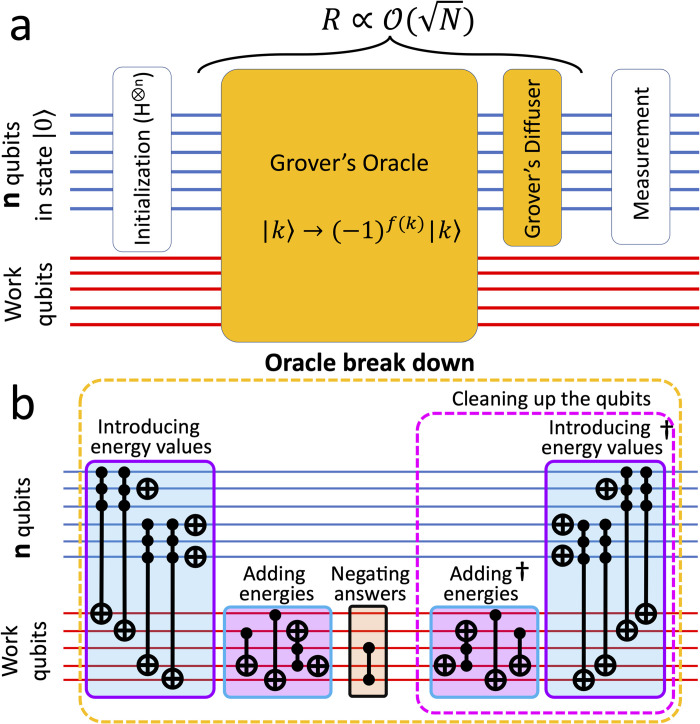
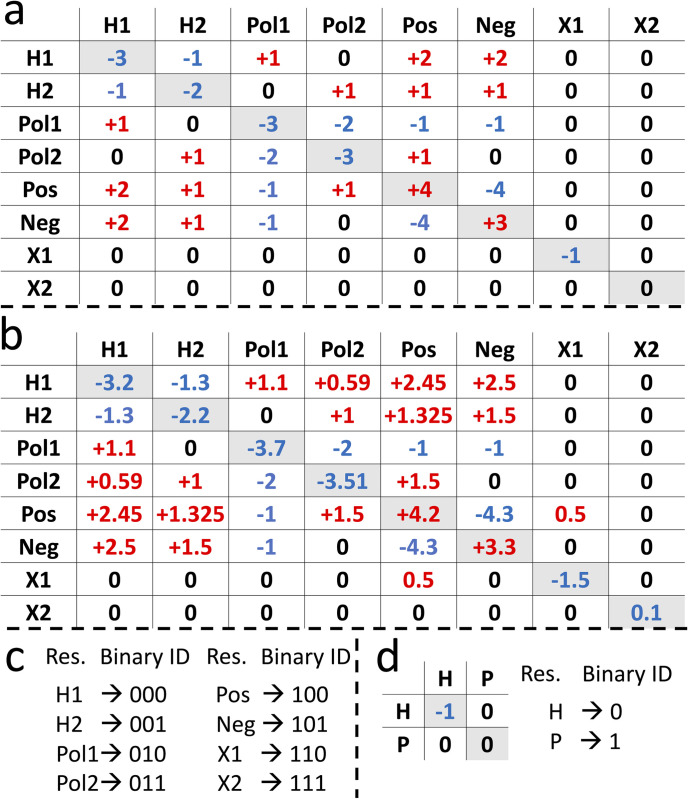
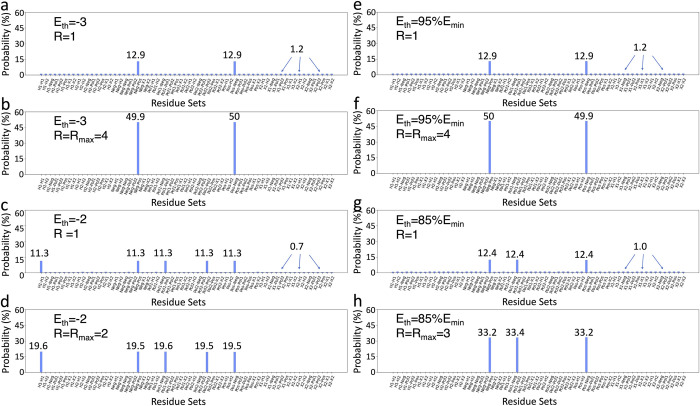
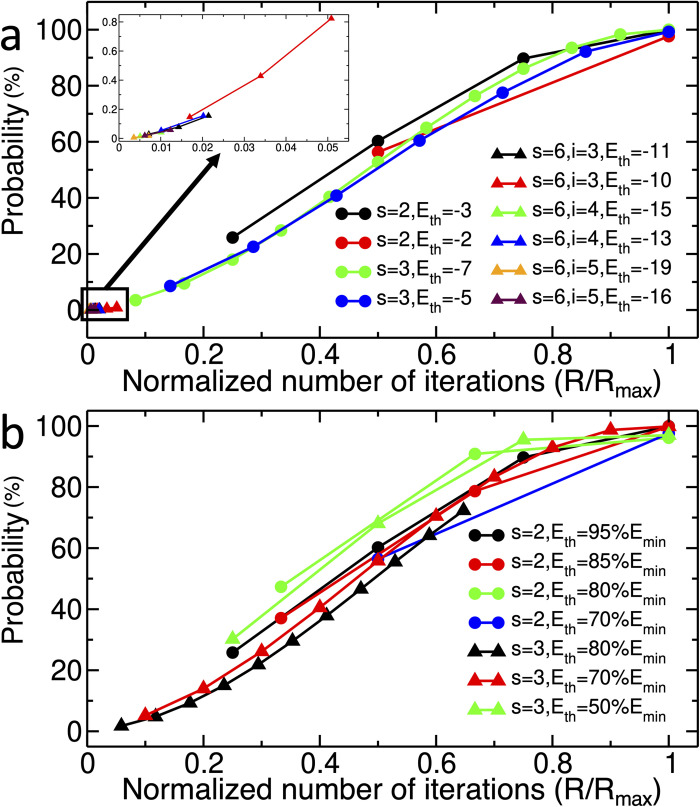
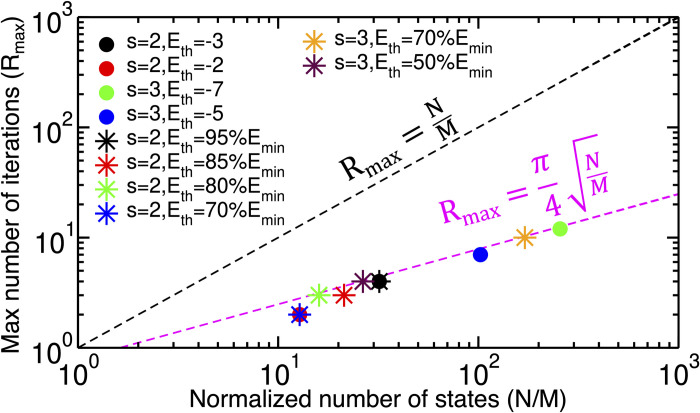
Protein design is a technique to engineer proteins by permuting amino acids in the sequence to obtain novel functionalities. However, exploring all possible combinations of amino acids is generally impossible due to the exponential growth of possibilities with the number of designable sites. The present work introduces circuits implementing a pure quantum approach, Grover’s algorithm, to solve protein design problems. Our algorithms can adjust to implement any custom pair-wise energy tables and protein structure models. Moreover, the algorithm’s oracle is designed to consist of only adder functions. Quantum computer simulators validate the practicality of our circuits, containing up to 234 qubits. However, a smaller circuit is implemented on real quantum devices. Our results show that usingO(N)iterations, the circuits find the correct results among all N possibilities, providing the expected quadratic speed up of Grover’s algorithm over classical methods (i.e.,O(N)).
Overview
The claims and statistics of this paper haven’t been checked yet.
Free: it reads the open-access text and checks the first 5 claims that cite a source we can check. Create a free account to check every claim.
Integrity signals
Registry
Cites
Statistics
Figures

Verification
Claims the paper makes
The claims and statistics of this paper haven’t been checked yet.
Free: it reads the open-access text and checks the first 5 claims that cite a source we can check. Create a free account to check every claim.
Claims other papers make about this one
Each is checked against this paper’s own text: does it say what the citing paper says it does?
The cited source says what the claim attributes to it.
In the citing paper
“Presently, considerable interest is increasing in quantum computing to solve biological problems [56-61].”
From Quantum Computing in the Next-Generation Computational Biology Landscape: From Protein Folding to Molecular Dynamics (2024) · cites this paper as [57]
Self-check
Percentages, sums and reported differences re-computed from the paper’s own numbers.
The self-check needs the paper’s full text.
Citations
Cites
A fast quantum mechanical algorithm for database search
Grover, L. K. (1996) · Proceedings of the twenty-eighth annual ACM symposium on Theory of computing - STOC '96 · doi:10.1145/237814.237866 · Cited by 8,830 · cited 1×
“Grover's algorithm[20], to solve protein design problems.”
Algorithms for quantum computation: discrete logarithms and factoring
Shor, P. W. (2002) · Proceedings 35th Annual Symposium on Foundations of Computer Science · doi:10.1109/sfcs.1994.365700 · Cited by 8,713 · cited 1×
“This step is similar to other quantum algorithms such as Shor’s algorithm[24], and the Deutsch-Jozsa algorithm[25].”
Markov Chain Monte Carlo in Practice
(1995) · Chapman & Hall/CRC eBooks · doi:10.1201/b14835 · Cited by 7,757
A variational eigenvalue solver on a photonic quantum processor
Peruzzo, A., McClean, J., Shadbolt, P., Yung, M.-H., Zhou, X.-Q., Love, P. J., Aspuru-Guzik, A., & O’Brien, J. L. (2014) · Nature Communications · doi:10.1038/ncomms5213 · Cited by 4,552 · cited 3×
“Similarly, a version of the VQE approach is employed by Robert et al .”
Introduction to the Theory of Computation
Sipser, M. (1996) · ACM SIGACT News · doi:10.1145/230514.571645 · Cited by 2,784
Rapid solution of problems by quantum computation
Deutsch, D., & Jozsa, R. (1992) · Proceedings of the Royal Society of London. Series A: Mathematical and Physical Sciences · doi:10.1098/rspa.1992.0167 · Cited by 2,700
Efficient Classical Simulation of Slightly Entangled Quantum Computations
Vidal, G. (2003) · Physical Review Letters · doi:10.1103/physrevlett.91.147902 · Cited by 2,368 · cited 1×
“12 Moreover, since the number of qubits required for the SP and MR model is large, we use the matrix product state (MPS) simulator[29], the only simulator that currently can”
A Quantum Approximate Optimization Algorithm
Farhi, E., Goldstone, J., & Gutmann, S. (2014) · arXiv · doi:10.48550/arxiv.1411.4028 · Cited by 1,789 · cited 4×
“[14] used the QAOA method to study the protein folding on a 9-residue protein using the HP energy model and a 3D lattice structure.”
InfluentialThe Rosetta All-Atom Energy Function for Macromolecular Modeling and Design
Alford, R. F., Leaver-Fay, A., Jeliazkov, J. R., O’Meara, M. J., DiMaio, F. P., Park, H., Shapovalov, M. V., Renfrew, P. D., Mulligan, V. K., Kappel, K., et al. (2017) · Journal of Chemical Theory and Computation · doi:10.1021/acs.jctc.7b00125 · Cited by 1,532
Qiskit: An Open-source Framework for Quantum Computing
Aleksandrowicz, G., Alexander, T., Barkoutsos, P. K., Bello, L., Ben-Haim, Y., Bucher, D., Cabrera-Hernández, F. J., Carballo-Franquis, J., Chen, A., Chen, C.-F., et al. (2019) · Zenodo (CERN European Organization for Nuclear Research) · doi:10.5281/zenodo.2562110 · Cited by 1,434
Research works printed but not linked: 2
- T Babej, 2018, others. Coarse-grained lattice protein folding on a quantum annealer., arXiv preprint arXiv:181100713.
- M Fingerhuth, 2018, others. A quantum alternating operator ansatz with hard and soft constraints for lattice protein folding, arXiv preprint arXiv:181013411.
Cited by
The state of quantum computing applications in health and medicine
Flöther, F. F. (2023) · Research Directions Quantum Technologies · doi:10.1017/qut.2023.4 · Cited by 191
Pal, S., Bhattacharya, M., Lee, S.-S., & Chakraborty, C. (2024) · Molecular Biotechnology · doi:10.1007/s12033-023-00765-4 · Cited by 103
Insights from incorporating quantum computing into drug design workflows
Lau, B., Emani, P. S., Chapman, J., Yao, L., Lam, T., Merrill, P., Warrell, J., Gerstein, M. B., & Lam, H. Y. K. (2023) · Bioinformatics · doi:10.1093/bioinformatics/btac789 · Cited by 54
Quantum computing algorithms: getting closer to critical problems in computational biology
Marchetti, L., Nifosì, R., Martelli, P. L., Da Pozzo, E., Cappello, V., Banterle, F., Trincavelli, M. L., Martini, C., & D’Elia, M. (2022) · Briefings in Bioinformatics · doi:10.1093/bib/bbac437 · Cited by 47
“Gate-based quantum algorithms are also being proposed to address biopolymer conformations, including a hybrid approach combining quantum Monte Carlo and machine learning for protein structure prediction [80], another quantum Monte Carlo approach to antibody loop modelling [54] and protein design exploiting Grover’s al…”
MethodQuantum Artificial Intelligence: A Brief Survey
Klusch, M., Lässig, J., Müssig, D., Macaluso, A., & Wilhelm, F. K. (2024) · Künstliche Intell. · doi:10.1007/s13218-024-00871-8 · Cited by 57
“…network constellation [178] and mission planning [147], energy network management [22, 124], job-shop scheduling in manufacturing [158], weather simulation and forecasting [68, 83, 132, 170] and simulation of materials and chemicals for drug discovery [91, 111, 142] and material design [10, 37].”
Molecular design with automated quantum computing-based deep learning and optimization
Ajagekar, A., & You, F. (2023) · npj Computational Materials · doi:10.1038/s41524-023-01099-0 · Cited by 48
Quantum computing research in medical sciences
Alrashed, S., & Min‐Allah, N. (2024) · Informatics in Medicine Unlocked · doi:10.1016/j.imu.2024.101606 · Cited by 50
Using quantum annealing to design lattice proteins
Irbäck, A., Knuthson, L., Mohanty, S., & Peterson, C. (2024) · Physical Review Research · doi:10.1103/physrevresearch.6.013162 · Cited by 35
“Prior work proposed both QA [22] and gate-based [23] schemes for the first of these subproblems, sequence optimization.”
MethodMokhtari, M., Khoshbakht, S., Ziyaei, K., Akbari, M. E., & Moravveji, S. S. (2024) · Briefings in Bioinformatics · doi:10.1093/bib/bbae074 · Cited by 30
“Notably, this study leveraged classical biological data and a Classical computer platform [180].”
MethodVendrell, R. C., Ajagekar, A., Bergman, M. T., Hall, C. K., & You, F. (2024) · Science Advances · doi:10.1126/sciadv.adq8492 · Cited by 21
An outlook on structural biology after A lpha F old: tools, limits and perspectives
Rosignoli, S., Pacelli, M., Manganiello, F., & Paiardini, A. (2024) · FEBS Open Bio · doi:10.1002/2211-5463.13902 · Cited by 26
Alvarez, P. H., Chowdhury, F. T., Smith, L. D., Brokowski, T. J., Aiello, C. D., Kattnig, D. R., & de Oliveira, M. C. (2024) · APL Quantum · doi:10.1063/5.0213120 · Cited by 15
Protein Design by Integrating Machine Learning and Quantum-Encoded Optimization
Panizza, V., Hauke, P., Micheletti, C., & Faccioli, P. (2024) · PRX Life · doi:10.1103/prxlife.2.043012 · Cited by 10
Review of quantum algorithms for medicine, finance and logistics
Ciacco, A., Guerriero, F., & Macrina, G. (2025) · Soft Computing · doi:10.1007/s00500-025-10540-z · Cited by 23
“Sarkar et al. (2021a), Niraula et al. (2021) and Khatami et al. (2023) proposed three different QAs that adapt Grover’s algorithm.”
Application of Quantum Tensor Networks for Protein Classification
Kundu, D., Ghosh, A., Ekambaram, S., Wang, J., Dokholyan, N. V., & Ghosh, S. (2024) · ACM Great Lakes Symposium on VLSI (GLSVLSI) · doi:10.1145/3649476.3658701 · Cited by 10
“The QNLP circuit is a Quantum Tensor Network that represents sentences as high-dimensional tensors and parses them into a network of more manageable, lower-dimension tensors that aid classification.”
BackgroundProtein Engineering Paving the Way for Next-Generation Therapies in Cancer
Naderiyan, Z., & Shoari, A. (2025) · International Journal of Translational Medicine · doi:10.3390/ijtm5030028 · Cited by 7
“Quantum computing holds the potential to overcome classical computational limitations by enabling large-scale simulations of protein folding and interactions, which can accelerate the design of optimized therapeutic proteins with improved stability and reduced immunogenicity [216].”
Quantum computing for faster enzyme discovery and engineering
Damborský, J., Kouba, P., Šivic, J., Vasina, M., Bednář, D., & Mazurenko, S. (2025) · Nature Catalysis · doi:10.1038/s41929-025-01410-w · Cited by 11
“Other notable approaches in protein design include algorithms based on Grover’s algorithm 35,36 , quantum Markov chain Monte Carlo 37 and QPE 38 .”
Review of Applications of Quantum Computing in Power Flow Calculation
Jang, Y.-E., Kim, N.-Y., & Kim, Y. (2024) · Journal of Electrical Engineering and Technology · doi:10.1007/s42835-024-01804-z · Cited by 7
RinQ: Towards predicting central sites in proteins on current quantum computers
Mohtashim, S. I. (2025) · Materials Today Quantum · doi:10.1016/j.mtquan.2025.100053 · Cited by 3
“By addressing the practical challenges of protein structure-function analysis, this work represents a vital contribution to current efforts to bridge quantum computing and bioinformatics 6–10 .”
Innovations in chemical process control: challenges and opportunities
Lima, F. V., Tian, Y., Durand, H., Paulson, J. A., & Biegler, L. T. (2025) · Current Opinion in Chemical Engineering · doi:10.1016/j.coche.2025.101148 · Cited by 8
Quantum bioinformatics: a systematic review of methods, trends, and challenges
Khalaj, M., Rayan, S., & Jin, L. (2026) · Briefings in Bioinformatics · doi:10.1093/bib/bbag383 · Cited by 2
“Khatami et al. [ 29] encode candidate protein sequences by assigning each amino acid a binary string and each designable site its own qubit register.”
Protein Folding and Drug Discovery Using Quantum Computing’s Grover’s Algorithm
Haverly, A., & Rahimi, S. (2025) · International Conference on Quantum Communications, Networking, and Computing (QCNC) · doi:10.1109/qcnc64685.2025.00073 · Cited by 1
“[6 ] Grover’s algorithm has been used to address the protein folding problem, but have focused on simplifications to allow for use on small quantum computers [7, 8, 9].”
Technical review of artificial intelligence in TCR-T therapy
Lee, I., Joo, M., & Chung, J.-M. (2025) · Journal of the National Cancer Center · doi:10.1016/j.jncc.2025.12.003 · Cited by 1
Selvaraj, A., Jayawant, M., Kayalvizhi, N., Krishnan, M., Puvaneshvari, N., Kumar, A. W. S., & Rameshkumar, N. (2026) · Methods · doi:10.1016/j.ymeth.2026.04.006 · Cited by 1
Investigating quantum many-body systems with tensor networks, machine learning and quantum computers
Kottmann, K. (2022) · UPCommons institutional repository (Universitat Politècnica de Catalunya) · doi:10.5821/dissertation-2117-379461 · Cited by 3
Application of Quantum Tensor Networks for Protein ClassificationPreprint
Kundu, D., Ghosh, A., Ekambaram, S., Wang, J., Dokholyan, N. V., & Ghosh, S. (2024) · bioRxiv (Cold Spring Harbor Laboratory) · doi:10.1101/2024.03.11.584501 · Cited by 1
Metadata
- Authors
- Khatami, M. H., Mendes, U. C., Wiebe, N., & Kim, P. M.
- Affiliations
- University of Toronto (CA)
- CMC Microsystems (Canada) (CA)
- Pacific Northwest National Laboratory (US)
- Corresponding author
- Kim, Philip M.
- Venue
- PLOS Computational Biology
- Publisher
- Public Library of Science (PLoS)
- Published
- 2023-04-12
- Volume
- 19
- Issue
- 4
- Pages
- e1011033
- ISSN
- 1553-734X (ISSN-L)
- 1553-7358
- PMC
- PMC10124842
- OpenAlex
- W4365135628
- Cited by
- 26
- References
- 36
- Citations by year
- 2026: 2 · 2025: 7 · 2024: 11 · 2023: 3
- FWCI
- 2.17
- Type
- journal article
- Language
- en
- Update notices
- new_version (2023-04-24)
- Open access
- gold
- doi.org
- Licence
- Locations
- PLoS Computational Biology (publishedVersion, cc-by)
- PubMed Central (publishedVersion, cc-by)
- PubMed (publishedVersion)
- arXiv (Cornell University) (submittedVersion)
- OSTI OAI (U.S. Department of Energy Office of Scientific and Technical Information) (submittedVersion)
- RePEc: Research Papers in Economics (submittedVersion)
- DOAJ (DOAJ: Directory of Open Access Journals) (submittedVersion, cc-by-sa)
- arXiv (Cornell University)
- Funders
- Canadian Institutes of Health Research (PJT-159750)
- Topics
- Physical Sciences › Computer Science › Artificial Intelligence › Quantum Computing Algorithms and Architecture
- Physical Sciences › Mathematics › Theoretical Computer Science › DNA and Biological Computing
- Life Sciences › Biochemistry, Genetics and Molecular Biology › Molecular Biology › Protein Structure and Dynamics
- Keywords
- protein design, Grover's algorithm, quantum computing, quantum circuits, combinatorial search, quadratic speedup
- MeSH terms
- Algorithms, Amino Acids, Computing Methodologies, Engineering, Quantum Theory
About these checks
Registry, retraction, Cites and statistics results are computed, not judged, with one exception: a printed reference that no index lists is read once by a model before it counts as a citation error. Claims are extracted by a model and kept only when their quote appears verbatim in the text; each cited source is then checked, with a model’s help, for whether it says what the claim relies on. Those verdicts can be wrong — read the claim’s quote and the cited source before relying on one.
Statistics and arithmetic are recomputed, not judged.
Confidence bands are shown only for fields calibrated on our annotated test set. None is calibrated yet, so no band is shown.
What counts as a claim ›How we measure confidence ›How we check this ›
Are you an author, or do you see a problem with this page? Request a review
Data sources
Bibliographic data: Semantic Scholar, OpenAlex, Crossref.
Contains information from the Semantic Scholar Academic Graph Datasets, made available under the ODC Attribution License (ODC-BY 1.0).
Semantic Scholar’s data is described in: Kinney, R., et al. (2023). The Semantic Scholar Open Data Platform. arXiv:2301.10140.
