

The DOI matches its Crossref record; 21 of the 21 references it cites were found in a registry or an index.
Resolving Individuals Contributing Trace Amounts of DNA to Highly Complex Mixtures Using High-Density SNP Genotyping Microarrays
Open accessAbstract
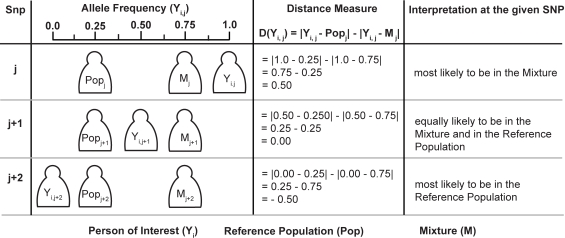
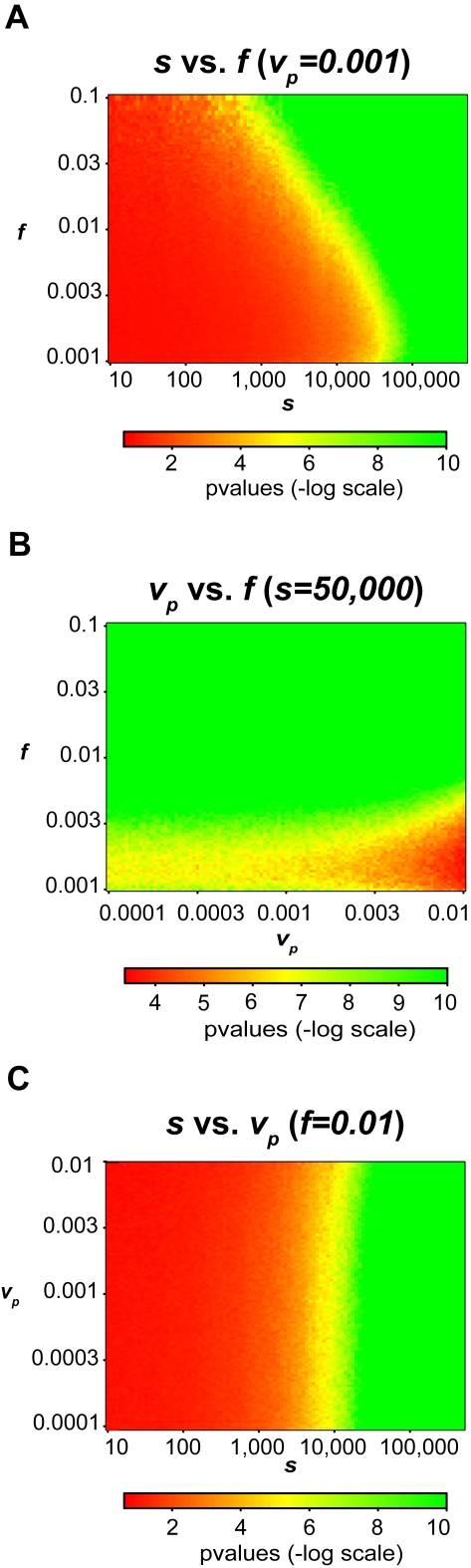
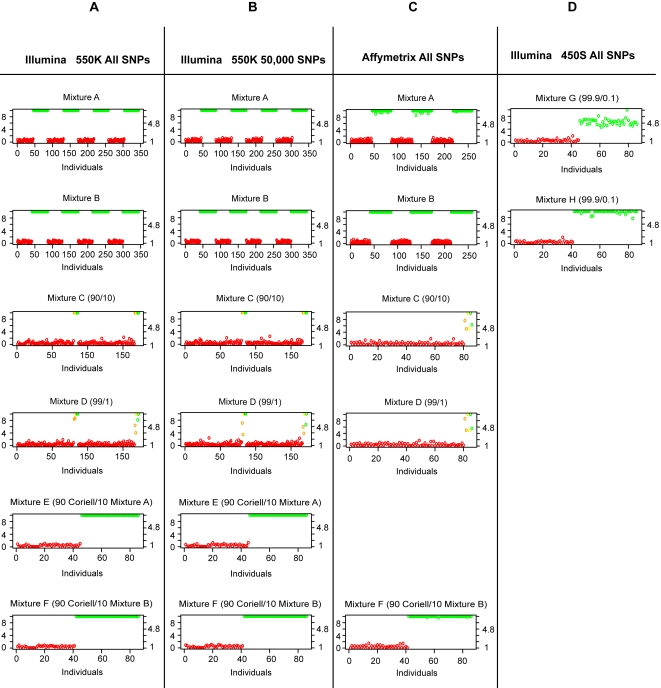
We use high-density single nucleotide polymorphism (SNP) genotyping microarrays to demonstrate the ability to accurately and robustly determine whether individuals are in a complex genomic DNA mixture. We first develop a theoretical framework for detecting an individual's presence within a mixture, then show, through simulations, the limits associated with our method, and finally demonstrate experimentally the identification of the presence of genomic DNA of specific individuals within a series of highly complex genomic mixtures, including mixtures where an individual contributes less than 0.1% of the total genomic DNA. These findings shift the perceived utility of SNPs for identifying individual trace contributors within a forensics mixture, and suggest future research efforts into assessing the viability of previously sub-optimal DNA sources due to sample contamination. These findings also suggest that composite statistics across cohorts, such as allele frequency or genotype counts, do not mask identity within genome-wide association studies. The implications of these findings are discussed.
Overview
The claims and statistics of this paper haven’t been checked yet.
Run the check — free, no account needed. It reads the open-access text and checks the sources it cites.
Integrity signals
Registry
Cites
Statistics
Figures
Verification
Claims the paper makes
The claims and statistics of this paper haven’t been checked yet.
Run the check — free, no account needed. It reads the open-access text and checks the sources it cites.
Claims other papers make about this one
Each is checked against this paper’s own text: does it say what the citing paper says it does?
The source backs part of the claim, not all of it — or backs it for a different population, condition or comparison.
In the citing paper
“However, this rapidly evolving research arena has been accompanied by equally rapid confirmation that genomic data can never be truly anonymized. A steady stream of provocative studies (51, 62, 68, 122) has demonstrated that it is possible to discover the identities of individuals whose genomic data had otherwise been considered deidentified.”
From Lessons from HeLa Cells: The Ethics and Policy of Biospecimens (2016) · cites this paper as [62]
Experimental — accuracy not yet measured
Self-check
Percentages, sums and reported differences re-computed from the paper’s own numbers.
The self-check needs the paper’s full text.
Citations
Cites
Genome-wide association study of 14,000 cases of seven common diseases and 3,000 shared controls
The Wellcome Trust Case Control Consortium, Management Committee, Burton, P. R., Clayton, D. G., Cardon, L. R., Craddock, N., Deloukas, P., Duncanson, A., Kwiatkowski, D. P., McCarthy, M. I., et al. (2007) · Nature · doi:10.1038/nature05911 · Cited by 9,442
The International HapMap Project
†The International HapMap Consortium, Genotyping centres: Baylor College of Medicine and ParAllele BioScience, Gibbs, R. A., Belmont, J. W., Hardenbol, P., Willis, T. D., Yu, F., Chinese HapMap Consortium, Yang, H., Ch'ang, L.-Y., et al. (2003) · Nature · doi:10.1038/nature02168 · Cited by 6,057
Encoded evidence: DNA in forensic analysis
Jobling, M. A., & Gill, P. (2004) · Nature Reviews Genetics · doi:10.1038/nrg1455 · Cited by 644
Large-scale genotyping of complex DNA
Kennedy, G., Matsuzaki, H., Dong, S.-L., Liu, W.-M., Huang, J., Liu, G., Su, X., Cao, M., Chen, W., Zhang, J., et al. (2003) · Nature Biotechnology · doi:10.1038/nbt869 · Cited by 609
Developing a SNP panel for forensic identification of individuals
Kídd, K. K., PAKSTIS, A. J., Speed, W. C., Grigorenko, E. L., Kajuna, S. L. B., Karoma, N. J., Kungulilo, S., Kim, J.-J., Lu, R., Odunsi, A., et al. (2005) · Forensic Science International · doi:10.1016/j.forsciint.2005.11.017 · Cited by 288
Analysis and interpretation of mixed forensic stains using DNA STR profiling
Clayton, T., Whitaker, J., Sparkes, R. L., & Gill, P. (1998) · Forensic Science International · doi:10.1016/s0379-0738(97)00175-8 · Cited by 287
Chakraborty, R., Meagher, T. R., & Smouse, P. E. (1988) · Genetics · doi:10.1093/genetics/118.3.527 · Cited by 243
Coble, M. D., Just, R. S., O’Callaghan, J. E., Letmanyi, I. H., Peterson, C. T., Irwin, J. A., & Parsons, T. J. (2004) · International Journal of Legal Medicine · doi:10.1007/s00414-004-0427-6 · Cited by 238
Weir, B. S., Triggs, C. M., Starling, L., Stowell, L., Walsh, K. A. J., & Buckleton, J. (1997) · Journal of Forensic Sciences · doi:10.1520/jfs14100j · Cited by 175
Pearson, J. V., Huentelman, M. J., Halperin, R. F., Tembe, W., Melquist, S., Homer, N., Brun, M., Szelinger, S., Coon, K. D., Zismann, V., et al. (2006) · The American Journal of Human Genetics · doi:10.1086/510686 · Cited by 152
Self-citation
Cited by
Sorted by citations
Items 701–800 of 1,000
Privacy-Preserving Non-Negative Matrix Factorization with Outliers
Saha, S., & Imtiaz, H. (2023) · ACM Transactions on Knowledge Discovery from Data · doi:10.1145/3632961 · Cited by 8
Guépin, F., Meeus, M., Creţu, A.-M., & de Montjoye, Y.-A. (2024) · Lecture notes in computer science · doi:10.1007/978-3-031-54204-6_10 · Cited by 8
Zhong, D., Wang, X., Xu, Z., Xu, J. L., & Wang, H. (2024) · ACM International Conference on Information and Knowledge Management (CIKM) · doi:10.1145/3627673.3679804 · Cited by 8
AML Genomics for the Clinician
Graubert, T. A., & Stone, R. M. (2014) · Seminars in Hematology · doi:10.1053/j.seminhematol.2014.08.006 · Cited by 8
Metaseq: Privacy Preserving Meta-analysis of Sequencing-based Association Studies
Singh, A., Zafer, S., & Pe’er, I. (2013) · PubMed · doi:10.7916/d8fn1h8s · Cited by 8
Maschke, K. J. (2010) · The Hastings Center Report · doi:10.1353/hcr.2010.0011 · Cited by 8
Dove, E. S., Laurie, G. T., & Knoppers, B. M. (2016) · Elsevier eBooks · doi:10.1016/b978-0-12-800681-8.00010-4 · Cited by 10
Templated DNA Cross‐Linking: Towards a Non‐Invasive Singlet‐Oxygen‐Based Triggering Method
Laet, N. D., Llamas, E. M., & Madder, A. (2018) · ChemPhotoChem · doi:10.1002/cptc.201700175 · Cited by 8
When Biology Gets Personal: Hidden Challenges of Privacy and Ethics in Biological Big Data
Gürsoy, G., Harmanci, A. O., Tang, H., Ayday, E., & Brenner, S. E. (2018) · Pacific Symposium on Biocomputing (PSB) · doi:10.1142/9789813279827_0035 · Cited by 8
Li, R., Duan, R., Zhang, X., Lumley, T., Pendergrass, S. A., Bauer, C. R., Hakonarson, H. H., Carrell, D., Smoller, J. W., Wei, W., et al. (2021) · Nature Communications · doi:10.1038/s41467-020-20211-2 · Cited by 8
Membership Inference Attacks: Analysis and Mitigation
Shuvo, M. S. R., & Alhadidi, D. (2020) · IEEE International Conference on Trust, Security and Privacy in Computing and Communications (TrustCom) · doi:10.1109/trustcom50675.2020.00190 · Cited by 9
Rahimzadeh, V. N. (2021) · Frontiers in Big Data · doi:10.3389/fdata.2020.603044 · Cited by 9
The Challenges of Achieving Open Source Sharing of Biobank Data
Gitter, D. M. (2012) · Springer eBooks · doi:10.1007/978-3-642-33116-9_10 · Cited by 7
Ethical Challenges Encountered in Genomic Research
Roche, P. A. (2009) · Circulation Cardiovascular Genetics · doi:10.1161/circgenetics.108.846758 · Cited by 8
Infringement of Individual Privacy via Mining Differentially Private GWAS Statistics
Wang, Y., Wen, J., Wu, X., & Shi, X. M. (2016) · Lecture notes in computer science · doi:10.1007/978-3-319-42553-5_30 · Cited by 8
SQC: secure quality control for meta-analysis of genome-wide association studies
Huang, Z., Huang, L., Fellay, J., Kutalik, Z., & Hubaux, J. (2017) · Bioinformatics · doi:10.1093/bioinformatics/btx193 · Cited by 8
La generación Y ante el desafío de su inserción laboral: realidades frente a estereotipos
Peña, A. V. (2017) · Arbor · doi:10.3989/arbor.2017.783n1006 · Cited by 8
Chatzinakos, C., Lee, D., Cai, N., Vladimirov, V. I., Webb, B. T., Riley, B. P., Flint, J., Kendler, K. S., Ressler, K. J., Daskalakis, N. P., et al. (2021) · American Journal of Medical Genetics Part B Neuropsychiatric Genetics · doi:10.1002/ajmg.b.32834 · Cited by 7
Direct-to-Consumer Genomics, Social Networking, and Confidentiality
Resnik, D. B. (2009) · The American Journal of Bioethics · doi:10.1080/15265160902893924 · Cited by 8
Su, W. (2024) · Annual Review of Statistics and Its Application · doi:10.1146/annurev-statistics-112723-034158 · Cited by 7
A study of the efficiency of pooling in haplotype estimation
Kuk, A. Y. C., Xu, J., & Yang, Y. (2010) · Bioinformatics · doi:10.1093/bioinformatics/btq492 · Cited by 7
Towards Realistic Membership Inferences: The Case of Survey Data
Bauer, L. A., & Bindschaedler, V. (2020) · Annual Computer Security Applications Conference · doi:10.1145/3427228.3427282 · Cited by 9
Anti-Neuron Watermarking: Protecting Personal Data Against Unauthorized Neural Networks
Zou, Z., Gong, B., & Wang, L. (2022) · Lecture notes in computer science · doi:10.1007/978-3-031-19778-9_26 · Cited by 12
Martin, D., Basodi, S., Panta, S. R., Rootes-Murdy, K., Prae, P., Sarwate, A. D., Kelly, R., Romero, J., Baker, B. T., Gazula, H., et al. (2023) · Frontiers in Neuroinformatics · doi:10.3389/fninf.2023.1207721 · Cited by 8
Reconstruction of private genomes through reference-based genotype imputation
Mosca, M. J., & Cho, H. (2023) · Genome biology · doi:10.1186/s13059-023-03105-6 · Cited by 9
Position: Membership Inference Attacks Cannot Prove That a Model was Trained on Your Data
Zhang, J., Das, D., Kamath, G., & Tramèr, F. (2025) · IEEE Conference on Secure and Trustworthy Machine Learning (SaTML) · doi:10.1109/satml64287.2025.00025 · Cited by 51
The Ethics of Large-Scale Genomic Research
Berkman, B. E., Shapiro, Z. E., Eckstein, L., & Pike, E. R. (2016) · Springer eBooks · doi:10.1007/978-3-319-28422-4_5 · Cited by 7
Addressing Benefits, Risks and Consent in Next Generation Sequencing Studies
Meller, R. (2015) · Journal of Clinical Research & Bioethics · doi:10.4172/2155-9627.1000249 · Cited by 8
Boddington, P. (2016) · Law, governance and technology series · doi:10.1007/978-3-319-33525-4_13 · Cited by 7
Accurate and adaptive imputation of summary statistics in mixed-ethnicity cohorts
Togninalli, M., Roqueiro, D., COPDGene Investigators, & Borgwardt, K. M. (2018) · Bioinformatics · doi:10.1093/bioinformatics/bty596 · Cited by 7
User-focused data sharing agreements: a foundation for the genomic future
Petersen, C. C. (2019) · JAMIA Open · doi:10.1093/jamiaopen/ooz043 · Cited by 7
Attitudes of Costa Rican Individuals Towards Donation of Personal Genetic Data for Research
Chavarría‐Soley, G., Francis-Cartin, F., Jimenez-Gonzalez, F., Ávila-Aguirre, A., Castro-Gomez, M. J., Robarts, L., Middleton, A., & Raventós, H. (2021) · Personalized Medicine · doi:10.2217/pme-2020-0113 · Cited by 7
Genomic privacy: performance analysis, open issues, and future research directions
Shamila, M., Vinuthna, K., & Tyagi, A. K. (2023) · Elsevier eBooks · doi:10.1016/b978-0-323-98352-5.00015-x · Cited by 7
10 Security and Privacy Problems in Large Foundation Models
Jia, J., Liu, H., & Gong, N. Z. (2023) · Springer eBooks · doi:10.1007/978-3-031-42637-7_8 · Cited by 8
FedGMMAT: Federated generalized linear mixed model association tests
Li, W., Chen, H., Jiang, X., & Harmanci, A. O. (2024) · PLoS Computational Biology · doi:10.1371/journal.pcbi.1012142 · Cited by 7
When Consumers Get their Genomes
Platt, D. (2009) · Personalized Medicine · doi:10.2217/pme.09.50 · Cited by 7
A new analysis tool for individual-level allele frequency for genomic studies
Yang, H., Lin, H., Huang, M.-C., Li, L., Pan, W., Wu, J., & Chen, Y.-T. (2010) · BMC Genomics · doi:10.1186/1471-2164-11-415 · Cited by 7
Building Trust in 21st Century Genomics
Szego, M. J., Buchanan, J. A., & Scherer, S. W. (2013) · G3 Genes Genomes Genetics · doi:10.1534/g3.113.007690 · Cited by 7
Blard, G., Zhang, Z., Coppieters, W. R., & Georges, M. (2012) · Journal of Dairy Science · doi:10.3168/jds.2011-5178 · Cited by 7
Ethical issues in the evaluation of adults with suspected genetic neuromuscular disorders
Su, X., Kang, P. B., Russell, J. A., & Simmons, Z. (2016) · Muscle & Nerve · doi:10.1002/mus.25400 · Cited by 7
Differential Privacy Preserving Genomic Data Releasing via Factor Graph
He, Z., Li, Y., & Wang, J. (2017) · Lecture notes in computer science · doi:10.1007/978-3-319-59575-7_33 · Cited by 7
Bacanu, S. (2017) · PLoS ONE · doi:10.1371/journal.pone.0179504 · Cited by 7
Privacy in Health Disparity Research
Xu, H., & Zhang, N. (2019) · Medical Care · doi:10.1097/mlr.0000000000001034 · Cited by 7
On Distributed Collaboration for Biomedical Analyses
Boujdad, F.-Z., Gaignard, A., Mario Südholt, B., Garzón, W., Navarro, L. D. B., & Redon, R. (2019) · IEEE/ACM International Symposium on Cluster, Cloud and Grid Computing (CCGrid) · doi:10.1109/ccgrid.2019.00079 · Cited by 8
Novel bovine embryo transfer technologies in the United States
Looney, C. R., & Pryor, J. H. (2012) · Animal Reproduction · Cited by 7
Condit, C. M., Shen, L., Edwards, K. L., Bowen, D. J., Korngiebel, D. M., & Johnson, C. O. (2016) · Journal of Health Communication · doi:10.1080/10810730.2016.1193914 · Cited by 7
Reconciling Utility and Membership Privacy via Knowledge Distillation.Preprint
Shejwalkar, V., & Houmansadr, A. (2019) · arXiv (Cornell University) · Cited by 7
Building and sustaining collaborative platforms in genomics and biobanks for health innovation
Garden, H., Hawkins, N., & Winickoff, D. E. (2021) · OECD science, technology and industry policy papers · doi:10.1787/11d960b7-en · Cited by 8
Emerging Privacy Issues in Times of Open SciencePreprint
Erb, B., Bösch, C., Herbert, C., Kargl, F., & Montag, C. (2021) · doi:10.31234/osf.io/u236e · Cited by 6
Enabling tradeoffs in privacy and utility in genomic data Beacons and summary statisticsPreprint
Venkatesaramani, R., Wan, Z., Malin, B., & Vorobeychik, Y. (2023) · Genome Research · doi:10.1101/gr.277674.123 · Cited by 7
Interpreting noncoding genetic variation in complex traits and human disease
Ward, L. D., & Kellis, M. (2012) · Nature Biotechnology · doi:10.1038/nbt.2422 · Cited by 6
Yang, Z., Zhu, Y., Wan, J., Xiang, C., Tang, T., Wang, Y., Xu, R., Wang, L., Zhang, F., Xu, J., et al. (2024) · IEEE Transactions on Dependable and Secure Computing · doi:10.1109/tdsc.2024.3518698 · Cited by 7
Smith, J. L., Wong, Q., Hornsby, W., Conomos, M. P., Heavner, B. D., Kullo, I. J., Psaty, B. M., Rich, S. S., Stilp, A. M., Tayo, B. O., et al. (2025) · The American Journal of Human Genetics · doi:10.1016/j.ajhg.2025.06.004 · Cited by 6
Self-citationYamada, K. A., Patel, A., Ewald, G. A., Whitehead, D., Pasque, M. K., Silvestry, S., Janks, D., Mann, D. L., & Nerbonne, J. M. (2013) · Clinical and Translational Science · doi:10.1111/cts.12032 · Cited by 6
Privacy-preserving decision tree for epistasis detection
Chen, Q., Zhang, X., & Zhang, R. (2019) · Cybersecurity · doi:10.1186/s42400-019-0025-z · Cited by 6
AnoniMME: bringing anonymity to the Matchmaker Exchange platform for rare disease gene discovery
Oprisanu, B., & Cristofaro, E. D. (2018) · Bioinformatics · doi:10.1093/bioinformatics/bty269 · Cited by 6
Identifying disease-causing mutations with privacy protection
Akgün, M., Ünal, A. B., Ergüner, B., Pfeifer, N., & Kohlbacher, O. (2020) · Bioinformatics · doi:10.1093/bioinformatics/btaa641 · Cited by 8
Privacy preservation in outsourced mobility traces through compact data structures
Calderoni, L., Bandini, S., & Maio, D. (2020) · Journal of Information Security and Applications · doi:10.1016/j.jisa.2020.102630 · Cited by 6
Preserving Genomic Privacy via Selective Sharing
Yılmaz, E., Ayday, E., Ji, T., & Li, P. (2020) · Workshop on Privacy in the Electronic Society · doi:10.1145/3411497.3420214 · Cited by 6
Pascali, V. L. (2021) · PLoS ONE · doi:10.1371/journal.pone.0247344 · Cited by 6
Privacy preserving collaborative learning of generalized linear mixed model
Anjum, M. M., Mohammed, N., Li, W., & Jiang, X. (2022) · Journal of Biomedical Informatics · doi:10.1016/j.jbi.2022.104008 · Cited by 6
The Protection of Data Sharing for Privacy in Financial Vision
Wang, Y., & Tsai, Y. (2022) · Applied Sciences · doi:10.3390/app12157408 · Cited by 6
Social and scientific motivations to move beyond groups in allele frequencies: The TOPMed experience
Nelson, S. C., Gogarten, S. M., Fullerton, S. M., Isasi, C. R., Mitchell, B. D., North, K. E., Rich, S. S., Taylor, M. R., Zöllner, S. K., & Sofer, T. (2022) · The American Journal of Human Genetics · doi:10.1016/j.ajhg.2022.07.008 · Cited by 6
Self-citationSoK: Membership Inference is Harder Than Previously Thought
Dionysiou, A., & Athanasopoulos, E. (2023) · Proceedings on Privacy Enhancing Technologies · doi:10.56553/popets-2023-0082 · Cited by 8
VPP: Privacy Preserving Machine Learning via Undervolting
Islam, M. S., Omidi, B., Alouani, I., & Khasawneh, K. N. (2023) · IEEE International Symposium on Hardware Oriented Security and Trust (HOST) · doi:10.1109/host55118.2023.10133266 · Cited by 6
Privacy-Preserving Natural Language Processing
Habernal, I., Mireshghallah, F., Thaine, P., Ghanavati, S., & Feyisetan, O. (2023) · doi:10.18653/v1/2023.eacl-tutorials.6 · Cited by 6
DPack: Efficiency-Oriented Privacy Budget Scheduling
Tholoniat, P., Kostopoulou, K., Chowdhury, M., Cidon, A., Geambasu, R., Lécuyer, M., & Yang, J. (2025) · European Conference on Computer Systems · doi:10.1145/3689031.3696096 · Cited by 6
Human embryos and eggs: from long-term storage to biobanking
Baylis, F. E., & Widdows, H. (2015) · Bioethics News · doi:10.1007/s40592-015-0045-8 · Cited by 6
Genetics – Ethical Implications of Research, Diagnostics and Counseling
Propping, P. (2010) · International library of ethics, law, and the new medicine/The international library of ethics, law, and the new medicine · doi:10.1007/978-90-481-8721-8_27 · Cited by 6
Preserving Genome Privacy in Research Studies
Wang, S., Jiang, X., Fox, D., & Lucila Ohno-machado, A. (2015) · Springer eBooks · doi:10.1007/978-3-319-23633-9_16 · Cited by 6
Building on Principles: The Case for Comprehensive, Proportionate Governance of Data Access
McGrail, K. M., Gutteridge, K., & Meagher, N. L. (2015) · Springer eBooks · doi:10.1007/978-3-319-23633-9_28 · Cited by 6
Protecting Privacy of Genomic Information
Jaime, D., Silvia, L., & Naro, D. (2017) · Studies in health technology and informatics · doi:10.3233/978-1-61499-753-5-318 · Cited by 6
Shade: A differentially-private wrapper for enterprise big data
Heifetz, A., Mugunthan, V., & Kagal, L. (2017) · IEEE International Conference on Big Data (BigData) · doi:10.1109/bigdata.2017.8258027 · Cited by 6
Secure DNA Motif-Finding Method Based on Sampling Candidate Pruning
Xia, K., Wu, X., Mao, Y., & Wang, H. (2020) · ACM Transactions on Internet Technology · doi:10.1145/3382078 · Cited by 6
Quantifying the Privacy Risks of Learning High-Dimensional Graphical Models
Murakonda, S. K., Shokri, R., & Theodorakopoulos, G. (2019) · ORCA Online Research @Cardiff (Cardiff University) · doi:10.48550/arxiv.1905.12774 · Cited by 10
Evaluating differentially private decision tree model over model inversion attack
Park, C.-H., Hong, D., & Seo, C. (2021) · International Journal of Information Security · doi:10.1007/s10207-021-00564-5 · Cited by 6
Genomic Databases, Access Review, and Data Access Committees
Shabani, M., Knoppers, B. M., & Borry, P. (2016) · Elsevier eBooks · doi:10.1016/b978-0-12-420196-5.00003-4 · Cited by 6
Researchers’ Duty to Share Pre-publication Data: From the Prima Facie Duty to Practice
Schickhardt, C., Hosley, N., & Winkler, E. C. (2016) · Law, governance and technology series · doi:10.1007/978-3-319-33525-4_14 · Cited by 6
Detecting the Presence of an Individual in Phenotypic Summary Data.
Liu, Y., Wan, Z., Xia, W., Kantarcıoğlu, M., Vorobeychik, Y., Clayton, E. W., Kho, A., Carrell, D., & Malin, B. (2018) · Europe PMC (PubMed Central) · Cited by 6
Adversarial Privacy Preservation under Attribute Inference Attack
Zhao, H., Chi, J., Tian, Y., & Gordon, G. J. (2019) · Cited by 6
Peeking into the black box of privacy – biobank participants on the importance of recognition
Ursin, L. O., & Steinsbekk, K. S. (2012) · Norsk Epidemiologi · doi:10.5324/nje.v21i2.1502 · Cited by 6
On Track? Using the Human Genome Epidemiology Roadmap
Little, J., & Hawken, S. (2010) · Public Health Genomics · doi:10.1159/000279627 · Cited by 6
Identifying Individuals in a Complex Mixture of DNA with Unknown Ancestry
Sampson, J. N., & Zhao, H. (2009) · Statistical Applications in Genetics and Molecular Biology · doi:10.2202/1544-6115.1469 · Cited by 6
Privacy-preserving biomedical data dissemination via a hybrid approach.
Jiang, Y., Wang, C., Wu, Z., Du, X., & Wang, S. (2018) · Europe PMC (PubMed Central) · Cited by 6
Privacy-Preserving Genetic Relatedness TestPreprint
Cristofaro, E. D., Liang, K., & Zhang, Y. (2016) · arXiv (Cornell University) · doi:10.48550/arxiv.1611.03006 · Cited by 6
Privacy-Preserving Genome-Wide Association Study is Practical.Preprint
Bonte, C., Makri, E., Ardeshirdavani, A., Simm, J., Moreau, Y., & Vercauteren, F. (2017) · IACR Cryptology ePrint Archive · Cited by 6
The Chills and Thrills of Whole Genome SequencingPreprint
Ayday, E., Cristofaro, E. D., Hubaux, J., & Tsudik, G. (2013) · arXiv (Cornell University) · doi:10.48550/arxiv.1306.1264 · Cited by 6
Provable trade-offs between private & robust machine learning.Preprint
Hayes, J. (2020) · arXiv (Cornell University) · Cited by 6
Identification, data combination and the risk of disclosure
Denis Nekipelov, C., & Yakovlev, E. (2017) · doi:10.1920/wp.cem.2011.3811 · Cited by 6
Secure discovery of genetic relatives across large-scale and distributed genomic data setsPreprint
Hong, M. M., Froelicher, D., Magner, R., Popic, V., Berger, B., & Cho, H. (2024) · Genome Research · doi:10.1101/gr.279057.124 · Cited by 7
Graves, L., Nagisetty, V., & Ganesh, V. (2021) · Proceedings of the AAAI Conference on Artificial Intelligence · doi:10.1609/aaai.v35i13.17371 · Cited by 5
PriRanGe: Privacy-Preserving Range-Constrained Intersection Query Over Genomic Data
Yang, Y., Tong, Y., Weng, J., Yi, Y., Zheng, Y., Zhang, L. Y., & Lu, R. (2022) · IEEE Transactions on Cloud Computing · doi:10.1109/tcc.2022.3205700 · Cited by 6
Private detection of relatives in forensic genomics using homomorphic encryption
de Souza, F. D. M., de Lassus, H., & Cammarota, R. (2024) · BMC Medical Genomics · doi:10.1186/s12920-024-02037-9 · Cited by 7
Developing the “next generation” of genetic association databases for complex diseases
Lill, C. M., & Bertram, L. (2012) · Human Mutation · doi:10.1002/humu.22149 · Cited by 5
A framework of ethical issues to consider when conducting internet-based research
Cilliers, L., & Viljoen, K. (2020) · South African journal of information management · doi:10.4102/sajim.v22i1.1215 · Cited by 5
KGP Meter: Communicating Kin Genomic Privacy to the Masses
Humbert, M., Dupertuis, D., Cherubini, M., & Huguenin, K. (2022) · IEEE European Symposium on Security and Privacy · doi:10.1109/eurosp53844.2022.00033 · Cited by 7
Membership Inference Attack Against Principal Component Analysis
Zari, O., Parra‐Arnau, J., Ünsal, A., Strufe, T., & Önen, M. (2022) · Lecture notes in computer science · doi:10.1007/978-3-031-13945-1_19 · Cited by 5
I-GWAS: Privacy-Preserving Interdependent Genome-Wide Association Studies
Pascoal, T. A., Decouchant, J., Boutet, A., & Völp, M. (2023) · Proceedings on Privacy Enhancing Technologies · doi:10.56553/popets-2023-0026 · Cited by 5
Privacy preserving identification of population stratification for collaborative genomic research
Dervishi, L., Li, W., Halimi, A., Jiang, X., Vaidya, J. S., & Ayday, E. (2023) · Bioinformatics · doi:10.1093/bioinformatics/btad274 · Cited by 5
Defending Against Membership Inference Attack by Shielding Membership Signals
Miao, Y., Yu, Y., Li, X., Guo, Y., Liu, X., Choo, K. R., & Deng, R. H. (2023) · IEEE Transactions on Services Computing · doi:10.1109/tsc.2023.3309336 · Cited by 5
Metadata
- Authors
- Homer, N., Szelinger, S., Redman, M., Duggan, D., Tembe, W., Muehling, J., Pearson, J. V., Stephan, D. A., Nelson, S. F., & Craig, D. W.
- Affiliations
- Translational Genomics Research Institute (US)
- University of California, Los Angeles (US)
- Corresponding author
- Craig, David W.
- ORCID
- Venue
- PLoS Genetics
- Publisher
- Public Library of Science (PLoS)
- Published
- 2008-08-29
- Volume
- 4
- Issue
- 8
- Pages
- e1000167
- ISSN
- 1553-7390 (ISSN-L)
- 1553-7404
- PMC
- PMC2516199
- OpenAlex
- W2040228409
- Cited by
- 1,221
- References
- 21
- Citations by year
- 2026: 24 · 2025: 42 · 2024: 54 · 2023: 71 · 2022: 81 · 2021: 76 · 2020: 89 · 2019: 103 · 2018: 87 · 2017: 81 · 2016: 65 · 2015: 59 · 2014: 79 · 2013: 62 · 2012: 63
- FWCI
- 34.85
- Type
- journal article
- Language
- en
- Open access
- gold
- doi.org
- Locations
- PLoS Genetics (publishedVersion, cc-by)
- Europe PMC (PubMed Central) (publishedVersion, cc-by)
- PubMed Central (publishedVersion, cc-by)
- PubMed (publishedVersion)
- DOAJ (DOAJ: Directory of Open Access Journals) (submittedVersion, cc-by-sa)
- Funders
- Wellcome Trust (076113)
- Translational Genomics Research Institute
- National Institutes of Health
- National Heart, Lung, and Blood Institute (U01HL086528)
- Topics
- Life Sciences › Biochemistry, Genetics and Molecular Biology › Genetics › Forensic and Genetic Research
- Life Sciences › Biochemistry, Genetics and Molecular Biology › Genetics › Genetic diversity and population structure
- Life Sciences › Biochemistry, Genetics and Molecular Biology › Genetics › Genetic Associations and Epidemiology
- Keywords
- DNA mixture analysis, single nucleotide polymorphisms, forensic DNA identification, sample contamination, genome-wide association study
- MeSH terms
- Computer Simulation, Genetics, Medical, Genotype, Humans, Genome, Human, Oligonucleotide Array Sequence Analysis, Polymorphism, Single Nucleotide
About these checks
Registry, retraction, Cites and statistics results are computed, not judged, with one exception: a printed reference that no index lists is read once by a model before it counts as a citation error. Claims are extracted by a model and kept only when their quote appears verbatim in the text; each cited source is then checked, with a model’s help, for whether it says what the claim relies on. Those verdicts can be wrong — read the claim’s quote and the cited source before relying on one.
Statistics and arithmetic are recomputed, not judged.
Confidence bands are shown only for fields calibrated on our annotated test set. None is calibrated yet, so no band is shown.
What counts as a claim ›How we measure confidence ›How we check this ›
Are you an author, or do you see a problem with this page? Request a review
