

Retinoid-X-Receptors (α/β) in Melanocytes Modulate Innate Immune Responses and Differentially Regulate Cell Survival following UV Irradiation
Open accessThe DOI matches its Crossref record; 50 of the 50 references it cites were found in a registry or an index.
Abstract
Understanding the molecular mechanisms of ultraviolet (UV) induced melanoma formation is becoming crucial with more reported cases each year. Expression of type II nuclear receptor Retinoid-X-Receptor α (RXRα) is lost during melanoma progression in humans. Here, we observed that in mice with melanocyte-specific ablation of RXRα and RXRβ, melanocytes attract fewer IFN-γ secreting immune cells than in wild-type mice following acute UVR exposure, via altered expression of several chemoattractive and chemorepulsive chemokines/cytokines. Reduced IFN-γ in the microenvironment alters UVR-induced apoptosis, and due to this, the survival of surrounding dermal fibroblasts is significantly decreased in mice lacking RXRα/β. Interestingly, post-UVR survival of the melanocytes themselves is enhanced in the absence of RXRα/β. Loss of RXRs α/β specifically in the melanocytes results in an endogenous shift in homeostasis of pro- and anti-apoptotic genes in these cells and enhances their survival compared to the wild type melanocytes. Therefore, RXRs modulate post-UVR survival of dermal fibroblasts in a "non-cell autonomous" manner, underscoring their role in immune surveillance, while independently mediating post-UVR melanocyte survival in a "cell autonomous" manner. Our results emphasize a novel immunomodulatory role of melanocytes in controlling survival of neighboring cell types besides controlling their own, and identifies RXRs as potential targets for therapy against UV induced melanoma.
Overview
The claims and statistics of this paper haven’t been checked yet.
Free: it reads the open-access text and checks the first 5 claims that cite a source we can check. Create a free account to check every claim.
Integrity signals
Registry
Cites
Statistics
Figures
Verification
Claims the paper makes
The claims and statistics of this paper haven’t been checked yet.
Free: it reads the open-access text and checks the first 5 claims that cite a source we can check. Create a free account to check every claim.
Claims other papers make about this one
Each is checked against this paper’s own text: does it say what the citing paper says it does?
In the citing paper
“The IFN- γ receptor on melanocytes inhibits UV-induced apoptosis110, suggesting that suppression of IFN- γ by IL-23 suppresses melanomagenesis by clearing damaged cells.”
From Mechanisms and prevention of UV‐induced melanoma (2018) · cites this paper as [110]
Self-check
Percentages, sums and reported differences re-computed from the paper’s own numbers.
The self-check needs the paper’s full text.
Citations
Cites
A decade of molecular biology of retinoic acid receptors
Chambon, P. (1996) · The FASEB Journal · doi:10.1096/fasebj.10.9.8801176 · Cited by 2,889 · cited 3×
“Retinoid-X-Receptors (RXRs) a, b, and c (See Table 1 for all gene names, abbreviations, and IDs) are members of the nuclear hormone receptor (NR) superfamily, and act as central coordinators of cell signal transduction in many different tissue types through heterodimerization with several other NRs [1].”
Background9-cis retinoic acid is a high affinity ligand for the retinoid X receptor
Heyman, R. A., Mangelsdorf, D. J., Dyck, J. A., Stein, R. B., Eichele, G., Evans, R. M., & Thaller, C. (1992) · Cell · doi:10.1016/0092-8674(92)90479-v · Cited by 1,780
Interferons, immunity and cancer immunoediting
Dunn, G. P., Koebel, C. M., & Schreiber, R. D. (2006) · Nature Reviews Immunology · doi:10.1038/nri1961 · Cited by 1,617 · cited 4×
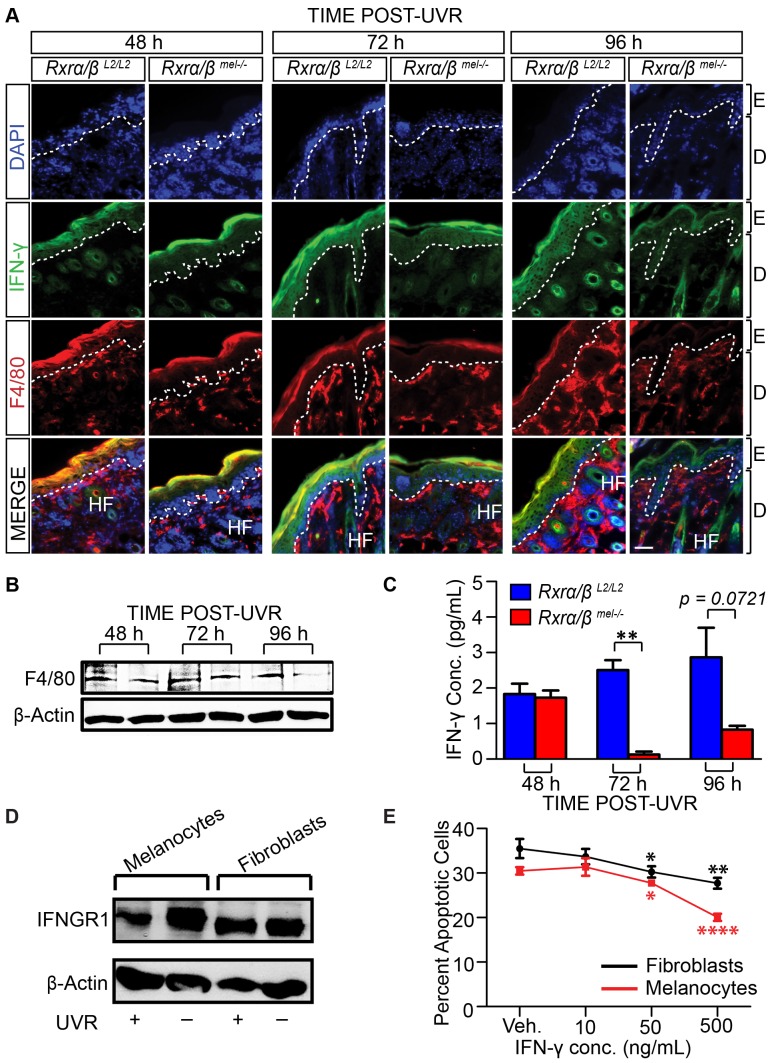
“First, we confirmed that both cell types express the primary receptor for IFN-c (IFNGR1) pre- and 24 h post-UVR using Western Blot (Figure 3D).”
BackgroundInfluentialDemonstration of an interferon γ-dependent tumor surveillance system in immunocompetent mice
Kaplan, D. H., Shankaran, V., Dighe, A. S., Stockert, E., Aguet, M., Old, L. J., & Schreiber, R. D. (1998) · Proceedings of the National Academy of Sciences · doi:10.1073/pnas.95.13.7556 · Cited by 1,465
Dieu, M.-C., Vanbervliet, B., Vicari, A., Bridon, J.-M., Oldham, E., Aït-Yahia, S., Brière, F., Zlotnik, A., Lebecque, S., & Caux, C. (1998) · The Journal of Experimental Medicine · doi:10.1084/jem.188.2.373 · Cited by 1,425
Multiplicity generates diversity in the retinoic acid signalling pathways
Leid, M., Kastner, P., & Chambon, P. (1992) · Trends in Biochemical Sciences · doi:10.1016/0968-0004(92)90014-z · Cited by 821 · cited 2×
“Retinoid-X-Receptors (RXRs) a, b, and c (See Table 1 for all gene names, abbreviations, and IDs) are members of the nuclear hormone receptor (NR) superfamily, and act as central coordinators of cell signal transduction in many different tissue types through heterodimerization with several other NRs [1].”
BackgroundDighe, A. S., Richards, E., Old, L. J., & Schreiber, R. D. (1994) · Immunity · doi:10.1016/1074-7613(94)90087-6 · Cited by 663
Perforin and interferon-γ activities independently control tumor initiation, growth, and metastasis
Street, S. E. A., Cretney, E., & Smyth, M. J. (2001) · Blood · doi:10.1182/blood.v97.1.192 · Cited by 572
eRNAs Are Required for p53-Dependent Enhancer Activity and Gene Transcription
Melo, C. A., Drost, J., Wijchers, P. J., van de Werken, H., de Wit, E., Vrielink, J. A. F. O., Elkon, R., Melo, S. A., Léveillé, N., Kalluri, R., et al. (2013) · Molecular Cell · doi:10.1016/j.molcel.2012.11.021 · Cited by 544
Ngo, V. N., Lucy Tang, H., & Cyster, J. G. (1998) · The Journal of Experimental Medicine · doi:10.1084/jem.188.1.181 · Cited by 470
Cited by
Mechanisms and prevention of UV‐induced melanoma
Sample, A., & He, Y. (2018) · Photodermatology, Photoimmunology & Photomedicine · doi:10.1111/phpp.12329 · Cited by 372
Understanding Autoimmunity: Mechanisms, Predisposing Factors, and Cytokine Therapies
Yasmeen, F., Pirzada, R. H., Ahmad, B., Choi, B., & Choi, S. (2024) · International Journal of Molecular Sciences · doi:10.3390/ijms25147666 · Cited by 154
Environmental Basis of Autoimmunity
Floreani, A., Leung, P. S. C., & Gershwin, M. E. (2016) · Clinical Reviews in Allergy & Immunology · doi:10.1007/s12016-015-8493-8 · Cited by 122
On the role of classical and novel forms of vitamin D in melanoma progression and management
Slominski, A. T., Brożyna, A. A., Skobowiat, C., Zmijewski, M. A., Kim, T., Janjetović, Z., Oak, A. S. W., Jóźwicki, W., Jetten, A. M., Mason, R. S., et al. (2017) · The Journal of Steroid Biochemistry and Molecular Biology · doi:10.1016/j.jsbmb.2017.06.013 · Cited by 105
NRF2 and Key Transcriptional Targets in Melanoma Redox Manipulation
Carpenter, E. L., Becker, A. L., & Indra, A. K. (2022) · Cancers · doi:10.3390/cancers14061531 · Cited by 47
Self-citationTouil, Y. S., Ségard, P., Ostyn, P., Bégard, S., Aspord, C., Machhour, R. E., Masselot, B., Vandomme, J., Flamenco, P., Idziorek, T., et al. (2016) · Scientific Reports · doi:10.1038/srep30405 · Cited by 38
Becker, A. L., Carpenter, E. L., Slominski, A. T., & Indra, A. K. (2021) · Frontiers in Oncology · doi:10.3389/fonc.2021.743667 · Cited by 29
Self-citationDoddapaneni, B. S., Kyryachenko, S., Chagani, S., Alany, R. G., Rao, D. A., Indra, A. K., & Alani, A. W. G. (2015) · Journal of Controlled Release · doi:10.1016/j.jconrel.2015.11.013 · Cited by 28
Self-citationCarpenter, E. L., Le, M., Miranda, C. L., Reed, R. L., Stevens, J. F., Indra, A. K., & Ganguli‐Indra, G. (2018) · Frontiers in Pharmacology · doi:10.3389/fphar.2018.00477 · Cited by 21
Self-citationIL-23 Inhibits Melanoma Development by Augmenting DNA Repair and Modulating T Cell Subpopulations
Nasti, T. H., Cochran, J. B., Vachhani, R. V., McKay, K., Tsuruta, Y., Athar, M., Timares, L., & Elmets, C. A. (2017) · The Journal of Immunology · doi:10.4049/jimmunol.1601455 · Cited by 19
“IFN-g receptors are present on melanocytes, and work by others reports that IFN-g can inhibit apoptosis of UV radiation–damaged melanocytes (45) and thus promote tumor development.”
BackgroundOxidative State in Cutaneous Melanoma Progression: A Question of Balance
Benedusi, M., Lee, H., Lim, Y., & Valacchi, G. (2024) · Antioxidants · doi:10.3390/antiox13091058 · Cited by 19
Zhang, X., Feng, Y., Yan, Y., Zheng, Z., Wang, W., Zhang, Y., Zhou, E., & Xiao, S. (2019) · Journal of General Virology · doi:10.1099/jgv.0.001320 · Cited by 16
In Vivo Role of Vitamin D Receptor Signaling in UVB-Induced DNA Damage and Melanocyte Homeostasis
Chagani, S., Kyryachenko, S., Yamamoto, Y., Kato, S., Ganguli‐Indra, G., & Indra, A. K. (2016) · Journal of Investigative Dermatology · doi:10.1016/j.jid.2016.06.004 · Cited by 15
Self-citationATF 2 alters melanocyte response and macrophage recruitment in UV‐irradiated neonatal mouse skin
Senft, D., Sorolla, A., Dewing, A., Claps, G., Lau, E., Walker, G. J., & Ronai, Z. A. (2015) · Pigment Cell & Melanoma Research · doi:10.1111/pcmr.12382 · Cited by 7
“As the melanocyte response to neonatal UV-B expo- sure was previously linked to innate immune responses (Coleman et al., 2014; Zaidi et al., 2011), we further evaluated whether melanocyte-specific expression of the ATF2 deletion mutant influences immune cell recruitment.”
BackgroundTherapeutic Application of Melatonin in the Treatment of Melanoma: A Review
Fatemi, I., Dehdashtian, E., Pourhanifeh, M. H., Mehrzadi, S., & Hosseinzadeh, A. (2021) · Current Cancer Therapy Reviews · doi:10.2174/1573394717666210526140950 · Cited by 5
α-Mangostin, a safe and natural product as a candidate skin-whitening agent
Li, X., Zhu, X., Wang, B., Sun, J., & Xia, Y. F. (2025) · Scientific Reports · doi:10.1038/s41598-025-31047-5 · Cited by 4
ABDEL‐MALEK, Z. A., Swope, V. B., & Indra, A. K. (2017) · Springer eBooks · doi:10.1007/978-3-319-41319-8_2 · Cited by 4
Self-citationCharacterization of the mechanisms of action of the transcription factor ZEB1 in melanoma
Tang, Y. (2021) · theses.fr (ABES) · doi:10.70675/d147bc89z14e4z4137zadecz307fd2f27136
Metadata
- Authors
- Coleman, D. J., Garcia, G., Hyter, S., Jang, H. S., Chagani, S., Liang, X., Larue, L., Ganguli-Indra, G., & Indra, A. K.
- Affiliations
- Oregon State University (US)
- Centre National de la Recherche Scientifique (FR)
- Corresponding author
- Indra, Arup K.
- ORCID
- Venue
- PLoS Genetics
- Publisher
- Public Library of Science (PLoS)
- Published
- 2014-05-08
- Volume
- 10
- Issue
- 5
- Pages
- e1004321
- ISSN
- 1553-7390 (ISSN-L)
- 1553-7404
- PMC
- PMC4014444
- OpenAlex
- W2156179338
- Cited by
- 17
- References
- 50
- Citations by year
- 2025: 1 · 2024: 2 · 2022: 1 · 2021: 2 · 2019: 1 · 2018: 1 · 2017: 3 · 2016: 3 · 2015: 3
- FWCI
- 1.48
- Type
- journal article
- Language
- en
- Open access
- gold
- doi.org
- Locations
- PLoS Genetics (publishedVersion, cc-by)
- Europe PMC (PubMed Central) (publishedVersion, cc-by)
- PubMed Central (publishedVersion, cc-by)
- PubMed (publishedVersion)
- DOAJ (DOAJ: Directory of Open Access Journals) (submittedVersion, cc-by-sa)
- Figshare (submittedVersion, cc-by)
- Funders
- Oregon Health and Science University (P30CA069533)
- National Institutes of Health (#ES00210)
- Knight Cancer Institute, Oregon Health and Science University (P30-CA069533)
- National Cancer Institute (T32CA106195, P30CA069533)
- National Institute of Environmental Health Sciences (ES016629-01A1, ES-00-210, R01ES016629, P30ES000210)
- Topics
- Life Sciences › Biochemistry, Genetics and Molecular Biology › Cell Biology › melanin and skin pigmentation
- Health Sciences › Medicine › Dermatology › Skin Protection and Aging
- Life Sciences › Biochemistry, Genetics and Molecular Biology › Molecular Biology › Melanoma and MAPK Pathways
- Keywords
- retinoid X receptor alpha, retinoid X receptor beta, melanocytes, ultraviolet radiation, innate immune response, interferon-gamma, chemokines, dermal fibroblasts, apoptosis, cell survival, non-cell-autonomous regulation, immune surveillance, nuclear receptors
- MeSH terms
- Animals, Cell Cycle, Immunity, Innate, Melanocytes, Mice, Transgenic, Ultraviolet Rays, Retinoid X Receptor alpha, Retinoid X Receptor beta, Mice
About these checks
Registry, retraction, Cites and statistics results are computed, not judged, with one exception: a printed reference that no index lists is read once by a model before it counts as a citation error. Claims are extracted by a model and kept only when their quote appears verbatim in the text; each cited source is then checked, with a model’s help, for whether it says what the claim relies on. Those verdicts can be wrong — read the claim’s quote and the cited source before relying on one.
Statistics and arithmetic are recomputed, not judged.
Confidence bands are shown only for fields calibrated on our annotated test set. None is calibrated yet, so no band is shown.
What counts as a claim ›How we measure confidence ›How we check this ›
Are you an author, or do you see a problem with this page? Request a review
Data sources
Bibliographic data: Semantic Scholar, OpenAlex, Crossref.
Contains information from the Semantic Scholar Academic Graph Datasets, made available under the ODC Attribution License (ODC-BY 1.0).
Semantic Scholar’s data is described in: Kinney, R., et al. (2023). The Semantic Scholar Open Data Platform. arXiv:2301.10140.
