

The DOI matches its Crossref record; 37 of the 38 references it cites were found in a registry or an index.
Genetic epidemiology and Mendelian randomization for informing disease therapeutics: Conceptual and methodological challenges
Open accessPublished version of a preprint
Abstract
The past decade has been proclaimed as a hugely successful era of gene discovery through the high yields of many genome-wide association studies (GWAS).However, much of the perceived benefit of such discoveries lies in the promise that the identification of genes that influence disease would directly translate into the identification of potential therapeutic targets, but this has yet to be realized at a level reflecting expectation.One reason for this, we suggest, is that GWAS, to date, have generally not focused on phenotypes that directly relate to the progression of disease and thus speak to disease treatment.A valuable proposed outcome of the GWAS era is the identification of novel therapeutic targets [1-4].As of 3 April 2017, the GWAS Catalog contained 2,854 publications and 33,674 unique SNP-trait associations [5].The large majority of these studies investigate genetic variation related to the presence (or occurrence) of disease.Such variants, though they may be informative for the prevention of disease, have unclear utility in informing disease treatment.If variants implicate etiological mechanisms of import for disease onset but sometimes of little relevance to disease progression, then the use of case/control GWAS as evidence to inform disease treatment-related drug discovery could be misleading.As an obvious example, consider GWAS of lung cancer.The lead variants identified in such GWAS tag a locus related to the heaviness of cigarette smoking [6], supporting the overwhelming evidence that smoking causes lung cancer.However, the cessation of smoking is hardly an efficacious treatment strategy after the onset of disease, although not smoking is a highly effective means of very substantially reducing the risk of developing lung cancer in the first place.Examples of factors causing both disease incidence and disease progression exist-for example, low-density lipoprotein (LDL) cholesterol levels clearly influence the risk of initial coronary events, and lowering LDL cholesterol reduces the risk of subsequent events.However, it is not necessarily the case that risk factors will influence both disease onset and disease progression-for example, a recent GWAS of Crohn disease observed independent genetic variants for the risk of onset and progression [7] and reported a negative genetic correlation (estimated through linkage disequilibrium [LD]
Overview
The claims and statistics of this paper haven’t been checked yet.
Run the check — free, no account needed. It reads the open-access text and checks the sources it cites.
Integrity signals
Registry
Cites
Statistics
Figures
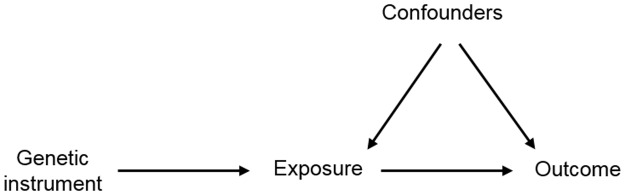
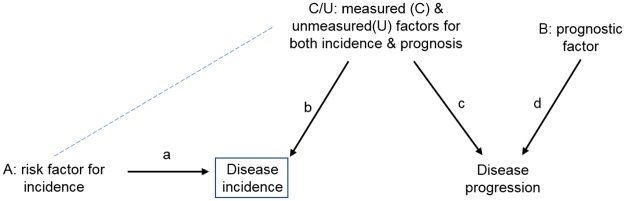
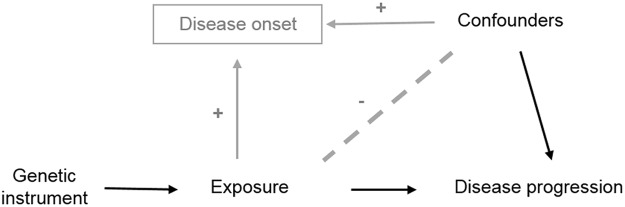
Verification
Claims the paper makes
The claims and statistics of this paper haven’t been checked yet.
Run the check — free, no account needed. It reads the open-access text and checks the sources it cites.
Claims other papers make about this one
Each is checked against this paper’s own text: does it say what the citing paper says it does?
In the citing paper
“Indeed, many such papers simply report MR estimates obtained from applying open-access software to open-access data and in these cases the analyses have, in essence, already been conducted by automated tools — an observation detailed in a recent preprint article.182”
From Mendelian randomization (2022) · cites this paper as [182]
Self-check
Percentages, sums and reported differences re-computed from the paper’s own numbers.
The self-check needs the paper’s full text.
Citations
Cites
Davey Smith, G., & Ebrahim, S. (2003) · International Journal of Epidemiology · doi:10.1093/ije/dyg070 · Cited by 5,882
Mendelian randomization: genetic anchors for causal inference in epidemiological studies
Davey Smith, G., & Hemani, G. (2014) · Human Molecular Genetics · doi:10.1093/hmg/ddu328 · Cited by 4,677
Mendelian randomization: Using genes as instruments for making causal inferences in epidemiology
Lawlor, D. A., Harbord, R. M., Sterne, J. A. C., Timpson, N., & Davey Smith, G. (2008) · Statistics in Medicine · doi:10.1002/sim.3034 · Cited by 4,618
Pierce, B. L., & Burgess, S. (2013) · American Journal of Epidemiology · doi:10.1093/aje/kwt084 · Cited by 1,389
Collider scope: when selection bias can substantially influence observed associations
Munafò, M. R., Tilling, K., Taylor, A. E., Evans, D. M., & Davey Smith, G. (2018) · International Journal of Epidemiology · doi:10.1093/ije/dyx206 · Cited by 813
Self-citationVariation in PCSK9 and HMGCR and Risk of Cardiovascular Disease and Diabetes
Ference, B. A., Robinson, J. G., Brook, R. D., Catapano, A. L., Chapman, M. J., Neff, D. R., Voros, S., Giugliano, R. P., Davey Smith, G., Fazio, S., et al. (2016) · New England Journal of Medicine · doi:10.1056/nejmoa1604304 · Cited by 743
Holmes, M. V., Dale, C. E., Zuccolo, L., Silverwood, R. J., Guo, Y., Ye, Z., Prieto-Merino, D., Dehghan, A., Trompet, S., Wong, A., et al. (2014) · BMJ · doi:10.1136/bmj.g4164 · Cited by 669
C Reactive Protein Coronary Heart Disease Genetics Collaboration (CCGC) (2011) · BMJ · doi:10.1136/bmj.d548 · Cited by 642
Mendelian randomization studies: a review of the approaches used and the quality of reporting
Boef, A. G. C., Dekkers, O. M., & le Cessie, S. (2015) · International Journal of Epidemiology · doi:10.1093/ije/dyv071 · Cited by 610
Role of Folate in Colon Cancer Development and Progression
Kim, Y.-I. (2003) · The Journal of Nutrition · doi:10.1093/jn/133.11.3731s · Cited by 386
Research works printed but not linked: 2
- MR Munafo, Collider Scope: How selection bias can induce spurious associations, Int J Epidemiol
- F Balazard, 2017, Disease as collider: a new case-only method to discover environmental factors in complex diseases with genetic risk estimation, BioRxiv
Cited by
Sorted by citations
Reading Mendelian randomisation studies: a guide, glossary, and checklist for clinicians
Davies, N. M., Holmes, M. V., & Davey Smith, G. (2018) · BMJ · doi:10.1136/bmj.k601 · Cited by 4,404
Buniello, A., MacArthur, J. A. L., Cerezo, M., Harris, L. W., Hayhurst, J., Malangone, C., McMahon, A., Morales, J., Mountjoy, E., Sollis, E., et al. (2019) · Nucleic Acids Research · doi:10.1093/nar/gky1120 · Cited by 4,000
Sanderson, E., Glymour, M. M., Holmes, M. V., Kang, H., Morrison, J., Munafò, M. R., Palmer, T., Schooling, C. M., Wallace, C., Zhao, Q., et al. (2022) · Nature Reviews Methods Primers · doi:10.1038/s43586-021-00092-5 · Cited by 2,229
Guidelines for performing Mendelian randomization investigations
Burgess, S., Davey Smith, G., Davies, N. M., Dudbridge, F., Gill, D., Glymour, M. M., Hartwig, F. P., Holmes, M. V., Minelli, C., Relton, C. L., et al. (2020) · Wellcome Open Research · doi:10.12688/wellcomeopenres.15555.2 · Cited by 1,273
Self-citationRecent Developments in Mendelian Randomization Studies
Zheng, J., Baird, D. A., Borges, M. C., Bowden, J., Hemani, G., Haycock, P., Evans, D. M., & Smith, G. D. (2017) · Current Epidemiology Reports · doi:10.1007/s40471-017-0128-6 · Cited by 1,147
Metadata
- Authors
- Paternoster, L., Tilling, K., & Davey Smith, G.
- Affiliations
- University of Bristol (GB)
- Corresponding author
- Paternoster, Lavinia
- Tilling, Kate
- Venue
- PLOS Genetics
- Publisher
- Public Library of Science (PLoS)
- Published
- 2017-10-05
- Volume
- 13
- Issue
- 10
- Pages
- e1006944
- ISSN
- 1553-7390 (ISSN-L)
- 1553-7404
- PMC
- PMC5628782
- OpenAlex
- W2951286101
- Cited by
- 271
- References
- 38
- Citations by year
- 2026: 10 · 2025: 16 · 2024: 37 · 2023: 37 · 2022: 38 · 2021: 47 · 2020: 36 · 2019: 23 · 2018: 21 · 2017: 6
- FWCI
- 3.08
- Type
- journal article
- Language
- en
- Open access
- gold
- doi.org
- Licence
- Locations
- PLoS Genetics (publishedVersion, cc-by)
- bioRxiv (Cold Spring Harbor Laboratory) (acceptedVersion, cc-by)
- Europe PMC (PubMed Central) (publishedVersion, cc-by)
- PubMed Central (publishedVersion, cc-by)
- PubMed (publishedVersion)
- DOAJ (DOAJ: Directory of Open Access Journals) (submittedVersion, cc-by-sa)
- Explore Bristol Research (submittedVersion, cc-by)
- Funders
- Medical Research Council (MC_UU_12013, MCUU12013/1)
- Topics
- Life Sciences › Biochemistry, Genetics and Molecular Biology › Genetics › Genetic Associations and Epidemiology
- Life Sciences › Biochemistry, Genetics and Molecular Biology › Genetics › Genetics and Physical Performance
- Life Sciences › Biochemistry, Genetics and Molecular Biology › Genetics › Genetic and phenotypic traits in livestock
- Keywords
- drug target identification, disease progression, genetic epidemiology, Mendelian randomization, genome-wide association study, drug discovery, genetic correlation, Crohn's disease, LDL cholesterol, smoking and lung cancer
- MeSH terms
- Coronary Disease, Humans, Phenotype, Risk Factors, Disease Progression, Genetic Predisposition to Disease, Genetic Diseases, Inborn, Genome-Wide Association Study, Mendelian Randomization Analysis
About these checks
Registry, retraction, Cites and statistics results are computed, not judged, with one exception: a printed reference that no index lists is read once by a model before it counts as a citation error. Claims are extracted by a model and kept only when their quote appears verbatim in the text; each cited source is then checked, with a model’s help, for whether it says what the claim relies on. Those verdicts can be wrong — read the claim’s quote and the cited source before relying on one.
Statistics and arithmetic are recomputed, not judged.
Confidence bands are shown only for fields calibrated on our annotated test set. None is calibrated yet, so no band is shown.
What counts as a claim ›How we measure confidence ›How we check this ›
Are you an author, or do you see a problem with this page? Request a review
