

The DOI matches its Crossref record; 32 of the 32 references it cites were found in a registry or an index.
Alcohol Intake and Blood Pressure: A Systematic Review Implementing a Mendelian Randomization Approach
Open accessAbstract
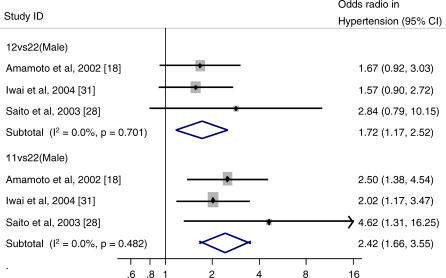
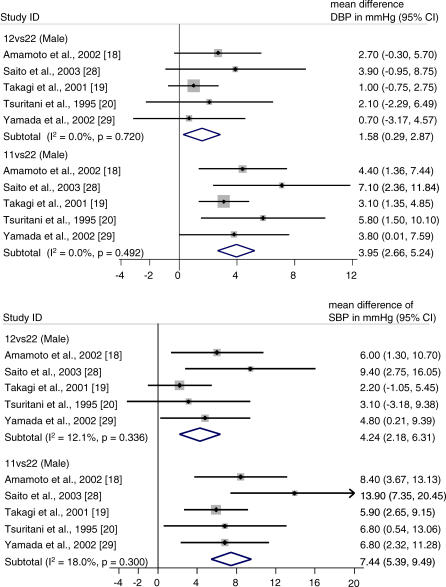
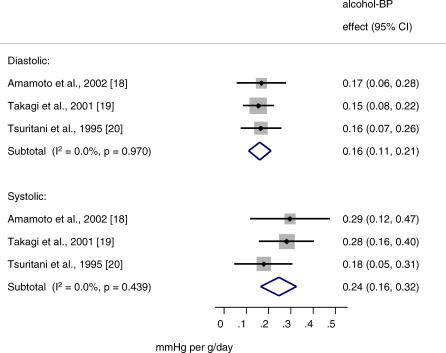
BACKGROUND: Alcohol has been reported to be a common and modifiable risk factor for hypertension. However, observational studies are subject to confounding by other behavioural and sociodemographic factors, while clinical trials are difficult to implement and have limited follow-up time. Mendelian randomization can provide robust evidence on the nature of this association by use of a common polymorphism in aldehyde dehydrogenase 2 (ALDH2) as a surrogate for measuring alcohol consumption. ALDH2 encodes a major enzyme involved in alcohol metabolism. Individuals homozygous for the null variant (*2*2) experience adverse symptoms when drinking alcohol and consequently drink considerably less alcohol than wild-type homozygotes (*1*1) or heterozygotes. We hypothesise that this polymorphism may influence the risk of hypertension by affecting alcohol drinking behaviour. METHODS AND FINDINGS: We carried out fixed effect meta-analyses of the ALDH2 genotype with blood pressure (five studies, n = 7,658) and hypertension (three studies, n = 4,219) using studies identified via systematic review. In males, we obtained an overall odds ratio of 2.42 (95% confidence interval [CI] 1.66-3.55, p = 4.8 x 10(-6)) for hypertension comparing *1*1 with *2*2 homozygotes and an odds ratio of 1.72 (95% CI 1.17-2.52, p = 0.006) comparing heterozygotes (surrogate for moderate drinkers) with *2*2 homozygotes. Systolic blood pressure was 7.44 mmHg (95% CI 5.39-9.49, p = 1.1 x 10(-12)) greater among *1*1 than among *2*2 homozygotes, and 4.24 mmHg (95% CI 2.18-6.31, p = 0.00005) greater among heterozygotes than among *2*2 homozygotes. CONCLUSIONS: These findings support the hypothesis that alcohol intake has a marked effect on blood pressure and the risk of hypertension.
Overview
The claims and statistics of this paper haven’t been checked yet.
Run the check — free, no account needed. It reads the open-access text and checks the sources it cites.
Integrity signals
Registry
Cites
Statistics
Figures
Verification
Claims the paper makes
The claims and statistics of this paper haven’t been checked yet.
Run the check — free, no account needed. It reads the open-access text and checks the sources it cites.
Claims other papers make about this one
Each is checked against this paper’s own text: does it say what the citing paper says it does?
In the citing paper
“The dose-response association may differ between men (linear) and women (J shaped)164 and can be modified by metabolic genes.163”
From Resistant Hypertension: Detection, Evaluation, and Management: A Scientific Statement From the American Heart Association (2018) · cites this paper as [163]
In the citing paper
“Alcohol intake has been linked to increases in BP and the risk for developing hypertension.162–164”
From Resistant Hypertension: Detection, Evaluation, and Management: A Scientific Statement From the American Heart Association (2018) · cites this paper as [163]
In the citing paper
“A DASH-style eating pattern,174,175 alcohol restriction to <10 g/d (women) and <20 g/d (men),162–165 and a variety of other dietary modifications174 can each yield significant reductions in BP among patients with hypertension.”
From Resistant Hypertension: Detection, Evaluation, and Management: A Scientific Statement From the American Heart Association (2018) · cites this paper as [163]
In the citing paper
“If the above conditions are met, the estimates obtained from multivariable MR will be a direct effect of each exposure included on the outcome, given the other exposures included in the estimation.74”
From Mendelian randomization (2022) · cites this paper as [74]
Self-check
Percentages, sums and reported differences re-computed from the paper’s own numbers.
The self-check needs the paper’s full text.
Citations
Cites
Bias in meta-analysis detected by a simple, graphical test
Egger, M., Smith, G. D., Schneider, M., & Minder, C. (1997) · BMJ · doi:10.1136/bmj.315.7109.629 · Cited by 56,722
Operating characteristics of a rank correlation test for publication bias
Begg, C. B., & Mazumdar, M. (1994) · Biometrics · doi:10.2307/2533446 · Cited by 16,955
Davey Smith, G., & Ebrahim, S. (2003) · International Journal of Epidemiology · doi:10.1093/ije/dyg070 · Cited by 5,882
BOSRON, W. F., & Li, T. (1986) · Hepatology · doi:10.1002/hep.1840060330 · Cited by 569
Molecular abnormality of an inactive aldehyde dehydrogenase variant commonly found in Orientals.
Yoshida, A., Huang, I. Y., & Ikawa, M. (1984) · Proceedings of the National Academy of Sciences · doi:10.1073/pnas.81.1.258 · Cited by 456
Alcohol Consumption and the Incidence of Hypertension
Fuchs, F. D., Chambless, L. E., Whelton, P. K., Nieto, F. J., & HEISS, G. M. (2001) · Hypertension · doi:10.1161/01.hyp.37.5.1242 · Cited by 409
Alcohol and blood pressure: the INTERSALT study
Marmot, M. G., Elliott, P., Shipley, M. J., Dyer, A. R., Ueshima, H., Beevers, D. G., Stamler, R., Kesteloot, H., Rose, G., & Stamler, J. (1994) · BMJ · doi:10.1136/bmj.308.6939.1263 · Cited by 353
Acetaldehyde Metabolism in Different Aldehyde Dehydrogenase‐2 Genotypes
Enomoto, N., Takase, S., Yasuhara, M., & Takada, A. (1991) · Alcoholism Clinical and Experimental Research · doi:10.1111/j.1530-0277.1991.tb00532.x · Cited by 266
Lewis, S. J., & Smith, G. D. (2005) · Cancer Epidemiology Biomarkers & Prevention · doi:10.1158/1055-9965.epi-05-0196 · Cited by 234
Self-citationThe Role of Acetaldehyde in the Actions of Alcohol (Update 2000)
Eriksson, C. J. P. (2001) · Alcoholism Clinical and Experimental Research · doi:10.1097/00000374-200105051-00005 · Cited by 205
Research works printed but not linked: 29
- Marmot, 1994, BMJ, 308, 1263
- Patel, 2006, J Hum Hypertens, 20, 733
- Fuchs, 2001, Hypertension, 37, 1242
- Moore, 1990, Am J Hypertens, 3, 1
- Davey Smith, 2003, Int J Epidemiol, 32, 1
- Bosron, 1986, Hepatology, 6, 502
- Yoshida, 1984, Proc Natl Acad Sci U S A, 81, 258
- Enomoto, 1991, Alcohol Clin Exp Res, 15, 141
- Lewis, 2005, Cancer Epidemiol Biomarkers Prev, 14, 1967
- Pittler, 2003, CMAJ, 169, 1269
- Mackenzie, 2005, Arterioscler Thromb Vasc Biol, 25, 1891
- Hashimoto, 2002, Clin Chem, 48, 1043
- Okayama, 1994, J Hum Hypertens, 8, 205
- Egger, 1997, BMJ, 315, 629
- Begg, 1994, Biometrics, 50, 1088
- Amamoto, 2002, Hypertens Res, 25, 857
- Takagi, 2001, Hypertens Res, 24, 365
- Tsuritani, 1995, Am J Hypertens, 8, 1053
- Howes, 1986, J Hypertens, 4, 421
- Rosito, 1999, Am J Hypertens, 12, 236
- Beulens, 2007, Ann Intern Med, 146, 10
- Westerterp-Plantenga, 1999, Am J Clin Nutr, 69, 205
- Lukasiewicz, 2005, Public Health Nutr, 8, 315
- Sakurai, 2006, Hypertens Res, 29, 75
- Eriksson, 2001, Alcohol Clin Exp Res, 25, 15S
- Saito, 2003, J Hypertens, 21, 1097
- Yamada, 2006, J Hum Genet, 51, 104
- Davey Smith, 2005, Lancet, 366, 1679
- Iwai, 2004, J Hypertens, 22, 1119
Cited by
Sorted by citations
Items 201–300 of 314
Precision Medicine and Cardiovascular Health: Insights from Mendelian Randomization Analyses
Spiller, W., Jung, K. J., Lee, J., & Jee, S. H. (2019) · Korean Circulation Journal · doi:10.4070/kcj.2019.0293 · Cited by 13
Gilani, A., Ramsay, S. E., Juraschek, S. P., Papacosta, O., LENNON, L. T., Whincup, P. H., & Wannamethee, S. G. (2020) · Journal of Clinical Hypertension · doi:10.1111/jch.13996 · Cited by 13
Evaluation of consultation training in hypertension care
Drevenhorn, E., Bengtson, A., & Kjellgren, K. I. (2009) · European Journal of Cardiovascular Nursing · doi:10.1016/j.ejcnurse.2009.08.001 · Cited by 12
Degerud, E., Høiseth, G., Mørland, J. G., Ariansen, I., Graff‐Iversen, S., Ystrøm, E., Zuccolo, L., Tell, G. S., & Næss, Ø. (2021) · American Journal of Epidemiology · doi:10.1093/aje/kwab063 · Cited by 13
Contribution of Alcohol to Hypertension Mortality in Russia
Razvodovsky, Y. (2014) · Journal of Addiction · doi:10.1155/2014/483910 · Cited by 12
Schooling, C. M., Lam, T. H., Ho, S. Y., He, Y., Mak, K. H., & Leung, G. M. (2009) · BMC Public Health · doi:10.1186/1471-2458-9-49 · Cited by 12
Rehfuess, E. A., Best, N., Briggs, D., & Joffe, M. (2013) · Emerging Themes in Epidemiology · doi:10.1186/1742-7622-10-13 · Cited by 12
Naimi, T. S., & Chikritzhs, T. N. (2024) · Alcoholism Clinical and Experimental Research · doi:10.1111/acer.15478 · Cited by 12
Castillo, J. M., Jivraj, S., & Fat, L. N. (2016) · Health & Place · doi:10.1016/j.healthplace.2016.11.007 · Cited by 11
Alcohol consumption and its impact on the risk of high blood pressure in R ussia
Akhmedjonov, A., & Suvankulov, F. (2012) · Drug and Alcohol Review · doi:10.1111/j.1465-3362.2012.00521.x · Cited by 11
ALDH2 Gene rs671 Polymorphism May Decrease the Risk of Essential Hypertension
Mei, X., Hu, S., Liu, P., Li, F. Y., Zhou, X., Zhou, Y., & Chen, T. (2020) · International Heart Journal · doi:10.1536/ihj.19-259 · Cited by 10
Bench Research Informed by GWAS Results
Kondratyev, N. V., Алфимова, М. В., Golov, A. K., & Голимбет, В. Е. (2021) · Cells · doi:10.3390/cells10113184 · Cited by 11
Identifying and Managing Factors that Interfere with or Worsen Blood Pressure Control
Basile, J., & Bloch, M. J. (2010) · Postgraduate Medicine · doi:10.3810/pgm.2010.03.2120 · Cited by 11
E-Values for Mendelian Randomization
Swanson, S. A., & VanderWeele, T. J. (2020) · Epidemiology · doi:10.1097/ede.0000000000001164 · Cited by 9
Detrimental Effects of Alcohol on the Heart: Hypertension and Cardiomyopathy
Figueredo, V. M., & Patel, A. J. (2023) · Reviews in Cardiovascular Medicine · doi:10.31083/j.rcm2410292 · Cited by 16
Blood Pressure After Changes in Light-to-Moderate Alcohol Consumption in Women and Men
Suzuki, T., Fukui, S., Yoneoka, D., Aoki, J., & Fujiwara, T. (2025) · Journal of the American College of Cardiology · doi:10.1016/j.jacc.2025.09.018 · Cited by 10
Retondario, A., Souza, A. D. M., Bricarello, L. P., Alves, M. D. A., Fernandes, R., Trindade, E. B. S. D. M., Zeni, L. A. Z. R., Sichieri, R., Antunes, J. L. F., & de Vasconcelos, F. D. A. G. (2021) · British Journal Of Nutrition · doi:10.1017/s0007114521002385 · Cited by 9
Victor, R. G. (2012) · Elsevier eBooks · doi:10.1016/b978-1-4377-0398-6.00045-7 · Cited by 9
Sarkar, S., & Pahuja, S. K. (2024) · Biomedical Materials & Devices · doi:10.1007/s44174-023-00146-0 · Cited by 7
Nonparametric instrumental regression with non-convex constraints
Grasmair, M., Scherzer, O., & Vanhems, A. (2013) · Inverse Problems · doi:10.1088/0266-5611/29/3/035006 · Cited by 8
He, W., Castiblanco, J., Walter, E. A., Okulicz, J. F., & Ahuja, S. K. (2010) · Current Opinion in HIV and AIDS · doi:10.1097/coh.0b013e32833f2087 · Cited by 8
Genetics and Pathophysiology of Essential Hypertension
Khullar, M. (2012) · InTech eBooks · doi:10.5772/1197 · Cited by 9
Kim, H.-Y., Choi, C. K., Kweon, S., Lee, Y. H., Nam, H., Park, K.-S., Ryu, S. Y., Choi, S.-W., & Shin, M. (2020) · Journal of Korean Medical Science · doi:10.3346/jkms.2020.35.e14 · Cited by 9
Paik, D. H., Lee, K. W., Shim, Y. Y., Reaney, M. J. T., Park, I., Lee, S., Park, J.-Y., Park, E., Lee, S., Kim, I. A., et al. (2024) · Foods · doi:10.3390/foods13244084 · Cited by 7
The interplay between cognitive ability, alcohol consumption, and health characteristics
Degerud, E., Ystrøm, E., Tambs, K., Ariansen, I., Mørland, J. G., Magnus, P. M., Smith, G. D., & Næss, Ø. (2017) · Psychological Medicine · doi:10.1017/s0033291717003543 · Cited by 8
Genetic Instrumental Variable Studies of Effects of Prenatal Risk Factors
Wehby, G. L., & von Hinke, S. (2013) · Biodemography and Social Biology · doi:10.1080/19485565.2013.774615 · Cited by 7
Risk factors for the metabolic syndrome in contemporary China
Schooling, C. M. (2009) · Global Heart · doi:10.1016/j.cvdpc.2008.11.005 · Cited by 6
Commentary on D awson et al. (2013): Drink to your health? Maybe not
Keyes, K. M., & Miech, R. A. (2013) · Addiction · doi:10.1111/add.12137 · Cited by 6
Red wine flavonoids and vascular health
Hodgson, J. M. (2014) · Nutrition and Aging · doi:10.3233/nua-130026 · Cited by 5
Jee, Y., Park, S., Yuk, E., & Cho, S. (2021) · International Journal of Environmental Research and Public Health · doi:10.3390/ijerph182111392 · Cited by 5
High-resolution imaging in studies of alcohol effect on prenatal development
Mbolle, A. M., Thapa, S., Bukiya, A. N., & Jiang, H. (2023) · Advances in Drug and Alcohol Research · doi:10.3389/adar.2023.10790 · Cited by 5
Yeung, S. L. A., Jiang, C., Cheng, K. K., Adab, P., Lam, H. K. B., Liu, B., Zhang, W., Lam, T. H., Leung, G. M., & Schooling, C. M. (2014) · Annals of Epidemiology · doi:10.1016/j.annepidem.2014.05.015 · Cited by 5
Aldehyde dehydrogenase II rs671 polymorphism in essential hypertension
Fan, Y., Chen, Z., Ye, T., Lin, W., Wang, Q., & Lin, B. (2018) · Clinica Chimica Acta · doi:10.1016/j.cca.2018.09.037 · Cited by 5
Comment on Rehm: Alcohol, cohort studies and all‐cause mortality: Where to from here?
Naimi, T. S. (2018) · Drug and Alcohol Review · doi:10.1111/dar.12892 · Cited by 5
Yu, C., Liang, H., & Zhang, Z. (2022) · Sustainability · doi:10.3390/su14095693 · Cited by 5
Managing the Exponential Growth of Mendelian Randomization Studies
Munafo, M. R., Brown, J., Hefler, M., & Smith, G. D. (2024) · Nicotine & Tobacco Research · doi:10.1093/ntr/ntae165 · Cited by 5
Boonchooduang, N., Likhitweerawong, N., & Louthrenoo, O. (2019) · Journal of Comprehensive Pediatrics · doi:10.5812/compreped.68342 · Cited by 4
Ariansen, I., Degerud, E., Gjesdal, K., Tell, G. S., & Næss, Ø. (2020) · IJC Heart & Vasculature · doi:10.1016/j.ijcha.2020.100679 · Cited by 4
Urinary Sodium Excretion Enhances the Effect of Alcohol on Blood Pressure
Jiang, X., Anasanti, M. D., Drenos, F., Blakemore, A. I. F., & Pazoki, R. (2022) · Healthcare · doi:10.3390/healthcare10071296 · Cited by 4
Risk factors related to hazardous alcohol consumption among Korean men with hypertension
Kim, O., Kim, B. H., & Jeon, H. O. (2012) · Nursing and Health Sciences · doi:10.1111/j.1442-2018.2012.00680.x · Cited by 4
Hart, C., & Smith, G. D. (2009) · Journal of Epidemiology & Community Health · doi:10.1136/jech.2008.079764 · Cited by 4
Genetic determinants of beverage consumption: Implications for nutrition and health
Cornelis, M. C. (2019) · Advances in food and nutrition research · doi:10.1016/bs.afnr.2019.03.001 · Cited by 4
Nyamdorj, R. (2010) · Työväentutkimus Vuosikirja · Cited by 4
Computational Tools for Causal Inference in GeneticsPreprint
Richardson, T. G., Zheng, J., & Gaunt, T. R. (2020) · Cold Spring Harbor Perspectives in Medicine · doi:10.1101/cshperspect.a039248 · Cited by 4
Li, R., Huddleston, S. J., & Prastein, D. J. (2024) · Alcohol and Alcoholism · doi:10.1093/alcalc/agae061 · Cited by 3
D’Urso, S., Wootton, R. E., Ask, H., Nunes, C. B., Andreassen, O. A., Hwang, L., Moen, G.-H., Evans, D. M., & Havdahl, A. (2024) · Psychological Medicine · doi:10.1017/s0033291724002216 · Cited by 4
Moon, K. Z., Rahman, M. H., Alam, M. J., Hossain, M. A., Hwang, S., Kang, S., Moon, S., Park, M. N., Ahn, C.-H., & Kim, B. (2024) · Computational Biology and Chemistry · doi:10.1016/j.compbiolchem.2024.108338 · Cited by 3
Chen, X., Gui, S., Wei, D., Deng, D., Tang, Y., Lv, J., You, W., Jiang, J., Lin, J., Ge, H., et al. (2025) · Journal of Stroke · doi:10.5853/jos.2024.04098 · Cited by 3
Mokwena, K. E., & Modutoane, M. B. (2022) · Journal of Family Medicine and Primary Care · doi:10.4103/jfmpc.jfmpc_740_22 · Cited by 3
Xu, H., Zhao, Y. F., Tan, R., Li, M., Yu, C., Rui, D., Li, J., Xiong, Y., & Zheng, W. (2024) · Public Health Nutrition · doi:10.1017/s1368980024000569 · Cited by 3
Huang, X., Qiu, L., Wang, T., Yao, Q., Liu, J., Xu, R., Zheng, Q., Zhang, X., & Wu, J. (2024) · Journal of Clinical Hypertension · doi:10.1111/jch.14826 · Cited by 2
Mendelian Randomization: Present and Future of Epidemiological Studies in Cardiology
Iturrieta-Zuazo, I., & Walter, S. (2014) · Revista Española de Cardiología (English Edition) · doi:10.1016/j.rec.2014.06.024 · Cited by 3
Aleatorización mendeliana: presente y futuro de los estudios epidemiológicos en cardiología
Iturrieta-Zuazo, I., & Walter, S. (2014) · Revista Española de Cardiología · doi:10.1016/j.recesp.2014.06.026 · Cited by 3
Park, Y. S., Kang, S. H., Park, E., & Jang, S. (2022) · Journal of Clinical Hypertension · doi:10.1111/jch.14475 · Cited by 3
A second‐class science? A defence of observational epidemiology to make causal inferences
Bell, S., & Britton, A. R. (2013) · Addiction · doi:10.1111/add.12379 · Cited by 3
Gong, W., Zeng, N., Corsi, D. J., & Wen, S. W. (2020) · doi:10.21203/rs.3.rs-36772/v1 · Cited by 3
(2012) · Kidney International Supplements · doi:10.1038/kisup.2012.62 · Cited by 3
Managing the exponential growth of Mendelian randomization studies
Munafo, M. R., Brown, J., Hefler, M., & Smith, G. D. (2024) · Addiction · doi:10.1111/add.16627 · Cited by 3
Managing the exponential growth of mendelian randomization studies
Munafo, M. R., Brown, J., Hefler, M., & Smith, G. D. (2024) · Tobacco Control · doi:10.1136/tc-2024-058987 · Cited by 3
A fresh approach to the development of national alcohol guidelines
Naimi, T. S. (2018) · Addiction · doi:10.1111/add.14428 · Cited by 3
Dietary Patterns, Food Intake and Health: New Evidence from Epidemiological and Genetic Studies
Yang, Q., & Sun, Y. (2024) · Nutrients · doi:10.3390/nu16070919 · Cited by 2
The Genetics of Alcohol Use Disorder
Wagner, J., Bell, A. S., Jung, J., & Lohoff, F. W. (2023) · Springer eBooks · doi:10.1007/978-3-031-32483-3_32 · Cited by 2
Nurhumaira, N. S., & Rahayuningsih, H. M. (2014) · Journal of Nutrition College · doi:10.14710/jnc.v3i4.6850 · Cited by 2
Recent Findings from Mendelian Randomization Studies of Cardiovascular Disease
Brown, I., & Elliott, P. (2010) · Current Cardiovascular Risk Reports · doi:10.1007/s12170-010-0127-3 · Cited by 2
Taylor, A. E., Ware, J. J., Gage, S. H., Smith, G. D., & Munafo, M. R. (2014) · Current Opinion in Behavioral Sciences · doi:10.1016/j.cobeha.2014.08.002 · Cited by 2
Cau, B. M., Arnaldo, C., Sengo, M., & Maloa, J. M. (2019) · Cited by 2
Principles of medical statistics
Lanerolle, G. D., Phiri, P., & Haroon, A. (2023) · Elsevier eBooks · doi:10.1016/b978-0-12-821787-0.00008-8 · Cited by 2
Hatton, A. A., Nunes, C. B., Flatley, C. J., Lawlor, D. A., & Evans, D. M. (2025) · medRxiv · doi:10.1101/2025.07.17.25331747 · Cited by 2
Sguiglia, S. (2023) · Evidencia actualizacion en la práctica ambulatoria · doi:10.51987/evidencia.v27i1.7097 · Cited by 1
Challenges and future directions for Mendelian randomization
Sanderson, E. C. M., Levin, M. G., Walker, V. M., Yuan, S., Badini, I., Dolce, J., Mahida, K. J., Nho, J.-W., Pingault, J., Damrauer, S. M., et al. (2026) · Nature Genetics · doi:10.1038/s41588-026-02546-6 · Cited by 2
Extensions to Mendelian randomization
Palmer, T. (2009) · Cited by 1
Differential Gene Expression Profile in Essential Hypertension
Yang, P. (2012) · InTech eBooks · doi:10.5772/29645 · Cited by 1
Ansari, R. A. (2012) · The Open Gastroenterology Journal · doi:10.2174/1874259901206010016 · Cited by 1
INTERAÇÃO MEDICAMENTOSA ENTRE FÁRMACOS ANTI-HIPERTENSIVOS EM USUÁRIOS DE BEBIDA ALCOÓLICA
Silva, L. C. D. J., & Ramos, M. E. S. P. (2016) · Revista Enfermagem Contemporânea · doi:10.17267/2317-3378rec.v5i2.1005 · Cited by 1
Arasteh, K. (2020) · Journal of Racial and Ethnic Health Disparities · doi:10.1007/s40615-020-00823-6 · Cited by 1
Stocks, T. (2009) · DiVA at Umeå University (Umeå University) · Cited by 1
Momose, Y., Une, H., Hayashi, M., & Takeyama, N. (2009) · Journal of Rural Medicine · doi:10.2185/jrm.4.64 · Cited by 1
The performance and feasibility of three brief alcohol screening tools in a senior population
Purcell, B. (2013) · QSpace (Queen's University Library) · Cited by 1
dos Santos, J. (2017) · Digital Library of Theses and Dissertations (Universidade de São Paulo) · doi:10.11606/t.7.2017.tde-17052017-111748 · Cited by 1
Manolis, A. J. (2020) · Faculty Opinions – Post-Publication Peer Review of the Biomedical Literature · doi:10.3410/f.734299250.793571584 · Cited by 1
Leon, D. A., Casas, J.-P., Dale, C. E., Polikina, O., Tomkins, S., & McKee, M. (2010) · American Journal of Epidemiology · doi:10.1093/aje/kwq235 · Cited by 1
Hatton, A. A., Nunes, C. B., Lawlor, D. A., & Evans, D. M. (2025) · medRxiv · doi:10.1101/2025.06.11.25329457 · Cited by 1
Tchamba, G. (2015) · ScholarWorks - WMU (Western Michigan University)
Methylenetetrahydrofolate Reductase C677T and A1298C Polymorphisms and Cancer Risk
Boccia, S. (2009) · Epigenetics and human health · doi:10.1002/9783527628384.ch5
Alkohol a ciśnienie tętnicze krwi
Baracz-Jozwik, B., Stojek, W., & Kumański, K. (2012)
Cook, S. (2012) · LSHTM Research Online (London School of Hygiene and Tropical Medicine) · doi:10.17037/pubs.04653406
Baltazi, M., Katsiki, N., Savopoulos, C. G., Iliadis, F. S., Koliakos, G., & Hatzitolios, A. I. (2011)
Can a Mendelian Randomization Study Predict the Results of a Clinical Trial? Yes and No
Abbate, A., Dinarello, C. A., Peruzzi, M., Sciarretta, S., Frati, G., & Biondi‐Zoccai, G. (2016) · International Journal of Statistics in Medical Research · doi:10.6000/1929-6029.2016.05.01.6
Jones, R. M. (2015) · ORCA Online Research @Cardiff (Cardiff University)
Causal Inference in Medicine via Mendelian Randomization
Frayling, T. M., & Voight, B. F. (2016) · Springer eBooks · doi:10.1007/978-3-319-01574-3_24
Moderate Alcohol Intake and Cardiometabolic Risk in Adults With Type 2 Diabetes
Saitz, R., & Naimi, T. S. (2016) · Annals of Internal Medicine · doi:10.7326/l16-5012
Sohn, K. (2018) · The Singapore Economic Review · doi:10.1142/s0217590818500236
Effect of alcohol on blood pressure : a systematic review and meta-analysis
Tasnim, S. (2019) · cIRcle (University of British Columbia) · doi:10.14288/1.0384576
Igumbor, B. A. (2017) · ResearchSpace (University of KwaZulu-Natal)
Lipid and Ischemic Heart Disease Revisited: Mendelian Randomization Analysis
Sung, J. (2020) · Korean Circulation Journal · doi:10.4070/kcj.2020.0328
Yoga and Lifestyle Factors in Heart Disease
Cunningham, M. M. (2020) · Advances in medical diagnosis, treatment, and care (AMDTC) book series · doi:10.4018/978-1-7998-3254-6.ch014
Humphreys, K. N., & Lingford-Hughes, A. R. (2016) · Cambridge University Press eBooks · doi:10.1017/cbo9781316258057.002
Wakabayashi, I. (2013) · Springer eBooks · doi:10.1007/978-3-7091-1334-9_7
Physical complications of excessive drinking
Humphreys, K. N., & Lingford-Hughes, A. R. (2016) · Cambridge University Press eBooks · doi:10.1017/cbo9781316258057.006
Assessing Causal Relationships in Genomics
Geneletti, S., Gallo, V., Porta, M. S., Khoury, M. J., & Vineis, P. (2013) · Apple Academic Press eBooks · doi:10.1201/b16304-5
Metadata
- Authors
- Chen, L., Davey Smith, G., Harbord, R. M., & Lewis, S. J.
- Affiliations
- University of Bristol (GB)
- Corresponding author
- Lewis, Sarah J
- Venue
- PLoS Medicine
- Publisher
- Public Library of Science (PLoS)
- Published
- 2008-03-04
- Volume
- 5
- Issue
- 3
- Pages
- e52
- ISSN
- 1549-1277 (ISSN-L)
- 1549-1676
- PMC
- PMC2265305
- OpenAlex
- W2097040757
- Cited by
- 314
- References
- 32
- Citations by year
- 2026: 5 · 2025: 9 · 2024: 18 · 2023: 13 · 2022: 15 · 2021: 17 · 2020: 27 · 2019: 17 · 2018: 21 · 2017: 16 · 2016: 19 · 2015: 15 · 2014: 20 · 2013: 22 · 2012: 25
- FWCI
- 2.15
- Type
- journal article
- Language
- en
- Open access
- gold
- doi.org
- Locations
- PLoS Medicine (publishedVersion, cc-by)
- PubMed Central (publishedVersion, cc-by)
- PubMed (publishedVersion)
- RePEc: Research Papers in Economics (publishedVersion)
- Bristol Research (University of Bristol) (submittedVersion)
- DOAJ (DOAJ: Directory of Open Access Journals) (submittedVersion, cc-by-sa)
- Funders
- Medical Research Council
- Topics
- Health Sciences › Medicine › Pathology and Forensic Medicine › Alcohol Consumption and Health Effects
- Life Sciences › Biochemistry, Genetics and Molecular Biology › Genetics › Genetic Associations and Epidemiology
- Health Sciences › Medicine › Cardiology and Cardiovascular Medicine › Blood Pressure and Hypertension Studies
- Keywords
- alcohol consumption, blood pressure, hypertension, ALDH2, ALDH2 polymorphism, genetic susceptibility, alcohol metabolism, systolic blood pressure
- MeSH terms
- Alcohol Dehydrogenase, Alcohol Drinking, Blood Pressure, Humans, Hypertension, Male, Genetic Predisposition to Disease
About these checks
Registry, retraction, Cites and statistics results are computed, not judged, with one exception: a printed reference that no index lists is read once by a model before it counts as a citation error. Claims are extracted by a model and kept only when their quote appears verbatim in the text; each cited source is then checked, with a model’s help, for whether it says what the claim relies on. Those verdicts can be wrong — read the claim’s quote and the cited source before relying on one.
Statistics and arithmetic are recomputed, not judged.
Confidence bands are shown only for fields calibrated on our annotated test set. None is calibrated yet, so no band is shown.
What counts as a claim ›How we measure confidence ›How we check this ›
Are you an author, or do you see a problem with this page? Request a review
