

The DOI matches its Crossref record; 35 of the 38 references it cites were found in a registry or an index.
Preventing Bias in Cluster Randomised Trials
Open accessAbstract
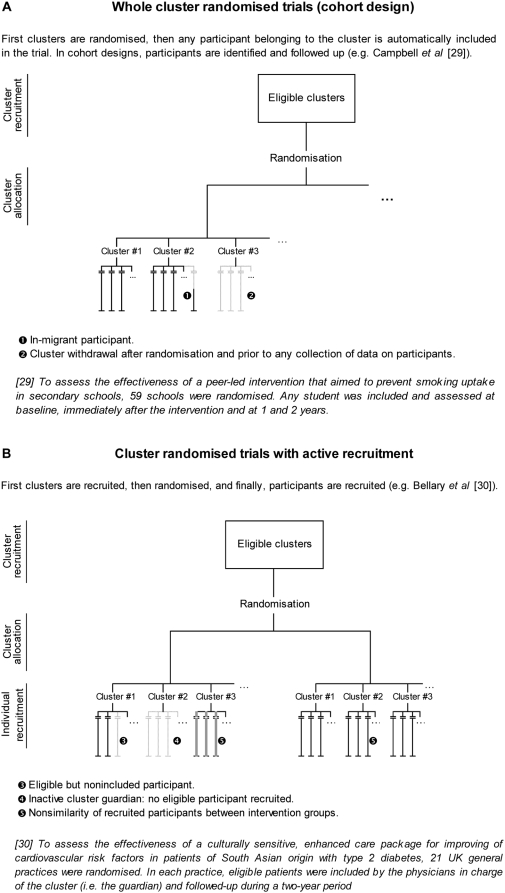
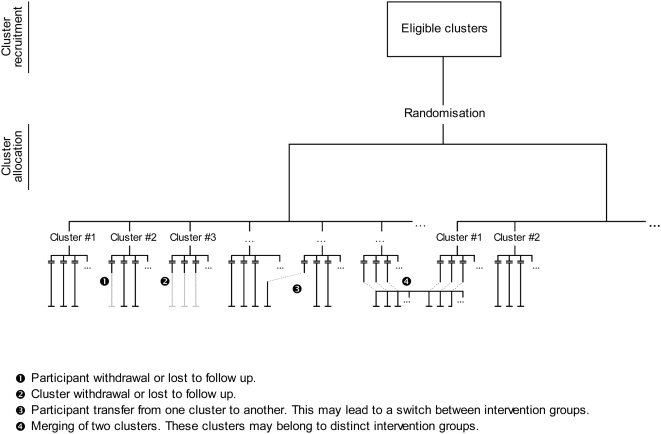
Bruno Giraudeau and Philippe Ravaud discuss the difficulties in preventing selection bias and applying intention-to-treat analysis in cluster randomized trials, and propose some solutions.
Overview
The claims and statistics of this paper haven’t been checked yet.
Run the check — free, no account needed. It reads the open-access text and checks the sources it cites.
Integrity signals
Registry
Cites
Statistics
Figures
Verification
Claims the paper makes
The claims and statistics of this paper haven’t been checked yet.
Run the check — free, no account needed. It reads the open-access text and checks the sources it cites.
Claims other papers make about this one
Each is checked against this paper’s own text: does it say what the citing paper says it does?
The source backs part of the claim, not all of it — or backs it for a different population, condition or comparison.
In the citing paper
“We extracted the number of eligibility criteria at the participant level as more eligibility criteria increases the likelihood of differential inclusion [14].”
From Cluster randomized trials of individual-level interventions were at high risk of bias (2021) · cites this paper as [14]
Experimental — accuracy not yet measuredThe source backs part of the claim, not all of it — or backs it for a different population, condition or comparison.
In the citing paper
“Knowledge of treatment condition at the time of patient recruitment is known to be a risk factor for differential identification and recruitment of participants across treatment arms [1,14,16,37], unless recruitment and identification are conducted by someone blind to the treatment allocation or the inclusion criteria are broad [2,11,14].”
From Cluster randomized trials of individual-level interventions were at high risk of bias (2021) · cites this paper as [14]
Experimental — accuracy not yet measured
Self-check
Percentages, sums and reported differences re-computed from the paper’s own numbers.
The self-check needs the paper’s full text.
Citations
Cites
The central role of the propensity score in observational studies for causal effects
ROSENBAUM, P. R., & RUBIN, D. B. (1983) · Biometrika · doi:10.1093/biomet/70.1.41 · Cited by 31,241
Consort 2010 statement: extension to cluster randomised trials
Campbell, M. K., Piaggio, G., Elbourne, D. R., Altman, D. G., & for the CONSORT Group (2012) · BMJ · doi:10.1136/bmj.e5661 · Cited by 3,510
Reducing Bias in Observational Studies Using Subclassification on the Propensity Score
Rosenbaum, P. R., & Rubin, D. B. (1984) · Journal of the American Statistical Association · doi:10.1080/01621459.1984.10478078 · Cited by 3,082
CONSORT statement: extension to cluster randomised trials
Campbell, M. K., Elbourne, D. R., & Altman, D. G. (2004) · BMJ · doi:10.1136/bmj.328.7441.702 · Cited by 2,557
What is meant by intention to treat analysis? Survey of published randomised controlled trials
Hollis, S., & Campbell, F. (1999) · BMJ · doi:10.1136/bmj.319.7211.670 · Cited by 2,160
Ukoumunne, Gulliford, M. C., Chinn, Sterne, & Burney, P. (1999) · Health Technology Assessment · doi:10.3310/hta3050 · Cited by 1,211
Factors relevant to the validity of experiments in social settings.
Campbell, D. T. (1957) · Psychological Bulletin · doi:10.1037/h0040950 · Cited by 1,138
Design and Analysis of Group-Randomized Trials
Sonnad, S. S. (1999) · Medicine & Science in Sports & Exercise · doi:10.1097/00005768-199902000-00025 · Cited by 1,130
Design and Analysis of Group-Randomized Trials
Murray, D. M. (2007) · doi:10.1093/oso/9780195120363.001.0001 · Cited by 1,117
Statistical Considerations in the Intent-to-Treat Principle
Lachin, J. M. (2000) · Controlled Clinical Trials · doi:10.1016/s0197-2456(00)00046-5 · Cited by 652
Cited by
Sorted by citations
SPIRIT 2013 explanation and elaboration: guidance for protocols of clinical trials
Chan, A.-W., Tetzlaff, J. M., Gotzsche, P. C., Altman, D. G., Mann, H., Berlin, J. A., Dickersin, K., Hrobjartsson, A., Schulz, K. F., Parulekar, W. R., et al. (2013) · BMJ · doi:10.1136/bmj.e7586 · Cited by 6,251
Designing and undertaking randomised implementation trials: guide for researchers
Wolfenden, L., Foy, R., Presseau, J., Grimshaw, J., Ivers, N. M., Powell, B. J., Taljaard, M., Wiggers, J., Sutherland, R., Nathan, N., et al. (2021) · BMJ · doi:10.1136/bmj.m3721 · Cited by 287
Bias in identifying and recruiting participants in cluster randomised trials: what can be done?
Eldridge, S., Kerry, S., & Torgerson, D. J. (2009) · BMJ · doi:10.1136/bmj.b4006 · Cited by 159
van Staa, T. P., Dyson, L., McCann, G., Padmanabhan, S., Belatri, R., Goldacre, B. M., Cassell, J., Pirmohamed, M., Torgerson, D. J., Ronaldson, S. J., et al. (2014) · Health Technology Assessment · doi:10.3310/hta18430 · Cited by 162
Hemming, K., & Taljaard, M. (2020) · International Journal of Epidemiology · doi:10.1093/ije/dyaa077 · Cited by 160
Metadata
- Authors
- Giraudeau, B., & Ravaud, P.
- Affiliations
- Université de Tours (FR)
- Inserm (FR)
- Corresponding author
- Giraudeau, Bruno
- Venue
- PLoS Medicine
- Publisher
- Public Library of Science (PLoS)
- Published
- 2009-05-05
- Volume
- 6
- Issue
- 5
- Pages
- e1000065
- ISSN
- 1549-1277 (ISSN-L)
- 1549-1676
- PMC
- PMC2668175
- OpenAlex
- W2065087661
- Cited by
- 150
- References
- 38
- Citations by year
- 2026: 2 · 2025: 7 · 2024: 10 · 2023: 7 · 2022: 10 · 2021: 13 · 2020: 14 · 2019: 10 · 2018: 8 · 2017: 5 · 2016: 10 · 2015: 10 · 2014: 11 · 2013: 10 · 2012: 9
- FWCI
- 6.38
- Type
- journal article
- Language
- en
- Open access
- gold
- doi.org
- Locations
- PLoS Medicine (publishedVersion, cc-by)
- PubMed Central (publishedVersion, cc-by)
- PubMed (publishedVersion)
- HAL (submittedVersion, other-oa)
- RePEc: Research Papers in Economics (submittedVersion)
- DOAJ (DOAJ: Directory of Open Access Journals) (submittedVersion, cc-by-sa)
- Topics
- Physical Sciences › Mathematics › Statistics and Probability › Statistical Methods in Clinical Trials
- Social Sciences › Decision Sciences › Statistics, Probability and Uncertainty › Meta-analysis and systematic reviews
- Physical Sciences › Mathematics › Statistics and Probability › Advanced Causal Inference Techniques
- Keywords
- bias prevention, trial design, confounding, randomization
- MeSH terms
- Humans, Bias, Randomized Controlled Trials as Topic, Practice Guidelines as Topic
About these checks
Registry, retraction, Cites and statistics results are computed, not judged, with one exception: a printed reference that no index lists is read once by a model before it counts as a citation error. Claims are extracted by a model and kept only when their quote appears verbatim in the text; each cited source is then checked, with a model’s help, for whether it says what the claim relies on. Those verdicts can be wrong — read the claim’s quote and the cited source before relying on one.
Statistics and arithmetic are recomputed, not judged.
Confidence bands are shown only for fields calibrated on our annotated test set. None is calibrated yet, so no band is shown.
What counts as a claim ›How we measure confidence ›How we check this ›
Are you an author, or do you see a problem with this page? Request a review
