

Prognosis Research Strategy (PROGRESS) 3: Prognostic Model Research
Open accessThe DOI matches its Crossref record; 86 of the 88 references it cites were found in a registry or an index.
Abstract
Prognostic models are abundant in the medical literature yet their use in practice seems limited. In this article, the third in the PROGRESS series, the authors review how such models are developed and validated, and then address how prognostic models are assessed for their impact on practice and patient outcomes, illustrating these ideas with examples.
Overview
The claims and statistics of this paper haven’t been checked yet.
Free: it reads the open-access text and checks the first 5 claims that cite a source we can check. Create a free account to check every claim.
Integrity signals
Registry
Cites
Statistics
Figures
Verification
Claims the paper makes
The claims and statistics of this paper haven’t been checked yet.
Free: it reads the open-access text and checks the first 5 claims that cite a source we can check. Create a free account to check every claim.
Claims other papers make about this one
Each is checked against this paper’s own text: does it say what the citing paper says it does?
The source backs part of the claim, not all of it — or backs it for a different population, condition or comparison.
In the citing paper
“In both the diagnostic and prognostic setting, estimates of probabilities are rarely based on a single pre-dictor (5).”
From Transparent Reporting of a multivariable prediction model for Individual Prognosis Or Diagnosis (TRIPOD): The TRIPOD Statement (2015) · cites this paper as [5]
Experimental — accuracy not yet measuredThe cited source says what the claim attributes to it.
In the citing paper
“These phases are based on the predominant phases in clinical prediction model research4,5.”
From Guidelines and quality criteria for artificial intelligence-based prediction models in healthcare: a scoping review (2022) · cites this paper as [4]
The cited source says what the claim attributes to it.
In the citing paper
“It is therefore not surprising, and fortunate, that very few prediction models, relative to the large number of models published, are widely implemented or used in clinical practice [6].”
From Transparent reporting of a multivariable prediction model for individual prognosis or diagnosis (TRIPOD): the TRIPOD Statement (2015) · cites this paper as [6]
The cited source says what the claim attributes to it.
In the citing paper
“It is therefore not surprising, and fortunate, that very few prediction models, relative to the large number of models published, are widely implemented or used in clinical practice.6”
From Transparent Reporting of a Multivariable Prediction Model for Individual Prognosis or Diagnosis (TRIPOD): The TRIPOD Statement (2015) · cites this paper as [6]
The cited source says what the claim attributes to it.
In the citing paper
“However, the overwhelming evidence shows that the quality of reporting of prediction model studies is poor.”
From Transparent Reporting of a Multivariable Prediction Model for Individual Prognosis or Diagnosis (TRIPOD): The TRIPOD Statement (2015) · cites this paper as [6]
2 more claims about this paper
Create a free account to see every claim other papers make about this one.
Self-check
Percentages, sums and reported differences re-computed from the paper’s own numbers.
The self-check needs the paper’s full text.
Citations
Cites
Prediction of coronary heart disease using risk factor categories
Wilson, P. W. F., D’Agostino, R. B., Levy, D., Belanger, A. M., Silbershatz, H., & Kannel, W. B. (1998) · Circulation · doi:10.1161/01.cir.97.18.1837 · Cited by 9,581 · cited 2×
“Clinical Use of Prognostic Models Easily used prognostic models may be more likely to be incorporated into clinical practice—examples include the Nottingham Prognostic Index [6], Framingham Risk Score [64], and CHADS score [65].”
MethodHarrell, F. E. (2001) · Springer Series in Statistics · doi:10.1007/978-1-4757-3462-1 · Cited by 9,195
Sterne, J. A. C., White, I. R., Carlin, J. B., Spratt, M., Royston, P., Kenward, M. G., Wood, A. M., & Carpenter, J. R. (2009) · BMJ · doi:10.1136/bmj.b2393 · Cited by 7,299
Pencina, M. J., D' Agostino, R. B., D' Agostino, R. B., & Vasan, R. S. (2008) · Statistics in Medicine · doi:10.1002/sim.2929 · Cited by 6,493 · cited 2×
“The importance of assessing the impact of new markers on the accuracy of a model is widely agreed, but how best to quantify any changes in prediction is an active topic of methodological research [11–13].”
BackgroundMethodAssessing the Performance of Prediction Models: A Framework for Traditional and Novel Measures
Steyerberg, E. W., Vickers, A. J., Cook, N. R., Gerds, T., Gonen, M., Obuchowski, N., Pencina, M. J., & Kattan, M. W. (2010) · Epidemiology · doi:10.1097/ede.0b013e3181c30fb2 · Cited by 5,170
Self-citationGage, B. F., Waterman, A. D., Shannon, W., Boechler, M., Rich, M. W., & Radford, M. J. (2001) · JAMA · doi:10.1001/jama.285.22.2864 · Cited by 4,832
Clinical Prediction Models: A Practical Approach to Development, Validation, and Updating
Steyerberg, E. W. (2019) · Statistics for Biology and Health · doi:10.1007/978-3-030-16399-0 · Cited by 3,281
Self-citationInternal validation of predictive models
Steyerberg, E. W., Harrell, F. E., Borsboom, G. J. J. M., Eijkemans, M. J. C., Vergouwe, Y., & Habbema, J. D. F. (2001) · Journal of Clinical Epidemiology · doi:10.1016/s0895-4356(01)00341-9 · Cited by 2,746
Self-citationExtensions of net reclassification improvement calculations to measure usefulness of new biomarkers
Pencina, M. J., D'Agostino, R. B., & Steyerberg, E. W. (2011) · Statistics in Medicine · doi:10.1002/sim.4085 · Cited by 2,453
Self-citationMeta-analysis of individual participant data: rationale, conduct, and reporting
Riley, R. D., Lambert, P. C., & Abo-Zaid, G. (2010) · BMJ · doi:10.1136/bmj.c221 · Cited by 1,701 · cited 1×
“The collation and synthesis of individual participant data from multiple studies offers a natural opportunity to increase sample size [68].”
BackgroundSelf-citation
Cited by
Items 801–900 of 1,002
Recent highlights in low back pain research, Part I: Diagnosis and Prognosis
Pinto, R. Z., Kongsted, A., Silva, S., Hayden, J. A., Downie, A., & Saragiotto, B. T. (2025) · Journal of physiotherapy · doi:10.1016/j.jphys.2025.12.002 · Cited by 9
Self-citationForoutan, F., Weiss, J., Mayer, M. G., Bache‐Mathiesen, L. K., Agoritsas, T., Vandvik, P. O., Signorile, M., Ensor, J., Agarwal, A., Guyatt, G. H., et al. (2026) · Journal of Clinical Epidemiology · doi:10.1016/j.jclinepi.2026.112293 · Cited by 8
Self-citationTan, J., Qi, Y., Liu, C., Xiong, Y., He, Q., Zhang, G., Chen, M., He, G., Wang, W., Liu, X., et al. (2019) · Journal of Clinical Epidemiology · doi:10.1016/j.jclinepi.2019.07.009 · Cited by 7
Visvanathan, A., Graham, C., Dennis, M. S., Lawton, J., Doubal, F., Mead, G. E., & Whiteley, W. N. (2021) · International Journal of Stroke · doi:10.1177/1747493020982873 · Cited by 7
“The latter is an assessment of whether predicted probabilities of specific abilities of patients were higher or lower than those actually observed.(16) We plotted calibration curves based on tenths of patients.”
BackgroundIntensive therapy for moderate established rheumatoid arthritis: the TITRATE research programme
Scott, D. L., Ibrahim, F., Hill, H. R., Tom, B. D. M., Prothero, L., Baggott, R. R., Bosworth, A., Galloway, J. B., Georgopoulou, S., Martin, N. H., et al. (2021) · Programme Grants for Applied Research · doi:10.3310/pgfar09080 · Cited by 9
Modrák, M., Bürkner, P., Sieger, T., Slisz, T., Vašáková, M., Mesežnikov, G., Méndez, L. F. C., Vajter, J., Táborský, J., Kubricht, V., et al. (2021) · PLoS ONE · doi:10.1371/journal.pone.0245103 · Cited by 7
“Common problems with prognostic models in medicine are small sample sizes used to develop the models, weak or problematic statistical methods and lack of external validation on independent datasets [39].”
BackgroundFeng, Z., Oberije, C., van de Wetering, A. J. P., Koch, A., Wouters, K. A. D., Vaes, N., Masclee, A., Carvalho, B. G., Meijer, G. A., Zeegers, M. P., et al. (2022) · Clinical and Translational Gastroenterology · doi:10.14309/ctg.0000000000000499 · Cited by 9
“Independent validation is crucial in biomarker research (35) to verify initial findings that are often too optimistic because of multiple testing in a limited data set (36).”
BackgroundLuck, T. G., Locke, K. C., Sherman, B. C., Vibbert, M. D., Hefton, S., & Shah, S. O. (2022) · Neurocritical Care · doi:10.1007/s12028-022-01570-8 · Cited by 7
“External Validation of SLANT As described in the Prognosis Research Strategy, a four-part series detailing a generalizable framework for researching clinical outcomes, there are several criteria that indicate the reliability of a prognostic scoring system: the use of a large, high-quality data set; a study protocol wi…”
BackgroundMethodPommerich, U. M., Stubbs, P. W., Eggertsen, P. P., Fabricius, J., & Nielsen, J. F. (2023) · Journal of Clinical Epidemiology · doi:10.1016/j.jclinepi.2023.02.009 · Cited by 8
Dalgaard, V. L., Willert, M. V., Kyndi, M., Vestergaard, J. M., Andersen, J. H., & Christiansen, D. H. (2023) · International Journal of Epidemiology · doi:10.1093/ije/dyad013 · Cited by 7
Wibæk, R., Andersen, G. S., Dahm, C. C., Witte, D. R., & Hulmán, Á. (2023) · JMIR Medical Informatics · doi:10.2196/43638 · Cited by 7
“The development of prediction models, regardless of the use of ML or classical methods, is not a trivial task (handling of missing data, variable selection, reporting, etc) [25-28].”
MethodOpportunities and Challenges of Prognostic Models for Extremely Preterm Infants
de Boer, A., van Beek, P. E., Andriessen, P., Groenendaal, F., Hogeveen, M., Meijer, J. S., Obermann-Borst, S. A., Onland, W., Scheepers, L. H. C. J., Vermeulen, M. J., et al. (2023) · Children · doi:10.3390/children10101712 · Cited by 12
Marzano, L. A. (2024) · Langenbeck s Archives of Surgery · doi:10.1007/s00423-024-03486-7 · Cited by 7
Zhong, J., Si, L., Zhang, G., Huo, J., Xing, Y., Hu, Y., Zhang, H., & Yao, W. (2021) · Systematic Reviews · doi:10.1186/s13643-021-01683-9 · Cited by 11
Adulkasem, N., Phinyo, P., Khorana, J., Pruksakorn, D., & Apivatthakakul, T. (2021) · International Journal of Environmental Research and Public Health · doi:10.3390/ijerph19010177 · Cited by 7
“One solution is to create clinical prediction rules (CPR) using statistical modeling, which would utilize the information from several predictors for estimating the probability, or the likelihood, of postoperative outcomes specifically for each patient [4].”
BackgroundMethodFarooq, S., Hattle, M., Dazzan, P., Kingstone, T., Ajnakina, O., Shiers, D., Nettis, M. A., Lawrence, A. J., Riley, R. D., & van der Windt, D. (2022) · BMJ Open · doi:10.1136/bmjopen-2021-056420 · Cited by 9
Self-citationComputational Analysis of High-Dimensional DNA Methylation Data for Cancer Prognosis
Hu, R., Zhou, X. J., & Li, W. (2022) · Journal of Computational Biology · doi:10.1089/cmb.2022.0002 · Cited by 6
“Although it is more accurate to provide a risk score for each patient, stratifying patients into risk groups or prognostic subtypes may inform treatment choices (Steyerberg et al., 2013).”
BackgroundInfluentialVeerbeek, J. M., Ottiger, B., Cazzoli, D., Vanbellingen, T., & Nyffeler, T. (2022) · Frontiers in Neurology · doi:10.3389/fneur.2022.999595 · Cited by 9
Hryciw, B. N., Hryciw, N., Tran, A., Fernando, S. M., Rochwerg, B. N., Burns, K. E. A., & SEELY, A. J. E. (2023) · Critical Care Medicine · doi:10.1097/ccm.0000000000005865 · Cited by 7
predictNMB: An R package to estimate if or when a clinical prediction model is worthwhile
Parsons, R., Blythe, R. D., Barnett, A. G., Cramb, S. M., & McPhail, S. (2023) · The Journal of Open Source Software · doi:10.21105/joss.05328 · Cited by 8
Harrisson, S. A., Ogollah, R. O., Dunn, K. M., Foster, N. E., & Konstantinou, K. (2023) · Journal of Pain · doi:10.1016/j.jpain.2023.09.016 · Cited by 11
Saeed, H., Black, G. C. M., Stivaros, S. M., Saeed, S. R., Nash, R., Cayé‐Thomasen, P., West, N., Mey, K., Fergie, M., & Bruce, I. A. (2023) · The Journal of International Advanced Otology · doi:10.5152/iao.2023.231044 · Cited by 11
Wärnberg, M. G., Roy, N., Felländer‐Tsai, L., Tomson, G. B., von Schreeb, J., Petzold, M., Gupta, A., Jhakal, A., Basak, D., Ismail, D. M., et al. (2016) · Journal of Clinical Epidemiology · doi:10.1016/j.jclinepi.2016.01.004 · Cited by 9
Klaveren, D. V., Götz, H. M., de Coul, E. L. O., Steyerberg, E. W., & Vergouwe, Y. (2016) · Sexually Transmitted Infections · doi:10.1136/sextrans-2015-052048 · Cited by 12
Self-citationMeid, A. D., Groll, A., Schieborr, U., Walker, J., & Haefeli, W. E. (2016) · European Journal of Clinical Pharmacology · doi:10.1007/s00228-016-2184-0 · Cited by 8
“A risk prediction model or prognostic model is formally a combination of multiple predictors from which benefits or risks of a specific endpoint can be derived to estimate the net risk of individual patients [18].”
Song, B., Chen, X., Tang, D., Ibrahim, M., Liu, Y., Nyame, L., Jiang, T., Wang, W., Li, X., Sun, C., et al. (2019) · Journal of Stroke and Cerebrovascular Diseases · doi:10.1016/j.jstrokecerebrovasdis.2019.02.032 · Cited by 7
Stroke prediction and the future of prognosis research
Quinn, T. J., & Drozdowska, B. A. (2019) · Nature Reviews Neurology · doi:10.1038/s41582-019-0181-5 · Cited by 7
Ruiz-Ruiz, F. J., Orenga, M. M., Medrano, F. J., Calderón, E. J., Lora, D., Navarro-Puerto, M. A., Rodríguez-Torres, P., & de la Cámara, A. G. (2019) · Clinical Epidemiology · doi:10.2147/clep.s206017 · Cited by 7
“Slope>1 occurs when predicted probabilities do not vary enough (eg, predicted risks are systematically too low) and 0<slope<1 occurs when they vary too much (predicted risks are too low for low outcome risks and too high for high outcome risks).(19,23,24) The slope in the mathematical model is 0.”
BackgroundPrognosis and classification of cancer
O’Sullivan, B., Brierley, J. D., & Gospodarowicz, M. K. (2015) · doi:10.1002/9781119013143.ch3 · Cited by 7
van Hoeven, L., Vergouwe, Y., Koes, B. W., Hazes, J. M. W., & Weel, A. E. A. M. (2016) · BMC Musculoskeletal Disorders · doi:10.1186/s12891-016-1132-6 · Cited by 7
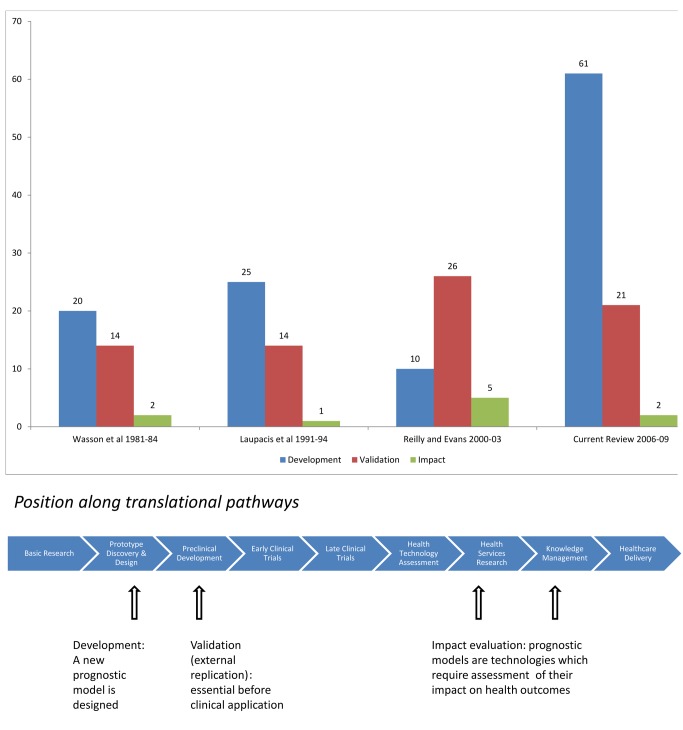
“In a recent review there were 61 development studies and only 2 (3 %) of them also had an impact evaluation [27], an essential step to asses clinical effectiveness and costs.”
BackgroundKent, D. M., Paulus, J. K., Sharp, R. R., & Hajizadeh, N. (2020) · Diagnostic and Prognostic Research · doi:10.1186/s41512-020-00079-y · Cited by 8
A Data-Driven Biopsychosocial Framework Determining the Spreading of Chronic PainPreprint
Tanguay-Sabourin, C., Fillingim, M., Parisien, M., Guglietti, G. V., Zare, A., Norman, J., Da‐ano, R., Pérez, J., Thompson, S. J., Martel, M. O., et al. (2022) · medRxiv · doi:10.1101/2022.07.22.22277850 · Cited by 7
Ajuwon, B. I., Richardson, A., Roper, K., & Lidbury, B. A. (2023) · Viruses · doi:10.3390/v15081735 · Cited by 6
Kirby, C., Barrington, J., Sondag, L., Loan, J. J., Schreuder, F. H. B. M., McColl, B. W., Klijn, C. J. M., Salman, R. A., & Samarasekera, N. (2023) · Wellcome Open Research · doi:10.12688/wellcomeopenres.19187.1 · Cited by 6
Nayak, S. P., Sánchez-Rosado, M., Reis, J. D., Brown, L. S., Mangona, K. L., Sharma, P., Nelson, D. B., Wyckoff, M. H., Pandya, S. R., Mir, I. N., et al. (2024) · American Journal of Perinatology · doi:10.1055/a-2253-8656 · Cited by 9
“Parkland Health also approved the study.”
Moriarty, A. S., Castleton, J., McMillan, D., Riley, R. D., Snell, K. I. E., Archer, L., Paton, L. W., Gilbody, S. M., & Chew-Graham, C. A. (2024) · Health Expectations · doi:10.1111/hex.70059 · Cited by 7
Self-citationEvaluation of changes in prediction modelling in biomedicine using systematic reviews
Lusa, L., Kappenberg, F., Collins, G. S., Schmid, M., Sauerbrei, W., Rahnenführer, J., & on behalf of the Topic Group for High-dimensional data of the STRATOS initiative (2025) · BMC Medical Research Methodology · doi:10.1186/s12874-025-02605-2 · Cited by 9
“We focus on prognostic models that have been developed for the prediction of a future health outcome event based on a model that uses multiple predictors [26].”
Zhang, L., Tian, J., Liu, X., Wang, L., & Yang, L. (2025) · Geriatric Nursing · doi:10.1016/j.gerinurse.2025.103530 · Cited by 7
Design aspects for prognostic factor studies
Sekula, P., Steinbrenner, I., Schultheiß, U. T., Valveny, N., Rebora, P., Halabi, S., Cadarette, S. M., Riley, R. D., Collins, G. S., Sauerbrei, W., et al. (2025) · BMJ Open · doi:10.1136/bmjopen-2024-095065 · Cited by 7
Self-citationXie, X.-R., Yu, M., Xu, R. H., Liu, Y., & Zhang, J. (2025) · Risk Management and Healthcare Policy · doi:10.2147/rmhp.s542262 · Cited by 8
Complications and adverse events following traumatic spinal cord injury
Salaheen, Z., Hejrati, N., Wong, I. H. Y., Jiang, F., & Fehlings, M. G. (2022) · Elsevier eBooks · doi:10.1016/b978-0-12-819835-3.00002-2 · Cited by 7
Naufal, E. R., Wouthuyzen‐Bakker, M., Babazadeh, S., Stevens, J. M., Choong, P., & Dowsey, M. M. (2022) · Frontiers in Rehabilitation Sciences · doi:10.3389/fresc.2022.824281 · Cited by 7
The potential role of machine learning in modelling advanced chronic liver disease
D’Amico, G., Colli, A., Malizia, G., & Casazza, G. (2022) · Digestive and Liver Disease · doi:10.1016/j.dld.2022.12.002 · Cited by 10
Brunckhorst, O., Liszka, J., James, C., Fanshawe, J. B., Hammadeh, M. Y., Thomas, R., Khan, S., Sheriff, M., Ahmed, H. U., Hemelrijck, M. V., et al. (2023) · PLoS ONE · doi:10.1371/journal.pone.0284727 · Cited by 8
“Additionally, these findings will be of use when considering future prognostic model research within the field, helping to identify candidate predictor variables and limit the number of variables which are evaluated within an individual model [20].”
Should we use composite outcomes in obstetric clinical prediction models?
Giles-Clark, H. J., Skinner, S., Rolnik, D. L., & Mol, B. W. (2023) · European Journal of Obstetrics & Gynecology and Reproductive Biology · doi:10.1016/j.ejogrb.2023.04.031 · Cited by 5
Multivariable Prediction Models for Traumatic Spinal Cord Injury: A Systematic Review
Hakimjavadi, R., Basiratzadeh, S., Wai, E. K., Baddour, N., Kingwell, S. P., Michalowski, W., Stratton, A. C., Tsai, E. C., Viktor, H. L., & Phan, P. (2023) · Topics in Spinal Cord Injury Rehabilitation · doi:10.46292/sci23-00010 · Cited by 7
Grotenhuis, Z., Mosteiro, P. J., & Leeuwenberg, A. (2024) · Computers in Biology and Medicine · doi:10.1016/j.compbiomed.2024.108014 · Cited by 8
Prognostic factors associated with failure of total elbow arthroplasty: a systematic review
Hamoodi, Z., Gehringer, C. K., Bull, L. M., Hughes, T., Kearsley‐Fleet, L., Sergeant, J. C., & Watts, A. C. (2024) · Bone and Joint Research · doi:10.1302/2046-3758.135.bjr-2023-0281.r1 · Cited by 7
“11 Several studies have been published by PROGRESS in high-impact journals to guide researchers in undertaking high-quality research into prognostic factors.”
BackgroundMethodExternal validation of a paediatric Smart triage model for use in resource limited facilities
Kigo, J., Kamau, S., Mawji, A., Mwaniki, P., Dunsmuir, D. T., Pillay, Y., Zhang, C., Pallot, K., Ogero, M. O., Kimutai, D. K., et al. (2024) · PLOS Digital Health · doi:10.1371/journal.pdig.0000293 · Cited by 7
Hillier, B., Scandrett, K., Coombe, A., Hernandez‐Boussard, T., Steyerberg, E. W., Takwoingi, Y., Veličković, V. M., & Dinnes, J. (2025) · Diagnostic and Prognostic Research · doi:10.1186/s41512-024-00182-4 · Cited by 10
“The PROGRESS framework suggests that multiple external validation studies should be conducted using independent datasets from different locations [15].”
InfluentialSelf-citationComparison of Predictive Models for Keloid Recurrence Based on Machine Learning
Hao, Y., Shan, M., Liu, H., Xia, Y., Kuang, X., Song, K., & Wang, Y. (2025) · Journal of Cosmetic Dermatology · doi:10.1111/jocd.70008 · Cited by 9
Ensor, J., Riley, R. D., Moore, D., Bayliss, S. E., Jowett, S. M., & Fitzmaurice, D. A. (2013) · Systematic Reviews · doi:10.1186/2046-4053-2-91 · Cited by 7
“If multiple studies are found that validate the same prognostic model, then calibration statistics (such as expected/observed events) and discriminatory statistics (such as the C statistic or area under the curve) will be synthesised using the random-effects meta-analysis of DerSimonian and Laird [10,11], to summarise…”
BackgroundMethodSelf-citationPre-procedural risk models for patients undergoing transcatheter aortic valve implantation
Martin, G. P., Sperrin, M., & Mamas, M. A. (2018) · Journal of Thoracic Disease · doi:10.21037/jtd.2018.05.67 · Cited by 6
“their predictive performance in populations distinct to those where they were developed (26-28).”
BackgroundÖn, B. I., Reeve, K. A., Havla, J. B., Burns, J., Gosteli, M., Lutterotti, A., Schippling, S., Mansmann, U., & Held, U. (2020) · Cochrane Database of Systematic Reviews · doi:10.1002/14651858.cd013606 · Cited by 6
“Steyerberg 2013 Steyerberg EW, Moons KG, van der Windt DA, Hayden JA, Perel P, Schroter S, et al. Prognosis research strategy (PROGRESS) 3: prognostic model research.”
BackgroundBarreto, P. G. D. S., Rezende, R. B., Santos, A. L., Silva, F. D. O., Bezerra, V. R., Freire, E. C., & do Brasil, P. E. A. A. (2022) · British Journal of Clinical Pharmacology · doi:10.1111/bcp.15312 · Cited by 6
“These models ordinarily use a combination of clinical characteristics as predictors, such as age, sex and biomarkers.(13) Within the scope of clinical pharmacy, they are often used to identify patients at risk of adverse drug reactions, adverse drug events and medication errors.”
MethodExternal validation of inpatient neonatal mortality prediction models in high-mortality settings
Tuti, T., Collins, G. S., English, M., Mbevi, G., Wainaina, J., Mumelo, L., Gicheha, E. W., Muinga, N., Ogola, M., Oyiengo, L., et al. (2022) · BMC Medicine · doi:10.1186/s12916-022-02439-5 · Cited by 8
“Well-performing prediction models can support better clinical decision-making and case-mix adjustment and subsequently help improve service delivery at the health system level [7].”
BackgroundFernando, S. M., Pugliese, M., McIsaac, D. I., Qureshi, D., Talarico, R., Sood, M. M., Myran, D. T., Herridge, M. S., Needham, D. M., Munshi, L., et al. (2022) · CHEST Journal · doi:10.1016/j.chest.2022.10.021 · Cited by 6
Verwoerd, M. J., Wittink, H. M., Maissan, F., van Kuijk, S. M. J., & Smeets, R. (2023) · PLoS ONE · doi:10.1371/journal.pone.0280278 · Cited by 7
Sweerts, L., Dekkers, P. W., van der Wees, P. J., van Susante, J. L. C., de Jong, L. D., Hoogeboom, T. J., & van de Groes, S. A. W. (2023) · Journal of Personalized Medicine · doi:10.3390/jpm13020277 · Cited by 6
“External validation is important because differences in, for example, population characteristics and setting may affect the applicability of the prediction models in another hospital population [17].”
BackgroundChen, J. W., Heidsma, C. M., Engelsman, A. F., Kabaktepe, E., van Dieren, S., Falconi, M., Besselink, M. G., & van Dijkum, E. J. M. N. (2023) · Cancers · doi:10.3390/cancers15051525 · Cited by 8
“samples of the same size are drawn with replacement) [24,29].”
BackgroundRushton, A., Jadhakhan, F., Verra, M. L., Emms, A., Heneghan, N. R., Falla, D., Reddington, M., Cole, A., Willems, P. C. P. H., Benneker, L. M., et al. (2023) · European Spine Journal · doi:10.1007/s00586-023-07754-w · Cited by 9
Ratzki‐Leewing, A. A., Black, J. E., Ryan, B. L., Zou, G., Klar, N. S., Webster-Bogaert, S., Timcevska, K., & Harris, S. B. (2023) · Diabetes Obesity and Metabolism · doi:10.1111/dom.15186 · Cited by 7
“The present study complies with the Transparent Reporting of a Multivariable Prediction Model for Individual Prognosis or Diagnosis (TRIPOD) statement(31) and recommendations by the Prognosis Research Strategy Group.(32) It has been written according to the Strengthening the Reporting of Observational Studies in Epide…”
MethodMuthaiyah, S., Singh, V. A., Zaw, T. O. K., Anbananthen, K. S. M., Park, B., & Kim, M. (2023) · Emerging Science Journal · doi:10.28991/esj-2023-07-04-018 · Cited by 7
“As such, prognosis is an important stage in the healthcare process, and research should be further performed in this area to understand and improve future outcomes for patients afflicted with a certain health condition [18].”
BackgroundThe “Surprise Question” for Prognostication in People With Parkinson's Disease and Related Disorders
Mahes, A., Macchi, Z. A., Martin, C. S., Katz, M., Galifianakis, N. B., Pantilat, S. Z., Kutner, J. S., Sillau, S., & Kluger, B. M. (2023) · Journal of Pain and Symptom Management · doi:10.1016/j.jpainsymman.2023.10.004 · Cited by 6
Nadarajah, R., Wu, J., Arbel, R., Haim, M., Zahger, D., Razi, T., Rokach, L., Cowan, J. C., & Gale, C. P. (2023) · BMJ Open · doi:10.1136/bmjopen-2023-075196 · Cited by 6
“41 The prediction model will be saved, including the RF structure, predictor variables and outcome variable into a standalone file.”
MethodZaccardi, F., Webb, D. R., Davies, M. J., Dhalwani, N. N., Gray, L. J., Chatterjee, S., Housley, G., Shaw, D. E., Hatton, J. W., & Khunti, K. (2017) · Diabetologia · doi:10.1007/s00125-017-4235-1 · Cited by 8
“In recent years, several risk prediction models have been proposed for patients admitted to hospital; these models can assist clinicians to define the prognosis and tailor medical decisions [5].”
BackgroundDevelopment and performance of a diagnostic/prognostic scoring system for breakthrough pain
Dekel, B. G. S., Palma, M., Sorella, M. C., Gori, A., Vasarri, A., & Melotti, R. M. (2017) · Journal of Pain Research · doi:10.2147/jpr.s126132 · Cited by 7
Persistent Pain After Wrist or Hand Fracture: Development and Validation of a Prognostic Model
Cashin, A. G., Traeger, A. C., Hübscher, M., Moseley, G. L., Pietro, F. D., Parkitny, L., & McAuley, J. H. (2018) · Journal of Orthopaedic and Sports Physical Therapy · doi:10.2519/jospt.2019.8342 · Cited by 7
Daines, L., McLean, S., Buelo, A., Lewis, S. C., Sheikh, A., & Pinnock, H. (2018) · npj Primary Care Respiratory Medicine · doi:10.1038/s41533-018-0086-6 · Cited by 8
Dretzke, J., Chuchu, N., Chua, W., Fabritz, L., Bayliss, S. E., Kotecha, D., Deeks, J. J., Kirchhof, P. F., & Takwoingi, Y. (2019) · Systematic Reviews · doi:10.1186/s13643-019-1128-z · Cited by 6
Wang, C., Stokes, T., Vargas, J. T., Steele, R. J., Wedderkopp, N., & Shrier, I. (2021) · American Journal of Epidemiology · doi:10.1093/aje/kwab280 · Cited by 9
Zhu, Q., Liang, Y., Fan, Z., Liu, Y., Zhou, C., Zhang, H., He, L., Li, T., Yang, J., Zhou, Y., et al. (2022) · Neurosurgical FOCUS · doi:10.3171/2022.1.focus21596 · Cited by 6
How to conduct a high-quality original study on a prognostic research topic
Yao, X., Vella, E. T., & Brouwers, M. C. (2018) · Surgical Oncology · doi:10.1016/j.suronc.2018.09.006 · Cited by 6
Prognostic Impact of the Combination of MGMT Methylation and TERT Promoter Mutation in Glioblastoma
Tunthanathip, T., Sangkhathat, S., Tanvejsilp, P., & Kanjanapradit, K. (2021) · Journal of Neurosciences in Rural Practice · doi:10.1055/s-0041-1735821 · Cited by 6
Scrutinio, D., Guida, P., Ammirati, E., Oliva, F. G., & Passantino, A. (2020) · Journal of Clinical Epidemiology · doi:10.1016/j.jclinepi.2020.05.020 · Cited by 6
Nugawela, M. D., Stephenson, T. J., Shafran, R., Stavola, B. L. D., Ladhani, S. N., Simmons, R., McOwat, K., Rojas, N. K., Cheung, E. Y., Ford, T. J., et al. (2022) · medRxiv · doi:10.1101/2022.04.01.22273117 · Cited by 11
Are frailty measurements derived using electronic health records fit for clinical use?
Best, K., Todd, O. M., & Clegg, A. P. (2024) · Age and Ageing · doi:10.1093/ageing/afae001 · Cited by 6
Predicting the outcome in poisoned patients: look at the past!
Zwaag, S. M., Hunault, C. C., & de Lange, D. W. (2024) · Clinical Toxicology · doi:10.1080/15563650.2024.2334820 · Cited by 6
“To test this, we needed external calibration or external validity testing [23].”
MethodTran, A., Lamb, T., Fernando, S. M., Charette, M. L., Nemnom, M., Matar, M. M., Lampron, J., & Vaillancourt, C. (2025) · Scandinavian Journal of Trauma Resuscitation and Emergency Medicine · doi:10.1186/s13049-025-01336-z · Cited by 5
“…an exhaustive evaluation of clinically important variables based on previous systematic review [6] and survey studies [8, 21], as well as adherence to best practice guidelines for derivation and validation of prediction models [14–17 , 20 ] in order to maximize performance at external validation.”
Basmadjian, R. B., Xu, Y., Quan, M. L., Lupichuk, S., Cheung, W. Y., & Brenner, D. R. (2025) · Breast Cancer Research and Treatment · doi:10.1007/s10549-025-07654-1 · Cited by 5
“Subject knowledge is viewed as a useful technique to restrict the number of candidate predictors and increase the robustness and validity of prediction models, particularly in smaller samples [25–27].”
Application of artificial intelligence in medical risk prediction: Bibliometric analysis
Yang, Z., Xu, Y., Wang, J., Li, W., Zhang, X., & Pan, H. (2025) · Digital Health · doi:10.1177/20552076251380652 · Cited by 6
Zhang, H., Jiang, L., Zheng, J., & Li, C. (2025) · Medicine · doi:10.1097/md.0000000000045230 · Cited by 6
“[4] These models play a pivotal role in guiding clinical decisions, evaluating care effectiveness, and enhancing patient outcomes.”
Yusufujiang, M., Navarro, C. L. A., Damen, J. A., Takada, T., Geersing, G., Hooft, L., Schuit, E., Moons, K. G. M., de Jong, V. M. T., & van Smeden, M. (2026) · Diagnostic and Prognostic Research · doi:10.1186/s41512-025-00216-5 · Cited by 5
“Healthcare professionals regularly combine multiple pieces of information to estimate an individual’s probability or risk of having an outcome (diagnosis) or developing an outcome in the future (prognosis) [1–3].”
Self-citationEvidence-Based Utilization of Prognostic Prediction Models in Cardiovascular Medicine
Iwakami, N., Nagai, T., Furukawa, T. A., Nishimura, K., & Anzai, T. (2019) · Circulation Reports · doi:10.1253/circrep.cr-19-0111 · Cited by 6
Estimating individualized treatment effects using an individual participant data meta-analysis
Bouvier, F. B., Chaimani, A., Peyrot, E., Gueyffier, F., Grenet, G., & Porcher, R. (2024) · BMC Medical Research Methodology · doi:10.1186/s12874-024-02202-9 · Cited by 8
“• Rank-1 model (R1): A final approach considers that the linear predictors share a common direction in the covariate space but that the size of their effects might be systematically different [15].”
BackgroundThe adverse inpatient medication event and frailty (AIME-frail) risk prediction model
Falconer, N., Scott, I. A., Abdel‐Hafez, A., Cottrell, N., Long, D., Morris, C., Snoswell, C. L., Aziz, E., Lam, J. Y. J., & Barras, M. A. (2024) · Research in Social and Administrative Pharmacy · doi:10.1016/j.sapharm.2024.05.003 · Cited by 6
Zhou, L., Wang, L., Liu, G., & Cai, E. (2024) · Systematic Reviews · doi:10.1186/s13643-024-02544-x · Cited by 6
“…stroke type (ischemic or hemorrhagic) is not reported, blinding is rarely reported, preset cutoff values are not reported, multiple predictive models are rarely compared in the same population, and the appraisal of models across different languages, races/ethnicities, and cultures is lacking [15].”
BackgroundGoh, V., Mallett, S., Boulter, V., Glynne-Jones, R., Khan, S., Lessels, S., Patel, D., Prezzi, D., Rodriguez-Justo, M., Taylor, S., et al. (2024) · European Radiology · doi:10.1007/s00330-024-10803-7 · Cited by 4
“The bene fi t, if any, of promising biomarkers is then determined by whether their addition to the standard model improves prediction signi fi cantly, instead of continually re-fi tting the entire model (which results in over-optimistic prediction) [18].”
White, N. M., Parsons, R., Borg, D. N., Collins, G. S., & Barnett, A. G. (2024) · Journal of Clinical Epidemiology · doi:10.1016/j.jclinepi.2024.111433 · Cited by 6
Nugawela, M. D., Stephenson, T. J., Shafran, R., Chalder, T., Dalrymple, E., Ford, T. J., Fox‐Smith, L., Harnden, A., Heyman, I., Ladhani, S. N., et al. (2024) · BMC Medicine · doi:10.1186/s12916-024-03708-1 · Cited by 9
Tian, C. H., Liu, L., Huang, Y. F., Yang, H. J., Lai, Y. Y., Li, C. L., Gan, D., & Yang, J. (2025) · Human Reproduction · doi:10.1093/humrep/deaf013 · Cited by 7
Haghnejad, V., Burke, L., Ouahabi, S. E., Parker, R., & Rowe, I. A. C. (2025) · Hepatology · doi:10.1097/hep.0000000000001359 · Cited by 9
Machine-Learning Applications in Eating-Disorder-Outcome Prediction: A Systematic Scoping Review
McClure, Z., Fuller‐Tyszkiewicz, M., Messer, M., & Linardon, J. (2025) · Clinical Psychological Science · doi:10.1177/21677026251340348 · Cited by 6
“To achieve this, external validation should be followed by clinical-impact studies that evaluate the real-world effectiveness of ML-based tools for improving patient outcomes and optimizing management of care (Steyerberg et al., 2013).”
InfluentialNguyen, T., Boudemaghe, T., Leguelinel, G., Eiden, C., Kinowski, J., Manach, Y. L., Peyrière, H., & Landais, P. (2017) · Scientific Reports · doi:10.1038/srep44428 · Cited by 8
Regression to the Mean in Measurements of Growth Rates in Geographic Atrophy
Biarnés, M., & Monés, J. (2020) · Ophthalmic Research · doi:10.1159/000505755 · Cited by 5
Naruse, H., Ishii, J., Takahashi, H., Kitagawa, F., Sakaguchi, E., Nishimura, H., Kawai, H., Muramatsu, T., Harada, M., Yamada, A., et al. (2021) · Journal of Clinical Medicine · doi:10.3390/jcm10163564 · Cited by 6
Chan, B. H. T., Snowdon, D. A., & Williams, C. (2022) · Injury · doi:10.1016/j.injury.2022.02.016 · Cited by 7
Jensen, J. H., Sørensen, L., Mosegaard, S. B., & Mechlenburg, I. (2022) · Physiotherapy Theory and Practice · doi:10.1080/09593985.2022.2037795 · Cited by 7
“The study design was informed by the PROGnosis RESearch Strategy (PROGRESS) framework for prognostic model research (Steyerberg et al., 2013), and the recommendations for Transparent Reporting of a multivariable prediction model for Individual Prognosis Or Diagnosis (TRIPOD) were followed (Moons et…”
BackgroundMethodSalet, N., Stangenberger, V. A., Eijkenaar, F., Schut, E., Schut, M. C., Bremmer, R. H., & Abu–Hanna, A. (2022) · Scientific Reports · doi:10.1038/s41598-022-09972-6 · Cited by 5
Ortiz‐Bautista, C., Muñiz, J., Bonet, L. A., Crespo‐Leiro, M. G., Sobrino‐Márquez, J. M., Farrero, M., Carmena, M. D. G., Molina, B. D., Zegrí‐Reiriz, I., González-Vílchez, F., et al. (2022) · Clinical Transplantation · doi:10.1111/ctr.14774 · Cited by 5
Metadata
- Authors
- Steyerberg, E. W., Moons, K. G. M., van der Windt, D. A., Hayden, J. A., Perel, P., Schroter, S., Riley, R. D., Hemingway, H., Altman, D. G., & for the PROGRESS Group
- Affiliations
- Erasmus MC (NL)
- University Medical Center Utrecht (NL)
- Dalhousie University (CA)
- London School of Hygiene & Tropical Medicine (GB)
- BMJ Group (United Kingdom) (GB)
- University of Birmingham (GB)
- University College London (GB)
- University of Oxford (GB)
- Corresponding author
- Altman, Douglas G.
- ORCID
- Venue
- PLoS Medicine
- Publisher
- Public Library of Science (PLoS)
- Published
- 2013-02-05
- Volume
- 10
- Issue
- 2
- Pages
- e1001381
- ISSN
- 1549-1277 (ISSN-L)
- 1549-1676
- PMC
- PMC3564751
- OpenAlex
- W2136085913
- Cited by
- 1,508
- References
- 88
- Citations by year
- 2026: 134 · 2025: 122 · 2024: 158 · 2023: 138 · 2022: 166 · 2021: 177 · 2020: 134 · 2019: 85 · 2018: 96 · 2017: 85 · 2016: 67 · 2015: 71 · 2014: 55 · 2013: 18
- FWCI
- 13.73
- Type
- journal article
- Language
- en
- Open access
- gold
- doi.org
- Locations
- PLoS Medicine (publishedVersion, cc-by)
- Europe PMC (PubMed Central) (publishedVersion, cc-by)
- PubMed Central (publishedVersion, cc-by)
- PubMed (publishedVersion)
- LSHTM Research Online (London School of Hygiene and Tropical Medicine) (acceptedVersion)
- Keele Research Repository (Keele University) (submittedVersion, cc-by)
- EUR Research Repository (Erasmus University Rotterdam) (submittedVersion)
- EUR Research Repository (Erasmus University Rotterdam) (submittedVersion, other-oa)
- RePub (Erasmus University Rotterdam) (submittedVersion, other-oa)
- RePEc: Research Papers in Economics (submittedVersion)
- DOAJ (DOAJ: Directory of Open Access Journals) (submittedVersion)
- UCL Discovery (University College London) (submittedVersion)
- Figshare (submittedVersion, cc-by)
- University of Birmingham Research Portal (University of Birmingham) (submittedVersion, other-oa)
- Funders
- Queen Mary University of London
- National Institute for Social Care and Health Research
- London School of Hygiene and Tropical Medicine
- Wellcome Trust (086091, 086091/Z/08/Z)
- Nova Scotia Health Research Foundation
- Cancer Research UK (C5529)
- National Institute for Health and Care Research (NF-SI-0509-10183, RP-PG-0407-10314, RP-PG-0407-10386)
- British Heart Foundation
- University College London
- University of Oxford
- University of Birmingham
- Dalhousie University
- Nederlandse Organisatie voor Wetenschappelijk Onderzoek (918.10.615)
- Keele University
- Versus Arthritis
- National Institutes of Health
- Canadian Institutes of Health Research
- Medical Research Council (G0800808, MR/K006584/1, G0902393)
- Engineering and Physical Sciences Research Council
- Economic and Social Research Council
- National Institute of Neurological Disorders and Stroke (R01NS042691)
- Topics
- Physical Sciences › Mathematics › Statistics and Probability › Statistical Methods in Epidemiology
- Social Sciences › Decision Sciences › Statistics, Probability and Uncertainty › Meta-analysis and systematic reviews
- Health Sciences › Medicine › Public Health, Environmental and Occupational Health › Palliative Care and End-of-Life Issues
- Keywords
- prognostic model, model development, model validation, patient outcomes
- MeSH terms
- Decision Support Techniques, Health Services Research, Humans, Models, Theoretical, Predictive Value of Tests, Prognosis, Research Design, Risk Factors, Reproducibility of Results, Biomarkers, Randomized Controlled Trials as Topic, Treatment Outcome, Disease Progression, Risk Assessment, Biomedical Research
About these checks
Registry, retraction, Cites and statistics results are computed, not judged, with one exception: a printed reference that no index lists is read once by a model before it counts as a citation error. Claims are extracted by a model and kept only when their quote appears verbatim in the text; each cited source is then checked, with a model’s help, for whether it says what the claim relies on. Those verdicts can be wrong — read the claim’s quote and the cited source before relying on one.
Statistics and arithmetic are recomputed, not judged.
Confidence bands are shown only for fields calibrated on our annotated test set. None is calibrated yet, so no band is shown.
What counts as a claim ›How we measure confidence ›How we check this ›
Are you an author, or do you see a problem with this page? Request a review
Data sources
Bibliographic data: Semantic Scholar, OpenAlex, Crossref.
Contains information from the Semantic Scholar Academic Graph Datasets, made available under the ODC Attribution License (ODC-BY 1.0).
Semantic Scholar’s data is described in: Kinney, R., et al. (2023). The Semantic Scholar Open Data Platform. arXiv:2301.10140.
