

The DOI matches its Crossref record; 37 of the 39 references it cites were found in a registry or an index.
Development and validation of machine learning models to identify high-risk surgical patients using automatically curated electronic health record data (Pythia): A retrospective, single-site study
Open accessAbstract
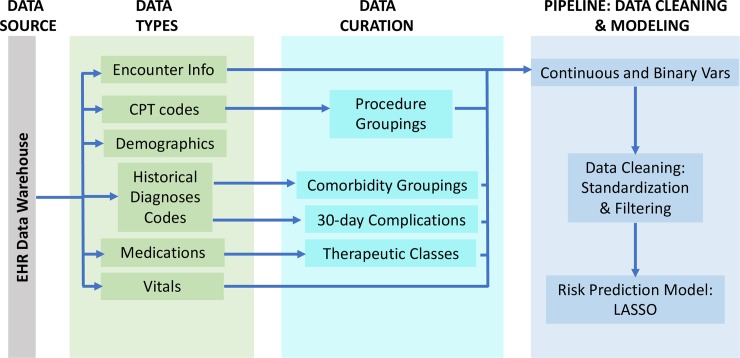
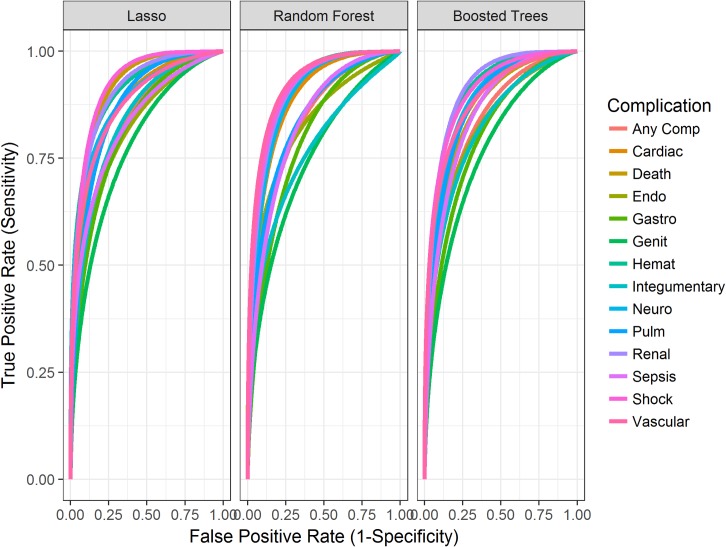
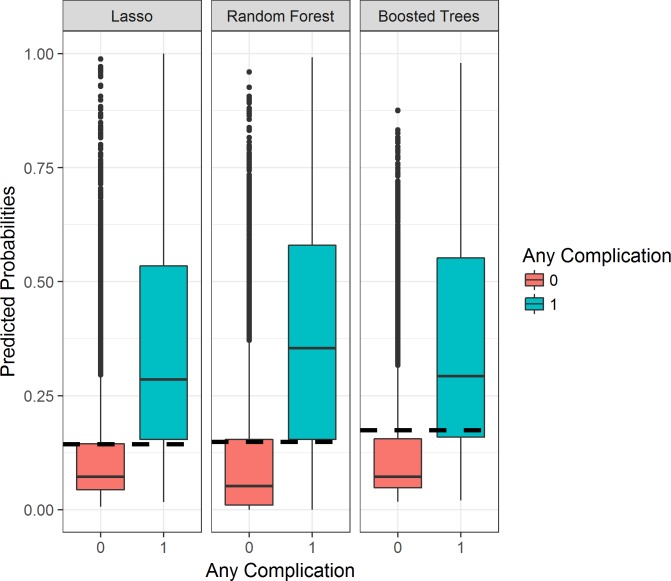
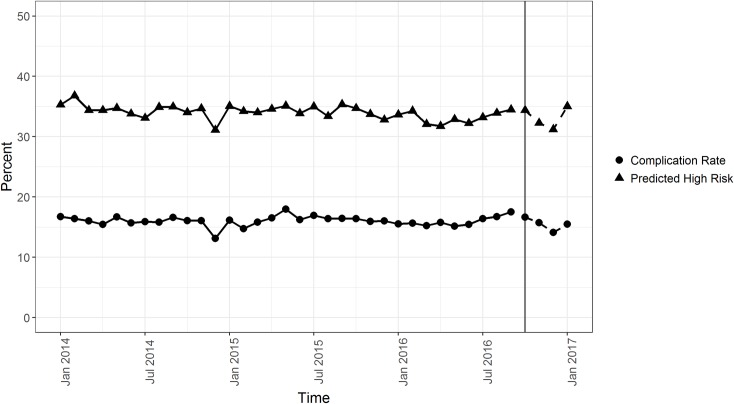
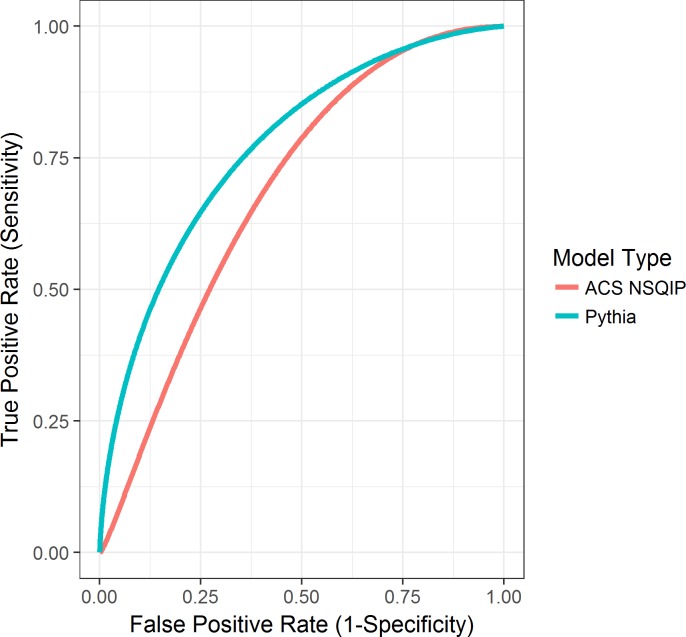
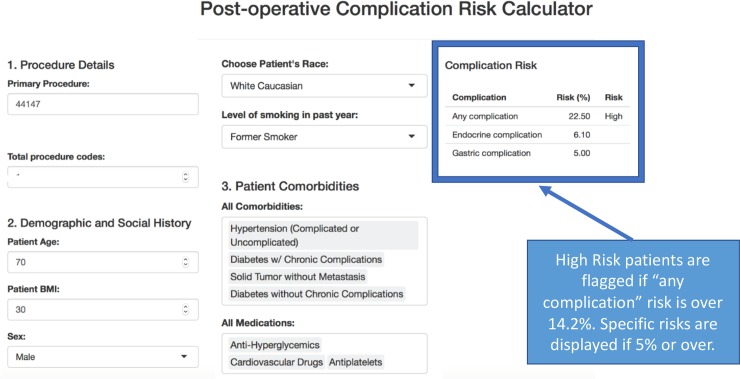
BACKGROUND: Pythia is an automated, clinically curated surgical data pipeline and repository housing all surgical patient electronic health record (EHR) data from a large, quaternary, multisite health institute for data science initiatives. In an effort to better identify high-risk surgical patients from complex data, a machine learning project trained on Pythia was built to predict postoperative complication risk. METHODS AND FINDINGS: A curated data repository of surgical outcomes was created using automated SQL and R code that extracted and processed patient clinical and surgical data across 37 million clinical encounters from the EHRs. A total of 194 clinical features including patient demographics (e.g., age, sex, race), smoking status, medications, comorbidities, procedure information, and proxies for surgical complexity were constructed and aggregated. A cohort of 66,370 patients that had undergone 99,755 invasive procedural encounters between January 1, 2014, and January 31, 2017, was studied further for the purpose of predicting postoperative complications. The average complication and 30-day postoperative mortality rates of this cohort were 16.0% and 0.51%, respectively. Least absolute shrinkage and selection operator (lasso) penalized logistic regression, random forest models, and extreme gradient boosted decision trees were trained on this surgical cohort with cross-validation on 14 specific postoperative outcome groupings. Resulting models had area under the receiver operator characteristic curve (AUC) values ranging between 0.747 and 0.924, calculated on an out-of-sample test set from the last 5 months of data. Lasso penalized regression was identified as a high-performing model, providing clinically interpretable actionable insights. Highest and lowest performing lasso models predicted postoperative shock and genitourinary outcomes with AUCs of 0.924 (95% CI: 0.901, 0.946) and 0.780 (95% CI: 0.752, 0.810), respectively. A calculator requiring input of 9 data fields was created to produce a risk assessment for the 14 groupings of postoperative outcomes. A high-risk threshold (15% risk of any complication) was determined to identify high-risk surgical patients. The model sensitivity was 76%, with a specificity of 76%. Compared to heuristics that identify high-risk patients developed by clinical experts and the ACS NSQIP calculator, this tool performed superiorly, providing an improved approach for clinicians to estimate postoperative risk for patients. Limitations of this study include the missingness of data that were removed for analysis. CONCLUSIONS: Extracting and curating a large, local institution's EHR data for machine learning purposes resulted in models with strong predictive performance. These models can be used in clinical settings as decision support tools for identification of high-risk patients as well as patient evaluation and care management. Further work is necessary to evaluate the impact of the Pythia risk calculator within the clinical workflow on postoperative outcomes and to optimize this data flow for future machine learning efforts.
Overview
The claims and statistics of this paper haven’t been checked yet.
Run the check — free, no account needed. It reads the open-access text and checks the sources it cites.
Integrity signals
Registry
Cites
Statistics
Figures
Verification
Claims the paper makes
The claims and statistics of this paper haven’t been checked yet.
Run the check — free, no account needed. It reads the open-access text and checks the sources it cites.
Claims other papers make about this one
Each is checked against this paper’s own text: does it say what the citing paper says it does?
The cited source says what the claim attributes to it.
In the citing paper
“Multiple ML models that risk-stratify patients with a disease or prepare patients for surgery have been recently developed and validated (16, 20–25).”
From Accessing Artificial Intelligence for Clinical Decision-Making (2021) · cites this paper as [16]
In the citing paper
“A growing nationwide effort is seeking to enhance preoperative and perioperative support for high-risk patients and high-cost populations (16, 17).”
From Accessing Artificial Intelligence for Clinical Decision-Making (2021) · cites this paper as [16]
In the citing paper
“These ML models have been shown to better predict mortality than conventional logistic regression after liver cancer surgery, aortic aneurysm surgery, and cardiac surgery.”
From Accessing Artificial Intelligence for Clinical Decision-Making (2021) · cites this paper as [16]
In the citing paper
“Healthcare systems have increasingly sought to use ML to assist in risk stratification, and these ML models may outperform statistical models in calibration and discrimination.”
From Accessing Artificial Intelligence for Clinical Decision-Making (2021) · cites this paper as [16]
Self-check
Percentages, sums and reported differences re-computed from the paper’s own numbers.
The self-check needs the paper’s full text.
Citations
Cites
Breiman, L. (2001) · Machine Learning · doi:10.1023/a:1010933404324 · Cited by 133,538
XGBoost: A Scalable Tree Boosting System
Chen, T., & Guestrin, C. (2016) · Proceedings of the 22nd ACM SIGKDD International Conference on Knowledge Discovery and Data Mining · doi:10.1145/2939672.2939785 · Cited by 54,569
Regression shrinkage and selection via the lasso
Tibshirani, R. (1996) · Journal of the Royal Statistical Society Series B: Statistical Methodology · doi:10.1111/j.2517-6161.1996.tb02080.x · Cited by 51,482
Regularization Paths for Generalized Linear Models via Coordinate Descent
Friedman, J., Hastie, T., & Tibshirani, R. (2010) · Journal of Statistical Software · doi:10.18637/jss.v033.i01 · Cited by 19,927
Classification and Regression by randomForest
Liaw, A. I., & Wiener, M. C. (2007) · Cited by 18,594
Comorbidity measures for use with administrative data.
Elixhauser, A., Steiner, C., Harris, D. R., & Coffey, R. M. (1998) · Medical Care · doi:10.1097/00005650-199801000-00004 · Cited by 9,921
XGBoost: A Scalable Tree Boosting System
Chen, T., & Guestrin, C. (2016) · arXiv · doi:10.48550/arxiv.1603.02754 · Cited by 7,104
Friedman, J. H. (2002) · Computational Statistics & Data Analysis · doi:10.1016/s0167-9473(01)00065-2 · Cited by 7,067
Collins, P. G. S., Reitsma, J. B., Altman, D. G., & Moons, K. G. M. (2015) · British Journal of Cancer · doi:10.1038/bjc.2014.639 · Cited by 3,319
Scalable and accurate deep learning with electronic health records
Rajkomar, A., Oren, E., Chen, K., Dai, A. M., Hajaj, N., Hardt, M., Liu, P. J., Liu, X., Marcus, J., Sun, M., et al. (2018) · npj Digital Medicine · doi:10.1038/s41746-018-0029-1 · Cited by 2,648
Cited by
Sorted by citations
Items 201–205 of 205
Chan, C. T., Pletcher, M. J., Balakrishnan, K., Hswen, Y., & Scheffler, A. (2026) · Journal of the American Medical Informatics Association · doi:10.1093/jamia/ocag162
Chan, C. T., Balakrishnan, K., Scheffler, A., Hswen, Y., Yeager, J., & Pletcher, M. J. (2026) · Applied Clinical Informatics · doi:10.1055/a-2969-1041
Artificial Intelligence for Risk Prediction in Perioperative Cancer Surgery: a Narrative Review
Ismail, H., Tyson, E., Ha, M., Whittington, S., Denehy, L., Reddy, S., Riedel, B., Anderson-Hunt, R., Best, S., Burbury, K., et al. (2026) · Current anesthesiology reports · doi:10.1007/s40140-026-00737-9
Machine Learning Applications for Prediction of Postoperative Complications
Lehmann, P., Brenner, D., & Dvorak, A. (2023) · Research and Practice in Anesthesiology – Open Journal · doi:10.17140/aoj.2023.v3.i01.pp01-05.2712
Dense phenotyping from EHR enables machine learning-based prediction of PTB
Capra, J. (2022) · ImmPort · doi:10.21430/m32keu0edf
Metadata
- Authors
- Corey, K. M., Kashyap, S., Lorenzi, E., Lagoo-Deenadayalan, S. A., Heller, K., Whalen, K., Balu, S., Heflin, M. T., McDonald, S. R., Swaminathan, M., & Sendak, M.
- Affiliations
- Duke University (US)
- Corresponding author
- Corey, Kristin M.
- ORCID
- Venue
- PLOS Medicine
- Publisher
- Public Library of Science (PLoS)
- Published
- 2018-11-27
- Volume
- 15
- Issue
- 11
- Pages
- e1002701
- ISSN
- 1549-1277 (ISSN-L)
- 1549-1676
- PMC
- PMC6258507
- OpenAlex
- W2901997892
- Cited by
- 204
- References
- 39
- Citations by year
- 2026: 14 · 2025: 17 · 2024: 25 · 2023: 34 · 2022: 30 · 2021: 40 · 2020: 28 · 2019: 14 · 2018: 2
- FWCI
- 11.82
- Type
- journal article
- Language
- en
- Open access
- gold
- doi.org
- Licence
- Locations
- PLoS Medicine (publishedVersion, cc-by)
- Europe PMC (PubMed Central) (publishedVersion, cc-by)
- PubMed Central (publishedVersion, cc-by)
- PubMed (publishedVersion)
- RePEc: Research Papers in Economics (submittedVersion)
- DOAJ (DOAJ: Directory of Open Access Journals) (submittedVersion, cc-by-sa)
- Figshare (submittedVersion, cc-by)
- Funders
- Duke Institue for Health Innovation (Clinical Research and Innovation Scholarship)
- Duke Forge (Graduate Fellowship Award)
- Health Resources and Services Administration (U1QHP28708)
- Duke Institute for Health Innovation (Internal Pilot Grant)
- Topics
- Physical Sciences › Computer Science › Artificial Intelligence › Machine Learning in Healthcare
- Health Sciences › Medicine › Cardiology and Cardiovascular Medicine › Cardiac, Anesthesia and Surgical Outcomes
- Health Sciences › Health Professions › Health Information Management › Artificial Intelligence in Healthcare
- Keywords
- postoperative complication prediction, automated data processing pipeline, random forest, extreme gradient boosting, 30-day postoperative mortality, postoperative shock, genitourinary complications, surgical risk calculator, clinical decision support, Pythia, model validation, surgical complexity
- MeSH terms
- Machine Learning, Adolescent, Adult, Aged, Automation, Female, Health Status, Humans, Male, Middle Aged, Postoperative Complications, Retrospective Studies, Risk Factors, Surgical Procedures, Operative, Reproducibility of Results, Comorbidity, Risk Assessment, Young Adult, Data Mining, Electronic Health Records
About these checks
Registry, retraction, Cites and statistics results are computed, not judged, with one exception: a printed reference that no index lists is read once by a model before it counts as a citation error. Claims are extracted by a model and kept only when their quote appears verbatim in the text; each cited source is then checked, with a model’s help, for whether it says what the claim relies on. Those verdicts can be wrong — read the claim’s quote and the cited source before relying on one.
Statistics and arithmetic are recomputed, not judged.
Confidence bands are shown only for fields calibrated on our annotated test set. None is calibrated yet, so no band is shown.
What counts as a claim ›How we measure confidence ›How we check this ›
Are you an author, or do you see a problem with this page? Request a review
