

The DOI matches its Crossref record; 23 of the 24 references it cites were found in a registry or an index.
Unlocking Short Read Sequencing for Metagenomics
Open accessAbstract
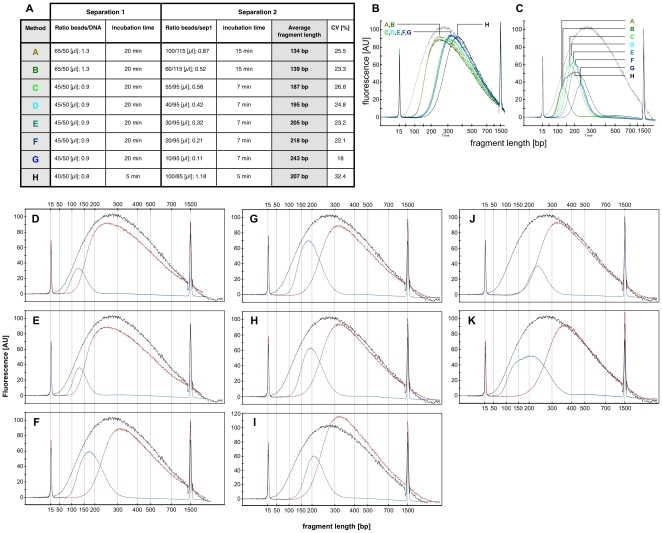
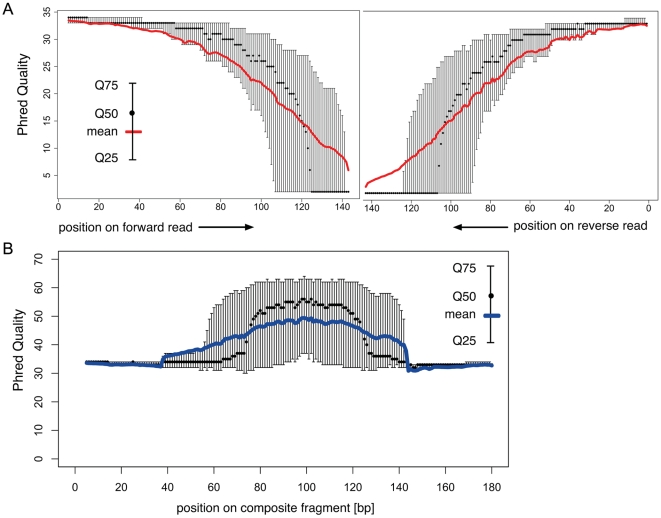
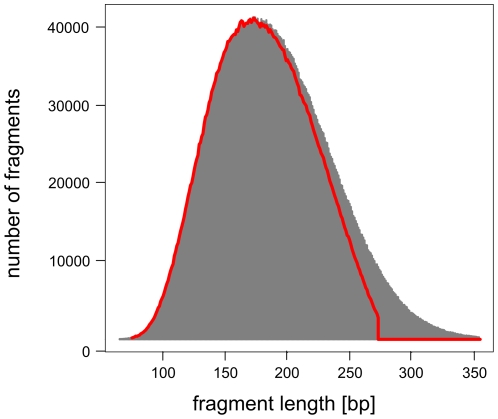
BACKGROUND: Different high-throughput nucleic acid sequencing platforms are currently available but a trade-off currently exists between the cost and number of reads that can be generated versus the read length that can be achieved. METHODOLOGY/PRINCIPAL FINDINGS: We describe an experimental and computational pipeline yielding millions of reads that can exceed 200 bp with quality scores approaching that of traditional Sanger sequencing. The method combines an automatable gel-less library construction step with paired-end sequencing on a short-read instrument. With appropriately sized library inserts, mate-pair sequences can overlap, and we describe the SHERA software package that joins them to form a longer composite read. CONCLUSIONS/SIGNIFICANCE: This strategy is broadly applicable to sequencing applications that benefit from low-cost high-throughput sequencing, but require longer read lengths. We demonstrate that our approach enables metagenomic analyses using the Illumina Genome Analyzer, with low error rates, and at a fraction of the cost of pyrosequencing.
Overview
The claims and statistics of this paper haven’t been checked yet.
Run the check — free, no account needed. It reads the open-access text and checks the sources it cites.
Integrity signals
Registry
Cites
Statistics
Figures
Verification
Claims the paper makes
The claims and statistics of this paper haven’t been checked yet.
Run the check — free, no account needed. It reads the open-access text and checks the sources it cites.
Claims other papers make about this one
Each is checked against this paper’s own text: does it say what the citing paper says it does?
The cited source doesn’t support the claim as written.
In the citing paper
“Both, Shera and FLASH (see later in the text) ignore the quality scores of the base calls.”
From PEAR: a fast and accurate Illumina Paired-End reAd mergeR (2014) · cites this paper as Rodrigue et al., 2010
Checked by a reasoning model — may be wrong.
Experimental — accuracy not yet measuredIn the citing paper
“Shera merges the reads by maximizing the number of matches between the paired-end reads.”
From PEAR: a fast and accurate Illumina Paired-End reAd mergeR (2014) · cites this paper as Rodrigue et al., 2010
In the citing paper
“Shera merges all reads and leaves it to the user to decide which merged reads are correct.”
From PEAR: a fast and accurate Illumina Paired-End reAd mergeR (2014) · cites this paper as Rodrigue et al., 2010
Self-check
Percentages, sums and reported differences re-computed from the paper’s own numbers.
The self-check needs the paper’s full text.
Citations
Cites
Gapped BLAST and PSI-BLAST: a new generation of protein database search programs
Altschul, S. (1997) · Nucleic Acids Research · doi:10.1093/nar/25.17.3389 · Cited by 73,302
Base-Calling of Automated Sequencer Traces Using Phred. I. Accuracy AssessmentPreprint
Ewing, B., Hillier, L., Wendl, M. C., & Green, P. (1998) · Genome Research · doi:10.1101/gr.8.3.175 · Cited by 6,993
Base-Calling of Automated Sequencer Traces Using Phred. II. Error Probabilities
Ewing, B., & Green, P. (1998) · Genome Research · doi:10.1101/gr.8.3.186 · Cited by 5,439
Accurate whole human genome sequencing using reversible terminator chemistry
Bentley, D. R., Balasubramanian, S., Swerdlow, H. P., Smith, G. P., Milton, J., Brown, C. G., Hall, K. P., Evers, D. J., Barnes, C. L., Bignell, H. R., et al. (2008) · Nature · doi:10.1038/nature07517 · Cited by 3,684
MEGAN analysis of metagenomic dataPreprint
Huson, D. H., Auch, A. F., Qi, J., & Schuster, S. C. (2007) · Genome Research · doi:10.1101/gr.5969107 · Cited by 3,294
Mapping short DNA sequencing reads and calling variants using mapping quality scores
Li, H., Ruan, J., & Durbin, R. (2008) · Genome Research · doi:10.1101/gr.078212.108 · Cited by 2,638
Next-generation sequencing transforms today's biology
Schuster, S. C. (2007) · Nature Methods · doi:10.1038/nmeth1156 · Cited by 1,870
An improved PCR method for walking in uncloned genomic DNA
Siebert, P. D., Chenchik, A. A., Kellogg, D. E., Lukyanov, K. A., & Lukyanov, S. (1995) · Nucleic Acids Research · doi:10.1093/nar/23.6.1087 · Cited by 1,014
Patterns and Implications of Gene Gain and Loss in the Evolution of Prochlorococcus
Kettler, G. C., Martiny, A. C., Huang, K. H., Zucker, J., Coleman, M. L., Rodrigue, S., Chen, F., Lapidus, A. L., Ferriera, S., Johnson, J. H., et al. (2007) · PLoS Genetics · doi:10.1371/journal.pgen.0030231 · Cited by 552
Phymm and PhymmBL: metagenomic phylogenetic classification with interpolated Markov models
Brady, A., & Salzberg, S. L. (2009) · Nature Methods · doi:10.1038/nmeth.1358 · Cited by 526
Cited by
Sorted by citations
FLASH: fast length adjustment of short reads to improve genome assemblies
Magoč, T., & Salzberg, S. L. (2011) · Bioinformatics · doi:10.1093/bioinformatics/btr507 · Cited by 15,366
PEAR: a fast and accurate Illumina Paired-End reAd mergeR
Zhang, J., Kobert, K., Flouri, T., & Stamatakis, A. (2014) · Bioinformatics · doi:10.1093/bioinformatics/btt593 · Cited by 4,497
PANDAseq: paired-end assembler for Illumina sequences
Masella, A. P., Bartram, A. K., Truszkowski, J. M., Brown, D. G., & Neufeld, J. D. (2012) · BMC Bioinformatics · doi:10.1186/1471-2105-13-31 · Cited by 2,132
Error filtering, pair assembly and error correction for next-generation sequencing reads
Edgar, R. C., & Flyvbjerg, H. (2015) · Bioinformatics · doi:10.1093/bioinformatics/btv401 · Cited by 1,315
Next-generation transcriptome assembly
Martin, J. A., & Wang, Z. (2011) · Nature Reviews Genetics · doi:10.1038/nrg3068 · Cited by 1,309
Metadata
- Authors
- Rodrigue, S., Materna, A. C., Timberlake, S. C., Blackburn, M. C., Malmstrom, R. R., Alm, E. J., & Chisholm, S. W.
- Affiliations
- Massachusetts Institute of Technology (US)
- Corresponding author
- Alm, Eric J.
- Chisholm, Sallie W.
- Venue
- PLoS ONE
- Publisher
- Public Library of Science (PLoS)
- Published
- 2010-07-28
- Volume
- 5
- Issue
- 7
- Pages
- e11840
- ISSN
- 1932-6203 (ISSN-L)
- PMC
- PMC2911387
- OpenAlex
- W2151671981
- Cited by
- 168
- References
- 24
- Citations by year
- 2025: 5 · 2024: 2 · 2023: 6 · 2022: 2 · 2021: 1 · 2020: 6 · 2019: 3 · 2018: 10 · 2017: 7 · 2016: 13 · 2015: 21 · 2014: 32 · 2013: 29 · 2012: 16
- FWCI
- 7.56
- Type
- journal article
- Language
- en
- Open access
- gold
- doi.org
- Locations
- PLoS ONE (publishedVersion, cc-by)
- PubMed Central (publishedVersion, cc-by)
- PubMed (publishedVersion)
- OSTI OAI (U.S. Department of Energy Office of Scientific and Technical Information) (submittedVersion)
- DOAJ (DOAJ: Directory of Open Access Journals) (submittedVersion, cc-by-sa)
- DSpace@MIT (Massachusetts Institute of Technology) (submittedVersion, cc-by-nc)
- Figshare (submittedVersion, cc-by)
- Funders
- U.S. Department of Energy (DEFG0207ER64506)
- Gordon and Betty Moore Foundation
- Fonds Québécois de la Recherche sur la Nature et les Technologies
- Natural Sciences and Engineering Research Council of Canada
- Topics
- Life Sciences › Biochemistry, Genetics and Molecular Biology › Molecular Biology › Genomics and Phylogenetic Studies
- Physical Sciences › Environmental Science › Ecology › Environmental DNA in Biodiversity Studies
- Physical Sciences › Environmental Science › Ecology › Microbial Community Ecology and Physiology
- Keywords
- metagenomics, short-read sequencing, long-read sequencing, paired-end sequencing, sequencing cost, read length
- MeSH terms
- Software, Sequence Analysis, DNA, Metagenomics
About these checks
Registry, retraction, Cites and statistics results are computed, not judged, with one exception: a printed reference that no index lists is read once by a model before it counts as a citation error. Claims are extracted by a model and kept only when their quote appears verbatim in the text; each cited source is then checked, with a model’s help, for whether it says what the claim relies on. Those verdicts can be wrong — read the claim’s quote and the cited source before relying on one.
Statistics and arithmetic are recomputed, not judged.
Confidence bands are shown only for fields calibrated on our annotated test set. None is calibrated yet, so no band is shown.
What counts as a claim ›How we measure confidence ›How we check this ›
Are you an author, or do you see a problem with this page? Request a review
