

The DOI matches its Crossref record.
Mitochondrial Haplogroup H1 in North Africa: An Early Holocene Arrival from Iberia
Overview
The claims and statistics of this paper haven’t been checked yet.
Run the check — free, no account needed. It reads the open-access text and checks the sources it cites.
Integrity signals
Registry
Cites
Statistics
Figures
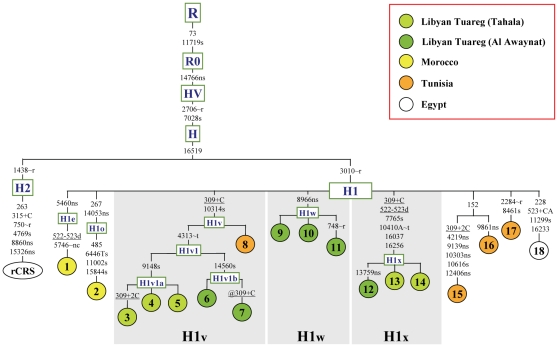
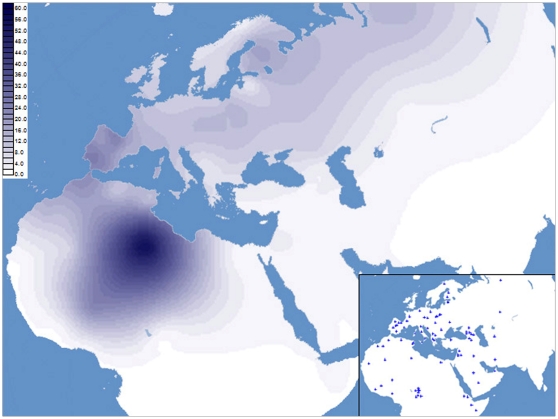
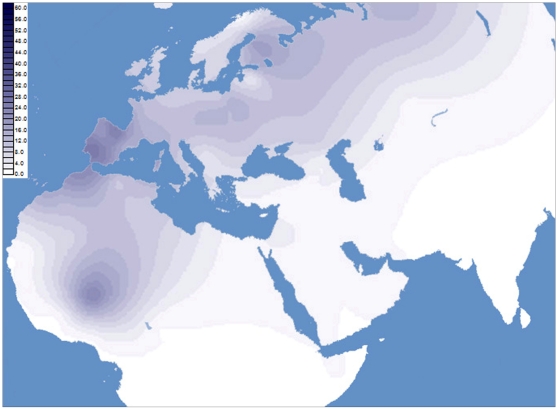
Verification
Claims the paper makes
The claims and statistics of this paper haven’t been checked yet.
Run the check — free, no account needed. It reads the open-access text and checks the sources it cites.
Claims other papers make about this one
Each is checked against this paper’s own text: does it say what the citing paper says it does?
In the citing paper
“The entire haplogroup H1 was represented in our control-region dataset with a frequency three times higher (∼3%) than the value reported in literature for Inner Asia”
From Mitochondrial DNA Footprints from Western Eurasia in Modern Mongolia (2022) · cites this paper as Ottoni et al., 2010
Self-check
Percentages, sums and reported differences re-computed from the paper’s own numbers.
The self-check needs the paper’s full text.
Citations
Cites
No references could be resolved yet.
Research works printed but not linked: 42
- V Macaulay, 2005, Single, rapid coastal settlement of Asia revealed by analysis of complete mitochondrial genomes., Science, 308, 1034, 10.1126/science.1109792 · DOI · Paper page
- P Mellars, 2006, Why did modern human populations disperse from Africa ca. 60,000 years ago? A new model., Proc Natl Acad Sci U S A, 103, 9381, 10.1073/pnas.0510792103 · DOI
- P Soares, 2010, The archaeogenetics of Europe., Curr Biol, 20, R174, 10.1016/j.cub.2009.11.054 · DOI
- M Kayser, 2010, The human genetic history of Oceania: near and remote views of dispersal., Curr Biol, 20, R194, 10.1016/j.cub.2009.12.004 · DOI
- PP Majumder, 2010, The human genetic history of South Asia., Curr Biol, 20, R184, 10.1016/j.cub.2009.11.053 · DOI
- RE Green, 2010, A draft sequence of the Neandertal genome., Science, 328, 710, 10.1126/science.1188021 · DOI · Paper page
- V Macaulay, 1999, The emerging tree of West Eurasian mtDNAs: a synthesis of control-region sequences and RFLPs., Am J Hum Genet, 64, 232, 10.1086/302204 · DOI · Paper page
- A Olivieri, 2006, The mtDNA legacy of the Levantine early Upper Palaeolithic in Africa., Science, 314, 1767, 10.1126/science.1135566 · DOI
- PU Clark, 2009, The Last Glacial Maximum., Science, 325, 710, 10.1126/science.1172873 · DOI · Paper page
- JM Adams, 1997, Preliminary vegetation maps of the world since the last glacial maximum: an aid to archaeological understanding., J Archaeol Sci, 24, 623, 10.1006/jasc.1996.0146 · DOI
- PE Tarasov, 1999, Last Glacial Maximum climate of the former Soviet Union and Mongolia reconstructed from pollen and plant macrofossil data., Climate Dynamics, 15, 227, 10.1007/s003820050278 · DOI
- C Gamble, 2004, Climate change and evolving human diversity in Europe during the last glacial., Philos Trans R Soc Lond B Biol Sci, 359, 243, 10.1098/rstb.2003.1396 · DOI
- C Gamble, 2005, The archaeological and genetic foundations of the European population during the Late Glacial: implications for ‘agricultural thinking’., Cambridge Archaeological Journal, 15, 193, 10.1017/S0959774305000107 · DOI
- A Achilli, 2004, The molecular dissection of mtDNA haplogroup H confirms that the Franco-Cantabrian glacial refuge was a major source for the European gene pool., Am J Hum Genet, 75, 910, 10.1086/425590 · DOI
- A Torroni, 2006, Harvesting the fruit of the human mtDNA tree., Trends Genet, 22, 339, 10.1016/j.tig.2006.04.001 · DOI
- U Roostalu, 2007, Origin and expansion of haplogroup H, the dominant human mitochondrial DNA lineage in West Eurasia: the Near Eastern and Caucasian perspective., Mol Biol Evol, 24, 436, 10.1093/molbev/msl173 · DOI
- M Pala, 2009, Mitochondrial haplogroup U5b3: a distant echo of the epipaleolithic in Italy and the legacy of the early Sardinians., Am J Hum Genet, 84, 814, 10.1016/j.ajhg.2009.05.004 · DOI
- D Comas, 2000, Alu insertions polymorphisms in NW Africa and the Iberian Peninsula: evidence for a strong genetic boudary through the Gibraltar Straits., Hum Genet, 107, 312, 10.1007/s004390000370 · DOI
- S Plaza, 2003, Joining the pillars of Hercules: mtDNA sequences show multidirectional gene flow in the western Mediterranean., Ann Hum Genet, 67, 312, 10.1046/j.1469-1809.2003.00039.x · DOI
- JZ Li, 2008, Worldwide human relationships inferred from genome-wide patterns of variation., Science, 319, 1100, 10.1126/science.1153717 · DOI
- E González-Pérez, 2010, Population relationships in the Mediterranean revealed by autosomal genetic data (Alu and Alu/STR compound systems)., Am J Phys Anthropol, 141, 430, 10.1002/ajpa.21161 · DOI
- A Torroni, 2001, A signal, from human mtDNA, of postglacial recolonization in Europe., Am J Hum Genet, 69, 844, 10.1086/323485 · DOI
- A Achilli, 2005, Saami and Berbers - An unexpected mitochondrial DNA link., Am J Hum Genet, 76, 883, 10.1086/430073 · DOI · Paper page
- L Cherni, 2009, Post-last glacial maximum expansion from Iberia to North Africa revealed by fine characterization of mtDNA H haplogroup in Tunisia., Am J Phys Anthropol, 139, 253, 10.1002/ajpa.20979 · DOI
- C Coudray, 2009, The complex and diversified mitochondrial gene pool of Berber populations., Ann Hum Genet, 73, 196, 10.1111/j.1469-1809.2008.00493.x · DOI
- C Ottoni, 2009, First genetic insight into Libyan Tuaregs: a maternal perspective., Ann Hum Genet, 73, 438, 10.1111/j.1469-1809.2009.00526.x · DOI
- A Torroni, 2001, Do the four clades of the mtDNA haplogroup L2 evolve at different rates?, Am J Hum Genet, 69, 1348, 10.1086/324511 · DOI
- J Saillard, 2000, mtDNA variation among Greenland Eskimos: the edge of the Beringian expansion., Am J Hum Genet, 67, 718, 10.1086/303038 · DOI · Paper page
- P Soares, 2009, Correcting for purifying selection: an improved human mitochondrial molecular clock., Am J Hum Genet, 84, 740, 10.1016/j.ajhg.2009.05.001 · DOI
- EL Loogväli, 2009, Explaining the imperfection of the molecular clock of hominid mitochondria., PLoS One, 4, e8260, 10.1371/journal.pone.0008260 · DOI
- L Excoffier, 2005, ARLEQUIN ver.3.0: an integrated software package for population genetics data analysis., Evolutionary Bioinformatics Online, 1, 47
- MD Costa, 2009, Data from complete mtDNA sequencing of Tunisian centenarians: testing haplogroup association and the “golden mean” to longevity., Mech Ageing Dev, 130, 222, 10.1016/j.mad.2008.12.001 · DOI
- DM Behar, 2008, Counting the founders: the matrilineal genetic ancestry of the Jewish Diaspora., PLoS One, 3, e2062, 10.1371/journal.pone.0002062 · DOI
- L Pereira, 2010, Linking the sub-Saharan and West Eurasian gene pools: maternal and paternal heritage of the Tuareg nomads from the African Sahel., Eur J Hum Genet, 18, 915, 10.1038/ejhg.2010.21 · DOI
- V Alvarez-Iglesias, 2009, New population and phylogenetic features of the internal variation within mitochondrial DNA macro-haplogroup R0., PLoS One, 4, e5112, 10.1371/journal.pone.0005112 · DOI
- A Brandstätter, 2008, Timing and deciphering mitochondrial DNA macro-haplogroup R0 variability in Central Europe and Middle East., BMC Evol Biol, 8, 191, 10.1186/1471-2148-8-191 · DOI
- D Spain, 1992, Gendered spaces: University of Carolina Press
- F Hassan, 2002, Droughts, food and culture;, 10.1007/b110045 · DOI
- RL Smith, 2003, What happened to the ancient Libyans? Chasing sources across the Sahara from Herodotus to Ibn Khaldun., Journal of World History, 14, 459, 10.1353/jwh.2003.0060 · DOI
- K Sadr, 2004, Review: Who were the Garamantes and what became of them?, The Journal of African History, 45, 492, 10.1017/S0021853704229930 · DOI
- RM Andrews, 1999, Reanalysis and revision of the Cambridge reference sequence for human mitochondrial DNA., Nat Genet, 23, 147, 10.1038/13779 · DOI · Paper page
- H Ennafaa, 2009, Mitochondrial DNA haplogroup H structure in North Africa., BMC Genet, 10, 8, 10.1186/1471-2156-10-8 · DOI
Cited by
Mitochondrial DNA Footprints from Western Eurasia in Modern Mongolia
Cardinali, I., Bodner, M., Capodiferro, M. R., Amory, C., Rambaldi Migliore, N., Gomez, E. J., Myagmar, E., Dashzeveg, T., Carano, F., Woodward, S. R., et al. (2022) · Frontiers in Genetics · doi:10.3389/fgene.2021.819337 · Cited by 8
Self-citation
Metadata
- Authors
- Ottoni, C., Primativo, G., Hooshiar Kashani, B., Achilli, A., Martínez-Labarga, C., Biondi, G., Torroni, A., & Rickards, O.
- Venue
- PLoS ONE
- Publisher
- Public Library of Science (PLoS)
- Published
- 2010-10-21
- Volume
- 5
- Issue
- 10
- Pages
- e13378
- ISSN
- 1932-6203
- PMC
- PMC2958834
- Cited by
- 49
- References
- 0
- Language
- en
About these checks
Registry, retraction, Cites and statistics results are computed, not judged, with one exception: a printed reference that no index lists is read once by a model before it counts as a citation error. Claims are extracted by a model and kept only when their quote appears verbatim in the text; each cited source is then checked, with a model’s help, for whether it says what the claim relies on. Those verdicts can be wrong — read the claim’s quote and the cited source before relying on one.
Statistics and arithmetic are recomputed, not judged.
Confidence bands are shown only for fields calibrated on our annotated test set. None is calibrated yet, so no band is shown.
What counts as a claim ›How we measure confidence ›How we check this ›
Are you an author, or do you see a problem with this page? Request a review
