

Misrepresentation of Neuroscience Data Might Give Rise to Misleading Conclusions in the Media: The Case of Attention Deficit Hyperactivity Disorder
Open accessThe DOI matches its Crossref record; 36 of the 37 references it cites were found in a registry or an index.
Abstract
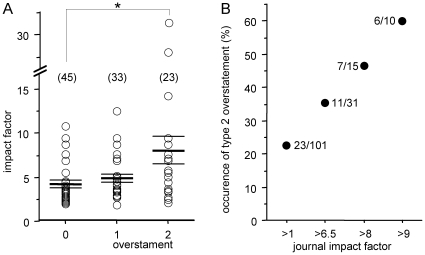
BACKGROUND: There is often a huge gap between neurobiological facts and firm conclusions stated by the media. Data misrepresentation in the conclusions and summaries of neuroscience articles might contribute to this gap. METHODOLOGY/PRINCIPAL FINDINGS: Using the case of attention deficit hyperactivity disorder (ADHD), we identified three types of misrepresentation. The first relies on prominent inconsistencies between results and claimed conclusions and was observed in two scientific reports dealing with ADHD. Only one out of the 61 media articles echoing both scientific reports adequately described the results and, thus questioned the claimed conclusion. The second type of misrepresentation consists in putting a firm conclusion in the summary while raw data that strongly limit the claim are only given in the results section. To quantify this misrepresentation we analyzed the summaries of all articles asserting that polymorphisms of the gene coding for the D4 dopaminergic receptor are associated with ADHD. Only 25 summaries out of 159 also mentioned that this association confers a small risk. This misrepresentation is also observed in most media articles reporting on ADHD and the D4 gene. The third misrepresentation consists in extrapolating basic and pre-clinical findings to new therapeutic prospects in inappropriate ways. Indeed, analysis of all ADHD-related studies in mice showed that 23% of the conclusions were overstated. The frequency of this overstatement was positively related with the impact factor of the journal. CONCLUSION/SIGNIFICANCE: Data misrepresentations are frequent in the scientific literature dealing with ADHD and may contribute to the appearance of misleading conclusions in the media. In synergy with citation distortions and publication biases they influence social representations and bias the scientific evidence in favor of the view that ADHD is primarily caused by biological factors. We discuss the social consequences and the causes of data misrepresentations and suggest a few corrective actions.
Overview
The claims and statistics of this paper haven’t been checked yet.
Free: it reads the open-access text and checks the first 5 claims that cite a source we can check. Create a free account to check every claim.
Integrity signals
Registry
Cites
Statistics
Figures
Verification
Claims the paper makes
The claims and statistics of this paper haven’t been checked yet.
Free: it reads the open-access text and checks the first 5 claims that cite a source we can check. Create a free account to check every claim.
Claims other papers make about this one
Each is checked against this paper’s own text: does it say what the citing paper says it does?
In the citing paper
“In addition, researchers commonly misstate or overstate the implications of their work (35).”
From Misinformation in and about science (2021) · cites this paper as [35]
Self-check
Percentages, sums and reported differences re-computed from the paper’s own numbers.
The self-check needs the paper’s full text.
Citations
Cites
Publication bias in clinical research
Easterbrook, P. J., Gopalan, R., Berlin, J. A., & Matthews, D. R. (1991) · The Lancet · doi:10.1016/0140-6736(91)90201-y · Cited by 3,109 · cited 1×
“This publication bias has already been pointed out in the biomedical literature [4,5] and is obvious regarding the association of ADHD either with the DRD4 gene or with the density of the dopamine transporter.”
BackgroundSystematic Review of the Empirical Evidence of Study Publication Bias and Outcome Reporting Bias
Dwan, K., Altman, D. G., Arnaiz, J. A., Bloom, J., Chan, A.-W., Cronin, E., Decullier, E., Easterbrook, P. J., Von Elm, E., Gamble, C., et al. (2008) · PLoS ONE · doi:10.1371/journal.pone.0003081 · Cited by 1,546
Contradicted and Initially Stronger Effects in Highly Cited Clinical Research
Ioannidis, J. P. A. (2005) · JAMA · doi:10.1001/jama.294.2.218 · Cited by 1,465 · cited 2×
“This publication bias has already been pointed out in the biomedical literature [4,5] and is obvious regarding the association of ADHD either with the DRD4 gene or with the density of the dopamine transporter.”
BackgroundJournal of the American Academy of Child & Adolescent Psychiatry
ScienceDirect (1987) · Cited by 1,339
Candidate gene studies of ADHD: a meta-analytic review
Gizer, I. R., Ficks, C., & Waldman, I. D. (2009) · Human Genetics · doi:10.1007/s00439-009-0694-x · Cited by 1,020
Impulsive choice induced in rats by lesions of the nucleus accumbens core
Cardinal, R. N., Pennicott, D. R., Lakmali, C., Sugathapala, Robbins, T. W., & Everitt, B. J. (2001) · Science · doi:10.1126/science.1060818 · Cited by 923
Role of Serotonin in the Paradoxical Calming Effect of Psychostimulants on Hyperactivity
Gainetdinov, R. R., Wetsel, W. C., Jones, S. R., Levin, E. D., Jaber, M., & Caron, M. G. (1999) · Science · doi:10.1126/science.283.5400.397 · Cited by 885 · cited 1×
“Lancet (1999) [26] Science (1999) [27] Science (2001) [28]”
Dopamine D4 receptor gene polymorphism is associated with attention deficit hyperactivity disorder.
LaHoste, G. J., Swanson, J. M., Wigal, S. B., Glabe, C. G., Wigal, T. L., King, N., & Kennedy, J. L. (1996) · PubMed · Cited by 791
(2009) · PsycEXTRA Dataset · doi:10.1037/e671332011-001 · Cited by 753
The neural correlates of attention deficit hyperactivity disorder: an ALE meta‐analysis
Dickstein, S. G., Bannon, K., Xavier Castellanos, F., & Milham, M. P. (2006) · Journal of Child Psychology and Psychiatry · doi:10.1111/j.1469-7610.2006.01671.x · Cited by 745 · cited 1×
“A recent meta-analysis ‘‘do not support simpler models which posit that ADHD is strictly a disorder resulting from deficits of activity in a few isolated brain regions’’ [32].”
Background
Cited by
Misinformation in and about science
West, J. D., & Bergstrom, C. T. (2021) · Proceedings of the National Academy of Sciences · doi:10.1073/pnas.1912444117 · Cited by 391
“In addition, researchers commonly misstate or overstate the implications of their work (35).”
BackgroundSmart Drugs “As Common As Coffee”: Media Hype about Neuroenhancement
Partridge, B. J., Bell, S. K., Lucke, J. C., Yeates, S., & Hall, W. D. (2011) · PLoS ONE · doi:10.1371/journal.pone.0028416 · Cited by 217
“In their examination of how the media reports the neuroscience research on Attention Deficit Hyperactivity Disorder (ADHD), Gonon and colleagues [4] found that the media often accurately reported researchers’ optimistic extrapolations of preliminary data to ‘‘therapeutic prospects’’, and researchers reported stronger…”
BackgroundMisunderstanding the harms of online misinformation
Budak, C., Nyhan, B., Rothschild, D. M., Thorson, E., & Watts, D. J. (2024) · Nature · doi:10.1038/s41586-024-07417-w · Cited by 156
“The tendency to over-emphasize misleading statistics (often with little context) is, of course, not unique to the topic of social media 11,12 ; coverage of science is frequently distorted by media sensationalism 13 and hype from academic press releases 14 .”
Microbiota-gut-brain research: A critical analysis
Hooks, K. B., Konsman, J. P., & O'Malley, M. A. (2019) · Behavioral and Brain Sciences · doi:10.1017/s0140525x18002133 · Cited by 98
Journalism and Social Media as Means of Observing the Contexts of Science
Allgaier, J., Dunwoody, S., Brossard, D., Lo, Y., & Peters, H. P. (2013) · BioScience · doi:10.1525/bio.2013.63.4.8 · Cited by 75
Scientific uncertainty in media content: Introduction to this special issue
Peters, H. P., & Dunwoody, S. (2016) · Public Understanding of Science · doi:10.1177/0963662516670765 · Cited by 89
How readers understand causal and correlational expressions used in news headlines.
Adams, R. C., Sumner, P., Vivian-Griffiths, S., Barrington, A., Williams, A., Boivin, J., Chambers, C. D., & Bott, L. (2017) · Journal of Experimental Psychology: Applied · doi:10.1037/xap0000100 · Cited by 63
Lehmkuhl, M., & Peters, H. P. (2016) · Public Understanding of Science · doi:10.1177/0963662516646047 · Cited by 45
“…also provides incentives for scientists to exaggerate the significance of outcomes or to overstate their scientific relevance, whether it is in the scientific publications themselves or in the scientists’ communication with the public (Fanelli, 2009; Gonon et al., 2011, 2012; Sumner et al., 2014).”
BackgroundMedia Reporting of Neuroscience Depends on Timing, Topic and Newspaper Type
van Atteveldt, N., van Aalderen-Smeets, S. I., Jacobi, C., & Ruigrok, N. (2014) · PLoS ONE · doi:10.1371/journal.pone.0104780 · Cited by 44
How French media have portrayed ADHD to the lay public and to social workers
Ponnou, S., & Gonon, F. (2017) · International Journal of Qualitative Studies on Health and Well-Being · doi:10.1080/17482631.2017.1298244 · Cited by 42
Self-citationMEDIALIZED SCIENCE? Neuroscientists' reflections on their role as journalistic sources
Allgaier, J., Dunwoody, S., Brossard, D., Lo, Y., & Peters, H. P. (2013) · Journalism Practice · doi:10.1080/17512786.2013.802477 · Cited by 52
Ngaka, T. C., Coetzee, J. F., & Dyer, R. A. (2016) · Anesthesia & Analgesia · doi:10.1213/ane.0000000000001568 · Cited by 37
Readability of the 100 Most-Cited Neuroimaging Papers Assessed by Common Readability Formulae
Yeung, A. W. K., Goto, T. K., & Leung, W. K. (2018) · Frontiers in Human Neuroscience · doi:10.3389/fnhum.2018.00308 · Cited by 46
Gendering attention deficit hyperactivity disorder: a discursive analysis of UK newspaper stories
Horton-Salway, M. (2013) · Journal of Health Psychology · doi:10.1177/1359105312456326 · Cited by 33
“It is interesting that since the media backlash following the publication of the Cardiff research, Gonon et al. (2011) have published a critical analysis of how neuroscience data on ADHD are frequently represented in the media through summaries and abstracts that are sometimes oversimplified and misleading than the ar…”
BackgroundMessaging in Biological Psychiatry: Misrepresentations, Their Causes, and Potential Consequences
Dumas-Mallet, E., & Gonon, F. (2020) · Harvard Review of Psychiatry · doi:10.1097/hrp.0000000000000276 · Cited by 35
Self-citationWade, L., Forlini, C., & Racine, É. (2014) · BMC Medical Ethics · doi:10.1186/1472-6939-15-37 · Cited by 25
Making ADHD Evident: Data, Practices, and Diagnostic Protocols in Portugal
Filipe, Â. M. (2015) · Medical Anthropology · doi:10.1080/01459740.2015.1101102 · Cited by 33
The Teenage Brain: Public Perceptions of Neurocognitive Development during Adolescence
Altikulaç, S., Lee, N. C., van der Veen, C., Benneker, I. M. B., Krabbendam, L., & van Atteveldt, N. (2018) · Journal of Cognitive Neuroscience · doi:10.1162/jocn_a_01332 · Cited by 32
Educational fMRI: From the Lab to the Classroom
Seghier, M. L., Fahim, M. A., & Habak, C. (2019) · Frontiers in Psychology · doi:10.3389/fpsyg.2019.02769 · Cited by 24
Ponnou, S., Haliday, H., & Gonon, F. (2019) · Health An Interdisciplinary Journal for the Social Study of Health Illness and Medicine · doi:10.1177/1363459319831331 · Cited by 17
Self-citationMisunderstandings of the genetics and neurobiology of ADHD: Moving beyond anachronisms
Cortese, S., Faraone, S. V., & Sergeant, J. A. (2011) · American Journal of Medical Genetics Part B Neuropsychiatric Genetics · doi:10.1002/ajmg.b.31207 · Cited by 20
Lehmkuhl, M., & Promies, N. (2020) · PLoS ONE · doi:10.1371/journal.pone.0241376 · Cited by 25
Incorporating Primary Scientific Literature in Middle and High School Education
Fankhauser, S. C., & Lijek, R. S. (2016) · Journal of Microbiology & Biology Education · doi:10.1128/jmbe.v17i1.1004 · Cited by 13
“Not only do these misleading reports generate false beliefs, but they also misrepresent how scientific research is performed and evaluated (3, 6, 13).”
BackgroundZhuang, H., Huang, T.-Y., & Acuna, D. E. (2021) · PLoS Computational Biology · doi:10.1371/journal.pcbi.1009650 · Cited by 13
ADHD and Brain Anatomy: What Do Academic Textbooks Used in the Netherlands Tell Students?
Meerman, S. T., Batstra, L., Freedman, J. E., Hoekstra, R., & Grietens, H. W. E. (2019) · Children & Society · doi:10.1111/chso.12362 · Cited by 14
Stigmatisierung oder Entstigmatisierung durch Biologisierung psychischer Krankheiten?
Heinz, A., & Müller, S. (2013) · Nervenheilkunde · doi:10.1055/s-0038-1633373 · Cited by 12
La psychiatrie biologique : une bulle spéculative ?. Le cas de l’hyperactivité tdah 1
Gonon, F. (2017) · Journal français de psychiatrie · doi:10.3917/jfp.044.0113 · Cited by 13
Self-citationEducating ‘cerebral subjects’: The emergence of brain talk in the Argentinean society
Mantilla, M. J. (2014) · BioSocieties · doi:10.1057/biosoc.2014.27 · Cited by 15
D’Angelo, S., Ahn, H., Miller, D., Monane, R., & Butler, M. J. (2022) · Harvard Data Science Review · doi:10.1162/99608f92.d5b57784 · Cited by 9
Ponnou, S., Kohout‐Diaz, M., & Gonon, F. (2015) · Les dossiers des sciences de l éducation · doi:10.4000/dse.1219 · Cited by 9
Self-citationMantilla, M. J., & Marco, M. H. D. (2016) · Physis Revista de Saúde Coletiva · doi:10.1590/s0103-73312016000100011 · Cited by 17
Psychoanalysis and academia: Psychoanalysis at the crossroads between exact and human sciences
Bazan, A. (2018) · International Forum of Psychoanalysis · doi:10.1080/0803706x.2017.1392040 · Cited by 9
Zemer, V. S., Manor, I., Weizman, A., Cohen, H. A., Hoshen, M. B., Caspi, N. M., Cohen, S., Faraone, S. V., & Shahar, N. (2024) · Psychiatry Research · doi:10.1016/j.psychres.2024.116077 · Cited by 9
What should be said to the lay public regarding ADHD etiology
Gonon, F., Bézard, E., & Boraud, T. (2011) · American Journal of Medical Genetics Part B Neuropsychiatric Genetics · doi:10.1002/ajmg.b.31236 · Cited by 8
Self-citationThe Brain in the Public Space: Social Neuroscience and the Media
Mantilla, M. J., Marco, M. H. D., & Golombek, D. A. (2017) · Springer eBooks · doi:10.1007/978-3-319-68421-5_14 · Cited by 4
Horton‐Salway, M., & Davies, A. (2018) · Springer eBooks · doi:10.1007/978-3-319-76026-1_3 · Cited by 6
Komplexität der Wissenschaft als Herausforderung für den Wissenschaftsjournalismus
Lehmkuhl, M. (2019) · Springer eBooks · doi:10.1007/978-3-658-22860-6_19 · Cited by 10
Voices of Experience: Narrative Lives and Selves
Horton‐Salway, M., & Davies, A. (2018) · Springer eBooks · doi:10.1007/978-3-319-76026-1_6 · Cited by 5
Ponnou, S., & Fricard, B. (2016) · Phronesis · doi:10.7202/1035270ar · Cited by 5
Brun, C., Boraud, T., & Gonon, F. (2024) · Neurobiology of Disease · doi:10.1016/j.nbd.2024.106544 · Cited by 7
Self-citationHaliday, H., Larose, M., Roebroeck, É., Clouse, F., & Ponnou, S. (2020) · Annales Médico-psychologiques revue psychiatrique · doi:10.1016/j.amp.2020.04.013 · Cited by 3
Autoayuda cerebral y nuevas gramáticas del bienestar. Cuidar el cerebro para una vida saludable
Mantilla, M. J. (2017) · Athenea Digital Revista de pensamiento e investigación social · doi:10.5565/rev/athenea.1755 · Cited by 9
Montagni, I., Stahl-Timmins, W., Monneraud, L., & Kurth, T. (2020) · Les Enjeux de l information et de la communication · doi:10.3917/enic.027.0103 · Cited by 3
La diferencia sexual en las neurociencias y la neuroeducación
Reverter-Bañón, S., & Medina-Vicent, M. (2018) · Crítica (México D F En línea) · doi:10.22201/iifs.18704905e.2018.13 · Cited by 4
Neuroscience Ambassadors: Creating a Network of Academia-Community Partnerships
Flaisher-Grinberg, S. (2022) · Journal of Undergraduate Neuroscience Education · doi:10.59390/lvzc1043 · Cited by 3
Brun, C., Penavayre, M., & Gonon, F. (2023) · Public Understanding of Science · doi:10.1177/09636625231183650 · Cited by 4
Self-citation6. Repercussions of media coverage on science? A critical assessment of a popular thesis
Lehmkuhl, M., Promies, N., & Leidecker-Sandmann, M. (2023) · De Gruyter eBooks · doi:10.1515/9783110776546-006 · Cited by 2
Foreword: The Neuroethics of Drug Addiction
Robbins, T. W. (2011) · Elsevier eBooks · doi:10.1016/b978-0-12-385973-0.00020-x · Cited by 2
Kuzmina, T. I., & Олеговна, Ч. А. (2019) · Clinical Psychology and Special Education · doi:10.17759/cpse.2019080101 · Cited by 4
Leach, J. (2011) · Elsevier eBooks · doi:10.1016/b978-0-12-385973-0.00012-0 · Cited by 1
Cortese, S., Faraone, S. V., & Sergeant, J. A. (2011) · American Journal of Medical Genetics Part B Neuropsychiatric Genetics · doi:10.1002/ajmg.b.31235 · Cited by 1
A MEDICALIZAÇÃO NAS RELAÇÕES SABER-PODER: UM OLHAR ACERCA DA INFÂNCIA MEDICALIZADA
Ferreira, R. R. (2016) · Psicologia em Estudo · doi:10.4025/psicolestud.v20i4.28669 · Cited by 1
ADHD as the Product of Discourse
Horton‐Salway, M., & Davies, A. (2018) · Springer eBooks · doi:10.1007/978-3-319-76026-1_7 · Cited by 1
The Science-Media Interface: On the Relation Between Internal and External Science Communication
Broer, I., Lemke, S., Mazarakis, A., Peters, I., & Zinke-Wehlmann, C. (2023) · De Gruyter eBooks · doi:10.1515/9783110776546 · Cited by 5
A critical perspective on the mediatization of brain imaging and healthy ageing
Khalili‐Mahani, N., & Loos, E. F. (2023) · Journal of Science Communication · doi:10.22323/2.22050401
Process factors influencing informed consent for participation in clinical research
Nwali, N. (2021) · Northumbria Research Link (Northumbria University) · Cited by 2
Lehmkuhl, M., & Promies, N. (2020) · SocArXiv (OSF Preprints) · doi:10.31235/osf.io/jszt7 · Cited by 1
Les professionnels de la physiothérapie sur Facebook, j’aime?
Larrivée, A. C., Charbonneau, M., & Samson, É. (2014) · Papyrus : Institutional Repository (Université de Montréal) · Cited by 1
Hoe schrijven Nederlandse kranten over hersenonderzoek
van Atteveldt, N., van Aalderen-Smeets, S. I., Jacobi, C., & Ruigrok, N. (2014) · Nederlandsch tijdschrift voor geneeskunde/Nederlands tijdschrift voor geneeskunde/NTvG-databank
L’impacte desculpabilitzador dels «neurosabers» en pares d’infants amb TDAH
Gironés, R. T. (2015) · Arxiu d Etnografia de Catalunya · doi:10.17345/aec15.9-36
ADHD en hersenen: First do no harm!
Batstra, L. (2017) · GZ - Psychologie · doi:10.1007/s41480-017-0066-4
Exploración de los factores generales y específicos en la estructura del TDAH
de Miguel, J. F. (2019) · UVaDOC UVaDOC University of Valladolid Documentary Repository (University of Valladolid) · doi:10.35376/10324/35133
McCauley, D. J. (2019) · Library, Museums and Press - UDSpace (University of Delaware) · doi:10.58088/vtqe-ce94
Montagni, I., Stahl-Timmins, W., Monneraud, L., & Kurth, T. (2020) · Les Enjeux de l information et de la communication · doi:10.3917/enic.027.0027 · Cited by 3
Roome, B. R. (2012) · eScholarship (California Digital Library)
À l’écoute des enfants hyperactifs
Gonon, F. (2022) · Champ social eBooks · doi:10.3917/chaso.ponno.2022.01.0019
Self-citationPalatta, F., Macedo, A. C., Marcacci, F., Martinisi, A., Durço, D. D. F. P. Â., Neto, R. C. B., & Ghezzi, P. (2023) · SocArXiv (OSF Preprints) · doi:10.31235/osf.io/dp849
Does Using Core Quadrants Lead to More Teacher Self-Efficacy and Less Perceived Problem Behaviour?
Batstra, L., de Vries, W., & Thoutenhoofd, E. D. (2024) · European Journal of Inclusive Education · doi:10.7146/ejie.v3i1.137366
fMRI for severely brain injured patients: A media analysis
Samuel, G. N. (2014) · Brunel University Research Archive (BURA) (Brunel University London) · Cited by 1
La psychiatrie n’est pas une discipline médicale comme les autres
Gonon, F. (2026) · Santé Publique · doi:10.3917/spub.hs1.2026.0229
Self-citation
Metadata
- Authors
- Gonon, F., Bezard, E., & Boraud, T.
- Affiliations
- Centre National de la Recherche Scientifique (FR)
- ORCID
- Boraud, Thomas
- Venue
- PLoS ONE
- Publisher
- Public Library of Science (PLoS)
- Published
- 2011-01-31
- Volume
- 6
- Issue
- 1
- Pages
- e14618
- ISSN
- 1932-6203 (ISSN-L)
- PMC
- PMC3031509
- OpenAlex
- W2082124284
- Cited by
- 71
- References
- 37
- Citations by year
- 2026: 1 · 2025: 1 · 2024: 4 · 2023: 5 · 2022: 3 · 2021: 4 · 2020: 6 · 2019: 6 · 2018: 8 · 2017: 5 · 2016: 8 · 2015: 3 · 2014: 6 · 2013: 3 · 2012: 2
- FWCI
- 12.91
- Type
- journal article
- Language
- en
- Open access
- gold
- doi.org
- Locations
- PLoS ONE (publishedVersion, cc-by)
- PubMed Central (publishedVersion, cc-by)
- PubMed (publishedVersion)
- HAL (submittedVersion)
- RePEc: Research Papers in Economics (submittedVersion)
- DOAJ (DOAJ: Directory of Open Access Journals) (submittedVersion, cc-by-sa)
- Figshare (submittedVersion, cc-by)
- Funders
- Agence Nationale de la Recherche
- Centre National de la Recherche Scientifique
- Université de Bordeaux
- Topics
- Social Sciences › Library and Information Sciences › Academic Publishing and Open Access
- Social Sciences › Decision Sciences › Statistics, Probability and Uncertainty › Meta-analysis and systematic reviews
- Social Sciences › Library and Information Sciences › Academic Writing and Publishing
- Keywords
- data misrepresentation, attention deficit hyperactivity disorder, science communication, genetic polymorphism, mouse model, publication bias, impact factor, biological determinism
- MeSH terms
- Attention Deficit Disorder with Hyperactivity, Communications Media, Humans, Medical Informatics, Neurosciences
About these checks
Registry, retraction, Cites and statistics results are computed, not judged, with one exception: a printed reference that no index lists is read once by a model before it counts as a citation error. Claims are extracted by a model and kept only when their quote appears verbatim in the text; each cited source is then checked, with a model’s help, for whether it says what the claim relies on. Those verdicts can be wrong — read the claim’s quote and the cited source before relying on one.
Statistics and arithmetic are recomputed, not judged.
Confidence bands are shown only for fields calibrated on our annotated test set. None is calibrated yet, so no band is shown.
What counts as a claim ›How we measure confidence ›How we check this ›
Are you an author, or do you see a problem with this page? Request a review
Data sources
Bibliographic data: Semantic Scholar, OpenAlex, Crossref.
Contains information from the Semantic Scholar Academic Graph Datasets, made available under the ODC Attribution License (ODC-BY 1.0).
Semantic Scholar’s data is described in: Kinney, R., et al. (2023). The Semantic Scholar Open Data Platform. arXiv:2301.10140.
