

Cascade of Neural Events Leading from Error Commission to Subsequent Awareness Revealed Using EEG Source Imaging
Open accessThe DOI matches its Crossref record; 68 of the 68 references it cites were found in a registry or an index.
Abstract
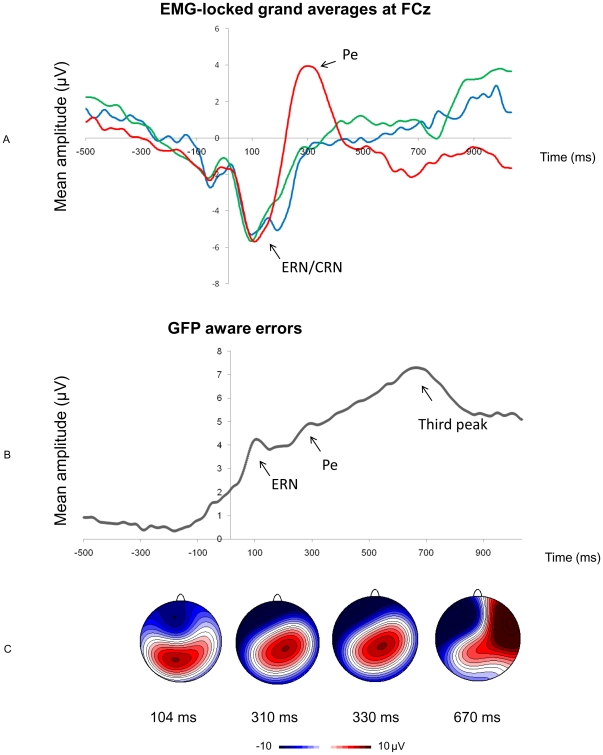
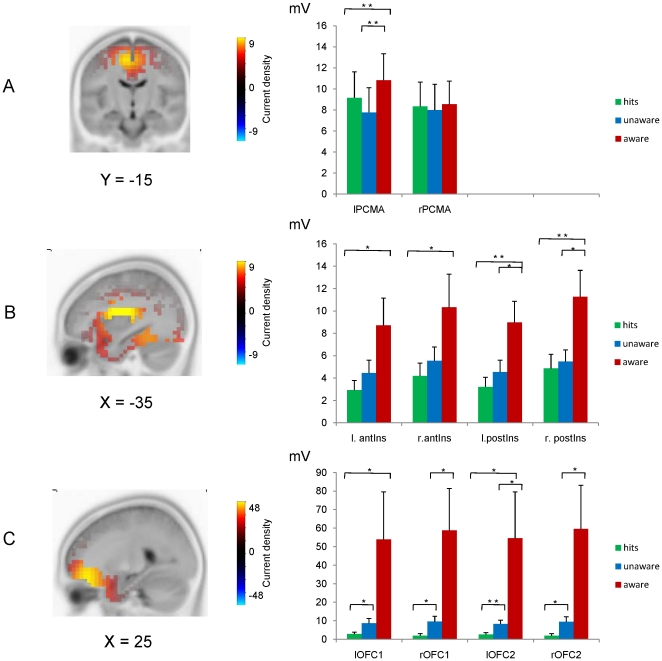
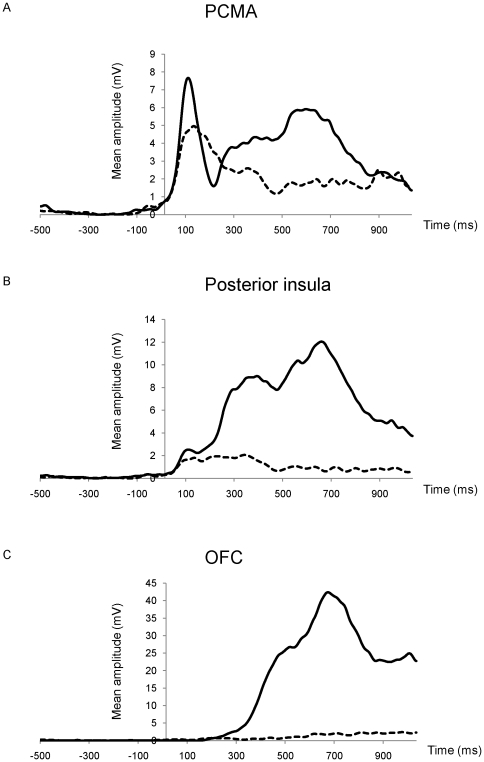
The goal of the present study was to shed light on the respective contributions of three important action monitoring brain regions (i.e. cingulate cortex, insula, and orbitofrontal cortex) during the conscious detection of response errors. To this end, fourteen healthy adults performed a speeded Go/Nogo task comprising Nogo trials of varying levels of difficulty, designed to elicit aware and unaware errors. Error awareness was indicated by participants with a second key press after the target key press. Meanwhile, electromyogram (EMG) from the response hand was recorded in addition to high-density scalp electroencephalogram (EEG). In the EMG-locked grand averages, aware errors clearly elicited an error-related negativity (ERN) reflecting error detection, and a later error positivity (Pe) reflecting conscious error awareness. However, no Pe was recorded after unaware errors or hits. These results are in line with previous studies suggesting that error awareness is associated with generation of the Pe. Source localisation results confirmed that the posterior cingulate motor area was the main generator of the ERN. However, inverse solution results also point to the involvement of the left posterior insula during the time interval of the Pe, and hence error awareness. Moreover, consecutive to this insular activity, the right orbitofrontal cortex (OFC) was activated in response to aware and unaware errors but not in response to hits, consistent with the implication of this area in the evaluation of the value of an error. These results reveal a precise sequence of activations in these three non-overlapping brain regions following error commission, enabling a progressive differentiation between aware and unaware errors as a function of time elapsed, thanks to the involvement first of interoceptive or proprioceptive processes (left insula), later leading to the detection of a breach in the prepotent response mode (right OFC).
Overview
The claims and statistics of this paper haven’t been checked yet.
Free: it reads the open-access text and checks the first 5 claims that cite a source we can check. Create a free account to check every claim.
Integrity signals
Registry
Cites
Statistics
Figures
Verification
Claims the paper makes
The claims and statistics of this paper haven’t been checked yet.
Free: it reads the open-access text and checks the first 5 claims that cite a source we can check. Create a free account to check every claim.
Claims other papers make about this one
Each is checked against this paper’s own text: does it say what the citing paper says it does?
The source backs part of the claim, not all of it — or backs it for a different population, condition or comparison.
In the citing paper
“a region involved in the processing of salient internal and external events such as consciously perceived errors, but also in interoception and in the integration of sensory and motor information [20–22].”
From Error-Related Brain Potentials as Biomarkers of Pathology Severity and Treatment Resistance in Patients With Obsessive-Compulsive Disorder (2026) · cites this paper as [20]
Experimental — accuracy not yet measured
Self-check
Percentages, sums and reported differences re-computed from the paper’s own numbers.
The self-check needs the paper’s full text.
Citations
Cites
Dissociable intrinsic connectivity networks for salience processing and executive control
Seeley, W. W., Menon, V., Schatzberg, A. F., Keller, J., Glover, G. H., Kenna, H., Reiss, A. L., & Greicius, M. D. (2007) · The Journal of Neuroscience · doi:10.1523/jneurosci.5587-06.2007 · Cited by 7,426 · cited 2×
“In this theoretical framework, this deep cortical structure functions in conjunction with the ACC and orbitofrontal cortex (OFC) as part of the salience network [24], which is sensitive to behaviorally salient events and its core function is to mark such events for additional processing and initiate appropriate remedi…”
BackgroundConflict monitoring and cognitive control
Botvinick, M. M., Braver, T. S., Barch, D. M., Carter, C. S., & Cohen, J. D. (2001) · Psychological Review · doi:10.1037/0033-295x.108.3.624 · Cited by 7,351 · cited 1×
“In relation to this, error processing has been described to comprise an evaluative component that detects an unexpected outcome upon which a regulative component can be called upon to exert top-down attentional control [1].”
BackgroundCognitive and emotional influences in anterior cingulate cortex
Bush, G., Luu, P., & Posner, M. I. (2000) · Trends in Cognitive Sciences · doi:10.1016/s1364-6613(00)01483-2 · Cited by 6,259 · cited 2×
“Thus, in contrast to the dACC [16], the specific functions of these brain areas (insula and OFC) in relation to error processing are not yet fully understood but indirect evidence is accumulating that they might reliably contribute to this process, and more specifically yield error awareness given their specific funct…”
BackgroundHow do you feel? Interoception: The sense of the physiological condition of the body
Craig, A. D. (2002) · Nature Reviews Neuroscience · doi:10.1038/nrn894 · Cited by 6,006 · cited 1×
“These anterior neurons are involved in interoceptive awareness and the regulation of the body’s homeostasis [28], whereas neurons in the posterior insula are thought to be involved in somatosensory or proprioceptive perception [29,30].”
BackgroundSaliency, switching, attention and control: a network model of insula function
Menon, V., & Uddin, L. Q. (2010) · Brain Structure and Function · doi:10.1007/s00429-010-0262-0 · Cited by 5,592 · cited 1×
“In this theoretical framework, this deep cortical structure functions in conjunction with the ACC and orbitofrontal cortex (OFC) as part of the salience network [24], which is sensitive to behaviorally salient events and its core function is to mark such events for additional processing and initiate appropriate remedi…”
BackgroundTalairach, J., Tournoux, P., & Rayport, M. (1988) · Thieme eBooks · Cited by 5,058
A new method for off-line removal of ocular artifact
Gratton, G., Coles, M. G. H., & Donchin, E. (1983) · Electroencephalography and Clinical Neurophysiology · doi:10.1016/0013-4694(83)90135-9 · Cited by 5,055 · cited 1×
“Next, a baseline correction was performed using the pre-EMG response interval of 500 ms and the Gratton and colleagues algorithm [46] was used to correct vertical eye movements.”
MethodEkman, P. (1976) · Medical Entomology and Zoology · Cited by 4,345
Standardized low-resolution brain electromagnetic tomography (sLORETA): technical details.
Pascual-Marqui, R. D. (2002) · PubMed · Cited by 4,070
Holroyd, C. B., & Coles, M. G. H. (2002) · Psychological Review · doi:10.1037/0033-295x.109.4.679 · Cited by 4,027 · cited 1×
“learning implicating dopaminergic midbrain structures [11,12].”
Cited by
Error awareness and the error-related negativity: evaluating the first decade of evidence
Wessel, J. R. (2012) · Frontiers in Human Neuroscience · doi:10.3389/fnhum.2012.00088 · Cited by 215
“However, more recent studies do demonstrate these differences in the absence of degraded or masked stimulus material (Dhar et al., 2011; Hewig et al., 2011; Wessel et al., 2011).”
BackgroundMethodResultInfluentialDistinct brain mechanisms for conscious versus subliminal error detection
Charles, L., Van Opstal, F., Marti, S., & Dehaene, S. (2013) · NeuroImage · doi:10.1016/j.neuroimage.2013.01.054 · Cited by 208
“Indeed, several recent articles suggest that error awareness might be related to the error positivity (Pe) (Dhar et al., 2011; Endrass et al., 2007; Hewig et al., 2011; Hughes and Yeung, 2011; Nieuwenhuis et al., 2001; O'Connell et al., 2007; Steinhauser and Yeung, 2010) which follows the ERN.”
InfluentialThe role of consciousness in cognitive control and decision making
van Gaal, S., de Lange, F. P., & Cohen, M. X. (2012) · Frontiers in Human Neuroscience · doi:10.3389/fnhum.2012.00121 · Cited by 182
“…(Pessiglione et al., 2007; Aarts et al., 2008; Custers and Aarts, 2010) and error detection (Nieuwenhuis et al., 2001; Hester et al., 2005; Klein et al., 2007; O’Connell et al., 2007; Belopolsky et al., 2008; Cohen et al., 2009; Pavone et al., 2009; Dhar et al., 2011) (but see Woodman, 2010).”
Brain systems underlying the affective and social monitoring of actions: An integrative review
Koban, L., & Pourtois, G. (2014) · Neuroscience & Biobehavioral Reviews · doi:10.1016/j.neubiorev.2014.02.014 · Cited by 161
“…modulation of action monitoring by negative affect is compatible with evidence that the ERN and Pe components are likely generated by different brain systems and functionally dissociable (Dhar et al., 2011; Koban et al., 2012a; Overbeek et al., 2005b; Ridderinkhof et al., 2009; Wessel, 2012).”
Self-citationError awareness as evidence accumulation: effects of speed-accuracy trade-off on error signaling
Steinhauser, M., & Yeung, N. (2012) · Frontiers in Human Neuroscience · doi:10.3389/fnhum.2012.00240 · Cited by 96
“…et al., 2001; Endrass et al., 2005, 2007; Overbeek et al., 2005; O’Connell et al., 2007; Shalgi et al., 2009; Steinhauser and Yeung, 2010; Dhar et al., 2011; Hewig et al., 2011; Hughes and Yeung, 2011; Wessel et al., 2011; Murphy et al., 2012), only a few studies found such a result for…”
An electrophysiological signal that precisely tracks the emergence of error awareness
Murphy, P. R., Robertson, I. H., Allen, D., Hester, R., & O'Connell, R. G. (2012) · Frontiers in Human Neuroscience · doi:10.3389/fnhum.2012.00065 · Cited by 94
“HUMAN NEUROSCIENCE ORIGINAL RESEARCH ARTICLE published: 28 March 2012 doi: 10.3389/fnhum.2012.00065”
InfluentialDecoding the Dynamics of Action, Intention, and Error Detection for Conscious and Subliminal Stimuli
Charles, L., King, J.-R., & Dehaene, S. (2014) · The Journal of Neuroscience · doi:10.1523/jneurosci.2465-13.2014 · Cited by 84
“, 2013) as well as the subjective identification of the required response (Scheffers and Coles, 2000; O’Connell et al., 2007; Dhar et al., 2011; Hughes and Yeung, 2011; Wessel et al., 2011; Shalgi and Deouell, 2012).”
BackgroundUnderstanding neural signals of post-decisional performance monitoring: An integrative review
Desender, K., Ridderinkhof, K. R., & Murphy, P. R. (2021) · eLife · doi:10.7554/elife.67556 · Cited by 77
“It was later observed that these signals are sensitive not only to error commission, but also error detection (or ‘error awareness’; Dhar et al., 2011; Endrass et al., 2007; Nieuwenhuis et al., 2001; O’Connell et al., 2007; Steinhauser and Yeung, 2010; Wessel et al., 2011) – that is, whether a committed error was subs…”
BackgroundEffects of social context and predictive relevance on action outcome monitoring
Koban, L., Pourtois, G., Bediou, B., & Vuilleumier, P. O. (2012) · Cognitive Affective & Behavioral Neuroscience · doi:10.3758/s13415-012-0091-0 · Cited by 92
Self-citationIntegration of Error Agency and Representation of Others' Pain in the Anterior Insula
Koban, L., Corradi‐Dell’Acqua, C., & Vuilleumier, P. O. (2013) · Journal of Cognitive Neuroscience · doi:10.1162/jocn_a_00324 · Cited by 77
“Recently, AI sensitivity to errors and negative feedback has been proposed to reflect the conscious perception of negative action outcomes, leading to specific autonomic responses and cognitive adjustment (Dhar et al., 2011; Ullsperger et al., 2010; Klein et al., 2007).”
BackgroundErroneous and correct actions have a different affective valence: Evidence from ERPs.
Aarts, K., De Houwer, J., & Pourtois, G. (2013) · Emotion · doi:10.1037/a0032808 · Cited by 67
Self-citationTemporospatial dissociation of Pe subcomponents for perceived and unperceived errors
Endraß, T., Klawohn, J., Preuss, J., & Kathmann, N. (2012) · Frontiers in Human Neuroscience · doi:10.3389/fnhum.2012.00178 · Cited by 69
“…errors, which is consistent with earlier studies (Nieuwenhuis et al., 2001; Endrass et al., 2005, 2007; O’Connell et al., 2007; Shalgi et al., 2009; Dhar et al., 2011; Hughes and Yeung, 2011), but inconsistent with more recent reports showing an amplitude reduction for unperceived errors (Maier…”
BackgroundResultInfluentialCebrian, A. N., Knight, R. T., & Kayser, A. S. (2013) · Journal of Neuroscience · doi:10.1523/jneurosci.0447-13.2013 · Cited by 72
“…when they made an error (Nieuwenhuis et al., 2001; O’Connell et al., 2007; Maier et al., 2008; Shalgi et al., 2009; Steinhauser and Yeung, 2010; Dhar et al., 2011; Hughes and Yeung, 2011), while others used a forcedchoice rating in which participants had to rate both errors and correct…”
BackgroundMethodSenderecka, M. (2015) · Biological Psychology · doi:10.1016/j.biopsycho.2015.11.003 · Cited by 57
Response accuracy rating modulates ERN and Pe amplitudes
Grützmann, R., Endraß, T., Klawohn, J., & Kathmann, N. (2013) · Biological Psychology · doi:10.1016/j.biopsycho.2013.10.007 · Cited by 63
Neural and behavioral traces of error awareness
Kirschner, H., Humann, J., Derrfuß, J., Danielmeier, C., & Ullsperger, M. (2020) · Cognitive Affective & Behavioral Neuroscience · doi:10.3758/s13415-020-00838-w · Cited by 60
Bellato, A., Norman, L., Idrees, I., Ogawa, C. Y., Waitt, A., Zuccolo, P. F., Tye, C., Radua, J., Groom, M. J., & Shephard, E. (2021) · Neuroscience & Biobehavioral Reviews · doi:10.1016/j.neubiorev.2021.10.018 · Cited by 49
Abnormal Error Monitoring in Math-Anxious Individuals: Evidence from Error-Related Brain Potentials
Pellicioni, M. S., Núñez‐Peña, M. I., & Colomé, À. (2013) · PLoS ONE · doi:10.1371/journal.pone.0081143 · Cited by 59
“In this case, it has been suggested that the spatio-temporal dynamics comprise a sequence of brain processes in the posterior cingulated (ERN), left insula (Pe component) and right orbito-frontal cortex (post-Pe) [79].”
BackgroundGoal relevance influences performance monitoring at the level of the FRN and P3 components
Walentowska, W., Moors, A., Paul, K., & Pourtois, G. (2016) · Psychophysiology · doi:10.1111/psyp.12651 · Cited by 56
Self-citationPerri, R. L., Berchicci, M., Lucci, G., Spinelli, D., & Russo, F. D. (2015) · NeuroImage · doi:10.1016/j.neuroimage.2015.03.040 · Cited by 48
“…of error processing because of its association with the high-order motor control, while the rostral ACC could reflect the affective reaction to the subsequent error awareness, as revealed by the Pe component (Davies et al., 2001; Nieuwenhuis et al., 2001; Mathalon et al., 2003; Dhar et al., 2011).”
InfluentialThe Representation of Objects in Apraxia: From Action Execution to Error Awareness
Canzano, L., Scandola, M., Gobbetto, V., Moretto, G., D’Imperio, D., & Moro, V. (2016) · Frontiers in Human Neuroscience · doi:10.3389/fnhum.2016.00039 · Cited by 51
“…and functional MRI studies have shown that our errors are processed as errors by the brain even if we are unaware of making them (Nieuwenhuis et al., 2001; Endrass et al., 2005, 2007; O’Connell et al., 2007, 2009; Pavone et al., 2009; Shalgi et al., 2009; Dhar et al., 2011; Hughes and Yeung, 2011).”
BackgroundOops, scratch that! Monitoring one’s own errors during mental calculation
Cruz, A. L. F., Arango‐Muñoz, S., & Volz, K. G. (2015) · Cognition · doi:10.1016/j.cognition.2015.09.005 · Cited by 53
Is any awareness necessary for an Ne?
Shalgi, S. (2012) · Frontiers in Human Neuroscience · doi:10.3389/fnhum.2012.00124 · Cited by 39
Campanella, S., Schröder, E., Monnart, A., Vanderhasselt, M., Duprat, R., Rabijns, M., Kornreich, C., Verbanck, P., & Baeken, C. (2016) · Clinical EEG and Neuroscience · doi:10.1177/1550059416645977 · Cited by 46
“This is because time pressure is known to generate a higher rate of false alarms on No-go trials.(29) A large number of tDCS studies have been successful in enhancing performance accuracy in cognitive tests using a variety of tDCS protocols.”
BackgroundHow the brain prevents a second error in a perceptual decision-making task
Perri, R. L., Berchicci, M., Lucci, G., Spinelli, D., & Di Russo, F. (2016) · Scientific Reports · doi:10.1038/srep32058 · Cited by 40
Long-term academic stress increases the late component of error processing: An ERP study
Wu, J., Yuan, Y., Duan, H., Qin, S., Buchanan, T. W., Zhang, K., & Zhang, L. (2014) · Biological Psychology · doi:10.1016/j.biopsycho.2014.03.002 · Cited by 43
Error detection across the adult lifespan: Electrophysiological evidence for age-related deficits
Nießen, E., Fink, G. R., Hoffmann, H. E. M., Weiss, P. H., & Stähl, J. (2017) · NeuroImage · doi:10.1016/j.neuroimage.2017.03.015 · Cited by 38
“Although the majority of studies reports comparable Ne/ERN amplitudes for aware and unaware errors (Dhar et al., 2011; Endrass et al., 2012, 2007, 2005; Grützmann et al., 2014; Hughes and Yeung, 2011; Nieuwenhuis et al., 2001; O'Connell et al., 2007, 2009; Pavone et al., 2009; Shalgi et al., 2009;…”
BackgroundDelayed monitoring of accuracy errors compared to commission errors in ACC
Bediou, B., Koban, L., Rosset, S., Pourtois, G., & Sander, D. (2012) · NeuroImage · doi:10.1016/j.neuroimage.2012.02.010 · Cited by 39
“errors, in line with the predictions of Falkenstein et al. (2000). However, another remarkable difference between the two error types is the absence of a Pe component for accuracy errors, relative to commission errors, such that even if accuracy errors would result from erroneous choices, it is striking that no Pe com…”
InfluentialSelf-citationCampanella, S., Absil, J., Carbia, C., Schröder, E., Peigneux, P., Bourguignon, M., Petieau, M., Metens, T., Nouali, M., Goldman, S., et al. (2016) · Brain Imaging and Behavior · doi:10.1007/s11682-016-9654-y · Cited by 36
“A possible explanation could be that, due to a better visual contrast of the letters displayed on the black screen, NC context triggered faster RTs to Go trials and then a higher rate of commission errors (e.g., Dhar et al. 2011).”
Walentowska, W., Severo, M. C., Moors, A., & Pourtois, G. (2019) · Psychophysiology · doi:10.1111/psyp.13456 · Cited by 34
“…or fatigue, and it was set up in such a way that correct and fast responding to go trials was fairly difficult to achieve (Aarts & Pourtois, 2012; Dhar & Pourtois, 2011; Dhar, Wiersema, & Pourtois, 2011; Koban, Pourtois, Vocat, & Vuilleumier, 2010; Koban et al., 2012; Vocat et al., 2008).”
BackgroundSelf-citationError-related brain activity and error awareness in an error classification paradigm
Gregorio, F. D., Steinhauser, M., & Maier, M. E. (2016) · NeuroImage · doi:10.1016/j.neuroimage.2016.05.074 · Cited by 42
“By contrast, many studies that failed to find a difference in the Ne/ERN for aware and unaware errors (Dhar et al., 2011; Endrass et al., 2005; Endrass et al., 2007; Nieuwenhuis et al., 2001; O'Connell et al., 2009; O'Connell et al., 2007; Shalgi et al., 2009; but see Wessel et al., 2011) used tasks where post-respons…”
Systematic review of cognitive event related potentials in euthymic bipolar disorder
Morsel, A., Morrens, M., Dhar, M., & Sabbe, B. (2018) · Clinical Neurophysiology · doi:10.1016/j.clinph.2018.05.025 · Cited by 32
Self-citationExamining the neural correlates of error awareness in a large fMRI study
Dali, G., Brosnan, M. B., Tiego, J., Johnson, B. P., Fornito, A., Bellgrove, M. A., & Hester, R. (2022) · Cerebral Cortex · doi:10.1093/cercor/bhac077 · Cited by 34
“This pattern has been observed in a myriad of tasks, including anti-saccade tasks (Nieuwenhuis et al. 2001; Endrass et al. 2007), Go/No-Go error awareness tasks (O’Connell et al. 2007; Dhar et al. 2011) and visual discrimination tasks (Steinhauser and Yeung 2010; Endrass et al. 2012).”
BackgroundMethodInfluentialPlacebo Analgesia Affects Brain Correlates of Error Processing
Koban, L., Braß, M., Lynn, M. T., & Pourtois, G. (2012) · PLoS ONE · doi:10.1371/journal.pone.0049784 · Cited by 28
“Whereas the ERN probably indexes an initial automatic stage of prediction error or motor mismatch detection in dMFC [14,19,35,51], the Pe has been related to later stages of error processing, leading to error awareness and subsequent adaptive changes in behavior [28,32,35].”
BackgroundMethodSelf-citationPaul, K., Walentowska, W., Bakic, J., Dondaine, T., & Pourtois, G. (2016) · Cognitive Affective & Behavioral Neuroscience · doi:10.3758/s13415-016-0466-8 · Cited by 33
Self-citationWalentowska, W., Paul, K., Severo, M. C., Moors, A., & Pourtois, G. (2017) · International Journal of Psychophysiology · doi:10.1016/j.ijpsycho.2017.11.005 · Cited by 31
“The response deadline was also updated throughout the whole experimental session in order to avoid habituation or fatigue, and it was originally set up in such a way that correct and fast responding to Go trials was fairly difficult to achieve, reducing uncertainty (i.e., low reward probability – 33%; see Aarts and Po…”
MethodSelf-citationCampanella, S., Absil, J., Carbia, C., Schröder, E., Peigneux, P., Bourguignon, M., Petieau, M., Metens, T., Nouali, M., Goldman, S., et al. (2016) · Brain Imaging and Behavior · doi:10.1007/s11682-016-9664-9 · Cited by 23
Bury, G., García-Huéscar, M., Bhattacharya, J., & Ruiz, M. H. (2019) · NeuroImage · doi:10.1016/j.neuroimage.2019.04.043 · Cited by 20
Czobor, P., Kakuszi, B., Németh, K., Balogh, L., Papp, S., Tombor, L., & Bitter, I. (2016) · Brain Imaging and Behavior · doi:10.1007/s11682-016-9610-x · Cited by 23
Godefroid, E., Pourtois, G., & Wiersema, J. R. (2015) · Biological Psychology · doi:10.1016/j.biopsycho.2015.12.005 · Cited by 24
“Using high density EEG combined with a distributed source localization method, Dhar, Wiersema and Pourtois (2011) previously found indirect evidence for insula activation to aware errors during the emergence of the Pe, as hypothesized by Ullsperger and colleagues (2010).”
InfluentialSelf-citationHoonakker, M., Doignon‐Camus, N., & Bonnefond, A. (2016) · Biological Psychology · doi:10.1016/j.biopsycho.2016.08.009 · Cited by 21
Electrophysiological correlates of error initiation and response correction
Kieffaber, P. D., Hershaw, J. N., Sredl, J., & West, R. L. (2015) · NeuroImage · doi:10.1016/j.neuroimage.2015.12.046 · Cited by 23
“Some suggest that the ERN acts as a non-specific alarm system (e.g., signaling that something is amiss), and the Pe acts as a specific alarm system (e.g., collection of evidence that the problem is the commission of an error) (Dhar et al., 2011; Nieuwenhuis et al., 2001).”
BackgroundIs there any electrophysiological evidence for subliminal error processing?
Shalgi, S., & Deouell, L. Y. (2013) · Frontiers in Neuroscience · doi:10.3389/fnins.2013.00150 · Cited by 19
“…found no effect of awareness on the Ne, reported that its amplitude was numerically larger for Aware compared to Unaware Errors (Endrass et al., 2007; Shalgi et al., 2009; Shalgi and Deouell, 2010; Dhar et al., 2011; Hughes and Yeung, 2011; but see O’Connell et al., 2007, for the opposite result).”
BackgroundResultInfluentialDissociation of preparatory attention and response monitoring maturation during adolescence
Padilla, M., Pfefferbaum, A., Sullivan, E. V., Baker, F. C., & Colrain, I. M. (2013) · Clinical Neurophysiology · doi:10.1016/j.clinph.2013.10.012 · Cited by 17
Goal impact influences the evaluative component of performance monitoring: Evidence from ERPs
Severo, M. C., Walentowska, W., Moors, A., & Pourtois, G. (2017) · Biological Psychology · doi:10.1016/j.biopsycho.2017.08.052 · Cited by 18
“Second, because fast hits (corresponding to rewarded events) were fairly challenging to attain (Aarts & Pourtois, 2010, 2012; Dhar & Pourtois, 2011; Dhar et al., 2011; Koban et al., 2010, 2012; Vocat et al., 2008; Walentowska et al., 2016), participants should be highly engaged in the task (Atkinson & Feather, 1966),…”
Self-citationMetacognitive Awareness of Difficulty in Action Selection: The Role of the Cingulo-opercular Network
Desender, K., Teuchies, M., González‐García, C., Baene, W. D., Demanet, J., & Braß, M. (2021) · Journal of Cognitive Neuroscience · doi:10.1162/jocn_a_01773 · Cited by 12
Severo, M. C., Walentowska, W., Moors, A., & Pourtois, G. (2018) · Brain and Cognition · doi:10.1016/j.bandc.2018.11.002 · Cited by 15
“Additionally, it encouraged high involvement in the task as reward probability was low, and self-efficacy was therefore challenged (Aarts & Pourtois, 2010, 2012; Atkinson & Feather, 1966; Dhar & Pourtois, 2011; Dhar et al., 2011; Koban et al., 2010; 2012; Vocat et al., 2008; Walentowska et al., 2016, 2018).”
Self-citationSchettino, A., Loeys, T., & Pourtois, G. (2013) · NeuroImage · doi:10.1016/j.neuroimage.2013.04.115 · Cited by 14
“, 2010), awareness processes (Craig, 2009; Dhar et al., 2011; Mayr, 2004), as well as performance monitoring (Ito et al.”
Self-citationGoueytes, D., Stockart, F., Robin, A., Gyger, L., Rouy, M., Hoffmann, D., Minotti, L., Kahane, P., Pereira, M., & Faivre, N. (2025) · Nature Communications · doi:10.1038/s41467-025-61744-8 · Cited by 15
“Interestingly, the subset of channels re fl ecting post-decisional con fi dence was primarily localised in frontal areas (81.81 % of channels, 9 out of 11, 7 in the insula and 2 in the OFC, with the two remaining channels located in the visual cortex).”
InfluentialPost-error Brain Activity Correlates With Incidental Memory for Negative Words
Senderecka, M., Ociepka, M., Matyjek, M., & Kroczek, B. (2018) · Frontiers in Human Neuroscience · doi:10.3389/fnhum.2018.00178 · Cited by 5
“…and posterior cingulate cortex, and additional sources in the insula, orbitofrontal and superior parietal cortex (van Veen and Carter, 2002; Herrmann et al., 2004; van Boxtel et al., 2005; Mathewson et al., 2005; O’Connell et al., 2007; Vocat et al., 2008; Dhar et al., 2011; Paul et al., 2017).”
BackgroundError Awareness Can Occur in the Absence of an Error‐Related Negativity
Dumsky, J., Maier, M. E., Di Gregorio, F., & Steinhauser, M. (2025) · Psychophysiology · doi:10.1111/psyp.70128 · Cited by 4
“Some found that signaled errors were associated with a larger Ne/ERN (e.g., Scheffers and Coles 2000; Wessel et al. 2011; Woodman 2010), while others did not find this relationship (e.g., Dhar et al. 2011; Endrass et al. 2007; Nieuwenhuis et al. 2001; Shalgi et al. 2009).”
Welcome, M. O., & Pereverzev, V. A. (2013) · InTech eBooks · doi:10.5772/54284 · Cited by 4
“Several studies have suggested that the error positivity (Pe) reflect conscious error awareness (Dhar et al. 2011; Garavan et al., 2002; Marco-Pallarés et al., 2008).”
Goueytes, D., Stockart, F., Robin, A., Gyger, L., Rouy, M., Hoffmann, D., Minotti, L., Kahane, P., Pereira, M., & Faivre, N. (2024) · bioRxiv (Cold Spring Harbor Laboratory) · doi:10.1101/2024.03.23.586414 · Cited by 4
Error Monitoring Under Negative Affect: A Window into Maladaptive Self-Regulation Processes
Aarts, K., & Pourtois, G. (2014) · Springer eBooks · doi:10.1007/978-1-4939-1236-0_8 · Cited by 4
Self-citationDomain specificity of error monitoring: An ERP study in young and older adults
Lenzoni, S., Sumich, A. L., & Mograbi, D. C. (2024) · Psychophysiology · doi:10.1111/psyp.14579 · Cited by 3
Pellicioni, M. S., Núñez‐Peña, M. I., & Colomé, À. (2014) · PLoS ONE · doi:10.1371/annotation/6f541903-ba9a-4b3f-b2d4-546f172b4477 · Cited by 2
Jiang, S., Qi, H., Zhang, J., Zhang, S., Xu, R., Liu, Y., Meng, L., & Ming, D. (2019) · Sensors · doi:10.3390/s19245554 · Cited by 2
“Source localization study has shown that dipole locations of the N1 potential may lie in the supplementary motor area (SMA) [20], posterior cingulate motor area (pCMA) [35], and dorsal anterior cingulate cortex (dACC) [36].”
BackgroundA Unified Theory of Disorientation
Velasco, P. F. (2021) · theses.fr (ABES) · doi:10.70675/ff433dcfzb3dez4274zba3bz3b69e9b94882 · Cited by 2
Wassouf, I., Vibert, N., Dampuré, J., Doolub, D., Harika-Germaneau, G., Langbour, N., & Jaafari, N. (2026) · Depression and Anxiety · doi:10.1155/da/9694689
“…studies indicate that the Pe component is generated by the anterior insular cortex (AIC), a region involved in the processing of salient internal and external events such as consciously perceived errors, but also in interoception and in the integration of sensory and motor information [20 – 22].”
Error Awareness and Apathy in Moderate-to-Severe Traumatic Brain Injury
Logan, D. M. (2014) · ScholarsArchive (Brigham Young University)
Negative affect-related changes of action monitoring brain processes: an experimental analysis
Aarts, K. (2012) · Ghent University Academic Bibliography (Ghent University)
Error Monitoring: Support for an Orienting Account
Houtman, F. (2013) · Ghent University Academic Bibliography (Ghent University)
Goupil, L. (2015) · theses.fr (ABES) · doi:10.70675/428bec58z5847z41acz905fzc51410a051e2 · Cited by 2
“I.2 and Figure 2 below) (Nieuwenhuis et al., 2001; Endrass et al., 2007; Dhar et al., 2011).”
BackgroundResponse Inhibition and Impulsiveness in Smoking and Non-Smoking Young Tattooed Women
Kertzman, S. (2021) · Psychology and Behavioral Science International Journal · doi:10.19080/pbsij.2021.16.555937
THE NEURAL CORRELATES OF METACOGNITIVE AWARENESS
Lenzoni, S. (2022) · doi:10.17771/pucrio.acad.61730
Diamanti, G., Colin, J., Hasler, R., Ros, T., Perroud, N., & Deiber, M. (2025) · Clinical Neurophysiology Practice · doi:10.1016/j.cnp.2025.11.005 · Cited by 1
“…which makes it easier to detect; its presumed multiregional neural generators — including the midfrontal, parietal and posterior insula cortices (Dhar et al., 2011; Orr and Hester, 2012); its lower sensitivity to emotional state variations (Balogh et al., 2017; Figuracion et al., 2024); and its…”
Behavioral and neural properties of conscious and unconscious expectancy effects
Rozier, C. (2018) · theses.fr (ABES) · doi:10.70675/995b04ecz26b6z43d0z8a32z6715548ab55d
“…in case of an unperceived error, scientists have noted an error-related negativity (ERN) that originates in the ACC showing a possibility of processing of errors outside of awareness (Dhar et al., 2011; Hester et al., 2005; Klein et al., 2007; Nieuwenhuis et al., 2001; O’Connell et al., 2007).”
BackgroundStockart, F. (2024) · theses.fr (ABES) · doi:10.70675/c4f62883zfadez4797z9c4ezc049226f96a4 · Cited by 1
Huang, X., Wu, J., Zhou, M., & Zhang, X. (2026) · CHI Conference on Human Factors in Computing Systems · doi:10.1145/3772318.3790889
“…between ERN and error awareness has been consistently observed across various tasks requiring response inhibition or conflict monitoring, including Stop-Signal tasks [16], Go/NoGo tasks [14, 29, 43, 49, 60], supporting our decision to aggregate all error trials irrespective of awareness reports.”
Metadata
- Authors
- Dhar, M., Wiersema, J. R., & Pourtois, G.
- Affiliations
- Ghent University (BE)
- Corresponding author
- Dhar, Monica
- Venue
- PLoS ONE
- Publisher
- Public Library of Science (PLoS)
- Published
- 2011-05-05
- Volume
- 6
- Issue
- 5
- Pages
- e19578
- ISSN
- 1932-6203 (ISSN-L)
- PMC
- PMC3088685
- OpenAlex
- W1970647690
- Cited by
- 72
- References
- 68
- Citations by year
- 2026: 2 · 2025: 3 · 2024: 3 · 2022: 2 · 2021: 5 · 2020: 1 · 2019: 3 · 2018: 4 · 2017: 4 · 2016: 10 · 2015: 7 · 2014: 7 · 2013: 10 · 2012: 11
- FWCI
- 4.55
- Type
- journal article
- Language
- en
- Open access
- gold
- doi.org
- Locations
- PLoS ONE (publishedVersion, cc-by)
- PubMed Central (publishedVersion, cc-by)
- PubMed (publishedVersion)
- Ghent University Academic Bibliography (Ghent University) (submittedVersion, other-oa)
- DOAJ (DOAJ: Directory of Open Access Journals) (submittedVersion, cc-by-sa)
- Funders
- Universiteit Gent (#05Z01708)
- FP7 Ideas: European Research Council (200758)
- Topics
- Life Sciences › Neuroscience › Cognitive Neuroscience › Neural and Behavioral Psychology Studies
- Social Sciences › Arts and Humanities › Philosophy › Free Will and Agency
- Life Sciences › Neuroscience › Cognitive Neuroscience › Motor Control and Adaptation
- Keywords
- error awareness, error-related negativity, error positivity, action monitoring, posterior cingulate cortex, posterior insula, orbitofrontal cortex, go/no-go task, response errors, interoception, proprioception, error evaluation
- MeSH terms
- Adult, Awareness, Behavior, Cerebral Cortex, Electroencephalography, Female, Gyrus Cinguli, Humans, Male, Nervous System Physiological Phenomena, Task Performance and Analysis, Time Factors, Young Adult
About these checks
Registry, retraction, Cites and statistics results are computed, not judged, with one exception: a printed reference that no index lists is read once by a model before it counts as a citation error. Claims are extracted by a model and kept only when their quote appears verbatim in the text; each cited source is then checked, with a model’s help, for whether it says what the claim relies on. Those verdicts can be wrong — read the claim’s quote and the cited source before relying on one.
Statistics and arithmetic are recomputed, not judged.
Confidence bands are shown only for fields calibrated on our annotated test set. None is calibrated yet, so no band is shown.
What counts as a claim ›How we measure confidence ›How we check this ›
Are you an author, or do you see a problem with this page? Request a review
Data sources
Bibliographic data: Semantic Scholar, OpenAlex, Crossref.
Contains information from the Semantic Scholar Academic Graph Datasets, made available under the ODC Attribution License (ODC-BY 1.0).
Semantic Scholar’s data is described in: Kinney, R., et al. (2023). The Semantic Scholar Open Data Platform. arXiv:2301.10140.
