

The DOI matches its Crossref record; 47 of the 48 references it cites were found in a registry or an index.
Reducing the Effects of PCR Amplification and Sequencing Artifacts on 16S rRNA-Based Studies
Open accessAbstract
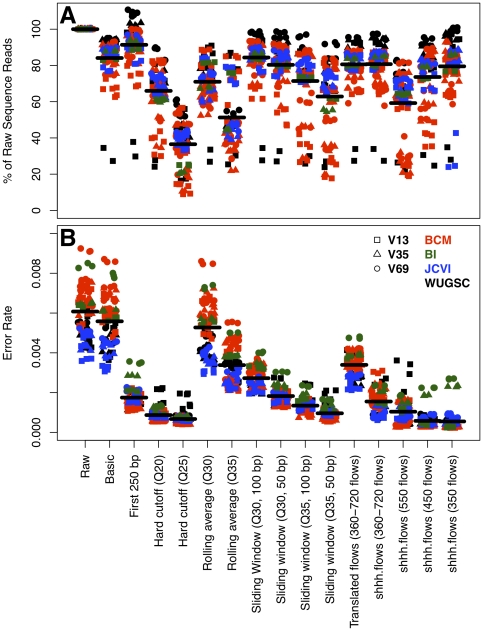
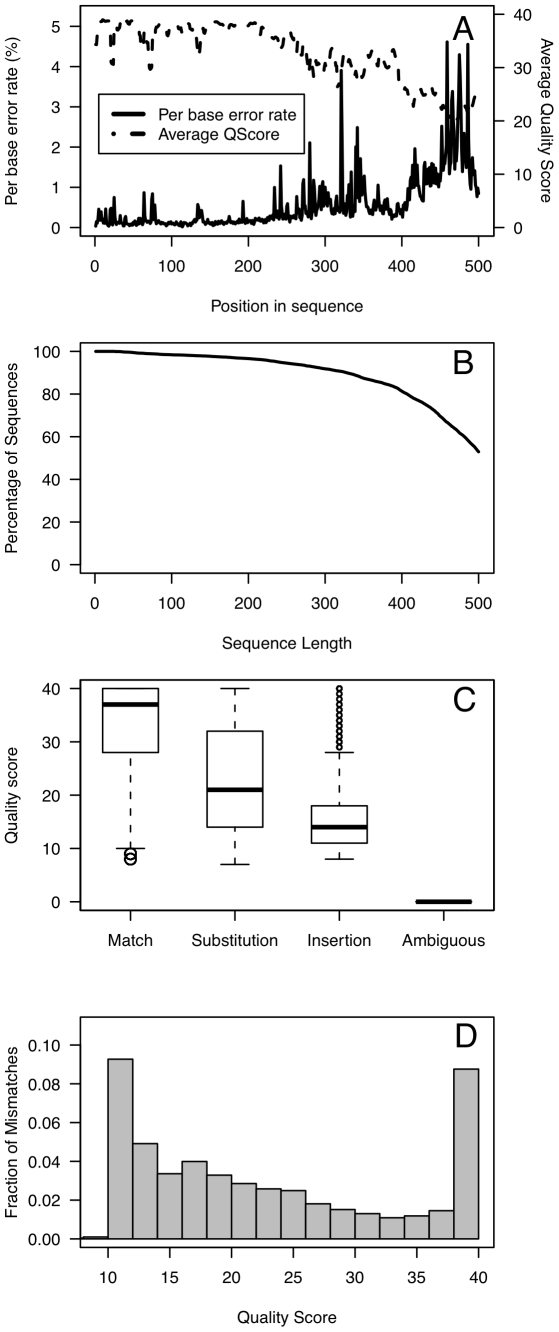
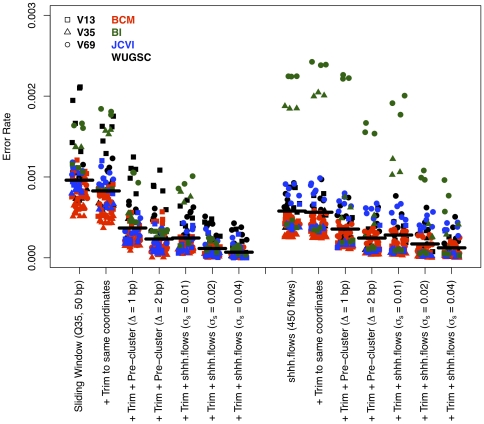
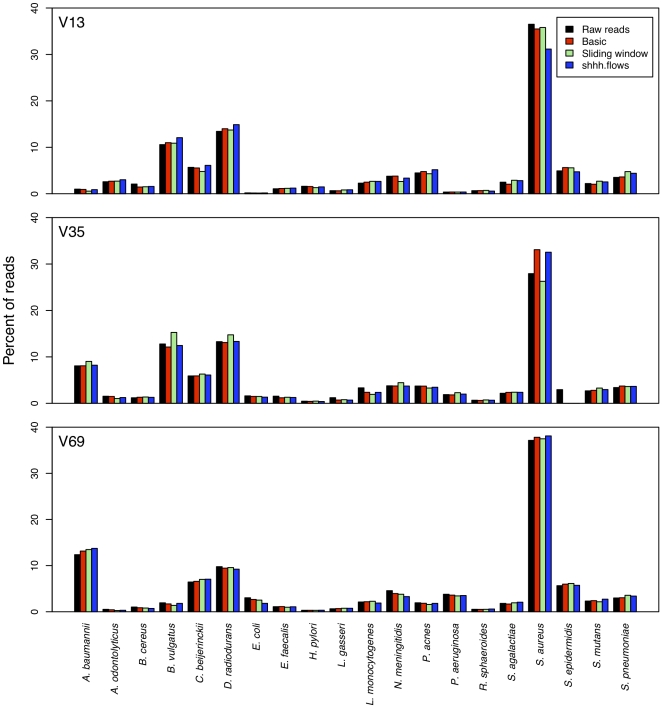
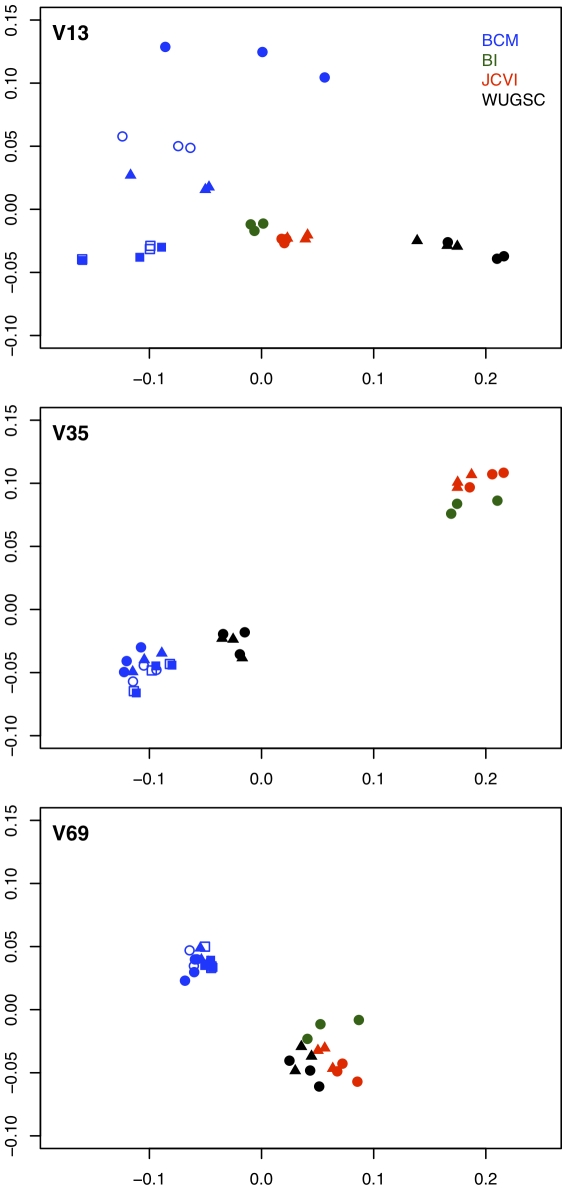
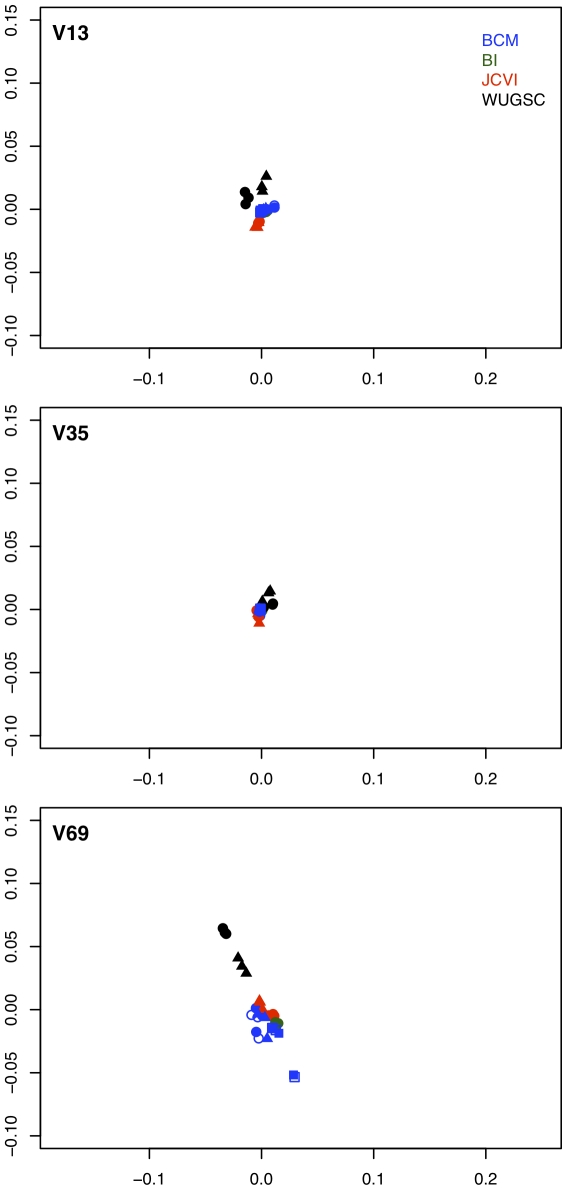
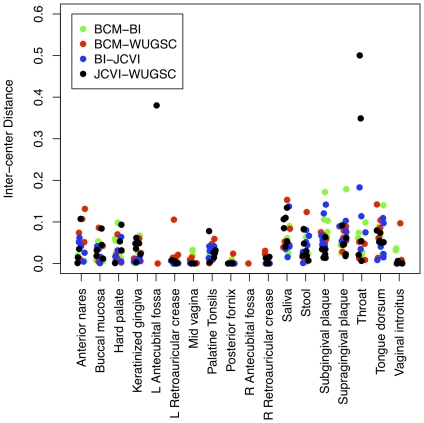
The advent of next generation sequencing has coincided with a growth in interest in using these approaches to better understand the role of the structure and function of the microbial communities in human, animal, and environmental health. Yet, use of next generation sequencing to perform 16S rRNA gene sequence surveys has resulted in considerable controversy surrounding the effects of sequencing errors on downstream analyses. We analyzed 2.7×10(6) reads distributed among 90 identical mock community samples, which were collections of genomic DNA from 21 different species with known 16S rRNA gene sequences; we observed an average error rate of 0.0060. To improve this error rate, we evaluated numerous methods of identifying bad sequence reads, identifying regions within reads of poor quality, and correcting base calls and were able to reduce the overall error rate to 0.0002. Implementation of the PyroNoise algorithm provided the best combination of error rate, sequence length, and number of sequences. Perhaps more problematic than sequencing errors was the presence of chimeras generated during PCR. Because we knew the true sequences within the mock community and the chimeras they could form, we identified 8% of the raw sequence reads as chimeric. After quality filtering the raw sequences and using the Uchime chimera detection program, the overall chimera rate decreased to 1%. The chimeras that could not be detected were largely responsible for the identification of spurious operational taxonomic units (OTUs) and genus-level phylotypes. The number of spurious OTUs and phylotypes increased with sequencing effort indicating that comparison of communities should be made using an equal number of sequences. Finally, we applied our improved quality-filtering pipeline to several benchmarking studies and observed that even with our stringent data curation pipeline, biases in the data generation pipeline and batch effects were observed that could potentially confound the interpretation of microbial community data.
Overview
The claims and statistics of this paper haven’t been checked yet.
Run the check — free, no account needed. It reads the open-access text and checks the sources it cites.
Integrity signals
Registry
Cites
Statistics
Figures
Verification
Claims the paper makes
The claims and statistics of this paper haven’t been checked yet.
Run the check — free, no account needed. It reads the open-access text and checks the sources it cites.
Claims other papers make about this one
Each is checked against this paper’s own text: does it say what the citing paper says it does?
The cited source says what the claim attributes to it.
In the citing paper
“Secondly, PCR introduces a bias in 16S tables, as some amplicon sequences will inevitably be amplified more efficiently than others (Acinas et al., 2005;Schloss et al., 2011) (Fig. 2).”
From The Microbiota-Gut-Brain Axis (2019) · cites this paper as Schloss et al., 2011
Self-check
Percentages, sums and reported differences re-computed from the paper’s own numbers.
The self-check needs the paper’s full text.
Citations
Cites
Naive Bayesian Classifier for Rapid Assignment of rRNA Sequences into the New Bacterial Taxonomy
Wang, Q., Garrity, G. M., Tiedje, J. M., & Cole, J. R. (2007) · Applied and Environmental Microbiology · doi:10.1128/aem.00062-07 · Cited by 20,145
Schloss, P. D., Westcott, S. L., Ryabin, T., Hall, J. R., Hartmann, M., Hollister, E. B., Lesniewski, R. A., Oakley, B. B., Parks, D. H., Robinson, C. J., et al. (2009) · Applied and Environmental Microbiology · doi:10.1128/aem.01541-09 · Cited by 19,549
Self-citationUCHIME improves sensitivity and speed of chimera detection
Edgar, R. C., Haas, B. J., Clemente, J. C., Quince, C., & Knight, R. (2011) · Bioinformatics · doi:10.1093/bioinformatics/btr381 · Cited by 15,114
A human gut microbial gene catalogue established by metagenomic sequencing
MetaHIT Consortium, Qin, J., Li, R., Raes, J., Arumugam, M., Burgdorf, K. S., Manichanh, C., Nielsen, T., Pons, N., Levenez, F., et al. (2010) · Nature · doi:10.1038/nature08821 · Cited by 11,624
Global patterns of 16S rRNA diversity at a depth of millions of sequences per sample
Caporaso, J. G., Lauber, C. L., Walters, W. A., Berg-Lyons, D., Lozupone, C., Turnbaugh, P. J., Fierer, N., & Knight, R. D. (2010) · Proceedings of the National Academy of Sciences · doi:10.1073/pnas.1000080107 · Cited by 9,944
Genome sequencing in microfabricated high-density picolitre reactors
Margulies, M., Egholm, M., Altman, W. E., Attiya, S., Bader, J. S., Bemben, L. A., Berka, J., Braverman, M. S., Chen, Y.-J., Chen, Z., et al. (2005) · Nature · doi:10.1038/nature03959 · Cited by 7,693
Measuring biological diversity
Magurran, A. E. (2004) · Choice Reviews Online · doi:10.5860/choice.42-1547 · Cited by 6,617
Turnbaugh, P. J., Ley, R. E., Hamady, M., Fraser-Liggett, C. M., Knight, R., & Gordon, J. I. (2007) · Nature · doi:10.1038/nature06244 · Cited by 6,091
Applied and Environmental Microbiology
(2018) · Applied and Environmental Microbiology · doi:10.1128/eissn.1098-5336 · Cited by 5,288
Measuring Biological Diversity
Reid, J. R. W. (2005) · Austral Ecology · doi:10.1111/j.1442-9993.2005.01502.x · Cited by 4,471
Research works printed but not linked: 1
- [7]Haenel H Schmidt EF Feldheim G 1959 Fecal dysbiosis in infancy. Z Kinderheilkd 82 595 603 13830809
Cited by
Sorted by citations
UPARSE: highly accurate OTU sequences from microbial amplicon reads
Edgar, R. C. (2013) · Nature Methods · doi:10.1038/nmeth.2604 · Cited by 16,770
Klindworth, A., Pruesse, E., Schweer, T., Peplies, J., Quast, C., Horn, M., & Glöckner, F. O. (2013) · Nucleic Acids Research · doi:10.1093/nar/gks808 · Cited by 8,850
Kozich, J. J., Westcott, S. L., Baxter, N. T., Highlander, S. K., & Schloss, P. D. (2013) · Applied and Environmental Microbiology · doi:10.1128/aem.01043-13 · Cited by 7,246
Self-citationCryan, J. F., O'Riordan, K. J., Cowan, C. S. M., Sandhu, K. V., Bastiaanssen, T. F. S., Boehme, M., Codagnone, M. G., Cussotto, S., Fulling, C., Golubeva, A. V., et al. (2019) · Physiological Reviews · doi:10.1152/physrev.00018.2018 · Cited by 5,286
Reagent and laboratory contamination can critically impact sequence-based microbiome analyses
Salter, S. J., Cox, M. J., Turek, E. M., Calus, S. T., Cookson, W. O., Moffatt, M. F., Turner, P., Parkhill, J., Loman, N. J., & Walker, A. W. (2014) · BMC Biology · doi:10.1186/s12915-014-0087-z · Cited by 3,463
Metadata
- Authors
- Schloss, P. D., Gevers, D., & Westcott, S. L.
- Affiliations
- University of Michigan (US)
- Broad Institute (US)
- Corresponding author
- Schloss, Patrick D.
- Venue
- PLoS ONE
- Publisher
- Public Library of Science (PLoS)
- Published
- 2011-12-14
- Volume
- 6
- Issue
- 12
- Pages
- e27310
- ISSN
- 1932-6203 (ISSN-L)
- PMC
- PMC3237409
- OpenAlex
- W2103412200
- Cited by
- 2,112
- References
- 48
- Citations by year
- 2026: 34 · 2025: 58 · 2024: 77 · 2023: 69 · 2022: 115 · 2021: 139 · 2020: 153 · 2019: 188 · 2018: 224 · 2017: 208 · 2016: 238 · 2015: 231 · 2014: 190 · 2013: 130 · 2012: 56
- FWCI
- 49.00
- Type
- journal article
- Language
- en
- Open access
- gold
- doi.org
- Locations
- PLoS ONE (publishedVersion, cc-by)
- PubMed Central (publishedVersion, cc-by)
- PubMed (publishedVersion)
- DOAJ (DOAJ: Directory of Open Access Journals) (submittedVersion, cc-by-sa)
- DSpace@MIT (Massachusetts Institute of Technology) (submittedVersion, cc-by-nc)
- Funders
- National Science Foundation (0743432)
- University of Michigan
- National Human Genome Research Institute (R01HG005975, U54HG004969, NIHU54HG004969)
- Topics
- Life Sciences › Biochemistry, Genetics and Molecular Biology › Molecular Biology › Genomics and Phylogenetic Studies
- Physical Sciences › Environmental Science › Ecology › Microbial Community Ecology and Physiology
- Physical Sciences › Environmental Science › Ecology › Environmental DNA in Biodiversity Studies
- Keywords
- 16S rRNA gene sequencing, sequencing errors, mock microbial community, error rate, quality filtering, operational taxonomic units, batch effects, microbial community analysis
- MeSH terms
- Algorithms, Base Sequence, DNA, Bacterial, Humans, Phylogeny, RNA, Ribosomal, 16S, Cluster Analysis, Polymerase Chain Reaction, Sequence Alignment, Artifacts, Sequence Analysis, DNA, DNA Primers, Biodiversity, Metagenome
About these checks
Registry, retraction, Cites and statistics results are computed, not judged, with one exception: a printed reference that no index lists is read once by a model before it counts as a citation error. Claims are extracted by a model and kept only when their quote appears verbatim in the text; each cited source is then checked, with a model’s help, for whether it says what the claim relies on. Those verdicts can be wrong — read the claim’s quote and the cited source before relying on one.
Statistics and arithmetic are recomputed, not judged.
Confidence bands are shown only for fields calibrated on our annotated test set. None is calibrated yet, so no band is shown.
What counts as a claim ›How we measure confidence ›How we check this ›
Are you an author, or do you see a problem with this page? Request a review
