

Evidence of the Most Stretchable Egg Sac Silk Stalk, of the European Spider of the Year Meta menardi
Open accessThe DOI matches its Crossref record; 61 of the 61 references it cites were found in a registry or an index.
Abstract
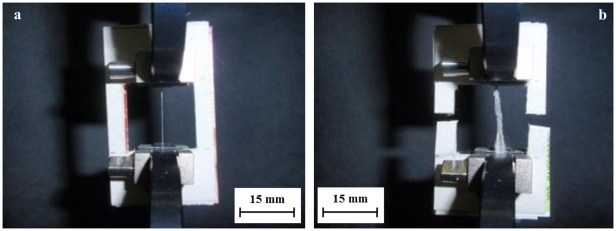
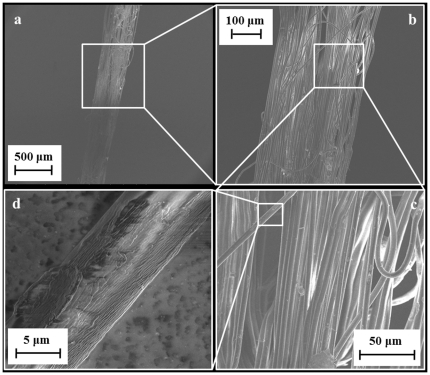
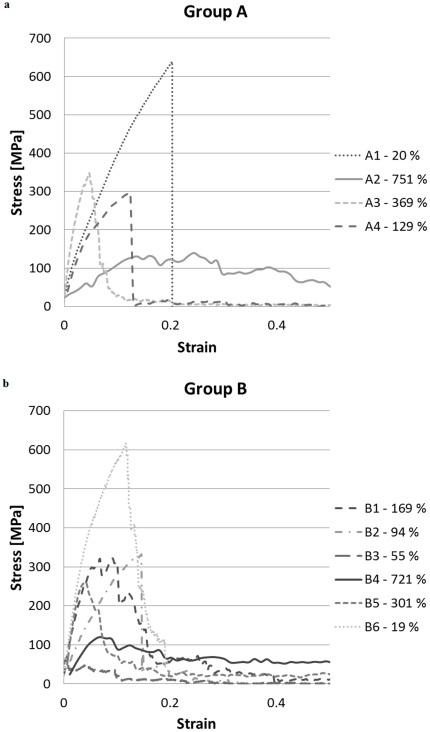
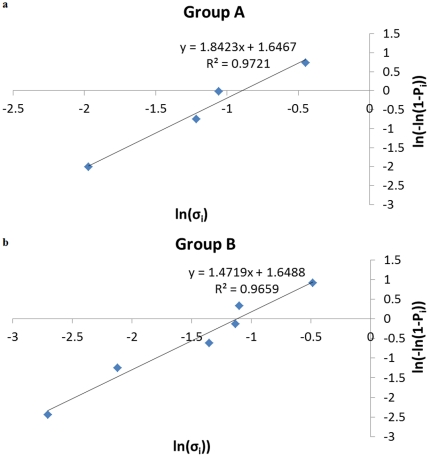
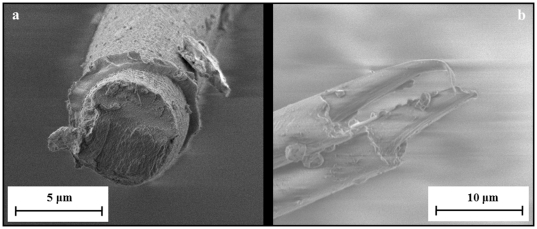
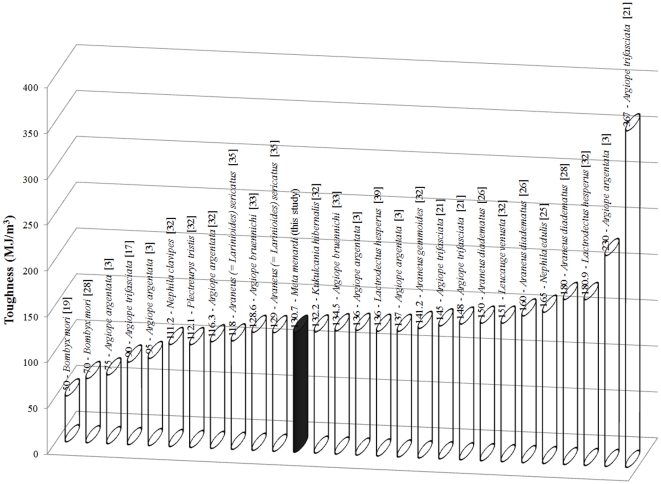
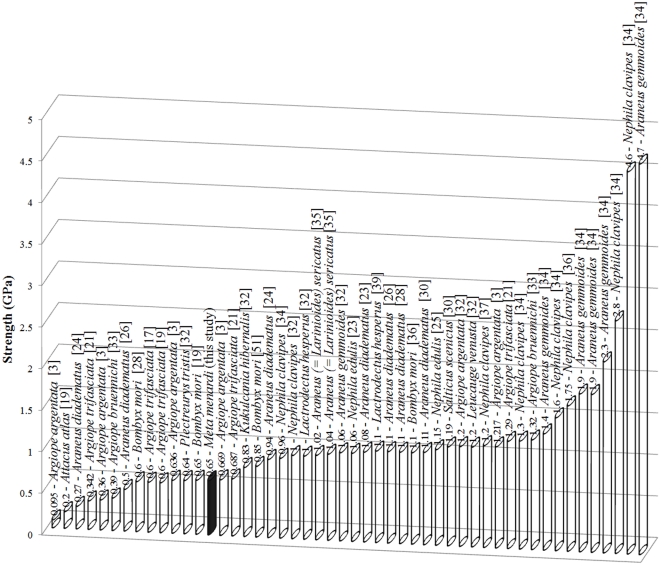
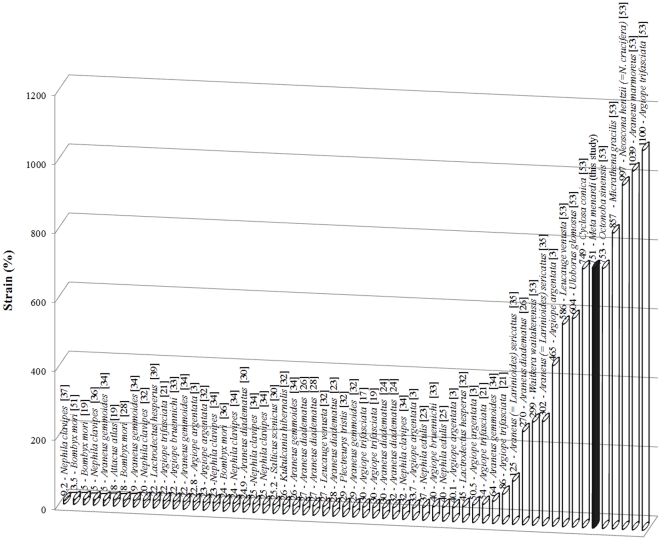
Spider silks display generally strong mechanical properties, even if differences between species and within the same species can be observed. While many different types of silks have been tested, the mechanical properties of stalks of silk taken from the egg sac of the cave spider Meta menardi have not yet been analyzed. Meta menardi has recently been chosen as the "European spider of the year 2012", from the European Society of Arachnology. Here we report a study where silk stalks were collected directly from several caves in the north-west of Italy. Field emission scanning electron microscope (FESEM) images showed that stalks are made up of a large number of threads, each of them with diameter of 6.03 ± 0.58 µm. The stalks were strained at the constant rate of 2 mm/min, using a tensile testing machine. The observed maximum stress, strain and toughness modulus, defined as the area under the stress-strain curve, are 0.64 GPa, 751% and 130.7 MJ/m(3), respectively. To the best of our knowledge, such an observed huge elongation has never been reported for egg sac silk stalks and suggests a huge unrolling microscopic mechanism of the macroscopic stalk that, as a continuation of the protective egg sac, is expected to be composed by fibres very densely and randomly packed. The Weibull statistics was used to analyze the results from mechanical testing, and an average value of Weibull modulus (m) is deduced to be in the range of 1.5-1.8 with a Weibull scale parameter (σ(0)) in the range of 0.33-0.41 GPa, showing a high coefficient of correlation (R(2) = 0.97).
Overview
The claims and statistics of this paper haven’t been checked yet.
Free: it reads the open-access text and checks the first 5 claims that cite a source we can check. Create a free account to check every claim.
Integrity signals
Registry
Cites
Statistics
Figures
Verification
Claims the paper makes
The claims and statistics of this paper haven’t been checked yet.
Free: it reads the open-access text and checks the first 5 claims that cite a source we can check. Create a free account to check every claim.
Claims other papers make about this one
Each is checked against this paper’s own text: does it say what the citing paper says it does?
The source backs part of the claim, not all of it — or backs it for a different population, condition or comparison.
In the citing paper
“Discrete examples of exceptional strength in natural materials are perhaps most prevalent in the silk of spiders [9,10], with tensile strength values of up to 4.5 GPa recorded in the literature [11].”
From Extreme strength observed in limpet teeth (2015) · cites this paper as [11]
Experimental — accuracy not yet measuredThe source backs part of the claim, not all of it — or backs it for a different population, condition or comparison.
In the citing paper
“These observations highlight an absolute material tensile strength that is the highest recorded for a biological material, outperforming the high strength of spider silk currently considered to be the strongest natural material, and approaching values comparable to those of the strongest man-made fibres.”
From Extreme strength observed in limpet teeth (2015) · cites this paper as [11]
Experimental — accuracy not yet measured
Self-check
Percentages, sums and reported differences re-computed from the paper’s own numbers.
The self-check needs the paper’s full text.
Citations
Cites
Foelix, R. F. (1982) · Cited by 1,586
Nanoconfinement controls stiffness, strength and mechanical toughness of β-sheet crystals in silk
Keten, S., Xu, Z., Ihle, B., & Buehler, M. J. (2010) · Nature Materials · doi:10.1038/nmat2704 · Cited by 1,391 · cited 1×
“and have been studied extensively during the last five decades. In particular, dragline silk is noted for its unique strength and toughness. Because of the complex structure of spider silk, large scale synthetic production still remains a challenge and can only be achieved through a controlled self-assembly of the mac…”
BackgroundSelf-citationThe mechanical design of spider silks: from fibroin sequence to mechanical function
Gosline, J. M., Guerette, P. A., Ortlepp, C. S., & Savage, K. N. (1999) · Journal of Experimental Biology · doi:10.1242/jeb.202.23.3295 · Cited by 1,165
The structure and properties of spider silk
Gosline, J. M., DeMont, M. E., & Denny, M. W. (1986) · Endeavour · doi:10.1016/0160-9327(86)90049-9 · Cited by 611 · cited 3×
“The specimens were pulled until they completely broke at a constant rate of 2 mm/min, coherently with the parameter setting of previous studies [20,23,24,25,29,33,34,48].”
BackgroundResult(1987) · Springer eBooks · doi:10.1007/978-3-642-71552-5 · Cited by 439
Nova, A., Keten, S., Pugno, N. M., Redaelli, A., & Buehler, M. J. (2010) · Nano Letters · doi:10.1021/nl101341w · Cited by 414 · cited 1×
“One study used a simple coarse-grained model to simulate the mechanical deformation of silk in which the silk constitutive unit was a combination of two domains representing the a-chains and b-pleated sheets [46].”
MethodSelf-citationGosline, J. M., Denny, M. W., & DeMont, M. E. (1984) · Nature · doi:10.1038/309551a0 · Cited by 392 · cited 1×
“The b-sheet rich crystalline units are responsible for the toughness of the silk thread while the remaining, apparently amorphous regions, have a rubber like behavior [45].”
BackgroundThe elaborate structure of spider silk: Structure and function of a natural high performance fiber
Römer, L., & Scheibel, T. (2008) · Prion · doi:10.4161/pri.2.4.7490 · Cited by 382
The Physical Properties of Spider’s Silk and Their Role in the Design of Orb-Webs
Denny, M. (1976) · Journal of Experimental Biology · doi:10.1242/jeb.65.2.483 · Cited by 345
Agnarsson, I., Kuntner, M., & Blackledge, T. A. (2010) · PLoS ONE · doi:10.1371/journal.pone.0011234 · Cited by 324 · cited 1×
“A recent study has discovered a dragline silk which is twice as tough as any other previously described silk: this silk belongs to Caerostris darwini Kuntner & Agnarsson, which is a spider which constructs its orb web suspended above streams, rivers and lakes [47].”
BackgroundMechanical and thermal properties of dragline silk from the spider Nephila clavipes
Cunniff, P. M., Fossey, S. A., Auerbach, M. A., Song, J. W., Kaplan, D. L., Adams, W. W., Eby, R. K., Mahoney, D., & Vezie, D. L. (1994) · Polymers for Advanced Technologies · doi:10.1002/pat.1994.220050801 · Cited by 297
Blackledge, T. A., & Hayashi, C. Y. (2006) · Journal of Experimental Biology · doi:10.1242/jeb.02275 · Cited by 281 · cited 5×
“Limiting our analysis to tensile tests conducted on egg sac silk, only few studies have been carried out, particularly on Argiope argentata [3], Araneus diadematus [24], Nephila madagascariensis [29], Argiope bruennichi [33], Araneus gemmoides and Nephila clavipes [34].”
BackgroundInfluentialThe effect of spinning conditions on the mechanics of a spider's dragline silk
Vollrath, F., Madsen, B., & Shao, Z. (2001) · Proceedings of the Royal Society of London. Series B: Biological Sciences · doi:10.1098/rspb.2001.1590 · Cited by 279 · cited 3×
“The specimens were pulled until they completely broke at a constant rate of 2 mm/min, coherently with the parameter setting of previous studies [20,23,24,25,29,33,34,48].”
BackgroundResultNanostructure and molecular mechanics of spider dragline silk protein assemblies
Keten, S., & Buehler, M. J. (2010) · Journal of The Royal Society Interface · doi:10.1098/rsif.2010.0149 · Cited by 269
Self-citationSilkworm silk as an engineering material
P�rez-Rigueiro, J., Viney, C., LLorca, J., & Elices, M. (1998) · Journal of Applied Polymer Science · doi:10.1002/(sici)1097-4628(19981219)70:12<2381::aid-app10>3.0.co;2-v · Cited by 257
Madsen, B., Shao, Z. Z., & Vollrath, F. (1999) · International Journal of Biological Macromolecules · doi:10.1016/s0141-8130(98)00094-4 · Cited by 256 · cited 3×
“The specimens were pulled until they completely broke at a constant rate of 2 mm/min, coherently with the parameter setting of previous studies [20,23,24,25,29,33,34,48].”
BackgroundResultMechanical properties of single-brin silkworm silk
P�rez-Rigueiro, J., Viney, C., Llorca, J., & Elices, M. (2000) · Journal of Applied Polymer Science · doi:10.1002/(sici)1097-4628(20000307)75:10<1270::aid-app8>3.0.co;2-c · Cited by 242 · cited 1×
“observed have a similar shape of that for carbon nanotube (CNT) bundles [50,51].”
BackgroundPlatnick, N. I. (2000) · doi:10.5531/db.iz.0001 · Cited by 234
Hayashi, C. Y. (2004) · Molecular Biology and Evolution · doi:10.1093/molbev/msh204 · Cited by 218
First Penning Trap Mass Measurements beyond the Proton Drip Line
Rauth, C., Ackermann, D., Blaum, K., Block, M., Chaudhuri, A., Di, Z., Eliseev, S., Ferrer, R., Habs, D., Herfurth, F., et al. (2008) · Physical Review Letters · doi:10.1103/physrevlett.100.012501 · Cited by 217
De novo engineering of reticular connective tissue in vivo by silk fibroin nonwoven materials
Dal Pra, I., Freddi, G., Minic, J., Chiarini, A., & Armato, U. (2005) · Biomaterials · doi:10.1016/j.biomaterials.2004.06.036 · Cited by 210
Use of spider silk fibres as an innovative material in a biocompatible artificial nerve conduit
Allmeling, C., Jokuszies, A., Reimers, K., Kall, S., & Vogt, P. M. (2006) · Journal of Cellular and Molecular Medicine · doi:10.1111/j.1582-4934.2006.tb00436.x · Cited by 165
The Form and Function of Spider Orb Webs
Blackledge, T. A., Kuntner, M., & Agnarsson, I. (2011) · Advances in Insect Physiology · doi:10.1016/b978-0-12-415919-8.00004-5 · Cited by 163 · cited 5×
“As the name itself suggests, dragline silk is used as a lifeline by most spiders moving through the environment and forms the backbone of most webs [4].”
BackgroundInfluentialMechanical Properties of Spider Dragline Silk: Humidity, Hysteresis, and Relaxation
Vehoff, T., Glišović, A., Schollmeyer, H., Zippelius, A., & Salditt, T. (2007) · Biophysical Journal · doi:10.1529/biophysj.106.099309 · Cited by 152 · cited 1×
“In orbweb spiders, the spinnerets are three paired appendagelike organs on the abdomen, each of which contains dozens to hundreds of spigots connected to their own internal silk-producing glands (Figure 1) [15].”
BackgroundThe effect of solvents on the contraction and mechanical properties of spider silk
Shao, Z., & Vollrath, F. W. (1999) · Polymer · doi:10.1016/s0032-3861(98)00266-3 · Cited by 145
Variation in the material properties of spider dragline silk across species
Swanson, B. O., Blackledge, T. A., Beltrán, J., & Hayashi, C. Y. (2005) · Applied Physics A · doi:10.1007/s00339-005-3427-6 · Cited by 143 · cited 4×
“Dragline silk, flagelliform silk, aggregate silk and aciniform silk have been extensively characterized in Argiope trifasciata (Forsskål) [16–21], Araneus diadematus (Linnaeus) [22–31], Argiope argentata (Fabricius) [3,32], Argiope bruennichi (Scopoli) [33], Araneus gemmoides Chamberlin & Ivie [32,34], Larinioides (…”
BackgroundInfluentialSpiderwebs and Silk: Tracing Evolution from Molecules to Genes to Phenotypes
Craig, C. L. (2003) · doi:10.1093/oso/9780195129168.001.0001 · Cited by 134
Behavioural and biomaterial coevolution in spider orb webs
Sensenig, A. T., Agnarsson, I., & Blackledge, T. A. (2010) · Journal of Evolutionary Biology · doi:10.1111/j.1420-9101.2010.02048.x · Cited by 130 · cited 1×
“Because silk is so important to spiders, it has presumably been subjected to strong selective pressures during the 400 million years of spider evolution and can be regarded as one of the key to spider’s evolutionary success [40,41].”
BackgroundComparative Structure and Histochemistry of Silk-Producing Organs in Arachnids
Kovoor, J. (1987) · Springer eBooks · doi:10.1007/978-3-642-71552-5_12 · Cited by 130
Fractographic analysis of silkworm and spider silk
Poza, P., Pérez‐Rigueiro, J., Elices, M., & LLorca, J. (2002) · Engineering Fracture Mechanics · doi:10.1016/s0013-7944(01)00120-5 · Cited by 128 · cited 1×
“41o, we were able to measure the real diameter and the exact number of single threads in each stalk, improving the accurateness [19].”
BackgroundKöhler, T., & Vollrath, F. W. (1995) · Journal of Experimental Zoology · doi:10.1002/jez.1402710102 · Cited by 127
Structural organization of spider silk
Vollrath, F. W., Holtet, T. L., Thøgersen, H. C., & Frische, S. (1996) · Proceedings of the Royal Society B Biological Sciences · doi:10.1098/rspb.1996.0023 · Cited by 122 · cited 1×
“Images from the FESEM further show that the fibers are made up of 2 layers [38], an inner layer and an outer coating.”
MethodSpiderwebs and silk : tracing evolution from molecules to genes to phenotypes
Craig, C. L. (2003) · Cited by 116
Mechanical Properties of Silk: Interplay of Deformation on Macroscopic and Molecular Length Scales
Krasnov, I., Diddens, I., Hauptmann, N., Helms, G., Ogurreck, M., Seydel, T., Funari, S. S., & Müller, M. (2008) · Physical Review Letters · doi:10.1103/physrevlett.100.048104 · Cited by 105 · cited 1×
“When an external force is applied, the loose amino acids stretch and from a disordered position are straightened, whilst the b-sheets are subject to tensile force [44].”
BackgroundÁlvarez‐Padilla, F., Dimitrov, D., Giribet, G., & Hormiga, G. (2009) · Cladistics · doi:10.1111/j.1096-0031.2008.00242.x · Cited by 100
Tensile properties of Argiope trifasciata drag line silk obtained from the spider's web
Pérez‐Rigueiro, J., Elices, M., LLorca, J., & Viney, C. (2001) · Journal of Applied Polymer Science · doi:10.1002/app.2072 · Cited by 94 · cited 1×
“6 GPa for the dragline of Argiope trifasciata [17] or equal to 5.”
BackgroundRousseau, M., Lefèvre, T., & Pézolet, M. (2009) · Biomacromolecules · doi:10.1021/bm9007919 · Cited by 84 · cited 1×
“Aciniform glands produce the silk used for prey wrapping and egg case construction and its fiber are more stretchable and tougher than dragline silk [5].”
BackgroundSelf-tightening of spider silk fibers induced by moisture
Guinea, G. V., Elices, M., Pérez‐Rigueiro, J., & Plaza, G. R. (2003) · Polymer · doi:10.1016/s0032-3861(03)00625-6 · Cited by 76 · cited 4×
“The specimens were pulled until they completely broke at a constant rate of 2 mm/min, coherently with the parameter setting of previous studies [20,23,24,25,29,33,34,48].”
BackgroundResultInfluentialVasanthavada, K., Hu, X., Falick, A. M., Mattina, C. L., Moore, A., Jones, P. R., Yee, R., Reza, R., Tuton‐Blasingame, T., & Vierra, C. (2007) · Journal of Biological Chemistry · doi:10.1074/jbc.m705791200 · Cited by 72
Hierarchical simulations for the design of supertough nanofibers inspired by spider silk
Bosia, F., Buehler, M. J., & Pugno, N. M. (2010) · Physical Review E · doi:10.1103/physreve.82.056103 · Cited by 63 · cited 1×
“observed have a similar shape of that for carbon nanotube (CNT) bundles [50,51].”
BackgroundSelf-citationNovel Molecular and Mechanical Properties of Egg Case Silk from Wasp Spider, Argiope bruennichi
Zhao, A., Zhao, T., Nakagaki, K., Zhang, Y., Sima, Y., Miao, Y., Shiomi, K., Kajiura, Z., Nagata, Y., Takadera, M., et al. (2006) · Biochemistry · doi:10.1021/bi052414g · Cited by 60 · cited 5×
“Limiting our analysis to tensile tests conducted on egg sac silk, only few studies have been carried out, particularly on Argiope argentata [3], Araneus diadematus [24], Nephila madagascariensis [29], Argiope bruennichi [33], Araneus gemmoides and Nephila clavipes [34].”
BackgroundResultInfluentialOpell, B. D., & Bond, J. E. (2000) · Biological Journal of the Linnean Society · doi:10.1111/j.1095-8312.2000.tb00203.x · Cited by 56
The design of self-collapsed super-strong nanotube bundles
Pugno, N. M. (2010) · Journal of the Mechanics and Physics of Solids · doi:10.1016/j.jmps.2010.05.007 · Cited by 54
Self-citationFinding inspiration in argiope trifasciata spider silk fibers
Elices, M., Guinea, G. V., Pérez‐Rigueiro, J., & Plaza, G. R. (2005) · JOM · doi:10.1007/s11837-005-0218-7 · Cited by 51
Comparison of Physical Properties of Three Silks from Nephila clavipes and Araneus gemmoides
Stauffer, S. L., Coguill, S. L., & Lewis, R. V. (1994) · Biodiversity Heritage Library (Smithsonian Institution) · doi:10.5281/zenodo.15933168 · Cited by 49
Possible functional significance of spigot placement on the spinnerets of spiders
Eberhard, W. G. (2010) · Journal of Arachnology · doi:10.1636/b09-97.1 · Cited by 47 · cited 2×
“In some derived taxa (like cobweb spinning theridiids) this type of silk is used to wrap preys [6].”
BackgroundTensile mechanical property evaluation of natural and epoxide‐treated silk fibers
Dunaway, D. L., Thiel, B. L., & Viney, C. (1995) · Journal of Applied Polymer Science · doi:10.1002/app.1995.070580322 · Cited by 42 · cited 2×
“Dragline silk, flagelliform silk, aggregate silk and aciniform silk have been extensively characterized in Argiope trifasciata (Forsskål) [16–21], Araneus diadematus (Linnaeus) [22–31], Argiope argentata (Fabricius) [3,32], Argiope bruennichi (Scopoli) [33], Araneus gemmoides Chamberlin & Ivie [32,34], Larinioides (…”
BackgroundPrà, I. D., Chiarini, A., Boschi, A., Freddi, G., & Armato, U. (2006) · International Journal of Molecular Medicine · doi:10.3892/ijmm.18.2.241 · Cited by 41
Spider silk: evolution and 400 million years of spinning, waiting, snagging, and mating
(2011) · Choice Reviews Online · doi:10.5860/choice.48-2672 · Cited by 40
The scaling of safety factor in spider draglines
Ortlepp, C., & Gosline, J. M. (2008) · Journal of Experimental Biology · doi:10.1242/jeb.014191 · Cited by 39 · cited 1×
“inaurata madagascariensis) (Vinson) [29], Lactrodectus hesperus Chamberlin & Ivie [32,39], Leucauge venusta Walckenaer [32], Plectreurys tristis Simon [32], Kukulcania hibernalis Hentz [32] and Salticus scenicus (Clerck) [30].”
BackgroundDetermination of tensile strength distribution of nanotubes from testing of nanotube bundles
XIAO, T., Ren, Y., Liao, K., Wu, P., LI, F., & Cheng, H. (2007) · Composites Science and Technology · doi:10.1016/j.compscitech.2007.10.004 · Cited by 27 · cited 1×
“In addition, the genuses Nephila, Araneus and Meta belong to three related families of orb web weavers (Nephilidae, Araneidae and Tetragnathidae, respectively [16]) and thus general conclusions could be drawn [49].”
BackgroundPlasticity in Major Ampullate Silk Production in Relation to Spider Phylogeny and Ecology
Boutry, C., Řezáč, M., & Blackledge, T. A. (2011) · PLoS ONE · doi:10.1371/journal.pone.0022467 · Cited by 25 · cited 1×
“It has been demonstrated that silk properties (in terms of different reeling methods [32,42], environmental conditions [8,20], types of silk [e.”
BackgroundMaterial properties of cobweb silk from the black widow spider Latrodectus hesperus
Moore, A. M. F., & Tran, K. (1999) · International Journal of Biological Macromolecules · doi:10.1016/s0141-8130(98)00090-7 · Cited by 23 · cited 2×
“Dragline silk, flagelliform silk, aggregate silk and aciniform silk have been extensively characterized in Argiope trifasciata (Forsskål) [16–21], Araneus diadematus (Linnaeus) [22–31], Argiope argentata (Fabricius) [3,32], Argiope bruennichi (Scopoli) [33], Araneus gemmoides Chamberlin & Ivie [32,34], Larinioides (…”
BackgroundForadori, M. J., Kovoor, J., Moon, M., & Tillinghast, E. K. (2002) · Journal of Morphology · doi:10.1002/jmor.1100 · Cited by 22
EGG SAC STRUCTURE OF ZYGIELLAX-NOTATA (ARACHNIDA, ARANEIDAE)
Gheysens, T., Beladjal, L., Gellynck, K., Nimmen, E. V., Langenhove, L. V., & Mertens, J. (2005) · Journal of Arachnology · doi:10.1636/cs05-12.1 · Cited by 20 · cited 1×
“Moreover, the left and right fibers are coated with a gluey secretion that causes them to adhere together [11].”
BackgroundMODELING OF THE STRESS-STRAIN BEHAVIOR OF EGG SAC SILK OF THE SPIDER ARANEUS DIADEMATUS
Nimmen, E. V., Gellynck, K., Gheysens, T., Langenhove, L. V., & Mertens, J. (2005) · Journal of Arachnology · doi:10.1636/cs05-5.1 · Cited by 19
Egg sac silk of Theridiosoma gemmosum (Araneae: Theridiosomatidae)
Hajer, J., Malý, J., Hrubá, L., & Řeháková, D. (2009) · Journal of Morphology · doi:10.1002/jmor.10757 · Cited by 13 · cited 1×
“The egg sac case houses eggs, while the stalk attaches the cocoon to the substrate [12].”
BackgroundThe Tensile Properties of Cocoon Silk of the Spider Araneus diadematus
Nimmen, E. V., Gellynck, K., Langenhove, L. V., & Mertens, J. (2006) · Textile Research Journal · doi:10.1177/0040517506068057 · Cited by 12
THE TENSILE BEHAVIOUR OF SPIDER SILK
Nimmen, E. V., Gellynck, K., & Langenhove, L. V. (2005) · Autex Research Journal · doi:10.1515/aut-2005-050301 · Cited by 12
Bosia, F., Buehler, M. J., & Pugno, N. M. (2010) · Physical Review E · doi:10.1103/physreve.82.059902 · Cited by 3
Self-citationNew, T. R. (2010) · Journal of Insect Conservation · doi:10.1007/s10841-010-9317-z · Cited by 1
Cited by
Extreme strength observed in limpet teeth
Barber, A. H., Lu, D., & Pugno, N. M. (2015) · Journal of the Royal Society Interface · doi:10.1098/rsif.2014.1326 · Cited by 212
Self-citationBio-mimetic mechanisms of natural hierarchical materials: A review
Chen, Q., & Pugno, N. M. (2013) · Journal of the Mechanical Behavior of Biomedical Materials · doi:10.1016/j.jmbbm.2012.10.012 · Cited by 196
“Other authors (Pugno and Lepore, 2008a,2008b; Pugno et al., 2011; Lepore et al., 2008,2012a) investigated the adhesive time of male/female geckos on different rough surfaces and found that the time to failure obeys a Weibull statistical distribution and optimal angle for the maximal adhesion in…”
BackgroundSelf-citationFundamental research questions in subterranean biology
Mammola, S., Amorim, I. R., Bichuette, M. E., Borges, P. A. V., Cheeptham, N., Cooper, S. J., Culver, D. C., Deharveng, L., Eme, D., Ferreira, R. L., et al. (2020) · Biological reviews/Biological reviews of the Cambridge Philosophical Society · doi:10.1111/brv.12642 · Cited by 157
“…such as autism (Yoshizawa et al., 2018), diabetes (Riddle et al., 2018), and cancer (Gatenby, Gillies, & Brown, 2011), to investigate the engineering potential of biologically inspired materials (Lepore et al., 2012), and to discover new drugs and pharmaceutical products (Cheeptham et al., 2013).”
BackgroundMammola, S., Lunghi, E., Bilandžija, H., Cardoso, P., Grimm, V., Schmidt, S. I., Hesselberg, T., & Martínez, A. (2021) · Ecology and Evolution · doi:10.1002/ece3.7556 · Cited by 123
“…2019), ethology (Parzefall, 1982), and evolution (Juan et al., 2010), ultimately reaching conclusions relevant to disciplines as diverse as medicine (Riddle et al., 2018; Stockdale et al., 2018; Yoshizawa et al., 2018), engineering (Lepore et al., 2012), and exobiology (Northup et al., 2011).”
BackgroundSpider silk reinforced by graphene or carbon nanotubes
Lepore, E., Bosia, F., Bonaccorso, F., Bruna, M., Taioli, S., Garberoglio, G., Ferrari, A. C., & Pugno, N. M. (2017) · 2D Materials · doi:10.1088/2053-1583/aa7cd3 · Cited by 66
“We observe an increment of the mechanical properties with respect to the pristine silk, up to a fracture strength ~5.4 GPa and a toughness modulus ~1570 J/g, the highest reported to date for any fibre.”
BackgroundSelf-citation
Metadata
- Authors
- Lepore, E., Marchioro, A., Isaia, M., Buehler, M. J., & Pugno, N. M.
- Affiliations
- Politecnico di Torino (IT)
- University of Turin (IT)
- Massachusetts Institute of Technology (US)
- Corresponding author
- Pugno, Nicola M.
- Venue
- PLoS ONE
- Publisher
- Public Library of Science (PLoS)
- Published
- 2012-02-08
- Volume
- 7
- Issue
- 2
- Pages
- e30500
- ISSN
- 1932-6203 (ISSN-L)
- PMC
- PMC3275603
- OpenAlex
- W2067922507
- Cited by
- 39
- References
- 61
- Citations by year
- 2025: 2 · 2024: 3 · 2023: 3 · 2022: 2 · 2021: 2 · 2020: 3 · 2019: 4 · 2018: 1 · 2017: 6 · 2016: 2 · 2015: 7 · 2014: 1 · 2013: 1 · 2012: 1
- FWCI
- 1.30
- Type
- journal article
- Language
- en
- Open access
- gold
- doi.org
- Locations
- PLoS ONE (publishedVersion, cc-by)
- PubMed Central (publishedVersion, cc-by)
- PubMed (publishedVersion)
- Unitn Eprints Research (Università Degli Studi di Trento) (acceptedVersion, other-oa)
- Institutional Research Information System (Università degli Studi di Trento) (submittedVersion, cc-by)
- Institutional Research Information System University of Turin (University of Turin) (submittedVersion, other-oa)
- DOAJ (DOAJ: Directory of Open Access Journals) (submittedVersion, cc-by-sa)
- DSpace@MIT (Massachusetts Institute of Technology) (submittedVersion, cc-by-nc)
- PORTO@Iris (submittedVersion)
- PORTO Publications Open Repository TOrino (Politecnico di Torino) (submittedVersion)
- Queen Mary Research Online (Queen Mary University of London) (submittedVersion, cc-by)
- Funders
- European Commission (2007–2013, FP7 2007-2013, FP7/2007, 279985)
- Istituto Nazionale di Ricerca Metrologica
- Office of Naval Research (N000141010562, N00014)
- Topics
- Physical Sciences › Materials Science › Biomaterials › Silk-based biomaterials and applications
- Life Sciences › Agricultural and Biological Sciences › Ecology, Evolution, Behavior and Systematics › Spider Taxonomy and Behavior Studies
- Life Sciences › Agricultural and Biological Sciences › Insect Science › Silkworms and Sericulture Research
- Keywords
- Meta menardi, spider silk, silk mechanical properties, stretchability, toughness, tensile strength, cave spiders, Weibull analysis
- MeSH terms
- Animals, Europe, Materials Testing, Spiders, Tensile Strength, Silk
About these checks
Registry, retraction, Cites and statistics results are computed, not judged, with one exception: a printed reference that no index lists is read once by a model before it counts as a citation error. Claims are extracted by a model and kept only when their quote appears verbatim in the text; each cited source is then checked, with a model’s help, for whether it says what the claim relies on. Those verdicts can be wrong — read the claim’s quote and the cited source before relying on one.
Statistics and arithmetic are recomputed, not judged.
Confidence bands are shown only for fields calibrated on our annotated test set. None is calibrated yet, so no band is shown.
What counts as a claim ›How we measure confidence ›How we check this ›
Are you an author, or do you see a problem with this page? Request a review
Data sources
Bibliographic data: Semantic Scholar, OpenAlex, Crossref.
Contains information from the Semantic Scholar Academic Graph Datasets, made available under the ODC Attribution License (ODC-BY 1.0).
Semantic Scholar’s data is described in: Kinney, R., et al. (2023). The Semantic Scholar Open Data Platform. arXiv:2301.10140.
