

New Specimens of Nemegtomaia from the Baruungoyot and Nemegt Formations (Late Cretaceous) of Mongolia
Open accessThe DOI matches its Crossref record; 57 of the 59 references it cites were found in a registry or an index; none of the 49 sources its claims cite is checked for support yet.
Abstract
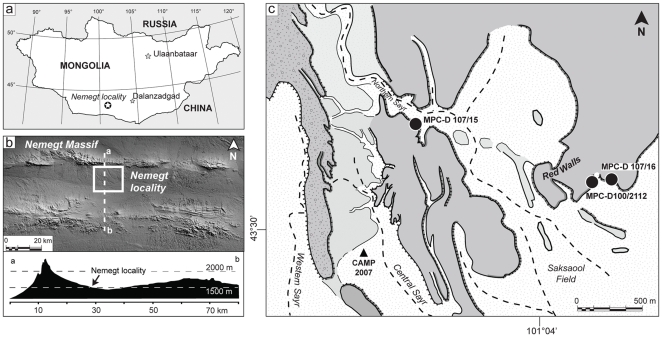
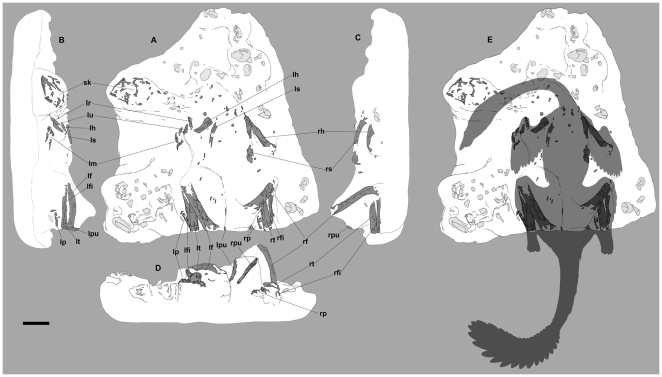
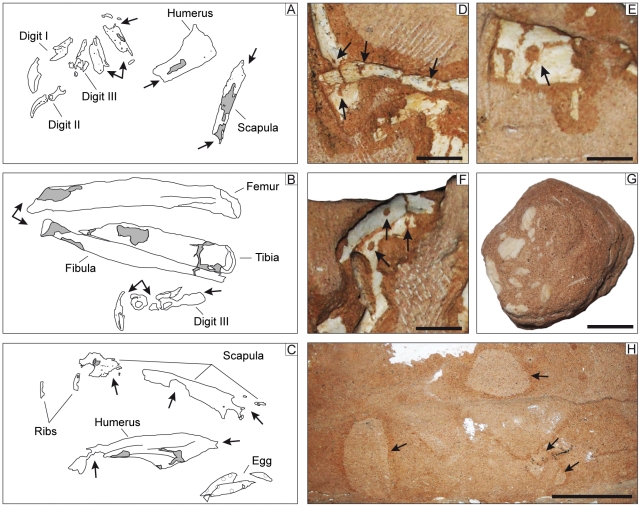
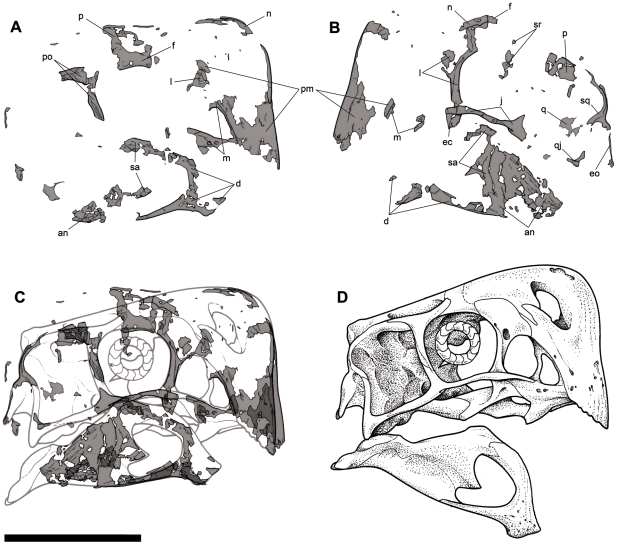
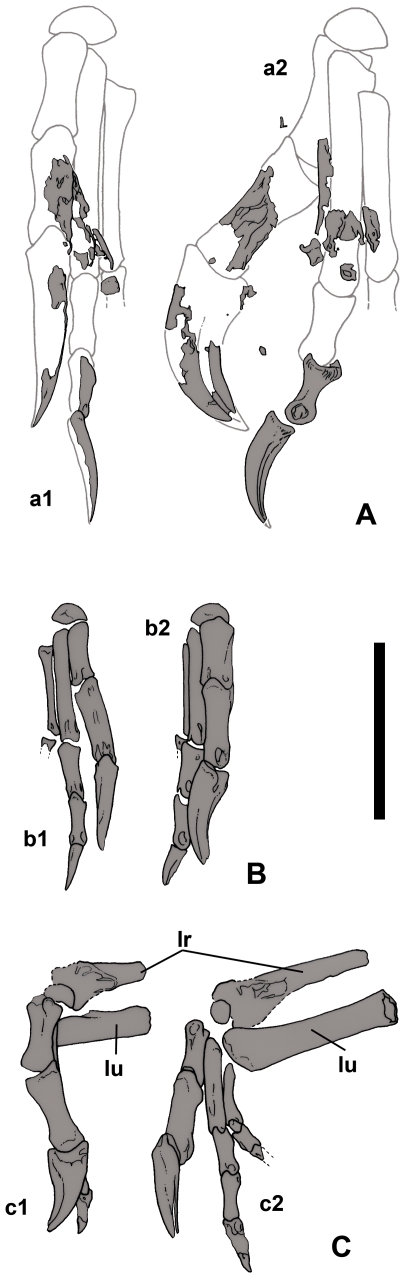
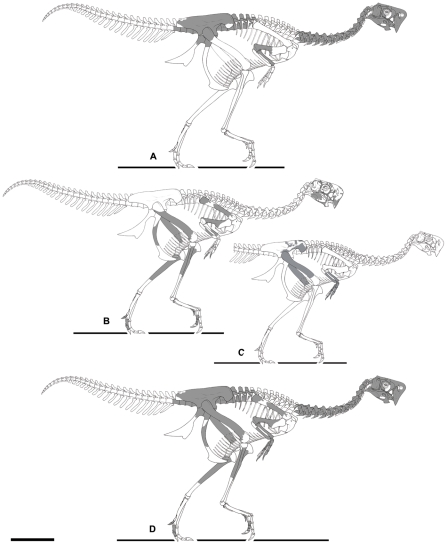
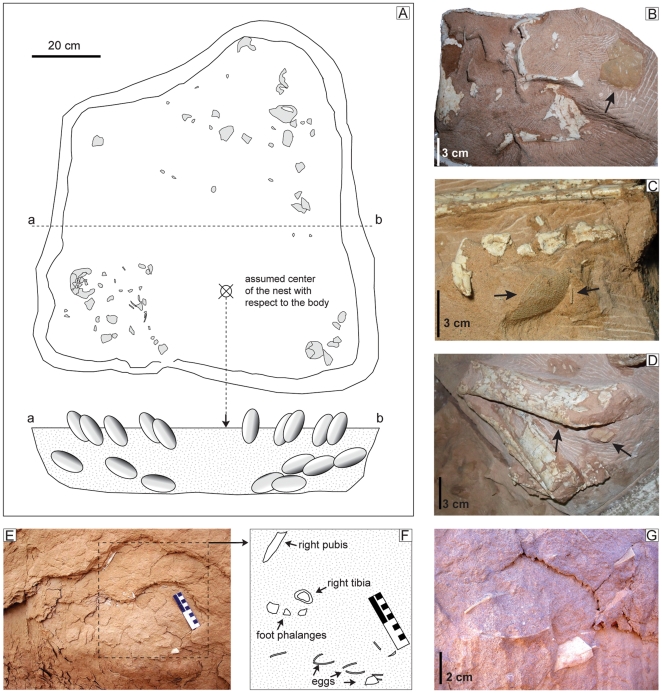
Two new specimens of the oviraptorid theropod Nemegtomaia barsboldi from the Nemegt Basin of southern Mongolia are described. Specimen MPC-D 107/15 was collected from the upper beds of the Baruungoyot Formation (Campanian-Maastrichtian), and is a nest of eggs with the skeleton of the assumed parent of Nemegtomaia on top in brooding position. Much of the skeleton was damaged by colonies of dermestid coleopterans prior to its complete burial. However, diagnostic characters are recovered from the parts preserved, including the skull, partial forelimbs (including the left hand), legs, and distal portions of both feet. Nemegtomaia represents the fourth known genus of oviraptorid for which individuals have been found on nests of eggs. The second new specimen, MPC-D 107/16, was collected a few kilometers to the east in basal deposits of the Nemegt Formation, and includes both hands and femora of a smaller Nemegtomaia individual. The two formations and their diverse fossil assemblages have been considered to represent sequential time periods and different environments, but data presented here indicate partial overlap across the Baruungoyot-Nemegt transition. All other known oviraptorids from Mongolia and China are known exclusively from xeric or semi-arid environments. However, this study documents that Nemegtomaia is found in both arid/aeolian (Baruungoyot Formation) and more humid/fluvial (Nemegt Formation) facies.
Overview
CoChat Summary
TL;DR
Two new specimens of the oviraptorid *Nemegtomaia barsboldi* from the Nemegt Basin, Mongolia, include a brooding individual on a nest of eggs (MPC-D 107/15) and a smaller partial skeleton with hands and femora (MPC-D 107/16). The material confirms *Nemegtomaia* as an ingeniine oviraptorid, documents the first ingeniine found on a nest, and indicates partial overlap between Baruungoyot and Nemegt depositional environments.
Key findings
- MPC-D 107/15 is a nest of eggs with an articulated partial skeleton in brooding position; *Nemegtomaia* becomes the fourth known oviraptorid genus found on nests and the first within Ingeniinae. Skull length is 172 mm, jaw length 152 mm, maximum dentary height 50 mm; estimated body length is about 2 m and mass about 40 kg.
- MPC-D 107/16 preserves both hands, femora, ribs, and a partial pelvis; it is approximately 35% smaller than the other two specimens. Estimated femur length is 222 mm and radius length 99 mm; hand length is 36% of femur length, comparable with *Ingenia yanshini* (40%).
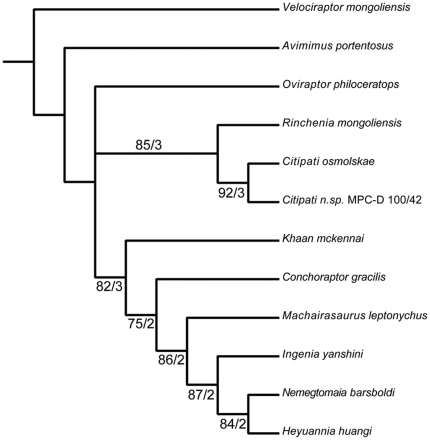
- Phylogenetic analysis recovers *Nemegtomaia* as a derived ingeniine, with Ingeniinae including (Khaan+(Conchoraptor+(Machairasaurus+(Ingenia+(Heyuannia+Nemegtomaia))))), rather than as an oviraptorine close to *Citipati* as previously proposed.
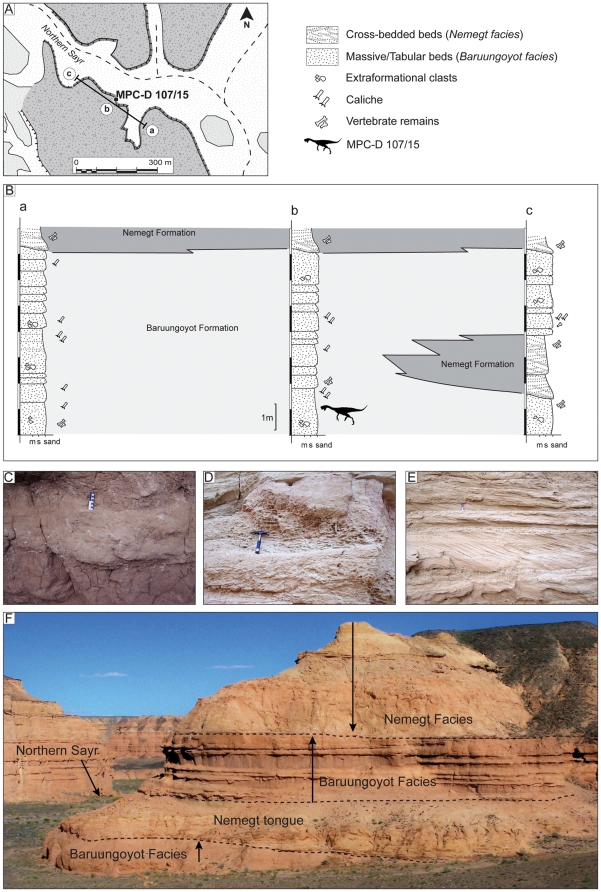
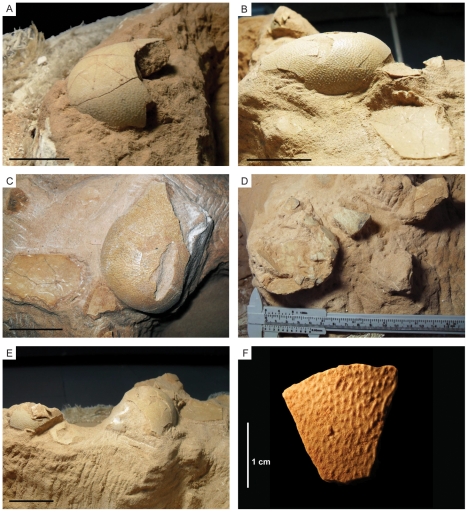
- Stratigraphic data document an approximately 25 m thick interval where Baruungoyot and Nemegt formations interfinger, and *Nemegtomaia* occurs in both aeolian/arid Baruungoyot facies and more fluvial Nemegt facies. Eggs are elongatoolithid; eggshell is 1–1.2 mm thick with ornament ridges about 0.3 mm; most complete eggs are estimated at 5–6 cm wide and 14–16 cm long.
Methods
- Descriptive and taphonomic study of two specimens from the Nemegt locality, southern Mongolia; MPC-D 107/15 was collected in a single block from the upper Baruungoyot Formation at Northern Sayr, and MPC-D 107/16 from the Red Walls area (abstract: basal Nemegt Formation; Methods: uppermost Baruungoyot Formation).
- Eggshell fragments were studied in tangential and radial thin sections using optical/polarizing light microscopy and scanning electron microscopy; stratigraphic sections were measured and logged for interfingering contacts.
- Phylogenetic analysis adapted the Longrich et al. matrix, using 12 taxa and 183 characters with PAUP* 4.0b10 exhaustive search; robustness was assessed with bootstrap (1000 replicates) and decay indices, and the analysis was rerun after rescoring five estimated-ratio characters as unknown.
Limitations
- Stated: much of MPC-D 107/15 was damaged by dermestid coleopteran scavenging, crushing, and erosion; no complete egg or embryo was recovered, and eggshell histostructures and pore canals were obliterated by recrystallization. The plaster jacket also precluded direct observation of parts of the nest.
- Stated: five phylogenetic characters relied on dimensions estimated from incomplete bones and may have unduly influenced results; these were rescored as unknown in a rerun, which recovered the same topology.
- Evident from text: MPC-D 107/16 is fragmentary, and its interpretation as a single individual is uncertain because an articulated right hand was found far enough behind the right leg to suggest it might represent a second individual; the authors assume one individual for the paper.
Model-written summary. Check it against the paper before relying on it.
Integrity signals
Registry
Cites
Statistics
Figures
Verification
Claims the paper makes
0 Valid · 7 Not valid · 27 Not checked · 175 Own results and interpretations
A result the paper reports from its own data — it cites no other source for it, so there is none to check. The quote shows it is in the paper.
In the paper
“includes both hands and femora of a smaller Nemegtomaia individual.”
§ New Specimens of Nemegtomaia from the Baruungoyot and Nemegt Formations (Late Cretaceous) of Mongolia > Abstract
plainSingle case- Asserted: passes — The authors put it forward as true.
- Checkable: passes — It can be checked against evidence.
- Load-bearing: unclear — It is unclear whether the paper’s conclusions depend on it.
- Based: passes — The paper gives a reason why it holds.
A result the paper states — it cites no source for it, so there is none to check. The quote shows it is in the paper.
In the paper
“is a nest of eggs with the skeleton of the assumed parent of Nemegtomaia on top in brooding position”
§ New Specimens of Nemegtomaia from the Baruungoyot and Nemegt Formations (Late Cretaceous) of Mongolia > Abstract
plainSingle case- Asserted: passes — The authors put it forward as true.
- Checkable: passes — It can be checked against evidence.
- Load-bearing: passes — The paper’s conclusions depend on it.
- Based: passes — The paper gives a reason why it holds.
A result the paper reports from its own data — it cites no other source for it, so there is none to check. The quote shows it is in the paper.
In the paper
“data presented here indicate partial overlap across the Baruungoyot-Nemegt transition.”
§ New Specimens of Nemegtomaia from the Baruungoyot and Nemegt Formations (Late Cretaceous) of Mongolia > Abstract
hedgedstates an associationn = 2- Asserted: passes — The authors put it forward as true.
- Checkable: passes — It can be checked against evidence.
- Load-bearing: passes — The paper’s conclusions depend on it.
- Based: passes — The paper gives a reason why it holds.
A result the paper reports from its own data — it cites no other source for it, so there is none to check. The quote shows it is in the paper.
In the paper
“this study documents that Nemegtomaia is found in both arid/aeolian (Baruungoyot Formation) and more humid/fluvial (Nemegt Formation) facies.”
§ New Specimens of Nemegtomaia from the Baruungoyot and Nemegt Formations (Late Cretaceous) of Mongolia > Abstract
boostedstates an associationn = 2- Asserted: passes — The authors put it forward as true.
- Checkable: passes — It can be checked against evidence.
- Load-bearing: passes — The paper’s conclusions depend on it.
- Based: passes — The paper gives a reason why it holds.
A result the paper reports from its own data — it cites no other source for it, so there is none to check. The quote shows it is in the paper.
In the paper
“new data collected in the Northern Sayr at the Nemegt locality document an approximately 25 meter thick stratigraphic interval where the two formations interfinger”
§ New Specimens of Nemegtomaia from the Baruungoyot and Nemegt Formations (Late Cretaceous) of Mongolia > Introduction > Geology and Stratigraphy
plain- Asserted: passes — The authors put it forward as true.
- Checkable: passes — It can be checked against evidence.
- Load-bearing: passes — The paper’s conclusions depend on it.
- Based: passes — The paper gives a reason why it holds.
86 more claims
Create a free account to see all 209 claims and to verify the 49 references still open.
- Probably not a substantial claim. 33
- It may state two separate claims as one. 90
- The quote only partly states this claim. 3
Self-check
Percentages, sums and reported differences re-computed from the paper’s own numbers.
Each contradiction between two passages listed here was confirmed by an independent check.
Rated major: it would touch a result — a value a result rests on, reported and recomputed p-values on opposite sides of the significance level, two passages that conflict with no sign which is right, or a cited work retracted before this paper was published.
In the paper
§ New Specimens of Nemegtomaia from the Baruungoyot and Nemegt Formations (Late Cretaceous) of Mongolia > Abstract
“The second new specimen, MPC-D 107/16, was collected a few kilometers to the east in basal deposits of the Nemegt Formation”
§ New Specimens of Nemegtomaia from the Baruungoyot and Nemegt Formations (Late Cretaceous) of Mongolia > Methods
“The second specimen (MPC-D 107/16) was collected from the uppermost layers of the Baruungoyot Formation”
Rated major: it would touch a result — a value a result rests on, reported and recomputed p-values on opposite sides of the significance level, two passages that conflict with no sign which is right, or a cited work retracted before this paper was published.
In the paper
§ New Specimens of Nemegtomaia from the Baruungoyot and Nemegt Formations (Late Cretaceous) of Mongolia > Results > Description and taphonomy of specimen MPC-D 107/16
“The ulna has a straight shaft like those of Heyuannia and Ingenia but is distinctive from the bowed shafts found in most oviraptorids.”
§ New Specimens of Nemegtomaia from the Baruungoyot and Nemegt Formations (Late Cretaceous) of Mongolia > Discussion
“Irrespective of size, ingeniines have longer deltopectoral crests, more bowed ulnar shafts, and shorter hands with more powerful first manual digits.”
Citations
Cites
(1998) · Choice Reviews Online · doi:10.5860/choice.35-3642 · Cited by 734
Factors affecting decomposition and Diptera colonization
Campobasso, C. P., Di Vella, G., & Introna, F. (2001) · Forensic Science International · doi:10.1016/s0379-0738(01)00411-x · Cited by 657
Ekdale, A. A., Gillette, D. D., & Lockley, M. G. (1990) · PALAIOS · doi:10.2307/3514816 · Cited by 453
Long‐bone circumference and weight in mammals, birds and dinosaurs
Anderson, J. F., Hall‐Martin, A., & Russell, D. A. (1985) · Journal of Zoology · doi:10.1111/j.1469-7998.1985.tb04915.x · Cited by 394
A Theropod Dinosaur Embryo and the Affinities of the Flaming Cliffs Dinosaur Eggs
Norell, M. A., Clark, J. M., Demberelyin, D., Rhinchen, B., Chiappe, L. M., Davidson, A. R., McKenna, M. C., Altangerel, P., & Novacek, M. J. (1994) · Science · doi:10.1126/science.266.5186.779 · Cited by 330
Norell, M. A., Clark, J. M., Chiappe, L. M., & Dashzeveg, D. (1995) · Nature · doi:10.1038/378774a0 · Cited by 286
Late Mesozoic stratigraphy and vertebrates of the Gobi Basin
Jerzykiewicz, T., & Russell, D. A. (1991) · Cretaceous Research · doi:10.1016/0195-6671(91)90015-5 · Cited by 253
The Dinosauria, Second Edition
(2019) · University of California Press eBooks · doi:10.1525/9780520941434 · Cited by 234
Carpenter, K., Hirsch, K. F., & Horner, J. R. (1994) · Cambridge University Press eBooks · Cited by 222
Varricchio, D. J., Jackson, F., Borkowski, J. J., & Horner, J. R. (1997) · Nature · doi:10.1038/385247a0 · Cited by 217
Research works printed but not linked: 24
- Barsbold R Maryańska T Osmólska H 1990 Oviraptorosauria. Weishampel DB Dodson P Osmólska H The Dinosauria Berkley University of California Press 249 258
- Barsbold R 1981 Edentulous carnivorous dinosaurs of Mongolia. Trudy 15 28 39 (Russian with English summary)
- Gradzinski R Kazmierczak J Lefeld J 1968 Geographical and geological data from the Polish-Mongolian palaeontological expeditions. Palaeontologia Polonica 19 3 82
- Lü JC Dong Z-M Azuma Y Barsbold R Tomida Y 2002 Oviraptorosaurs compared to birds. Zhou Z Zhang F Proceedings of the 5th Symposium of the Society of Avian Paleontology and Evolution Beijing Science Press 175 189
- Szczechura J 1978 Fresh-water ostracods from the Nemegt Formation (Upper Cretaceous) of Mongolia. Palaeontologia Polonica 38 65 121
- Lü JC Tomida Y Azuma Y Dong Z-M Lee Y-N 2005 Nemegtomaia gen. nov., a new generic name for the oviraptorosaurian dinosaur Nemegtia Lü et al., 2004. Bulletin of the National Science Museum of Tokyo Ser. C 31 51
- Benton MJ Shishkin MA Unwin DM Kurochkin EN 2000 Mongolian place names and stratigraphic terms. Benton MJ Shishkin MA Unwin DM Kurochkin EN The Age of Dinosaurs in Russia and Mongolia Cambridge Cambridge University Press 22 28
- Gradzinski R 1970 Sedimentation of dinosaur-bearing Upper Cretaceous deposits of the Nemegt Basin, Gobi Desert. Palaeontologia Polonica 21 147 229
- Gradzinski R Jerzykiewicz T 1974a Sedimentation of the Barun Goyot formation. Palaeontologica Polonica 30 111 146
- Shuvalov VF 2001 The Cretaceous stratigraphy and palaeobiogeography of Mongolia. Benton MJ Shishkin MA Unwin DM Kurochkin EN The Age of Dinosaurs in Russia and Mongolia Cambridge Cambridge University Press 256 278
- Jerzykiewicz T 2001 Lithostratigraphy and sedimentary settings of the Cretaceous dinosaur beds of Mongolia. Benton MJ Shishkin MA Unwin DM Kurochkin EN The age of dinosaurs in Russia and Mongolia Cambridge Cambridge University Press 279 296
- Kielan-Jaworowska Z 1968 Preliminary data on the Upper Cretaceous eutherian mammals from Bayn Dzak, Gobi Desert. Paleontologica Polonica 19 171 191
- Gradzinski R Kielan-Jaworowska Z Maryanska T 1977 Upper Cretaceous Djadokhta, Barun Goyot and Nemegt formations of Mongolia. Acta Geologica Polonica 27 281 317
- Hopp TP Orsen MJ 1998 Dinosaur brooding behavior and the origin of flight feathers. Wolberg DL Gittis K Miller S Carey L Raynor A The Dinofest Symposium Academy of Natural Sciences, Philadelphia 27
- Barsbold R 1997 Oviraptorosauria. Currie PJ Padian K The Encyclopedia of Dinosaurs San Diego Academic Press 505 508
- Hasiotis ST Fiorillo AR 1997 Dermestid beetle boring in sauropod and theropod dinosaur bones, Dinosaur National Monument, Utah—keys to the taphonomy of a bone bed. Combined Rocky Mountain/South central Geological Society of America Meeting, Abstracts with Program, El Paso,Texas 29 2 13A
- Bader K Hasiotis S 2007 Insect trace fossils on dinosaur bones from the Upper Jurassic Morrison Formation of northeastern Wyoming. Geological Society of America Abstract with Programs 39 3 18
- Kirkland JI Bader K 2010 Insect trace fossils associated with Protoceratops carcasses in the Djadokhta Formation (Upper Cretaceous), Mongolia. Ryan MJ Chinnery-Allgeier BJ Eberth DA New Perspectives on Horned Dinosaurs: The Royal Tyrell Museum Ceratopsian Symposium Bloomington, Indiana Indiana University Press 509 519
- Kirkland JI Delgado CR Chimedtseren A Hasiotis ST 1998 Insect? Bored dinosaur skeletons and associated pupae from the Djadokhta Formation (Cretaceous, Campanian). Journal of Vertebrate Paleontology 18 56A
- Kielan-Jaworowska Z 1974 Multituberculate succession in the Late Cretaceous of the Gobi Desert (Mongolia). Paleontologica Polonica 30 24 43
- Zhao Z-K 1975 The microstructure of dinosaurian eggshells of Nanhsiung, Kwangtung and Guangdong. Vertebrata PalAsiatica 13 105 117
- Osmólska H 1997a Barun Goyot Formation. Currie PJ Padian K Encyclopedia of Dinosaurs San Diego Academic Press 41 42
- Osmólska H 1997b Nemegt Formation. Currie PJ Padian K Encyclopedia of Dinosaurs San Diego Academic Press 471 472
- Zanno LE Sampson SD 2005 A new oviraptorosaur (Theropoda, Maniraptora) from the Late Cretaceous (Campanian) of Utah. Journal of Vertebrate Paleontology 25 897 904 · DOI · Paper page
Cited by
An integrative approach to understanding bird origins
Xu, X., Zhou, Z., Dudley, R., Mackem, S., Chuong, C.-M., Erickson, G. M., & Varricchio, D. J. (2014) · Science · doi:10.1126/science.1253293 · Cited by 319
Lamanna, M. C., Sues, H.-D., Schachner, E. R., & Lyson, T. R. (2014) · PLoS ONE · doi:10.1371/journal.pone.0092022 · Cited by 114
Reproduction in Mesozoic birds and evolution of the modern avian reproductive mode
Varricchio, D. J., & Jackson, F. D. (2016) · The Auk · doi:10.1642/auk-15-216.1 · Cited by 100
Pennaraptoran Theropod Dinosaurs Past Progress and New Frontiers
Pittman, M., & Xu, X. (2020) · Bulletin of the American Museum of Natural History · doi:10.1206/0003-0090.440.1.1 · Cited by 94
Eggshell Porosity Provides Insight on Evolution of Nesting in Dinosaurs
Tanaka, K., Zelenitsky, D. K., & Therrien, F. (2015) · PLOS ONE · doi:10.1371/journal.pone.0142829 · Cited by 75
Oviraptorosaur anatomy, diversity and ecology in the Nemegt Basin
Funston, G. F., Mendonca, S. E., Currie, P. J., & Барсболд, Р. (2017) · Palaeogeography Palaeoclimatology Palaeoecology · doi:10.1016/j.palaeo.2017.10.023 · Cited by 72
Self-citationFanti, F., Cau, A., Cantelli, L., Hassine, M., & Auditore, M. (2015) · PLOS ONE · doi:10.1371/journal.pone.0123475 · Cited by 56
Self-citationLongrich, N. R., Barnes, K., Clark, S., & Millar, L. (2013) · Bulletin of the Peabody Museum of Natural History · doi:10.3374/014.054.0102 · Cited by 66
Arbour, V. M., & Evans, D. C. (2017) · Royal Society Open Science · doi:10.1098/rsos.161086 · Cited by 58
Funston, G. F., & Currie, P. J. (2016) · Journal of Vertebrate Paleontology · doi:10.1080/02724634.2016.1160910 · Cited by 57
Self-citationWang, S., Zhang, S., Sullivan, C., & Xu, X. (2016) · BMC Evolutionary Biology · doi:10.1186/s12862-016-0633-0 · Cited by 51
Norell, M. A., Balanoff, A. M., Barta, D. E., & Erickson, G. M. (2018) · American Museum Novitates · doi:10.1206/3899.1 · Cited by 49
“…eggs may also be longer than the estimated 140 to 160 mm long eggs of a nesting specimen of Nemegtomaia barsboldi from the geologically younger Nemegt Formation, but these eggs are too incompletely preserved to make more confident macrostructural or microstructural comparisons (Fanti et al., 2012).”
BackgroundInfluentialA new two-fingered dinosaur sheds light on the radiation of Oviraptorosauria
Funston, G. F., Chinzorig, T., Tsogtbaatar, K., Kobayashi, Y., Sullivan, C., & Currie, P. J. (2020) · Royal Society Open Science · doi:10.1098/rsos.201184 · Cited by 45
Self-citationBi, S., Amiot, R., Peyre de Fabrègues, C., Pittman, M., Lamanna, M. C., Yu, Y., Yu, C., Yang, T., Zhang, S., Zhao, Q., et al. (2021) · Science Bulletin · doi:10.1016/j.scib.2020.12.018 · Cited by 43
Xing, L., Parkinson, A. H., Ran, H., Pirrone, C. A., Roberts, E. M., Zhang, J., Burns, M. E., Wang, T., & Choiniere, J. N. (2015) · Historical Biology · doi:10.1080/08912963.2015.1111884 · Cited by 44
Lü, J., Pu, H., Kobayashi, Y., Xu, L., Chang, H., Shang, Y., Liu, D., Lee, Y., Kundrát, M., & Shen, C. (2015) · Scientific Reports · doi:10.1038/srep11490 · Cited by 42
Dinosaur eggshell assemblage from Japan reveals unknown diversity of small theropods
Tanaka, K., Zelenitsky, D. K., Saegusa, H., Ikeda, T., DeBuhr, C. L., & Therrien, F. (2015) · Cretaceous Research · doi:10.1016/j.cretres.2015.06.002 · Cited by 39
Choi, S. H., Han, S., & Lee, Y. (2019) · Palaeontology · doi:10.1111/pala.12427 · Cited by 38
The Osteology of Haya griva (Dinosauria: Ornithischia) from the Late Cretaceous of Mongolia
Barta, D. E., & Norell, M. A. (2021) · Bulletin of the American Museum of Natural History · doi:10.1206/0003-0090.445.1.1 · Cited by 38
First record of a complete giant theropod egg clutch from Upper Cretaceous deposits, South Korea
Huh, M., Kim, B. S., Woo, Y., Simon, D. J., Paik, I. S., & Kim, H. J. (2014) · Historical Biology · doi:10.1080/08912963.2014.894998 · Cited by 38
Eberth, D. A. (2018) · Palaeogeography, Palaeoclimatology, Palaeoecology · doi:10.1016/j.palaeo.2017.11.018 · Cited by 38
Revisiting Sabath's "Larger Avian Eggs" from the Gobi Cretaceous
VARRICCHIO, D., & Barta, D. (2014) · Acta Palaeontologica Polonica · doi:10.4202/app.00085.2014 · Cited by 36
Fanti, F., Currie, P. J., & Burns, M. E. (2015) · Canadian Journal of Earth Sciences · doi:10.1139/cjes-2014-0197 · Cited by 31
Self-citationAn Intermediate Incubation Period and Primitive Brooding in a Theropod Dinosaur
Varricchio, D. J., Kundrát, M., & Hogan, J. D. (2018) · Scientific Reports · doi:10.1038/s41598-018-30085-6 · Cited by 31
Lithobiotopes of the Nemegt Gobi Basin1
Jerzykiewicz, T., Currie, P. J., Fanti, F., & Lefeld, J. (2021) · Canadian Journal of Earth Sciences · doi:10.1139/cjes-2020-0148 · Cited by 31
Self-citationTheropod dinosaurs from the Albian–Cenomanian Wayan Formation of eastern Idaho
Krumenacker, L. J., Simon, D. J., Scofield, G. B., & Varricchio, D. J. (2016) · Historical Biology · doi:10.1080/08912963.2015.1137913 · Cited by 31
A New Dromaeosaurid (Dinosauria: Coelurosauria) from Khulsan, Central Mongolia
Napoli, J. G., Ruebenstahl, A. A., Bhullar, B.-A. S., Turner, A. H., & Norell, M. A. (2021) · American Museum Novitates · doi:10.1206/3982.1 · Cited by 30
Skeletal completeness of the non‐avian theropod dinosaur fossil record
Cashmore, D. D., & Butler, R. J. (2019) · Palaeontology · doi:10.1111/pala.12436 · Cited by 28
van Hinsbergen, D. J. J., Cunningham, D., Straathof, G. B., Ganerød, M., Hendriks, B. W. H., & Dijkstra, A. H. (2014) · Geoscience Frontiers · doi:10.1016/j.gsf.2014.12.002 · Cited by 28
Fossil eggshell cuticle elucidates dinosaur nesting ecology
Yang, T.-R., Chen, Y., Wiemann, J., Spiering, B., & Sander, P. M. (2018) · PeerJ · doi:10.7717/peerj.5144 · Cited by 27
Ornithomimosaurs from the Nemegt Formation of Mongolia: manus morphological variation and diversity
Chinzorig, T., Kobayashi, Y., Tsogtbaatar, K., Currie, P. J., Takasaki, R., Tanaka, T., Iijima, M., & Барсболд, Р. (2017) · Palaeogeography Palaeoclimatology Palaeoecology · doi:10.1016/j.palaeo.2017.10.031 · Cited by 27
Self-citationDinosaur tracks at the Nemegt locality: Paleobiological and paleoenvironmental implications
Nakajima, J., Kobayashi, Y., Chinzorig, T., Tanaka, T., Takasaki, R., Tsogtbaatar, K., Currie, P. J., & Fiorillo, A. R. (2017) · Palaeogeography Palaeoclimatology Palaeoecology · doi:10.1016/j.palaeo.2017.10.026 · Cited by 26
Self-citationKubo, K., Kobayashi, Y., Chinzorig, T., & Tsogtbaatar, K. (2023) · PLoS ONE · doi:10.1371/journal.pone.0293801 · Cited by 24
Incubation behaviours of oviraptorosaur dinosaurs in relation to body size
Tanaka, K., Zelenitsky, D. K., Lü, J., DeBuhr, C. L., Yi, L., Jia, S., Ding, F., Xia, M., Liu, D., Shen, C., et al. (2018) · Biology Letters · doi:10.1098/rsbl.2018.0135 · Cited by 24
Choi, S. H., & Lee, Y. (2019) · Cretaceous Research · doi:10.1016/j.cretres.2019.06.013 · Cited by 22
Currie, P. J., Wilson, J. A., Fanti, F., Mainbayar, B., & Tsogtbaatar, K. (2017) · Palaeogeography Palaeoclimatology Palaeoecology · doi:10.1016/j.palaeo.2017.10.035 · Cited by 22
Self-citationA giant sauropod footprint from the Nemegt Formation (Upper Cretaceous) of Mongolia
Stettner, B., Persons, W. S., & Currie, P. J. (2017) · Palaeogeography Palaeoclimatology Palaeoecology · doi:10.1016/j.palaeo.2017.10.027 · Cited by 22
Self-citationFossil eggshells of amniotes as a paleothermometry tool
Choi, S. H., Park, Y. C., Kweon, J. J., Kim, S., Jung, H., Lee, S. K., & Lee, Y. (2021) · Palaeogeography Palaeoclimatology Palaeoecology · doi:10.1016/j.palaeo.2021.110376 · Cited by 21
Fanti, F., Cantelli, L., & Angelicola, L. (2017) · Palaeogeography Palaeoclimatology Palaeoecology · doi:10.1016/j.palaeo.2017.10.015 · Cited by 21
Self-citationLee, S., Lee, Y., Chinsamy, A., Lü, J., Барсболд, Р., & Tsogtbaatar, K. (2019) · PLoS ONE · doi:10.1371/journal.pone.0210867 · Cited by 19
Modularity and heterochrony in the evolution of the ceratopsian dinosaur frill
Prieto‐Márquez, A., Garcia‐Porta, J., Joshi, S. H., Norell, M. A., & Makovicky, P. J. (2020) · Ecology and Evolution · doi:10.1002/ece3.6361 · Cited by 19
Zelenitsky, D. K., Therrien, F., Tanaka, K., Currie, P. J., & DeBuhr, C. L. (2016) · Canadian Journal of Earth Sciences · doi:10.1139/cjes-2016-0080 · Cited by 19
Self-citationAtkins-Weltman, K. L., Simon, D. J., Woodward, H. N., Funston, G. F., & Snively, E. D. (2024) · PLoS ONE · doi:10.1371/journal.pone.0294901 · Cited by 18
Simon, D. J., Varricchio, D. J., Jin, X., & Robison, S. F. (2018) · Journal of Vertebrate Paleontology · doi:10.1080/02724634.2018.1553046 · Cited by 18
The Fossil Record of Mesozoic and Paleocene Pennaraptorans
Pittman, M., O'Connor, J. K., Tse, E., Makovicky, P. J., Field, D. J., Ma, W., Turner, A. H., Norell, M. A., Pei, R., & Xu, X. (2020) · Biodiversity Heritage Library (Smithsonian Institution) · doi:10.17863/cam.59245 · Cited by 17
Fanti, F., Bell, P. R., Tighe, M., Milan, L. A., & Dinelli, E. (2018) · Palaeogeography, Palaeoclimatology, Palaeoecology · doi:10.1016/j.palaeo.2017.10.032 · Cited by 17
Self-citationTanaka, K., Kobayashi, Y., Zelenitsky, D. K., Therrien, F., Lee, Y., Барсболд, Р., KUBOTA, K., Lee, H.-J., Chinzorig, T., & Idersaikhan, D. (2019) · Geology · doi:10.1130/g46328.1 · Cited by 17
Hatching Asynchrony in Oviraptorid Dinosaurs Sheds Light on Their Unique Nesting Biology
Yang, T.-R., Engler, T., Lallensack, J. N., Samathi, A., Makowska, M. G., & Schillinger, B. (2019) · Integrative Organismal Biology · doi:10.1093/iob/obz030 · Cited by 16
Zhu, X., Wang, Q., & Wang, X. (2021) · Historical Biology · doi:10.1080/08912963.2021.1910817 · Cited by 16
Penkalski, P., & Tumanova, T. (2016) · Cretaceous Research · doi:10.1016/j.cretres.2016.10.004 · Cited by 16
Diagenesis of dinosaur eggshell from the Gobi Desert, Mongolia
Graf, J., Tabor, N. J., Ferguson, K., Winkler, D. A., Lee, Y.-N., May, S., & Jacobs, L. L. (2018) · Palaeogeography, Palaeoclimatology, Palaeoecology · doi:10.1016/j.palaeo.2017.11.011 · Cited by 15
The Skull and Head Muscles of Archosauria
Smith‐Paredes, D., & Bhullar, B.-A. S. (2019) · Fascinating life sciences · doi:10.1007/978-3-319-93560-7_10 · Cited by 14
Microstructural description of the maniraptoran egg Protoceratopsidovum
Choi, S. H., Barta, D. E., Moreno‐Azanza, M., Kim, N., Shaw, C. A., & Varricchio, D. J. (2022) · Papers in Palaeontology · doi:10.1002/spp2.1430 · Cited by 14
Osteology of the two-fingered oviraptorid Oksoko avarsan (Theropoda: Oviraptorosauria)
Funston, G. F. (2024) · Zoological Journal of the Linnean Society · doi:10.1093/zoolinnean/zlae011 · Cited by 13
Dinosaur eggshells from the lower Maastrichtian St. Mary River Formation of southern Alberta, Canada
Voris, J. T., Zelenitsky, D. K., Therrien, F., & Tanaka, K. (2017) · Canadian Journal of Earth Sciences · doi:10.1139/cjes-2017-0195 · Cited by 13
Simon, D. J. (2014) · Montana State University ScholarWorks (Montana State University) · Cited by 13
Craniodental and Postcranial Characters of Non-Avian Dinosauria Often Imply Different Trees
Li, Y., Ruta, M., & Wills, M. A. (2019) · Systematic Biology · doi:10.1093/sysbio/syz077 · Cited by 12
Hogan, J. D., & Varricchio, D. J. (2023) · Philosophical Transactions of the Royal Society B Biological Sciences · doi:10.1098/rstb.2022.0144 · Cited by 12
Park, J., Lee, Y., Currie, P. J., Ryan, M. J., Bell, P. R., Sissons, R. L., Koppelhus, E. B., Барсболд, Р., Lee, S., & Kim, S. (2021) · Scientific Reports · doi:10.1038/s41598-021-83568-4 · Cited by 12
Self-citationThe reproductive biology of oviraptorosaurs: a synthesis
Yang, T.-R., & Sander, P. M. (2022) · Geological Society London Special Publications · doi:10.1144/sp521-2021-181 · Cited by 12
Tsuihiji, T., Watabe, M., Tsogtbaatar, K., & Барсболд, Р. (2016) · Cretaceous Research · doi:10.1016/j.cretres.2016.03.007 · Cited by 12
Hogan, J. D., & Varricchio, D. J. (2020) · Paleobiology · doi:10.1017/pab.2020.49 · Cited by 11
Reassessment of the enigmatic Late Cretaceous theropod dinosaur, Bagaraatan ostromi
Słowiak, J., Brusatte, S. L., & Szczygielski, T. (2024) · Zoological Journal of the Linnean Society · doi:10.1093/zoolinnean/zlad169 · Cited by 8
Fossil eggshell diversity of the Mussentuchit Member, Cedar Mountain Formation, Utah
Hedge, J., Tucker, R. T., Makovicky, P. J., & Zanno, L. E. (2025) · PLoS ONE · doi:10.1371/journal.pone.0314689 · Cited by 7
Hogan, J. D. (2023) · Paleobiology · doi:10.1017/pab.2023.19 · Cited by 7
Gardner, J. D., Henderson, D. M., & Therrien, F. (2015) · Canadian Journal of Earth Sciences · doi:10.1139/cjes-2015-0059 · Cited by 7
EASTER, J. (2013) · Zootaxa · doi:10.11646/zootaxa.3737.2.6 · Cited by 7
Zhu, X., Wang, Q., & Wang, X. (2024) · Paleobiology · doi:10.1017/pab.2024.9 · Cited by 6
Fanti, F., Bell, P. R., Currie, P. J., & Tsogtbaatar, K. (2017) · Palaeogeography Palaeoclimatology Palaeoecology · doi:10.1016/j.palaeo.2017.07.014 · Cited by 6
Self-citationCelebrating dinosaurs: their behaviour, evolution, growth, and physiology
Currie, P. J. (2023) · Canadian Journal of Earth Sciences · doi:10.1139/cjes-2022-0131 · Cited by 5
Self-citationCabrera-Hernández, J. S., Montellano-Ballesteros, M., Roy, P. D., & Fastovsky, D. E. (2022) · Cretaceous Research · doi:10.1016/j.cretres.2022.105265 · Cited by 5
Tanaka, K., Lü, J., Yi, L., Zhiqing, H., Kobayashi, Y., Dong, H., & Zelenitsky, D. K. (2012) · Acta Geologica Sinica - English Edition · doi:10.1111/j.1755-6724.2012.00659.x · Cited by 5
Lee, S., Lee, Y., Park, J.-Y., Kim, S.-H., Zorigt, B., Idersaikhan, D., & Tsogtbaatar, K. (2023) · Journal of Vertebrate Paleontology · doi:10.1080/02724634.2024.2364746 · Cited by 4
Qiu, R., Du, Y., Huang, Z., Zhu, X., Yang, X., Wang, Q., & Wang, X. (2024) · PeerJ · doi:10.7717/peerj.17669 · Cited by 4
Barta, D. E., & Norell, M. A. (2021) · doi:10.5531/sd.sp.47 · Cited by 4
He, Q., Li, S., Zheng, H., Zhang, S., & Wang, Z. (2024) · Cretaceous Research · doi:10.1016/j.cretres.2024.105911 · Cited by 3
Lee, S. A. (2019) · Physical review. E · doi:10.1103/physreve.99.052405 · Cited by 2
Foster, W., Norell, M. A., & Balanoff, A. M. (2025) · American Museum Novitates · doi:10.1206/4033.1 · Cited by 2
Vital statistics, absolute abundance and preservation rate of Tyrannosaurus rex
Griebeler, E. M. (2023) · Palaeontology · doi:10.1111/pala.12648 · Cited by 2
Tanaka, K. (2016) · Libraries and Cultural Resources (University of Calgary) · doi:10.11575/prism/27073 · Cited by 2
Lamanna, M. C., Sues, H., Schachner, E. R., & Lyson, T. R. (2015) · PLoS ONE · doi:10.1371/journal.pone.0125843 · Cited by 2
Hao, M., & Xu, X. X. (2026) · Zoological Journal of the Linnean Society · doi:10.1093/zoolinnean/zlag049 · Cited by 1
Su, C.-Y., Liao, J.-Y., Wu, H.-J., Chou, K.-Y., Chen, C., Lee, M., & Yang, T.-R. (2026) · Frontiers in Ecology and Evolution · doi:10.3389/fevo.2026.1351288
Buyantegsh, B., Saneyoshi, M., Mainbayar, B., Chiba, K., Takahashi, M., Ishigaki, S., & Tsogtbaatar, K. (2023) · Mongolian Geoscientist · doi:10.5564/mgs.v28i56.3199
Zhu, X., Li, Y., Wang, Q., Qiu, R., Wang, B., Chang, F., Xu, L., Gao, D., Liu, D., & Wang, X. (2025) · Historical Biology · doi:10.1080/08912963.2025.2586230
The morphology and systematics of Pinacosaurus
Penkalski, P. (2026) · Historical Biology · doi:10.1080/08912963.2026.2633178
Transition in Nesting Methods and Behaviors from Non-Avian Dinosaurs to Birds
Tanaka, K., Zelenitsky, D. K., Therrien, F., & Kobayashi, Y. (2018) · Japanese Journal of Ornithology · doi:10.3838/jjo.67.25
Completeness of the dinosaur fossil record: disentangling geological and anthropogenic bias
Cashmore, D. D. (2020) · University of Birmingham Institutional Research Archive (University of Birmingham)
Milligan, J. R. (2024) · HARVEST (University of Saskatchewan)
Metadata
- Authors
- Fanti, F., Currie, P. J., & Badamgarav, D.
- Affiliations
- University of Bologna (IT)
- University of Alberta (CA)
- Mongolian Academy of Sciences (MN)
- Corresponding author
- Fanti, Federico
- Venue
- PLoS ONE
- Publisher
- Public Library of Science (PLoS)
- Published
- 2012-02-08
- Volume
- 7
- Issue
- 2
- Pages
- e31330
- ISSN
- 1932-6203 (ISSN-L)
- PMC
- PMC3275628
- OpenAlex
- W2117785491
- Cited by
- 91
- References
- 59
- Citations by year
- 2026: 3 · 2025: 3 · 2024: 7 · 2023: 7 · 2022: 3 · 2021: 7 · 2020: 7 · 2019: 9 · 2018: 8 · 2017: 12 · 2016: 8 · 2015: 8 · 2014: 6 · 2013: 2 · 2012: 1
- FWCI
- 2.73
- Type
- journal article
- Language
- en
- Open access
- gold
- doi.org
- Locations
- PLoS ONE (publishedVersion, cc-by)
- PubMed Central (publishedVersion, cc-by)
- PubMed (publishedVersion)
- Archivio istituzionale della ricerca (Alma Mater Studiorum Università di Bologna) (submittedVersion)
- DOAJ (DOAJ: Directory of Open Access Journals) (submittedVersion)
- Figshare (submittedVersion, cc-by)
- ERA: Education and Research Archive (University of Alberta)
- Funders
- University of Alberta
- Dinosaur Research Institute
- Natural Sciences and Engineering Research Council of Canada
- Topics
- Physical Sciences › Earth and Planetary Sciences › Paleontology › Paleontology and Evolutionary Biology
- Physical Sciences › Earth and Planetary Sciences › Paleontology › Evolution and Paleontology Studies
- Life Sciences › Agricultural and Biological Sciences › Ecology, Evolution, Behavior and Systematics › Fossil Insects in Amber
- Keywords
- Oviraptoridae, theropod dinosaurs, Nemegt Formation, Late Cretaceous, paleoenvironment
- MeSH terms
- Animals, Environment, Fossils, Mongolia, Zygote, Dinosaurs
About these checks
Registry, retraction, Cites and statistics results are computed, not judged, with one exception: a printed reference that no index lists is read once by a model before it counts as a citation error. Claims are extracted by a model and kept only when their quote appears verbatim in the text; each cited source is then checked, with a model’s help, for whether it says what the claim relies on. Those verdicts can be wrong — read the claim’s quote and the cited source before relying on one.
A language model drew the claims from the paper on 2026-11-23, under version 3 of the claim definition (model deepseek-v4.1-flash, prompt extract-v3).
A second model labelled each claim on 2026-11-23 (model jev-1.13-20260917, definition revision gold-guideline-v0.2).
Statistics and arithmetic are recomputed, not judged.
Confidence bands are shown only for fields calibrated on our annotated test set. None is calibrated yet, so no band is shown.
What counts as a claim ›How we measure confidence ›How we check this ›
Are you an author, or do you see a problem with this page? Request a review
Data sources
Bibliographic data: Semantic Scholar, OpenAlex, Crossref.
Contains information from the Semantic Scholar Academic Graph Datasets, made available under the ODC Attribution License (ODC-BY 1.0).
Semantic Scholar’s data is described in: Kinney, R., et al. (2023). The Semantic Scholar Open Data Platform. arXiv:2301.10140.
