

Genetic Diversity, Morphological Uniformity and Polyketide Production in Dinoflagellates (Amphidinium, Dinoflagellata)
Open accessThe DOI matches its Crossref record; 95 of the 95 references it cites were found in a registry or an index.
Abstract
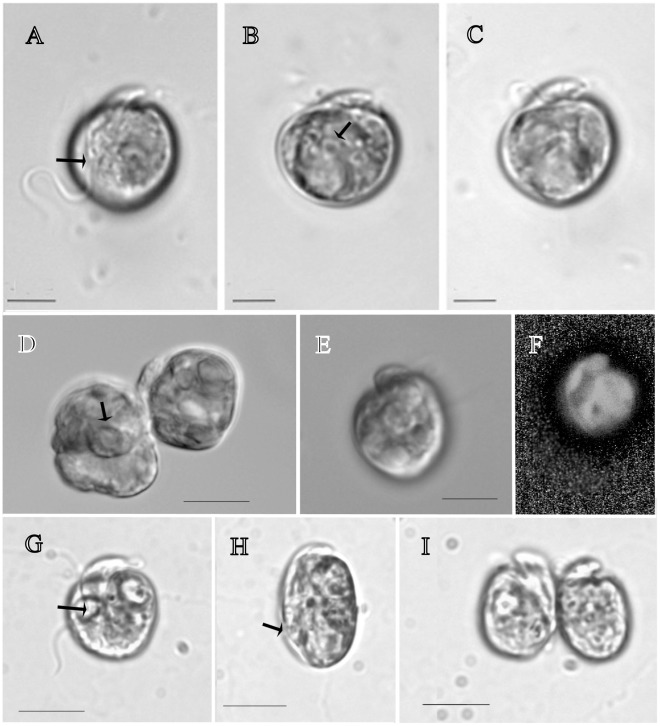
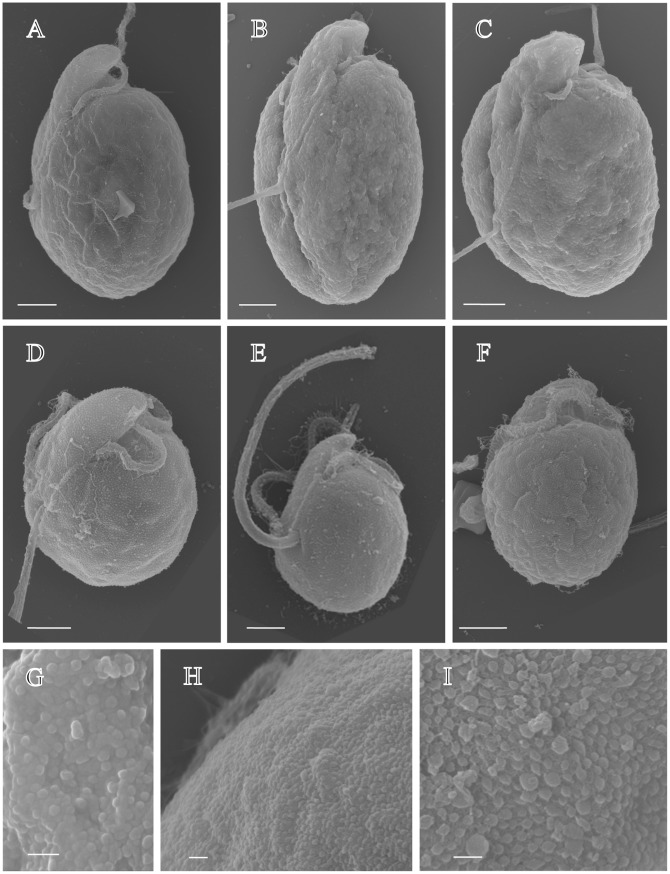
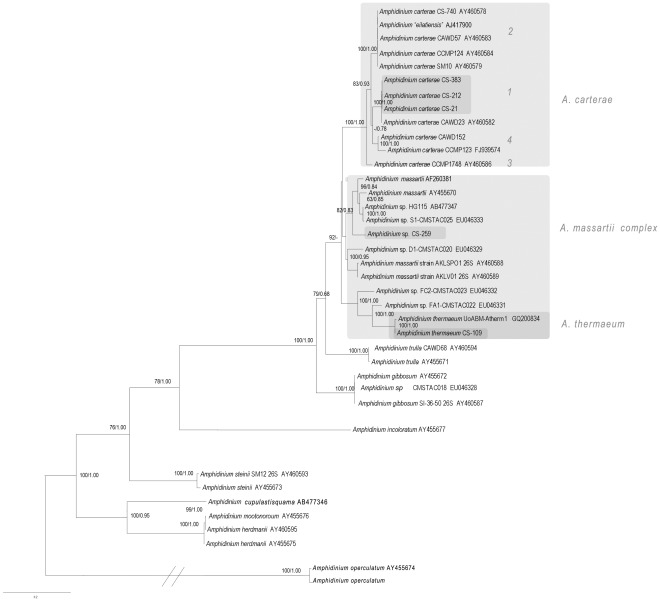
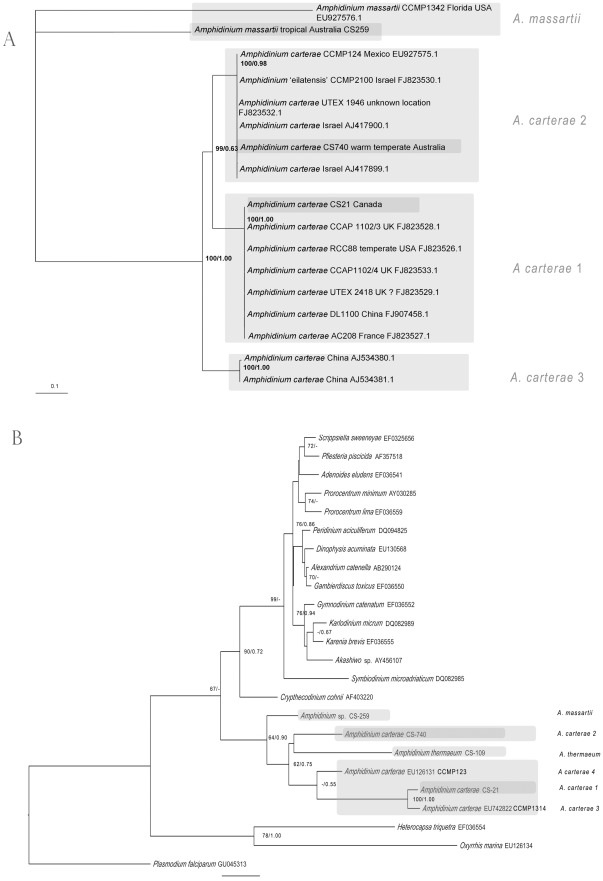
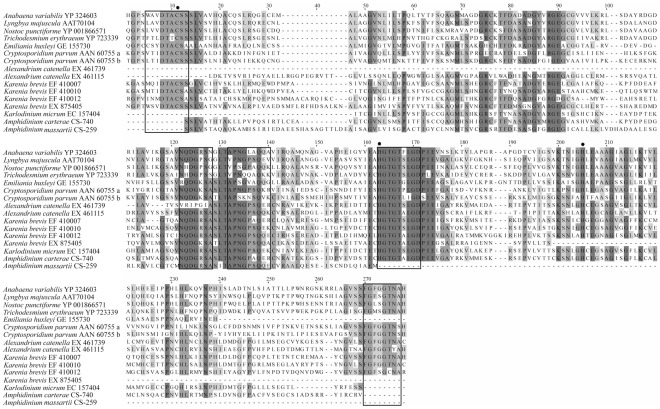
Dinoflagellates are an intriguing group of eukaryotes, showing many unusual morphological and genetic features. Some groups of dinoflagellates are morphologically highly uniform, despite indications of genetic diversity. The species Amphidinium carterae is abundant and cosmopolitan in marine environments, grows easily in culture, and has therefore been used as a 'model' dinoflagellate in research into dinoflagellate genetics, polyketide production and photosynthesis. We have investigated the diversity of 'cryptic' species of Amphidinium that are morphologically similar to A. carterae, including the very similar species Amphidinium massartii, based on light and electron microscopy, two nuclear gene regions (LSU rDNA and ITS rDNA) and one mitochondrial gene region (cytochrome b). We found that six genetically distinct cryptic species (clades) exist within the species A. massartii and four within A. carterae, and that these clades differ from one another in molecular sequences at levels comparable to other dinoflagellate species, genera or even families. Using primers based on an alignment of alveolate ketosynthase sequences, we isolated partial ketosynthase genes from several Amphidinium species. We compared these genes to known dinoflagellate ketosynthase genes and investigated the evolution and diversity of the strains of Amphidinium that produce them.
Overview
The claims and statistics of this paper haven’t been checked yet.
Free: it reads the open-access text and checks the first 5 claims that cite a source we can check. Create a free account to check every claim.
Integrity signals
Registry
Cites
Statistics
Figures
Verification
Claims the paper makes
The claims and statistics of this paper haven’t been checked yet.
Free: it reads the open-access text and checks the first 5 claims that cite a source we can check. Create a free account to check every claim.
Claims other papers make about this one
Each is checked against this paper’s own text: does it say what the citing paper says it does?
The source backs part of the claim, not all of it — or backs it for a different population, condition or comparison.
In the citing paper
“Later on, the discovery of PKS encoding genes as well as the identification of PKS routes in Thraustochytrids [135,136], Dinophytes [137,138,139], Haptophytes [140,141], and Chlorophytes [140] supported the broader existence of this pathway among protists.”
From Microalgae n-3 PUFAs Production and Use in Food and Feed Industries (2021) · cites this paper as [137]
Experimental — accuracy not yet measuredThe cited source says what the claim attributes to it.
In the citing paper
“Type I PKS is mainstream of protist and has been identified in Haptophytes [141,143], Chlorophytes [140], Dinophytes [137,144], and Thraustochytrids [145].”
From Microalgae n-3 PUFAs Production and Use in Food and Feed Industries (2021) · cites this paper as [137]
Self-check
Percentages, sums and reported differences re-computed from the paper’s own numbers.
The self-check needs the paper’s full text.
Citations
Cites
Hall, T. A. (1999) · Nucleic Acids Symposium Series · doi:10.14601/phytopathol_mediterr-14998u1.29 · Cited by 38,297
Amplification and direct sequencing of fungal ribosomal RNA genes for phylogenetics
White, T. J., Bruns, T., Lee, S., & Taylor, J. (1990) · PCR Protocols · doi:10.1016/b978-0-12-372180-8.50042-1 · Cited by 36,648
MrBayes 3: Bayesian phylogenetic inference under mixed models
Ronquist, F., & Huelsenbeck, J. P. (2003) · Bioinformatics · doi:10.1093/bioinformatics/btg180 · Cited by 29,077
A Simple, Fast, and Accurate Algorithm to Estimate Large Phylogenies by Maximum Likelihood
Guindon, S., & Gascuel, O. (2003) · Systematic Biology · doi:10.1080/10635150390235520 · Cited by 16,806
PCR protocols — A guide to methods and applications
(1990) · Trends in Genetics · doi:10.1016/0168-9525(90)90186-a · Cited by 11,781
Guillard, R. R. L., & Ryther, J. H. (1962) · Canadian Journal of Microbiology · doi:10.1139/m62-029 · Cited by 7,685
Multiple sequence alignment with the Clustal series of programs
Chenna, R. (2003) · Nucleic Acids Research · doi:10.1093/nar/gkg500 · Cited by 4,875
Scholin, C. A., Herzog, M., Sogin, M., & Anderson, D. M. (1994) · Journal of Phycology · doi:10.1111/j.0022-3646.1994.00999.x · Cited by 885
Daugbjerg, N., Hansen, G., Larsen, J., & Moestrup, Ø. (2000) · Phycologia · doi:10.2216/i0031-8884-39-4-302.1 · Cited by 672
Hofmann, E., Wrench, P. M., Sharples, F. P., Hiller, R. G., Welte, W., & Diederichs, K. (1996) · Science · doi:10.1126/science.272.5269.1788 · Cited by 465
Research works printed but not linked: 1
- Clarke KJ Pennick NC 1976 Occurence of body scales in Oxyrrhis marina Dujardin British Phycological Journal 11 345 348
Cited by
Microalgae n-3 PUFAs Production and Use in Food and Feed Industries
Remize, M., Brunel, Y., Silva, J. L., Berthon, J.-Y., & Filaire, E. (2021) · Marine Drugs · doi:10.3390/md19020113 · Cited by 214
“In Dinophytes, the multifunctional activities characteristic of Type I PKS is not always verified because some species like Karenia brevis, Alexandrium ostenfeldii, and Heterocapsa triquetra possess an atypical architecture for Type I PKS with only one catalytic module [144,146].”
BackgroundInfluentialEvolutionary distinctiveness of fatty acid and polyketide synthesis in eukaryotes
Kohli, G. S., John, U., Van Dolah, F. M., & Murray, S. A. (2016) · The ISME Journal · doi:10.1038/ismej.2015.263 · Cited by 99
Self-citationProgress and promise of omics for predicting the impacts of climate change on harmful algal blooms
Hennon, G. M. M., & Dyhrman, S. T. (2019) · Harmful Algae · doi:10.1016/j.hal.2019.03.005 · Cited by 86
Gene duplication, loss and selection in the evolution of saxitoxin biosynthesis in alveolates
Murray, S. A., Diwan, R., Orr, R. J. S., Kohli, G. S., & John, U. (2015) · Molecular Phylogenetics and Evolution · doi:10.1016/j.ympev.2015.06.017 · Cited by 76
Self-citationKohli, G. S., John, U., Figueroa, R. I., Rhodes, L., Harwood, D. T., Groth, M., Bolch, C. J. S., & Murray, S. A. (2015) · BMC Genomics · doi:10.1186/s12864-015-1625-y · Cited by 77
Self-citationA fish kill associated with a bloom of Amphidinium carterae in a coastal lagoon in Sydney, Australia
Murray, S. A., Kohli, G. S., Farrell, H., Spiers, Z. B., Place, A. R., Dorantes‐Aranda, J. J., & Ruszczyk, J. (2015) · Harmful Algae · doi:10.1016/j.hal.2015.08.003 · Cited by 73
Self-citationThe bank of swimming organisms at the micron scale (BOSO-Micro)
Rodrigues, M. F. V., Lisicki, M., & Lauga, E. (2021) · PLoS ONE · doi:10.1371/journal.pone.0252291 · Cited by 67
Verma, A., Hoppenrath, M., Dorantes‐Aranda, J. J., Harwood, D. T., & Murray, S. A. (2016) · Harmful Algae · doi:10.1016/j.hal.2016.11.004 · Cited by 59
Self-citationHe, L., Liu, F., Karuppiah, V., Ren, Y., & Li, Z. (2014) · Microbial Ecology · doi:10.1007/s00248-014-0393-6 · Cited by 54
Zhang, H., Li, Y., Cen, J., Wang, H., Cui, L., Dong, Y., & Lü, S. (2015) · Phycologia · doi:10.2216/15-8.1 · Cited by 48
Epiphytic dinoflagellates in sub-tropical New Zealand, in particular the genus Coolia Meunier
Rhodes, L. L., Smith, K. F., Papiol, G. G., Adamson, J. E., Harwood, D. T., & Munday, R. (2014) · Harmful Algae · doi:10.1016/j.hal.2014.02.004 · Cited by 45
Algal toxins and producers in the marine waters of Qatar, Arabian Gulf
Muftah, A. A., Selwood, A. I., Foss, A. J., Jabri, H. M. S. J. A., Potts, M., & Yılmaz, M. (2016) · Toxicon · doi:10.1016/j.toxicon.2016.09.016 · Cited by 51
Molina-Miras, A., Morales-Amador, A., de Vera, C. R., López‐Rosales, L., Sánchez‐Mirón, A., Souto, M. L., Fernández, J. J., Norte, M., García-Camacho, F., & Grima, E. M. (2018) · Algal Research · doi:10.1016/j.algal.2018.01.010 · Cited by 52
Karafas, S., Teng, S. T., Leaw, C. P., & Alves‐de‐Souza, C. (2017) · Harmful Algae · doi:10.1016/j.hal.2017.08.001 · Cited by 45
Ajani, P. A., Murray, S. A., Hallegraeff, G. M., Lundholm, N., Gillings, M. R., Brett, S., & Armand, L. (2013) · Journal of Phycology · doi:10.1111/jpy.12087 · Cited by 38
Self-citationRecent developments in quantitative PCR for monitoring harmful marine microalgae
Pearson, L. A., D’Agostino, P. M., & Neilan, B. A. (2021) · Harmful Algae · doi:10.1016/j.hal.2021.102096 · Cited by 44
Self-citationLi, Z., Mertens, K. N., Nézan, É., Chomérat, N., Bilien, G., Iwataki, M., & Shin, H. H. (2019) · Protist · doi:10.1016/j.protis.2019.02.003 · Cited by 34
Wang, H., Guo, R., Lim, W., Allen, A. E., & Ki, J. (2020) · Harmful Algae · doi:10.1016/j.hal.2020.101777 · Cited by 35
Kohli, G. S., Neilan, B. A., Brown, M. V., Hoppenrath, M., & Murray, S. A. (2013) · Environmental Microbiology · doi:10.1111/1462-2920.12275 · Cited by 32
Self-citationMolecular phylogenetics and morphology of Gambierdiscus yasumotoi from tropical eastern Australia
Murray, S. A., Momigliano, P., Heimann, K., & Blair, D. (2014) · Harmful Algae · doi:10.1016/j.hal.2014.08.003 · Cited by 38
Self-citationSubcellular localization of dinoflagellate polyketide synthases and fatty acid synthase activity
Dolah, F. M. V., Zippay, M. L., Pezzolesi, L., Rein, K. S., Johnson, J. G., Morey, J. S., Wang, Z., & Pistocchi, R. (2013) · Journal of Phycology · doi:10.1111/jpy.12120 · Cited by 33
Wang, H., Kim, H., & Ki, J. (2020) · Ecotoxicology and Environmental Safety · doi:10.1016/j.ecoenv.2020.110474 · Cited by 31
Integrated omics unveil the secondary metabolic landscape of a basal dinoflagellate
Beedessee, G., Kubota, T., Arimoto, A., Nishitsuji, K., Waller, R. F., Hisata, K., Yamasaki, S., Satoh, N., Kobayashi, J., & Shoguchi, E. (2020) · BMC Biology · doi:10.1186/s12915-020-00873-6 · Cited by 34
Murray, S. A., Hoppenrath, M., Orr, R. J. S., Bolch, C. J. S., John, U., Diwan, R., Yauwenas, R., Harwood, D. T., de Salas, M. F., Neilan, B. A., et al. (2013) · Harmful Algae · doi:10.1016/j.hal.2013.09.005 · Cited by 33
Self-citationGárate‐Lizárraga, I., González‐Armas, R., Verdugo–Díaz, G., Okolodkov, Y. B., Pérez-Cruz, B., & Díaz-Ortíz, J. A. (2019) · Marine Pollution Bulletin · doi:10.1016/j.marpolbul.2019.06.073 · Cited by 25
Accoroni, S., Totti, C., Romagnoli, T., Giulietti, S., & Glibert, P. M. (2020) · Marine Environmental Research · doi:10.1016/j.marenvres.2020.104891 · Cited by 26
Thermal niche evolution of functional traits in a tropical marine phototroph
Baker, K. G., Radford, D. T., Evenhuis, C. R., Kuzhiumparambil, U., Ralph, P. J., & Doblin, M. A. (2018) · Journal of Phycology · doi:10.1111/jpy.12759 · Cited by 31
Transcriptomic investigation into polyketide toxin synthesis in Ostreopsis (Dinophyceae) species
Verma, A., Kohli, G. S., Harwood, D. T., Ralph, P. J., & Murray, S. A. (2019) · Environmental Microbiology · doi:10.1111/1462-2920.14780 · Cited by 28
Self-citationAjani, P. A., Murray, S. A., Hallegraeff, G. M., Brett, S., & Armand, L. (2013) · Phycological Research · doi:10.1111/pre.12020 · Cited by 22
Self-citationBenthic dinoflagellates in Korean waters
Lim, A. S., & Jeong, H. J. (2021) · ALGAE · doi:10.4490/algae.2021.36.5.31 · Cited by 21
Sansone, C., Nuzzo, G., Galasso, C., Casotti, R., Fontana, A., Romano, G., & Ianora, A. (2018) · Marine Biotechnology · doi:10.1007/s10126-018-9817-5 · Cited by 23
Gómez, F., & Artigas, L. F. (2013) · Journal of the Marine Biological Association of the United Kingdom · doi:10.1017/s0025315413001744 · Cited by 20
Liu, C.-L., Place, A. R., & Jagus, R. (2017) · Marine Drugs · doi:10.3390/md15080242 · Cited by 19
Remize, M., Planchon, F., Loh, A. N., Le Grand, F., Lambert, C., Bideau, A., Bidault, A., Corvaisier, R., Volety, A., & Soudant, P. (2020) · Biomolecules · doi:10.3390/biom10101428 · Cited by 18
“Type I PKS has been identified in Haptophytes [27,28], Dinophytes [25,29], and Thraustochytrids [30], and consists of a large multifunctional enzyme presenting all catalytic domains on the same peptide.”
BackgroundPatil, J. S., Rodrigues, R. V., Paul, P., Sathish, K., Rafi, M., & Anil, A. C. (2017) · Marine Biology · doi:10.1007/s00227-017-3123-z · Cited by 18
Jiang, Z.-P., Tong, Y., Tong, M., Yuan, J., Cao, Q., & Pan, Y. (2021) · Frontiers in Marine Science · doi:10.3389/fmars.2021.690764 · Cited by 19
Lee, K. H., Jeong, H. J., Park, K., Kang, N. S., Yoo, Y. D., Lee, M. J., Lee, J.-W., Lee, S.-J., Kim, T., Kim, H. S., et al. (2013) · ALGAE · doi:10.4490/algae.2013.28.3.213 · Cited by 20
Toxicity Bioassay and Cytotoxic Effects of the Benthic Marine Dinoflagellate Amphidinium operculatum
Mejía-Camacho, A. L., Durán-Riveroll, L. M., & Cembella, A. D. (2021) · Journal of Xenobiotics · doi:10.3390/jox11020003 · Cited by 15
Moreira-González, A. R., Fernandes, L. F., Uchida, H., Uesugi, A., Suzuki, T., Chomérat, N., Bilien, G., Pereira, T. A., & Mafra, L. L. (2019) · Journal of Applied Phycology · doi:10.1007/s10811-019-01855-0 · Cited by 15
Bausch, A. R., Juhl, A. R., Donaher, N. A., & Cockshutt, A. M. (2019) · Marine Biology · doi:10.1007/s00227-019-3528-y · Cited by 14
Marine dinoflagellates as a source of new bioactive structures
Cousseau, A., Siano, R., Probert, I., Bach, S., & Mehiri, M. (2020) · Studies in natural products chemistry · doi:10.1016/b978-0-12-817905-5.00004-4 · Cited by 14
Yang, X. M., Yan, Z. J., Chen, J., Wang, D., & Li, K. (2023) · Toxics · doi:10.3390/toxics11040370 · Cited by 11
Anglès, S., Reñé, A., Garcés, E., Lugliè, A., Sechi, N., Camp, J., & Satta, C. T. (2017) · Journal of Phycology · doi:10.1111/jpy.12546 · Cited by 11
Durán-Riveroll, L. M., Juárez, O. E., Okolodkov, Y. B., Mejía-Camacho, A. L., Ramírez‐Corona, F., Casanova-Gracia, D., Osorio-Ramírez, M. D. C., Cervantes-Urieta, V. A., & Cembella, A. D. (2023) · Phycology · doi:10.3390/phycology3020020 · Cited by 10
Luo, Z., Wang, N., Mohamed, H. F., Liang, Y., Pei, L., Huang, S., & Gu, H. (2021) · ALGAE · doi:10.4490/algae.2021.36.8.27 · Cited by 10
Phylogenomics shows unique traits in Noctilucales are derived rather than ancestral
Cooney, E. C., Leander, B. S., & Keeling, P. J. (2022) · PNAS Nexus · doi:10.1093/pnasnexus/pgac202 · Cited by 12
Сергеевна, С. М., Efimova, K. V., & Hoppenrath, M. (2019) · Phycologia · doi:10.1080/00318884.2018.1517535 · Cited by 9
Self-citationFu, F., Tschitschko, B., Hutchins, D. A., Larsson, M. E., Baker, K. G., McInnes, A. S., Kahlke, T., Verma, A., Murray, S. A., & Doblin, M. A. (2022) · Global Change Biology · doi:10.1111/gcb.16330 · Cited by 14
Self-citationLuo, Z., Zhang, H., Qun, L., Wang, L., Mohamed, H. F., Lü, S., & Gu, H. (2022) · Journal of Oceanology and Limnology · doi:10.1007/s00343-021-1049-2 · Cited by 9
First Identification of Amphidinols from Mexican Strains and New Analogs
Durán-Riveroll, L. M., Weber, J., & Krock, B. (2023) · Toxins · doi:10.3390/toxins15020163 · Cited by 8
Characterization of Acetyl-CoA Carboxylases in the Basal Dinoflagellate Amphidinium carterae
Haq, S., Bachvaroff, T. R., & Place, A. R. (2017) · Marine Drugs · doi:10.3390/md15060149 · Cited by 8
Complex response of dinoflagellate cyst distribution patterns to cooler early Oligocene oceans
Woods, M. A., Vandenbroucke, T. R. A., Williams, M., Riding, J. B., Schepper, S. D., & Sabbe, K. (2014) · Earth-Science Reviews · doi:10.1016/j.earscirev.2014.02.004 · Cited by 8
Marine Cyanobacterial Toxins: Source, Chemistry, Toxicology, Pharmacology, and Detection
Vasconcelos, V. M., & Leão, P. N. (2014) · CRC Press eBooks · doi:10.1201/b16662-38 · Cited by 7
Ajani, P. A., Armbrecht, L., Kersten, O., Kohli, G. S., & Murray, S. A. (2016) · Diatom Research · doi:10.1080/0269249x.2016.1260058 · Cited by 12
Self-citationLee, E. S., Hwang, J., Hyung, J.-H., & Park, J. (2021) · Journal of Marine Science and Engineering · doi:10.3390/jmse9080885 · Cited by 6
A review on marine benthic dinoflagellates in Mexico
Okolodkov, Y. B., & Laboratorio de Botánica Marina y Planctología, I. D. C. M. Y. P. (2022) · Hidrobiológica · doi:10.24275/uam/izt/dcbs/hidro/2022v32n3/okolodkov · Cited by 5
Leblond, J. D., Elkins, L. C., Graeff, J. E., & Sabir, K. (2022) · European Journal of Phycology · doi:10.1080/09670262.2022.2092215 · Cited by 6
Hu, Z., Song, X., Wang, J., Tao, Z., Sun, Y., Li, Y., Liu, Y., Deng, Y., Shang, L., Chai, Z., et al. (2022) · Journal of Oceanology and Limnology · doi:10.1007/s00343-022-2122-1 · Cited by 5
Genetic diversity of Moestrupia oblonga (Dinophyceae) from coastal areas of Okinawa Island, Japan
Prabowo, D. A., Shah, M. M. R., Horiguchi, T., & Suda, S. (2015) · Marine Biodiversity · doi:10.1007/s12526-015-0351-7 · Cited by 4
Paul, P., Patil, J. S., & Anil, A. C. (2021) · Journal of Earth System Science · doi:10.1007/s12040-021-01591-5 · Cited by 4
Leblond, J. D., Elkins, L. C., Sabir, K., & Graeff, J. E. (2022) · Journal of Eukaryotic Microbiology · doi:10.1111/jeu.12929 · Cited by 4
Chen, Y., Cao, X., Zhang, J., Mu, Z., Ma, S., Liu, B., Cheng, Y., Ren, J., & Ikram, R. M. A. (2024) · Water · doi:10.3390/w16040573 · Cited by 3
D’Alelio, D. (2017) · Advances in Oceanography and Limnology · doi:10.4081/aiol.2017.7194 · Cited by 3
Kim, H., Li, Z., Kang, N. S., Gu, H., Kim, D., Seo, M. H., Lee, S. D., Yun, S. M., Oh, S.-J., & Shin, H. H. (2021) · Journal of Marine Science and Engineering · doi:10.3390/jmse9020154 · Cited by 3
Premvardhan, L. L., Robert, B., & Hiller, R. G. (2015) · Biochimica et Biophysica Acta (BBA) - Bioenergetics · doi:10.1016/j.bbabio.2015.05.006 · Cited by 3
Gu, H., Huang, S., Krock, B., Leaw, C. P., Lim, P. T., Kassim, N. S., Shin, H. H., Roeroe, K. A., Yuan, H., Hosny, S., et al. (2025) · Harmful Algae · doi:10.1016/j.hal.2025.102934 · Cited by 2
High Inter- and Intraspecific Variability in Amphidinol Content and Toxicity of Amphidinium Strains
Alves‐de‐Souza, C., Weber, J., Schmitt, M., York, R. A., Karafas, S., Tomas, C. R., & Krock, B. (2025) · Marine Drugs · doi:10.3390/md23090332 · Cited by 2
Impact of molecular approaches on dinoflagellate taxonomy and systematics
Bolch, C. J. S. (2021) · Elsevier eBooks · doi:10.1016/b978-0-12-822861-6.00010-8 · Cited by 2
Phua, Y. H., Husník, F., Lemer, S., & Wakeman, K. C. (2022) · Phycologia · doi:10.1080/00318884.2022.2033948 · Cited by 2
Gene Mining for Environmental Studies and Applications: Examples from Marine Organisms
Dittami, S. M., & Tonon, T. (2014) · Wiley eBooks · doi:10.1002/9783527681501.ch20 · Cited by 2
Rapid detection of Phaeocystis globosa by aptamer-gold nanoparticles based colorimetric assay
Tian, X., Zhang, C., Liu, Q., Cheng, S., Li, J., Wang, Y., & Chen, G. (2025) · Journal of Applied Phycology · doi:10.1007/s10811-025-03566-1 · Cited by 1
Tian, X., Zhang, C., Chen, W., Wang, Y., & Chen, G. (2025) · Marine Pollution Bulletin · doi:10.1016/j.marpolbul.2025.118449 · Cited by 1
Wang, K., Li, X., Wang, C., Wang, W., Peng, C., Gao, Y., Lin, H., Dong, X., Lin, H., & Chen, B. (2025) · Journal of Hazardous Materials · doi:10.1016/j.jhazmat.2025.140971 · Cited by 2
Functional evaluation of marine micro-algae Amphidinium carterae extract
Kim, H.-M., Oh, H. H., Jeong, J. H., Lee, S.-C., Moon, H., & Jeong, Y. (2017) · Korean Journal of Food Preservation · doi:10.11002/kjfp.2017.24.5.673 · Cited by 1
Mikalsen, S., Hjøllum, J. Í., Salter, I., Hammer, S., Djurhuus, A., & Kongsstovu, S. Í. (2023) · doi:10.32942/x21s4c · Cited by 1
Jones, G. D., Williams, E. P., Haq, S., Bachvaroff, T. R., Sánchez, M., Place, A. R., & Jagus, R. (2024) · bioRxiv (Cold Spring Harbor Laboratory) · doi:10.1101/2024.02.20.581179 · Cited by 1
Jones, G. D., Williams, E. P., Haq, S., Bachvaroff, T. R., Sánchez, M., Place, A. R., & Jagus, R. (2024) · eLife · doi:10.7554/elife.96976 · Cited by 1
Vicente, A. R. (2014) · UPCommons institutional repository (Universitat Politècnica de Catalunya) · doi:10.5821/dissertation-2117-95319 · Cited by 1
Marine Cyanobacterial Toxins: Source, Chemistry, Toxicology, Pharmacology, and Detection
Vasconcelos, V. M., & Leão, P. N. (2014) · CRC Press eBooks · doi:10.1201/b16662-45
George, C. (2022) · DR-NTU (Nanyang Technological University) · doi:10.32657/10356/161163 · Cited by 1
Sari, S. N. I., & Rukminasari, N. (2022) · IOP Conference Series Earth and Environmental Science · doi:10.1088/1755-1315/1119/1/012011
Jones, G. D., Williams, E. P., Haq, S., Bachvaroff, T. R., Sánchez, M., Place, A. R., & Jagus, R. (2024) · eLife · doi:10.7554/elife.96976.1 · Cited by 3
A Faroese perspective on decoding life for sustainable use of nature and protection of biodiversity
Mikalsen, S., Hjøllum, J. Í., Salter, I., Hammer, S., Djurhuus, A., & Kongsstovu, S. Í. (2024) · npj Biodiversity · doi:10.1038/s44185-024-00068-0 · Cited by 1
Beedessee, G., Kubota, T., Arimoto, A., Nishitsuji, K., Waller, R. F., Hisata, K., Yamasaki, S., Satoh, N., Kobayashi, J., & Shoguchi, E. (2020) · Figshare · doi:10.6084/m9.figshare.13088020
Beedessee, G., Kubota, T., Arimoto, A., Nishitsuji, K., Waller, R. F., Hisata, K., Yamasaki, S., Satoh, N., Kobayashi, J., & Shoguchi, E. (2020) · Figshare · doi:10.6084/m9.figshare.13088023
Microbial dynamics in coral reef waters: Diel cycles in contrasting seasons
Steinsdóttir, H. G. R., Akkaynak, D., & Frada, M. J. (2026) · Science Advances · doi:10.1126/sciadv.ady9534 · Cited by 1
Boisnoir, A. (2018) · theses.fr (ABES) · doi:10.70675/7fcf5eefzb45cz4897zab85z1def1979ecf0 · Cited by 1
Escarcega-Bata, A., la Torre, M. C. R.-D., Sánchez, E. C., Arana-García, J., Reséndiz, M. L. N., Martín-Atienza, B., & Abel Sentíes, G. (2026) · European Journal of Phycology · doi:10.1080/09670262.2026.2658160
Sezgin, R., Durmuş, T., Krock, B., Dursun, F., Balkıs, N., & Balcı, M. (2026) · Harmful Algae · doi:10.1016/j.hal.2026.103168
Rissel, T., Morão, I. F. C., Moutinho, A., Correro, M. M., David, H., Shiels, K., Novais, S. C., Lemos, M. F. L., Amorim, A., & Simões, T. (2026) · Aquatic Toxicology · doi:10.1016/j.aquatox.2026.108053
Metadata
- Authors
- Murray, S. A., Garby, T., Hoppenrath, M., & Neilan, B. A.
- Affiliations
- UNSW Sydney (AU)
- Senckenberg am Meer (DE)
- Corresponding author
- Murray, Shauna A.
- Venue
- PLoS ONE
- Publisher
- Public Library of Science (PLoS)
- Published
- 2012-06-04
- Volume
- 7
- Issue
- 6
- Pages
- e38253
- ISSN
- 1932-6203 (ISSN-L)
- PMC
- PMC3366924
- OpenAlex
- W1996462118
- Cited by
- 90
- References
- 95
- Citations by year
- 2026: 4 · 2025: 5 · 2024: 5 · 2023: 4 · 2022: 10 · 2021: 11 · 2020: 8 · 2019: 7 · 2018: 4 · 2017: 7 · 2016: 4 · 2015: 6 · 2014: 8 · 2013: 7
- FWCI
- 2.70
- Type
- journal article
- Language
- en
- Open access
- gold
- doi.org
- Locations
- PLoS ONE (publishedVersion, cc-by)
- Europe PMC (PubMed Central) (publishedVersion, cc-by)
- PubMed Central (publishedVersion, cc-by)
- PubMed (publishedVersion)
- DOAJ (DOAJ: Directory of Open Access Journals) (submittedVersion, cc-by-sa)
- OPUS - Open Publications of UTS Scholars (University of Technology Sydney) (submittedVersion)
- UTS ePRESS (University of Technology Sydney) (submittedVersion)
- Funders
- Carl von Ossietzky Universität Oldenburg
- Commonwealth Scientific and Industrial Research Organisation
- University of New South Wales
- Australian Research Council
- Topics
- Life Sciences › Agricultural and Biological Sciences › Ecology, Evolution, Behavior and Systematics › Protist diversity and phylogeny
- Physical Sciences › Environmental Science › Environmental Chemistry › Marine Toxins and Detection Methods
- Physical Sciences › Earth and Planetary Sciences › Oceanography › Marine Biology and Ecology Research
- Keywords
- Amphidinium, Amphidinium carterae, cryptic species, genetic diversity, morphological uniformity, polyketide production, 28S rDNA, ITS sequences, cytochrome b, alveolates, photosynthesis
- MeSH terms
- Amino Acid Sequence, Dinoflagellida, DNA, Ribosomal, Molecular Sequence Data, Phylogeny, Species Specificity, Genetic Variation, Likelihood Functions, Sequence Alignment, Polyketide Synthases, Ribosome Subunits, Large, Polyketides
About these checks
Registry, retraction, Cites and statistics results are computed, not judged, with one exception: a printed reference that no index lists is read once by a model before it counts as a citation error. Claims are extracted by a model and kept only when their quote appears verbatim in the text; each cited source is then checked, with a model’s help, for whether it says what the claim relies on. Those verdicts can be wrong — read the claim’s quote and the cited source before relying on one.
Statistics and arithmetic are recomputed, not judged.
Confidence bands are shown only for fields calibrated on our annotated test set. None is calibrated yet, so no band is shown.
What counts as a claim ›How we measure confidence ›How we check this ›
Are you an author, or do you see a problem with this page? Request a review
Data sources
Bibliographic data: Semantic Scholar, OpenAlex, Crossref.
Contains information from the Semantic Scholar Academic Graph Datasets, made available under the ODC Attribution License (ODC-BY 1.0).
Semantic Scholar’s data is described in: Kinney, R., et al. (2023). The Semantic Scholar Open Data Platform. arXiv:2301.10140.
