

The DOI matches its Crossref record; 67 of the 67 references it cites were found in a registry or an index.
Posttraumatic stress disorder prevalence and risk of recurrence in acute coronary syndrome patients: a meta-analytic review.
Open accessAbstract
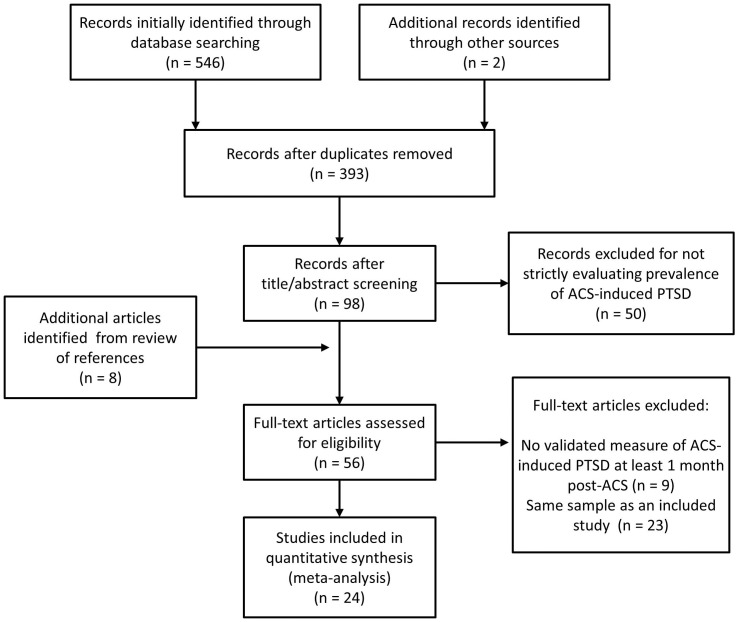
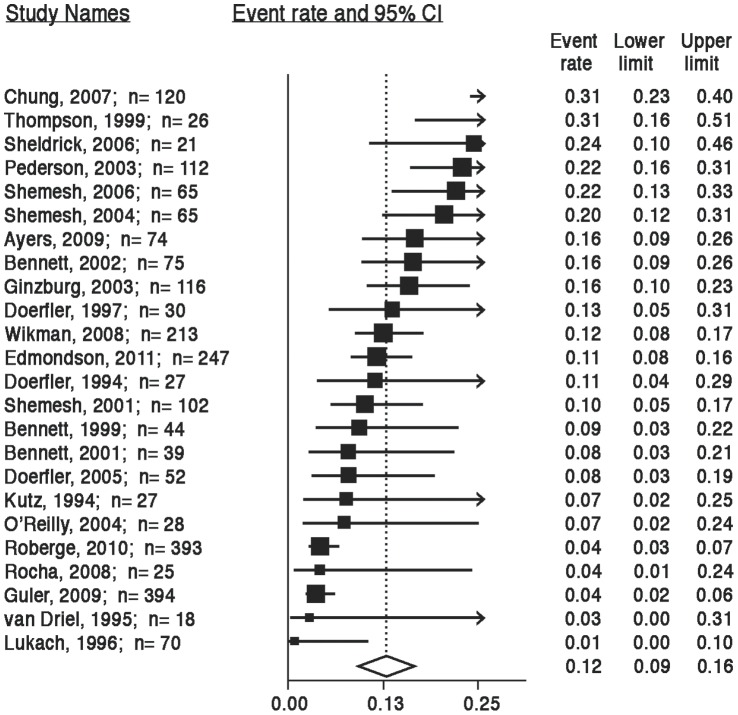
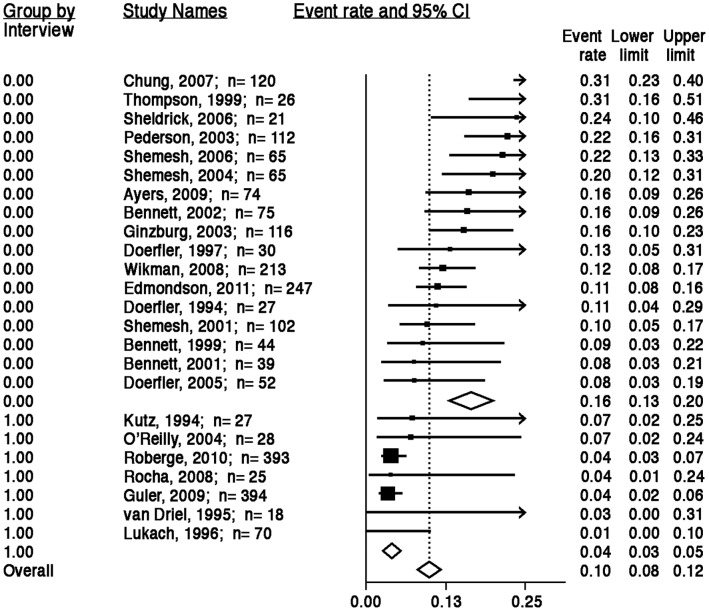
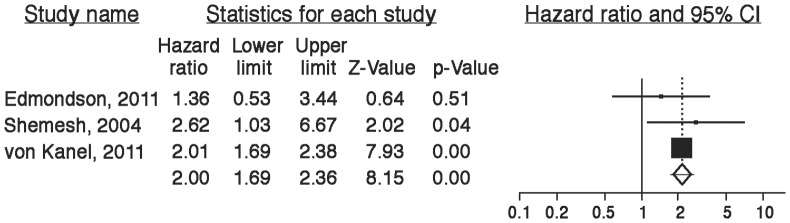
BACKGROUND: Acute coronary syndromes (ACS; myocardial infarction or unstable angina) can induce posttraumatic stress disorder (PTSD), and ACS-induced PTSD may increase patients' risk for subsequent cardiac events and mortality. OBJECTIVE: To determine the prevalence of PTSD induced by ACS and to quantify the association between ACS-induced PTSD and adverse clinical outcomes using systematic review and meta-analysis. DATA SOURCES: Articles were identified by searching Ovid MEDLINE, PsycINFO, and Scopus, and through manual search of reference lists. METHODOLOGY/PRINCIPAL FINDINGS: Observational cohort studies that assessed PTSD with specific reference to an ACS event at least 1 month prior. We extracted estimates of the prevalence of ACS-induced PTSD and associations with clinical outcomes, as well as study characteristics. We identified 56 potentially relevant articles, 24 of which met our criteria (N = 2383). Meta-analysis yielded an aggregated prevalence estimate of 12% (95% confidence interval [CI], 9%-16%) for clinically significant symptoms of ACS-induced PTSD in a random effects model. Individual study prevalence estimates varied widely (0%-32%), with significant heterogeneity in estimates explained by the use of a screening instrument (prevalence estimate was 16% [95% CI, 13%-20%] in 16 studies) vs a clinical diagnostic interview (prevalence estimate was 4% [95% CI, 3%-5%] in 8 studies). The aggregated point estimate for the magnitude of the relationship between ACS-induced PTSD and clinical outcomes (ie, mortality and/or ACS recurrence) across the 3 studies that met our criteria (N = 609) suggested a doubling of risk (risk ratio, 2.00; 95% CI, 1.69-2.37) in ACS patients with clinically significant PTSD symptoms relative to patients without PTSD symptoms. CONCLUSIONS/SIGNIFICANCE: This meta-analysis suggests that clinically significant PTSD symptoms induced by ACS are moderately prevalent and are associated with increased risk for recurrent cardiac events and mortality. Further tests of the association of ACS-induced PTSD and clinical outcomes are needed.
Overview
The claims and statistics of this paper haven’t been checked yet.
Run the check — free, no account needed. It reads the open-access text and checks the sources it cites.
Integrity signals
Registry
Cites
Statistics
Figures
Verification
Claims the paper makes
The claims and statistics of this paper haven’t been checked yet.
Run the check — free, no account needed. It reads the open-access text and checks the sources it cites.
Claims other papers make about this one
Each is checked against this paper’s own text: does it say what the citing paper says it does?
The source backs part of the claim, not all of it — or backs it for a different population, condition or comparison.
In the citing paper
“The most common disorders among CVD patients are pathological stress reactions after a cardiovascular event, depressive and anxiety disorders (3–6).”
From Metacognitive Short-Term Intervention in Patients With Mental Disorders Following Cardiovascular Events (2022) · cites this paper as [4]
Experimental — accuracy not yet measured
Self-check
Percentages, sums and reported differences re-computed from the paper’s own numbers.
The self-check needs the paper’s full text.
Citations
Cites
Diagnostic and Statistical Manual of Mental Disorders
Williams, J. B. W., & First, M. B. (2013) · Oxford University Press eBooks · doi:10.1093/acrefore/9780199975839.013.104 · Cited by 109,845
Diagnostic and Statistical Manual of Mental Disorders
Siegel, L. J., & Fletcher‐Janzen, E. (2008) · Wiley eBooks · doi:10.1002/9780470373699.speced0655 · Cited by 8,467
Impact of Event Scale: A Measure of Subjective Stress
Horowitz, M., Wilner, N., & Alvarez, W. (1979) · Psychosomatic Medicine · doi:10.1097/00006842-197905000-00004 · Cited by 7,813
The development of a Clinician-Administered PTSD Scale
Blake, D. D., Weathers, F. W., Nagy, L. M., Kaloupek, D. G., Gusman, F. D., Charney, D. S., & Keane, T. M. (1995) · Journal of Traumatic Stress · doi:10.1002/jts.2490080106 · Cited by 5,024
Heart Disease and Stroke Statistics—2008 Update
Writing Group Members, Rosamond, W. D., Flegal, K. M., Furie, K. L., Go, A. S., Greenlund, K. J., Haase, N., Hailpern, S. M., Ho, M., Howard, V. J., et al. (2007) · Circulation · doi:10.1161/circulationaha.107.187998 · Cited by 3,799
The Impact of Event Scale: Revised
Weiss, D. S. (2007) · Springer eBooks · doi:10.1007/978-0-387-70990-1_10 · Cited by 3,074
Diagnostic and Statistical Manual of Mental Disorders
Raber, G., & Spokas, M. (2024) · doi:10.4135/9781071886229.n145 · Cited by 2,806
Foa, E. B., Cashman, L., Jaycox, L., & Perry, K. (1997) · Psychological Assessment · doi:10.1037/1040-3590.9.4.445 · Cited by 2,709
Mendelson, G. (1995) · Australian & New Zealand Journal of Psychiatry · doi:10.3109/00048679509064964 · Cited by 2,592
Systematic Reviews in Health Care : Meta-Analysis in Context
Egger, M., Smith, G. D., & Altman, D. G. (2000) · Cited by 2,312
Research works printed but not linked: 7
- JK Neumann, 1991, Psychological post-traumatic effects of MI: A comparison study., Medical Psychotherapy: An International Journal, 4, 105
- D Edmondson, 2011, Posttraumatic stress due to an acute coronary syndrome increases risk of 42-month major adverse cardiac events and all-cause mortality., 10.1016/j.jpsychires.2011.07.004 · DOI
- BM Lukach, 1996, Are heart attacks traumatic stressors?, Diss Abstr Int: Section B: The Sciences and Engineering, 56, 6398
- ML Gander, 2006, Myocardial infarction and post-traumatic stress disorder: frequency, outcome, and atherosclerotic mechanisms., Eur J Cardiovasc PrevRehabil, 13, 165, 10.1097/01.hjr.0000214606.60995.46 · DOI
- E Guler, 2009, Clinical diagnosis of posttraumatic stress disorder after myocardial infarction., Clin Cardiol, 32, 125, 10.1002/clc.20384 · DOI
- LA Doerfler, 2005, Relationship of quality of life and perceived control with posttraumatic stress disorder symptoms 3 to 6 months after myocardial infarction., J Cardiopulm Rehabil, 25, 166, 10.1097/00008483-200505000-00008 · DOI
- A Wikman, 2008, Persistence of posttraumatic stress symptoms 12 and 36 months after acute coronary syndrome., Psychosom Med, 70, 764, 10.1097/PSY.0b013e3181835c07 · DOI
Cited by
Sorted by citations
Items 301–399 of 399
Post-traumatic stress disorder and cardiovascular disease
Moraru, A. C., Năfureanu, E. D., Proca, A., Zavadovschi, I., Floria, M., & Popescu, D. M. (2022) · Romanian Journal of Military Medicine · doi:10.55453/rjmm.2022.125.1.13 · Cited by 2
Jeong, E. S., Lee, K. S., Yang, S.-K., & Cho, J. H. (2022) · Journal of Korean Biological Nursing Science · doi:10.7586/jkbns.2022.24.2.113 · Cited by 2
Princip, M., von Känel, R., Zuccarella‐Hackl, C., Meister‐Langraf, R. E., Znoj, H., Schmid, J., Barth, J., Schnyder, U., Jiménez‐Gonzalo, L., & Ledermann, K. (2022) · Psych · doi:10.3390/psych4040057 · Cited by 2
Cunningham, S. C., Keleman, A., Brandon, R., Groninger, H., & BrintzenhofeSzoc, K. (2023) · Journal of Social Work in End-of-Life & Palliative Care · doi:10.1080/15524256.2023.2198158 · Cited by 2
Bukhbinder, A. S., Wang, A. C., Qureshi, S. U., Arora, G., Jawaid, A., Kalkonde, Y. V., Petersen, N. J., Yu, H., Kimbrell, T. A., Pyne, J. M., et al. (2019) · Journal of Geriatric Psychiatry and Neurology · doi:10.1177/0891988719868308 · Cited by 2
Shen, J., Valentim, W. L., Friligkou, E., Overstreet, C. M., Choi, K. W., Koller, D., O’Donnell, C. J., Stein, M. B., Gelernter, J. E., Lv, H., et al. (2024) · medRxiv · doi:10.1101/2024.08.20.24312181 · Cited by 2
Kapfhammer, H. (2022) · Springer eBooks · doi:10.1007/978-3-662-65873-4_2 · Cited by 1
Kapfhammer, H. (2022) · Springer eBooks · doi:10.1007/978-3-662-65873-4_1 · Cited by 1
Cardiac-induced PTSD symptoms predict shorter sleep a month after acute coronary syndrome evaluation
ten Brink, M., Shechter, A., Cornelius, T. M., Rojas, D. A., Murdock, M. E., Schwartz, J. E., Lee, S. A. J., & Birk, J. L. (2024) · General Hospital Psychiatry · doi:10.1016/j.genhosppsych.2024.04.003 · Cited by 1
Eye movement desensitisation and reprocessing for survivors of life-threatening medical events
Bates, A. S., Baldwin, D. S., Pattison, N. A., Moyses, H. E., Huneke, N. T. M., Cortese, S., Grocott, M. P. W., & Cusack, R. (2024) · Cochrane Database of Systematic Reviews · doi:10.1002/14651858.cd015640 · Cited by 1
Chui, J., Vasquez, L. E. M., Fleming, C. V., Patel, A. A., Taboun, Z. S., Green‐Holland, M., Fochesato, L.-A., Douglas, N., Yang, H., & Murkin, J. M. (2025) · Anesthesiology · doi:10.1097/aln.0000000000005603 · Cited by 1
Another call to action for physical and psychological SCAD-specific rehabilitation
Edwards, K. S., & Wagers, T. P. (2025) · European Journal of Cardiovascular Nursing · doi:10.1093/eurjcn/zvaf105 · Cited by 1
Best-Practice Mental Health Interventions Following Acute Cardiovascular Events
Abreu, M. N., Albuquerque, R. P., & Fonseca, A. (2026) · Cardiology Clinics · doi:10.1016/j.ccl.2025.12.005 · Cited by 1
Herlaș-Pop, A., Radu, A.-F., Radu, A., Bungau, G. S., Ţiţ, D. M., Babeş, E. E., & Bustea, C. (2026) · Medical Sciences · doi:10.3390/medsci14010138 · Cited by 1
Davletov, K., Davletov, D., Zholdin, B., Kulimbet, M., Osser, D., Kurmanalina, G. L., Medovchshikov, V., Yeshniyazov, N., Ибрагимова, Ф. С., MAKHMUTOV, A., et al. (2026) · Medical Sciences · doi:10.3390/medsci14040439 · Cited by 1
Psychological Responses to Acute Coronary Syndrome
Turner, A., & O'Neil, A. E. (2016) · Springer eBooks · doi:10.1007/978-981-287-206-7_21 · Cited by 1
Post-Traumatic Stress Disorder Symptoms and Quality of Life of Patients with Coronary Artery Disease
Lee, S. A., & Kang, J. (2019) · Journal of Korean Critical Care Nursing · doi:10.34250/jkccn.2019.12.1.82 · Cited by 1
Pavan, A., & Palese, A. (2018) · Scenario - Il Nursing nella sopravvivenza · doi:10.4081/scenario.2015.79 · Cited by 1
Jacquet‐Smailovic, M., Tarquinio, C., & Houppe, J.-P. (2019) · European Journal of Trauma & Dissociation · doi:10.1016/j.ejtd.2019.100123 · Cited by 3
PTSD and Cardiovascular Disease
Carmassi, C., Cordone, A., Pedrinelli, V., & Dell’Osso, L. (2019) · Springer eBooks · doi:10.1007/978-3-319-90305-7_20-1 · Cited by 1
Posttraumatische Belastungsstörungen
Frommberger, U., Nyberg, E., Angenendt, J., Lieb, K., & Berger, T. (2015) · Elsevier eBooks · doi:10.1016/b978-3-437-22484-3.00014-1 · Cited by 1
Cranz, A., Greinacher, A., Nagy, E., Friederich, H., Katus, H. A., Geis, N. A., Pleger, S. T., & Nikendei, C. (2020) · Journal of Clinical Medicine · doi:10.3390/jcm9124048 · Cited by 1
Liew, K. S., Moorehead, N. R., & Krantz, D. S. (2021) · Elsevier eBooks · doi:10.1016/b978-0-12-818697-8.00123-0 · Cited by 1
Recent Advances in Anxiety Disorders and Cardiovascular Diseases
李, 国. (2022) · Advances in Clinical Medicine · doi:10.12677/acm.2022.124379 · Cited by 1
Burdick, K. J., Courtney, M. C., & Schlesinger, J. J. (2019) · Lessons from the ICU · doi:10.1007/978-3-030-24250-3_16 · Cited by 1
The Nurse Psychotherapist and a Framework for Practice
(2020) · Springer Publishing Company eBooks · doi:10.1891/9780826193896.0001 · Cited by 1
Psychosomatic Problem Areas and Comorbidities Using the Example of Coronary Heart Disease
Albus, C., Herrmann‐Lingen, C., Köllner, V., von Känel, R., & Titscher, G. (2022) · Springer eBooks · doi:10.1007/978-3-662-65322-7_5 · Cited by 1
Tully, P. J., & Cosh, S. (2023) · doi:10.1093/oso/9780197564295.003.0012 · Cited by 1
Cardiovascular diseases and community mental health
Topuz, İ., & Topuz, A. (2024) · Cardiac and Cardiovascular Research · doi:10.54517/ccr.v4i1.2284 · Cited by 1
Factors affecting sleep quality in acute coronary syndrome survivors (P. 283)
Susuthi, P. (2020) · Chulalongkorn Medical Journal · doi:10.58837/chula.cmj.64.3.8 · Cited by 1
Nguyen, N. H., Le, S. D. T., Bui, H. T. T., Hoang, V. Q., & Do, C. C. (2025) · Health Psychology Research · doi:10.52965/001c.129914 · Cited by 1
Large decrease in posttraumatic stress disorder severity and cardiovascular disease outcomes
Salas, J., Sheth, P., Cohen, B. E., Freedland, K. E., Jaffe, A. S., Schnurr, P. P., Friedman, M. J., Lustman, P. J., & Scherrer, J. F. (2025) · General Hospital Psychiatry · doi:10.1016/j.genhosppsych.2025.04.011 · Cited by 1
Fi, B., Veltishchev, D. Y., Volel, B. A., Garganeeva, N. P., Kopylov, F. Y., Lareva, N. V., Medvedev, V. E., Mosolov, S. N., Petrova, M. M., Петрунько, О. В., et al. (2025) · Kardiologiia · doi:10.18087/cardio.2025.6.n2921 · Cited by 2
Lakušić, N., Kamenečki, G., Merkaš, I. S., Cerovec, D., Fučkar, K., Gabrić, I., Trbušić, M., & Habek, J. Č. (2020) · Cardiologia Croatica · doi:10.15836/ccar2020.3 · Cited by 1
Schultebraucks, K., Bittlinger, M., Cato, K., & Chang, B. (2021) · Psychiatric Annals · doi:10.3928/00485713-20201204-01 · Cited by 1
Wanner, P. (2017) · Deep Blue (University of Michigan) · Cited by 1
Cyr, S., Marcil, M.-J., Long, V., Marco, C. D., Dyrda, K., & Brouillette, J. (2021) · medRxiv · doi:10.1101/2021.01.14.21249762 · Cited by 1
Biofeedback in Psychocardiology
Dyer, J. M. (2014) · Wiley eBooks · doi:10.1002/9781118453940.ch17
Abbey, G. (2014) · Bournemouth University Research Online (Bournemouth University)
La psychocardiologie : une nouvelle spécialité
Houppe, J.-P. (2017) · HEGEL - HEpato-GastroEntérologie Libérale · doi:10.3917/heg.071.0036
A common genetic mechanism underlying susceptibility to posttraumatic stress disorder
He, Z., Cui, L., He, B. L., Ferguson, S. A., & Paule, M. G. (2013) · World Journal of Neurology · doi:10.5316/wjn.v3.i3.14
Traumatisierungen im Kontext schwerer körperlicher Erkrankungen und medizinischer Behandlung
Glaesmer, H. (2017) · Trauma und Gewalt · doi:10.21706/tg-11-4-265
Luscombe, A. L. (2017) · Unisa Institutional Repository (University of South Africa)
Medically Induced Posttraumatic Stress Disorder in Military Personnel and Veterans: An Overview
O’Garo, K.-G. N., Medley, V., Margaretten, A. R., Udeaja, C., Kooistra, C., Eleanya, A., & Koenig, H. G. (2019) · Military Behavioral Health · doi:10.1080/21635781.2019.1598523 · Cited by 1
Depression as a Risk Factor for Coronary Artery Disease: Myth or Verity
Arshad, M. S., Riaz, A., Zahoor, S., Farhan, M., & Ahmed, M. W. (2017) · Annals of PIMS-Shaheed Zulfiqar Ali Bhutto Medical University
Psychosomatische Problemfelder und Komorbiditäten am Beispiel der koronaren Herzkrankheit
Albus, C., Herrmann‐Lingen, C., Köllner, V., von Känel, R., & Titscher, G. (2019) · Springer eBooks · doi:10.1007/978-3-662-58899-4_5
Cardiovascular Manifestations of Panic and Anxiety
Tully, P. J., Cosh, S., & Pedersen, S. S. (2020) · Springer eBooks · doi:10.1007/978-3-030-28008-6_23
Chang, B., Cornelius, T. M., Willey, J. Z., Edmondson, D. E., Elkind, M. S. V., & Kronish, I. M. (2020) · Emergency Medicine Journal · doi:10.1136/emermed-2019-209154
Self-citationHemorrhagic Stroke Risk in Armed Forces Veterans
Willey, J. Z., & Chang, B. (2020) · Stroke · doi:10.1161/strokeaha.120.032669
Zhang, G., He, C., Liu, Z., Pan, S., He, T., Zhao, X.-J., & Zhang, X. (2020) · Research Square · doi:10.21203/rs.3.rs-124309/v1
Post-traumatic Stress Disorder in the Emergency Department
McDowell, A. K., & Simpson, S. A. (2021) · Springer eBooks · doi:10.1007/978-3-030-52520-0_11
Psychological Morbidity After Critical Illness
Bienvenu, O. J., & Hosey, M. M. (2021) · Oxford University Press eBooks · doi:10.1093/oso/9780190077013.003.0005
Cardiovascular Manifestations of Panic and Anxiety
Tully, P. J., Cosh, S., & Pedersen, S. S. (2019) · Springer eBooks · doi:10.1007/978-3-319-90305-7_23-1
Psychological Responses to Acute Coronary Syndrome
Turner, A., & O'Neil, A. E. (2015) · Springer eBooks · doi:10.1007/978-981-4560-53-5_21-1
Psychological Responses to Acute Coronary Syndrome
Turner, A., & O'Neil, A. E. (2016) · Springer eBooks · doi:10.1007/978-981-4560-53-5_21-2
Verlauf der Stressreagibilität bei Patientinnen mit komplexen Traumafolgestörungen
Seutemann, F. (2020) · eDiss (Georg-August-Universität Göttingen) · doi:10.53846/goediss-8351
Post-traumatic Stress Disorders in Physical Diseases and Medical Interventions
Köllner, V. (2022) · Springer eBooks · doi:10.1007/978-3-662-64057-9_23
Greenberg, T. M. (2015) · Springer eBooks · doi:10.1007/978-3-319-24289-7_3
Fan, Y. (2022) · DR-NTU (Nanyang Technological University) · doi:10.32657/10356/157775
Yoga for Mental Health and Comorbidities
Bhargav, P. H., Bhargav, H., Arsappa, R., & Varambally, S. S. (2022) · Springer eBooks · doi:10.1007/978-981-16-6913-2_26
Posttraumatische Belastungsstörung nach ICD-11 bei Herzpatienten
Lueger, S., Lueger, T., & Deeg, P. (2023) · Trauma und Gewalt · doi:10.21706/tg-17-2-166
Schincariol, A., Orrù, G., Otgaar, H., Sartori, G., & Scarpazza, C. (2023) · Research Square · doi:10.21203/rs.3.rs-2922069/v1
Rezeption und Bewertung internistischer Befunde
Hieber, M. (2023) · Springer eBooks · doi:10.1007/978-3-662-64801-8_31-1
Posttraumatic stress disorder and cardiovascular disease
Chung, M. C. (2023) · Oxford University Press eBooks · doi:10.1093/oso/9780198727323.003.0002 · Cited by 1
Biomedical and public health studies on susceptibility to post-traumatic stress disorder
Jowf, G. I. A. (2023) · Research Publications (Maastricht University) · doi:10.26481/dis.20230906ga
Kapfhammer, H. (2023) · Springer eBooks · doi:10.1007/978-3-662-68309-5_1
Jacquet‐Smailovic, M., Martin‐Krumm, C., & Tarquinio, C. (2024) · Annales Médico-psychologiques revue psychiatrique · doi:10.1016/j.amp.2023.11.011
Sex and Psychosocial Differences in Acute Stress Symptoms Prior to Open-Heart Surgery
Ai, A. L., Appel, H. B., & Lin, C. J. (2024) · International Journal of Behavioral Medicine · doi:10.1007/s12529-024-10287-1
Li, A., Nie, Y., Chi, M., Wang, N., Ji, S., Zhu, Z., Li, S., & Hou, Y. (2024) · Healthcare · doi:10.3390/healthcare12161651 · Cited by 1
Meinhausen, C., Fatehpuria, A., Bhangu, J., Edmondson, D. E., Kronish, I. M., Wilson, P. A., & Sumner, J. A. (2024) · Journal of Traumatic Stress · doi:10.1002/jts.23106
Self-citationChui, J., Vasquez, L. E. M., Fleming, C. V., Patel, A. A., Taboun, Z. S., Green‐Holland, M., Fochesato, L.-A., Douglas, N., Yang, H., & Murkin, J. M. (2024) · SSRN Electronic Journal · doi:10.2139/ssrn.5027308
Hjerteinfarkt og posttraumatisk stressreaksjon: en kvalitativ studie
Næss, E. T., Lund, J. S., Jakobsen, J. M., Smines, A. I. G., & Lorem, G. F. (2024) · Tidsskrift for Norsk psykologforening · doi:10.52734/pdts9027
Dyadic Treatment in the Context of Medical Concerns
McBain, S. A., & Schramm, A. T. (2024) · CBT: science into practice · doi:10.1007/978-3-031-74838-7_7
Rezeption und Bewertung internistischer Befunde
Hieber, M. (2025) · Springer eBooks · doi:10.1007/978-3-662-64797-4_31
Grundlagen der Diagnostik und Therapie
(2024) · Elsevier eBooks · doi:10.1016/b978-3-437-22487-4.16001-0
Andonian, C., Beckmann, J., Freiberger, A., & Huber, M. (2024) · Springer eBooks · doi:10.1007/978-3-031-32046-0_7-1
Andonian, C., Beckmann, J., Freiberger, A., & Huber, M. (2025) · Springer eBooks · doi:10.1007/978-3-031-73363-5_7
Arterial Hypertension in Patients with Post-Traumatic Stress Disorder
Темникова, Е. А. (2025) · Kardiologiia · doi:10.18087/cardio.2025.9.n2974
Prost, S. G., Archuleta, A. J., Golder, S., Bullman, D. B., & Williams, B. (2025) · International Journal of Prison Health · doi:10.1108/ijoph-05-2024-0027
Mond, L., de Zwaan, M., Safieddine, B., Kahl, K. G., Stahmeyer, J. T., Weißenborn, K., & Epping, J. (2025) · Journal of Affective Disorders · doi:10.1016/j.jad.2025.120649
Collopy, C. M., Cosh, S. M., & Tully, P. J. (2021) · Figshare · doi:10.6084/m9.figshare.13550001
Boudreaux, B. D., Xu, C., Sanchez, G. J., Murdock, M. E., Cruz, G. J., Jurado, A., Gonzales, A., Ellis, J., Diaz, F., Chang, M. J., et al. (2026) · Journal of General Internal Medicine · doi:10.1007/s11606-025-10137-0
Self-citationZhang, Y., Liang, Y., Huang, H., & Xu, Y. (2026) · Journal of Cardiothoracic Surgery · doi:10.1186/s13019-026-03858-8
Latyshevskaya, N. I., Васильевна, Б. А., Александровна, Д. Л., Levchenko, N. V., & Rurua, L. P. (2026) · Kazan medical journal · doi:10.17816/kmj643242
Sandhu, H. K., Wie, M. P. V., Short, M. B., & Miller, C. C. (2026) · Journal of Clinical Medicine · doi:10.3390/jcm15082962
Thorson, K. R., Cornelius, T. M., Meli, L., Chang, B., West, T. V., & Edmondson, D. E. (2024) · OSF Preprints (OSF Preprints)
Self-citationLebenskrisen und Grenzsituationen in der Psychokardiologie
Weber, C. (2026) · Ärztliche Psychotherapie · doi:10.21706/aep-21-2-72
Stipčević, M., Jurin, I., Praveček, M. K., Selthofer-Relatić, K., Dražić, L., Lugarić, M., Čančarević, O., Manola, Š., Hadžibegović, I., Bešić, K. M., et al. (2026) · Medicina · doi:10.3390/medicina62061082
Çam, S. D., Uzun, S., & Demirkıran, B. C. (2026) · Journal of Religion and Health · doi:10.1007/s10943-026-02697-0
Gopal, A., Patel, P., Bahar, A. R., Kidess, G. G., Basit, J., & Alraies, M. C. (2026) · Future Cardiology · doi:10.1080/14796678.2026.2686697
Sun, X., Zhou, H., Li, X., & Wu, Y. (2026) · Heliyon · doi:10.1016/j.heliyon.2026.e45114
Cahill, J. D., & Gallagher, K. (2026) · Cambridge University Press eBooks · doi:10.1017/9781108689229.010
Danzig, A. (2026) · Cambridge University Press eBooks · doi:10.1017/9781108689229.019
Ahad, A., Dabiry, S. M., Singh, T., Jain, A., & Dabiry, G. (2026) · Acta Neurologica Belgica · doi:10.1007/s13760-026-03172-z
Enjeux psychologiques en réadaptation cardiaque
Trosdorf, M., & Flahaut, C. (2026) · Archives des Maladies du Coeur et des Vaisseaux - Pratique · doi:10.1016/j.amcp.2026.07.009
Anik, E., Armour, C., Guthrie, E., Chalmers, J. D., Ho, L.-P., Horsley, A. R., Marks, M., Raman, B., Leavy, O. C., Richardson, M., et al. (2026) · BJPsych Open · doi:10.1192/bjo.2026.12081
Millequant-Gourari, F., Lamore, K., Saint-Léger, A., Tomas, M., & Delevoye, Y. (2026) · The Journal of Cardiovascular Nursing · doi:10.1097/jcn.0000000000001398
Metadata
- Authors
- Edmondson, D., Richardson, S., Falzon, L., Davidson, K. W., Mills, M. A., & Neria, Y.
- Affiliations
- Columbia University Irving Medical Center (US)
- VA Boston Healthcare System (US)
- Corresponding author
- Edmondson, Donald
- Venue
- PLoS ONE
- Publisher
- Public Library of Science (PLoS)
- Published
- 2012-06-20
- Volume
- 7
- Issue
- 6
- Pages
- e38915
- ISSN
- 1932-6203 (ISSN-L)
- PMC
- PMC3380054
- OpenAlex
- W2078373966
- Cited by
- 400
- References
- 67
- Citations by year
- 2026: 20 · 2025: 25 · 2024: 35 · 2023: 25 · 2022: 35 · 2021: 28 · 2020: 36 · 2019: 44 · 2018: 32 · 2017: 25 · 2016: 23 · 2015: 35 · 2014: 17 · 2013: 19 · 2012: 1
- FWCI
- 3.78
- Type
- journal article
- Language
- en
- Update notices
- correction (2019-03-06)
- Open access
- gold
- doi.org
- Locations
- PLoS ONE (publishedVersion, cc-by)
- Europe PMC (PubMed Central) (publishedVersion, cc-by)
- PubMed Central (publishedVersion, cc-by)
- PubMed (publishedVersion)
- RePEc: Research Papers in Economics (submittedVersion)
- DOAJ (DOAJ: Directory of Open Access Journals) (submittedVersion, cc-by-sa)
- Columbia Academic Commons (Columbia University)
- Funders
- Georgia Clinical and Translational Science Alliance (UL1RR024156)
- National Institutes of Health
- National Heart, Lung, and Blood Institute (HL088117, P01HL088117)
- National Cancer Institute (CA-156709, KM1CA156709)
- National Center for Research Resources (UL1RR024156)
- Topics
- Health Sciences › Medicine › Cardiology and Cardiovascular Medicine › Cardiac Health and Mental Health
- Social Sciences › Psychology › Clinical Psychology › Posttraumatic Stress Disorder Research
- Health Sciences › Medicine › Cardiology and Cardiovascular Medicine › Acute Myocardial Infarction Research
- Keywords
- post-traumatic stress disorder, acute coronary syndrome, myocardial infarction, unstable angina, PTSD prevalence, mortality, psychological trauma, screening tool, clinical interview
- MeSH terms
- Humans, Stress Disorders, Post-Traumatic, Prevalence, Acute Coronary Syndrome
About these checks
Registry, retraction, Cites and statistics results are computed, not judged, with one exception: a printed reference that no index lists is read once by a model before it counts as a citation error. Claims are extracted by a model and kept only when their quote appears verbatim in the text; each cited source is then checked, with a model’s help, for whether it says what the claim relies on. Those verdicts can be wrong — read the claim’s quote and the cited source before relying on one.
Statistics and arithmetic are recomputed, not judged.
Confidence bands are shown only for fields calibrated on our annotated test set. None is calibrated yet, so no band is shown.
What counts as a claim ›How we measure confidence ›How we check this ›
Are you an author, or do you see a problem with this page? Request a review
