

Discovery and Targeted LC-MS/MS of Purified Polerovirus Reveals Differences in the Virus-Host Interactome Associated with Altered Aphid Transmission
Open accessThe DOI matches its Crossref record; 92 of the 92 references it cites were found in a registry or an index.
Abstract
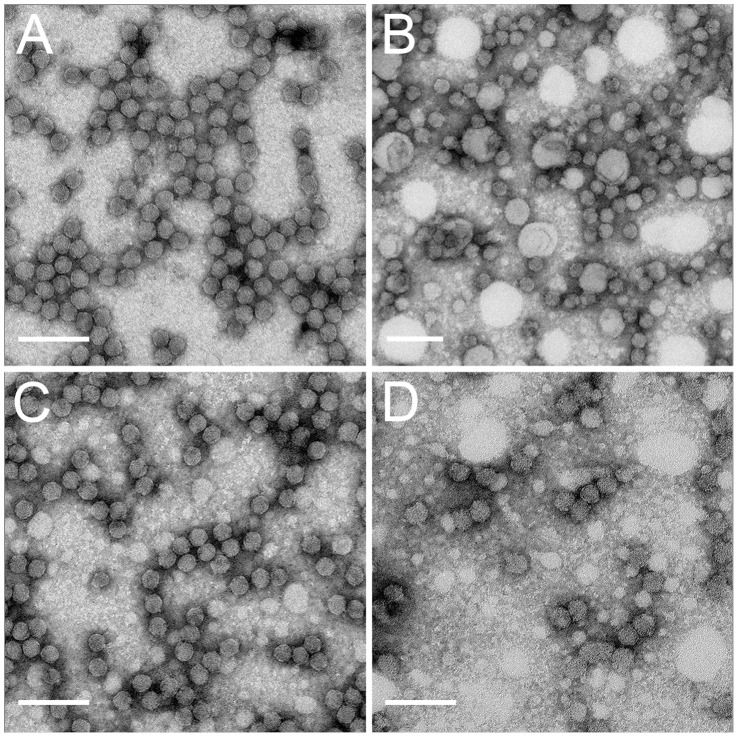
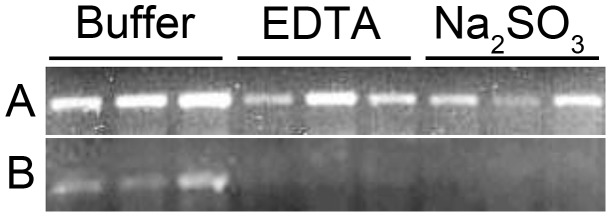
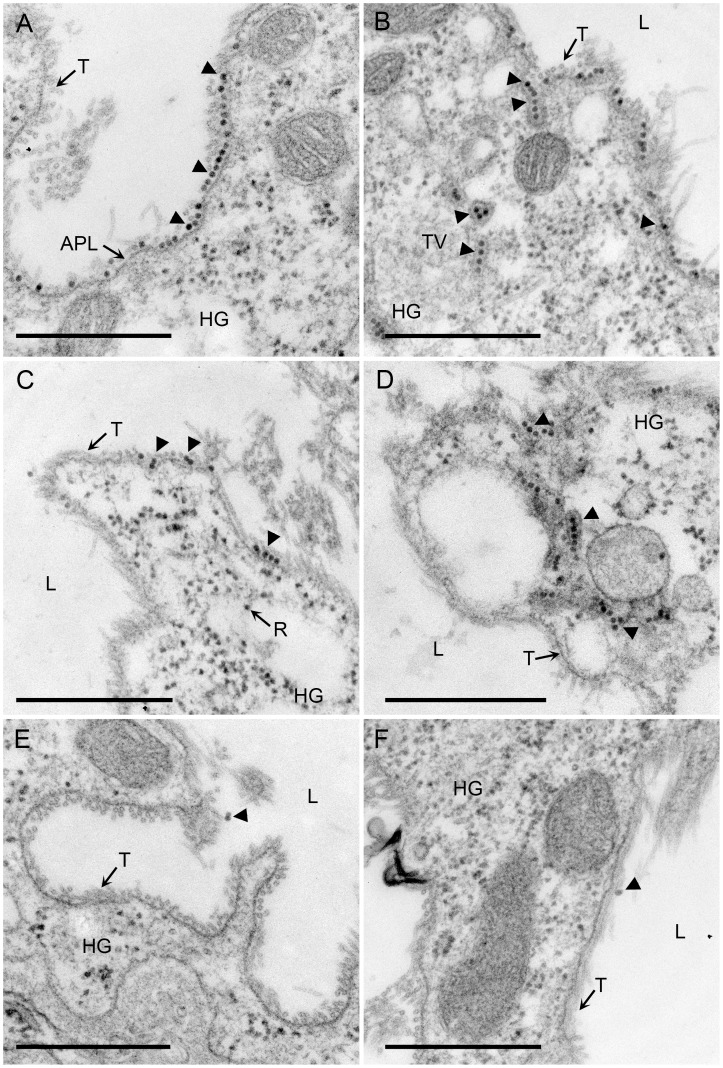
Circulative transmission of viruses in the Luteoviridae, such as cereal yellow dwarf virus (CYDV), requires a series of precisely orchestrated interactions between virus, plant, and aphid proteins. Natural selection has favored these viruses to be retained in the phloem to facilitate acquisition and transmission by aphids. We show that treatment of infected oat tissue homogenate with sodium sulfite reduces transmission of the purified virus by aphids. Transmission electron microscopy data indicated no gross change in virion morphology due to treatments. However, treated virions were not acquired by aphids through the hindgut epithelial cells and were not transmitted when injected directly into the hemocoel. Analysis of virus preparations using nanoflow liquid chromatography coupled to tandem mass spectrometry revealed a number of host plant proteins co-purifying with viruses, some of which were lost following sodium sulfite treatment. Using targeted mass spectrometry, we show data suggesting that several of the virus-associated host plant proteins accumulated to higher levels in aphids that were fed on CYDV-infected plants compared to healthy plants. We propose two hypotheses to explain these observations, and these are not mutually exclusive: (a) that sodium sulfite treatment disrupts critical virion-host protein interactions required for aphid transmission, or (b) that host infection with CYDV modulates phloem protein expression in a way that is favorable for virus uptake by aphids. Importantly, the genes coding for the plant proteins associated with virus may be examined as targets in breeding cereal crops for new modes of virus resistance that disrupt phloem-virus or aphid-virus interactions.
Overview
The claims and statistics of this paper haven’t been checked yet.
Free: it reads the open-access text and checks the first 5 claims that cite a source we can check. Create a free account to check every claim.
Integrity signals
Registry
Cites
Statistics
Figures
Verification
Claims the paper makes
The claims and statistics of this paper haven’t been checked yet.
Free: it reads the open-access text and checks the first 5 claims that cite a source we can check. Create a free account to check every claim.
Claims other papers make about this one
Each is checked against this paper’s own text: does it say what the citing paper says it does?
In the citing paper
“Specifically, Cilia et al. assessed how aphid transmission may indirectly modulate the virus–host interactions between the cereal yellow dwarf virus (CYDV) and plants [135].”
From Proteomic approaches to uncovering virus–host protein interactions during the progression of viral infection (2016) · cites this paper as [135]
In the citing paper
“Upon feeding of aphids with virus-infected plants, several plant proteins were found enriched specifically during infection, suggesting that CYDV infection induces changes in the plant proteome that enhance virion uptake by aphids.”
From Proteomic approaches to uncovering virus–host protein interactions during the progression of viral infection (2016) · cites this paper as [135]
In the citing paper
“suggesting that CYDV infection induces changes in the plant proteome that enhance virion uptake by aphids.”
From Proteomic approaches to uncovering virus–host protein interactions during the progression of viral infection (2016) · cites this paper as [135]
Self-check
Percentages, sums and reported differences re-computed from the paper’s own numbers.
The self-check needs the paper’s full text.
Citations
Cites
Gapped BLAST and PSI-BLAST: a new generation of protein database search programs
Altschul, S. (1997) · Nucleic Acids Research · doi:10.1093/nar/25.17.3389 · Cited by 73,302 · cited 2×
“Host proteins found in all virus preparations If the gene was not annotated , functional homology to an annotated gene was determined using BLASTP [ 92 ] .”
Perkins, D. N., Pappin, D. J. C., Creasy, D. M., & Cottrell, J. S. (1999) · Electrophoresis · doi:10.1002/(sici)1522-2683(19991201)20:18<3551::aid-elps3551>3.0.co;2-2 · Cited by 8,203
Keller, A., Nesvizhskii, A. I., Kolker, E., & Aebersold, R. (2002) · Analytical Chemistry · doi:10.1021/ac025747h · Cited by 4,830 · cited 2×
“Peptide and protein probabilities were calculated using PeptideProphet and ProteinProphet algorithms [90].”
MethodSkyline: an open source document editor for creating and analyzing targeted proteomics experiments
MacLean, B., Tomazela, D. M., Shulman, N., Chambers, M., Finney, G. L., Frewen, B., Kern, R., Tabb, D. L., Liebler, D. C., & MacCoss, M. J. (2010) · Bioinformatics · doi:10.1093/bioinformatics/btq054 · Cited by 4,697 · cited 6×
“Targeted protein sequences were imported into Skyline [ 32 ] and converted into trypsin fragments .”
InfluentialSelf-citationTechniques in Protein Chemistry
(1993) · Journal of the American Society for Mass Spectrometry · doi:10.1016/1044-0305(93)80012-n · Cited by 1,298 · cited 1×
“For cystines (disulfides) having two positively charged flanking amino acids, the rate constant for reaction of the negative disulfide is 132,000 s(21)M(21) as compared to one having two neutral neighbors, 367 s(21)M(21), a 10(6)-fold range in rate constants [43].”
Insect Vector Interactions with Persistently Transmitted Viruses
Hogenhout, S. A., Ammar, E.-D., Whitfield, A. E., & Redinbaugh, M. G. (2008) · Annual Review of Phytopathology · doi:10.1146/annurev.phyto.022508.092135 · Cited by 1,133 · cited 1×
“Aphids can transmit acquired virus for days or weeks and even after molting [1,2,3].”
(2002) · Elsevier eBooks · doi:10.1016/b978-0-12-361160-4.x5050-6 · Cited by 780 · cited 2×
“Sodium sulfite (Na 2 SO 3 ) and ethylenediaminetetraacetic acid (EDTA) are commonly added to infected plant homogenate during virus purification to minimize the effects of polyphenolic compounds and virion aggregation, respectively [23, 24] .”
Full dynamic range proteome analysis of S. cerevisiae by targeted proteomics
Picotti, P., Bodenmiller, B., Mueller, L. N., Domon, B., & Aebersold, R. (2009) · Cell · doi:10.1016/j.cell.2009.05.051 · Cited by 744 · cited 1×
“A targeted proteomics approach called selective reaction monitoring (SRM) mass spectrometry [32,33,34,35] was used to detect peptides derived from virus-interacting plant proteins in aphid protein homogenates.”
Selective Trafficking of KNOTTED1 Homeodomain Protein and Its mRNA Through Plasmodesmata
Lucas, W. J., Bouché-Pillon, S., Jackson, D. P., Nguyen, L., Baker, L., Ding, B., & Hake, S. (1995) · Science · doi:10.1126/science.270.5244.1980 · Cited by 739 · cited 1×
“Due to the dynamic nature of protein trafficking in plants [61,63,84,85,86,87] and cell-type specific transcriptional regulation [88], the latter experiment is not a trivial undertaking.”
Speir, J. A., Munshi, S., Wang, G., Baker, T. S., & Johnson, J. E. (1995) · Structure · doi:10.1016/s0969-2126(01)00135-6 · Cited by 693 · cited 1×
“Indeed, other icosahedral plant viruses such as rice yellow mottle virus, tomato bushy stunt virus, southern bean mosaic virus and cowpea chlorotic mottle virus are stabilized by divalent cations such as Ca and Mg, [40,51,52,53,54].”
Cited by
Status and Prospects of Plant Virus Control Through Interference with Vector Transmission
Bragard, C., Caciagli, P., Lemaire, O., Lopez-Moya, J. J., MacFarlane, S., Peters, D., Susi, P., & Torrance, L. (2013) · Annual Review of Phytopathology · doi:10.1146/annurev-phyto-082712-102346 · Cited by 256
“These facilitating-vectoring proteins should be examined in-depth as new targets for virus resistance by disrupting phloem-virusvector interactions (35).”
BackgroundPlant Virus–Insect Vector Interactions: Current and Potential Future Research Directions
Dietzgen, R., Mann, K., & Johnson, K. (2016) · Viruses · doi:10.3390/v8110303 · Cited by 236
“Critical virus-associated host plant proteins that may be induced in the phloem of polerovirus-infected plants appear to be required for virus uptake and transmission by aphid vectors [38].”
BackgroundCirculative, “Nonpropagative” Virus Transmission
Gray, S., Cilia, M., & Ghanim, M. (2014) · Advances in Virus Research · doi:10.1016/b978-0-12-800172-1.00004-5 · Cited by 159
Self-citationLum, K. K., & Cristea, I. M. (2016) · Expert Review of Proteomics · doi:10.1586/14789450.2016.1147353 · Cited by 113
Plant virus ecology and epidemiology: historical perspectives, recent progress and future prospects
Jones, R. A. (2014) · Annals of Applied Biology · doi:10.1111/aab.12123 · Cited by 104
The Past, Present, and Future of Barley Yellow Dwarf Management
Walls, J., Rajotte, E. G., & Rosa, C. (2019) · Agriculture · doi:10.3390/agriculture9010023 · Cited by 89
Pinheiro, P., Ghanim, M., Alexander, M., Rebelo, A. R., Santos, R. S., Orsburn, B. C., Gray, S. M., & Cilia, M. (2016) · Molecular & Cellular Proteomics · doi:10.1074/mcp.m116.063495 · Cited by 84
“Luteovirids are nonspecifically ingested from the phloem sap together with sap proteins (6) while the aphid is feeding on an infected plant.”
BackgroundMethodSelf-citationWatanabe, S., Greenwell, A. M., & Bressan, A. (2013) · Viruses · doi:10.3390/v5020758 · Cited by 73
Aphids and their transmitted potato viruses: A continuous challenges in potato crops
Xu, Y., & Gray, S. M. (2020) · Journal of Integrative Agriculture · doi:10.1016/s2095-3119(19)62842-x · Cited by 75
Self-citationTamborindeguy, C., Bereman, M. S., DeBlasio, S. L., Igwe, D. O., Smith, D., White, F. F., MacCoss, M. J., Gray, S. M., & Cilia, M. (2013) · PLoS ONE · doi:10.1371/journal.pone.0071620 · Cited by 64
“graminum [9,48] whereas PLRV is acquire through the midgut of M.”
Self-citationTrends in plant virus epidemiology: Opportunities from new or improved technologies
Jones, R. A. (2013) · Virus Research · doi:10.1016/j.virusres.2013.11.003 · Cited by 68
Heck, M. L., & Brault, V. (2018) · Current Opinion in Virology · doi:10.1016/j.coviro.2018.07.007 · Cited by 53
“Bencharki, Brault and colleagues [34] and Cilia (now Heck), Gray and colleagues [35] showed that phloem and other plant proteins interact with CABYV and CYDV, respectively.”
BackgroundDeBlasio, S. L., Chavez, J. D., Alexander, M., Ramsey, J. S., Eng, J. K., Mahoney, J. E., Gray, S. M., Bruce, J. E., & Cilia, M. (2015) · Journal of Virology · doi:10.1128/jvi.01706-15 · Cited by 48
“benthamiana leaves by sucrose density centrifugation (46) at 3 dpi with wild-type (WT) or mutant PLRV clones containing either of two RTD mutations ( RTD, deletion of the entire RTD, and RTDCT499, which lacks the last 218 C-terminal residues, Fig.”
MethodSelf-citationDeBlasio, S. L., Johnson, R. S., Mahoney, J. E., Karasev, A. V., Gray, S. M., MacCoss, M. J., & Cilia, M. (2014) · Molecular Plant-Microbe Interactions · doi:10.1094/mpmi-11-14-0363-r · Cited by 52
Self-citationA molecular tug-of-war: Global plant proteome changes during viral infection
Alexander, M., & Cilia, M. (2015) · Current Plant Biology · doi:10.1016/j.cpb.2015.10.003 · Cited by 53
“Multiple members of the glycine cleavage system, a group of four proteins which degrade excess glycine, co-immunoprecipitate or co-purify with PLRV, RYMV, and CYDV-RPV [20,66,76], and glycine dehydrogenase is upregulated during PMeV infection [41].”
BackgroundMethodInfluentialSelf-citationPLANT VIRUS ECOLOGY: A GLIMPSE OF RECENT ACCOMPLISHMENTS
Islam, W. (2017) · Applied Ecology and Environmental Research · doi:10.15666/aeer/1501_691705 · Cited by 42
Aphid–Plant–Phytovirus Pathosystems: Influencing Factors from Vector Behaviour to Virus Spread
Mabola, J. C. F., & Francis, F. (2021) · Agriculture · doi:10.3390/agriculture11060502 · Cited by 34
DeBlasio, S. L., Johnson, R. S., Sweeney, M. M., Karasev, A. V., Gray, S. M., MacCoss, M. J., & Cilia, M. (2015) · PROTEOMICS · doi:10.1002/pmic.201400594 · Cited by 30
“1) [19] ARFA1E Plays a role in replication of RNA viruses 3 +/+ (5.”
BackgroundMethodInfluentialSelf-citationLeybourne, D. J. (2024) · Plant Pathology · doi:10.1111/ppa.13871 · Cited by 23
Wilson, J. R., DeBlasio, S. L., Alexander, M., & Heck, M. L. (2019) · Current Issues in Molecular Biology · doi:10.21775/cimb.034.113 · Cited by 18
“Some techniques in proteomics allow one to measure the levels of a specific target protein (targeted experiments) (Cilia et al., 2012a) or identify and quantify protein–protein interactions (co-immunoprecipitation-MS and crosslinking-MS technology) (Chavez et al., 2012; DeBlasio et al., 2015a).”
BackgroundMethodInfluentialKliot, A., Johnson, R. S., MacCoss, M. J., Kontsedalov, S., Lebedev, G., Czosnek, H. H., Heck, M. L., & Ghanim, M. (2020) · GigaScience · doi:10.1093/gigascience/giaa124 · Cited by 15
“Different isoforms of the protein were shown to segregate between 246 clones with different CYDV-RPV transmission efficiencies [30].”
BackgroundSelf-citationModel System-Guided Protein Interaction Mapping for Virus Isolated from Phloem Tissue
DeBlasio, S. L., Johnson, R. S., MacCoss, M. J., Gray, S. M., & Cilia, M. (2016) · Journal of Proteome Research · doi:10.1021/acs.jproteome.6b00715 · Cited by 14
Self-citationPlant–Virus–Vector Interactions
Rajarapu, S. P., Ullman, D. E., Uzest, M., Rotenberg, D., Ordaz, N. A., & Whitfield, A. E. (2021) · Wiley eBooks · doi:10.1002/9781119818526.ch7 · Cited by 11
Quantitative proteomic analysis of A549 cells infected with human adenovirus type 2
Badr, K. R., Parente-Rocha, J. A., Baeza, L. C., Ficcadori, F. S., Souza, M. B. L. D., Soares, C. M. D. A., Guissoni, A. C. P., Almeida, T. N. V., & Cardoso, D. D. D. D. P. (2019) · Journal of Medical Virology · doi:10.1002/jmv.25439 · Cited by 9
Evidence for lysine acetylation in the coat protein of a polerovirus
Cilia, M., Johnson, R. S., Sweeney, M. M., DeBlasio, S. L., Bruce, J. E., MacCoss, M. J., & Gray, S. M. (2014) · Journal of General Virology · doi:10.1099/vir.0.066514-0 · Cited by 10
Self-citationBoissinot, S., Brault, V., & Herrbach, E. (2020) · Wiley eBooks · doi:10.1002/9780470015902.a0029206 · Cited by 6
Differential gene expression between viruliferous and non-viruliferous Schizaphis graminum (Rondani)
Crane, C. F., Crane, C. F., & Schemerhorn, B. J. (2023) · PLoS ONE · doi:10.1371/journal.pone.0294013 · Cited by 5
“However, cyclophilin and a luciferase homolog have been found to bind CYDV-RPV virions in greenbug [46], and up to five-fold increased expression of cyclophilin (referenced as peptidylprolylisomerase) was correlated with increased transmission of RPV to wheat in an F 2 greenbug population…”
BackgroundWilson, J. R., DeBlasio, S. L., Alexander, M., & Heck, M. L. (2019) · Caister Academic Press eBooks · doi:10.21775/9781912530083.06 · Cited by 6
Chen, A. Y. S., Zhou, J. S., Liu, J., & Ng, J. C. K. (2021) · Viruses · doi:10.3390/v13081578 · Cited by 3
Shen, Y., Karthikeyan, A., Yang, Y., Ma, N., Yin, J., Yuan, Y., Wang, L., & Zhi, H. (2021) · Agronomy · doi:10.3390/agronomy11081592 · Cited by 3
Purification and serological detection of maize yellow mosaic virus
Wilson, J. R., Willie, K. J., & Khatri, N. (2025) · Archives of Virology · doi:10.1007/s00705-025-06249-x · Cited by 1
“For these experiments, partially purified virus was used, as it has been found that some plant proteins copurifying with the virus are required for aphid transmission of poleroviruses [6 ].”
Plant virus identification and virus-vector-host interactions
Gaafar, Y. Z. A. (2019) · eDiss (Georg-August-Universität Göttingen) · doi:10.53846/goediss-7751 · Cited by 2
Watanabe, S. (2013) · ScholarSpace (University of Hawaii at Manoa)
Mécanismes d'interaction entre un nanovirus et son puceron vecteur
Villegas, M. (2023) · theses.fr (ABES) · doi:10.70675/9887640ez788ez4cd6z86abz414b92b5371b
Metadata
- Authors
- Cilia, M., Peter, K. A., Bereman, M. S., Howe, K., Fish, T., Smith, D., Gildow, F., MacCoss, M. J., Thannhauser, T. W., & Gray, S. M.
- Affiliations
- Agricultural Research Service (US)
- Pennsylvania State University (US)
- University of Washington (US)
- Cornell University (US)
- Corresponding author
- Cilia, Michelle
- Peter, Kari A.
- Bereman, Michael S.
- Howe, Kevin
- Fish, Tara
- Smith, Dawn
- Gildow, Fredrick
- MacCoss, Michael J.
- Thannhauser, Theodore W.
- Gray, Stewart M.
- ORCID
- Venue
- PLoS ONE
- Publisher
- Public Library of Science (PLoS)
- Published
- 2012-10-30
- Volume
- 7
- Issue
- 10
- Pages
- e48177
- ISSN
- 1932-6203 (ISSN-L)
- PMC
- PMC3484124
- OpenAlex
- W1971956143
- Cited by
- 35
- References
- 92
- Citations by year
- 2025: 1 · 2024: 1 · 2023: 1 · 2021: 4 · 2020: 4 · 2019: 5 · 2018: 2 · 2017: 1 · 2016: 4 · 2015: 3 · 2014: 5 · 2013: 4
- FWCI
- 4.38
- Type
- journal article
- Language
- en
- Open access
- gold
- doi.org
- Licence
- Locations
- PLoS ONE (publishedVersion, public-domain)
- PubMed Central (publishedVersion, public-domain)
- PubMed (publishedVersion)
- DOAJ (DOAJ: Directory of Open Access Journals) (submittedVersion, cc-by-sa)
- Figshare (submittedVersion, cc-by)
- Funders
- National Science Foundation (1109989, P41 GM103533)
- U.S. Department of Agriculture
- National Institutes of Health (GM103533)
- National Institute of General Medical Sciences (P41GM103533)
- Topics
- Life Sciences › Agricultural and Biological Sciences › Plant Science › Plant Virus Research Studies
- Life Sciences › Agricultural and Biological Sciences › Plant Science › Phytoplasmas and Hemiptera pathogens
- Life Sciences › Agricultural and Biological Sciences › Insect Science › Insect-Plant Interactions and Control
- Keywords
- cereal yellow dwarf virus, Luteoviridae, aphid transmission, circulative transmission, host-virus interaction, phloem, oat, virus resistance breeding
- MeSH terms
- Animals, Aphids, Chromatography, Gel, Edetic Acid, Endocytosis, Hemolymph, Insect Vectors, Peptide Fragments, Plant Diseases, Plant Proteins, Sulfites, Virion, Avena, Proteome, Gastrointestinal Tract, Phloem, Luteoviridae, Tandem Mass Spectrometry, Host-Pathogen Interactions
About these checks
Registry, retraction, Cites and statistics results are computed, not judged, with one exception: a printed reference that no index lists is read once by a model before it counts as a citation error. Claims are extracted by a model and kept only when their quote appears verbatim in the text; each cited source is then checked, with a model’s help, for whether it says what the claim relies on. Those verdicts can be wrong — read the claim’s quote and the cited source before relying on one.
Statistics and arithmetic are recomputed, not judged.
Confidence bands are shown only for fields calibrated on our annotated test set. None is calibrated yet, so no band is shown.
What counts as a claim ›How we measure confidence ›How we check this ›
Are you an author, or do you see a problem with this page? Request a review
Data sources
Bibliographic data: Semantic Scholar, OpenAlex, Crossref.
Contains information from the Semantic Scholar Academic Graph Datasets, made available under the ODC Attribution License (ODC-BY 1.0).
Semantic Scholar’s data is described in: Kinney, R., et al. (2023). The Semantic Scholar Open Data Platform. arXiv:2301.10140.
